A landscape architecture plan is a drawing that organizes outdoor space. It is not a planting diagram or a garden layout — it is a plan for shaping land, water, plants, and structures to create functional, beautiful, and ecologically resilient environments. A good landscape plan manages stormwater, provides habitat, moderates temperature, frames views, and supports human activity.
These 14 landscape architecture plans span residential gardens, public parks, urban plazas, and ecological restoration projects. Each plan includes defining characteristics, design principles, and applications.
1. The Rain Garden Plan
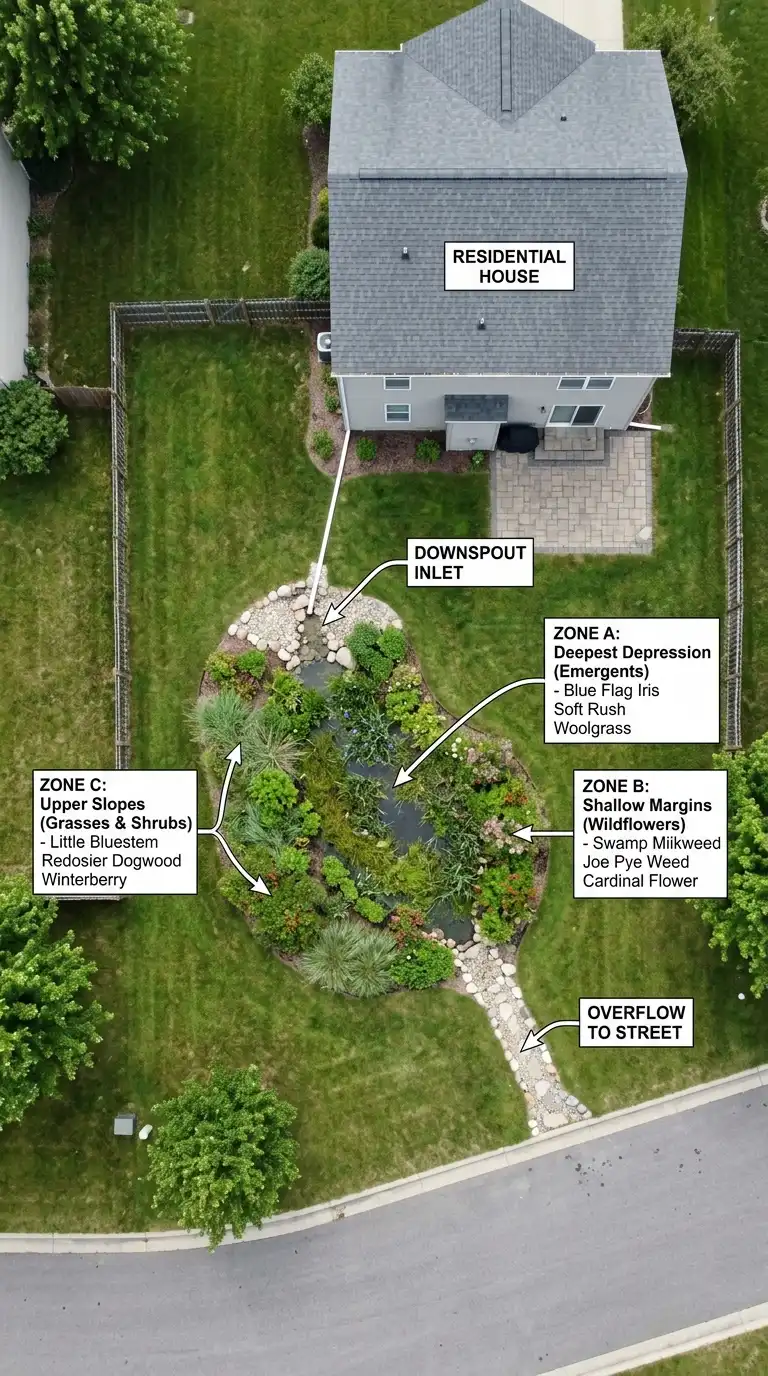
The rain garden plan shows a planted depression designed to capture stormwater runoff from roofs, driveways, and streets. The garden is located at a low point on the site, where water naturally flows. The plan shows the garden’s shape, the inlet and outlet, the overflow path, and the planting zones.
This plan type is for stormwater management and residential landscapes. The emotional effect is ecological, functional, and surprisingly beautiful.
Quick Tips
- Locate the rain garden at least 3 metres from building foundations.
- Size the garden to capture runoff from the contributing drainage area.
- Plant deep-rooted, water-tolerant native plants.
2. The Green Roof Plan
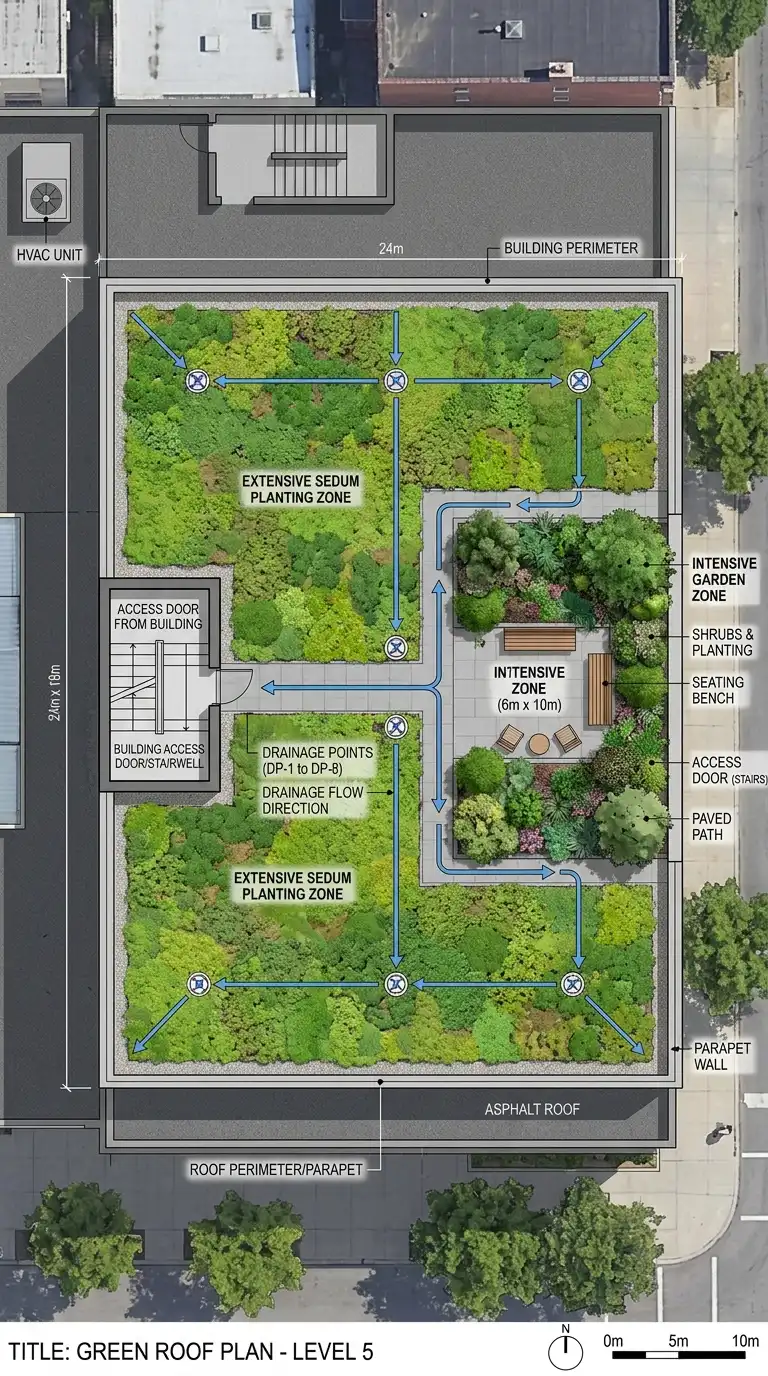
The green roof plan shows a vegetated layer installed on top of a building. The plan shows the roof perimeter, drainage paths, planting zones, and access points. The plan distinguishes between extensive green roof (shallow soil, sedums) and intensive green roof (deeper soil, shrubs, and small trees).
This plan type is for urban buildings and sustainable design. The emotional effect is ecological, urban, and surprising.
Quick Tips
- Show the drainage layer and waterproofing membrane below the soil.
- Distinguish extensive (sedum) from intensive (shrub) zones.
- Include access for maintenance.
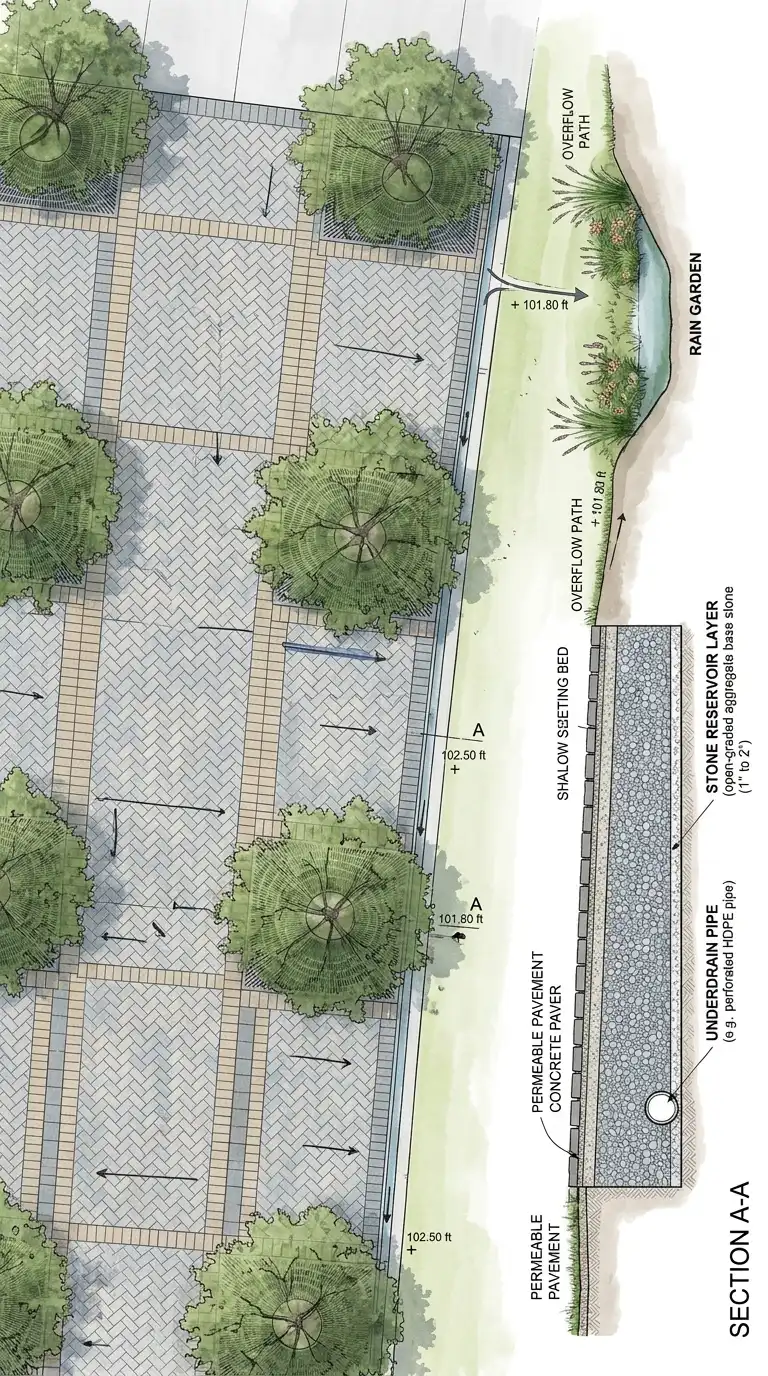
3. The Permeable Pavement Plaza Plan
The permeable pavement plaza plan shows a paved area that allows water to infiltrate through the surface into a stone reservoir below. The plan shows the pavement pattern, the stone reservoir layer, the underdrain, and the overflow path.
This plan type is for civic plazas, parking lots, and urban spaces. The emotional effect is civic, functional, and environmentally responsible.
Quick Tips
- Show the stone reservoir layer at least 30cm deep.
- Indicate the slope of the pavement (1-2%).
- Show underdrains and overflow paths.
4. The Native Meadow Plan
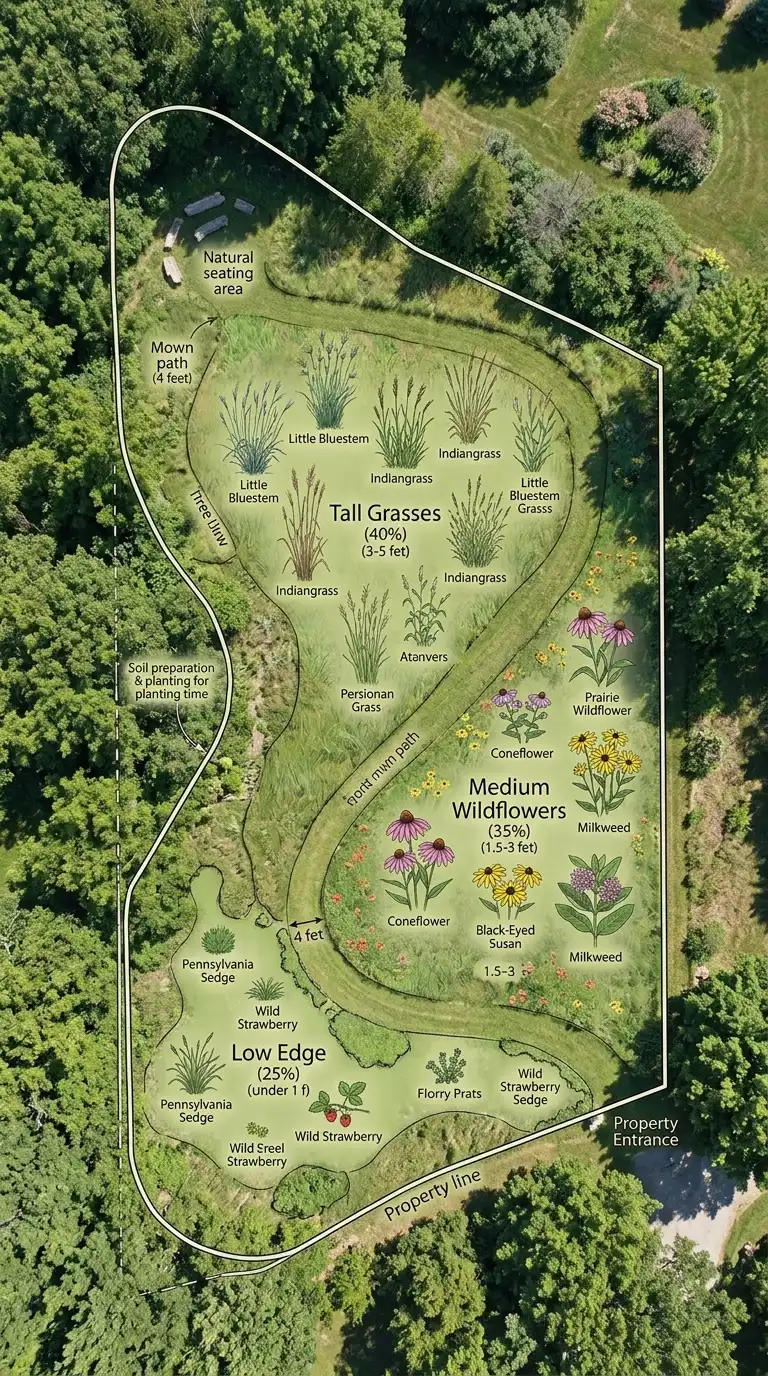
The native meadow plan shows a diverse planting of native grasses and wildflowers replacing lawn. The plan shows the meadow boundary, the seed mix zones, the mown path, and the maintenance access. The plan may show the meadow at different seasons.
This plan type is for large residential lots, parks, and ecological restoration. The emotional effect is wild, seasonal, and ecologically rich.
Quick Tips
- Show the meadow boundary and the mown edge.
- Indicate seed mix zones by height and bloom time.
- Include a mown path through the meadow for access.
5. The Bioswale Plan
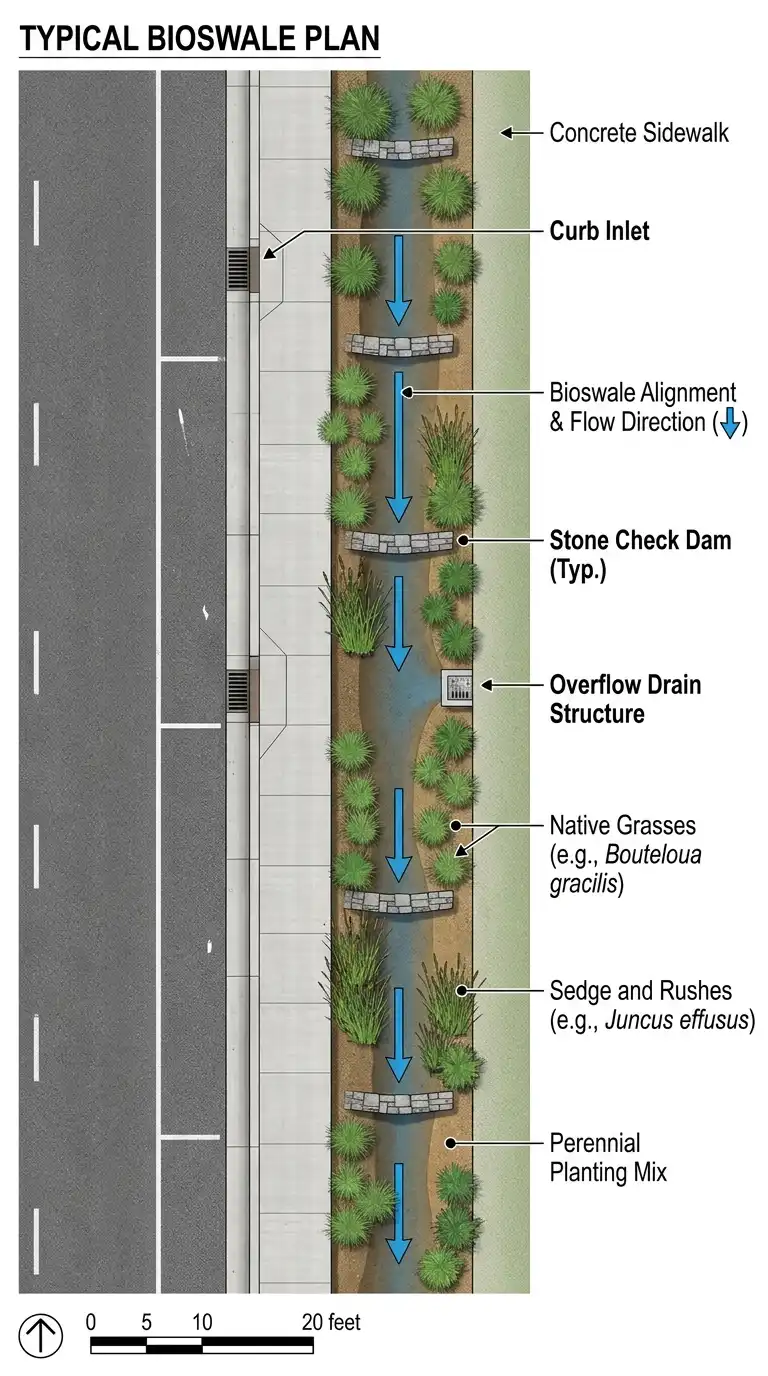
The bioswale plan shows a linear vegetated channel that conveys and treats stormwater. The plan shows the channel alignment, the slope direction, check dams, planting zones, and the inlet and outlet structures.
This plan type is for streetscapes, parking lots, and building edges. The emotional effect is infrastructural, ecological, and gracefully engineered.
Quick Tips
- The channel should slope gently — 1-2% is ideal.
- Show check dams at regular intervals.
- Plants must tolerate both flooding and drought.
6. The Pocket Park Plan
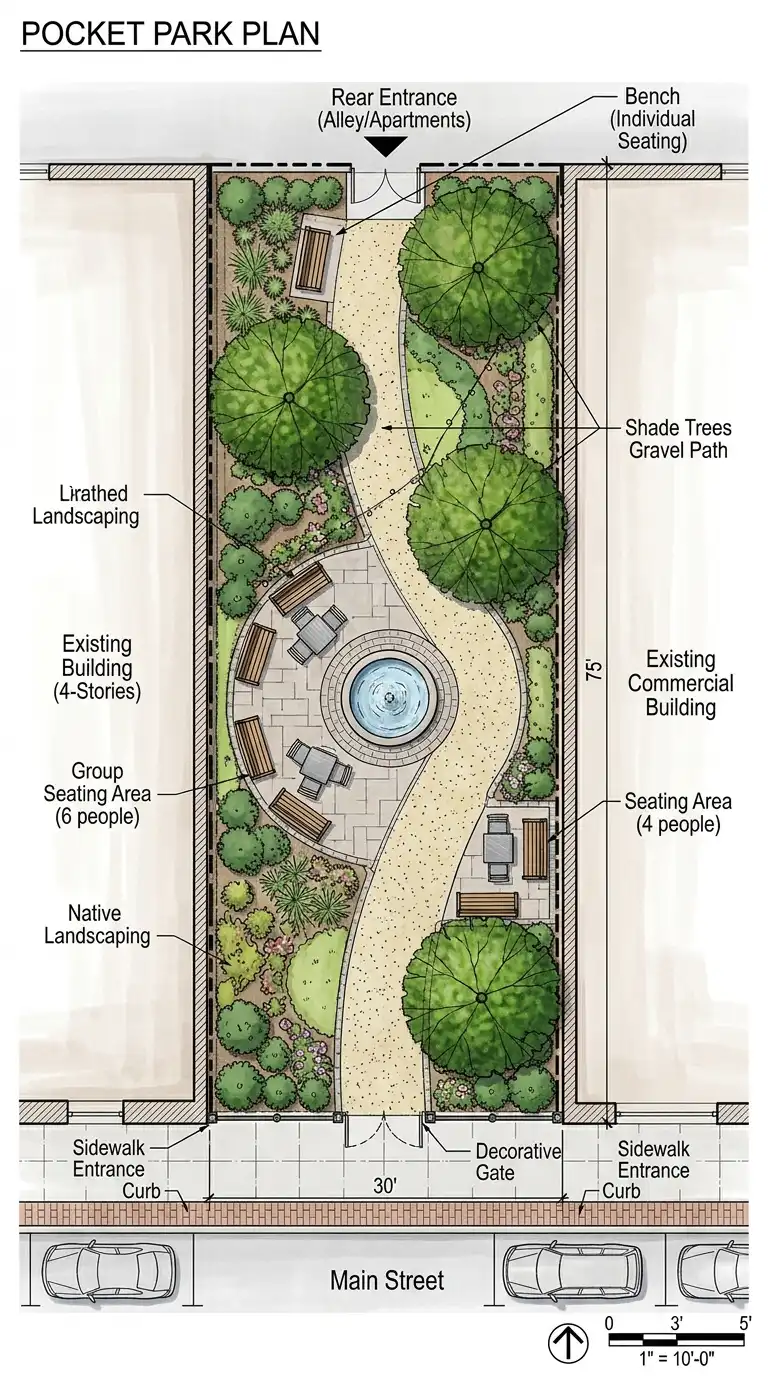
The pocket park plan shows a small public park, typically one lot or less in size, tucked into a dense urban neighbourhood. The plan shows seating areas, planting, paths, a small fountain or playground, and street access.
This plan type is for urban infill and community development. The emotional effect is intimate, community-scaled, and urban.
Quick Tips
- The park should be 200-800 square metres.
- Include at least three seating areas for different group sizes.
- Show street access and pedestrian paths.
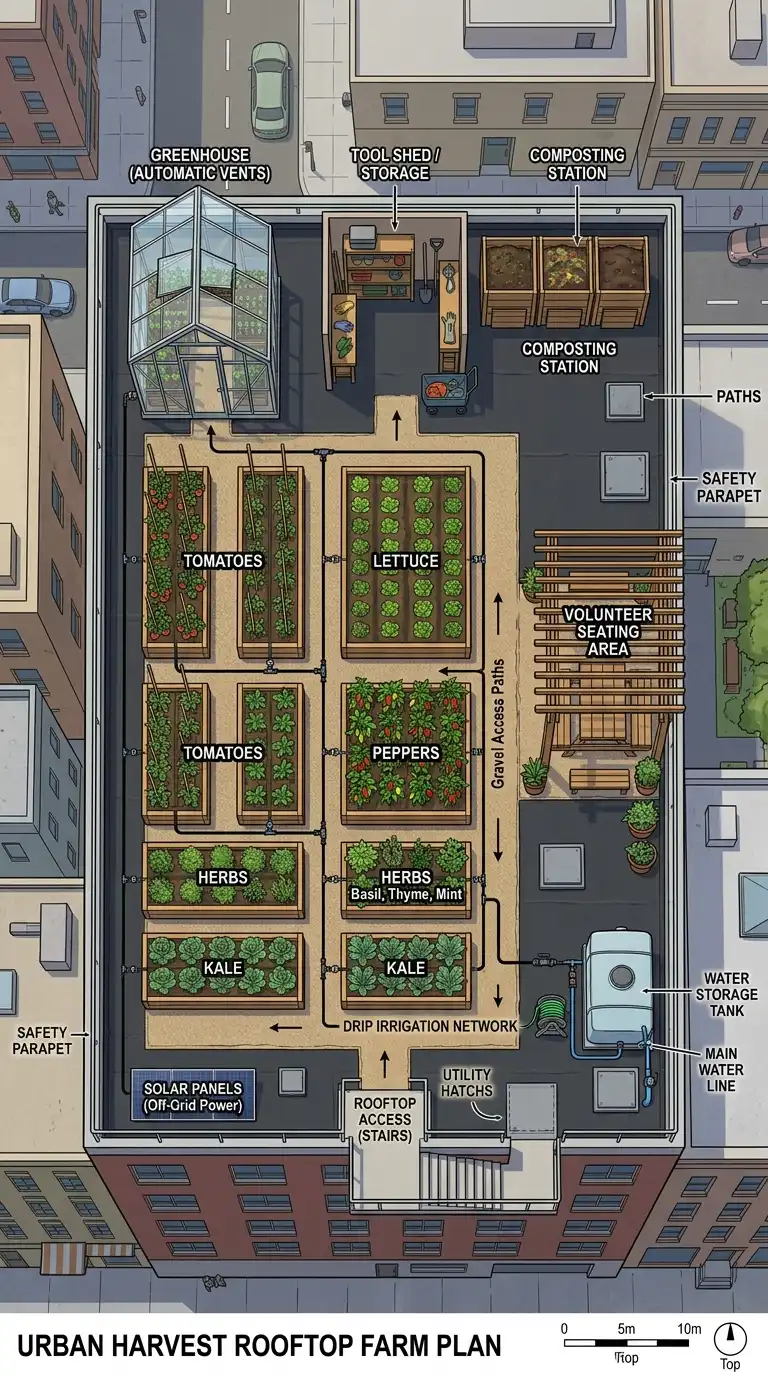
7. The Rooftop Farm Plan
The rooftop farm plan shows an intensive green roof designed for food production. The plan shows raised beds, compost bins, tool storage, a greenhouse, irrigation lines, and access for volunteers and deliveries.
This plan type is for urban agriculture and sustainable buildings. The emotional effect is productive, communal, and hopeful.
Quick Tips
- Show raised beds with crop labels.
- Indicate compost bins, tool storage, and a greenhouse.
- Show irrigation lines and access points.
8. The Woodland Garden Plan
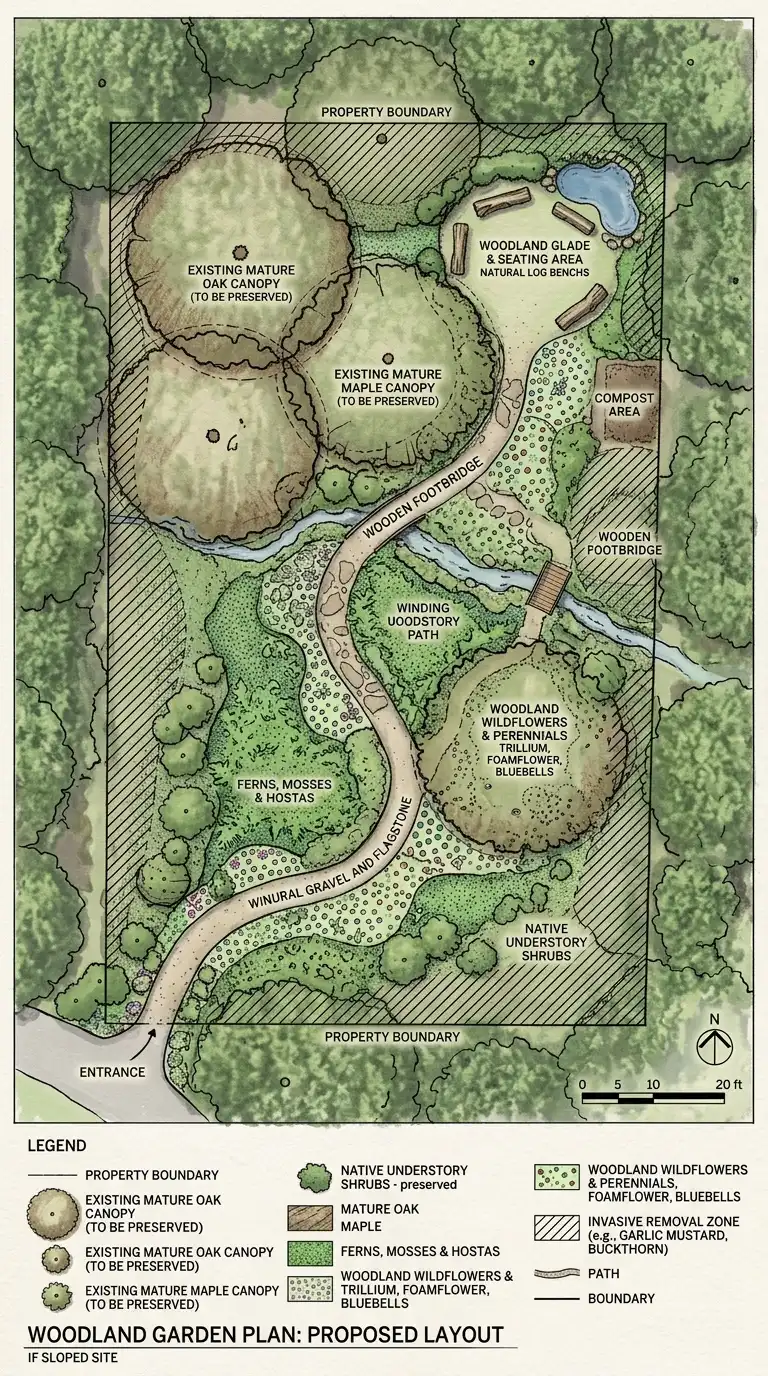
The woodland garden plan shows a garden planted beneath an existing forest canopy. The plan shows the existing trees to be preserved, the understory planting zones, the path network, and the invasive species removal areas.
This plan type is for forested residential lots and nature preserves. The emotional effect is shaded, layered, and deeply natural.
Quick Tips
- Preserve mature trees at all costs.
- Show invasive species removal areas.
- Use paths to guide visitors and protect sensitive areas.
9. The Coastal Dune Restoration Plan
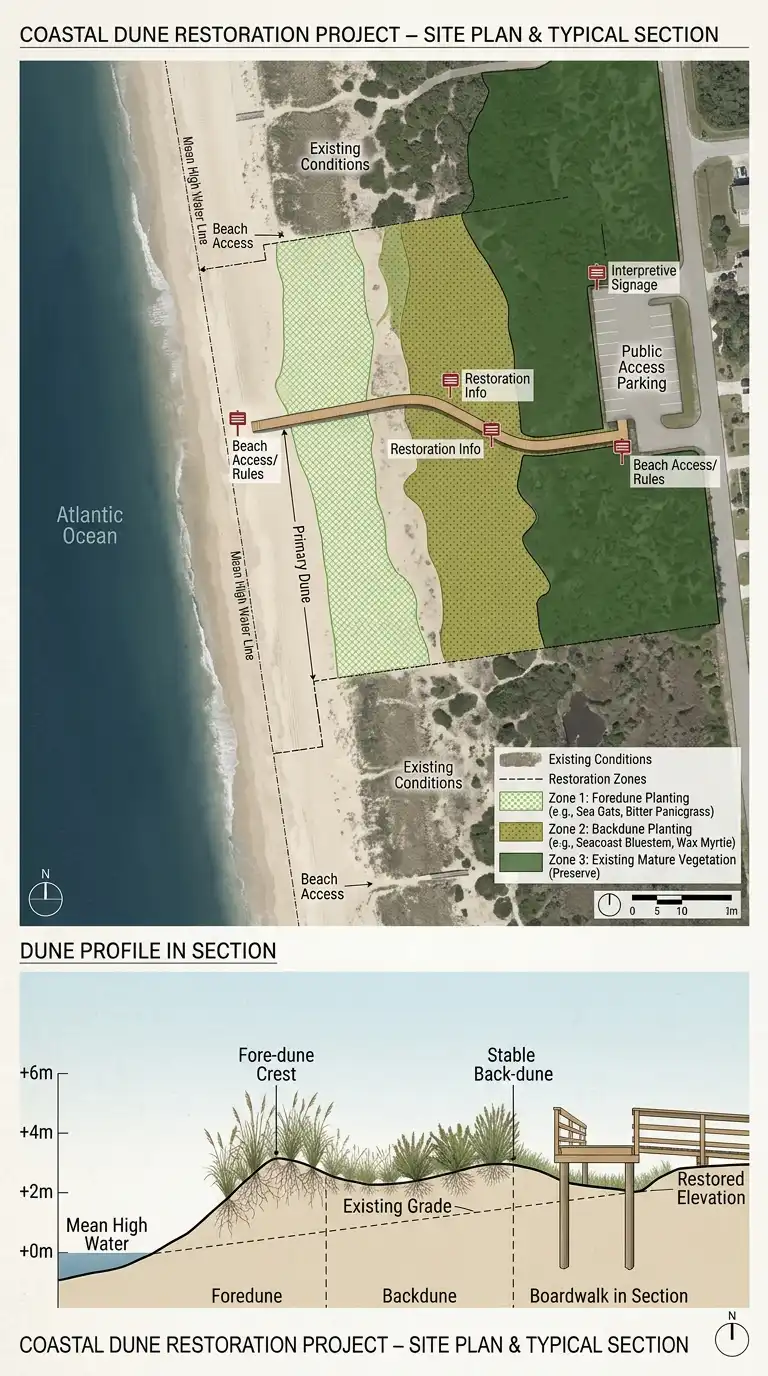
The coastal dune restoration plan shows the rebuilding and stabilization of sand dunes damaged by development or storms. The plan shows the dune profile, the planting zones for native dune grasses, the boardwalk alignment, and the signage locations.
This plan type is for coastal sites and ecological restoration. The emotional effect is wild, resilient, and ecologically critical.
Quick Tips
- Show the dune profile in section.
- Plant native dune grasses on the seaward side.
- Install boardwalks to concentrate foot traffic.
10. The Urban Forest Plan
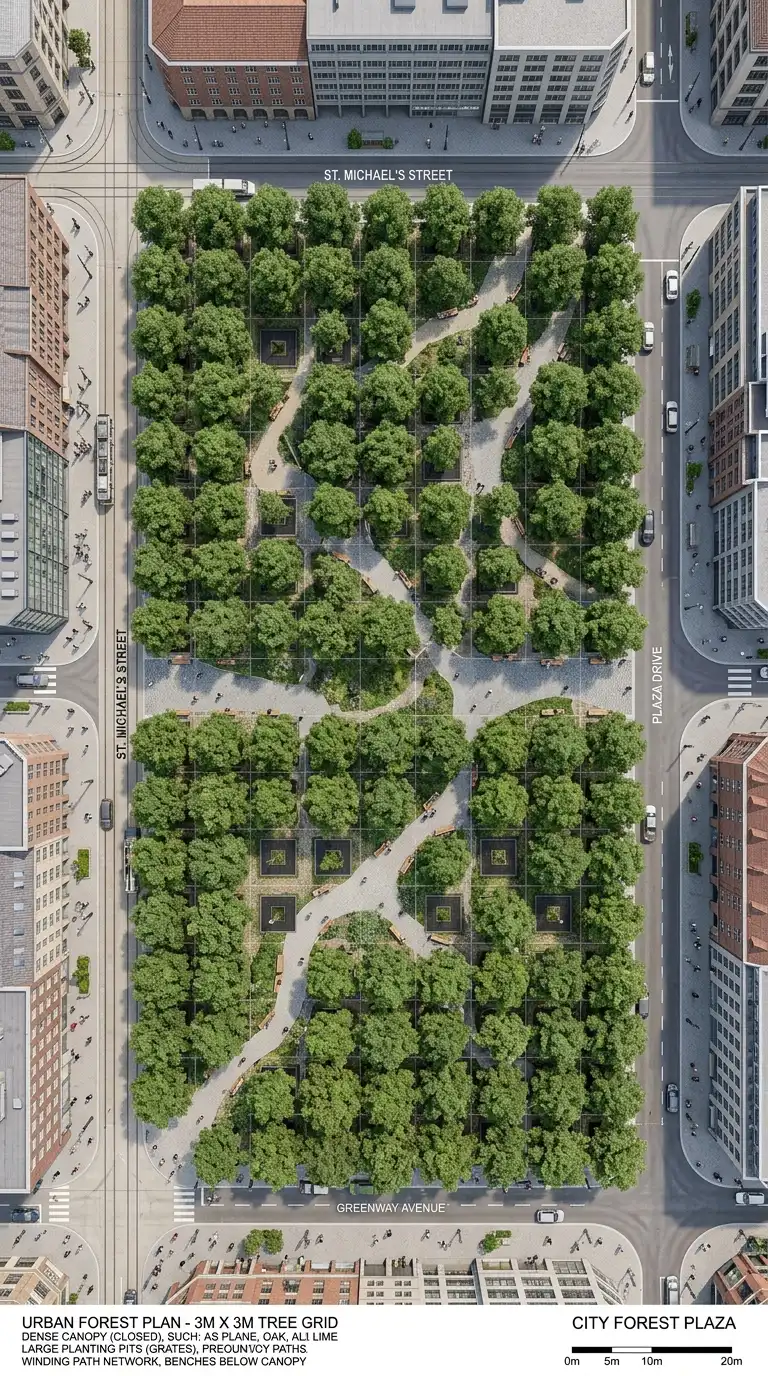
The urban forest plan shows a dense planting of trees in a city — not a park, but a forest. The plan shows the tree spacing (2-4 metres), the planting pit sizes, the soil volume, the path network, and the seating areas.
This plan type is for plazas, streetscapes, and former parking lots. The emotional effect is immersive, cooling, and transformative.
Quick Tips
- Plant trees at 2-4 metre spacing for a closed canopy.
- Use large planting pits with structural soil.
- Show the path network through the forest.
11. The Healing Garden Plan
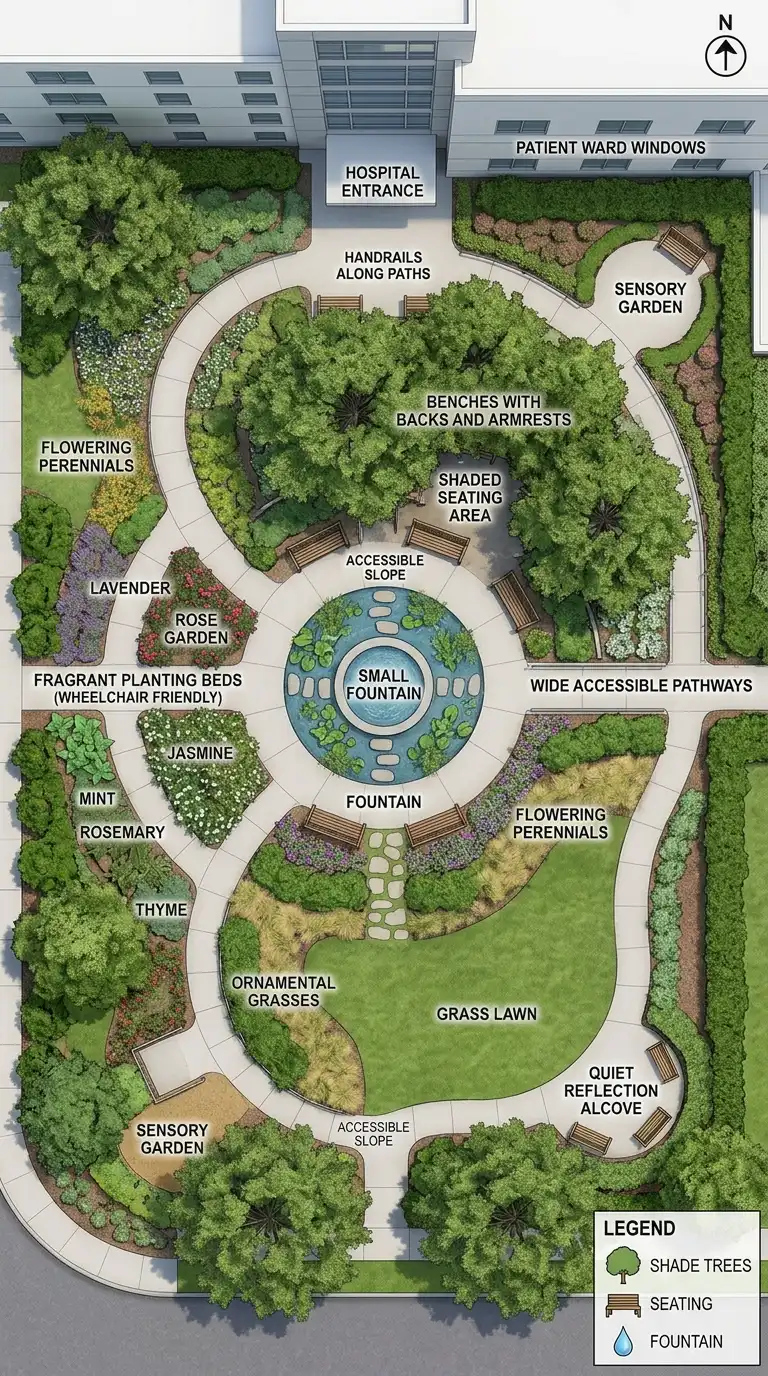
The healing garden plan is designed for hospitals, hospices, and healthcare facilities. The plan shows accessible paths (at least 2 metres wide), comfortable seating, sensory planting zones, shade structures, and a water feature.
This plan type is for healthcare settings. The emotional effect is calm, restorative, and accessible.
Quick Tips
- Paths must be wide enough for wheelchairs and beds.
- Seating should include benches with backs and armrests.
- Plants should engage all senses: sight, smell, touch, sound.
12. The Stormwater Wetland Plan
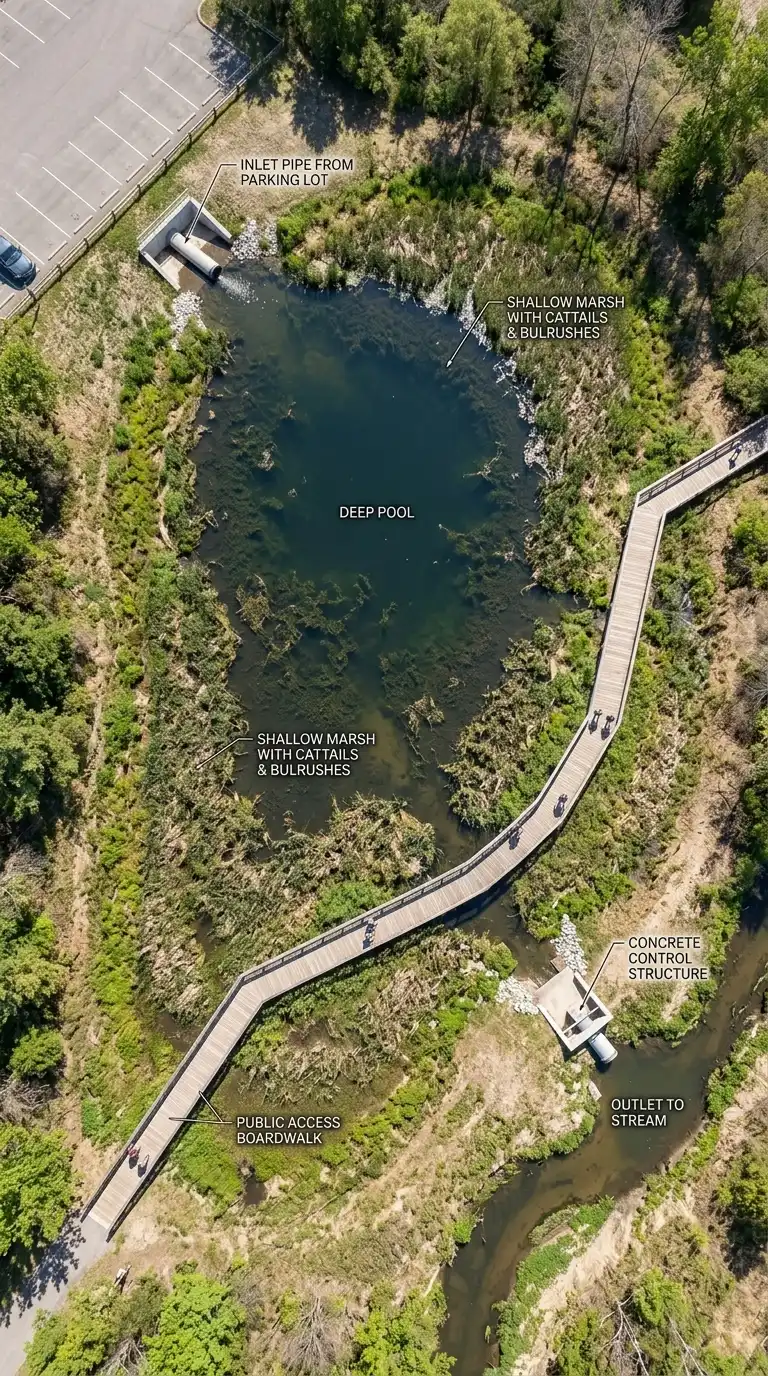
The stormwater wetland plan shows a constructed wetland designed to treat runoff from surrounding development. The plan shows the deep pool for sediment settling, the shallow marsh for plant growth, the inlet and outlet structures, and the boardwalk for public access.
This plan type is for suburban and urban stormwater management. The emotional effect is wild, ecologically productive, and infrastructural.
Quick Tips
- The wetland must have a permanent pool of water.
- Use native emergent plants: cattails, bulrushes, pickerelweed.
- Provide public access with boardwalks and overlooks.
13. The Productive Home Garden Plan
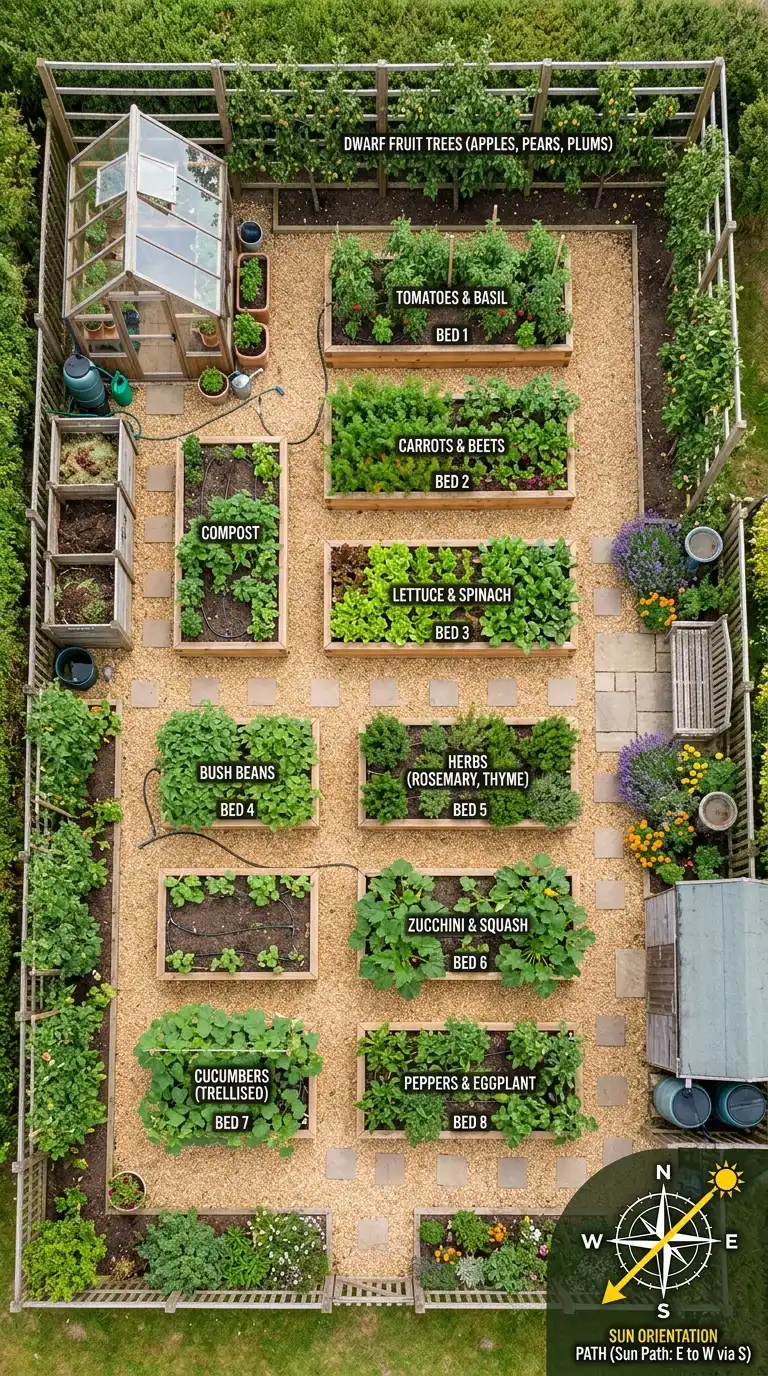
The productive home garden plan integrates food production into the residential landscape. The plan shows raised beds, fruit trees, a compost bin, a greenhouse, a seating area, and paths wide enough for wheelbarrows.
This plan type is for residential landscapes. The emotional effect is abundant, beautiful, and deeply satisfying.
Quick Tips
- Place the garden in full sun (6+ hours per day).
- Build raised beds for better soil control.
- Include paths wide enough for wheelbarrows and kneeling.
14. The Meditation Garden Plan
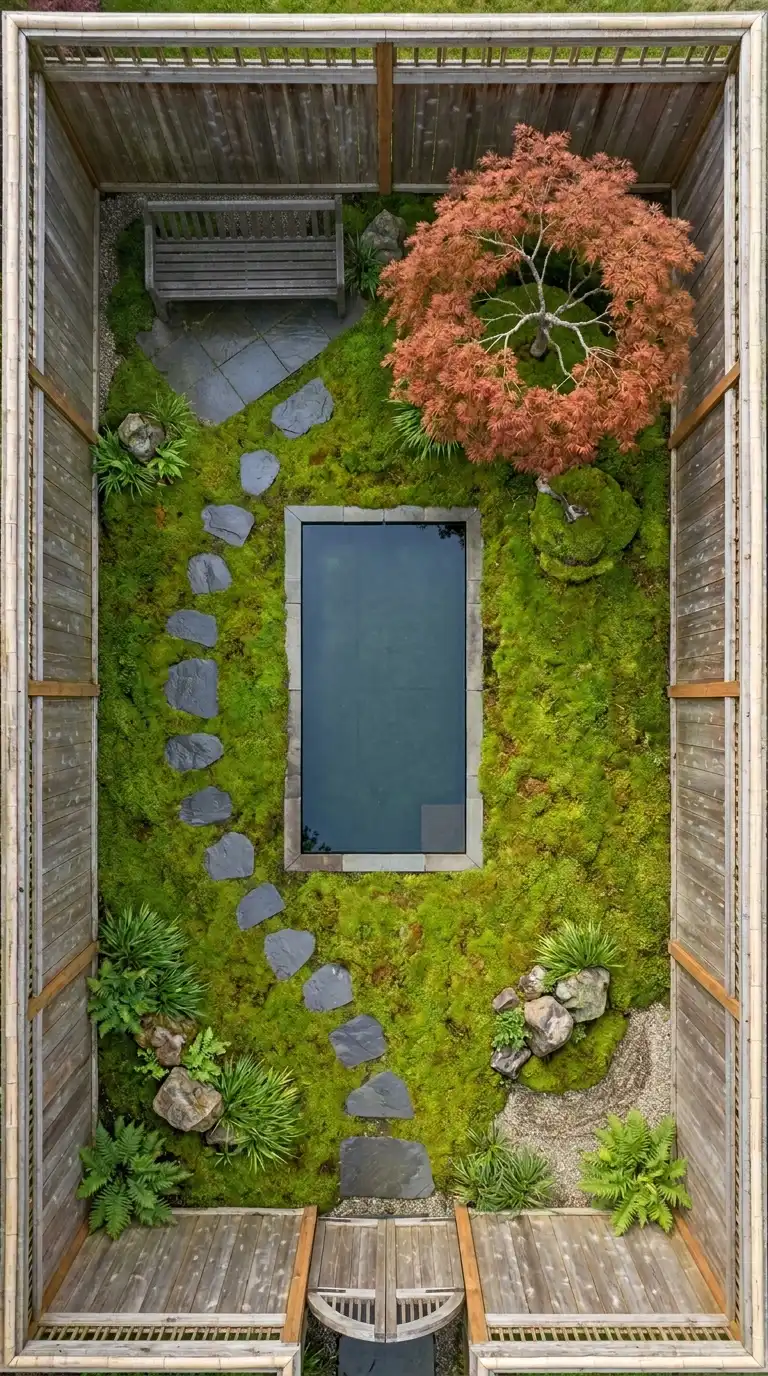
The meditation garden plan is designed for quiet contemplation. The plan shows an enclosed space (walls, hedges, or fences), a simple planting palette (evergreens, moss, bamboo), a water feature (still pool or small fountain), and a single seating area facing a focal point.
This plan type is for residential gardens, temples, and retreat centres. The emotional effect is calm, enclosed, and meditative.
Quick Tips
- The garden should be enclosed on all sides for privacy.
- Use a limited palette of plants — green and white only.
- Include a seating area facing a single focal point.
Final Thoughts
A landscape plan is not a planting diagram. A planting diagram shows what plants go where. A landscape plan shapes land, water, and space. A rain garden manages water. A bioswale cleans water. A green roof insulates a building. A healing garden restores the spirit. A meditation garden calms the mind. These are not decorations — they are infrastructures of ecology and well-being.
These 14 landscape plans are not mutually exclusive. A stormwater wetland can be a healing garden. A productive home garden can include a rain garden. An urban forest can be built on a green roof. The best landscape plans integrate multiple functions into a single, beautiful, resilient design. They do not just plant — they shape.