Bamboo is one of the most remarkable building materials on earth. It grows up to one metre per day, reaches full maturity in 3-5 years, and has a tensile strength comparable to steel. Bamboo is lightweight, flexible, and renewable. Bamboo architecture is not primitive — it is ingenious. The best bamboo buildings are lightweight, earthquake-resistant, and deeply connected to nature.
These 12 bamboo architecture designs span pavilions, houses, bridges, and community buildings. Each design includes defining characteristics, structural principles, and material strategies.
1. The Bamboo Gridshell
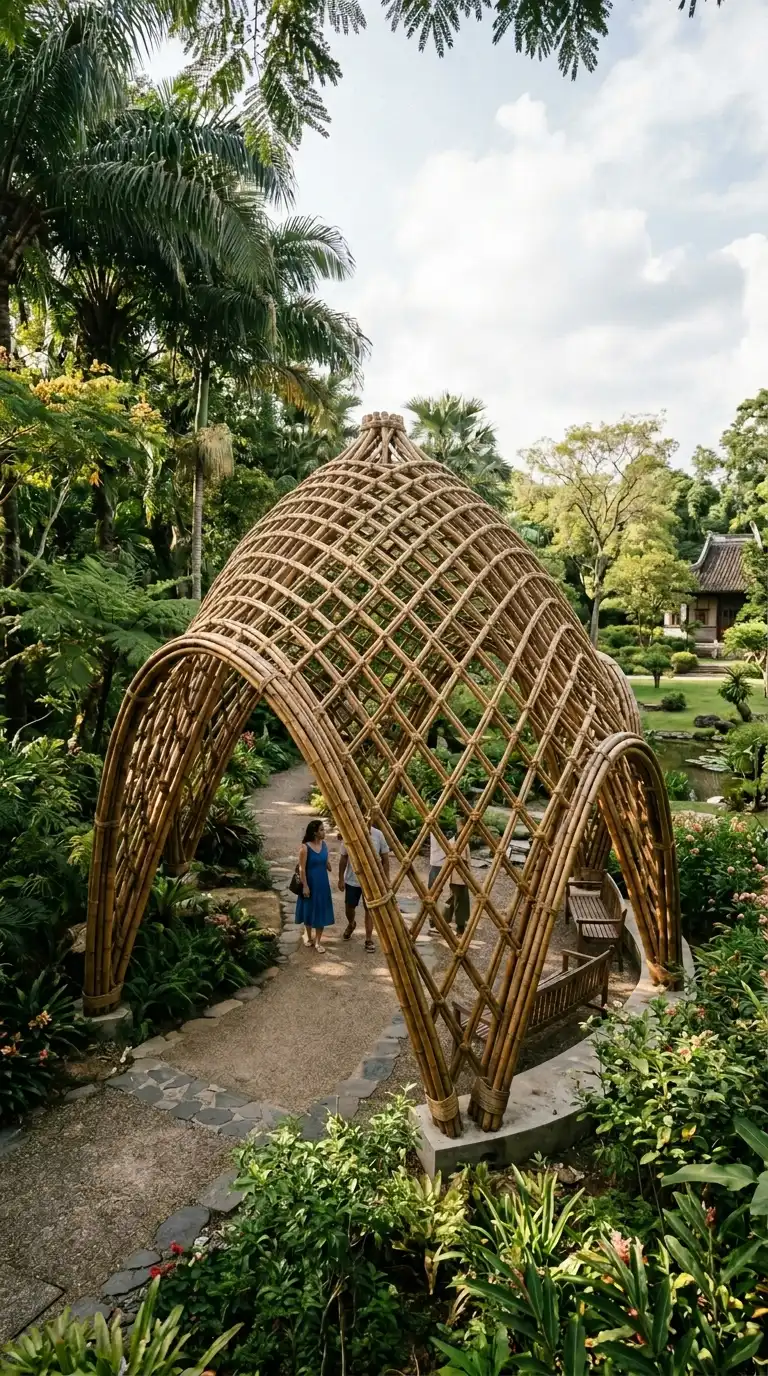
The bamboo gridshell is a double-curved shell made of a grid of bamboo poles. The grid is laid flat, then lifted and bent into shape. The bamboo bends but does not break. The gridshell is strong, lightweight, and dramatic. It is a showcase for bamboo’s flexibility.
This design is ideal for pavilions, event spaces, and exhibition halls. The emotional effect is curved, lightweight, and dramatic.
Quick Tips
- The grid must be a regular pattern (diamond or square).
- The bamboo must be bent, not cut.
- The structure must be braced against spreading.
2. The Bamboo Bridge
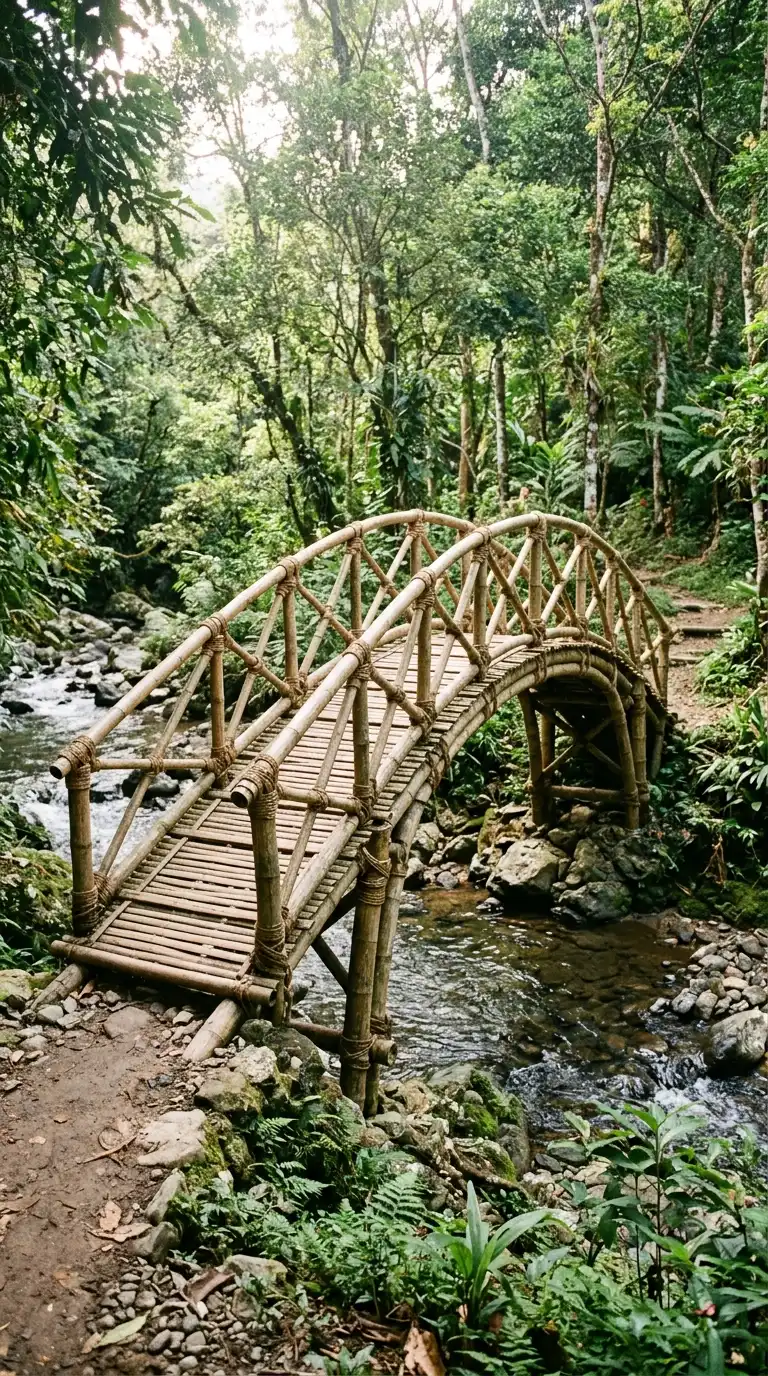
The bamboo bridge is a pedestrian bridge made of bamboo poles lashed together. Bamboo is ideal for bridges because it is strong, lightweight, and flexible. The bridge can be a simple beam bridge or a graceful arch bridge. The bamboo is lashed with rope or rattan — no metal.
This design is ideal for rural communities, parks, and gardens. The emotional effect is arched, lightweight, and handcrafted.
Quick Tips
- Use mature bamboo (3-5 years old) for strength.
- Lash joints with rope or rattan — no metal.
- The bridge must be braced against lateral movement.
3. The Bamboo House
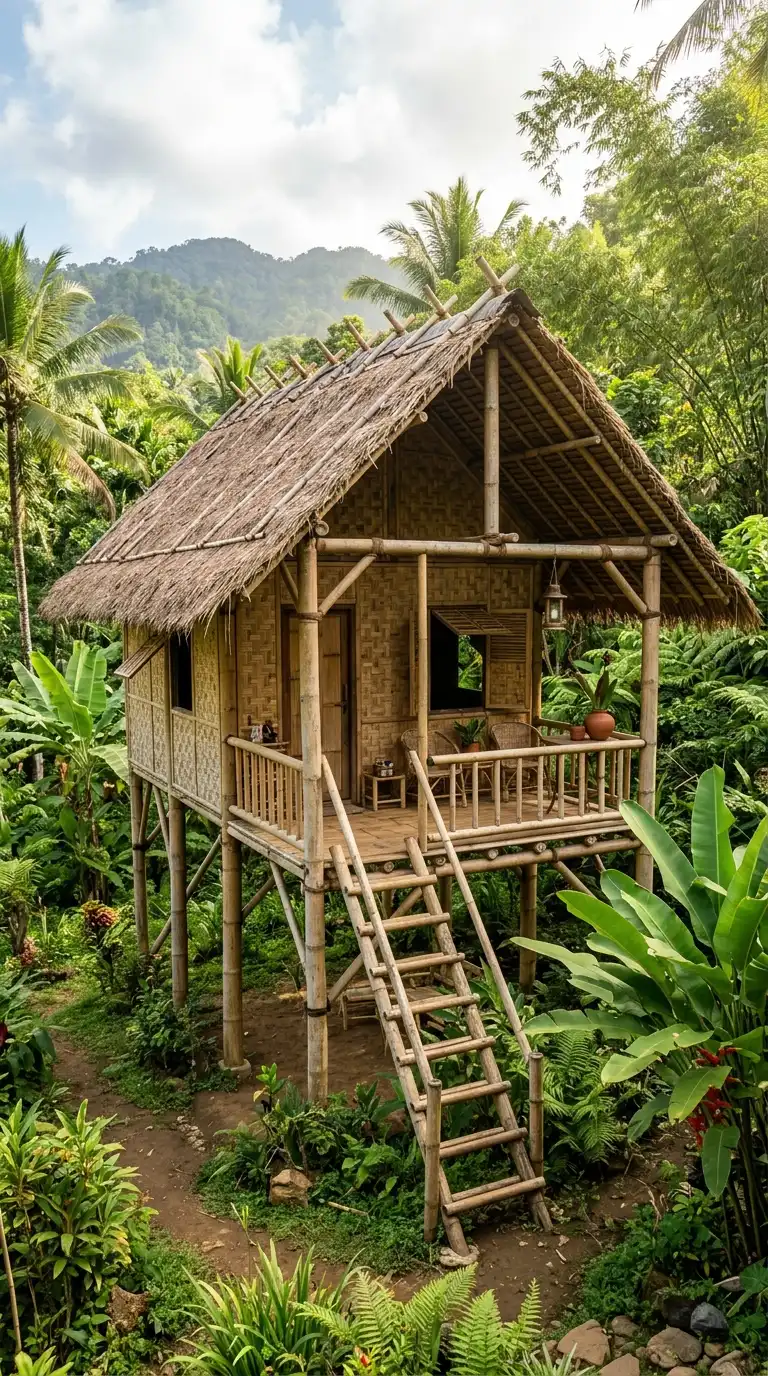
The bamboo house is a dwelling made primarily of bamboo. The structure is a frame of bamboo columns and beams. The walls are woven bamboo (wattle) or split bamboo. The roof is thatch or bamboo shingles. The bamboo house is raised on stilts for ventilation and flood protection.
This design is ideal for tropical climates and rural housing. The emotional effect is tropical, raised, and handcrafted.
Quick Tips
- Raise the house on stilts for ventilation.
- Use mature bamboo for structural members.
- Treat bamboo against insects and rot.
4. The Bamboo Dome
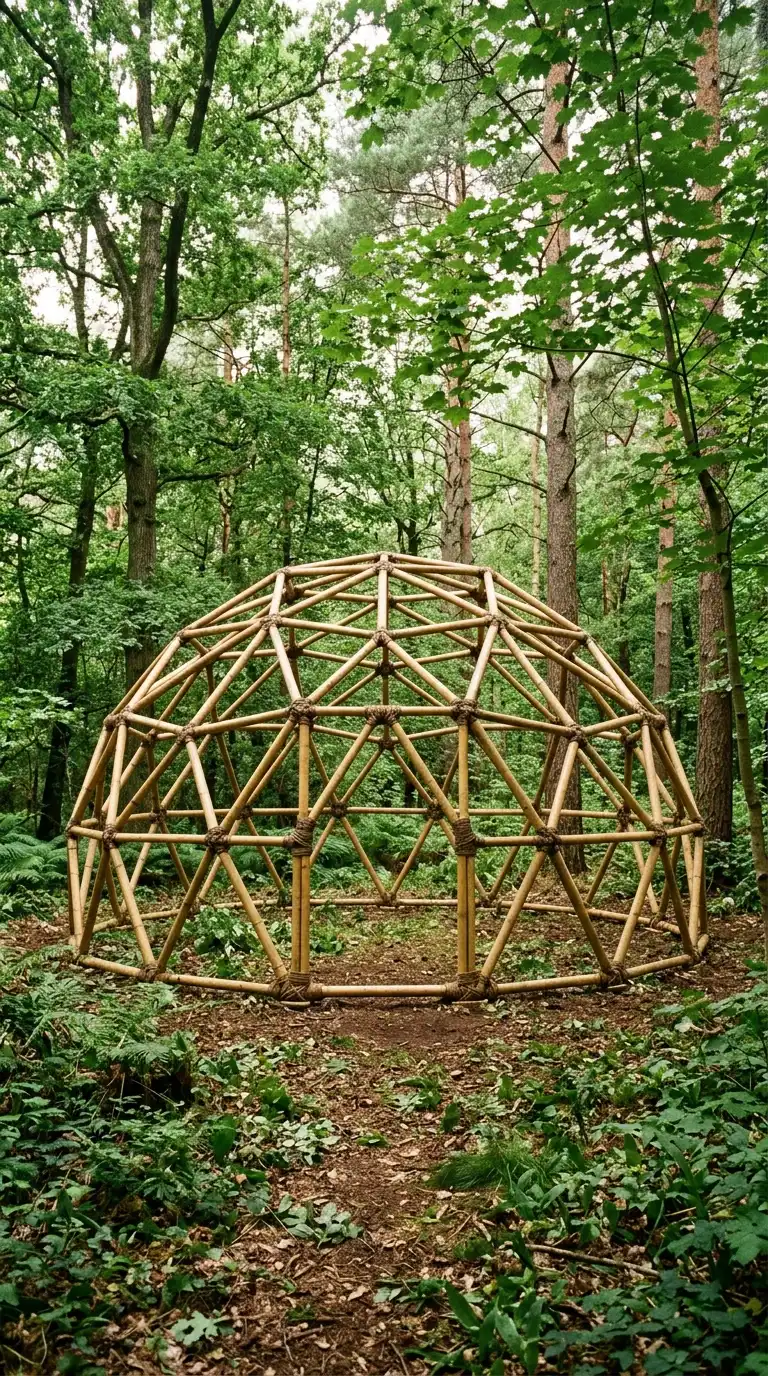
The bamboo dome is a geodesic or hemispherical dome made of bamboo poles. The dome is strong, lightweight, and efficient. The bamboo poles are lashed together in a network of triangles. The dome can be covered with fabric, thatch, or bamboo shingles.
This design is ideal for event spaces, meditation halls, and eco-resorts. The emotional effect is domed, triangular, and lightweight.
Quick Tips
- The dome must be a network of triangles.
- Joints must be lashed with rope or rattan.
- The dome can be covered or left open.
5. The Bamboo Pavilion
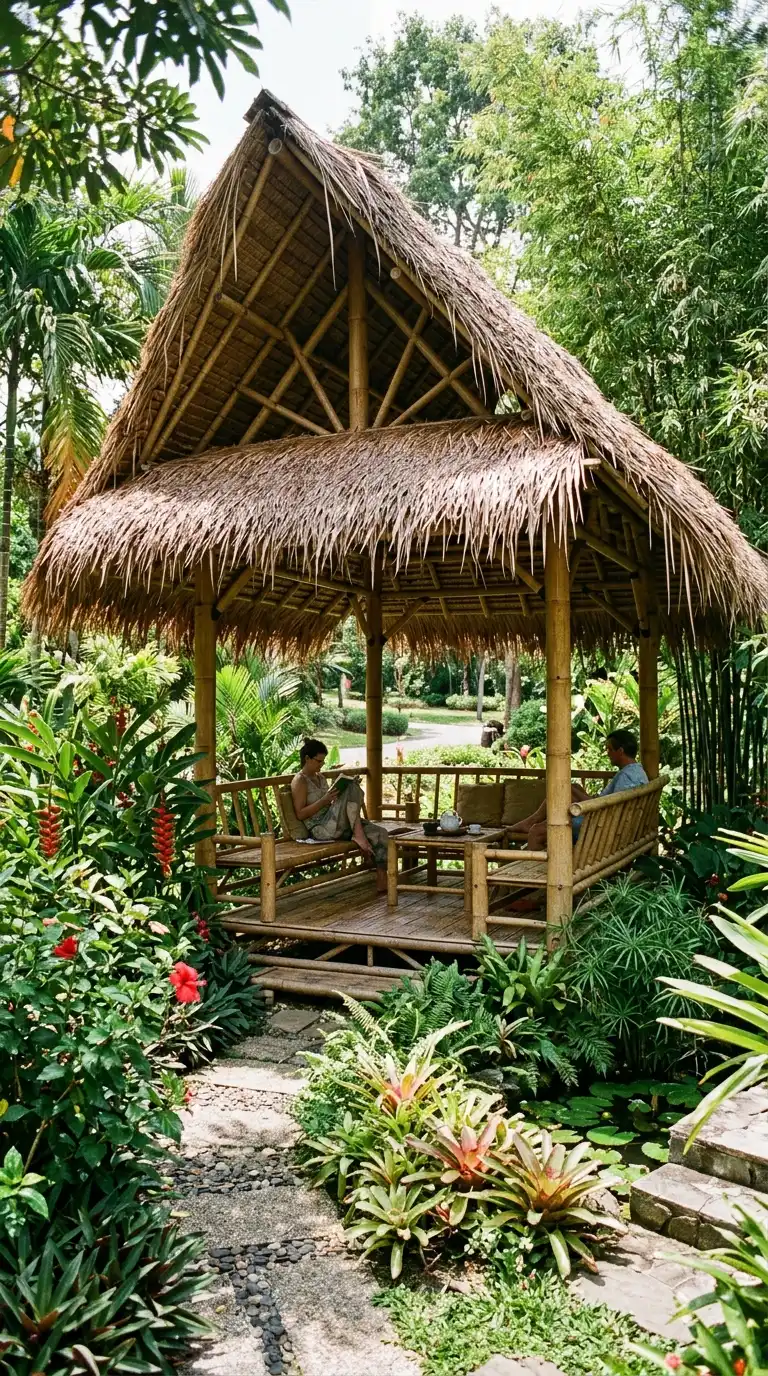
The bamboo pavilion is a small, open structure in a garden or park. The pavilion has a bamboo frame and a bamboo or thatch roof. The pavilion is open on all sides. It is a place for rest, gathering, or events.
This design is ideal for parks, resorts, and gardens. The emotional effect is open, shaded, and tropical.
Quick Tips
- The pavilion must be open on at least three sides.
- The roof should overhang to provide shade.
- Use mature bamboo for columns.
6. The Bamboo Tower
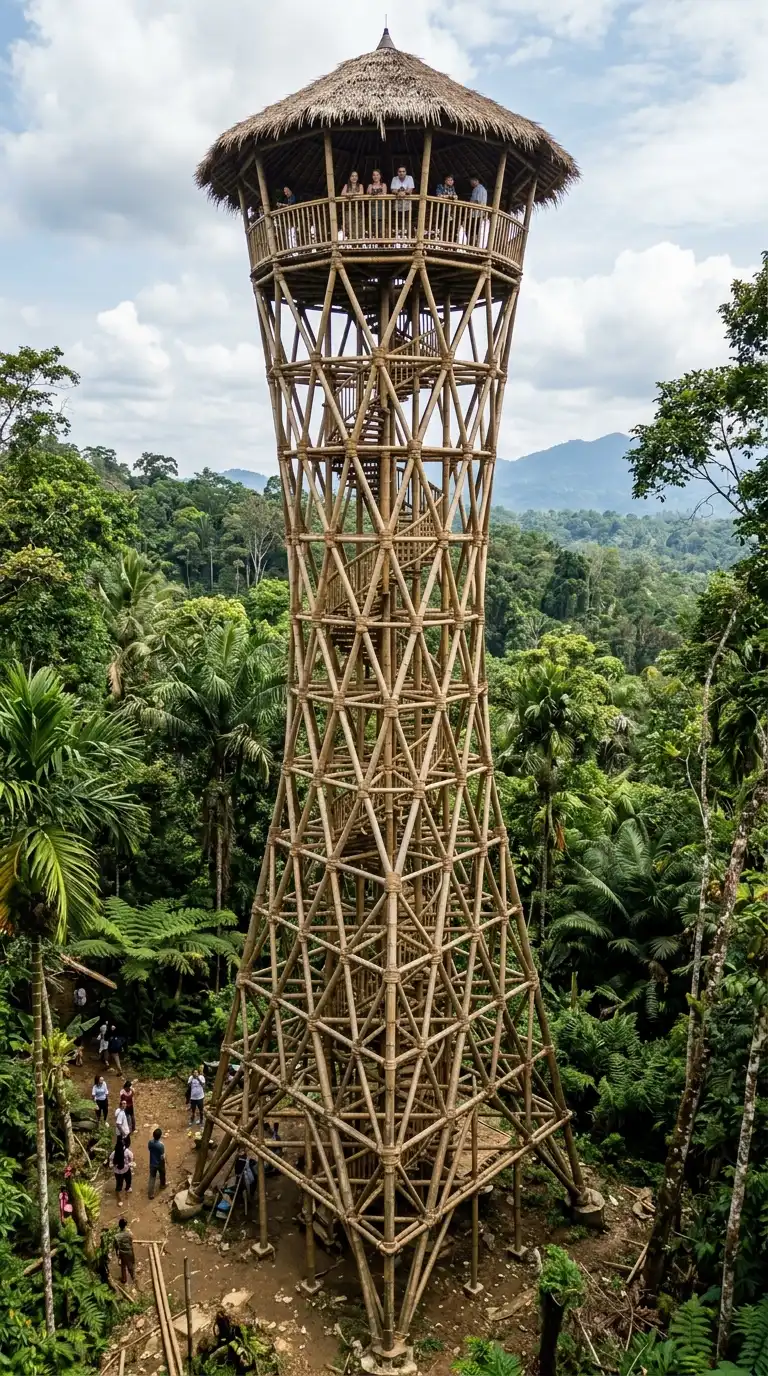
The bamboo tower is a tall, slender tower made of bamboo. The tower is a lattice of bamboo poles. The tower is used for observation, communication, or just for the view. The bamboo tower is lightweight and earthquake-resistant.
This design is ideal for observation decks, eco-resorts, and community landmarks. The emotional effect is vertical, latticed, and lightweight.
Quick Tips
- The tower must be a lattice of triangles.
- The base must be wider than the top for stability.
- Use mature bamboo for structural members.
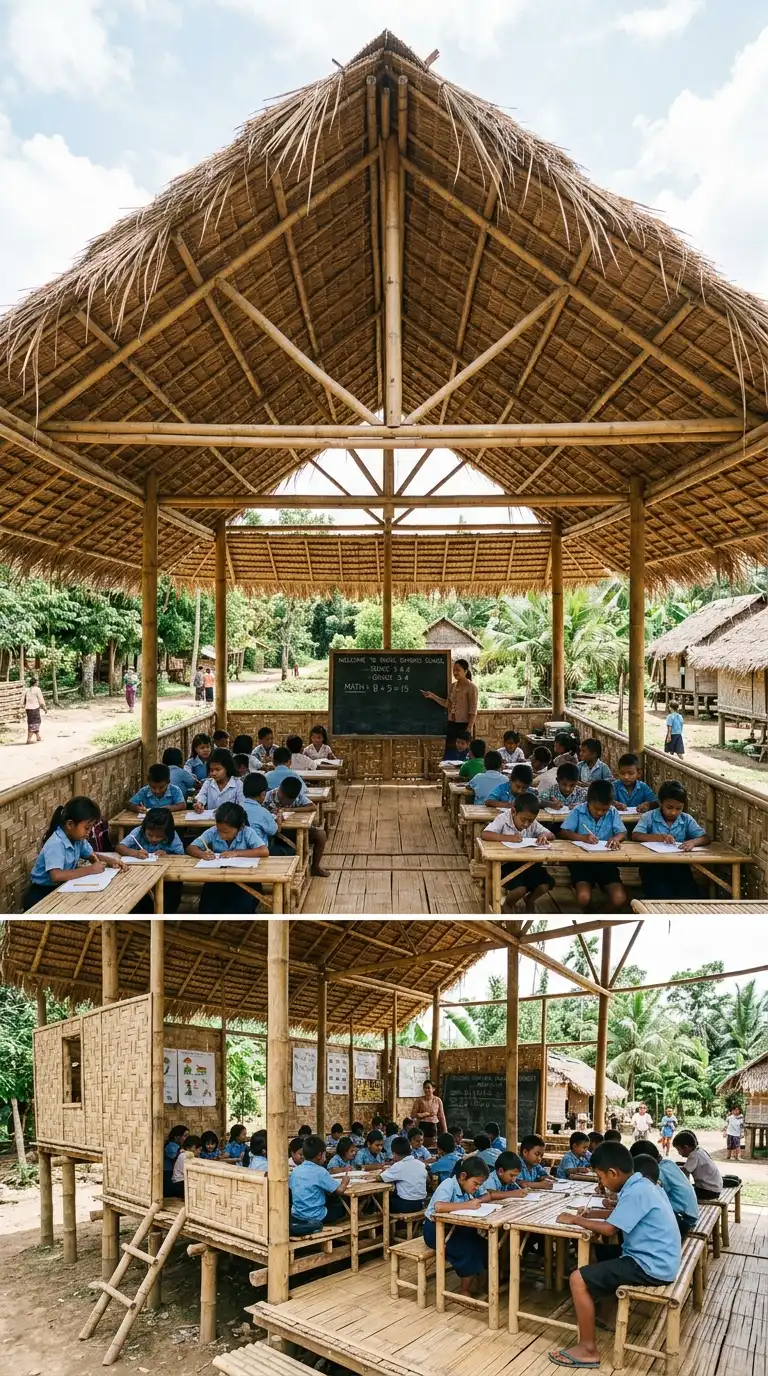
7. The Bamboo School
The bamboo school is a community building made of bamboo. The school has a large open classroom space. The roof is high and ventilated. The walls are woven bamboo for air circulation. The bamboo school is cheap, fast to build, and earthquake-resistant.
This design is ideal for rural communities in tropical regions. The emotional effect is open, ventilated, and communal.
Quick Tips
- The roof must be high for ventilation.
- The walls should be woven bamboo for airflow.
- The floor should be raised for flood protection.
8. The Bamboo Footbridge
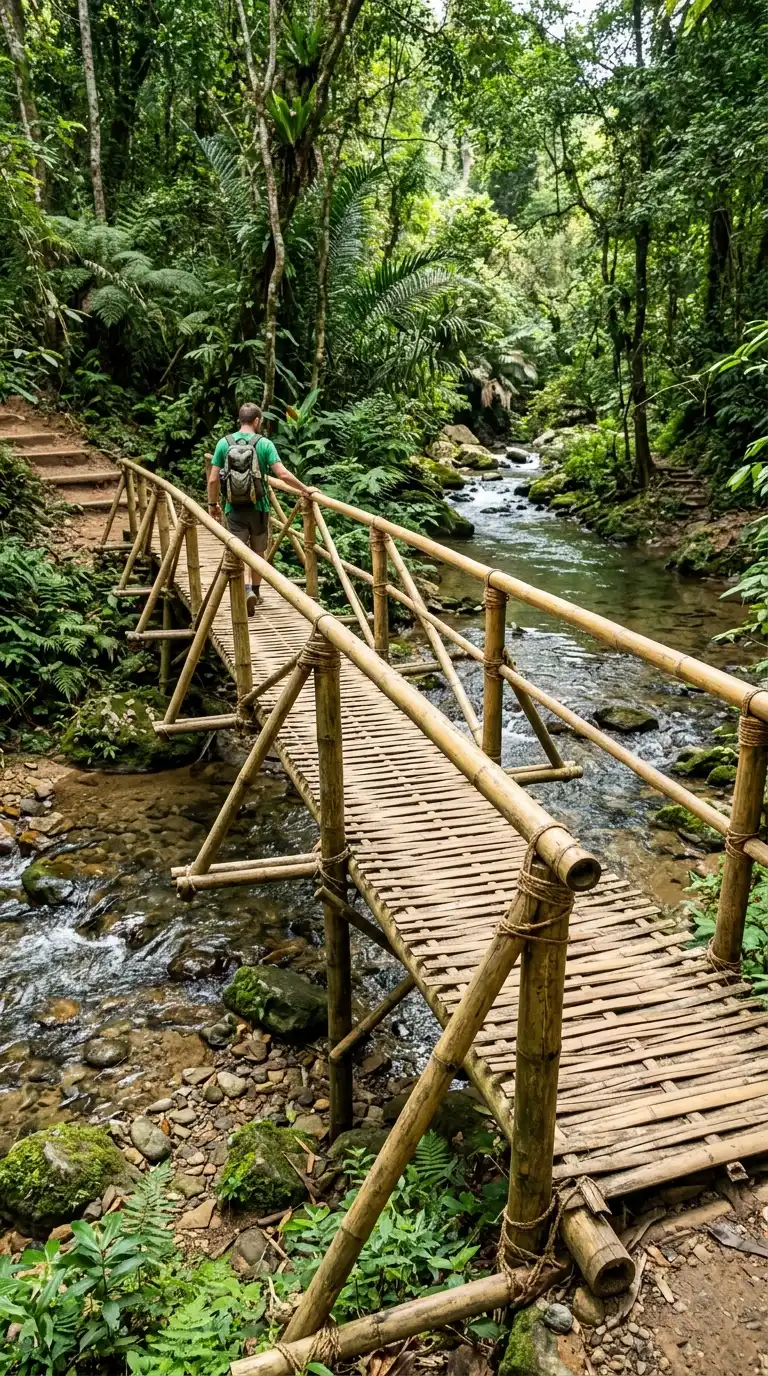
The bamboo footbridge is a small, simple bridge for pedestrians. The bridge is a single span of bamboo poles. The deck is split bamboo. The handrails are bamboo. The bamboo footbridge is lightweight, cheap, and quick to build.
This design is ideal for rural communities, parks, and garden paths. The emotional effect is simple, lightweight, and handcrafted.
Quick Tips
- The span should be under 10 metres for simple beam bridges.
- The deck should be split bamboo for a non-slip surface.
- Handrails should be at least 90cm high.
9. The Bamboo Lantern
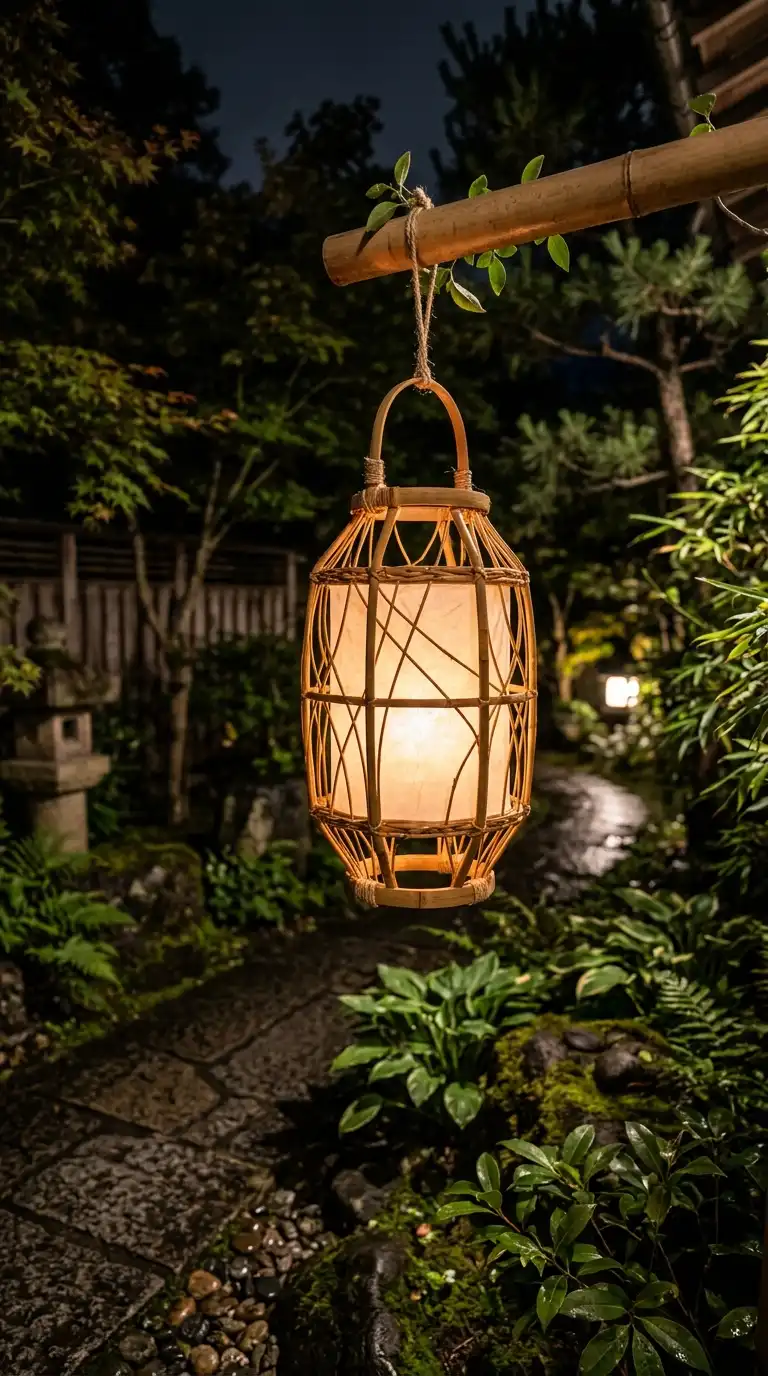
The bamboo lantern is a small, decorative structure made of bamboo and paper or fabric. The lantern is a frame of thin bamboo poles covered with translucent fabric. The lantern glows from within. The bamboo lantern is used for events, festivals, and garden lighting.
This design is ideal for events, gardens, and temporary installations. The emotional effect is glowing, translucent, and festive.
Quick Tips
- The frame must be thin bamboo poles.
- The covering must be translucent fabric or paper.
- The lantern must be lit from within.
10. The Bamboo Truss
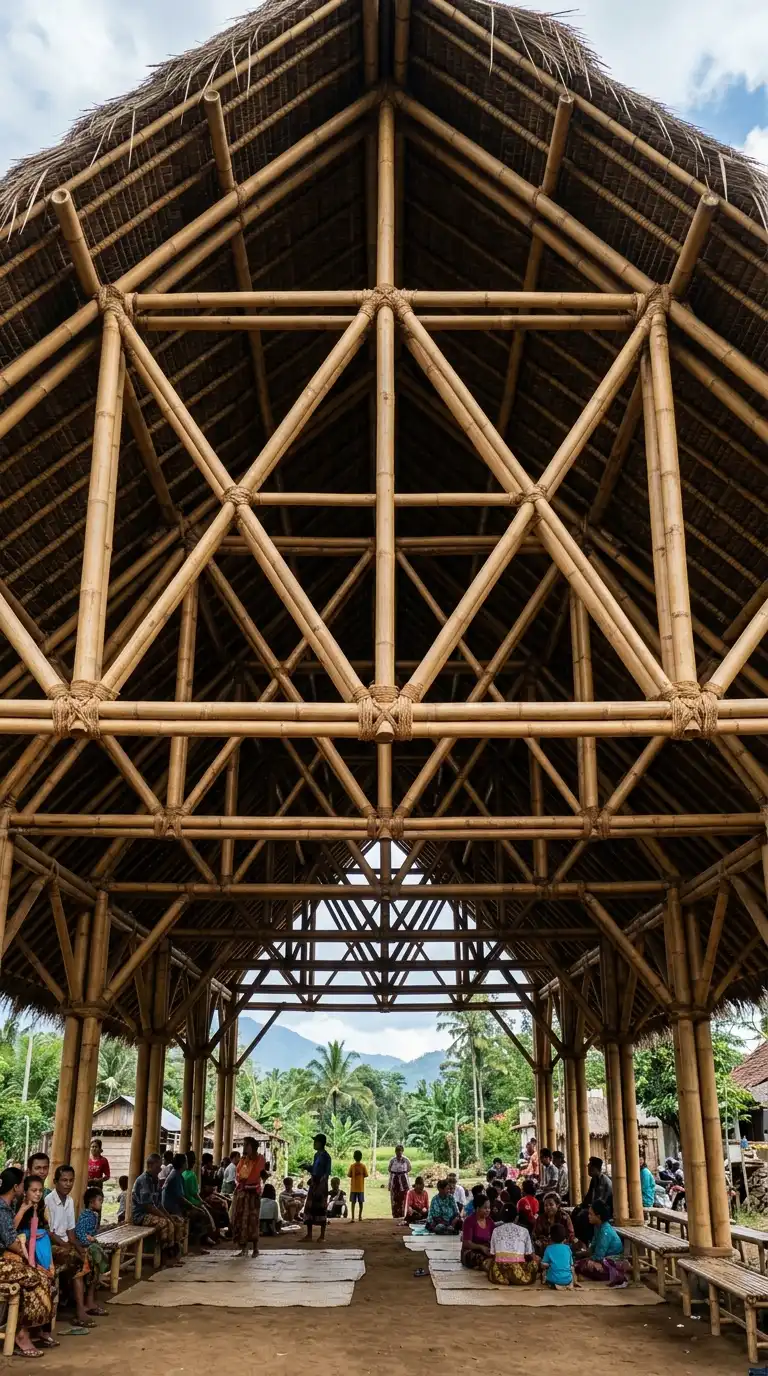
The bamboo truss is a triangular framework of bamboo poles. The truss is used for roofs and bridges. The bamboo truss is strong and lightweight. The joints are lashed with rope or rattan. The bamboo truss can span long distances without intermediate supports.
This design is ideal for roofs, bridges, and large-span structures. The emotional effect is triangular, structural, and lightweight.
Quick Tips
- The truss must be a network of triangles.
- Joints must be lashed, not metal.
- The truss can be used for roofs or bridges.
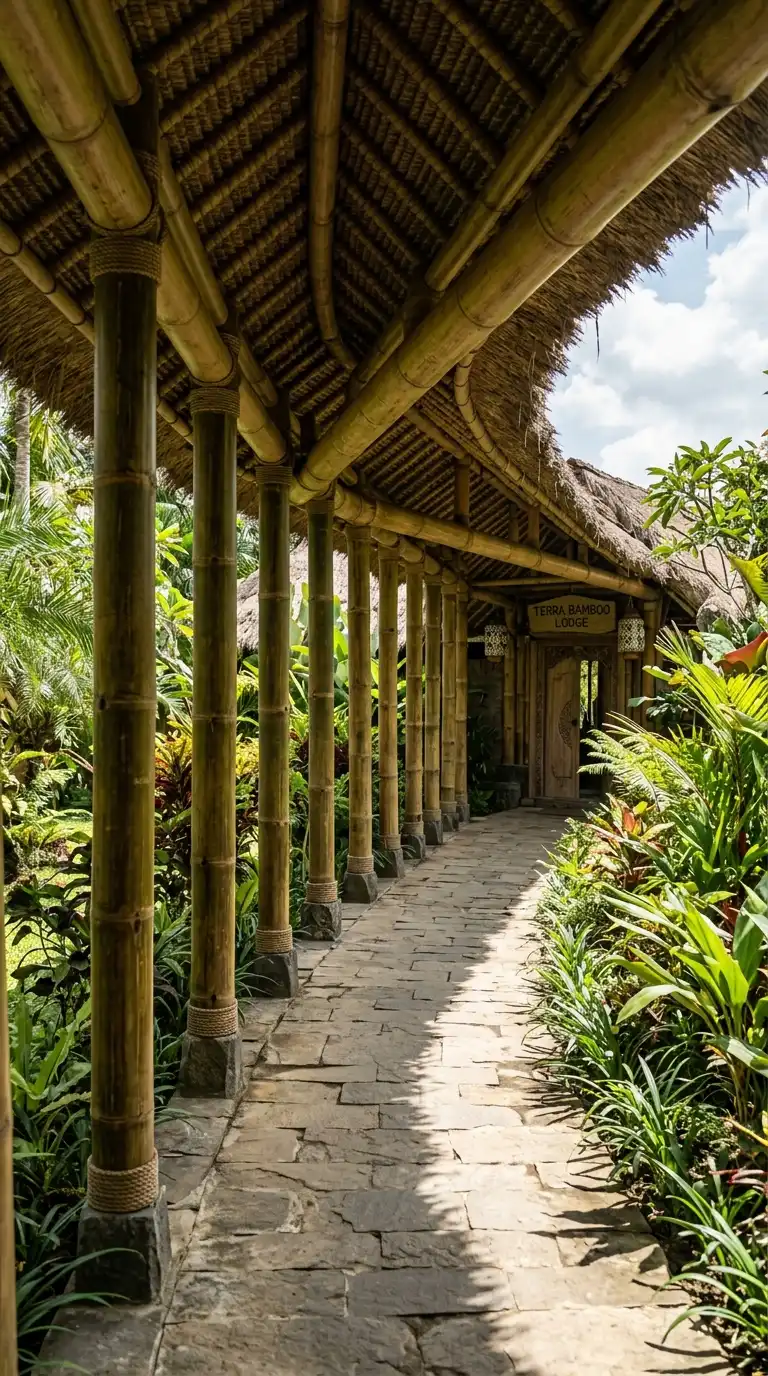
11. The Bamboo Colonnade
The bamboo colonnade is a row of bamboo columns supporting a bamboo beam or roof. The colonnade creates a shaded walkway. The columns are evenly spaced. The colonnade is rhythmic and repetitive.
This design is ideal for walkways, entrances, and outdoor corridors. The emotional effect is rhythmic, shaded, and repetitive.
Quick Tips
- The columns must be evenly spaced.
- The beam must be continuous.
- The colonnade should be at least 2 metres wide.
12. The Bamboo and Tensile Structure
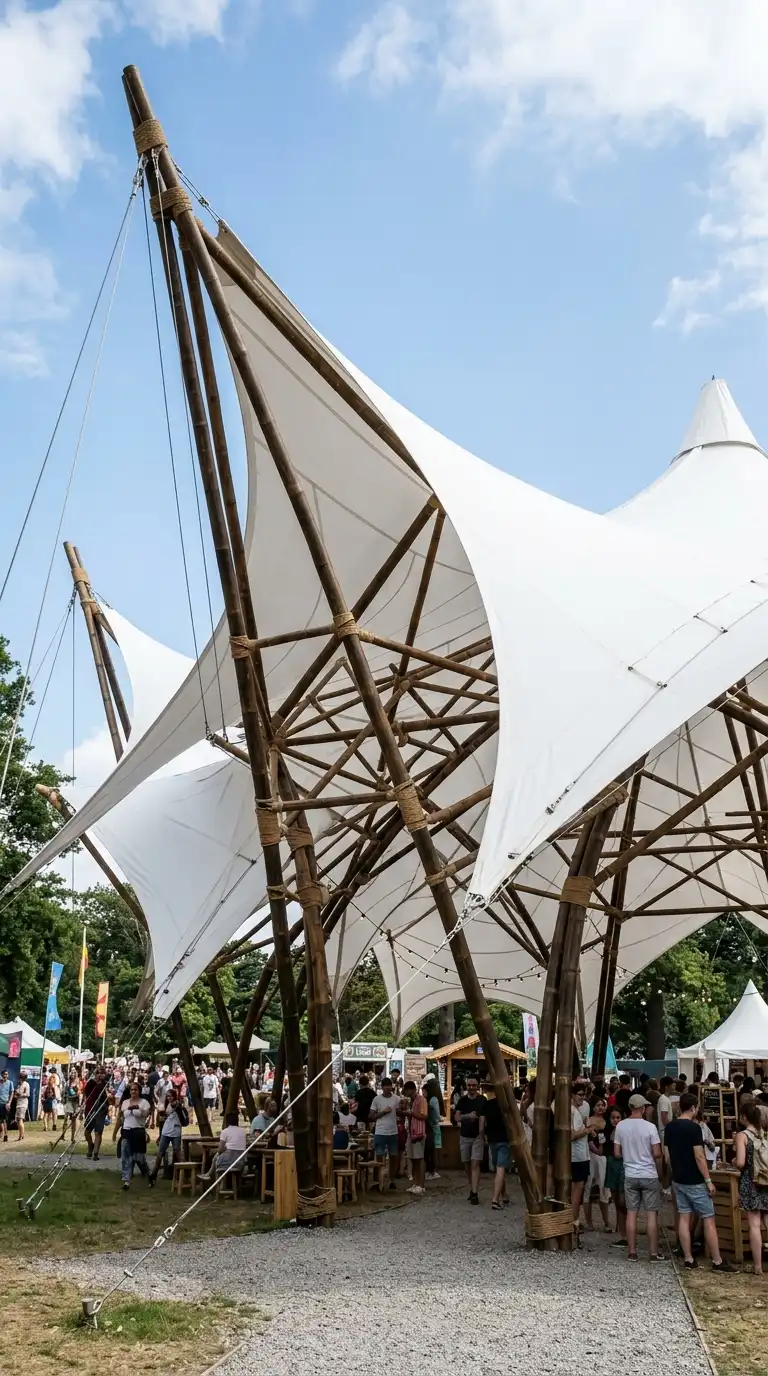
The bamboo and tensile structure combines bamboo compression members with fabric tension members. The bamboo poles act as struts. The fabric acts as a tension membrane. The structure is lightweight, dramatic, and efficient.
This design is ideal for pavilions, event spaces, and temporary structures. The emotional effect is tensile, dramatic, and hybrid.
Quick Tips
- Bamboo must be in compression (struts).
- Fabric must be in tension (membrane).
- The fabric must be tensioned, not draped.
Final Thoughts
Bamboo is not a poor person’s material. It is a smart person’s material. Bamboo grows fast, sequesters carbon, and has remarkable structural properties. Bamboo architecture is lightweight, earthquake-resistant, and deeply connected to nature.
These 12 bamboo designs are not mutually exclusive. A bamboo gridshell can be a pavilion. A bamboo dome can be a school. A bamboo colonnade can be an entrance to a bamboo house. The best bamboo architecture is not the most complex — it is the most appropriate. It uses bamboo where bamboo is strong: in tension, in bending, in lightweight structures. It respects the material. It lets bamboo be bamboo.