Parametric architecture uses computational algorithms to generate form. Unlike traditional design, where the architect draws every line, parametric design establishes rules and relationships. The computer then generates forms that emerge from those rules. The result is architecture that is continuous, non-repetitive, and deeply integrated — structure, surface, and ornament become one.
These 14 parametric architecture designs span pavilions, towers, stadiums, and urban plans. Each design includes defining characteristics, algorithmic principles, and architectural applications.
1. The Continuous Surface Pavilion
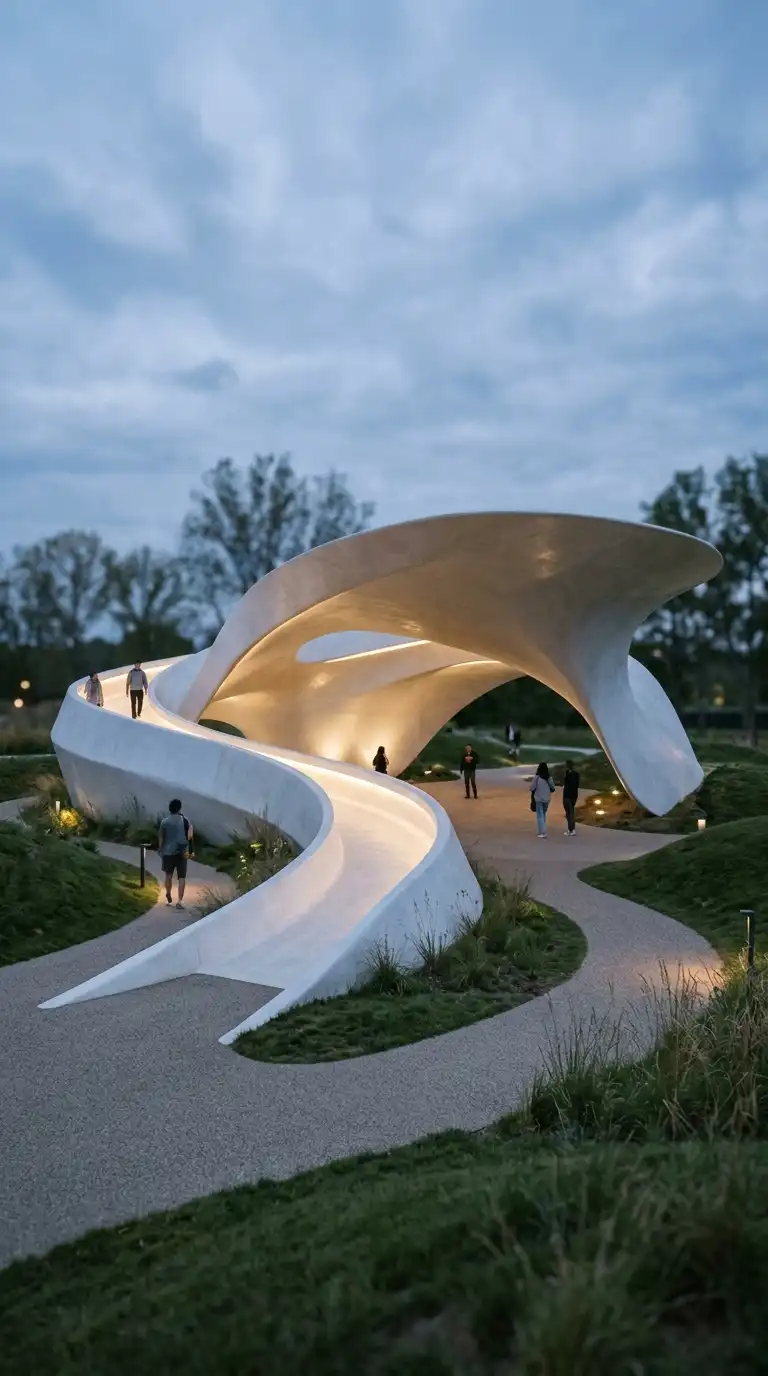
The continuous surface pavilion has no columns, no beams, no walls, and no roof — only a single, curving surface that folds from ground to wall to ceiling. The surface is generated by a mesh or a NURBS (Non-Uniform Rational B-Spline) model. The geometry is non-repetitive and non-rectilinear.
This design type is ideal for pavilions, exhibition spaces, and installations. The emotional effect is seamless, futuristic, and sculptural.
Quick Tips
- The surface must be continuous — no joints, no seams.
- The form should be generated by a mesh or NURBS model.
- Avoid straight lines and right angles.
2. The Responsive Facade
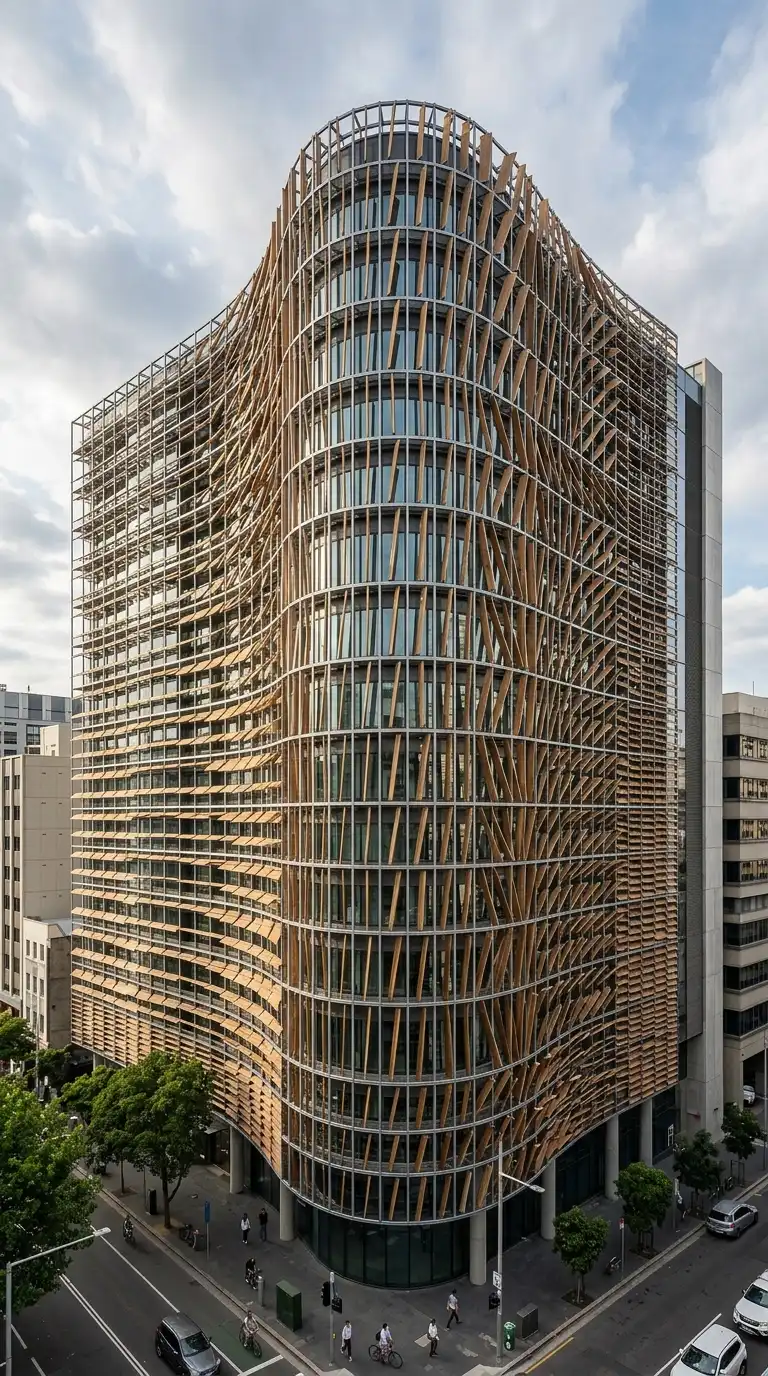
The responsive facade uses a parametric algorithm to vary the facade elements across the building. Windows, louvres, or panels change in size, angle, or density in response to sun, view, or program. The variation is continuous — no two elements are identical.
This design type is ideal for office buildings, museums, and any building requiring solar control. The emotional effect is dynamic, intelligent, and patterned.
Quick Tips
- The facade must vary continuously across the building.
- The variation must respond to a parameter (sun, view, program).
- No two elements should be identical.
3. The Branching Structure
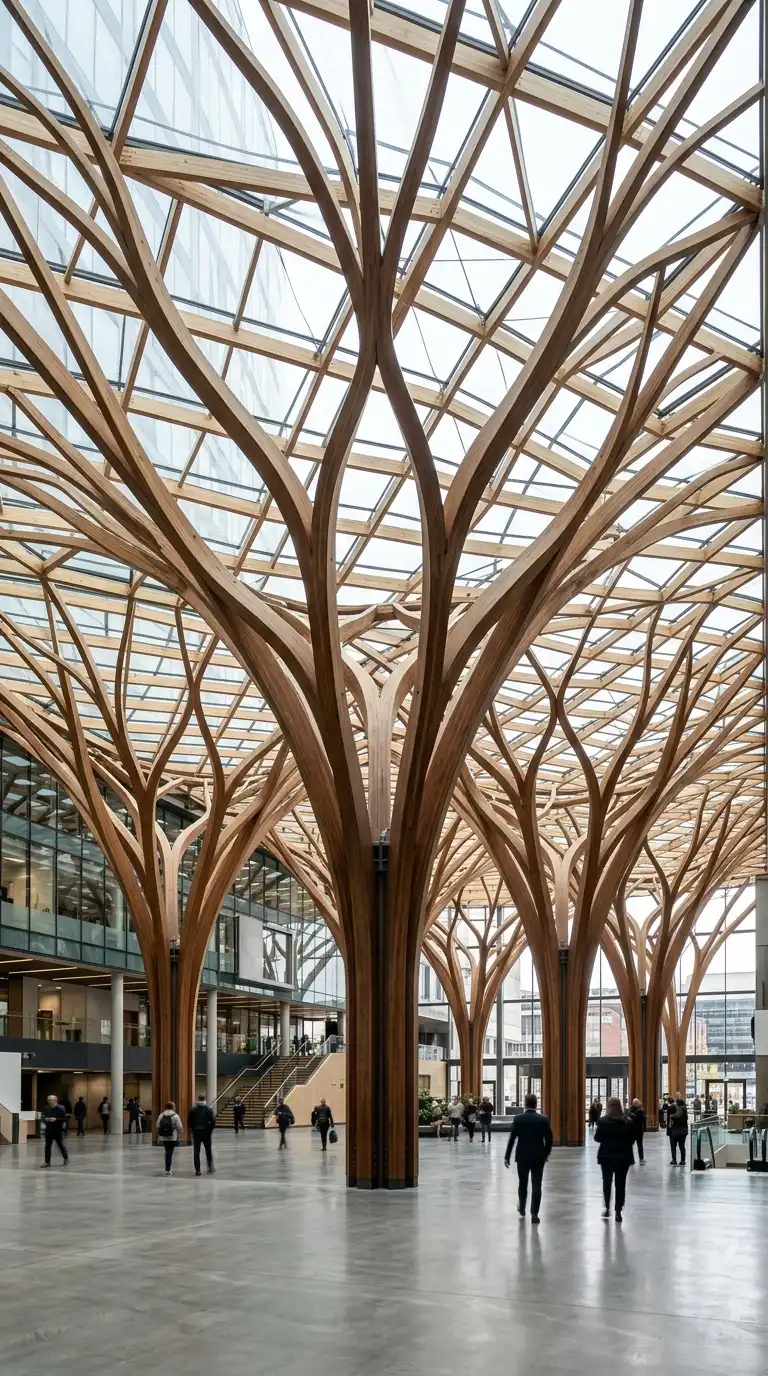
The branching structure uses a tree-like algorithm to generate columns that split into smaller branches. The branches support the roof or upper floors. The structure is hierarchical — thick at the base, thin at the tips.
This design type is ideal for atriums, airport terminals, and large-span spaces. The emotional effect is organic, hierarchical, and structural.
Quick Tips
- The structure must branch from thick to thin.
- The branching angle should be consistent across the structure.
- The branches should be continuous — no joints.
4. The Voronoi Structure
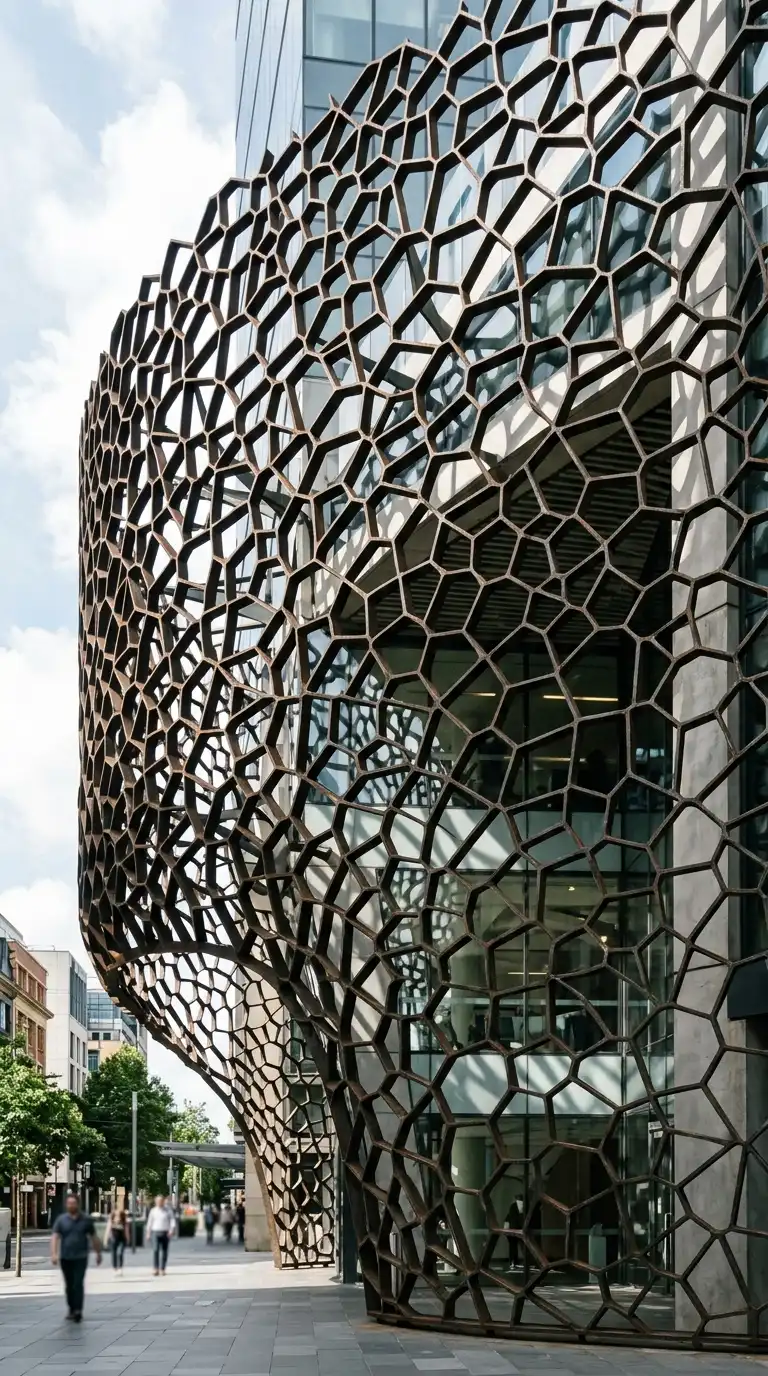
The Voronoi structure uses a Voronoi diagram to generate a cellular, organic structure. The space is divided into cells, each cell around a seed point. The cells are irregular and organic. The structure is the edges of the cells.
This design type is ideal for screens, pavilions, and lightweight structures. The emotional effect is cellular, organic, and mathematical.
Quick Tips
- The Voronoi diagram must be generated from seed points.
- Cells should be irregular — no repetition.
- The structure should be the edges of the cells.
5. The Waffle Structure
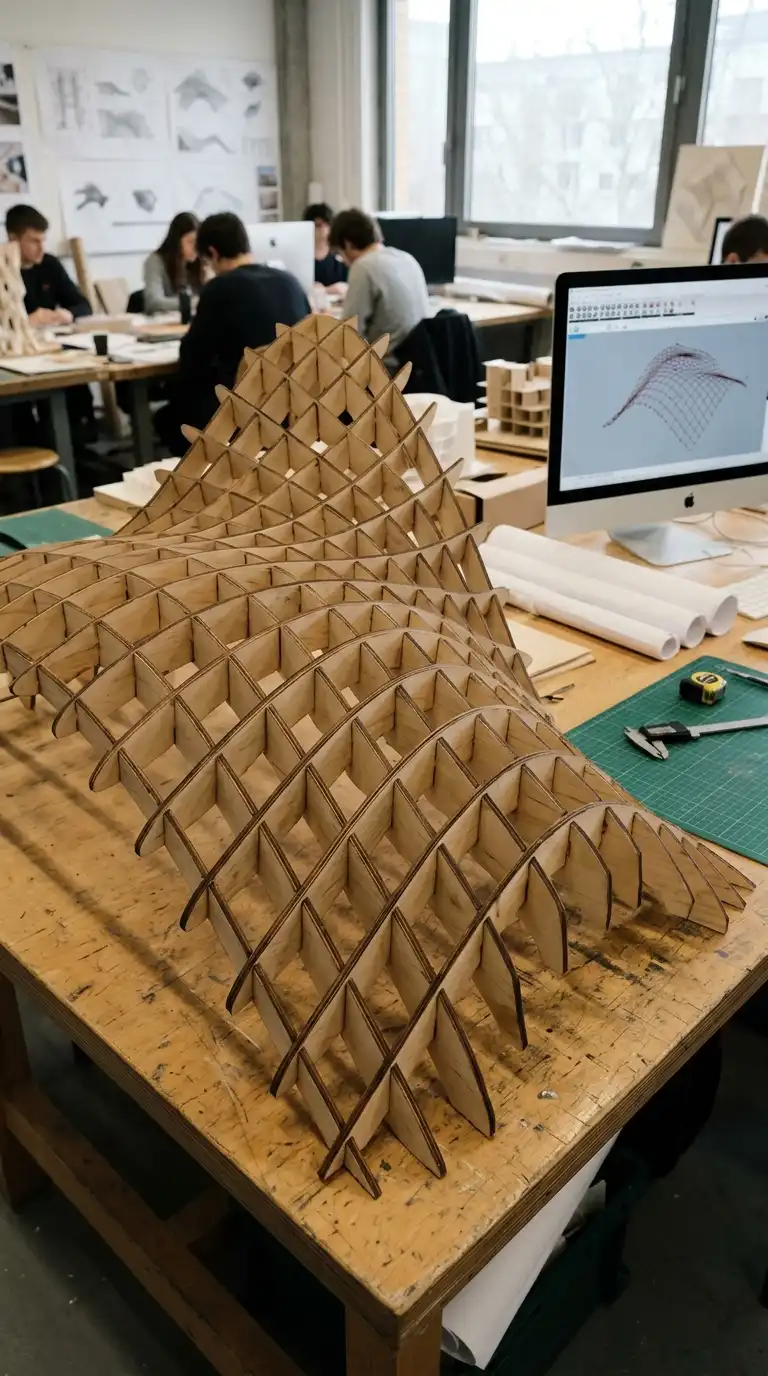
The waffle structure is a grid of intersecting ribs. The ribs are generated by slicing a complex surface with horizontal and vertical planes. The ribs interlock at intersections. The structure is both strong and lightweight.
This design type is ideal for large-span roofs, pavilions, and temporary structures. The emotional effect is grid-like, structural, and precise.
Quick Tips
- The ribs must be generated by slicing a surface.
- Ribs should interlock at intersections.
- The grid should be regular or semi-regular.
6. The Minimal Surface
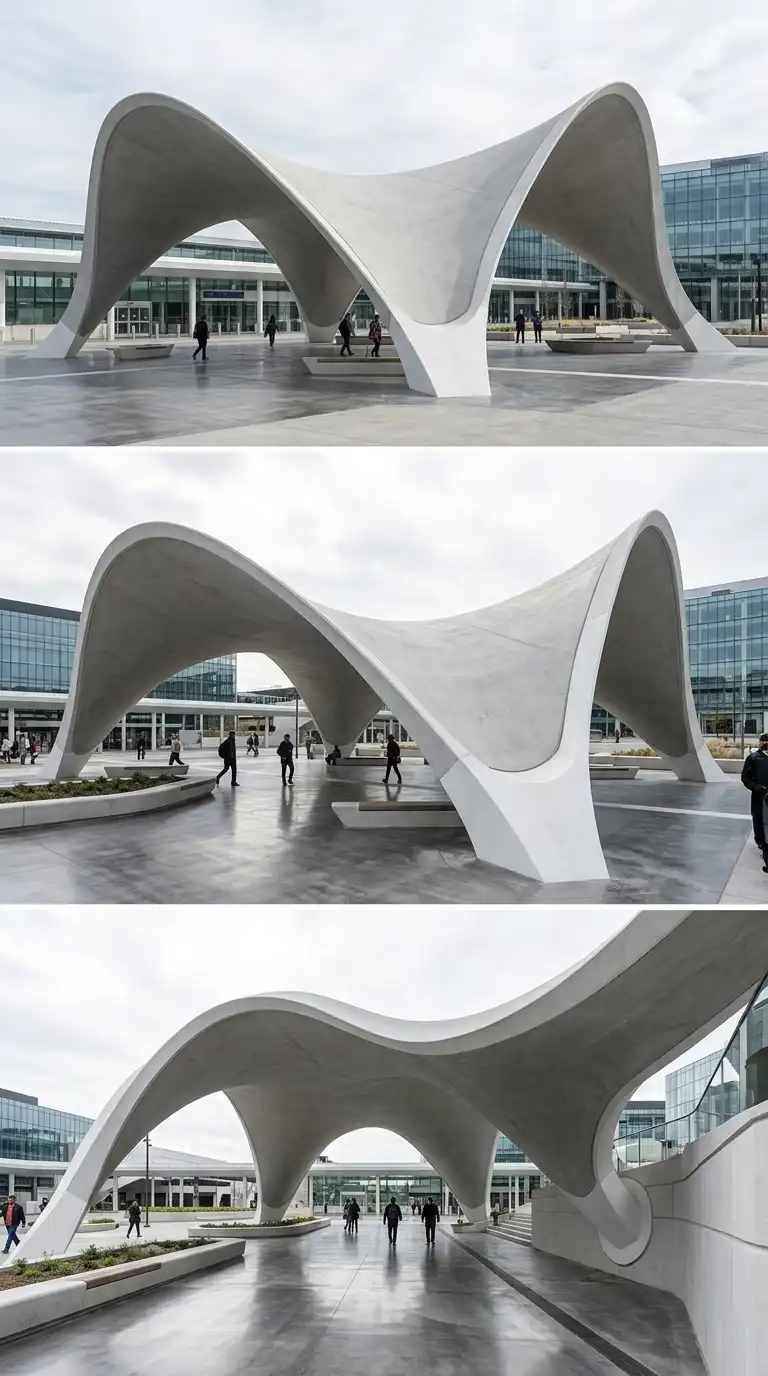
The minimal surface is a surface that minimises area for a given boundary. The surface is curved in two directions — like a saddle or a soap film. Minimal surfaces are continuous, smooth, and mathematically elegant.
This design type is ideal for canopies, roofs, and tensile structures. The emotional effect is continuous, smooth, and mathematical.
Quick Tips
- The surface must be curved in two directions (anticlastic).
- The surface must be continuous — no breaks.
- The boundary must be fixed.
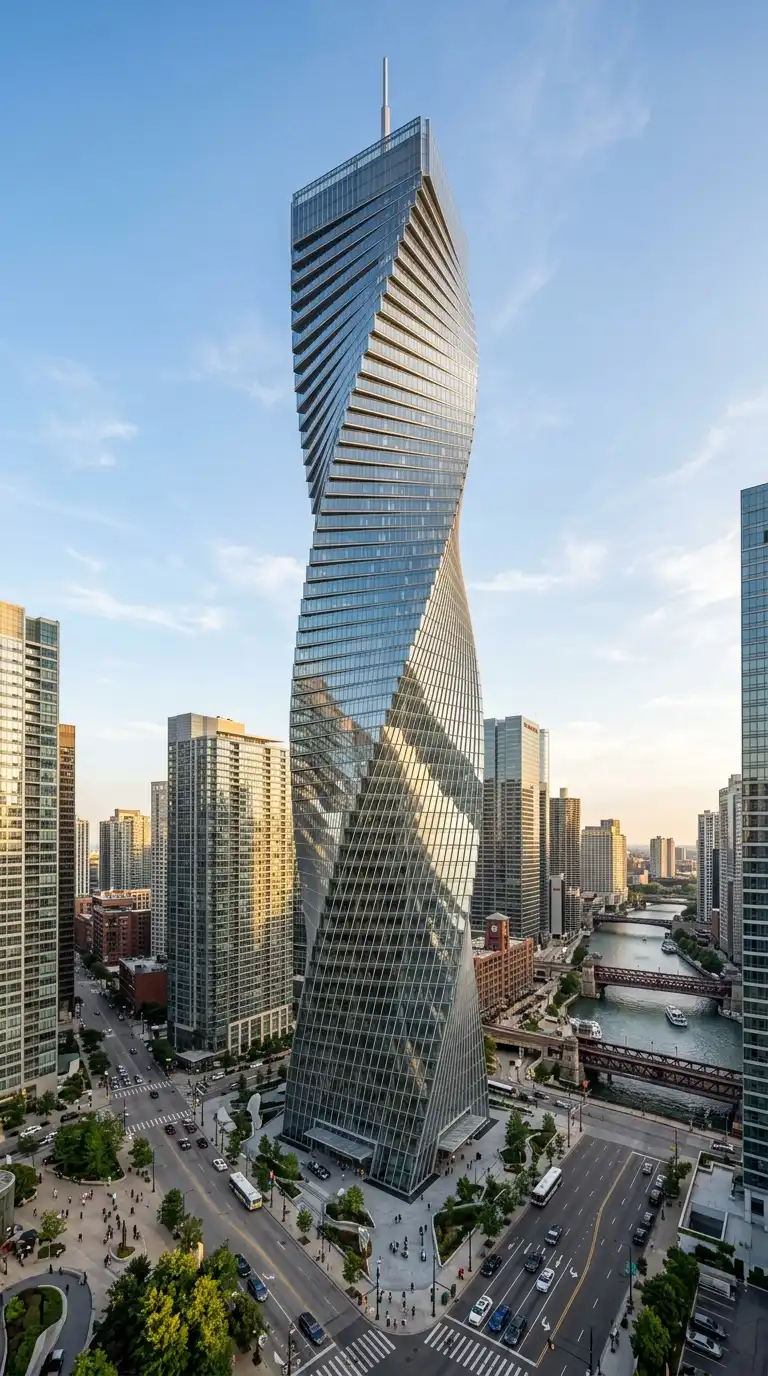
7. The Twist Tower
The twist tower is a skyscraper that rotates as it rises. Each floor is rotated slightly relative to the floor below. The total rotation from base to top is typically 90 to 180 degrees. The form is generated by a twist parameter.
This design type is ideal for residential and office towers. The emotional effect is dynamic, vertical, and sculptural.
Quick Tips
- Each floor must be rotated relative to the floor below.
- The twist should be consistent from base to top.
- The total twist should be 90 to 180 degrees.
8. The Diagrid Structure
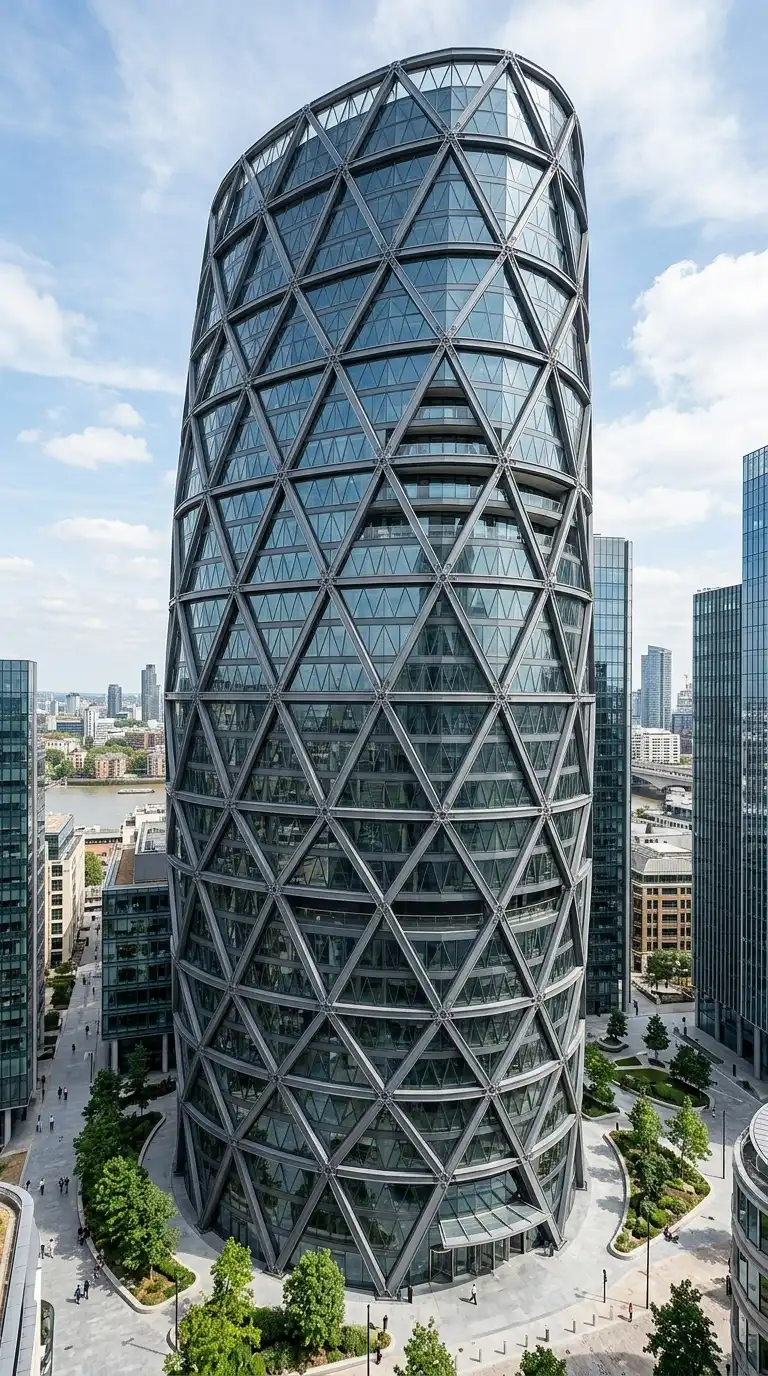
The diagrid structure is a diagonal grid of structural members. Unlike a vertical column grid, the diagrid carries both gravity and lateral loads. The diagonal members form a triangulated pattern. The structure is efficient and expressive.
This design type is ideal for skyscrapers, stadiums, and large-span roofs. The emotional effect is structural, triangular, and efficient.
Quick Tips
- The structure must be a diagonal grid, not vertical and horizontal.
- The triangulation should be consistent across the structure.
- The diagonal members should be expressed on the exterior.
9. The Adaptive Reuse Mesh
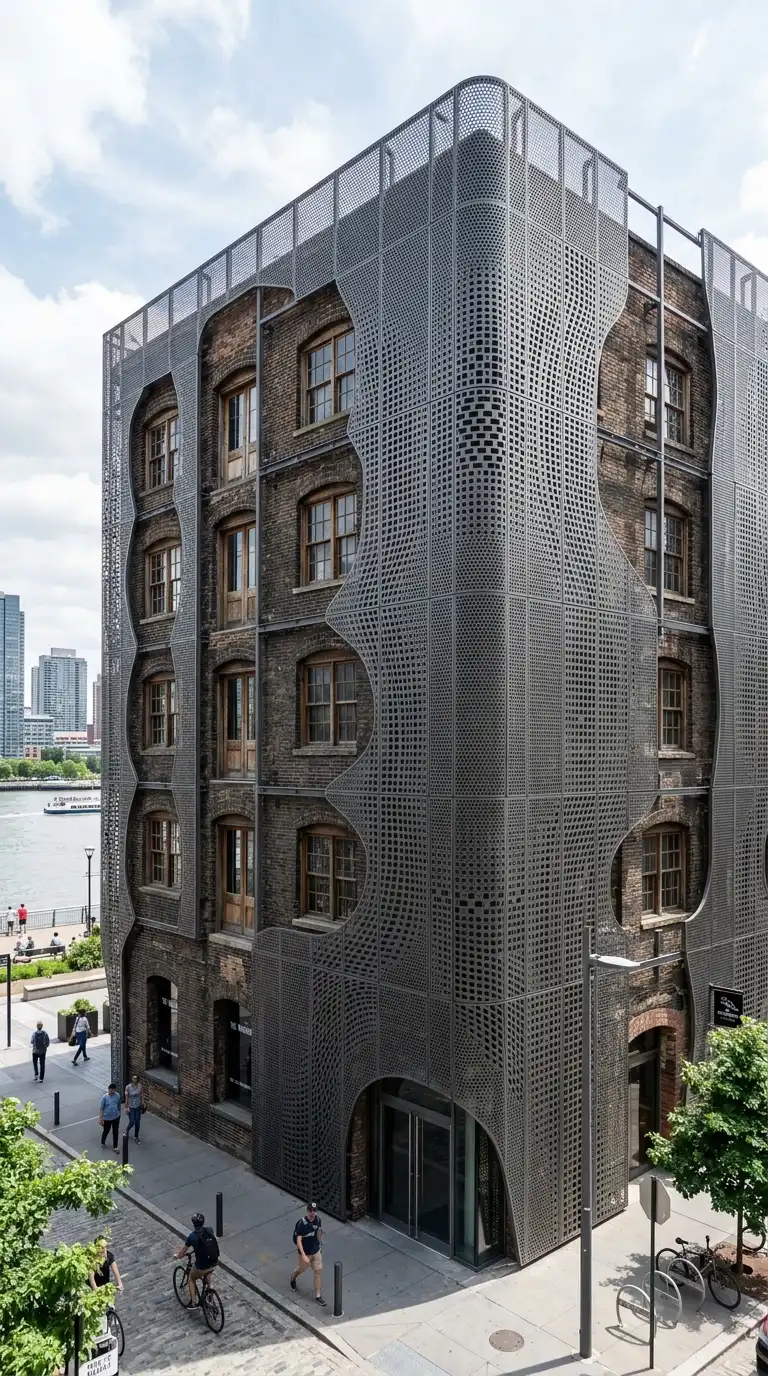
The adaptive reuse mesh wraps an existing building in a new parametric skin. The skin is generated by a mesh or a pattern that adapts to the existing building’s geometry. The skin is often perforated, allowing views and light.
This design type is ideal for renovations and additions. The emotional effect is layered, adaptive, and contemporary.
Quick Tips
- The mesh must adapt to the existing building’s geometry.
- The pattern should be continuous across the facade.
- The mesh should be clearly new, not imitating the old.
10. The Folded Plate Roof
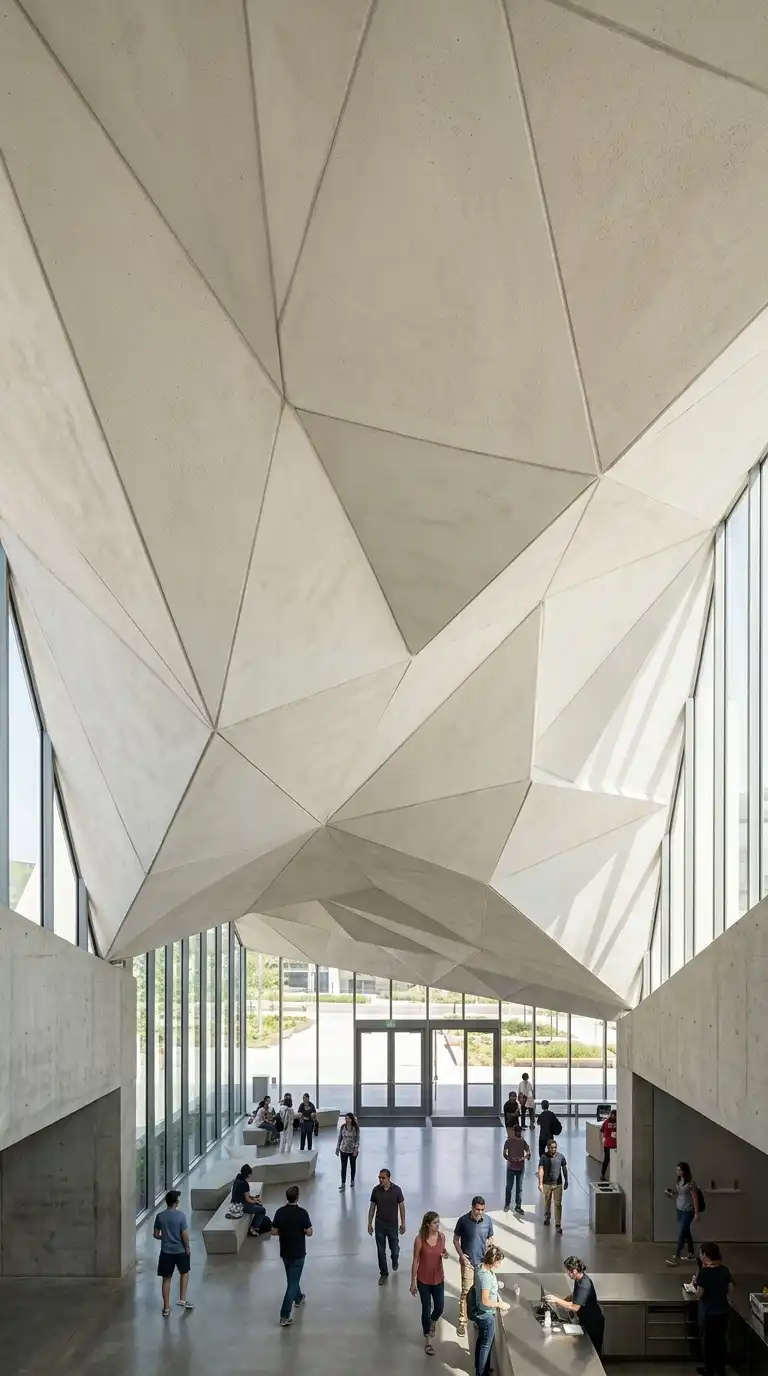
The folded plate roof is a roof made of flat, planar facets that fold in a continuous surface. The facets are generated by a folding algorithm. The roof is self-supporting — no beams or trusses are needed.
This design type is ideal for gymnasiums, auditoriums, and large-span roofs. The emotional effect is faceted, structural, and origami-like.
Quick Tips
- The roof must be made of flat, planar facets.
- The facets must be continuous — no gaps.
- The roof must be self-supporting.
11. The Swarm Plan
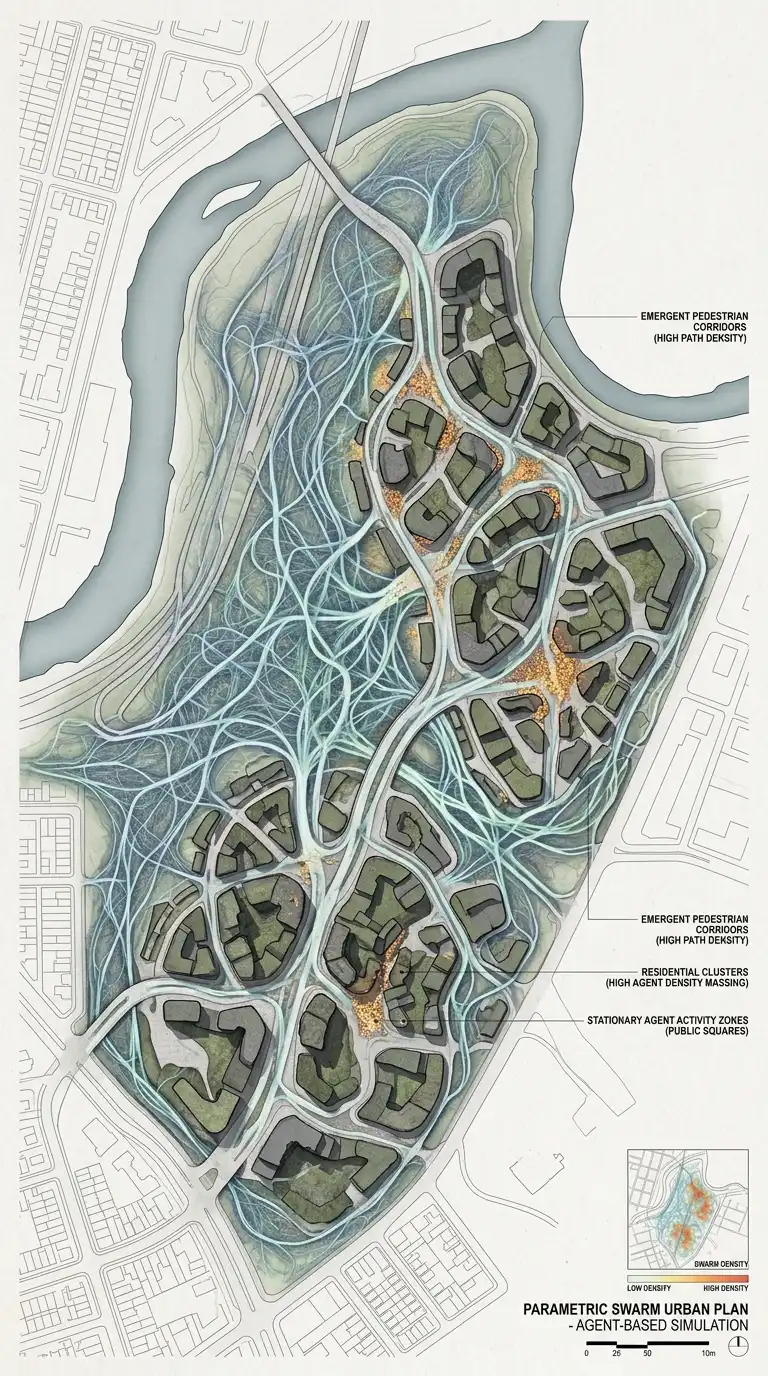
The swarm plan generates a building or urban plan from swarm behaviour. Agents (points) move according to simple rules: avoid each other, move toward goals, follow paths. The trajectories of the agents become the circulation paths. The densities become the building masses.
This design type is ideal for urban plans and complex building layouts. The emotional effect is organic, behavioural, and emergent.
Quick Tips
- The plan must be generated by agent-based simulation.
- Circulation should emerge from agent paths.
- Density should determine program distribution.
12. The Parametric Urban Plan
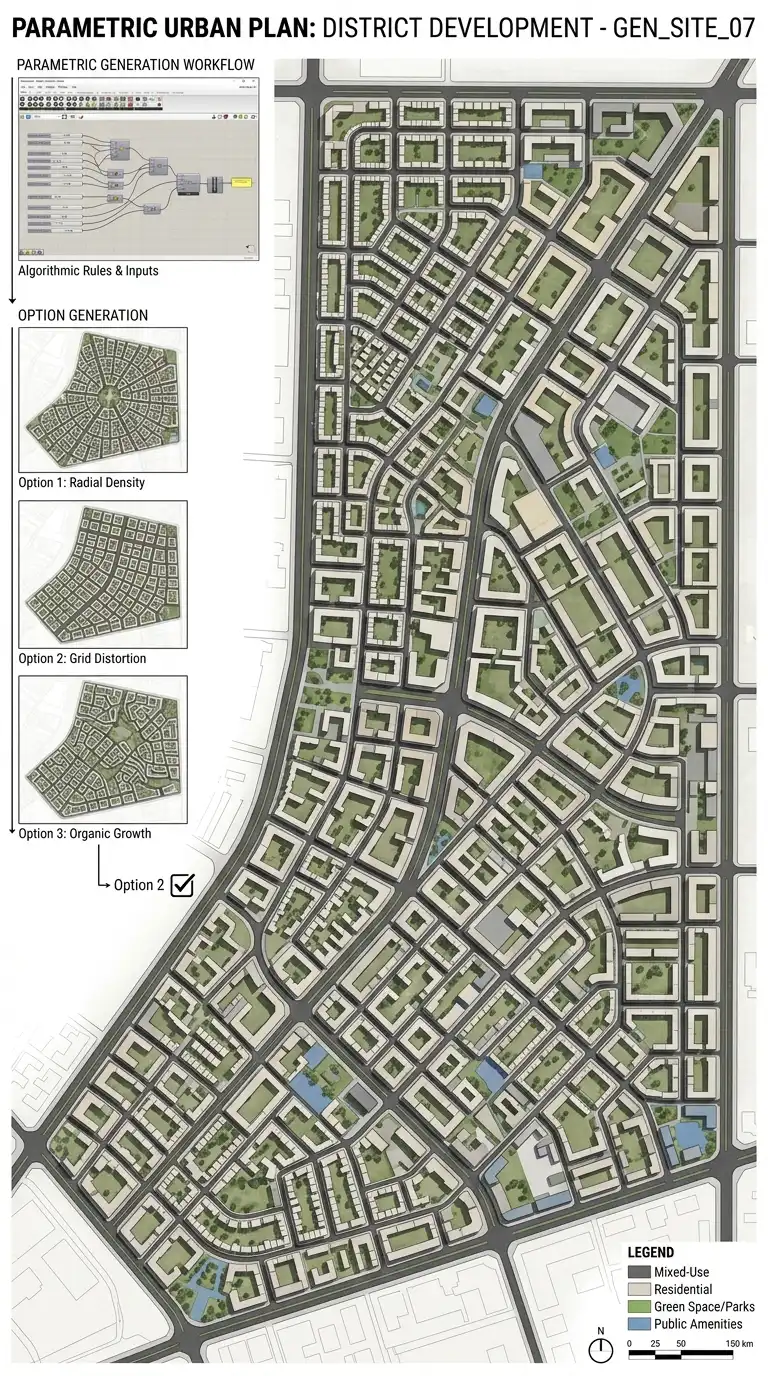
The parametric urban plan uses algorithms to generate city blocks, streets, and plots. The parameters include density, plot size, street width, solar access, and view. The algorithm generates thousands of options, and the architect selects the best.
This design type is ideal for master planning and large-scale development. The emotional effect is algorithmic, varied, and efficient.
Quick Tips
- The plan must be generated by a parametric algorithm.
- Multiple options should be generated and compared.
- The final plan should be selected, not designed manually.
13. The Kinetic Facade
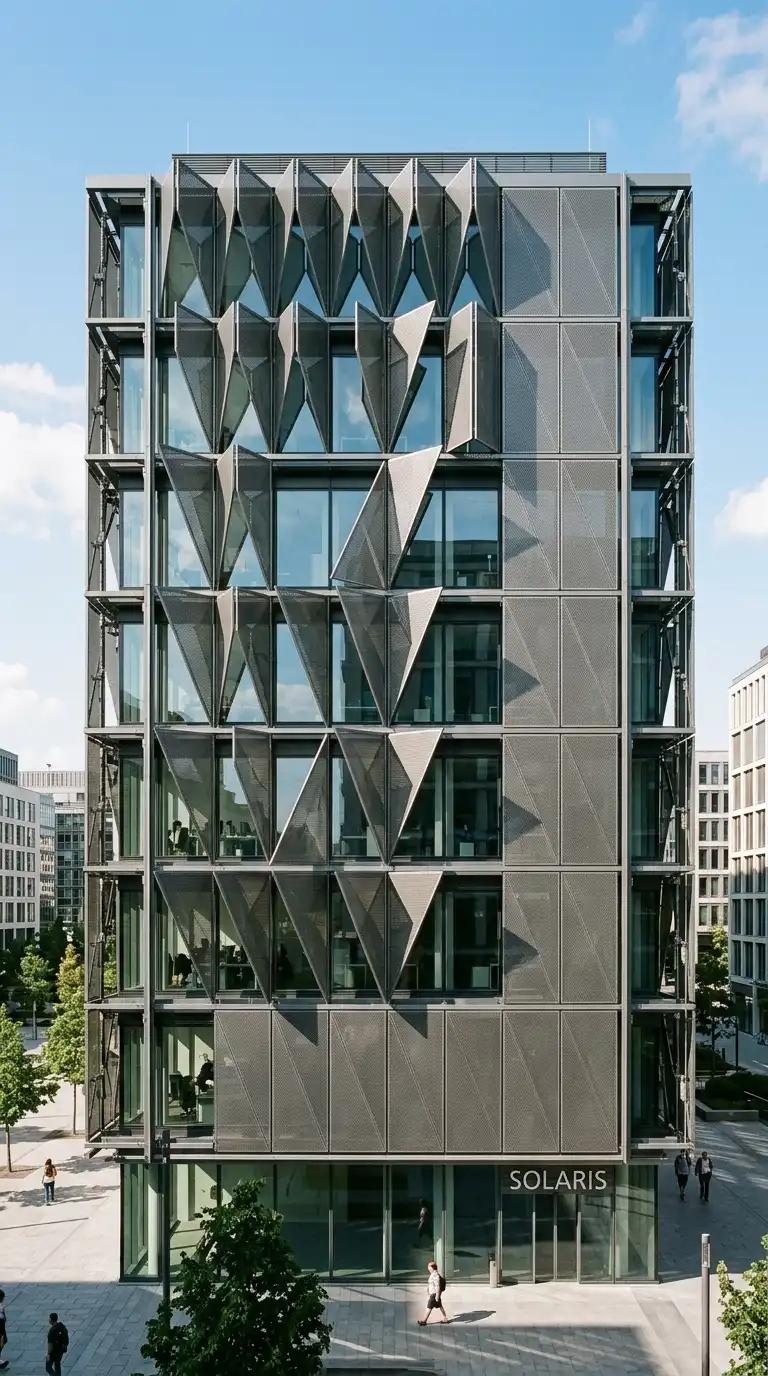
The kinetic facade is an extension of parametric design where the facade elements move in response to environmental conditions. Panels, louvres, or shades open and close, track the sun, or create dynamic patterns. The facade is alive.
This design type is ideal for buildings requiring active solar control or dynamic expression. The emotional effect is kinetic, intelligent, and alive.
Quick Tips
- The movement must be driven by sensors (sun, wind, temperature).
- Each element should be individually controllable.
- The movement should have a clear functional purpose.
14. The Topology Optimised Structure
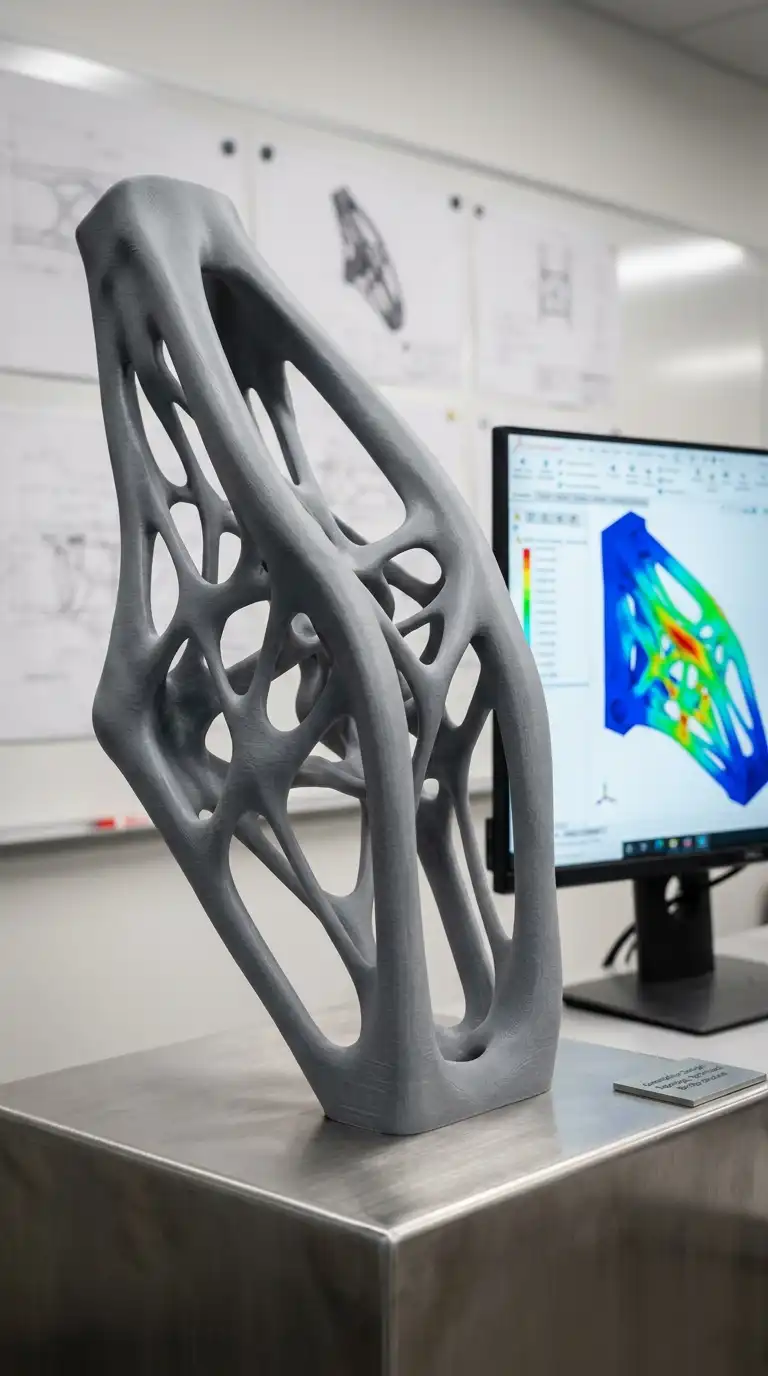
The topology optimised structure uses an algorithm to remove material where it is not needed. The algorithm starts with a solid block and removes material iteratively, leaving only the material required to carry the loads. The result is an organic, bone-like structure.
This design type is ideal for bridges, trusses, and high-performance structures. The emotional effect is organic, efficient, and bone-like.
Quick Tips
- The optimisation must be based on structural loads.
- The resulting form should be organic, not geometric.
- The structure should be 3D printed or cast, not built with standard members.
Final Thoughts
Parametric architecture is not a style. It is a method. The same algorithm can generate a facade, a structure, a roof, or an urban plan. The architect designs the rules, not the form. The form emerges from the rules.
These 14 parametric designs are not mutually exclusive. A twist tower can have a diagrid structure. A responsive facade can be a continuous surface. A swarm plan can generate a waffle structure. The best parametric architecture is not the most complex — it is the most intelligent. It uses computation to solve problems that cannot be solved by hand.