Neoclassical architecture emerged in the mid-18th century as a reaction against the excesses of Baroque and Rococo. It looked back to the architecture of ancient Greece and Rome — not as a revival, but as a return to first principles: reason, order, proportion, and restraint. Neoclassicism is the architecture of the Enlightenment: rational, civic, and dignified.
These 14 Neoclassical architecture designs span Europe and the Americas, from public buildings to private residences. Each design includes defining characteristics, key examples, and architectural principles.
1. The Temple Front
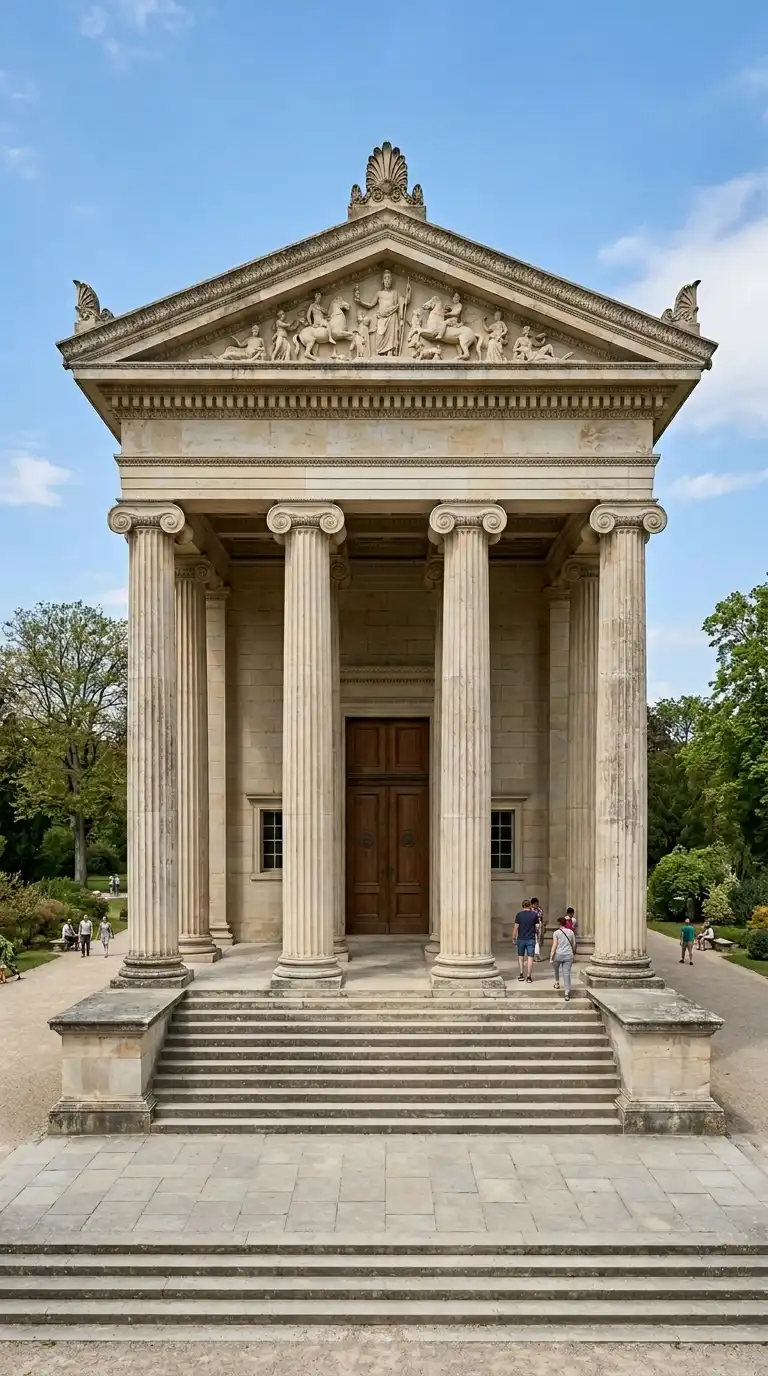
The temple front is the most recognisable Neoclassical motif. A portico of columns supports a pediment. The columns follow a classical order: Doric, Ionic, or Corinthian. The pediment is often filled with sculpture. The building behind the portico is simple and rectangular.
This design is ideal for banks, museums, courthouses, and capitols. The emotional effect is dignified, civic, and authoritative.
Quick Tips
- The portico should be centred on the facade.
- Columns should follow a single order consistently.
- The pediment should be triangular, not curved.
2. The Rotunda
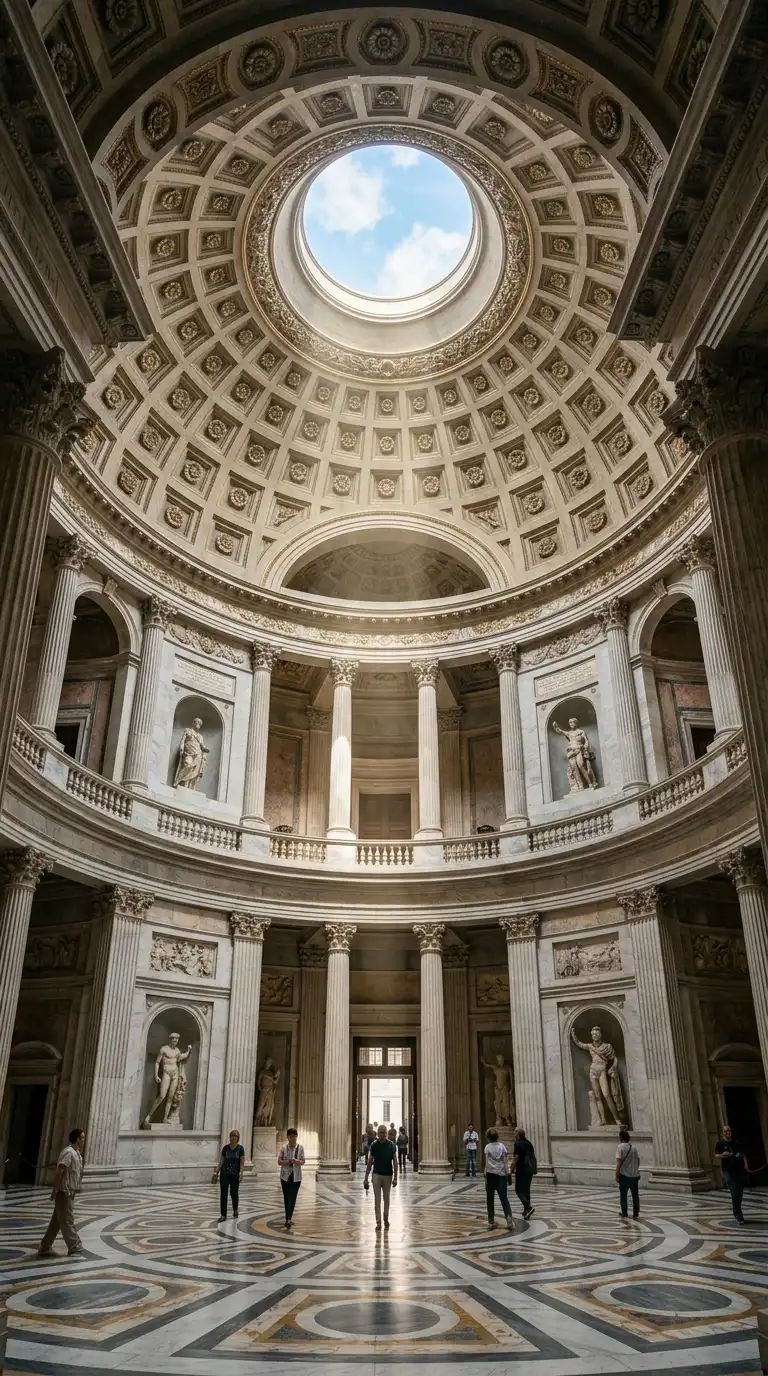
The rotunda is a circular building or room, often domed. It is derived from the Pantheon in Rome. The rotunda is used for libraries, museums, and university buildings. The interior is a single, uninterrupted space. Light enters from an oculus in the dome.
The emotional effect is centralised, celestial, and awe-inspiring.
Quick Tips
- The plan should be a perfect circle.
- The dome should have an oculus at the centre.
- The interior should be a single volume — no columns blocking the space.
3. The Colonnaded Courtyard
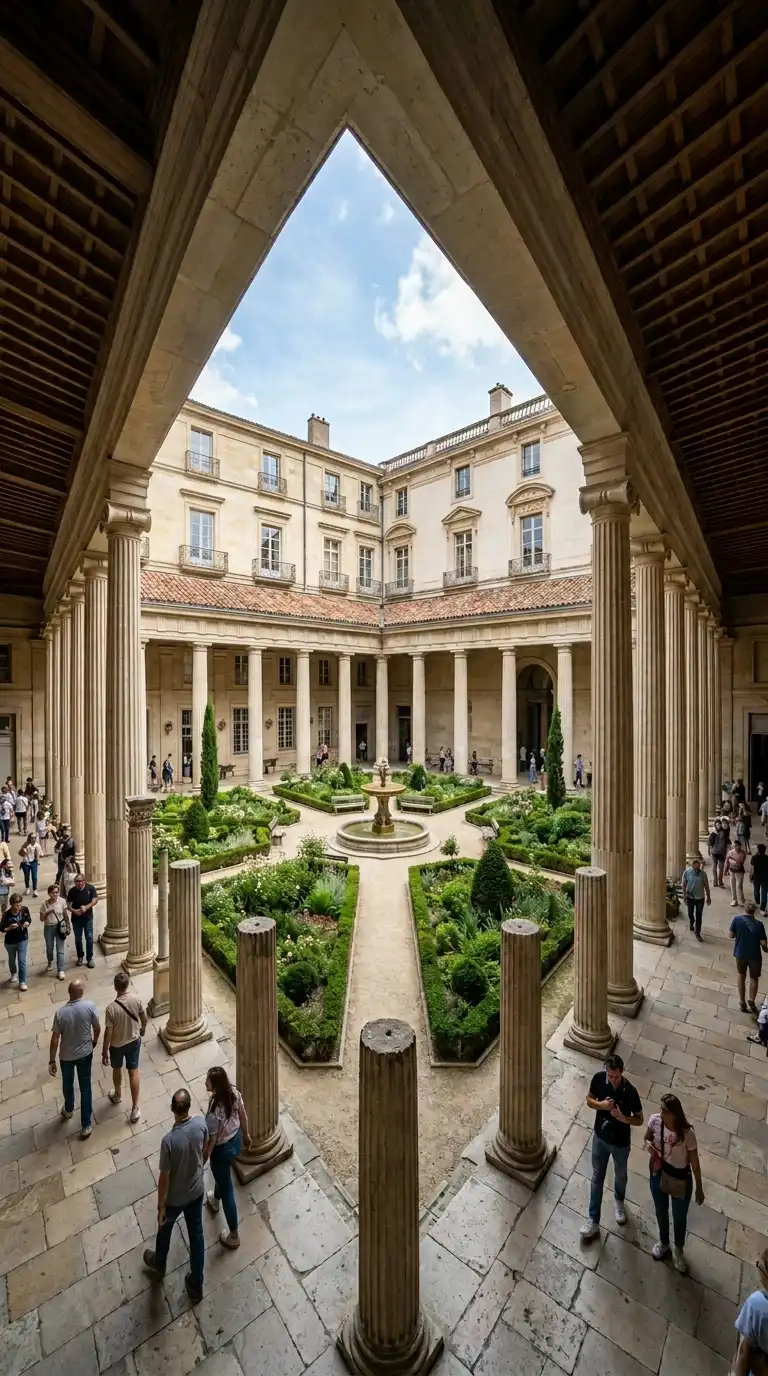
The colonnaded courtyard wraps a courtyard with a covered walkway supported by columns. The courtyard is square or rectangular. The colonnade is single or double. The columns follow a classical order.
This design is ideal for museums, libraries, and university quadrangles. The emotional effect is ordered, sheltered, and communal.
Quick Tips
- The courtyard should be square or rectangular.
- The colonnade should be on all four sides.
- The columns should be evenly spaced.
4. The Triumphal Arch
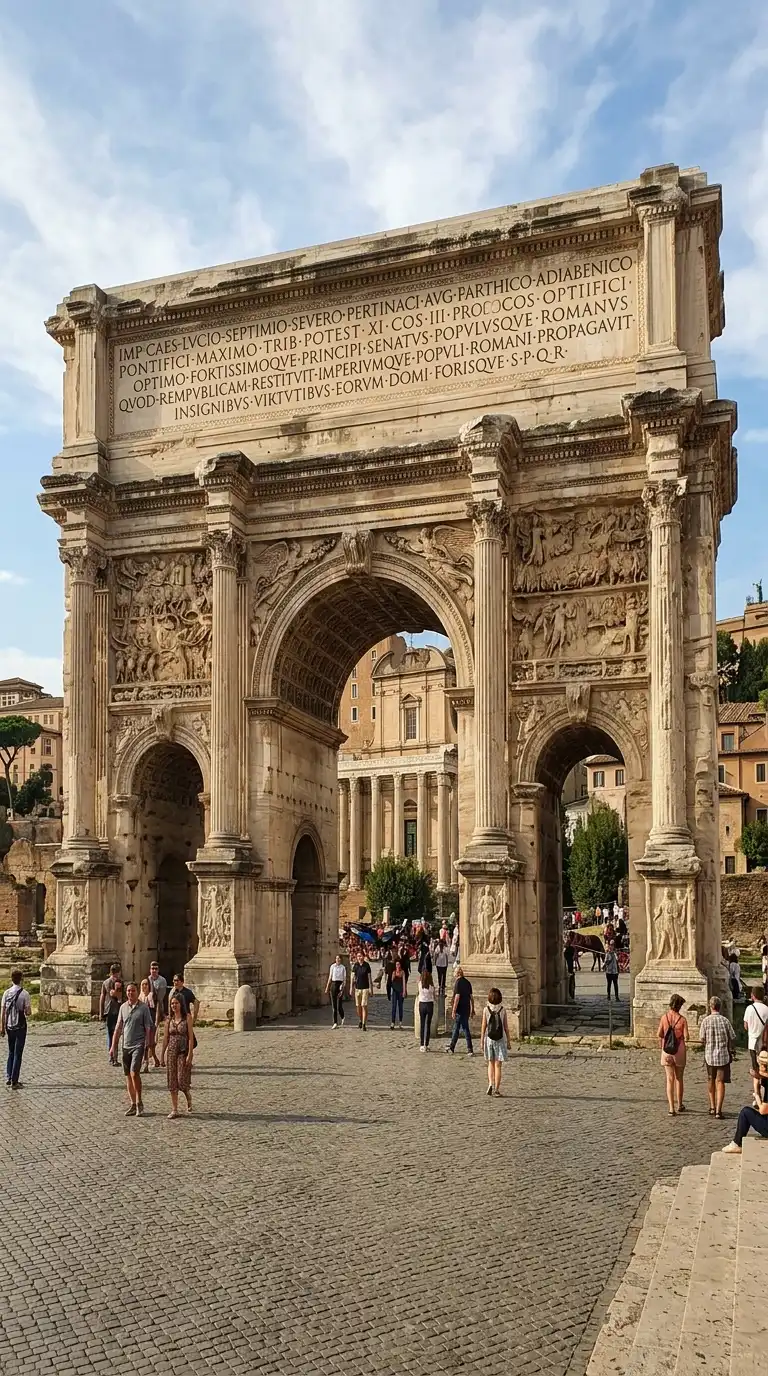
The triumphal arch is a monumental gateway, derived from Roman arches. It has one large central arch and two smaller side arches. The arch is decorated with columns, pediments, and sculpture. The arch is free-standing, not attached to a building.
This design is ideal for memorials, gateways, and urban landmarks. The emotional effect is monumental, commemorative, and heroic.
Quick Tips
- The central arch should be larger than the side arches.
- Columns should be attached to the piers (engaged columns).
- The attic (top section) should have space for an inscription.
5. The Palladian Window
The Palladian window, also called the Venetian window, is a motif derived from Andrea Palladio. The window has a large central arched opening flanked by two smaller rectangular openings. The three openings are separated by columns or pilasters.
This design is used in facades, interior walls, and garden pavilions. The emotional effect is rhythmic, elegant, and Venetian.
Quick Tips
- The central arch should be taller than the side openings.
- Columns or pilasters should separate the three openings.
- The window should be centred on the wall.
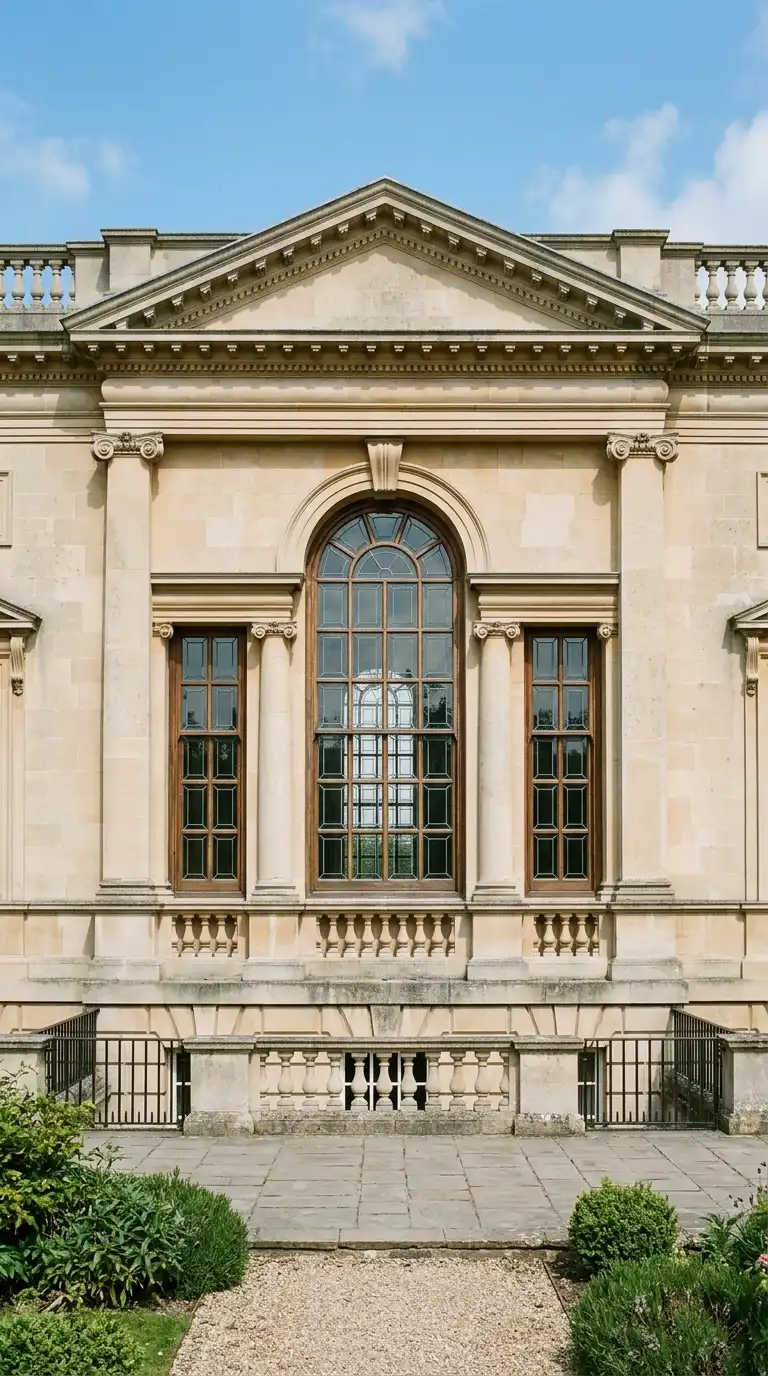
6. The Neoclassical Church
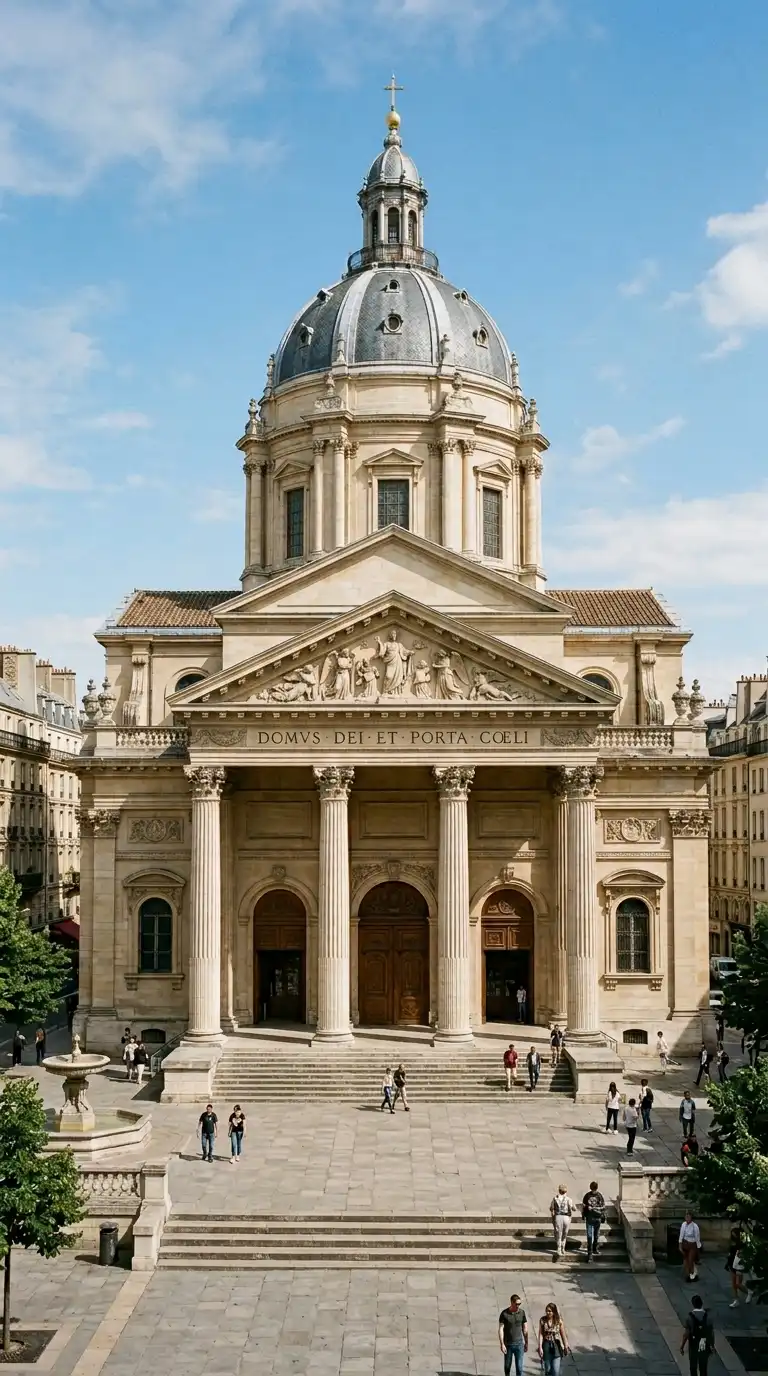
The Neoclassical church replaces the Baroque church’s drama with rational clarity. The facade is a temple front. The plan is a Greek cross or a Latin cross with a dome at the crossing. The interior is light, calm, and ordered.
The emotional effect is rational, serene, and Protestant in its clarity.
Quick Tips
- The facade should be a temple front with a pediment and columns.
- The plan should be a Greek cross or a Latin cross.
- The crossing should have a dome.
7. The Neoclassical Palace
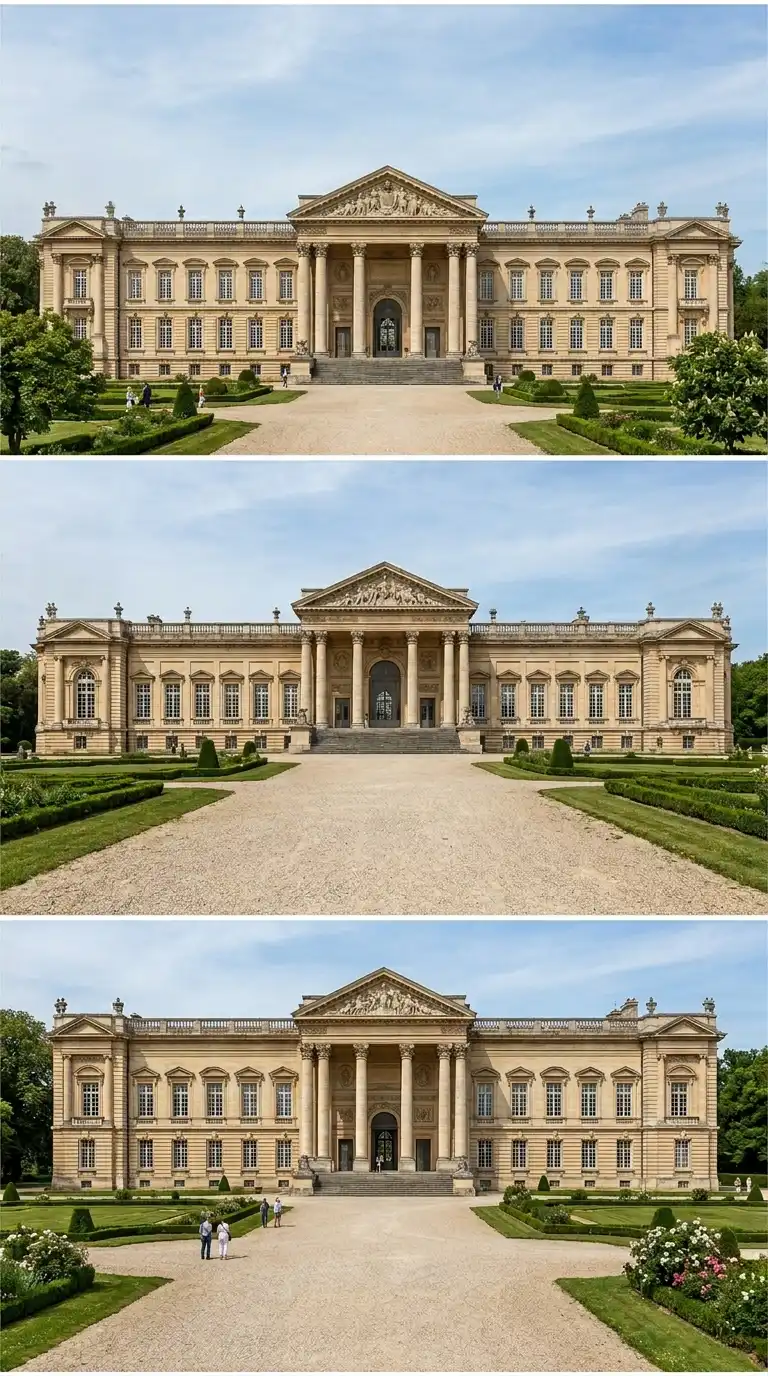
The Neoclassical palace is the residence of a monarch or a government. The facade is long and symmetrical. The centre is emphasised by a portico or a pediment. The wings are lower. The windows are arranged in a regular grid.
The emotional effect is rational, dignified, and powerful.
Quick Tips
- The facade should be long with a central emphasis.
- The centre should have a portico or pediment.
- Windows should be arranged in a regular grid.
8. The Neoclassical Library
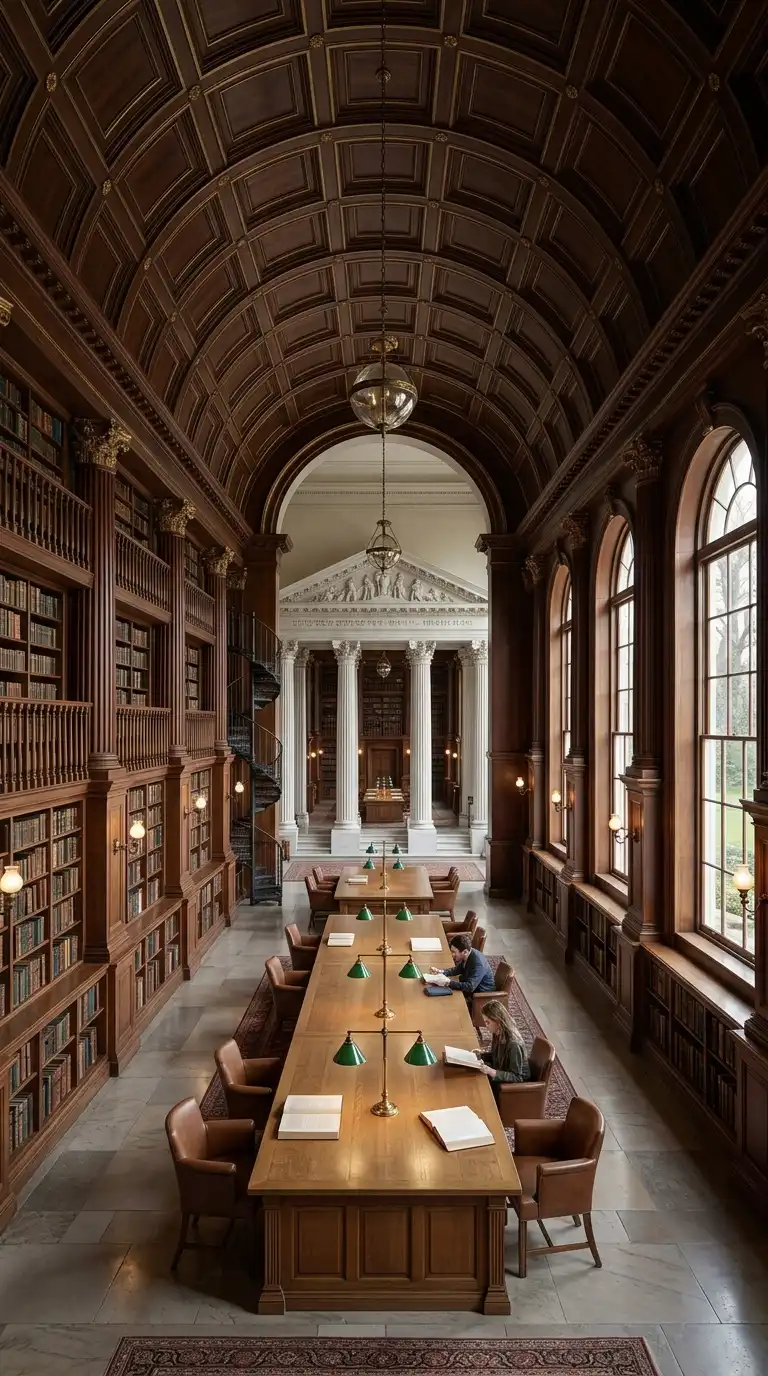
The Neoclassical library is a temple of knowledge. The facade is a temple front. The interior is a long, tall room with bookcases on both walls. The ceiling is coffered or vaulted. Light enters from tall windows or a skylight.
The emotional effect is learned, dignified, and inspiring.
Quick Tips
- The facade should be a temple front.
- The reading room should be long and tall.
- Bookcases should be built-in on both walls.
9. The Neoclassical University Building
The Neoclassical university building is part of a campus or a stand-alone institution. The facade is a temple front or a colonnade. The plan is organised around a courtyard or a central axis. The building expresses learning and tradition.
The emotional effect is scholarly, traditional, and authoritative.
Quick Tips
- The entrance should be emphasised by a portico.
- The plan should be organised around a courtyard or axis.
- The building should be symmetrical.

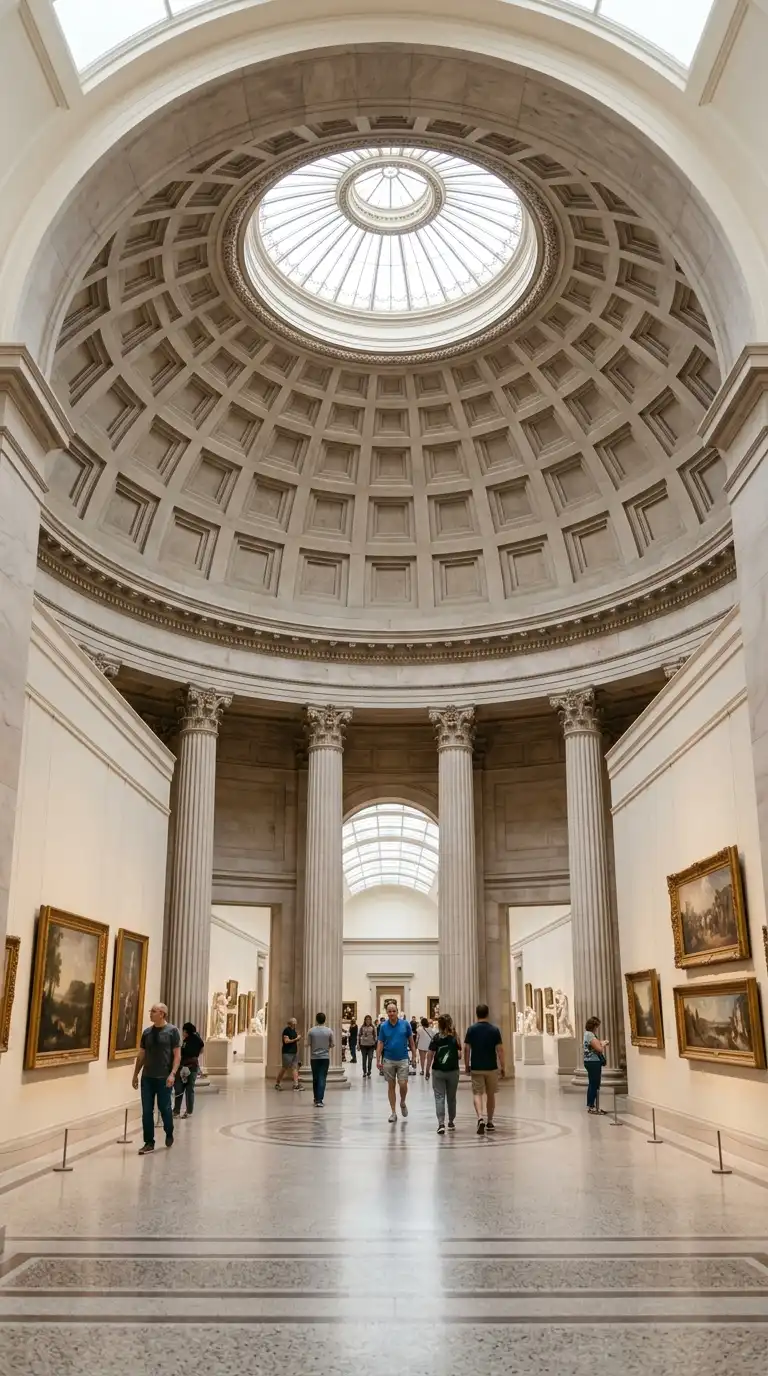
10. The Neoclassical Museum
The Neoclassical museum is a temple for art. The facade is a temple front. The plan is organised around a rotunda or a sequence of galleries. The galleries are top-lit from skylights.
The emotional effect is dignified, serene, and art-appropriate.
Quick Tips
- The facade should be a temple front.
- The plan should have a rotunda or central gallery.
- Galleries should be top-lit from skylights.
11. The Neoclassical Market
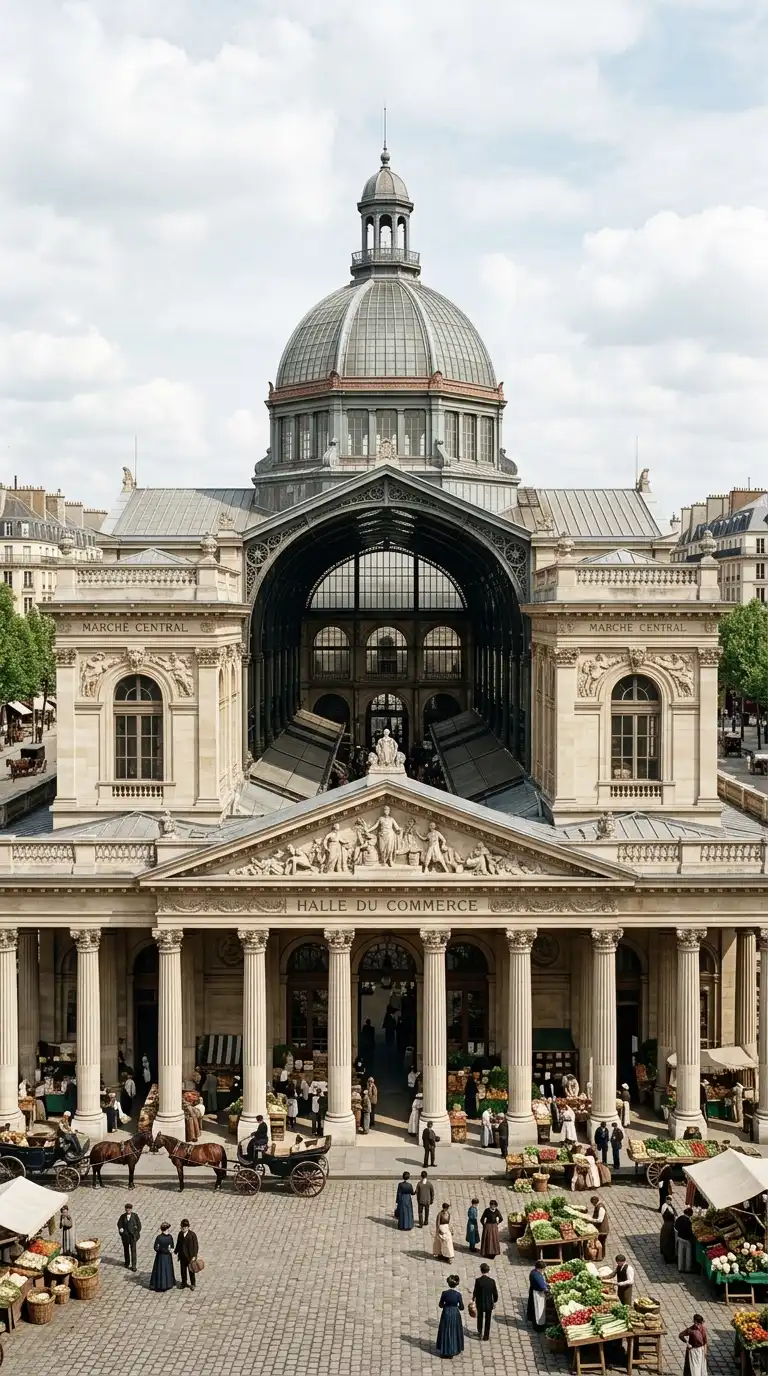
The Neoclassical market is a covered public market. The facade is a colonnade. The interior is a large hall with stalls. The roof is vaulted or domed.
The emotional effect is civic, orderly, and public.
Quick Tips
- The facade should be a colonnade at ground level.
- The interior should be a single large hall.
- The roof should be vaulted or domed.
12. The Neoclassical Monument
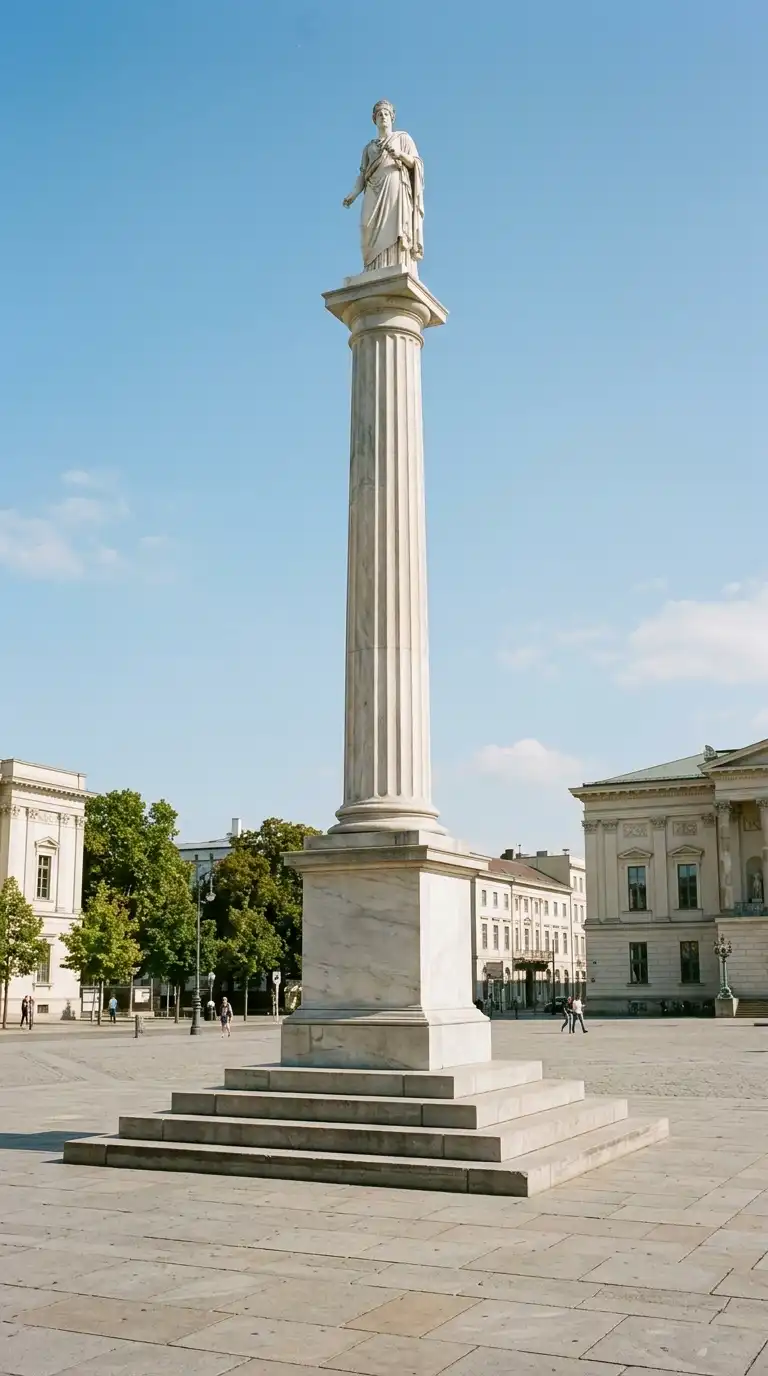
The Neoclassical monument commemorates a person or event. It is a column, an obelisk, or a tomb. The form is simple and geometric. The decoration is minimal.
The emotional effect is commemorative, heroic, and restrained.
Quick Tips
- The form should be simple: column, obelisk, or cube.
- Decoration should be minimal — only essential inscriptions.
- The monument should be freestanding.
13. The Neoclassical Bridge
The Neoclassical bridge is a functional structure treated as architecture. The bridge has arched openings, often three. The piers are rusticated. The parapet has balustrades.
The emotional effect is monumental, infrastructural, and dignified.
Quick Tips
- The bridge should have arched openings.
- The piers should be rusticated (rough stone).
- The parapet should have balustrades.

14. The Neoclassical Villa
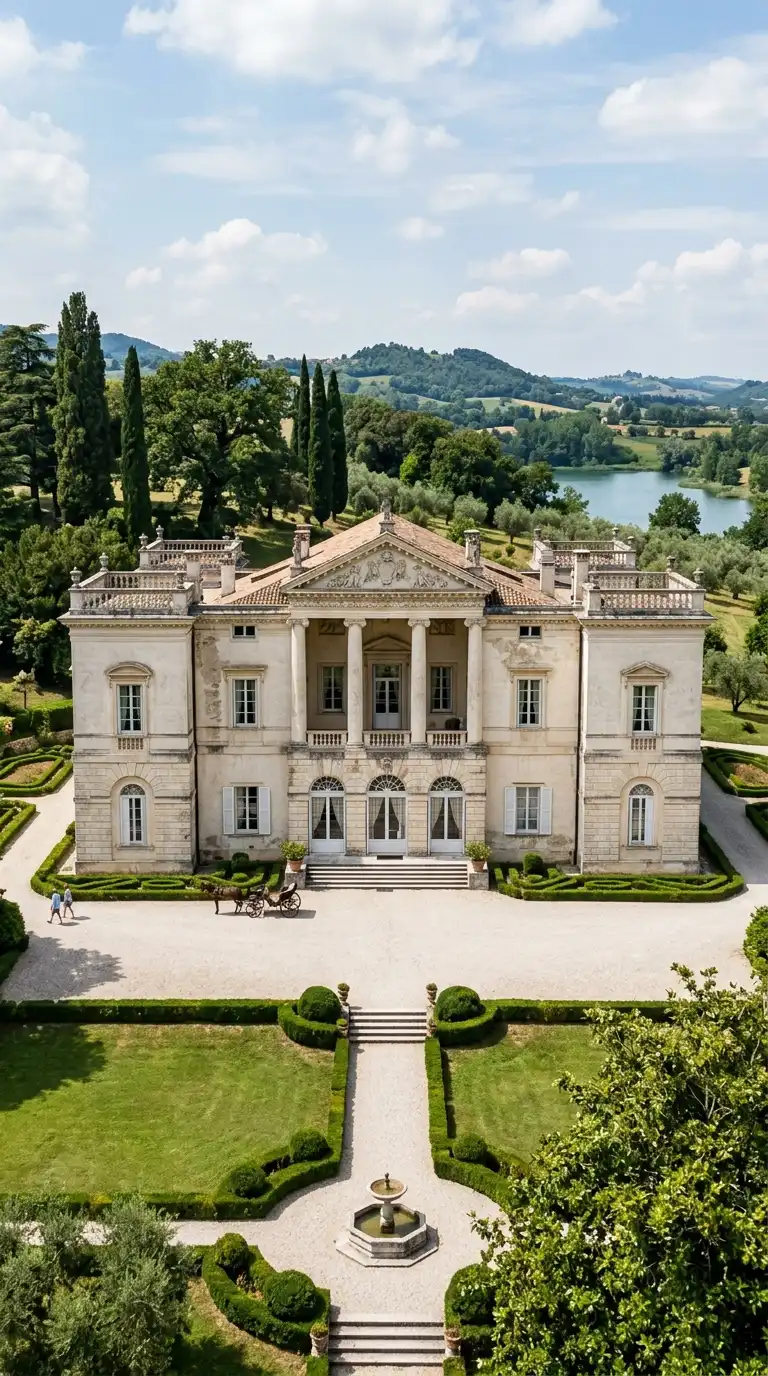
The Neoclassical villa is a country house. The facade is a temple front. The plan is square or rectangular. The villa has a central hall and four corner pavilions.
The emotional effect is rational, elegant, and rural.
Quick Tips
- The facade should be a temple front.
- The plan should be square or rectangular.
- The villa should have a central hall and four corner pavilions.
Final Thoughts
Neoclassical architecture is not a copy of ancient Rome and Greece. It is an interpretation. It uses classical forms — columns, pediments, domes, arches — but arranges them with Enlightenment rationality. The result is architecture that is logical, legible, and humane.
These 14 Neoclassical designs are not mutually exclusive. A temple front can have a Palladian window. A rotunda can be part of a museum. A colonnaded courtyard can surround a monument. The best Neoclassical architecture is not the most archaeological — it is the most intelligent. It understands the principles of classical architecture and applies them to new programs, new materials, and new centuries.