A tree is not just a plant. It is a structure, a shelter, a landmark, and a memory. Tree architecture is the design of buildings that integrate living trees — buildings wrapped around trees, built under trees, or built from trees. It is also the design of treehouses, tree walks, and tree-inspired forms. Tree architecture connects people to nature, to childhood, and to the ancient human experience of living among trees.
These 14 tree architecture ideas span treehouses, tree-integrated buildings, and tree-inspired forms. Each design includes defining characteristics, structural principles, and experiential qualities.
1. The Treehouse
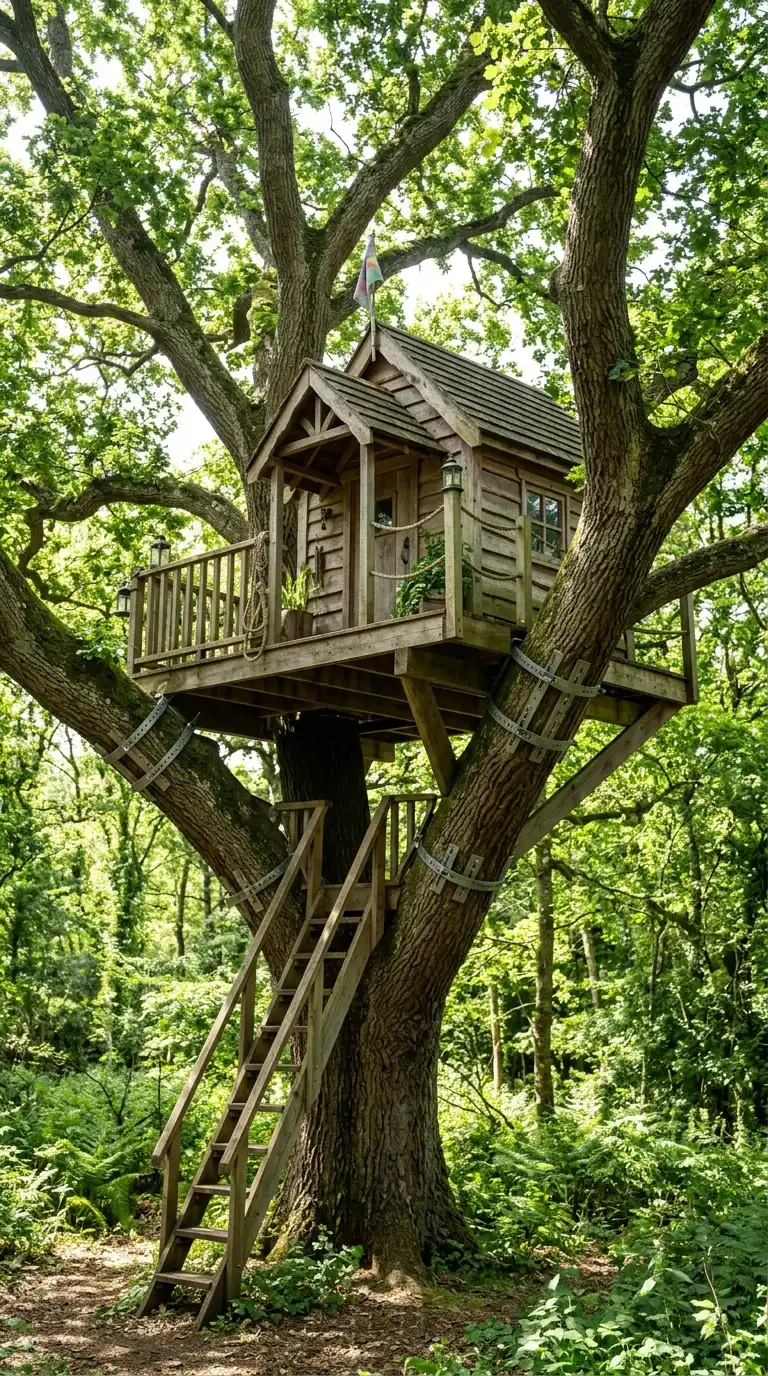
The treehouse is a small building supported by one or more living trees. The platform is attached to the tree with bolts or ropes that allow the tree to grow. The treehouse is not a house — it is a room in the air. The treehouse is playful, elevated, and magical.
This design is ideal for gardens, resorts, and childhood dreams. The emotional effect is playful, elevated, and magical.
Quick Tips
- The platform must be attached to the tree with adjustable connections.
- The tree must be healthy and mature.
- The treehouse must be light — no heavy materials.
2. The Tree Wrapped Building
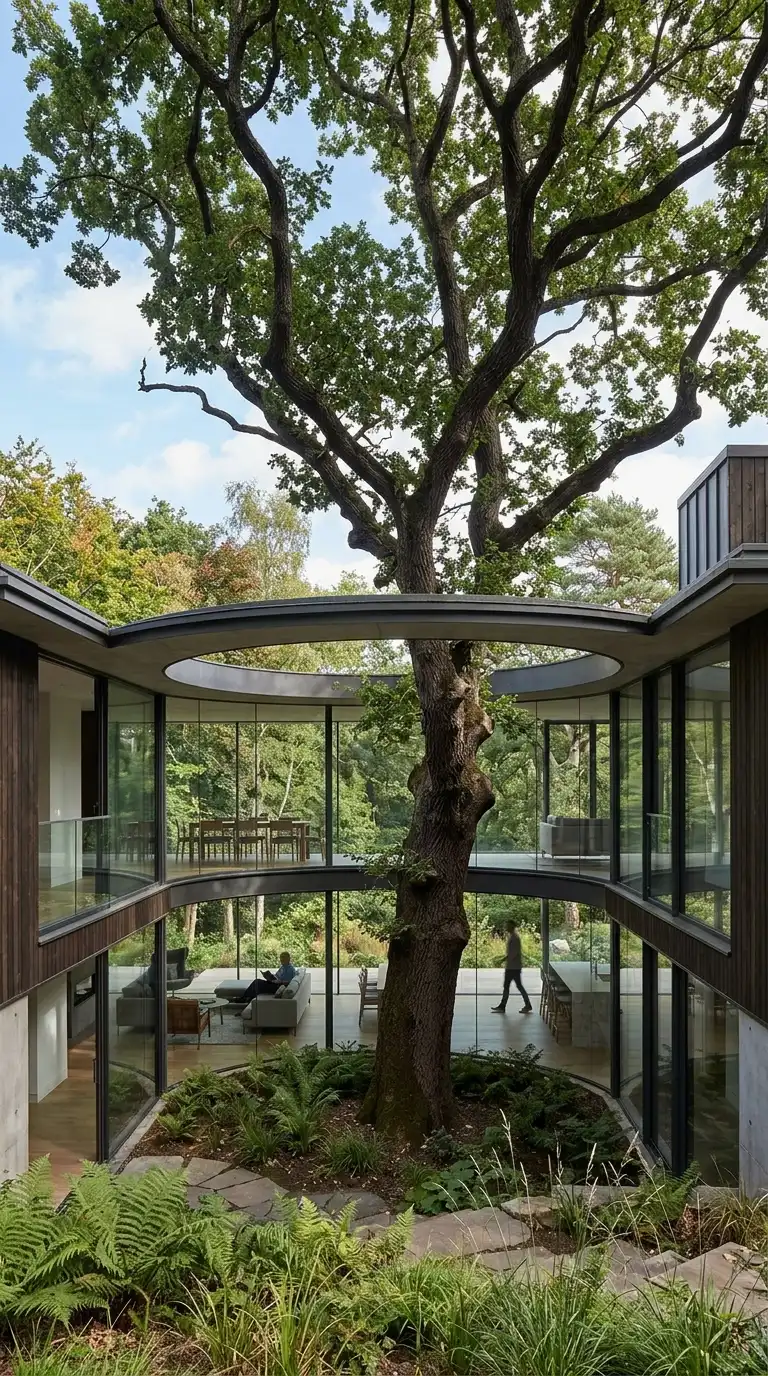
The tree wrapped building is a building that wraps around a living tree. The tree grows through a courtyard, an atrium, or a hole in the roof. The tree is visible from inside the building. The tree wrapped building is respectful, integrated, and nature-connected.
This design is ideal for houses, offices, and museums on wooded sites. The emotional effect is respectful, integrated, and nature-connected.
Quick Tips
- The tree must be preserved during construction.
- The opening must be large enough for the tree to grow.
- The tree must have access to light and water.
3. The Tree Colonnade
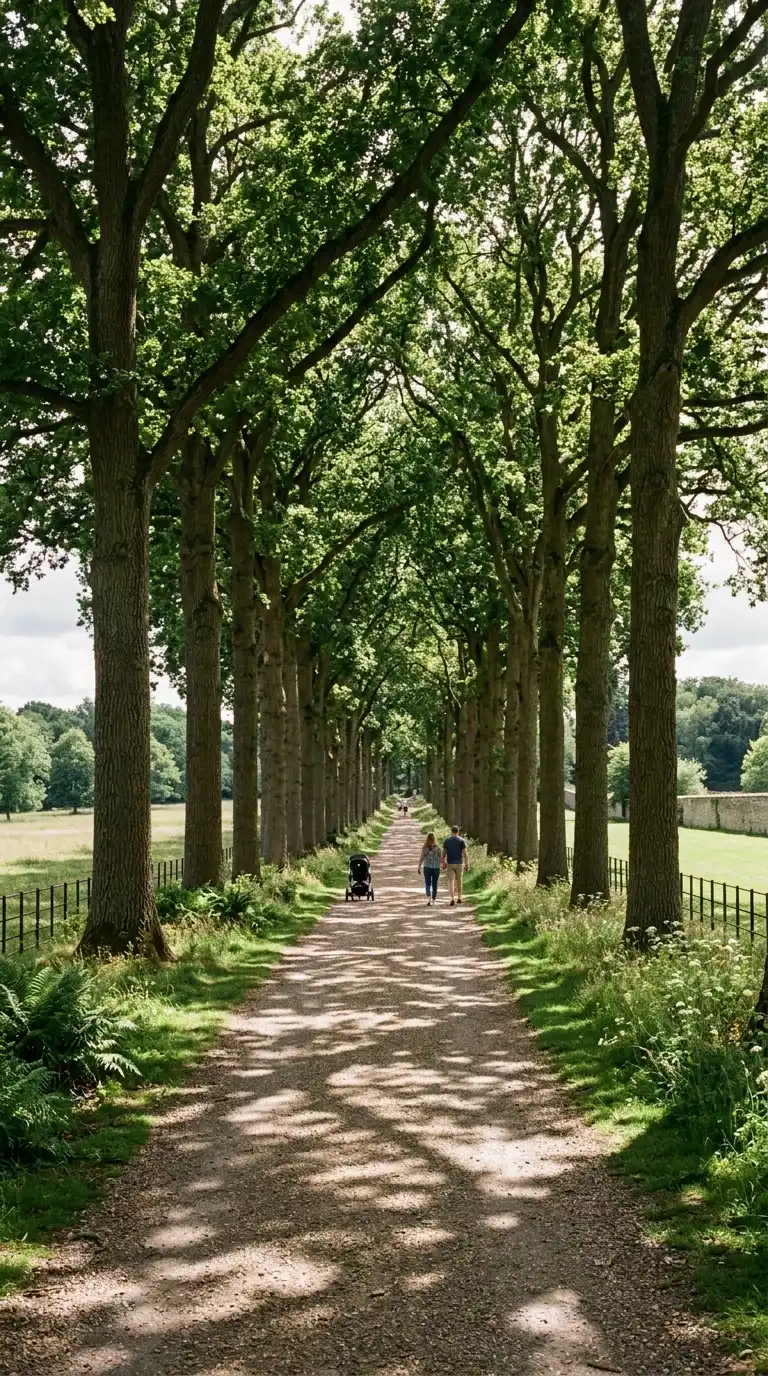
The tree colonnade is a row of trees planted like columns. The trees are evenly spaced. Their canopies form a roof. The tree colonnade is a living arcade. It provides shade, scale, and rhythm.
This design is ideal for walkways, plazas, and entrances. The emotional effect is rhythmic, shaded, and living.
Quick Tips
- Trees must be evenly spaced (3-6 metres apart).
- Trees must be of the same species for consistency.
- The canopy must be high enough for people to walk under.
4. The Tree Canopy Walk
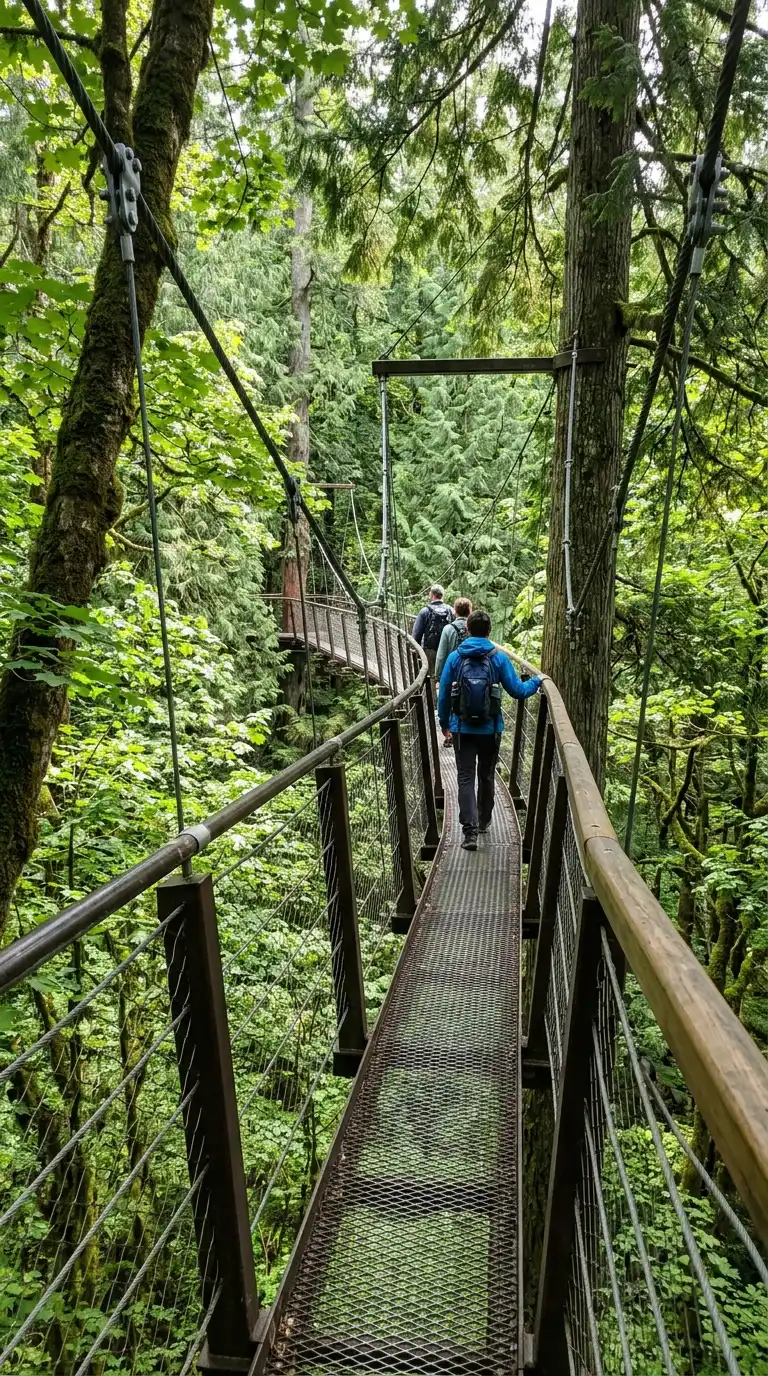
The tree canopy walk is a elevated walkway through the treetops. The walkway is suspended from cables or supported by slender columns. The walkway is light and transparent. The tree canopy walk provides a view from above.
This design is ideal for parks, arboretums, and ecotourism. The emotional effect is elevated, transparent, and view-giving.
Quick Tips
- The walkway must be high enough to be in the canopy (10-30 metres).
- The walkway must be light and transparent.
- Handrails must be provided for safety.
5. The Tree Cathedral
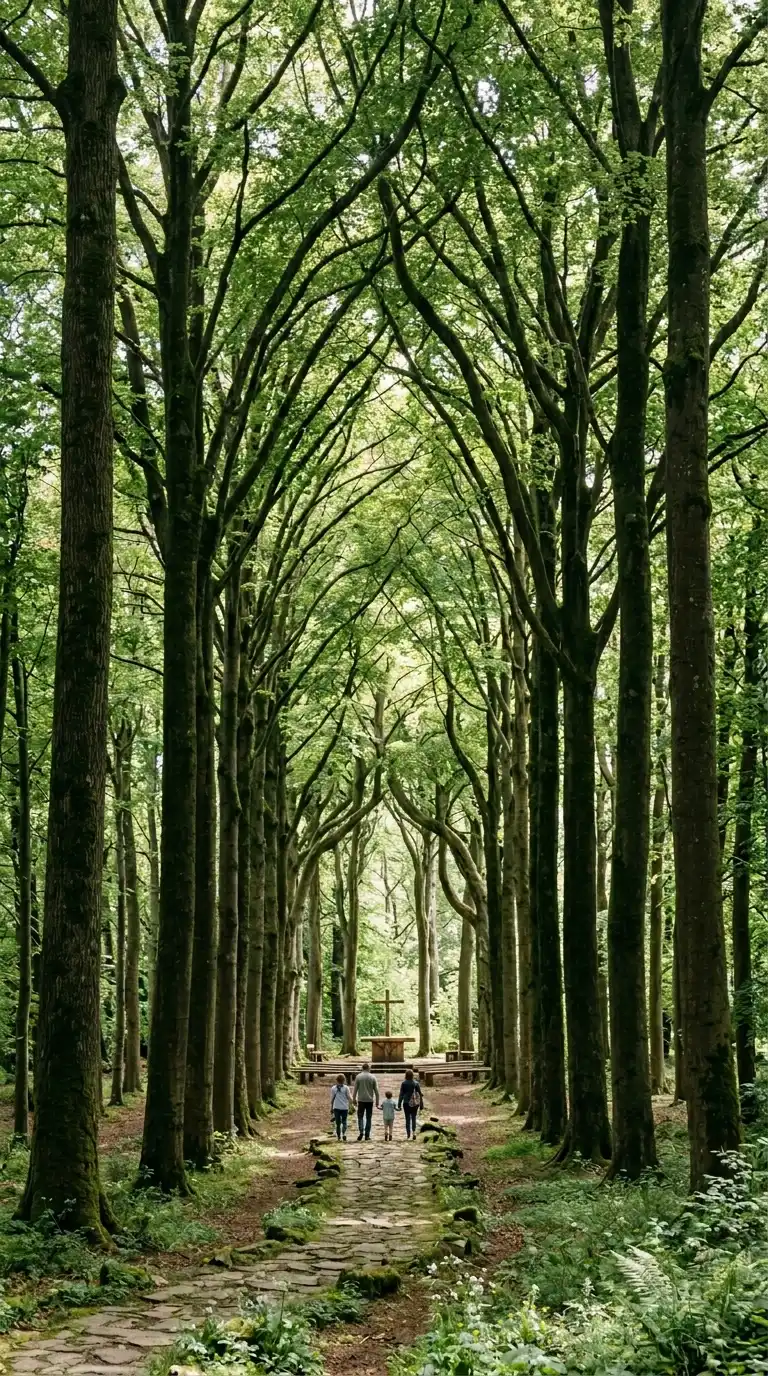
The tree cathedral is a grove of trees planted in the shape of a cathedral. The trees form the nave, the aisles, and the apse. The canopy is the vault. The tree cathedral is a living building. It is grown, not built.
This design is ideal for memorials, gardens, and spiritual sites. The emotional effect is sacred, grown, and living.
Quick Tips
- Trees must be planted in a cathedral plan (nave, aisles, apse).
- Trees must be of a species that grows tall and straight.
- The canopy must be allowed to close.
6. The Tree Nursery House
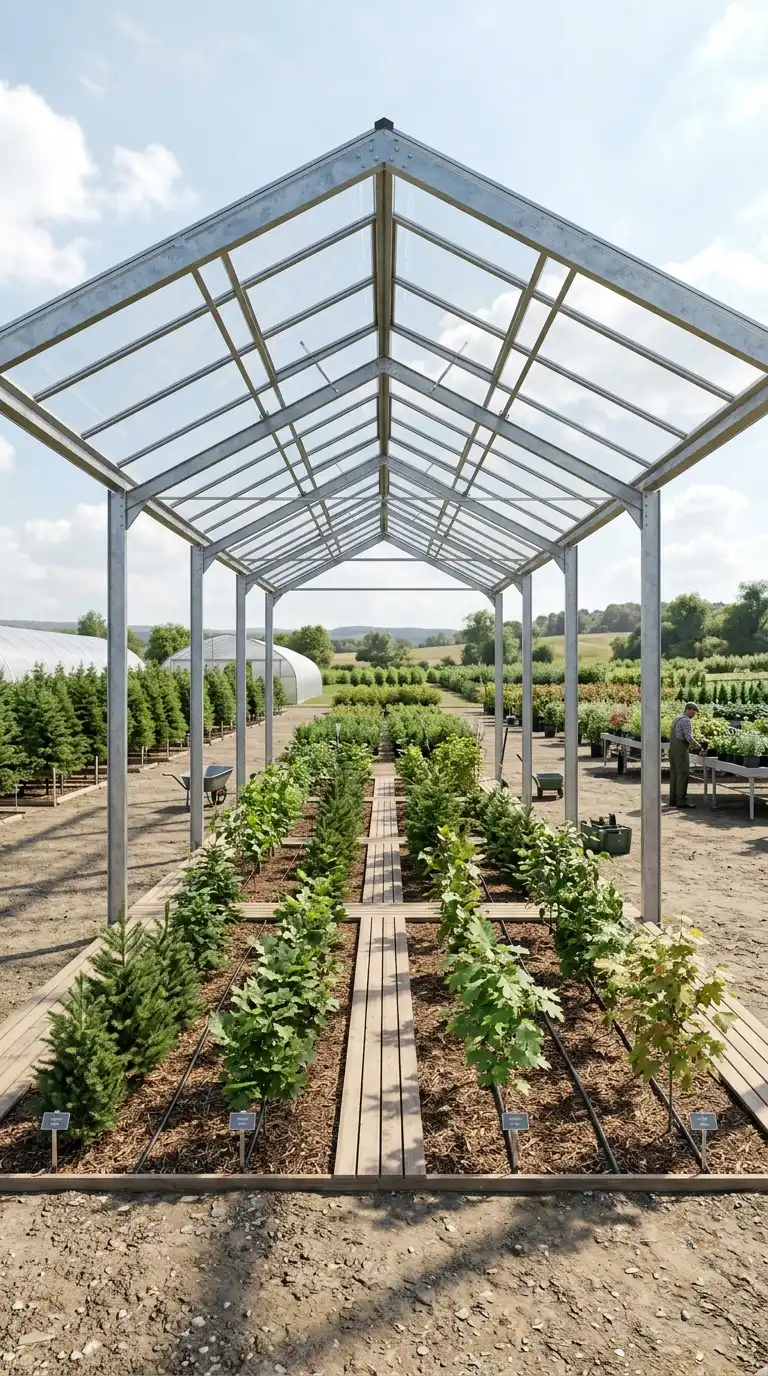
The tree nursery house is a greenhouse-like structure for growing trees. The house has a glass roof and open sides. The trees are planted in the ground. The house protects the trees while they grow. The tree nursery house is functional, protective, and temporary.
This design is ideal for tree nurseries and reforestation projects. The emotional effect is functional, protective, and temporary.
Quick Tips
- The roof must be glass for light.
- The sides must be open for ventilation.
- The structure must be removable when the trees are mature.
7. The Tree House Village
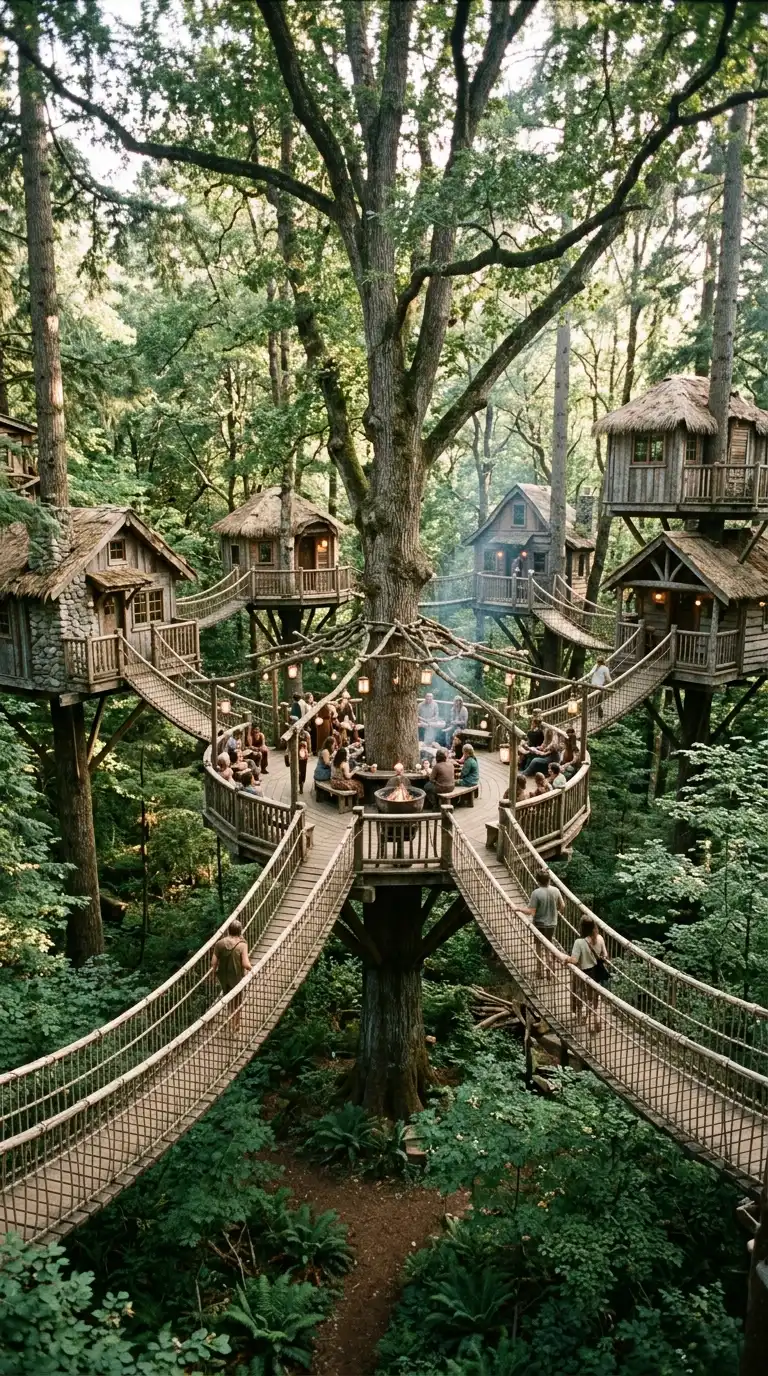
The tree house village is a cluster of treehouses connected by bridges and platforms. The village is a community in the trees. Each treehouse is a small room. The bridges are the streets. The tree house village is communal, elevated, and playful.
This design is ideal for eco-resorts and adventure parks. The emotional effect is communal, elevated, and playful.
Quick Tips
- Treehouses must be connected by bridges.
- Bridges must have handrails for safety.
- The village must have a central gathering platform.
8. The Tree Root Building
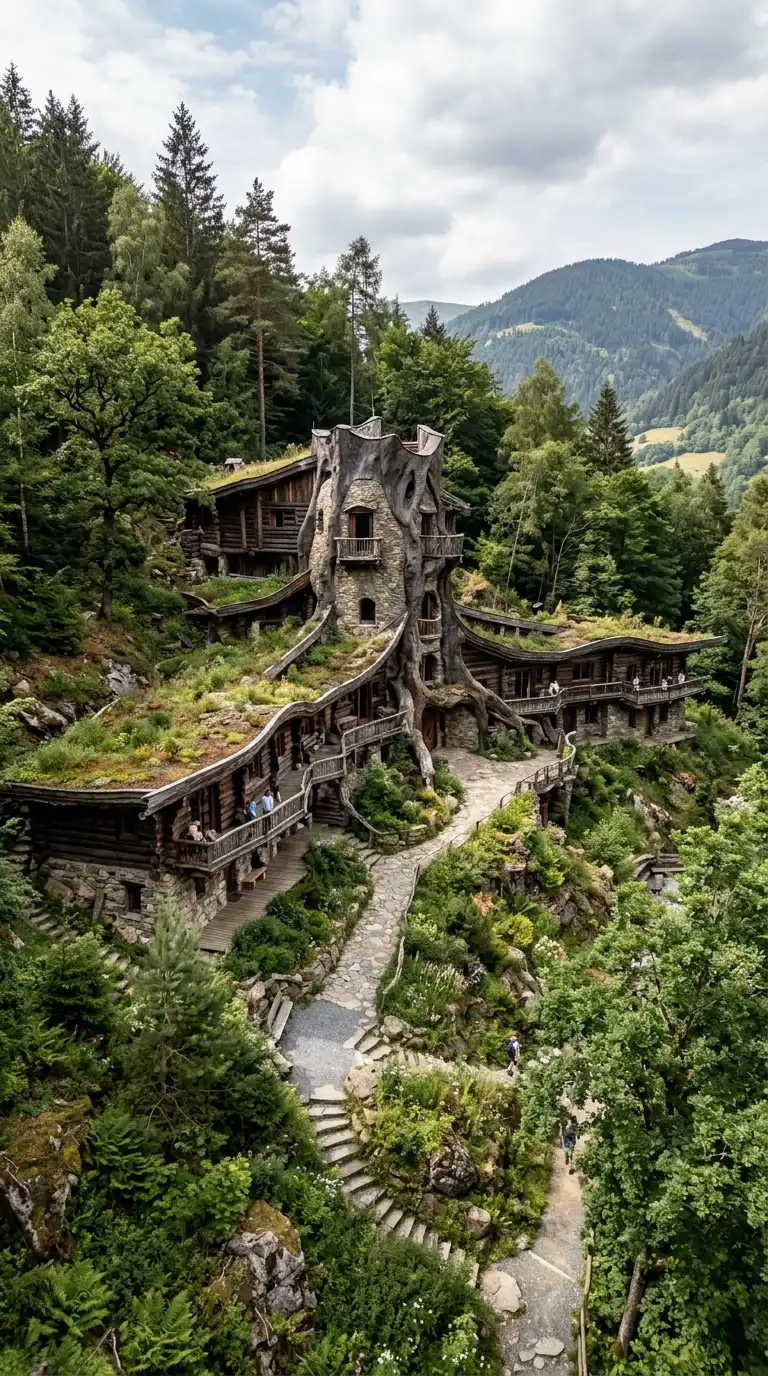
The tree root building is inspired by the form of tree roots. The building spreads outward from a central core, like roots from a trunk. The wings are low and branching. The tree root building is organic, branching, and ground-hugging.
This design is ideal for museums, visitor centres, and houses on sloping sites. The emotional effect is organic, branching, and ground-hugging.
Quick Tips
- The plan must have a central core and branching wings.
- The wings must be low and horizontal.
- The building should appear to grow from the ground.
9. The Tree Trunk Column
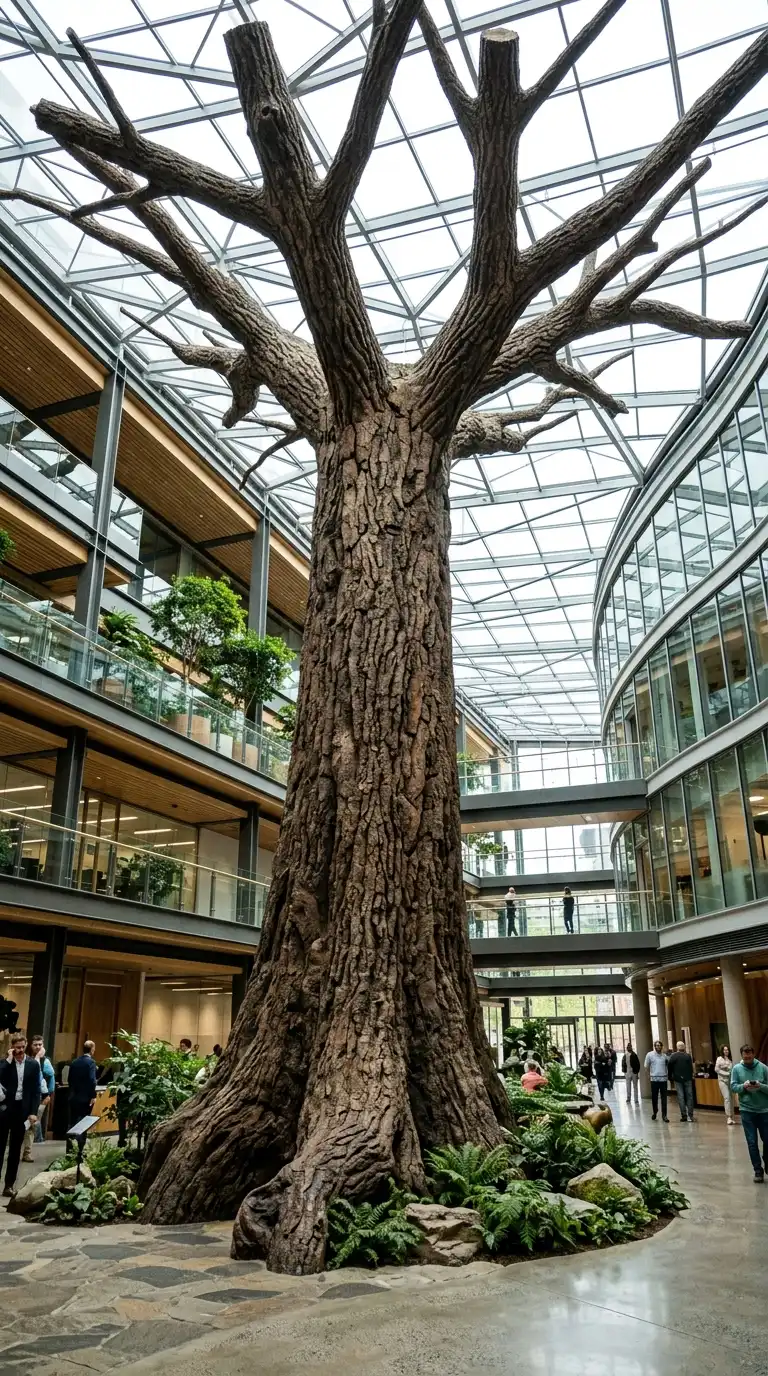
The tree trunk column is a column shaped like a tree trunk. The column is wider at the base and tapers toward the top. The surface is textured like bark. The tree trunk column is structural, organic, and forest-like.
This design is ideal for atriums, lobbies, and forest-inspired buildings. The emotional effect is structural, organic, and forest-like.
Quick Tips
- The column must taper from base to top.
- The surface must have bark-like texture.
- The column may branch at the top.
10. The Tree Canopy Roof
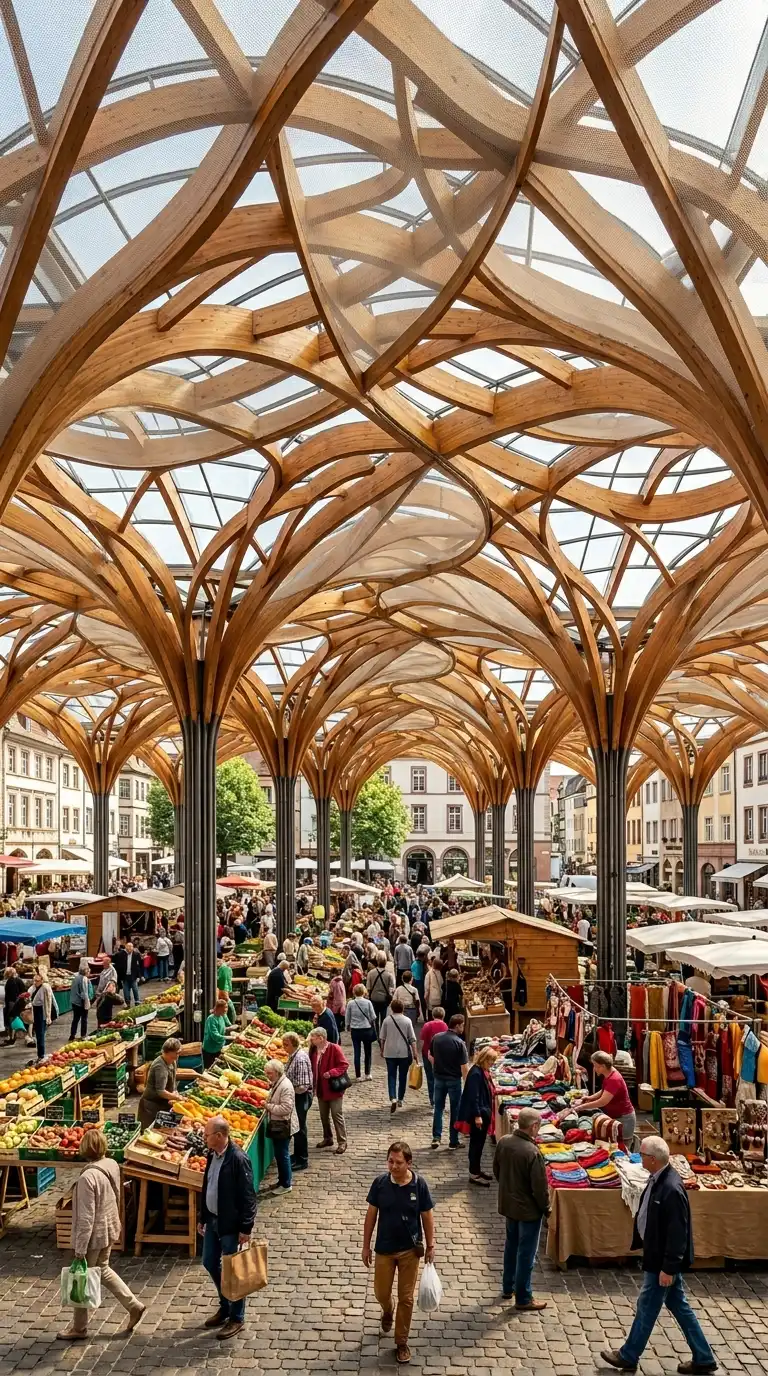
The tree canopy roof is a roof shaped like a tree canopy. The roof is a series of overlapping curved forms. The roof is supported by slender columns. The tree canopy roof is sheltering, organic, and light.
This design is ideal for markets, pavilions, and open-air buildings. The emotional effect is sheltering, organic, and light.
Quick Tips
- The roof must be a series of overlapping curves.
- The columns must be slender.
- The roof should appear to float.
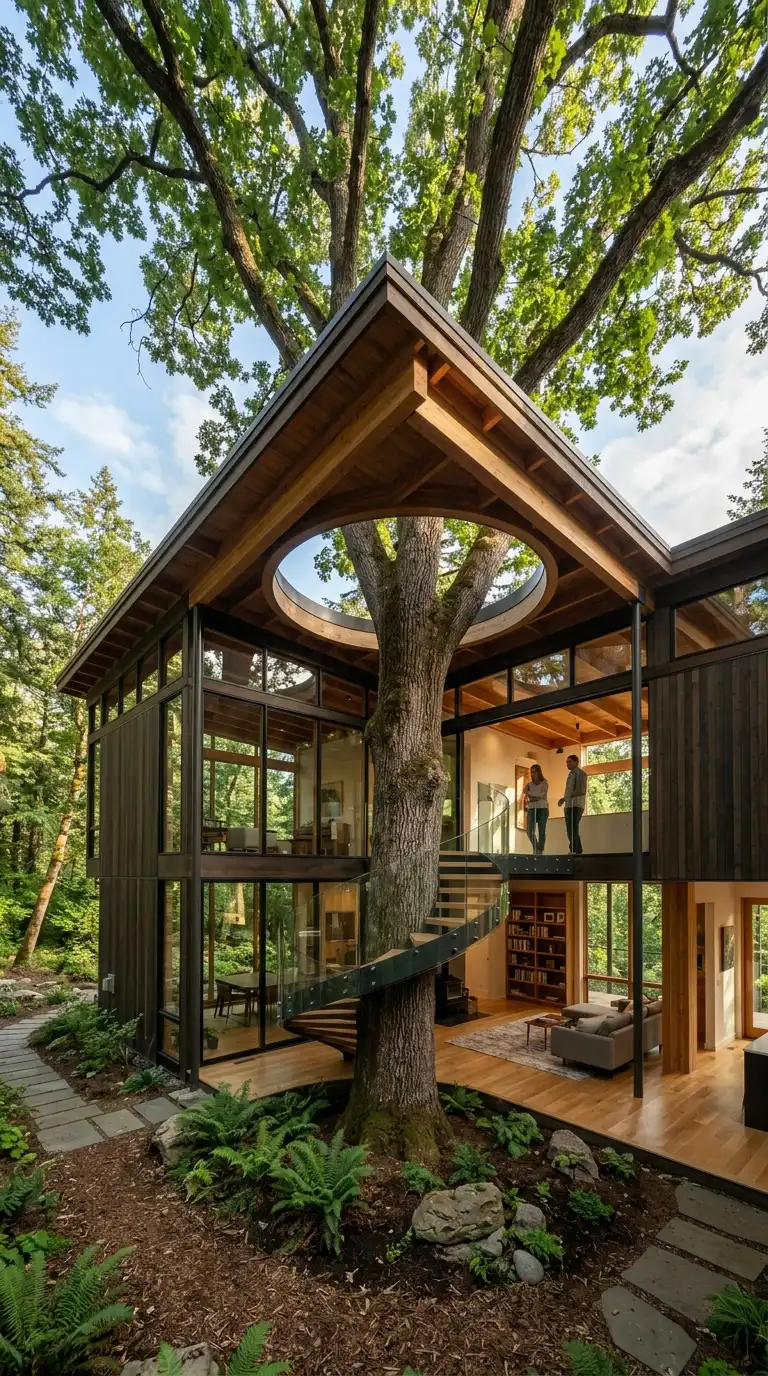
11. The Tree Preservation House
The tree preservation house is a building built around a tree to protect it during construction. The tree is inside the building. The building has a hole in the roof for the tree to grow through. The tree preservation house is respectful, protective, and integrated.
This design is ideal for houses and buildings on wooded sites. The emotional effect is respectful, protective, and integrated.
Quick Tips
- The tree must be inside the building.
- The roof must have an opening for the tree.
- The tree must have access to light and water.
12. The Tree Shade Structure
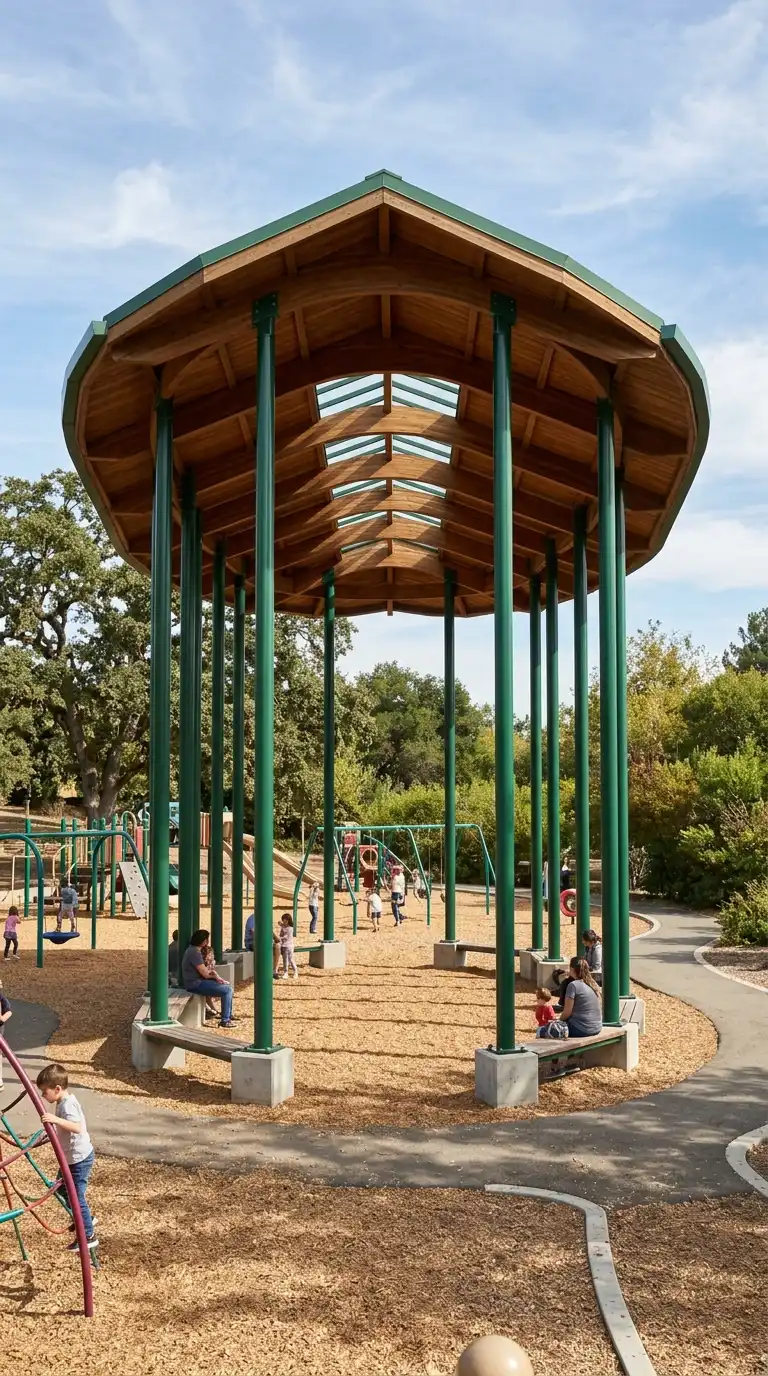
The tree shade structure is a building that mimics the shade of a tree. The roof is a large canopy. The columns are slender. The roof is high. The tree shade structure is open, shaded, and cool.
This design is ideal for bus stops, playgrounds, and outdoor classrooms. The emotional effect is open, shaded, and cool.
Quick Tips
- The roof must be large and high.
- The columns must be slender.
- The structure must be open on all sides.
13. The Tree Ring Amphitheatre
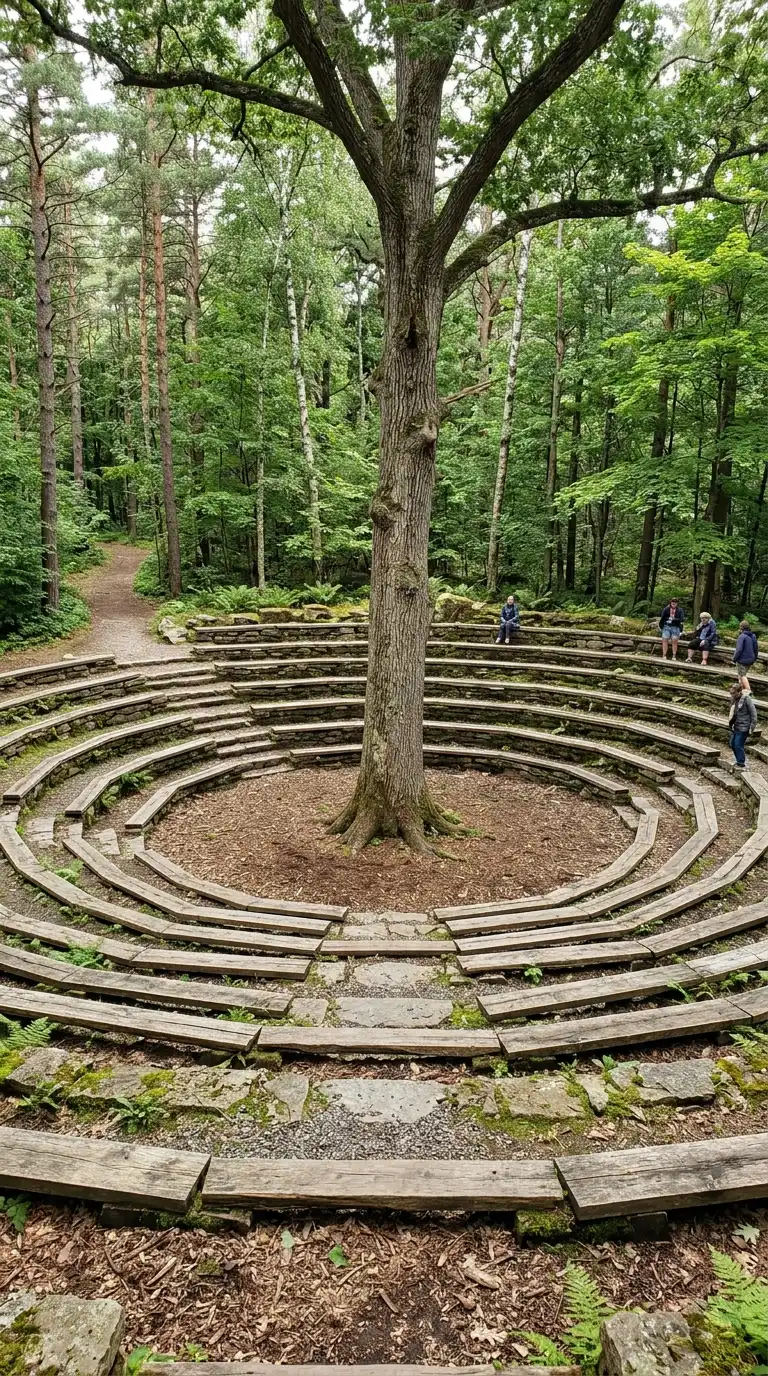
The tree ring amphitheatre is a circular seating area around a central tree. The seats are concentric rings, like the rings of a tree. The tree is the stage. The tree ring amphitheatre is circular, nested, and tree-centred.
This design is ideal for outdoor classrooms, theatres, and gathering spaces. The emotional effect is circular, nested, and tree-centred.
Quick Tips
- The tree must be at the centre.
- Seats must be concentric rings.
- The rings must step up as they go outward.
14. The Tree House Hotel
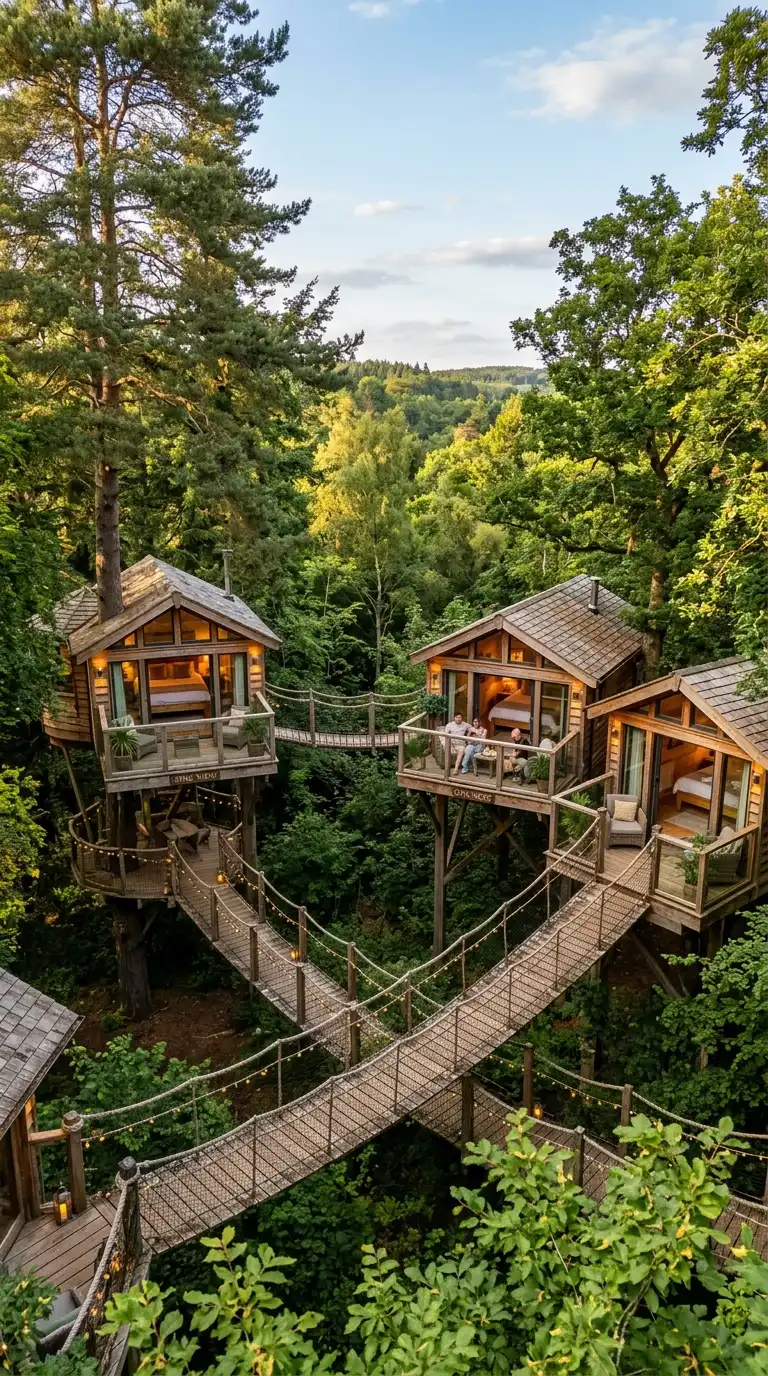
The tree house hotel is a cluster of treehouses for overnight guests. Each treehouse is a private room. The treehouses are connected by bridges or stairs. The tree house hotel is luxurious, elevated, and forested.
This design is ideal for eco-resorts and luxury camping. The emotional effect is luxurious, elevated, and forested.
Quick Tips
- Each treehouse must be a private room.
- Treehouses must be connected by bridges or stairs.
- Each treehouse must have a view of the forest.
Final Thoughts
These 14 tree ideas are not mutually exclusive. A tree wrapped building can have a tree trunk column. A tree cathedral can have a tree canopy walk. A tree house village can be a tree house hotel. The best tree architecture is not the most complex — it is the most respectful. It preserves the tree. It works with the tree. It lets the tree be a tree. It is architecture that grows, not just architecture that is built. It is the architecture of the forest, the garden, and the childhood dream.