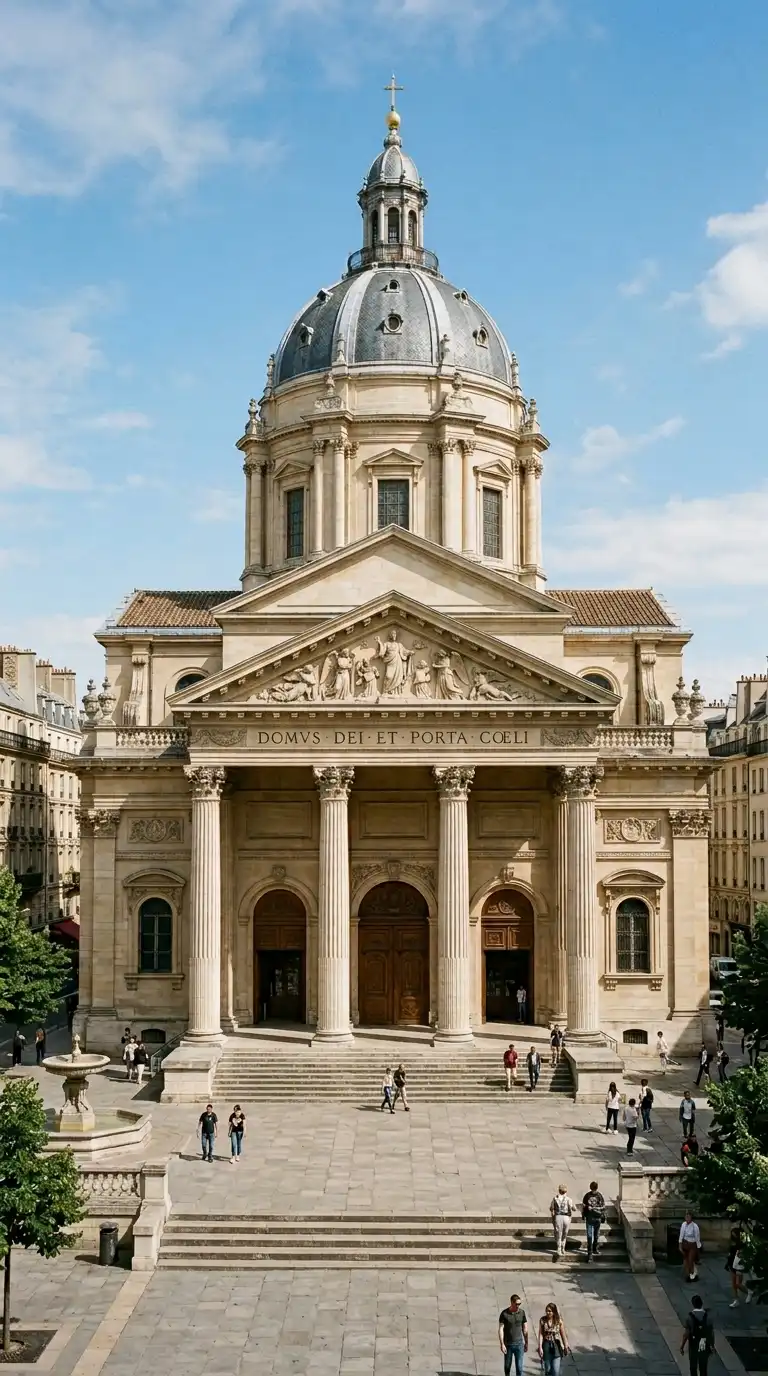
The office building is the most common building type of the modern city. It houses the work of millions — yet most office buildings are repetitive and forgettable. A great office building does more than provide shelter from rain. It creates community, supports collaboration, enables concentration, and expresses the values of the organisations inside.
These 12 office building architecture designs span historical precedents, contemporary innovations, and workplace strategies. Each design includes defining characteristics, spatial principles, and applications.
1. The Deep Plan Office
The deep plan office is wide and shallow. The building depth is typically 15-20 metres, allowing natural light to reach the centre of the floor plate from both sides. Windows are on two facades. The core (stairs, elevators, shafts) is placed off-centre or at the ends.
This plan is efficient and well-lit. Desks near windows get natural light. Desks in the middle rely on artificial light. The emotional effect is rational, efficient, and bright.
Quick Tips
- Floor plate depth should be 15-20 metres maximum for natural light.
- The core should be placed off-centre or at the ends.
- Windows should be on two opposite facades.
2. The Shallow Plan Office
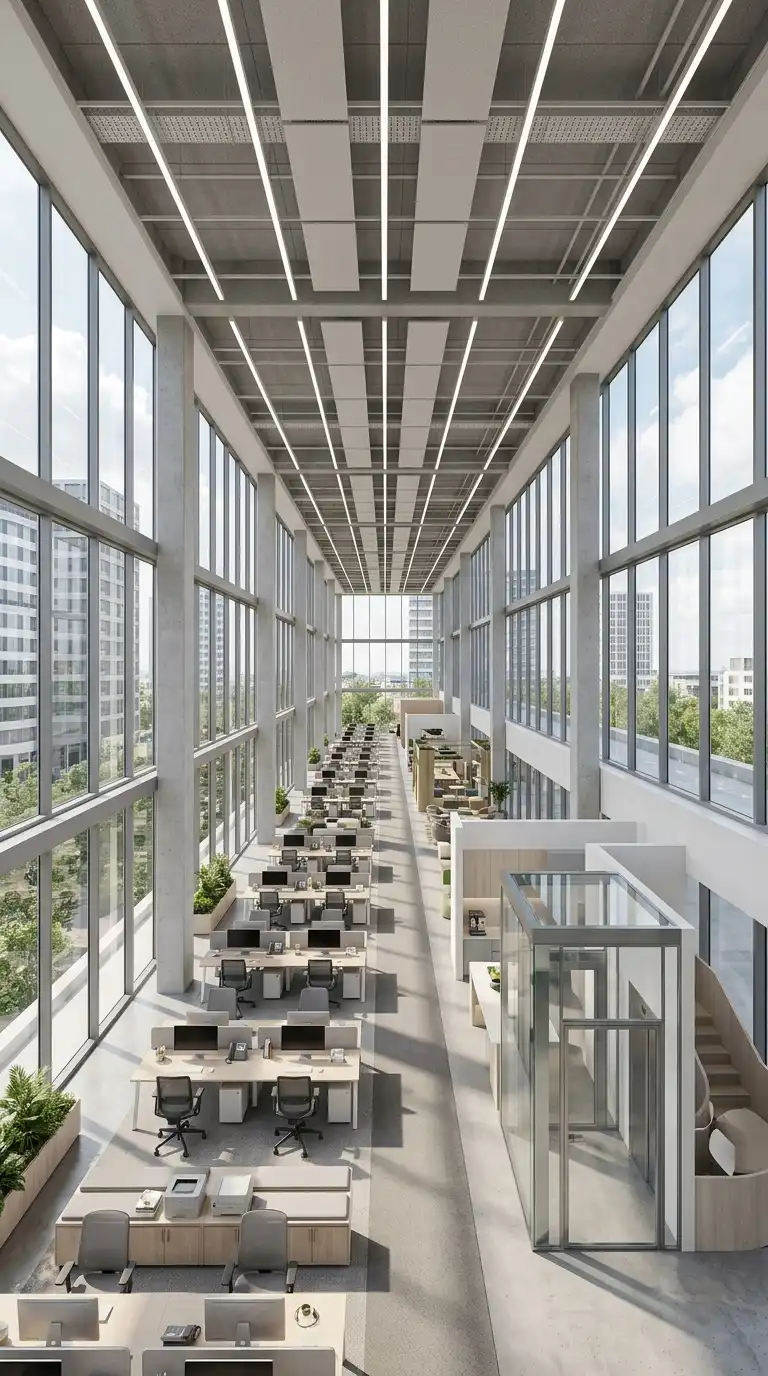
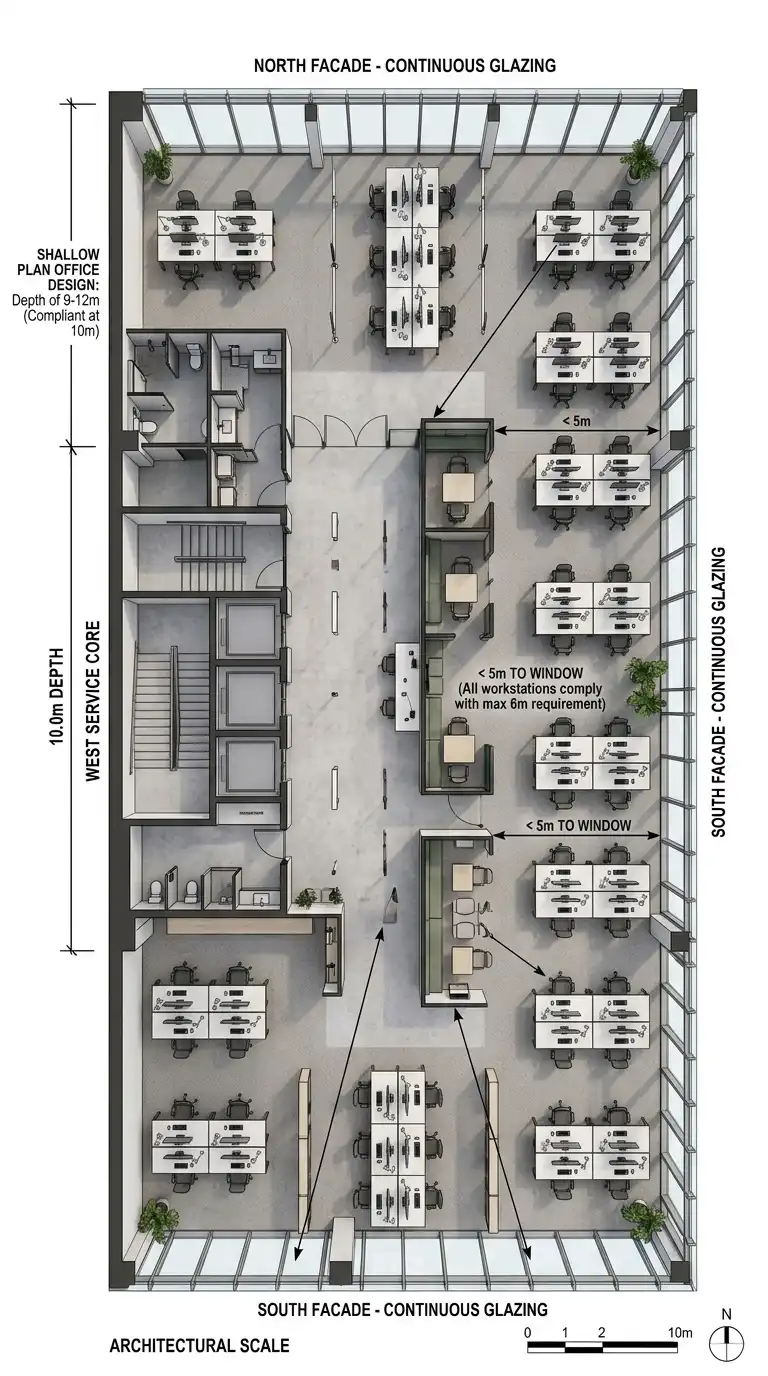
The shallow plan office is narrow — typically 9-12 metres deep. Every desk is within 5-6 metres of a window. Natural light reaches all workstations. The building is often a long bar with windows on both long sides.
This plan is ideal for small offices, start-ups, and firms that value natural light. The emotional effect is bright, open, and connected to the outdoors.
Quick Tips
- Floor plate depth should be 9-12 metres maximum.
- Every workstation should be within 6 metres of a window.
- The core should be at the ends, not in the middle.
3. The Central Core Tower
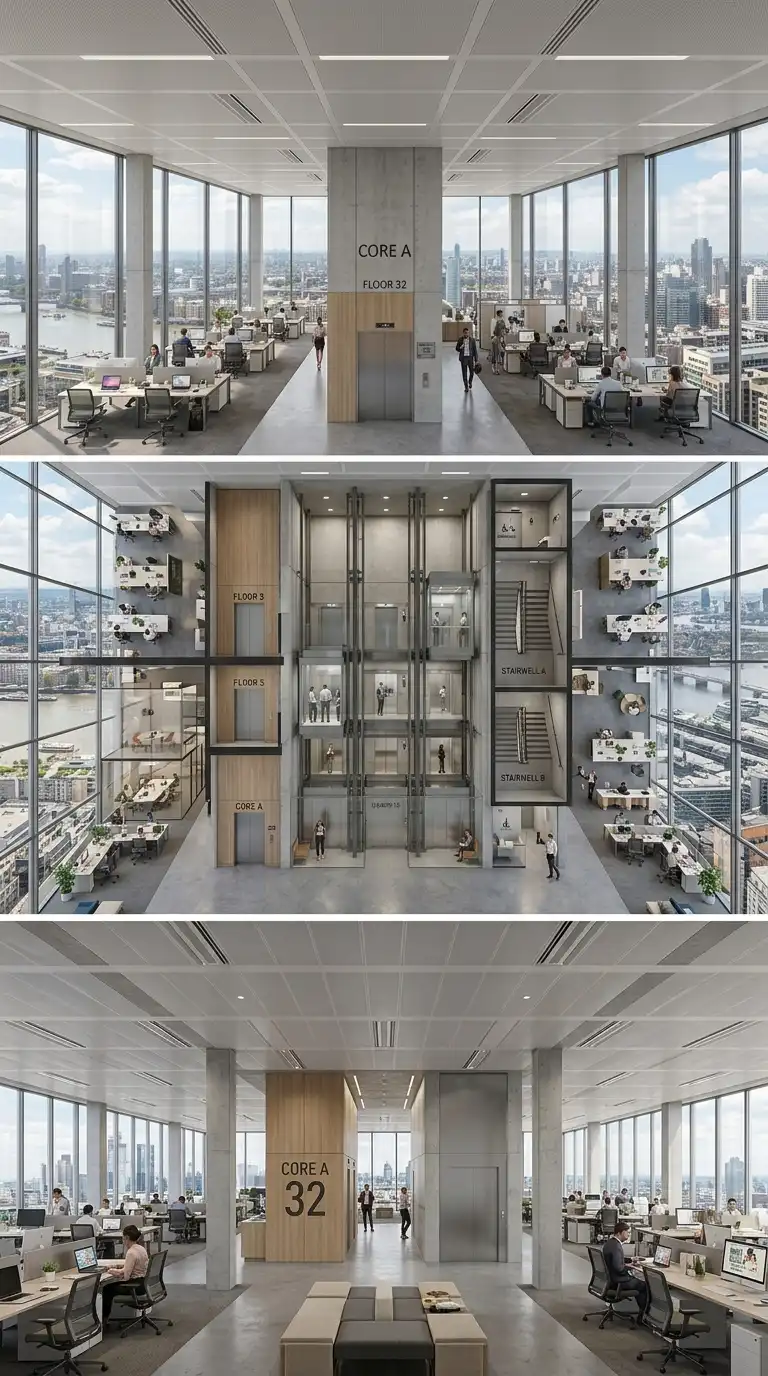
The central core tower is the most common office skyscraper type. The core (elevators, stairs, shafts) is in the centre of the floor plate. Offices wrap around the core on all four sides. The floor plate is square or rectangular.
This plan is efficient for circulation and services. The emotional effect is vertical, dense, and urban.
Quick Tips
- The core should be centrally located for equal access.
- Floor plates should be square or nearly square.
- Windows on all four facades.
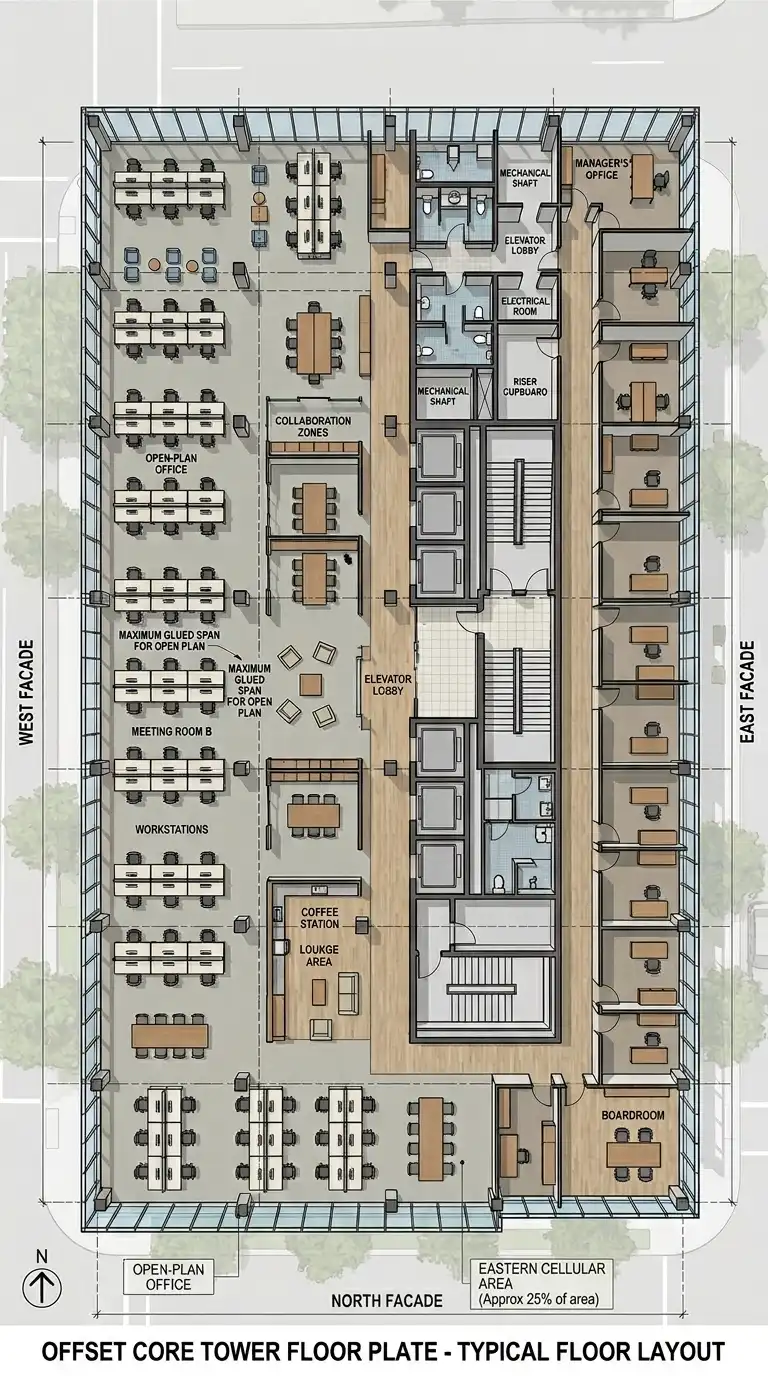
4. The Offset Core Tower
The offset core tower places the core off-centre, creating a large, uninterrupted floor plate on one side and a smaller plate on the other. The large plate can be used for open-plan offices. The small plate for private offices or meeting rooms.
This plan offers flexibility and variety. The emotional effect is dynamic, flexible, and spatially varied.
Quick Tips
- The core should be offset to one side or corner.
- The larger floor plate should be at least 15 metres wide for open plan.
- The smaller plate can be 8-10 metres wide for cellular offices.
5. The Atrium Office
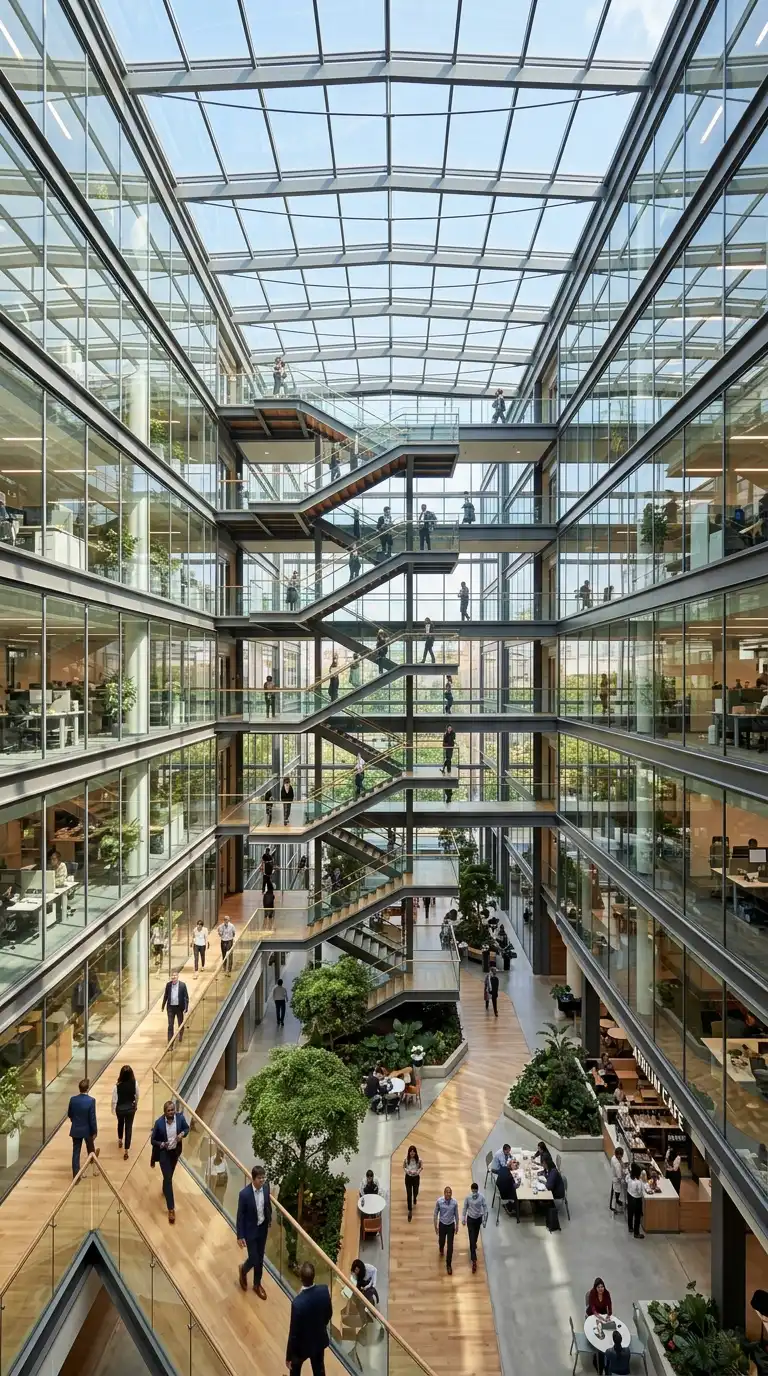
The atrium office has a large central space open to the sky, surrounded by office floors. The atrium brings natural light deep into the building. It creates a communal heart — a place for gathering, eating, and informal meeting.
This plan is ideal for collaborative companies and large floor plates. The emotional effect is luminous, communal, and vertical.
Quick Tips
- The atrium should be at least 6 metres wide to feel generous.
- Offices should have windows to both the exterior and the atrium.
- The atrium should have stairs, not just elevators, to encourage movement.
6. The Courtyard Office
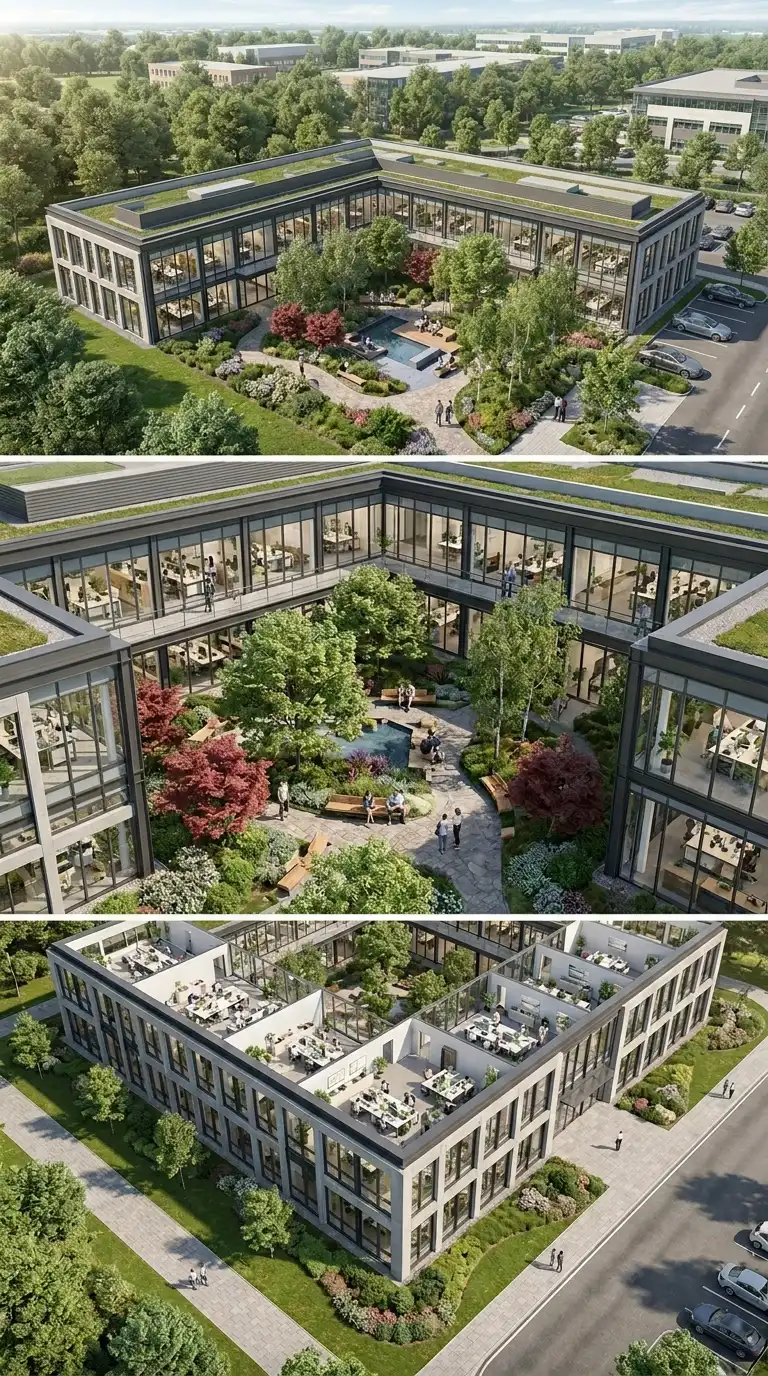
The courtyard office wraps around a central outdoor courtyard. The building is single-loaded around the courtyard — offices face the courtyard on one side and the exterior on the other. The courtyard provides light, air, and outdoor space.
This plan is ideal for suburban or low-rise office campuses. The emotional effect is calm, green, and inward-focused.
Quick Tips
- The courtyard should be at least 10×10 metres to feel generous.
- Offices should have windows to both courtyard and exterior.
- The courtyard should be landscaped with seating and shade.
7. The Bar Office
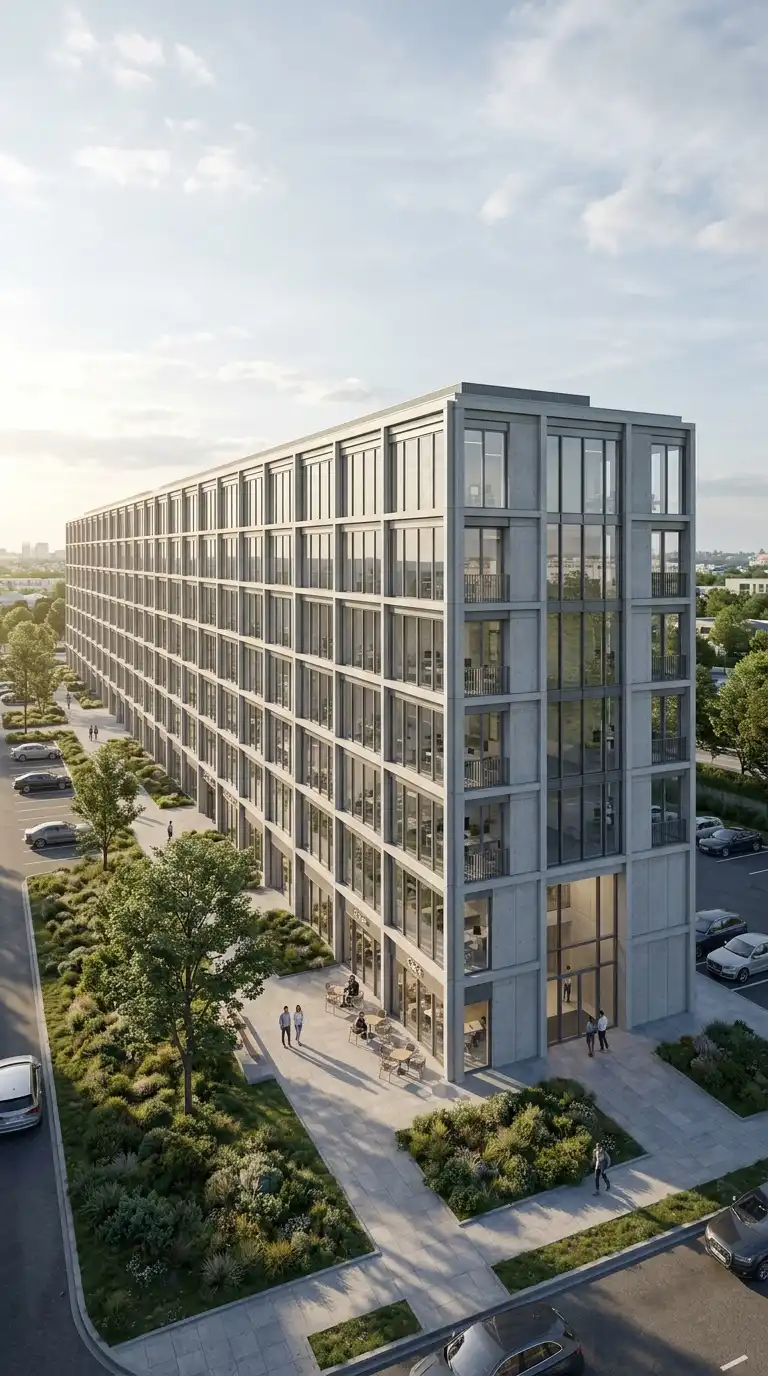
The bar office is a long, narrow building, typically 3-6 storeys tall. The plan is a simple bar with offices on both sides of a central corridor (double-loaded) or offices on one side of a corridor facing a view (single-loaded).
This plan is efficient and well-lit. It is ideal for suburban office parks and urban infill sites. The emotional effect is rational, horizontal, and efficient.
Quick Tips
- The bar should be 12-15 metres deep for double-loaded, 9-10 metres for single-loaded.
- The long facade should face south (northern hemisphere) for solar gain.
- The bar should be broken with courtyards or shifts in direction for longer buildings.
8. The Campus Office
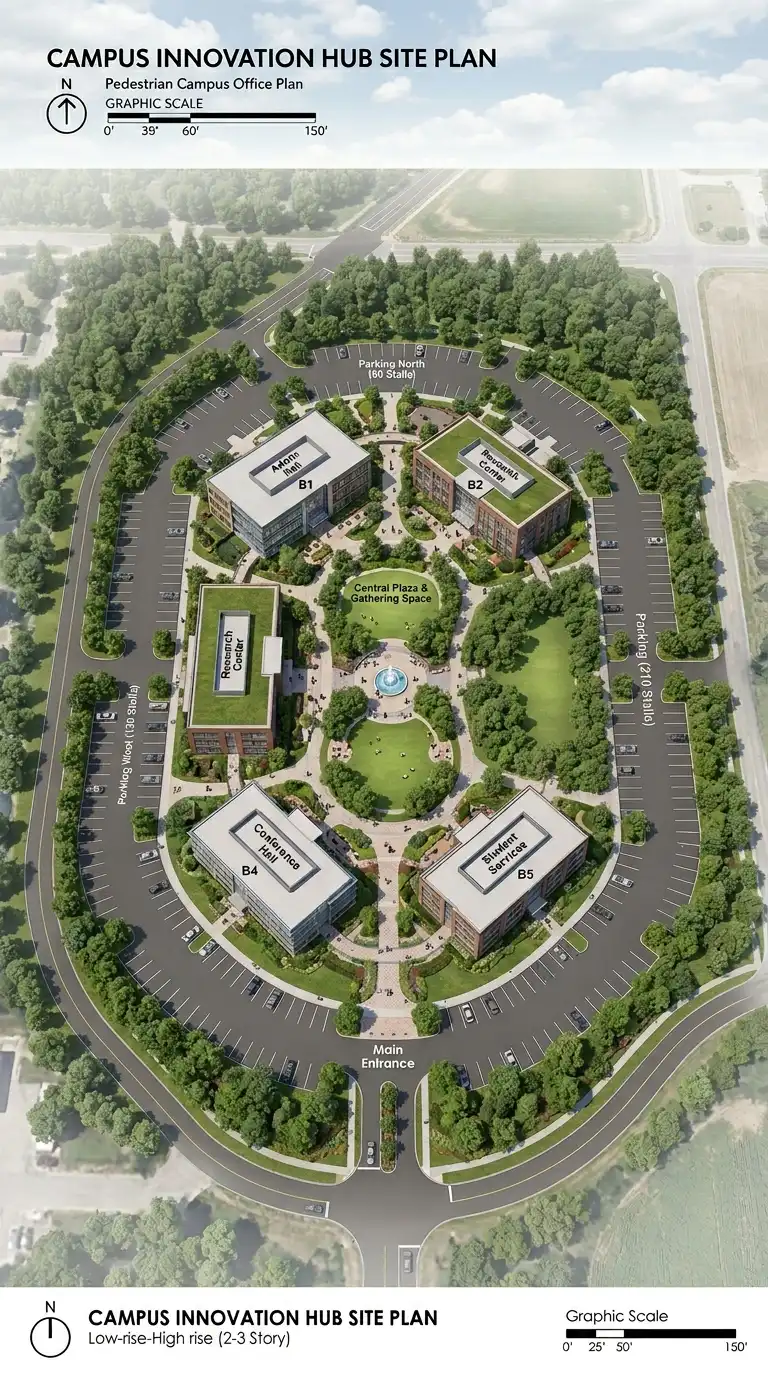
The campus office spreads multiple buildings across a landscaped site. Buildings are low-rise (2-5 storeys), connected by paths, plazas, and courtyards. Each building can have its own identity and function.
This plan is ideal for technology companies, research parks, and suburban locations. The emotional effect is park-like, collegiate, and dispersed.
Quick Tips
- Buildings should be clustered around shared open spaces.
- Parking should be peripheral, not between buildings.
- Walking distances between buildings should be under 5 minutes.
9. The Green Office
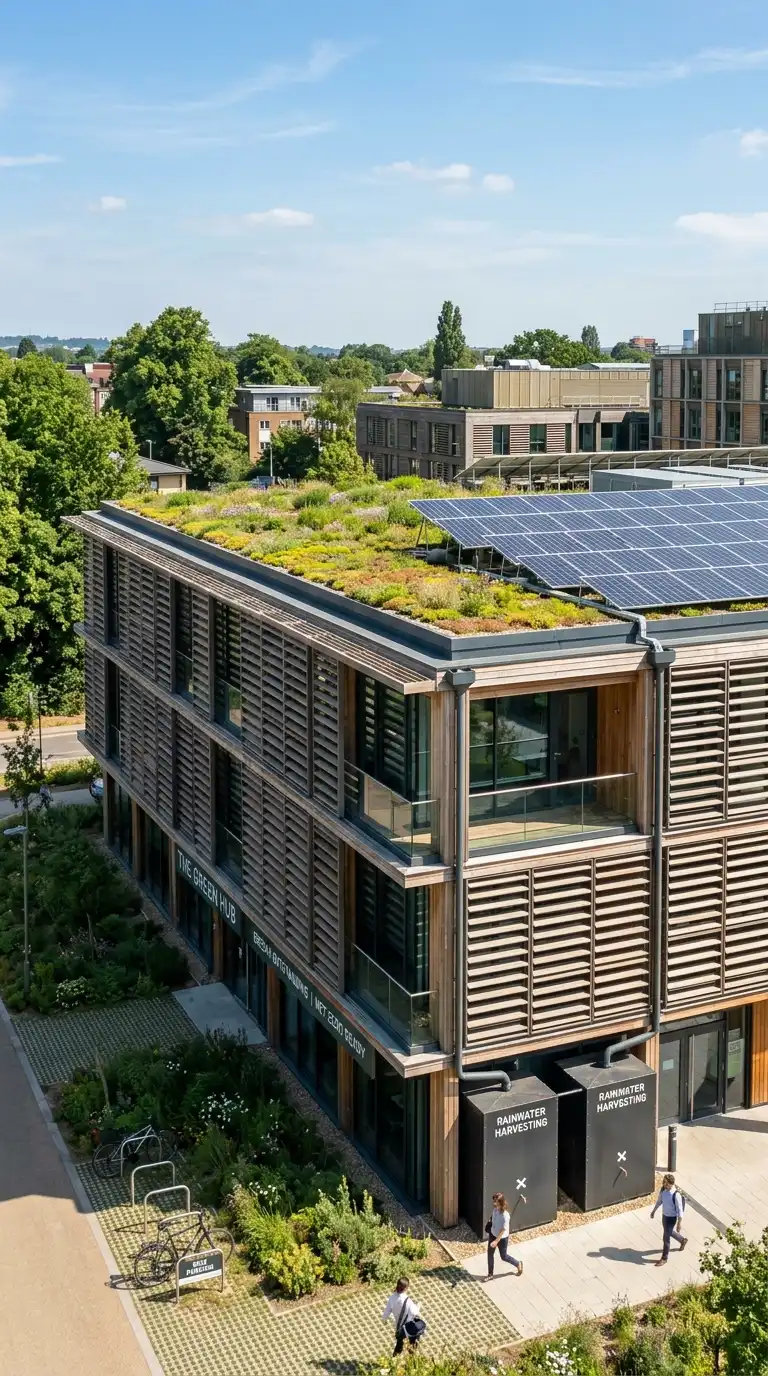
The green office integrates sustainable design into every aspect of the building. The facade has high-performance glazing and external shading. The roof is planted. Rainwater is harvested. Energy is generated by solar panels. The building is designed for passive heating and cooling.
This plan is ideal for environmentally conscious companies and for meeting energy codes. The emotional effect is responsible, healthy, and forward-looking.
Quick Tips
- Orient the building for passive solar gain — long axis east-west.
- Use high-performance glazing and external shading.
- The roof should be green or solar, or both.
10. The Flexible Office
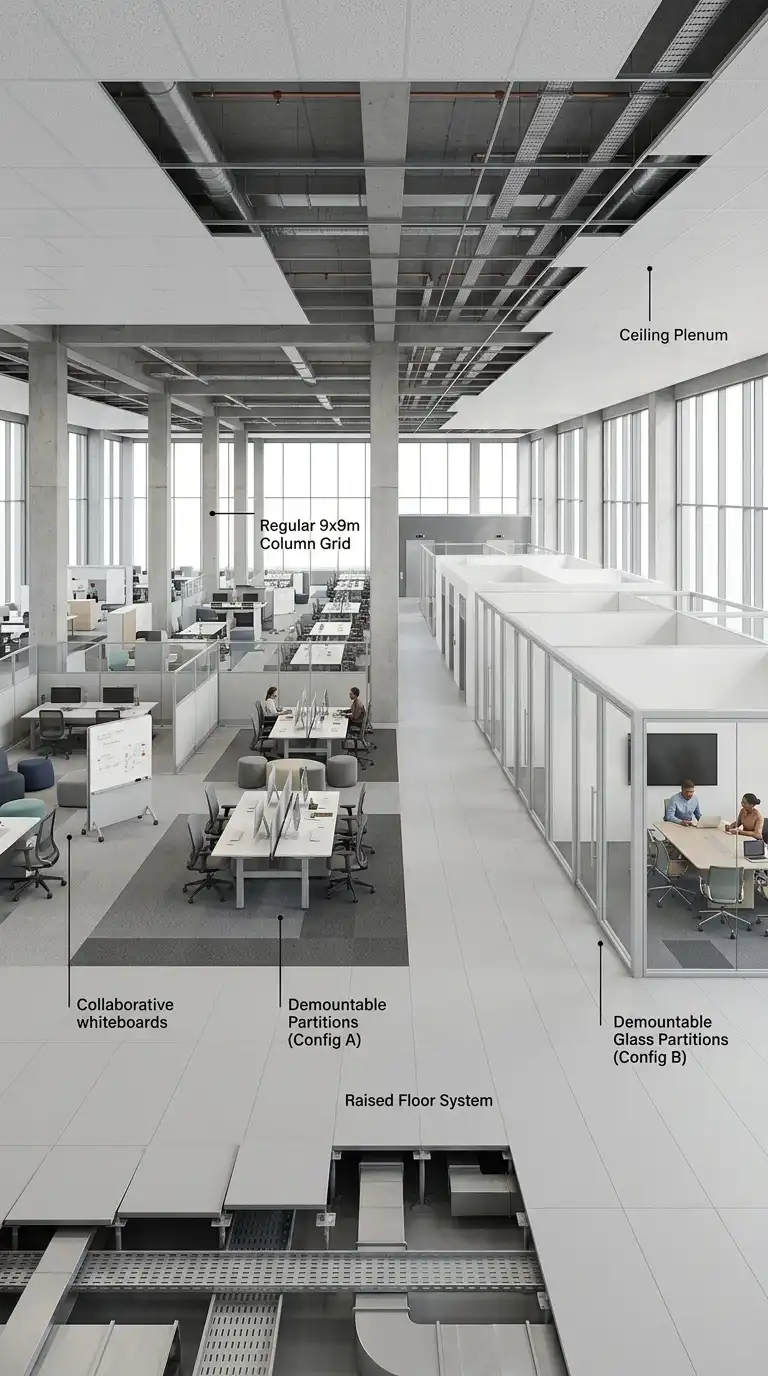
The flexible office is designed for change. The structure is regular and generous. Floors are tall. Windows are large. Mechanical systems are oversized. Interior walls are demountable, not permanent. The building can be subdivided or opened up as tenants change.
This plan is ideal for speculative office development and co-working spaces. The emotional effect is adaptable, future-proof, and efficient.
Quick Tips
- Use a regular column grid (8×8 metres or 9×9 metres).
- Floor-to-floor height should be at least 4 metres.
- Use raised floors and ceiling plenums for flexible services.
11. The Collaborative Office
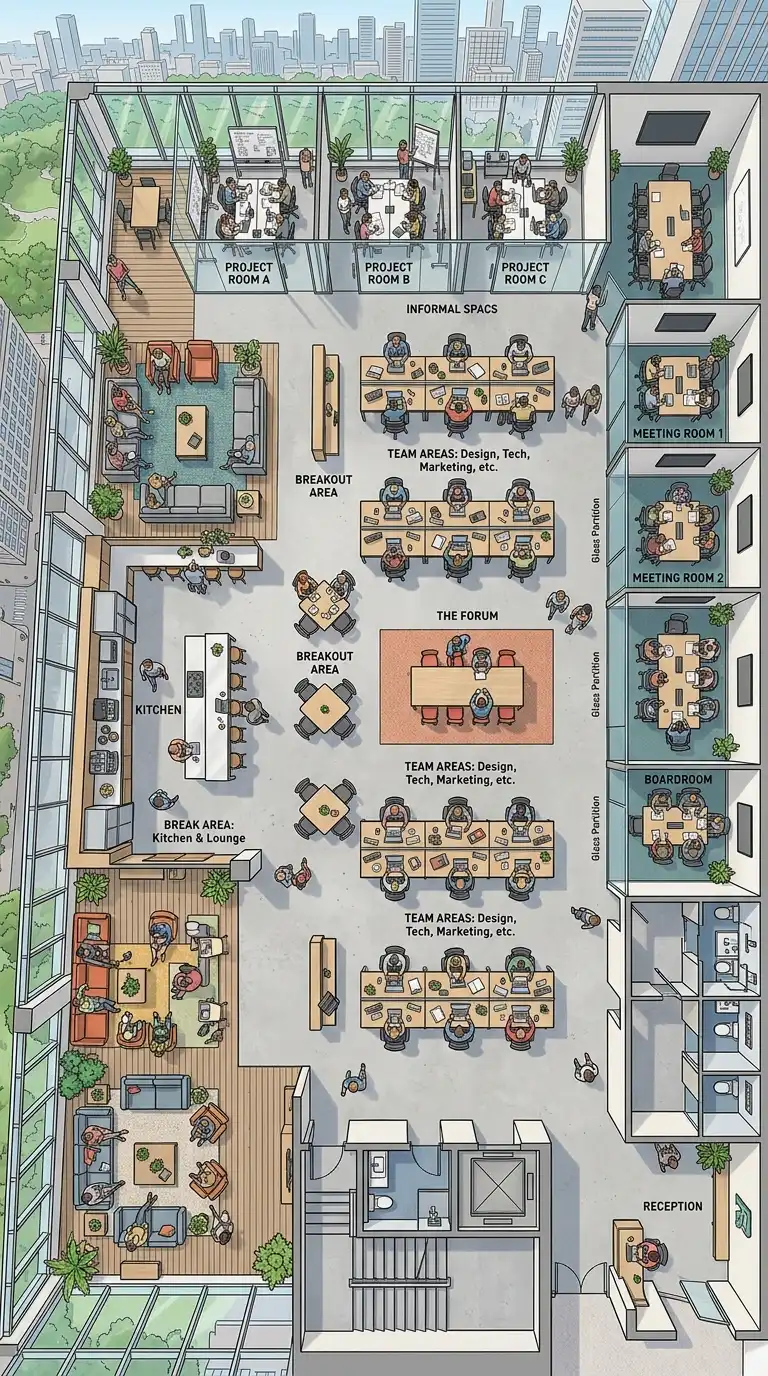
The collaborative office prioritises shared spaces over private offices. The plan includes many meeting rooms, break areas, project rooms, and lounges. Private workstations are smaller and more numerous. The balance is tipped toward group work.
This plan is ideal for creative and technology companies. The emotional effect is social, energetic, and collaborative.
Quick Tips
- Allocate at least 30 percent of floor area to shared spaces.
- Place shared spaces near windows — they need light and view.
- Provide a mix of formal meeting rooms and informal lounges.
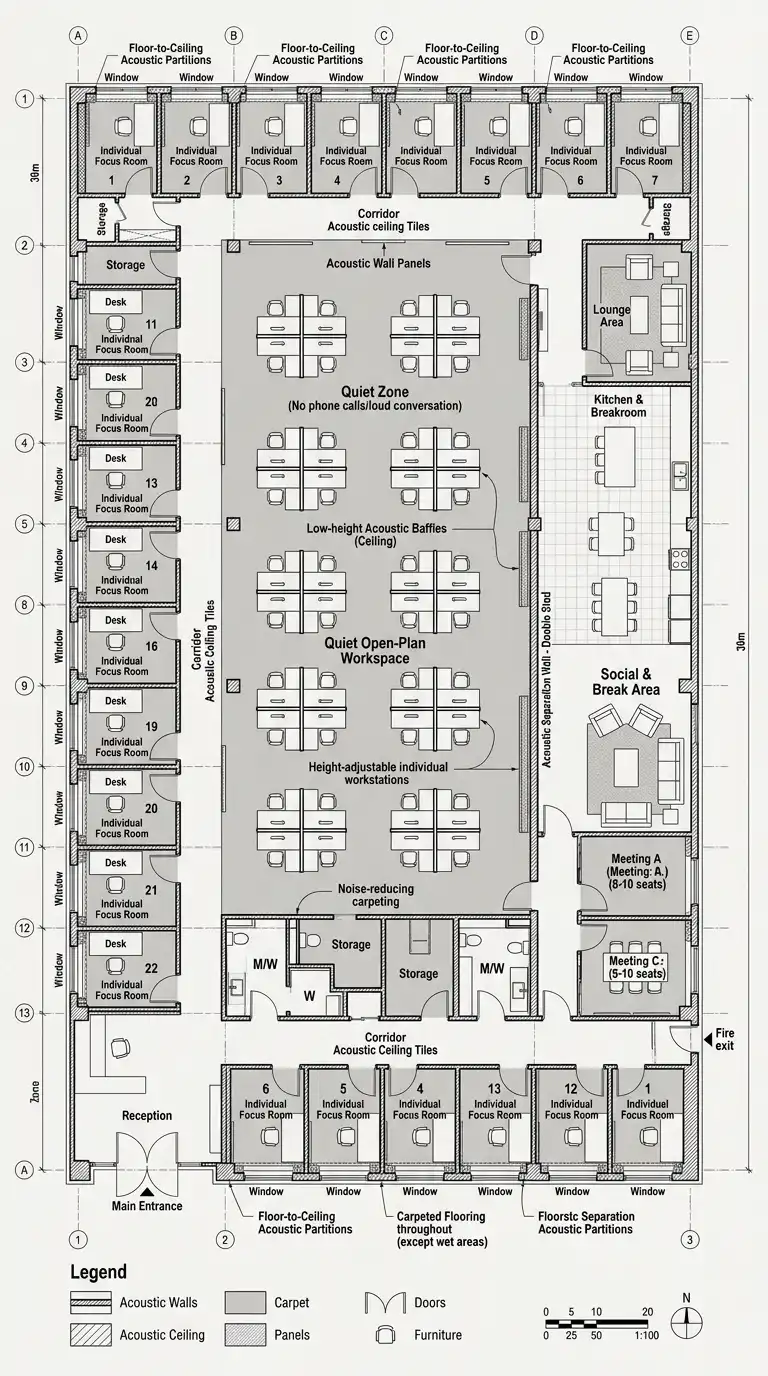
12. The Silent Office
The silent office prioritises concentration over collaboration. The plan includes many small, enclosed rooms for individual work. Open areas are quiet. Sound-absorbing materials are used throughout. Shared spaces are separate.
This plan is ideal for law firms, accounting firms, and any work requiring deep concentration. The emotional effect is quiet, focused, and private.
Quick Tips
- Use sound-absorbing materials: acoustic panels, carpet, fabric walls.
- Enclose private offices with floor-to-ceiling walls.
- Place shared spaces (kitchen, lounge) away from work areas.
Final Thoughts
The office building is not just a container for work. It shapes how we work, how we collaborate, how we concentrate, and how we feel. A deep plan office is efficient but dark. A shallow plan office is bright but less efficient. An atrium office is communal but noisy. A silent office is private but isolating. There is no single best office type — only the right type for the organisation, the site, and the culture.
These 12 office types are not mutually exclusive. A green office can have a courtyard. A flexible office can be a central core tower. A collaborative office can be a bar office. The best office buildings draw from multiple types, adapting and combining to fit the specific needs of the people who work inside.