Brutalism is an aesthetic of raw honesty. The name comes from béton brut — raw concrete in French. Emerging from post-war Europe in the 1950s and flourishing through the 1970s, Brutalist architecture makes no effort to hide its structure, materials, or construction methods. Concrete is the primary material, often board-formed with visible grain and seam marks. Forms are blocky, sculptural, and often asymmetrical. The emotional effect is monumental, serious, and unapologetically heavy.
These 14 Brutalist architecture drawings cover residential, civic, landscape, and interior subjects. Each drawing includes defining characteristics, compositional principles, and techniques for rendering concrete.
1. The Board-Formed Concrete House
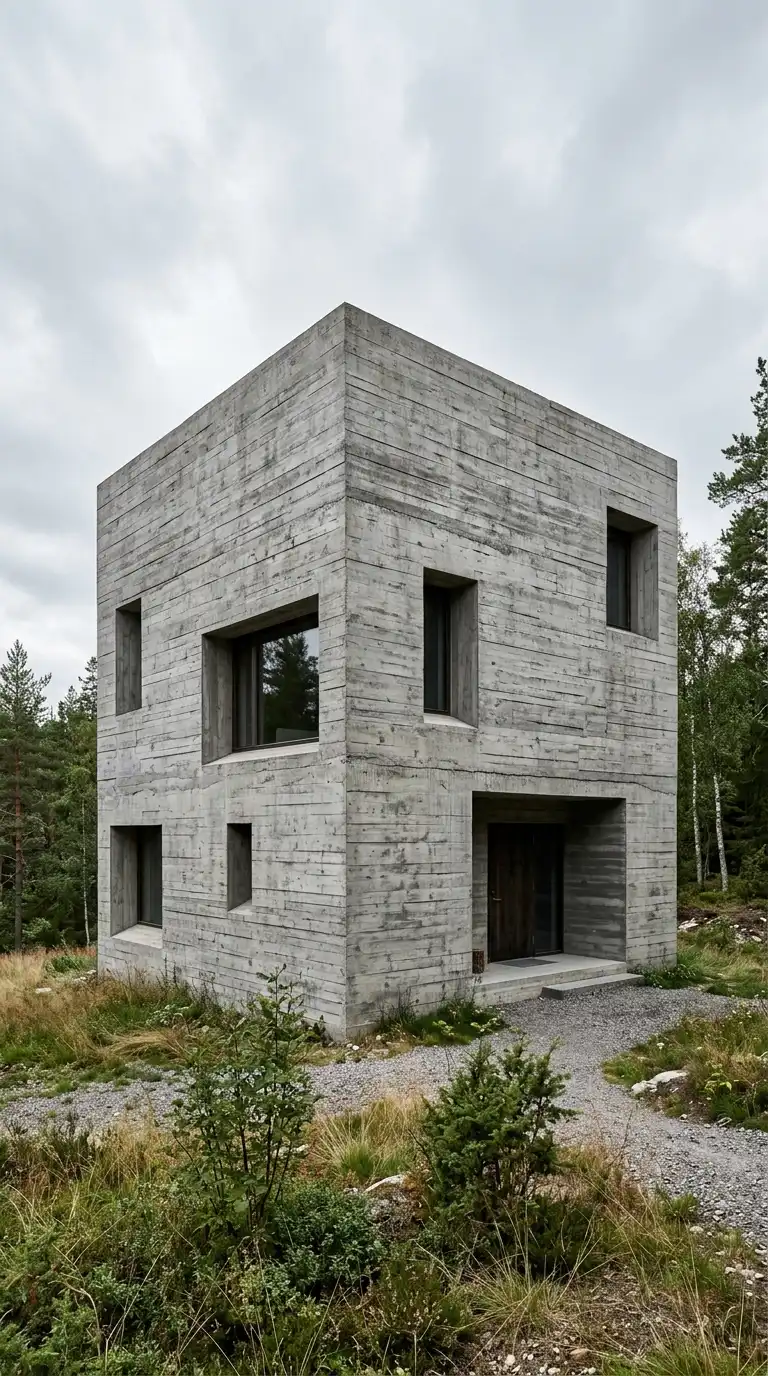
Board-formed concrete is the signature Brutalist material. The house becomes a monolithic sculpture — walls, floors, and ceilings all poured in place, with the grain and seam marks of the wooden formwork visible on every surface. No cladding, no paint, no disguise. The design emphasises a single, massive volume rather than multiple small rooms. Deep-set window openings puncture the concrete like caves.
Quick Tips
- Emphasise the wood grain texture from the formwork in your shading.
- Use strong contrasts between the deep shadow of window openings and the bright concrete face.
- Keep the composition simple — one massive volume, not multiple small masses.
2. The Concrete Courtyard House
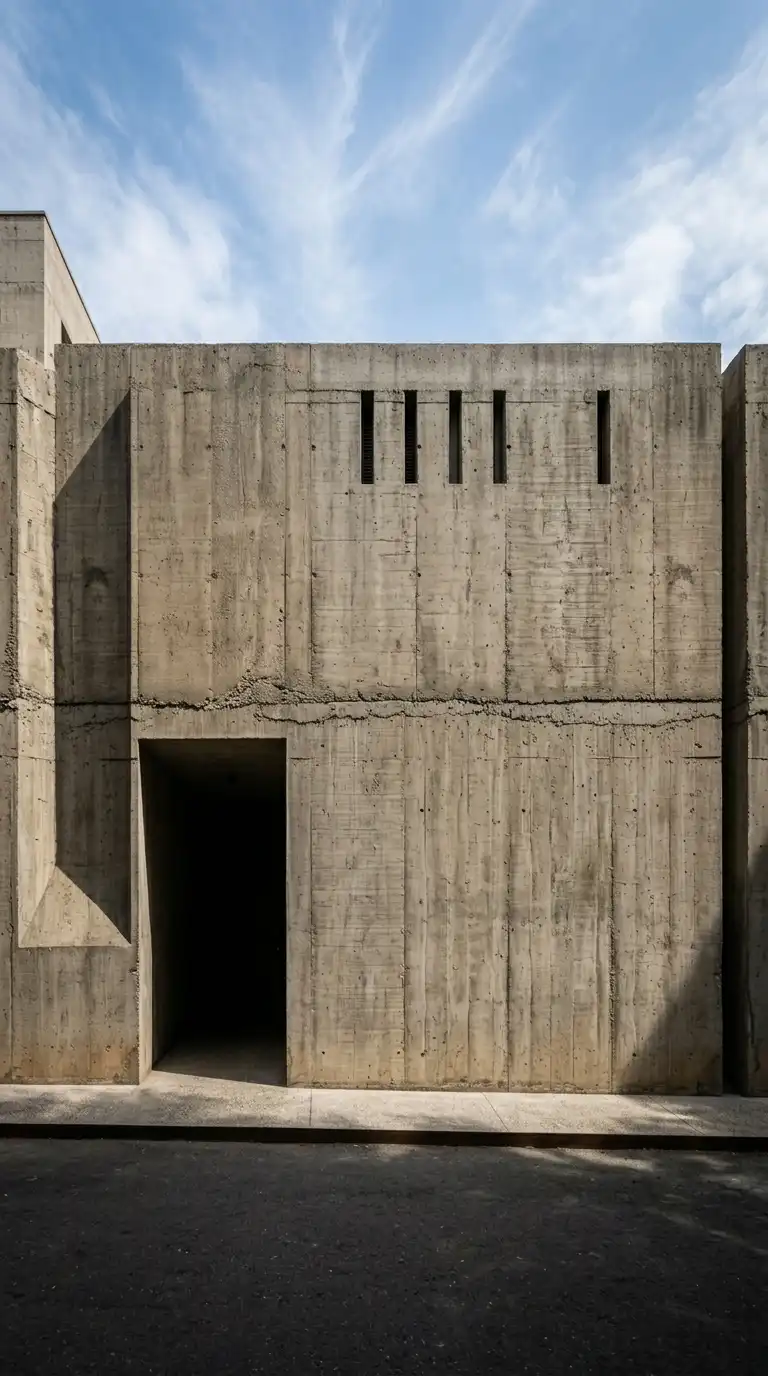
The courtyard is a natural partner to Brutalism. Concrete walls create privacy and security while the courtyard provides light, air, and outdoor space. The house turns inward, with all major rooms opening onto the courtyard. The street facade is windowless or nearly windowless — a sheer concrete wall that reveals nothing of what lies behind.
Quick Tips
- Draw the courtyard as the lightest area to draw the eye inward.
- Use heavy shading on the exterior walls to emphasise their mass and privacy.
- Add a single tree or water feature in the courtyard for scale and contrast.
3. The Terraced Hillside Brutalist
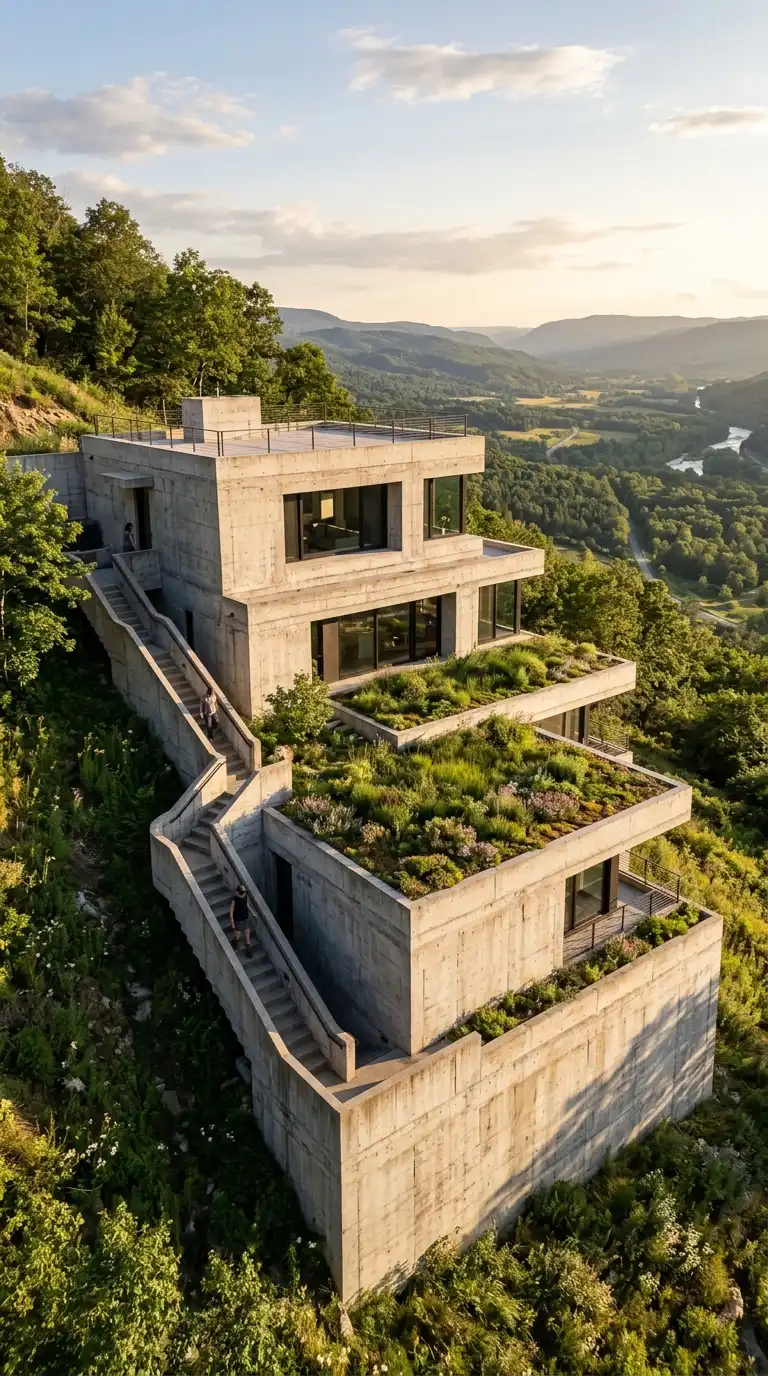
Brutalism excels on difficult sites. The terraced hillside design steps concrete platforms down a slope, each platform supporting a room or outdoor space. The building becomes part of the hill. The form is massive and sculptural from below, but from above it disappears into the landscape.
Quick Tips
- Use strong horizontals for the terrace edges to emphasise the stepping.
- Shade the undersides of each terrace heavily to create depth.
- Draw the hillside as a continuous form that the building emerges from.
4. The Concrete Tower
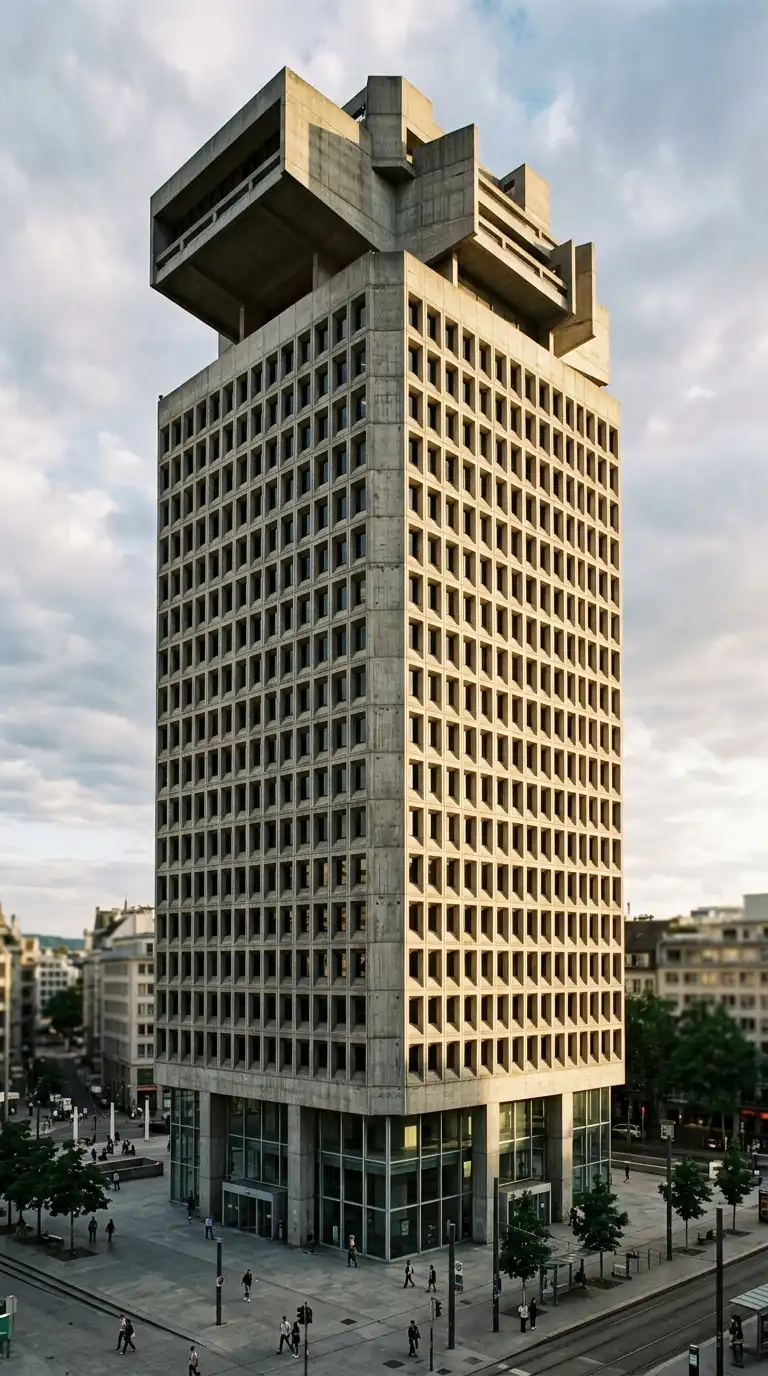
The concrete tower is Brutalism at its most heroic. A single vertical volume rises from a small footprint, with deep-set windows creating a rhythmic pattern across the facade. The tower reads as a sculptural object, not a stack of floors. The top is sculptural — a water tower, a viewing platform, or a dramatic cantilever.
Quick Tips
- Use strong vertical lines in your shading to emphasise height.
- Make the top of the tower distinct — a darker silhouette or a dramatic cantilever.
- Keep the base darker and heavier to anchor the tower to the ground.
5. The Brutalist Civic Centre
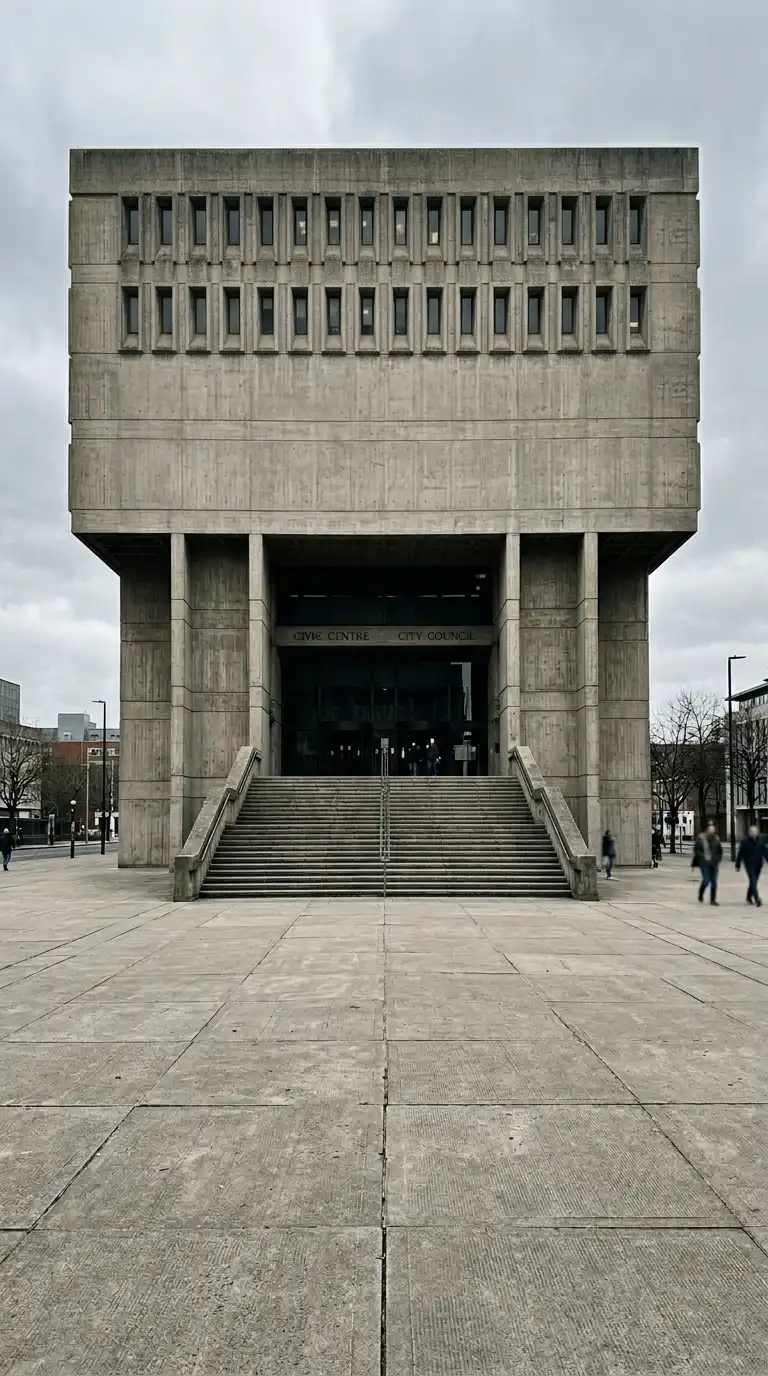
Civic buildings are Brutalism’s natural territory. The courthouse, library, or government building demands seriousness, permanence, and authority. The design is massive, symmetrical or carefully balanced asymmetrical, and raised on a podium. The entrance is recessed and monumental, often reached by a wide staircase.
Quick Tips
- Use a symmetrical composition to convey authority.
- Draw the entrance staircase as a dramatic foreground element.
- Keep windows minimal on lower floors to emphasise mass and security.
6. The Brutalist Church
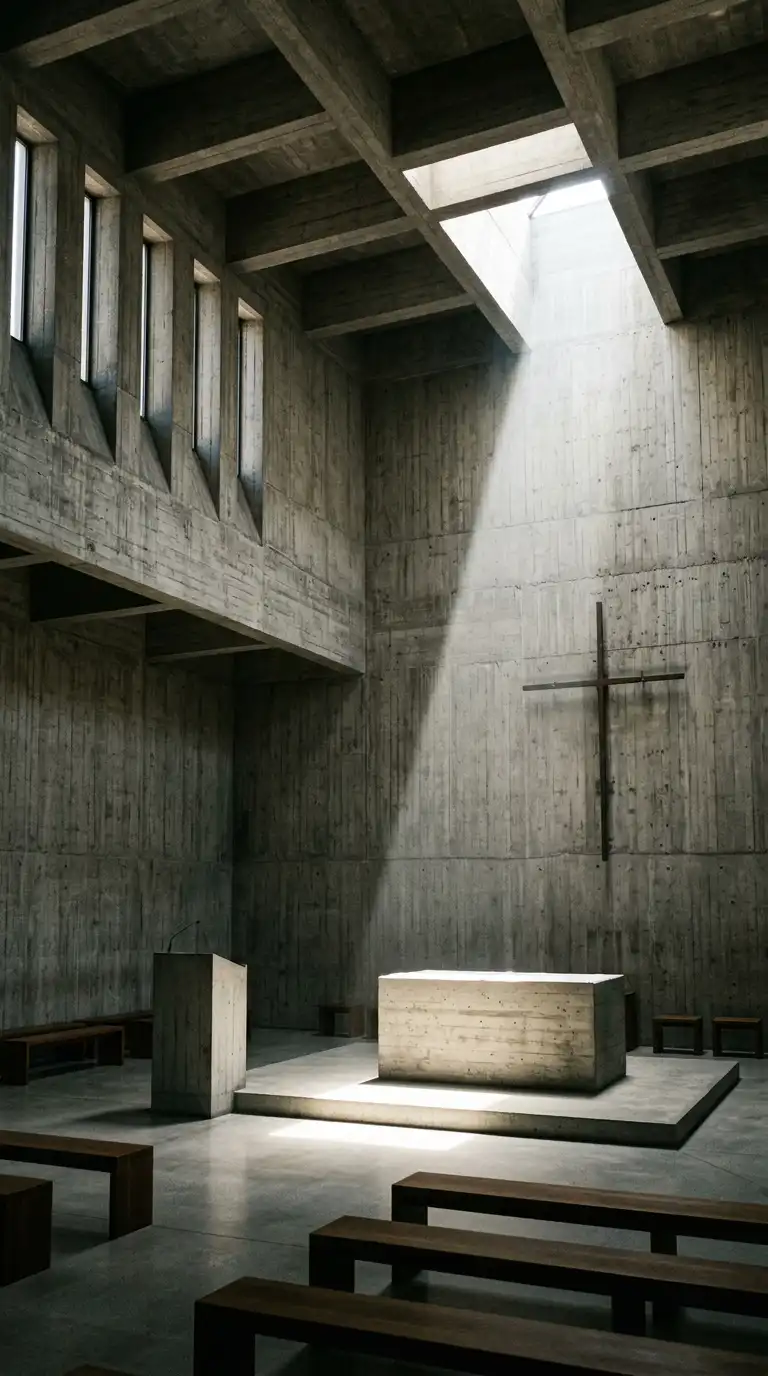
Sacred architecture and Brutalism share an interest in raw materiality, dramatic light, and spiritual weight. The Brutalist church replaces stained glass with concrete, pointed arches with angular forms, and ornament with structure. Light enters from above through deep-set windows or a dramatic skylight.
Quick Tips
- Use a single dramatic light source from above to create a spiritual atmosphere.
- Keep the composition simple — one tall volume, one dramatic light beam.
- Shade the interior heavily, leaving only the altar and light beam bright.
7. The Concrete Bridge
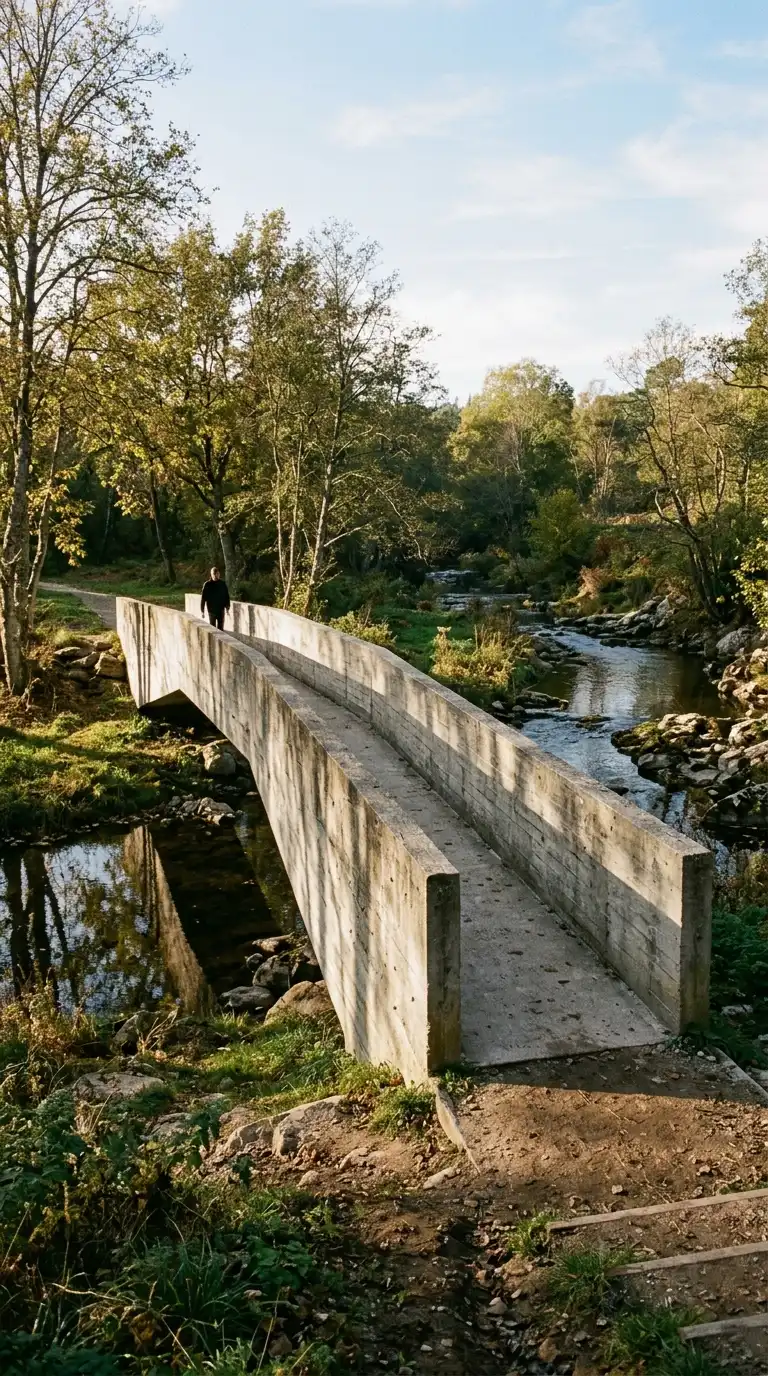
Brutalist engineering is as important as Brutalist architecture. The concrete bridge is pure structure expressed as form. Parapets, piers, and deck are all cast concrete. No railings, no cladding, no paint. The form follows the forces: deeper where bending moments are highest, thinner where forces are lower.
Quick Tips
- Draw the bridge in profile to show the varying depth of the structure.
- Emphasise the horizontal line of the deck against the vertical piers.
- Use water reflections to soften the massive concrete forms.
8. The Brutalist Garden Wall
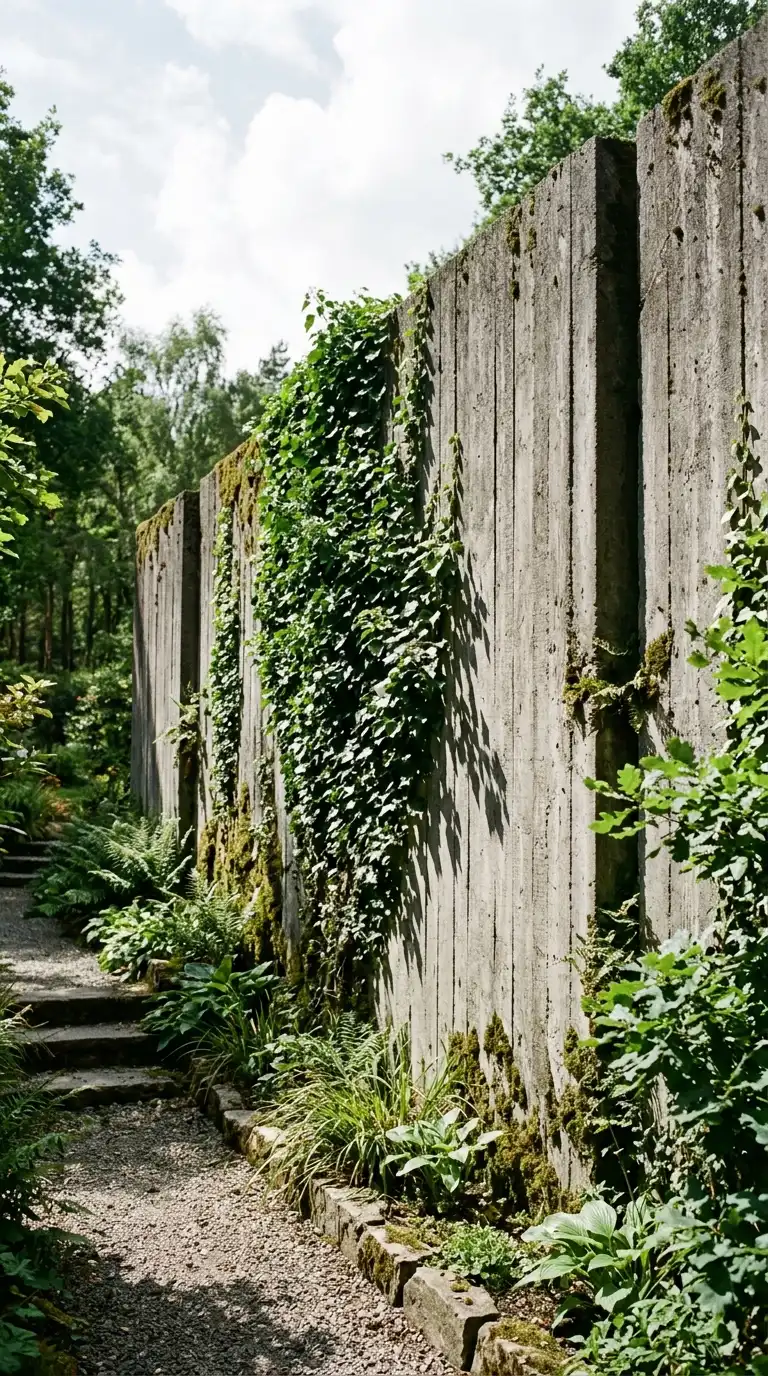
Brutalism is not only for buildings. The garden wall is a small-scale Brutalist gesture that transforms an ordinary landscape. A concrete wall 2-3 metres tall, board-formed, with deep reveals and shadow gaps, creates a backdrop for planting. Plants soften the concrete over time — moss, ivy, ferns establish in the formwork marks.
Quick Tips
- Draw the wall with strong vertical formwork lines.
- Add climbing plants as soft, organic shapes contrasting with the rigid concrete.
- Use deep shadows in the reveals to emphasise the wall’s thickness.
9. The Concrete Stair
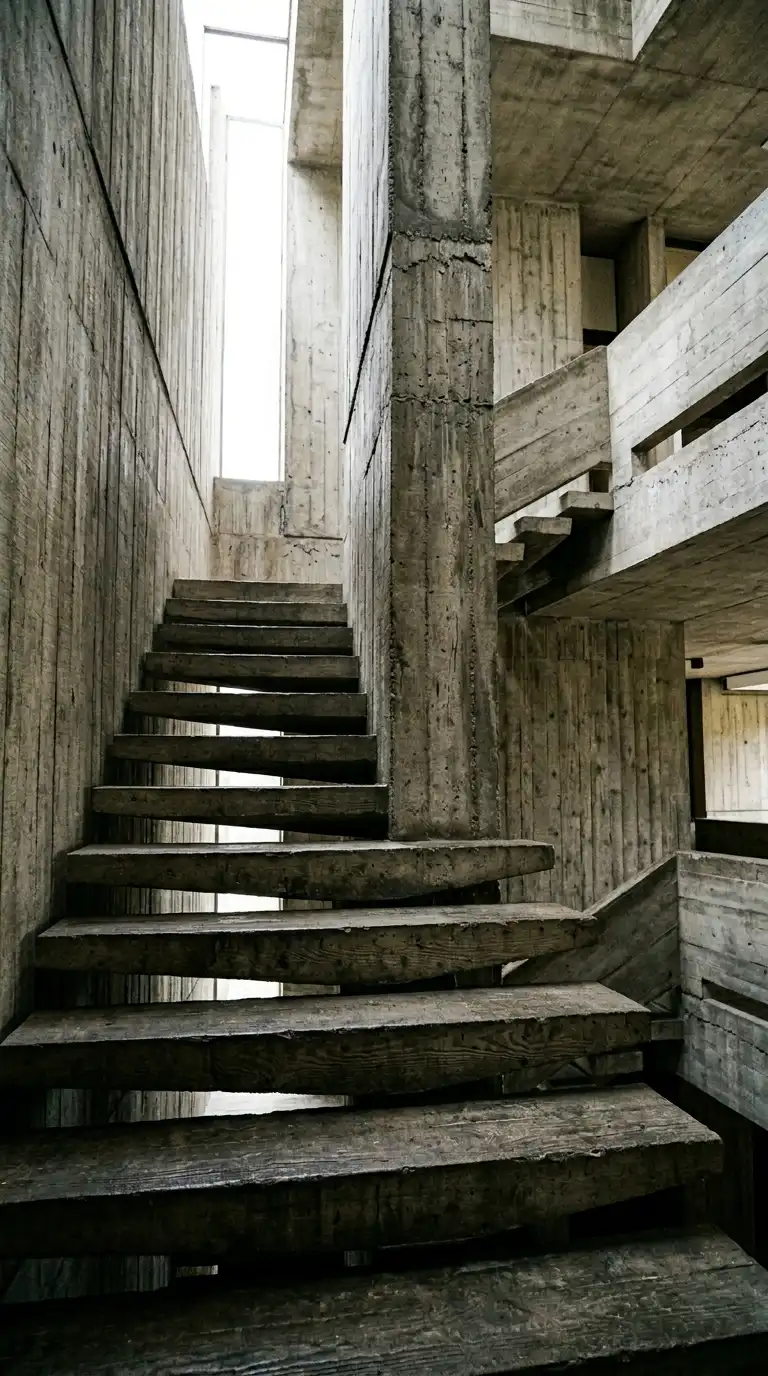
The stair is an opportunity for sculptural drama. The Brutalist concrete stair is a single cast piece — treads, risers, and stringers all poured together. No railings, or railings cast as part of the concrete mass. Cantilevered treads are particularly effective: each tread projects from a central concrete spine with no visible support.
Quick Tips
- Draw the stair in perspective to emphasise the cantilever.
- Use strong shadows under each tread to emphasise the floating effect.
- Keep the composition simple — the stair is the entire subject.
10. The Brutalist Apartment Block
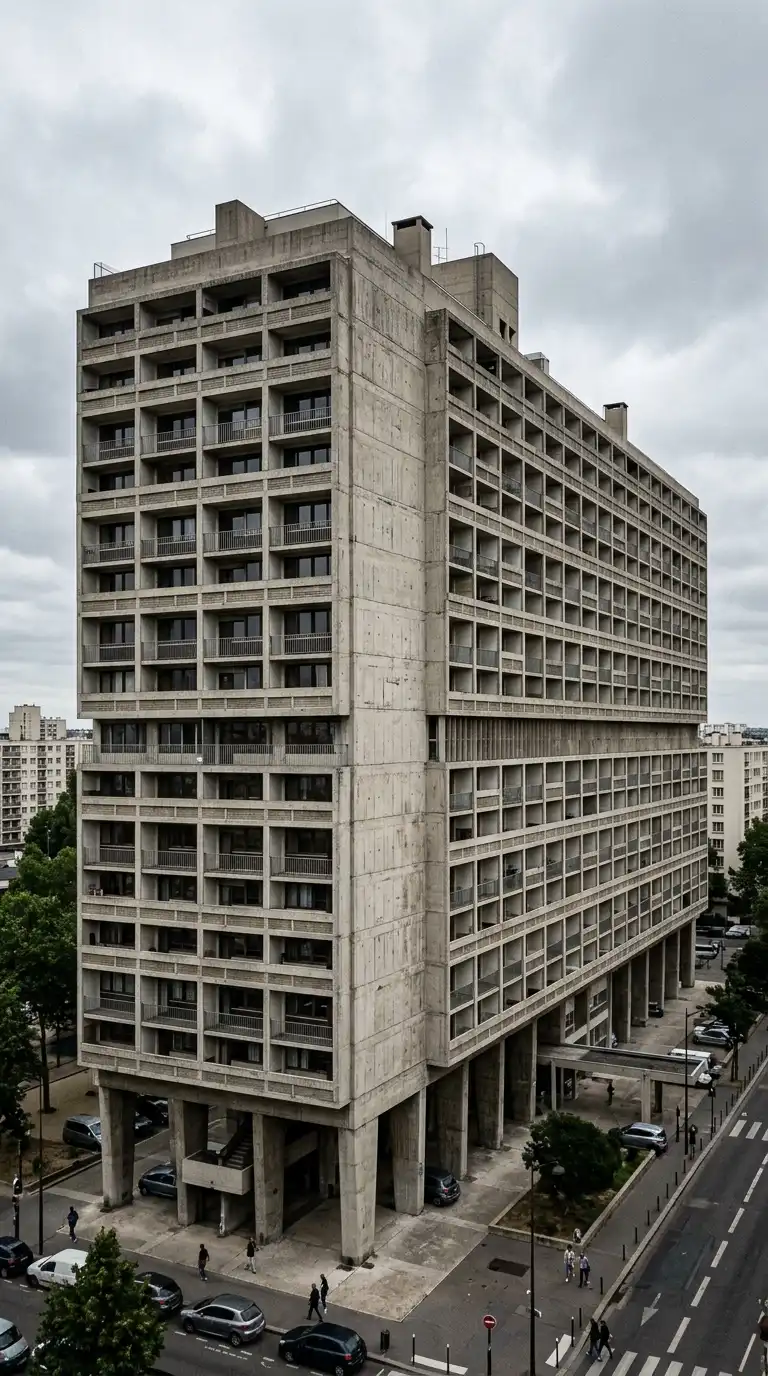
Social housing is Brutalism’s most controversial legacy. The Brutalist apartment block uses repetitive modular forms to create a massive, sculptural whole. Each unit is identical, expressed on the facade as a concrete frame around a deep-set window and balcony. The block is raised on pilotis, leaving the ground floor open.
Quick Tips
- Use repetition as the primary compositional device.
- Draw the pilotis as massive, heavy elements contrasting with the lighter upper floors.
- Keep the ground floor dark to emphasise the floating effect of the building above.
11. The Concrete Fireplace
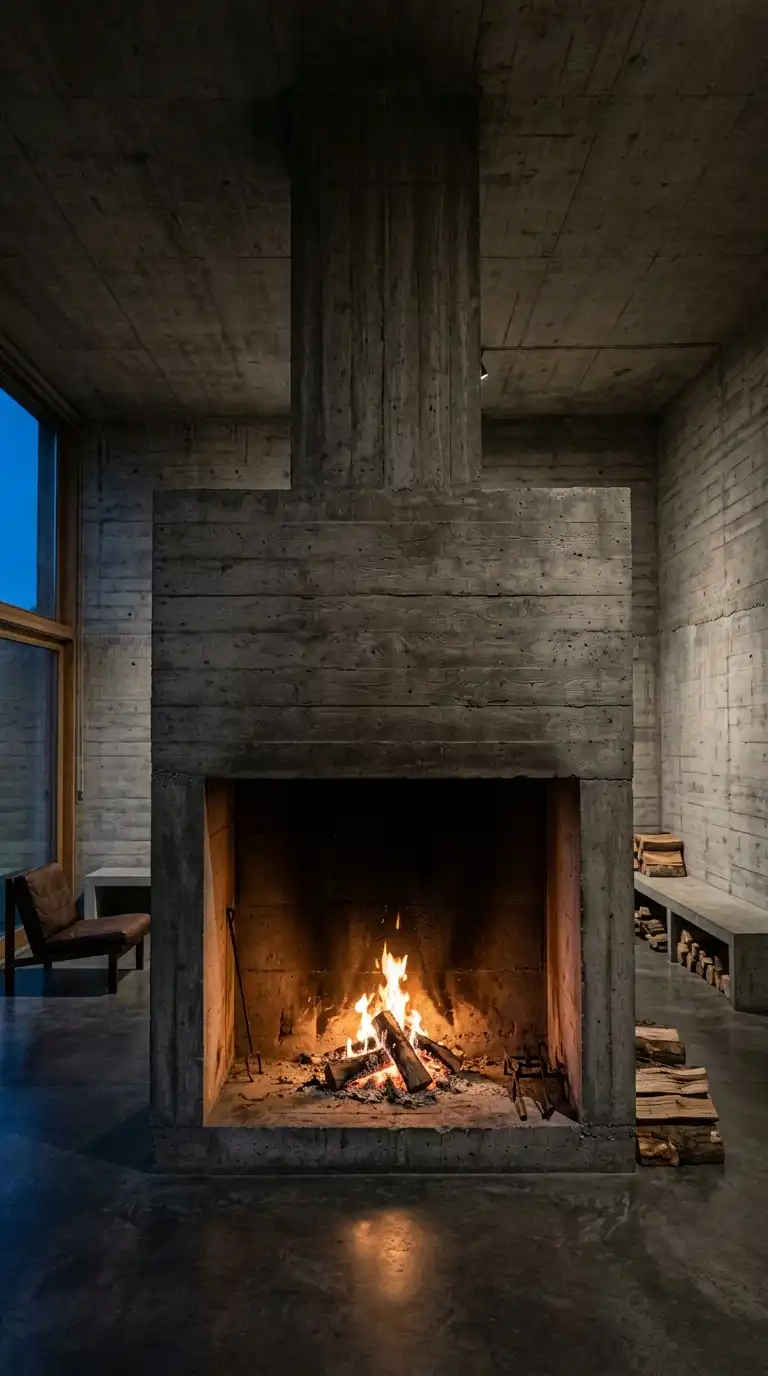
At the smallest scale, the Brutalist fireplace brings raw concrete into the living room. A massive concrete surround, board-formed, with a deep, dark opening for the fire. The chimney is also concrete, rising through the ceiling like a column. The fireplace is the room’s focal point — heavy, grounding, and warm despite its material.
Quick Tips
- Draw the fireplace as the darkest element in the room except for the fire itself.
- Use the fire as the only source of warm light in an otherwise cool grey scene.
- Emphasise the thickness of the concrete surround.
12. The Brutalist Library
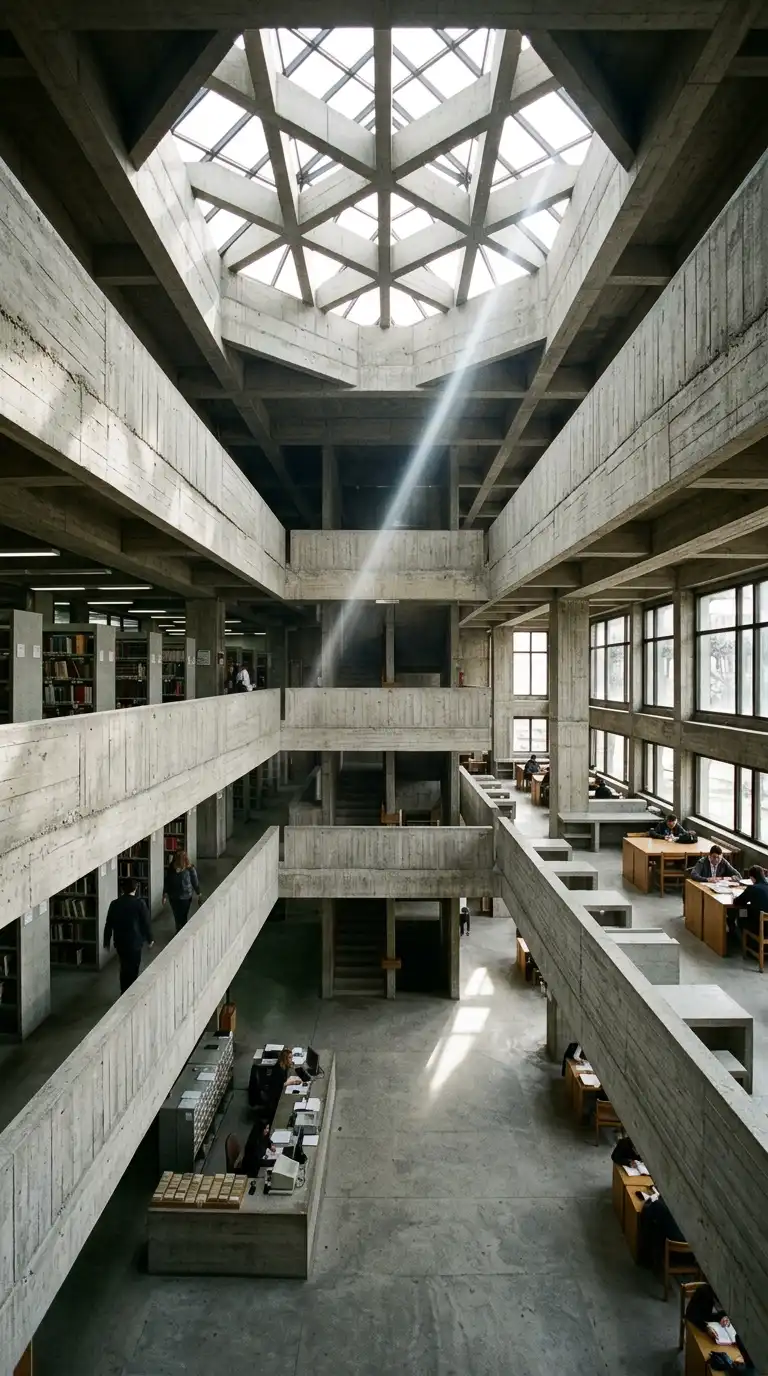
Libraries demand quiet, light, and order. The Brutalist library delivers all three. The exterior is a massive concrete volume with deep-set, repetitive windows. The interior is organised around a central atrium, with concrete balconies and stairs visible from every level. Light enters from above through a dramatic skylight.
Quick Tips
- Use the central atrium as the brightest point in the drawing.
- Draw the balconies receding into the distance to emphasise depth.
- Use small figures on the balconies to show the scale of the space.
13. The Concrete Retaining Wall as Architecture
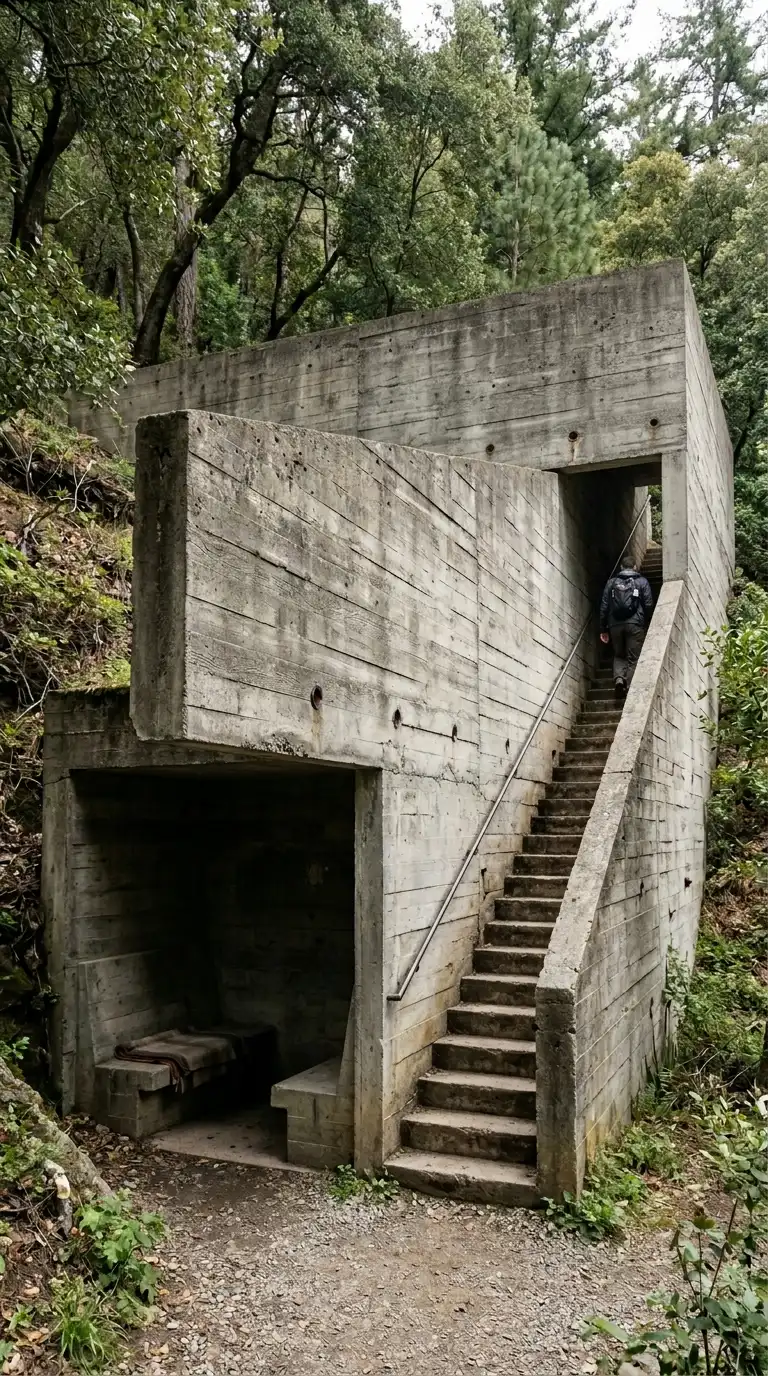
On a sloped site, the retaining wall is not infrastructure — it is architecture. The Brutalist retaining wall becomes a habitable element: terraced seating, planters, stairs, and even rooms carved into its thickness. The wall is thick enough to contain spaces: a bench recessed into the face, a stair rising through the thickness.
Quick Tips
- Draw the wall in section to show the spaces carved into its thickness.
- Use the hillside as a dark background to make the concrete wall stand out.
- Add a human figure on the bench to show scale.
14. The Brutalist Water Tower
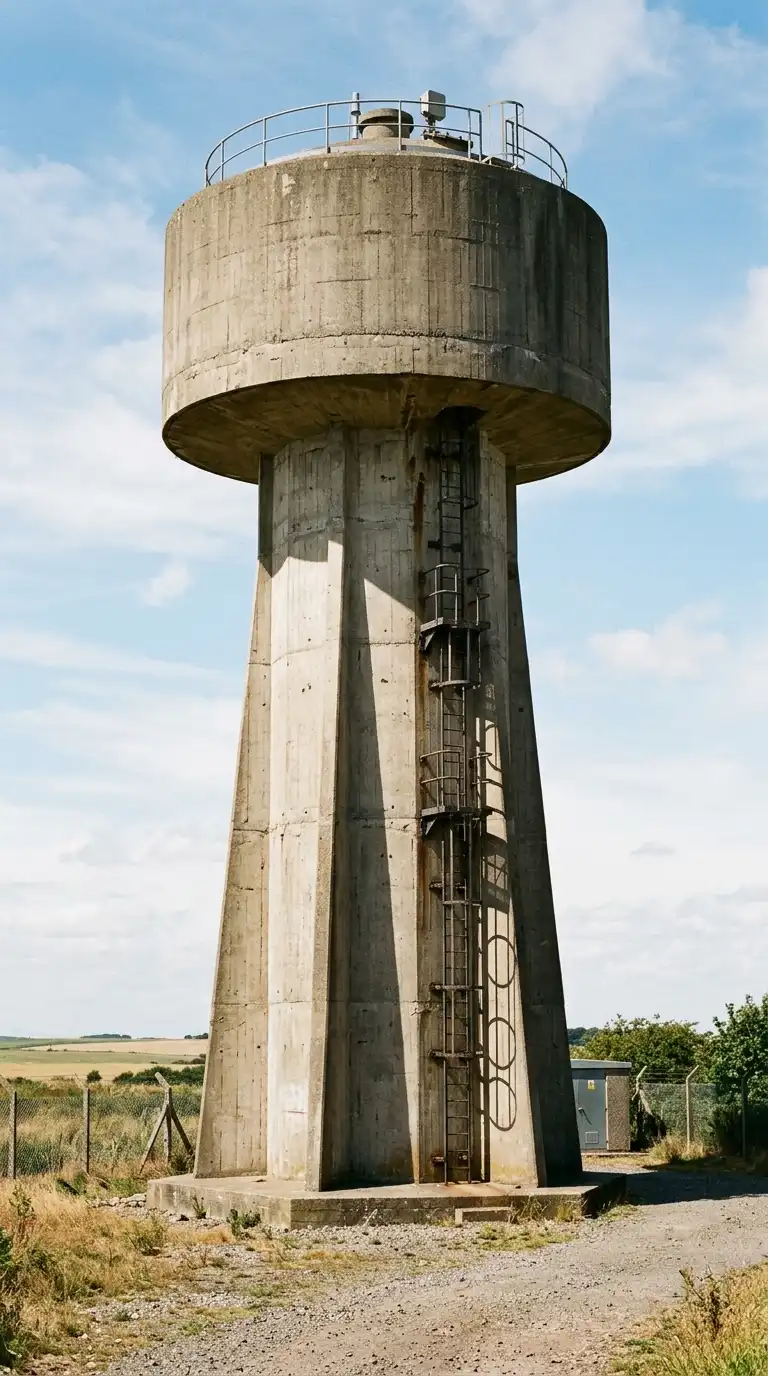
The water tower is a purely functional structure that Brutalism transforms into a landmark. A concrete shaft rises from the ground, supporting a massive tank at the top. The shaft is board-formed, often tapering or faceted. The tank is also concrete, sometimes exposed, sometimes enclosed. The form is honest: the shaft carries the weight, the tank holds the water.
Quick Tips
- Draw the tower as a strong vertical against a light sky.
- Emphasise the taper of the shaft to make the tower feel stable.
- Use the tank as a heavy, dark mass at the top to anchor the composition.
Final Thoughts
Brutalism is not for everyone. It is heavy, serious, and unapologetically grey. But for those who appreciate raw materiality, honest structure, and sculptural form, Brutalism offers an aesthetic that no other style can match. It does not try to be pretty. It tries to be true.
These 14 Brutalist drawings are not mutually exclusive. A board-formed house can have a courtyard. A concrete tower can have a civic programme. A library can have a fireplace. The best Brutalist drawings are not the most decorated — they are the most honest. They show the concrete, the formwork, the shadows, and the mass. No disguise, no decoration, no apology. That is Brutalism.