Futuristic architecture is not a style but an attitude. It looks forward, not back. It asks: what if? It embraces new materials, new structures, and new ways of living. Futuristic architecture is often speculative, sometimes unbuildable today, but always expanding the imagination of what architecture can become.
These 18 futuristic architecture ideas span floating cities, space habitats, responsive skins, and radical urbanisms. Each idea includes defining characteristics, speculative principles, and architectural provocations.
1. The Floating City
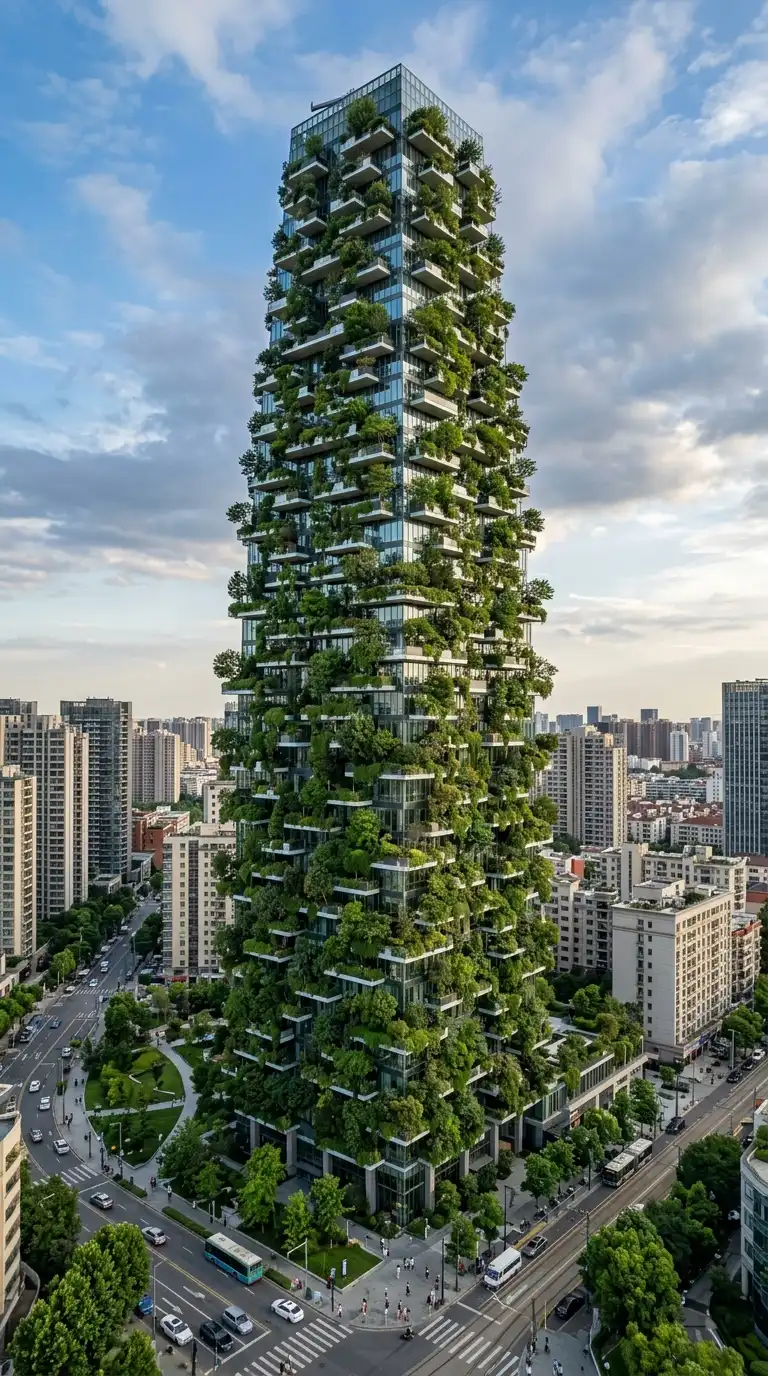
What if a city could float on water? The floating city is built on interconnected platforms that rise and fall with tides and storms. The city can be towed to new locations, expanded indefinitely, or reorganised as needed. Platforms support buildings, streets, parks, and infrastructure.
Floating cities address sea-level rise, urban density, and the desire for waterfront living. The emotional effect is nautical, optimistic, and precarious.
Quick Tips
- The platform must be stable — use multiple interconnected pontoons.
- Fresh water and waste treatment must be onboard.
- The city should be designed for expansion, not fixed size.
2. The Vertical Forest
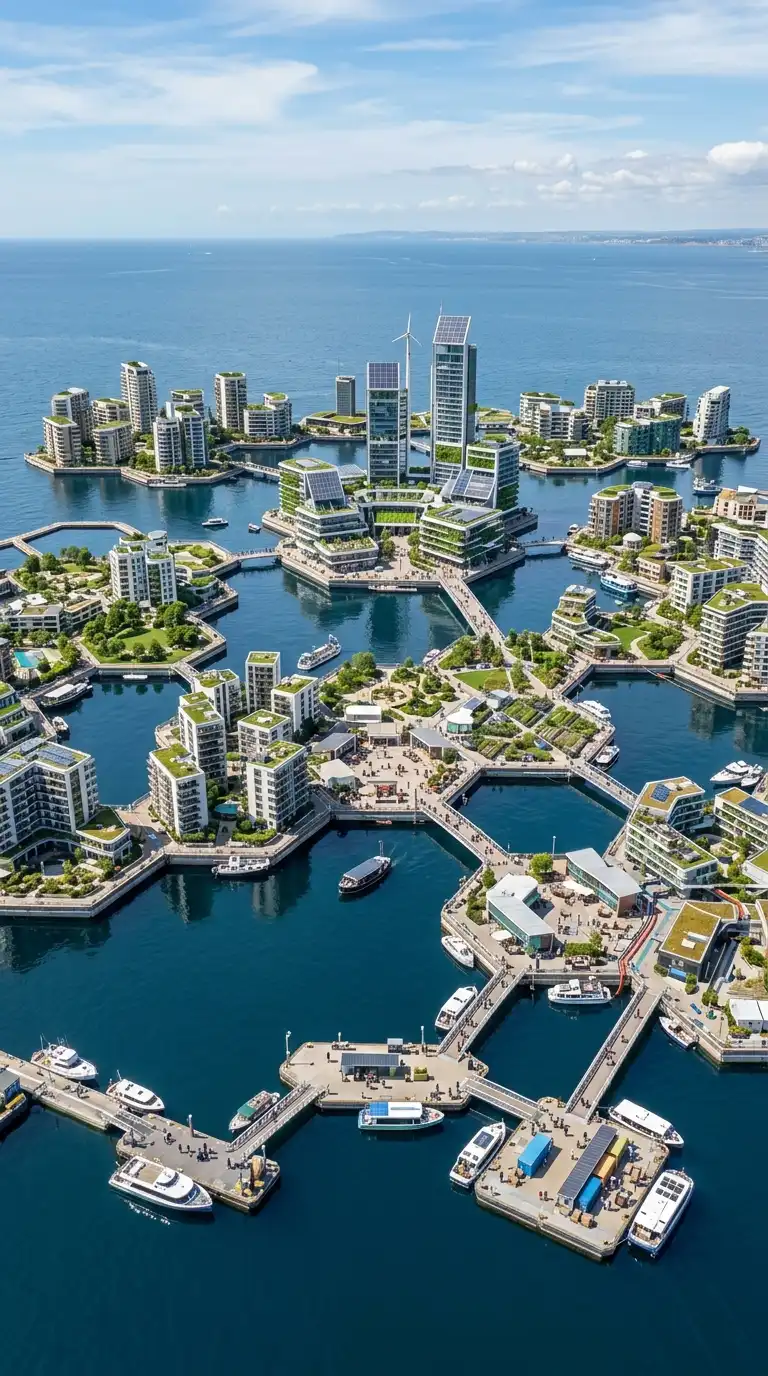
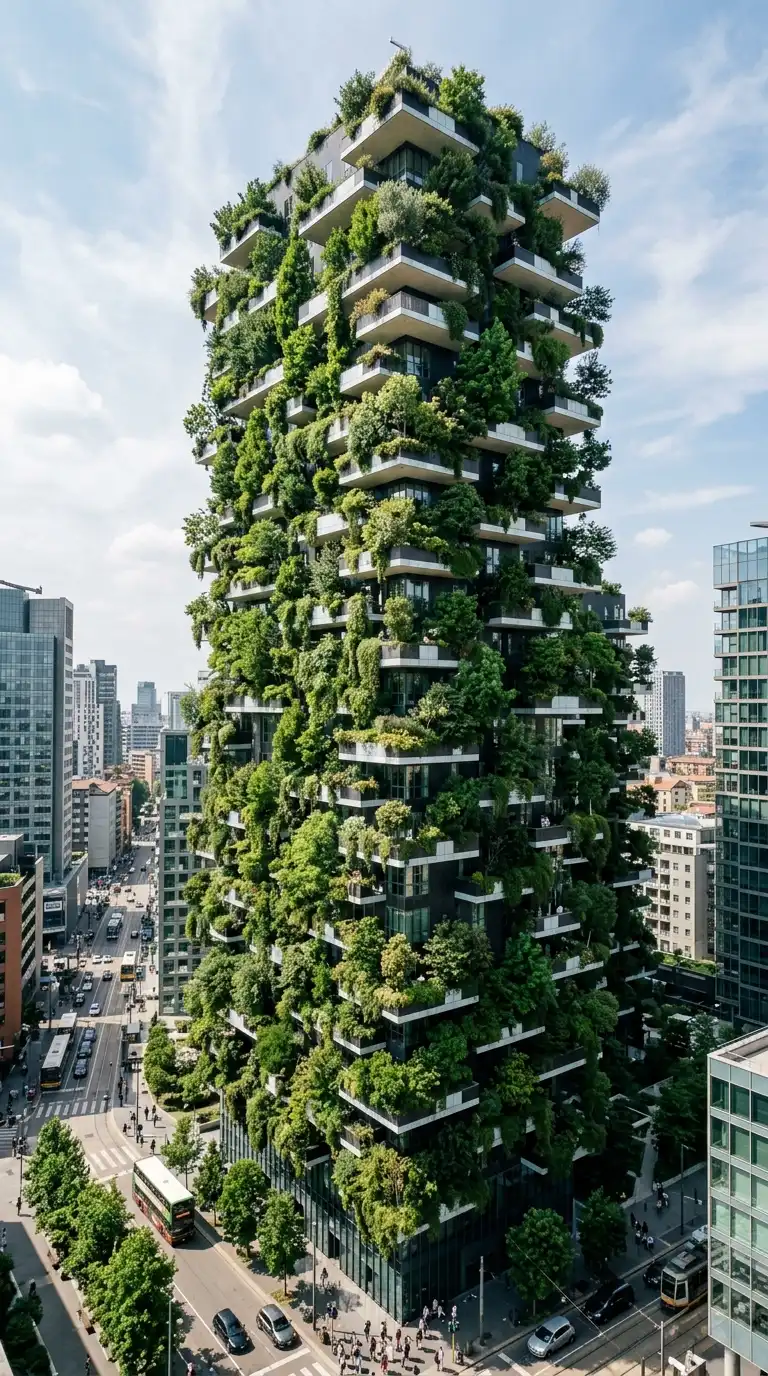
What if a skyscraper was a forest? The vertical forest wraps a tall building in trees, shrubs, and plants. The vegetation covers the entire facade. Each apartment has a private garden. The building absorbs carbon, produces oxygen, and provides habitat for birds and insects.
This idea has been realised in the Bosco Verticale in Milan, but futuristic versions imagine entire cities of vertical forests. The emotional effect is green, vertical, and ecologically transformative.
Quick Tips
- Trees must be structurally supported and irrigated.
- Species must be chosen for the local climate and wind conditions.
- The building’s structure must accommodate wet soil and root growth.
3. The Underwater City
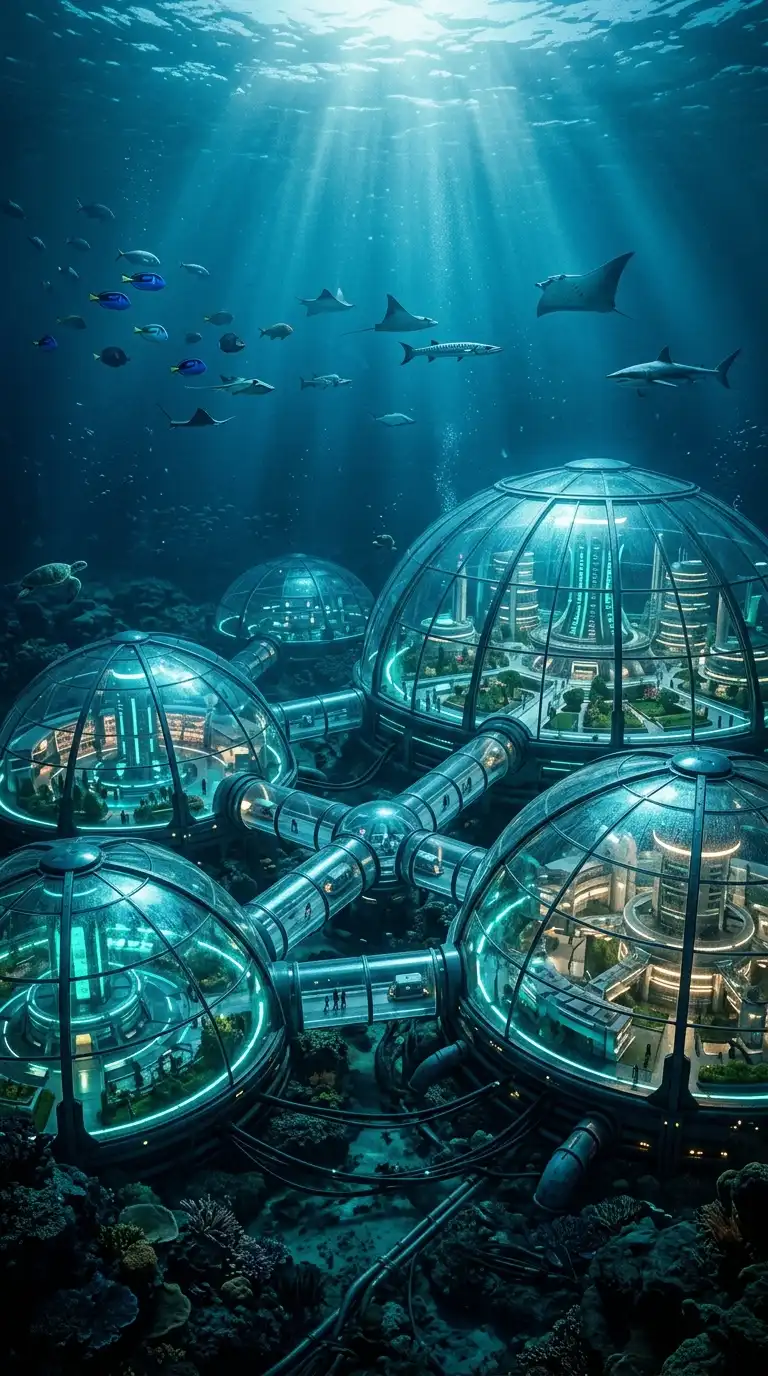
What if a city could be built underwater? The underwater city is sealed within transparent domes or tunnels. Light enters from above. The city is accessible by submarine, elevator, or tunnel from the shore. Residents live beneath the waves.
Underwater cities could expand habitable space on a crowded planet. The emotional effect is alien, protected, and sublime.
Quick Tips
- The structure must withstand immense water pressure.
- Light must be provided artificially or through transparent domes.
- Air, water, and waste must be recycled continuously.
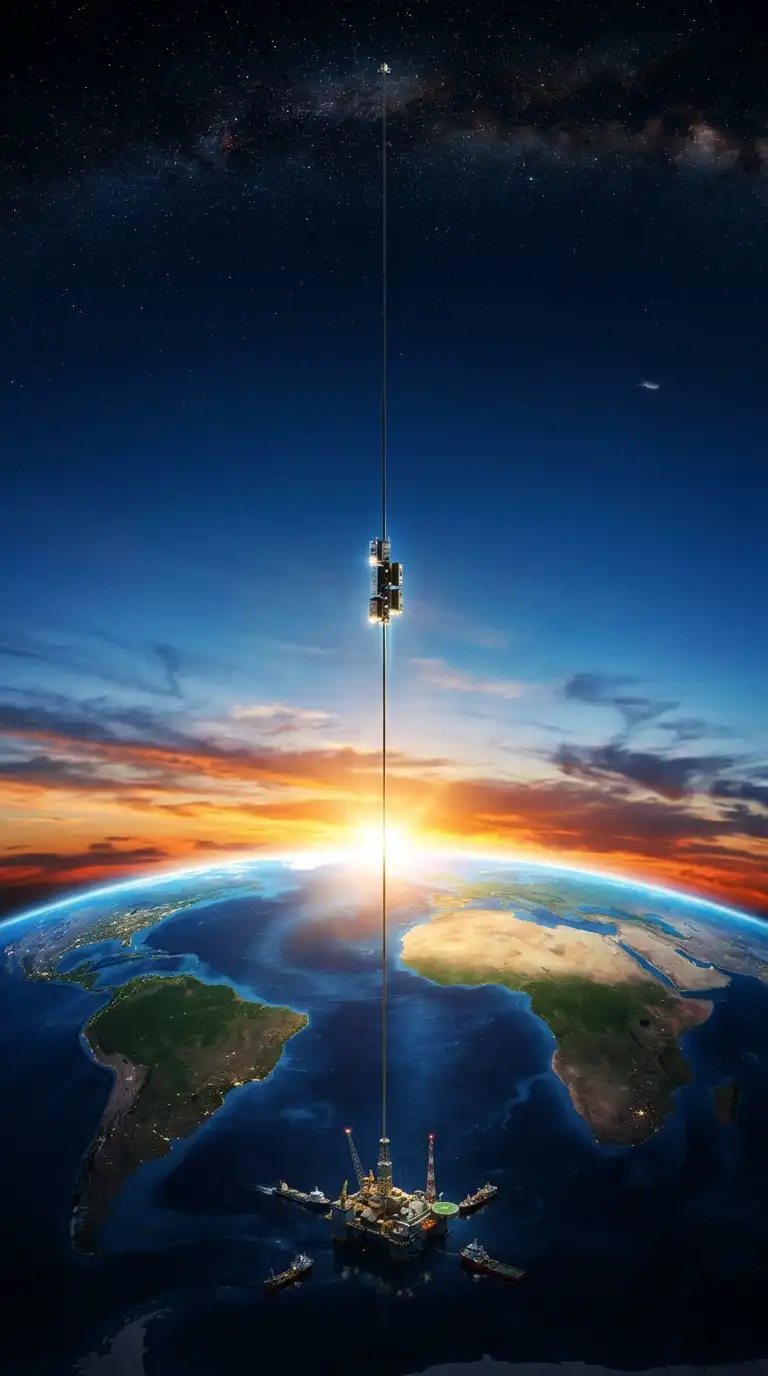
4. The Space Elevator
What if we could ride an elevator to space? The space elevator is a cable anchored to the Earth’s equator and extending tens of thousands of kilometres to a counterweight in geostationary orbit. Climbers carry payloads up the cable. The elevator replaces rockets for space access.
The space elevator is not a building but an infrastructure — a vertical city. The emotional effect is vertical, technological, and revolutionary.
Quick Tips
- The cable must be made of material stronger than any existing (carbon nanotubes or diamond nanothreads).
- The anchor must be on the equator for stability.
- Climbers must be powered wirelessly or by onboard motors.
5. The Self-Sufficient Biosphere
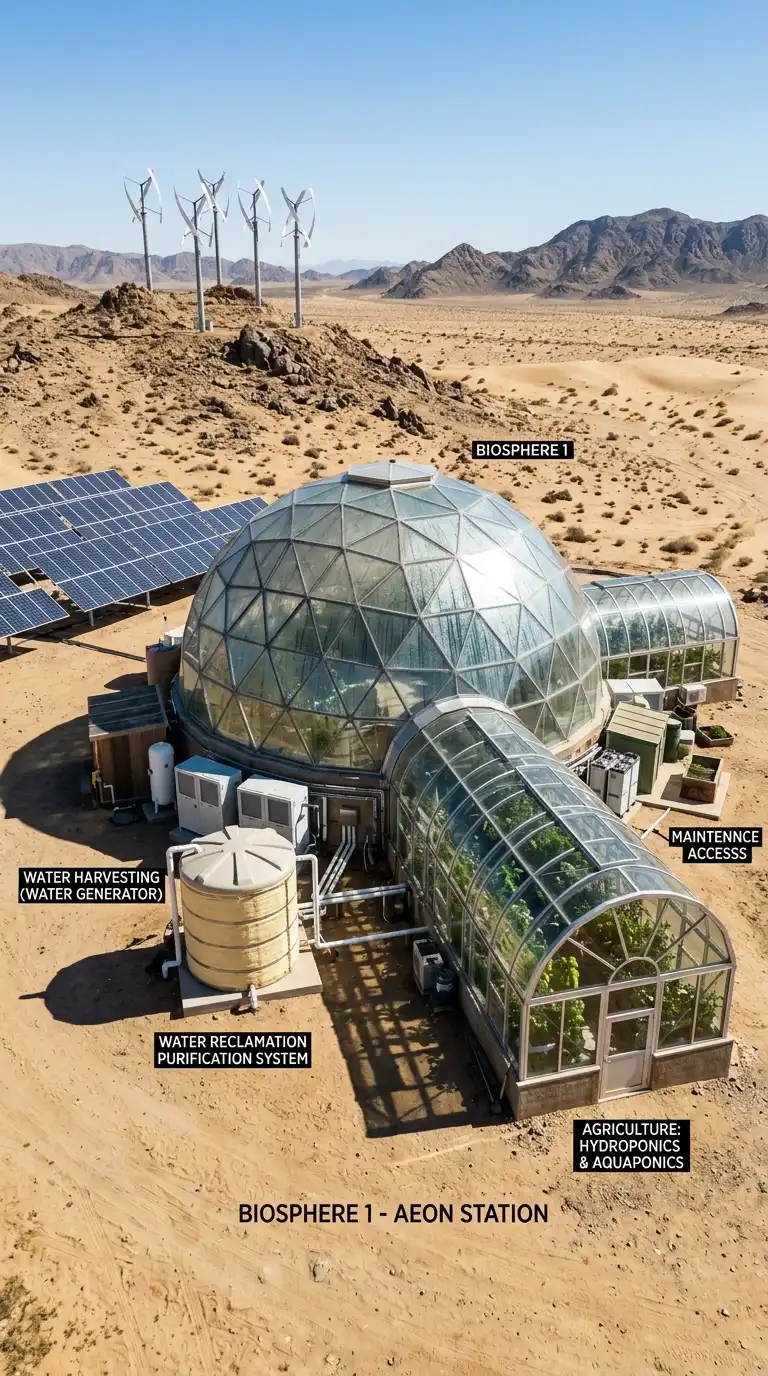
What if a building could support all its own needs? The self-sufficient biosphere generates its own energy, collects its own water, treats its own waste, and grows its own food. The building is a closed-loop system, independent of external infrastructure.
This idea is for remote sites, space habitats, or a post-apocalyptic future. The emotional effect is autonomous, resilient, and hopeful.
Quick Tips
- Energy must come from solar, wind, or geothermal.
- Water must be collected from rain and recycled continuously.
- Food must be grown hydroponically or aquaponically.
6. The Responsive Skin
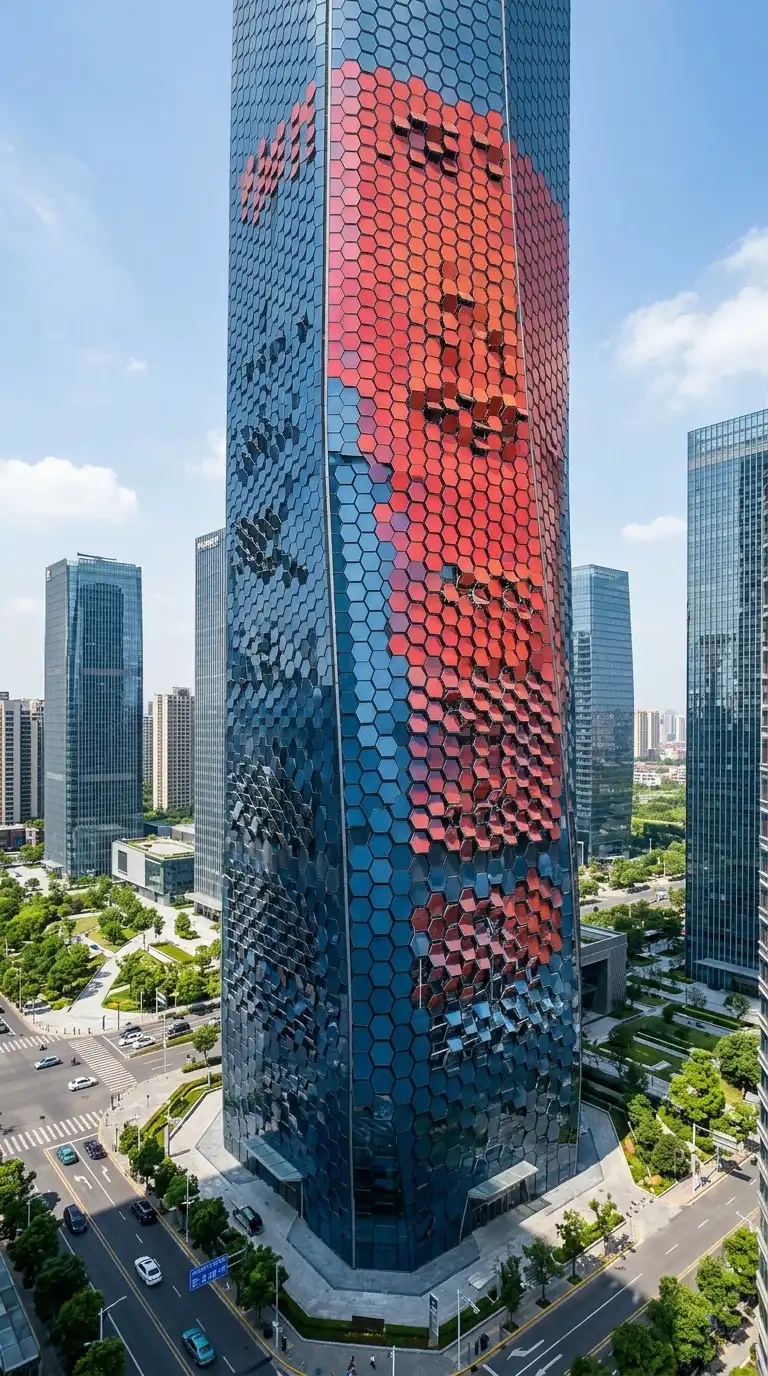
What if a building’s skin could respond to its environment? The responsive skin is covered in sensors, actuators, and smart materials. The skin changes colour, opacity, or shape in response to sun, wind, temperature, or user input. The building adapts in real time.
This idea is an evolution of smart facades and kinetic architecture. The emotional effect is intelligent, adaptive, and alive.
Quick Tips
- The skin must respond to measurable environmental data.
- Actuators must be durable and low-energy.
- The building’s form must accommodate movement.
7. The Subterranean City
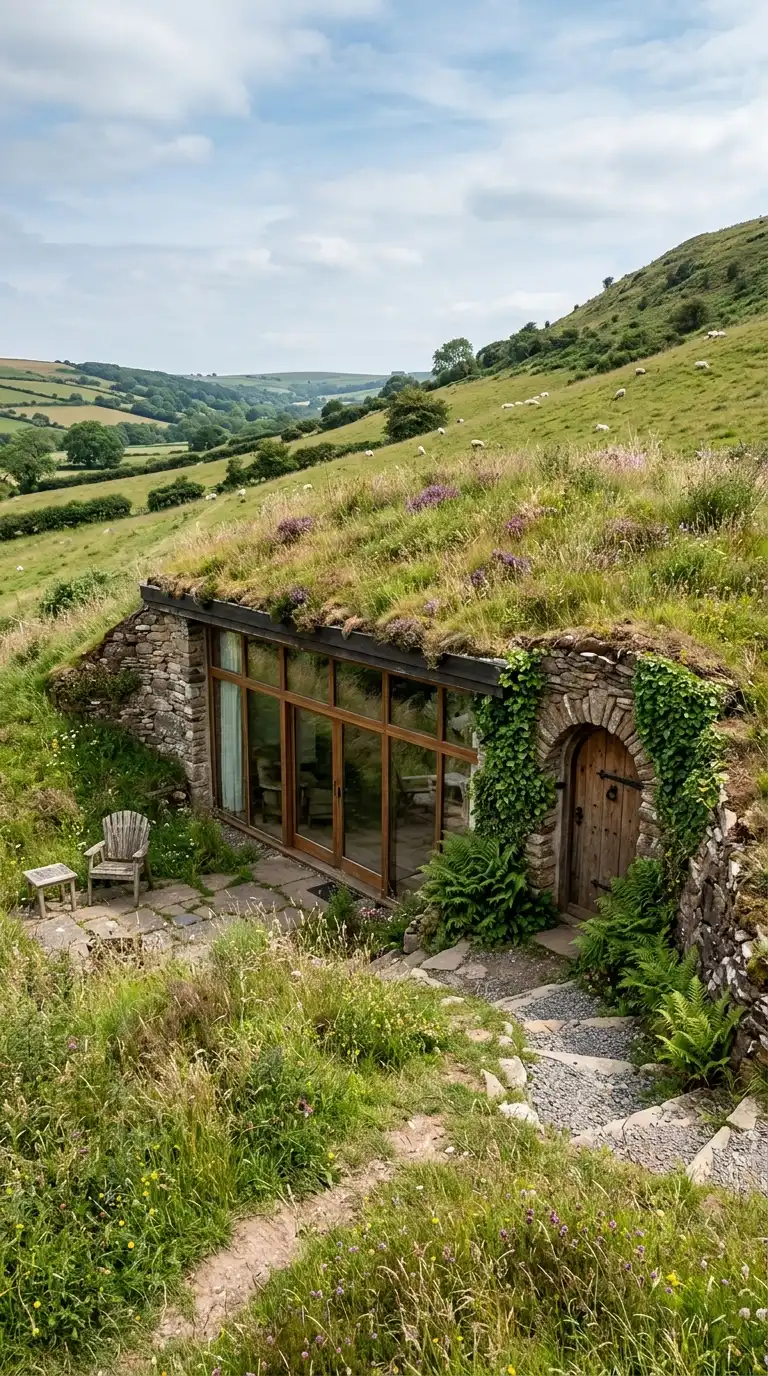
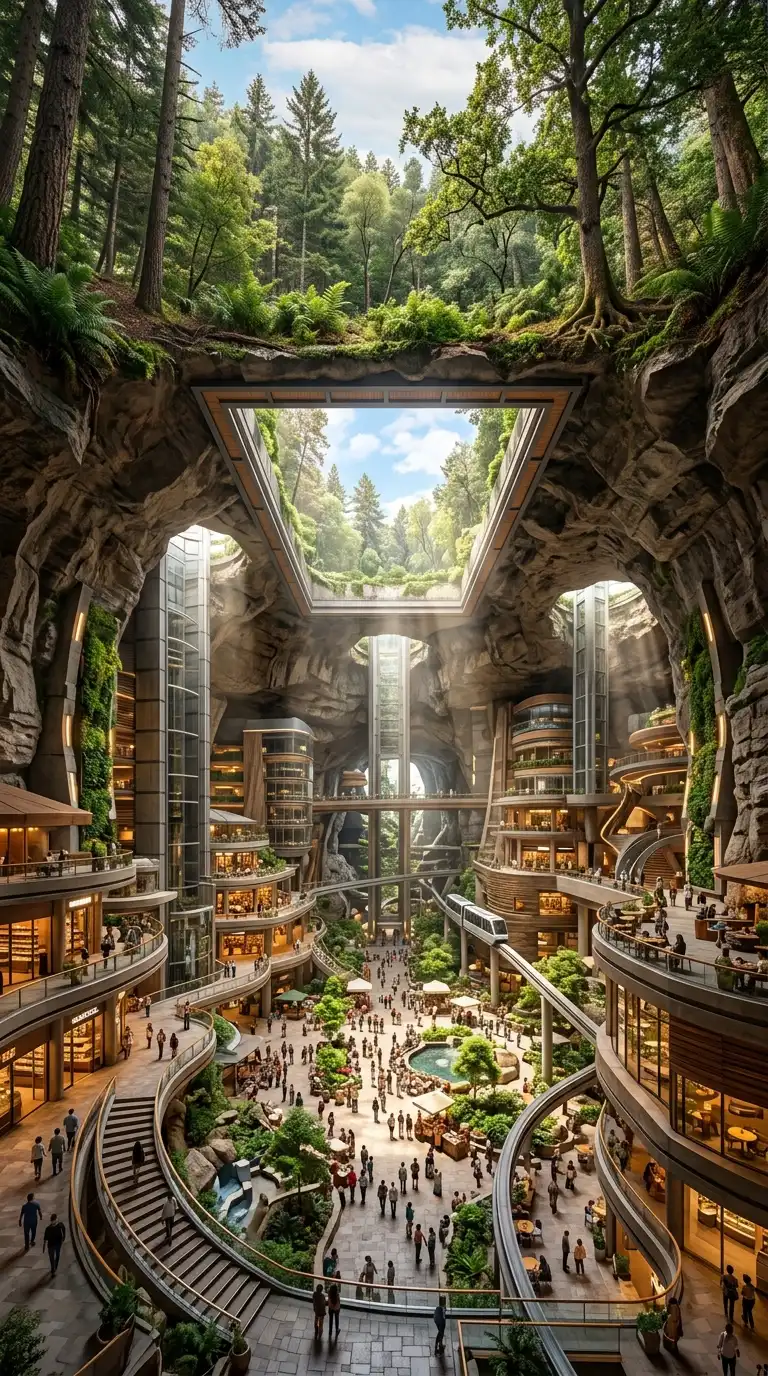
What if a city could be built underground? The subterranean city is carved into rock or built in excavated caverns. Light enters through courtyards, light wells, and fibre-optic systems. The surface is returned to nature.
Subterranean cities protect from extreme climates, preserve surface landscapes, and reduce energy use. The emotional effect is protected, mysterious, and radically sustainable.
Quick Tips
- Light wells and courtyards are essential for light and orientation.
- Spaces should not feel like basements — give them height and volume.
- Ventilation is critical — design for natural airflow where possible.
8. The Drone Port
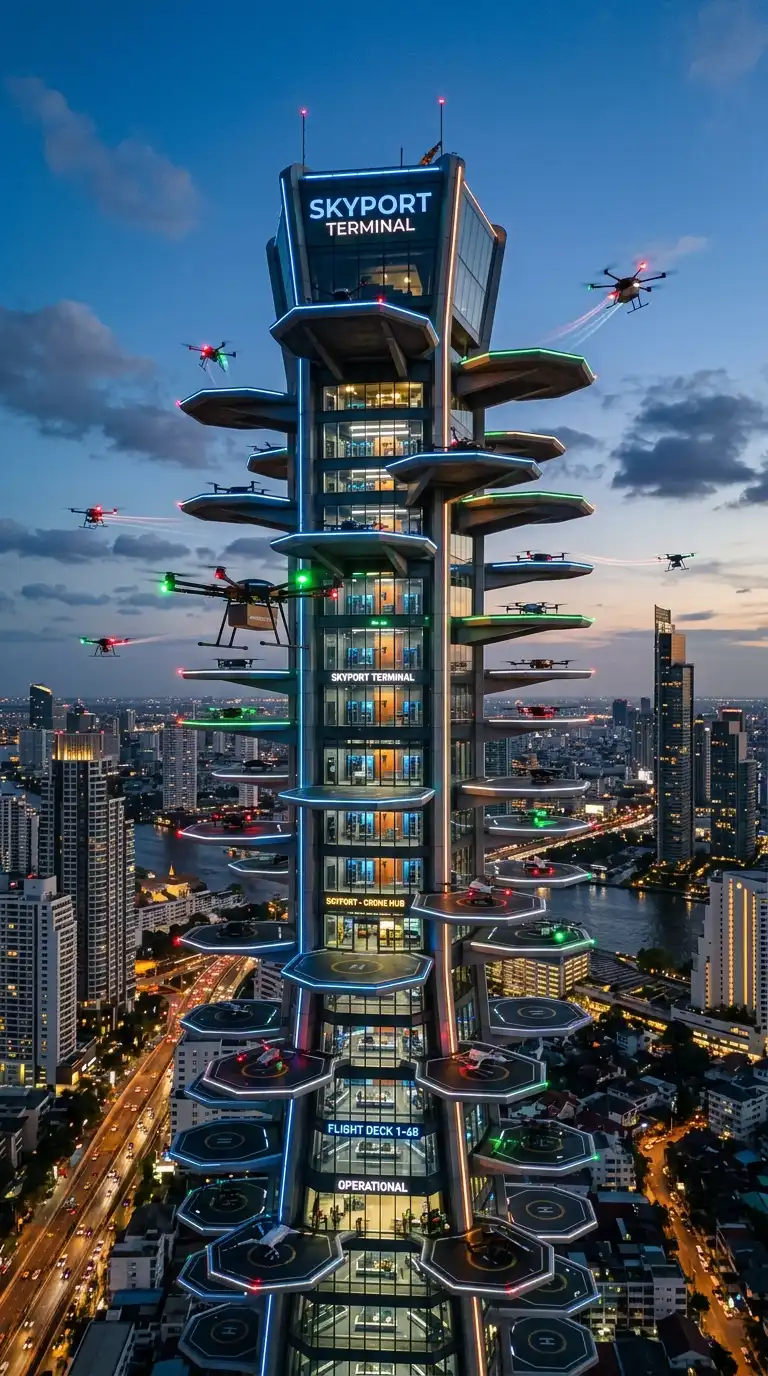
What if buildings were designed for drones? The drone port is a tower or platform for autonomous delivery drones. Drones land on external perches, deposit packages in chutes, and recharge at wireless pads. The building is a hub in the drone network.
This idea responds to the coming age of drone delivery. The emotional effect is technological, efficient, and vertiginous.
Quick Tips
- Landing perches must be accessible from multiple directions.
- Charging pads must be wireless and weatherproof.
- The building must be tall enough to clear surrounding obstacles.
9. The Space Habitat
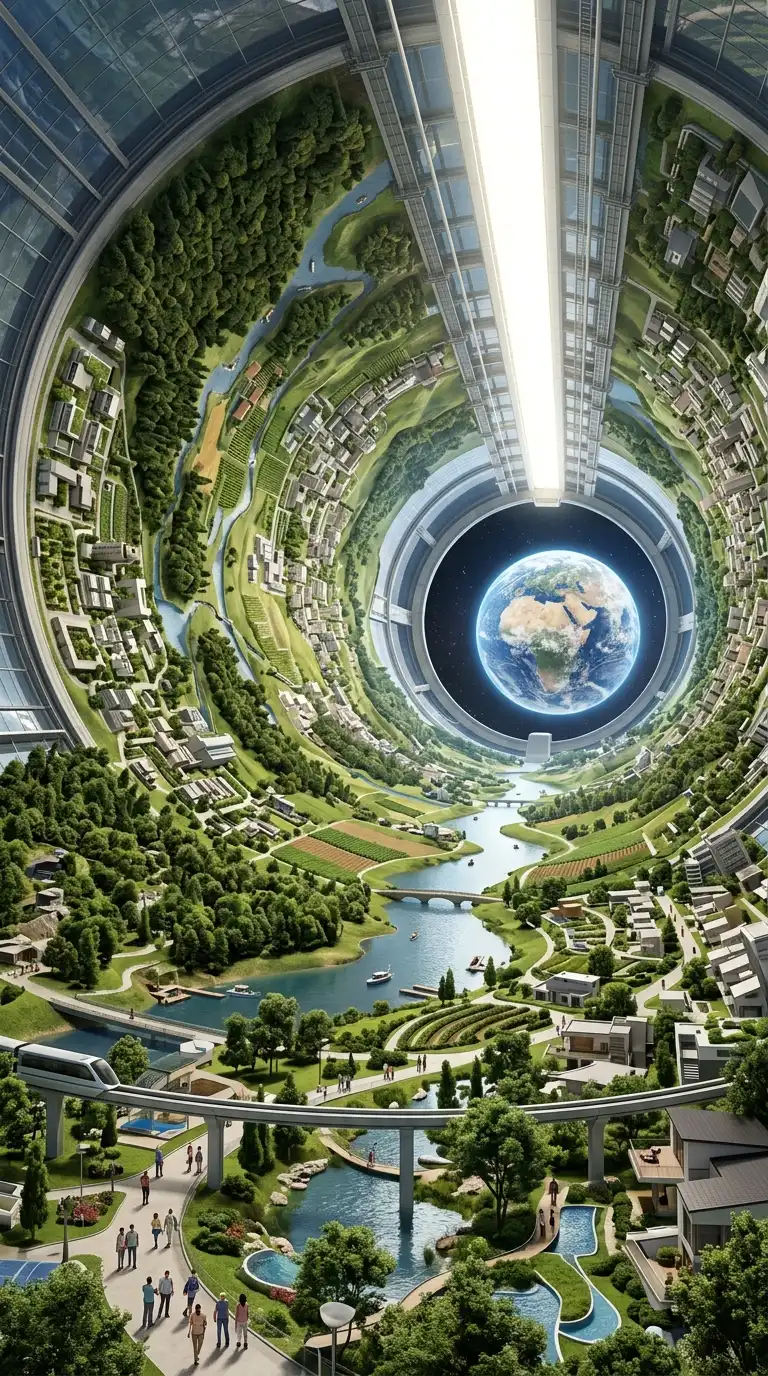
What if a city could orbit the Earth? The space habitat is a rotating cylinder or torus that provides artificial gravity through centrifugal force. The interior is a landscape — hills, rivers, buildings, and sky. The habitat is self-sufficient in energy, water, and food.
This idea is from Gerard O’Neill’s space colony concepts. The emotional effect is celestial, futuristic, and hopeful.
Quick Tips
- The habitat must rotate to create artificial gravity.
- The interior must have a continuous landscape.
- The structure must be pressurised and shielded from radiation.
10. The 3D-Printed City
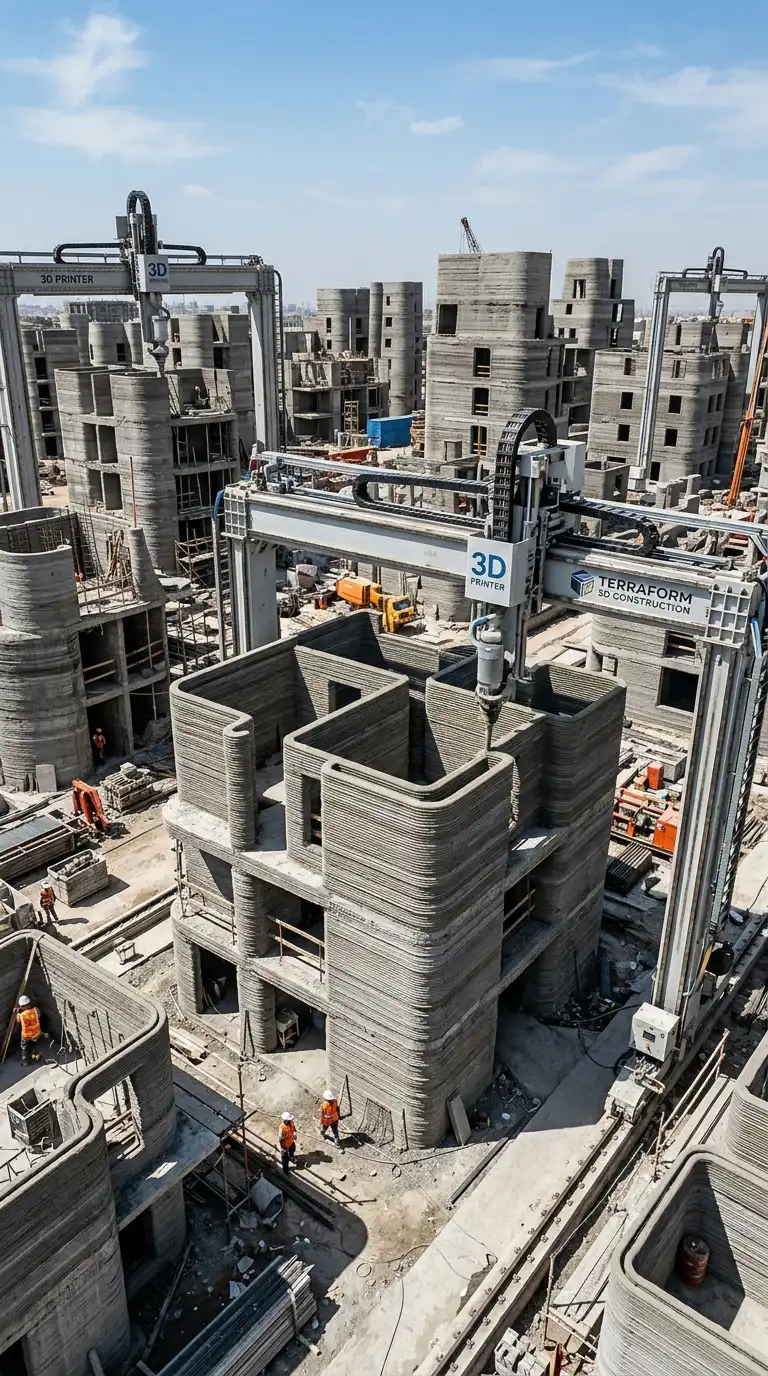
What if an entire city could be 3D printed? The 3D-printed city is built by robotic printers extruding concrete, polymer, or local soil. Buildings are printed in place, layer by layer. The city is organic, customised, and rapidly deployable.
This idea is already emerging in housing projects. Futuristic versions imagine cities printed from lunar or Martian soil. The emotional effect is additive, rapid, and customisable.
Quick Tips
- The printer must be mobile or gantry-based.
- Material must be locally sourced where possible.
- The design must be optimised for layer-by-layer printing.
11. The Mobile City
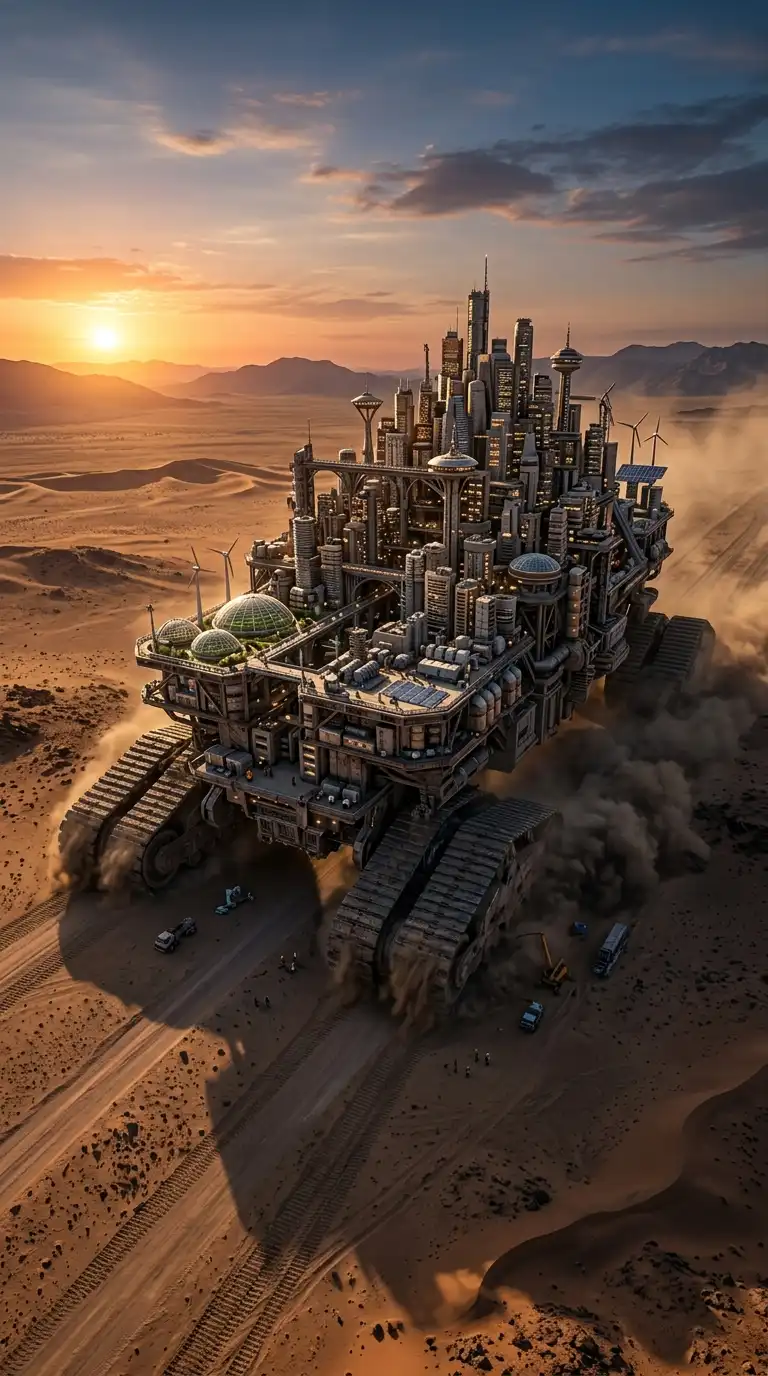
What if a city could move? The mobile city is built on giant tracked platforms or wheels. The city moves slowly across the landscape, following resources, escaping threats, or exploring new territories. The city is a vehicle.
This idea is for nomadic cultures or post-catastrophe scenarios. The emotional effect is nomadic, industrial, and slow.
Quick Tips
- The platforms must be enormous — kilometres wide.
- Mobility determines the landscape — no fixed infrastructure.
- The city must be self-sufficient during transit.
12. The Crystal Palace
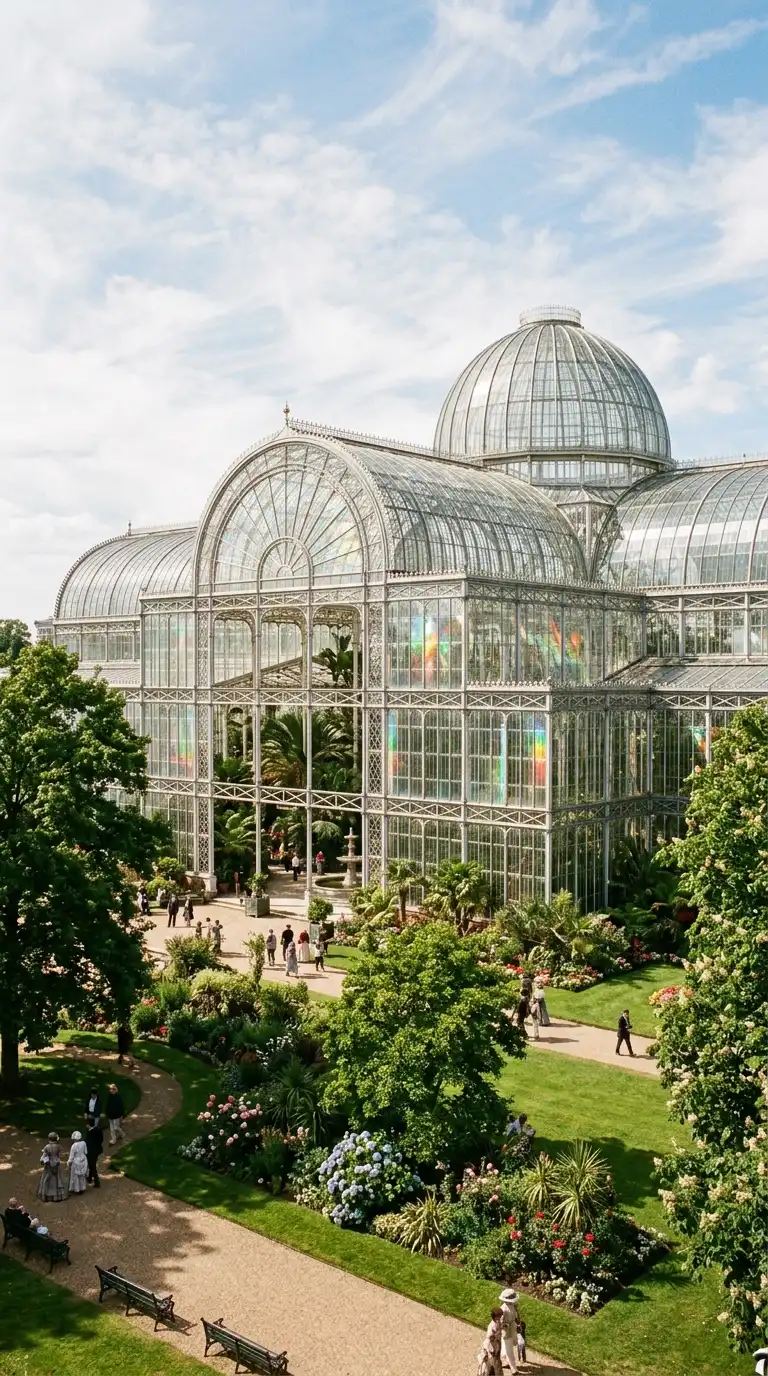
What if a building could be made of pure glass? The crystal palace is a structure of glass, steel, and light. No solid walls. The building is transparent, fragile-looking, and luminous. The boundary between inside and outside dissolves.
The original Crystal Palace (1851) was a precursor. Futuristic versions imagine glass domes over entire cities. The emotional effect is transparent, fragile, and luminous.
Quick Tips
- The structure must be minimal — thin steel or carbon fibre.
- Glass must be structural, not just cladding.
- The building should appear weightless.
13. The Arcology
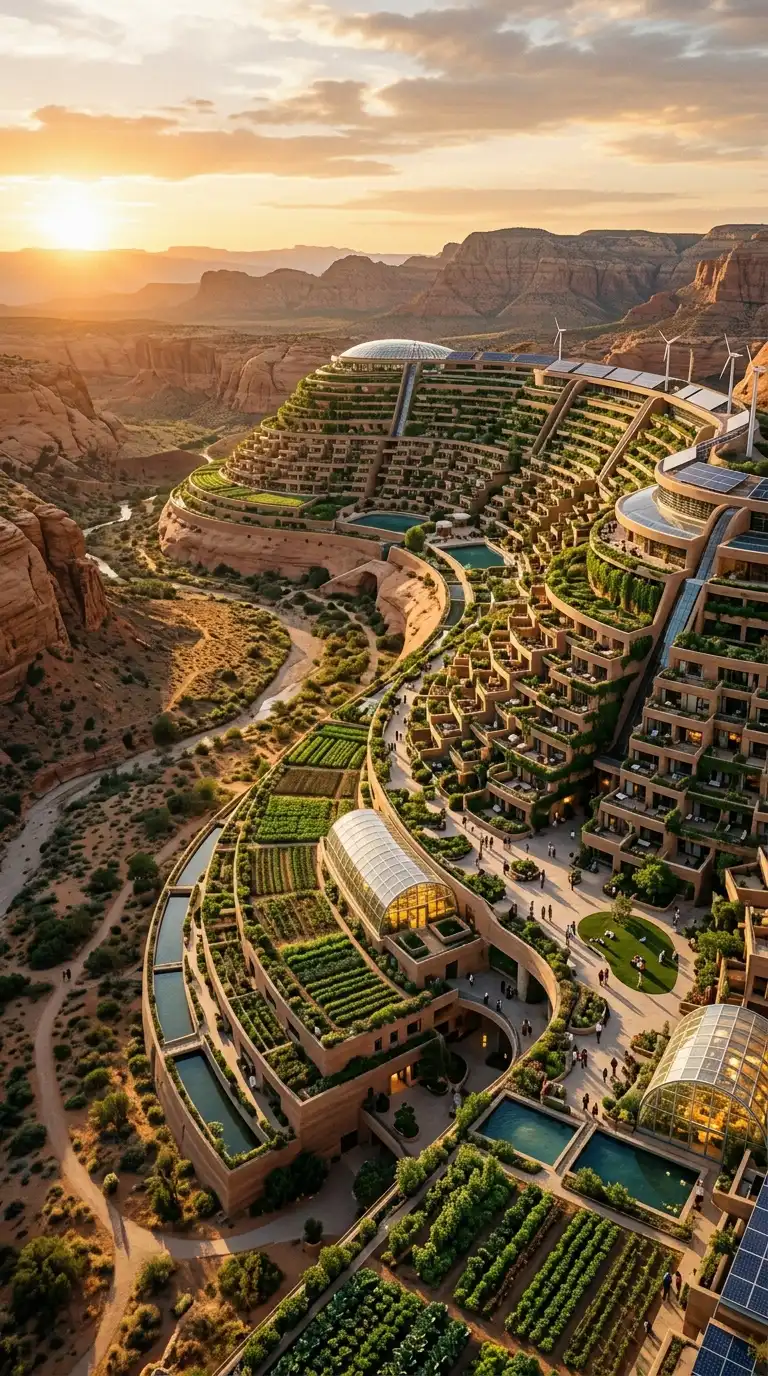
What if a city could be a single building? Arcology combines architecture and ecology into a single massive structure. The arcology contains housing, work, agriculture, industry, and wilderness within one continuous form. The building is a self-contained ecosystem.
This idea was developed by Paolo Soleri. The emotional effect is integrated, ecological, and continuous.
Quick Tips
- The structure must be massive — kilometres across.
- Agriculture must be integrated into the form.
- The arcology must be self-sufficient in energy, water, and food.
14. The Inflatable City
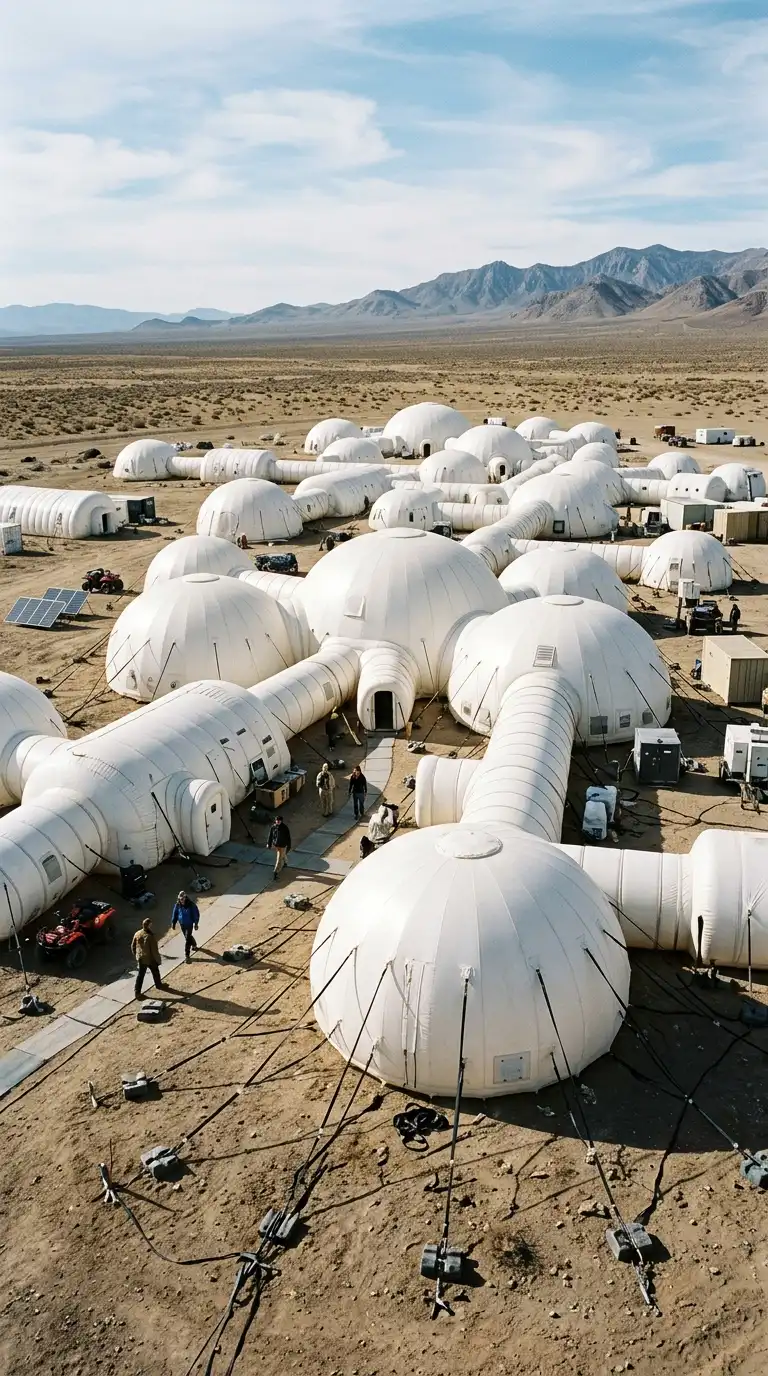
What if a city could be inflated? The inflatable city is made of lightweight, inflatable structures. Buildings are pumped up like balloons, then stiffened with foam or rigidised with UV light. The city can be deployed rapidly, deflated, and moved.
This idea is for temporary settlements, disaster relief, or space habitats. The emotional effect is temporary, lightweight, and deployable.
Quick Tips
- The structure must be airtight and pressurised.
- Materials must be lightweight and foldable.
- The city must be anchored against wind.
15. The Living Building
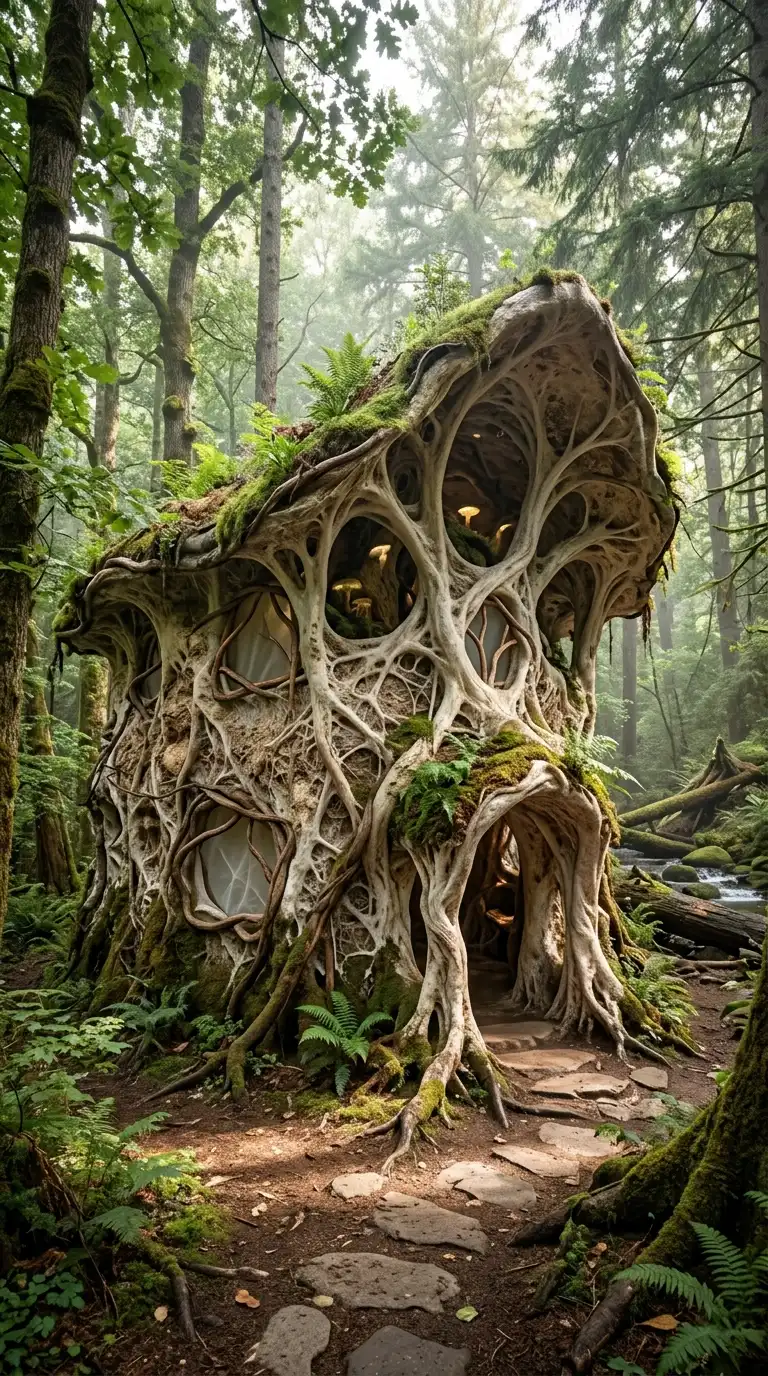
What if a building could grow? The living building is made of living materials: mycelium, algae, or engineered wood. The building grows from a seed, repairs itself, and eventually decays. The building is alive.
This idea explores bio-integrated architecture. The emotional effect is organic, living, and temporal.
Quick Tips
- Materials must be biologically grown, not manufactured.
- The building must have a life cycle — growth, maturity, decay.
- The form must be organic, not geometric.
16. The Skybridge City
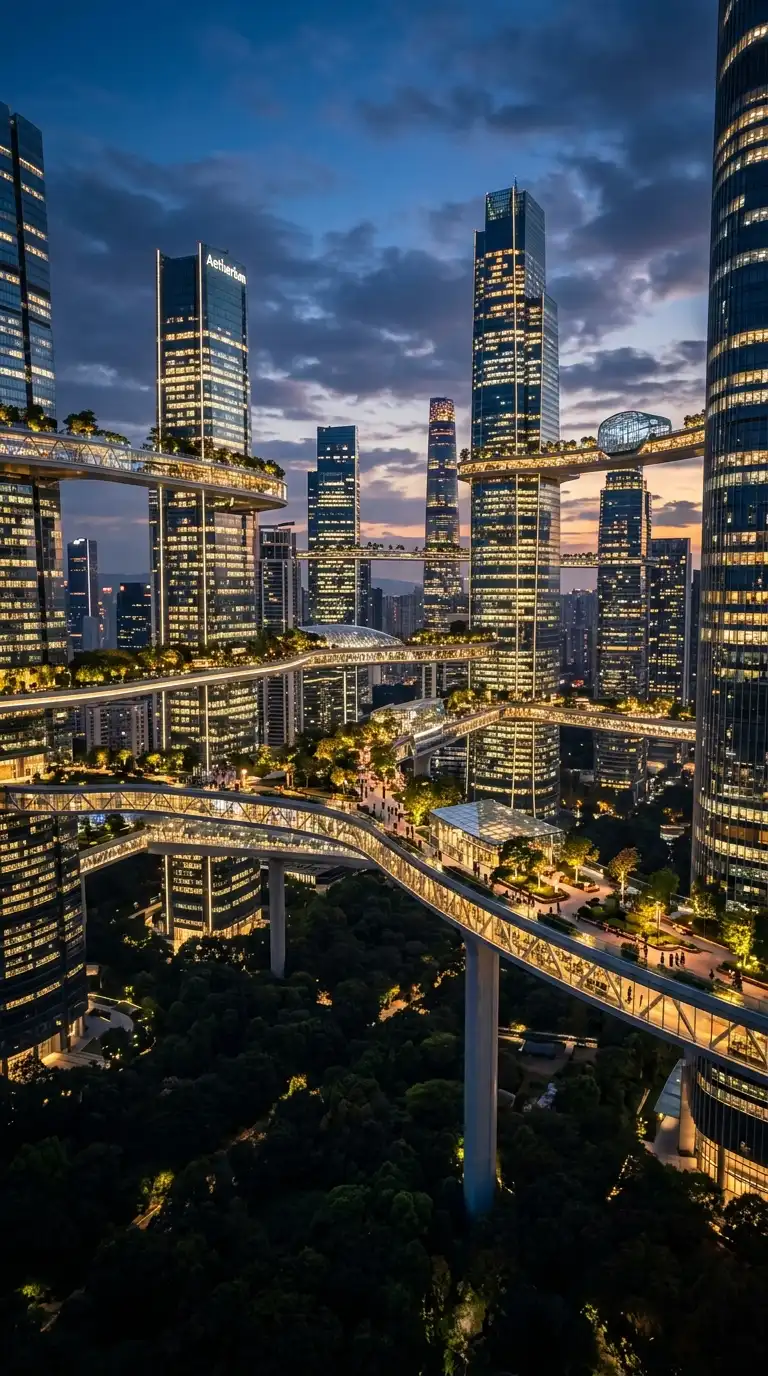
What if buildings were connected by bridges at high levels? The skybridge city is a network of bridges connecting towers at the 20th, 40th, and 60th floors. The bridges contain parks, shops, and public spaces. The streets are in the sky.
This idea creates a second city above the ground. The emotional effect is vertical, connected, and vertiginous.
Quick Tips
- Bridges must be at multiple levels for redundancy.
- The ground level can be returned to nature or vehicles.
- The bridges must be wide enough for parks and gathering.
17. The Adaptive Reuse of Space
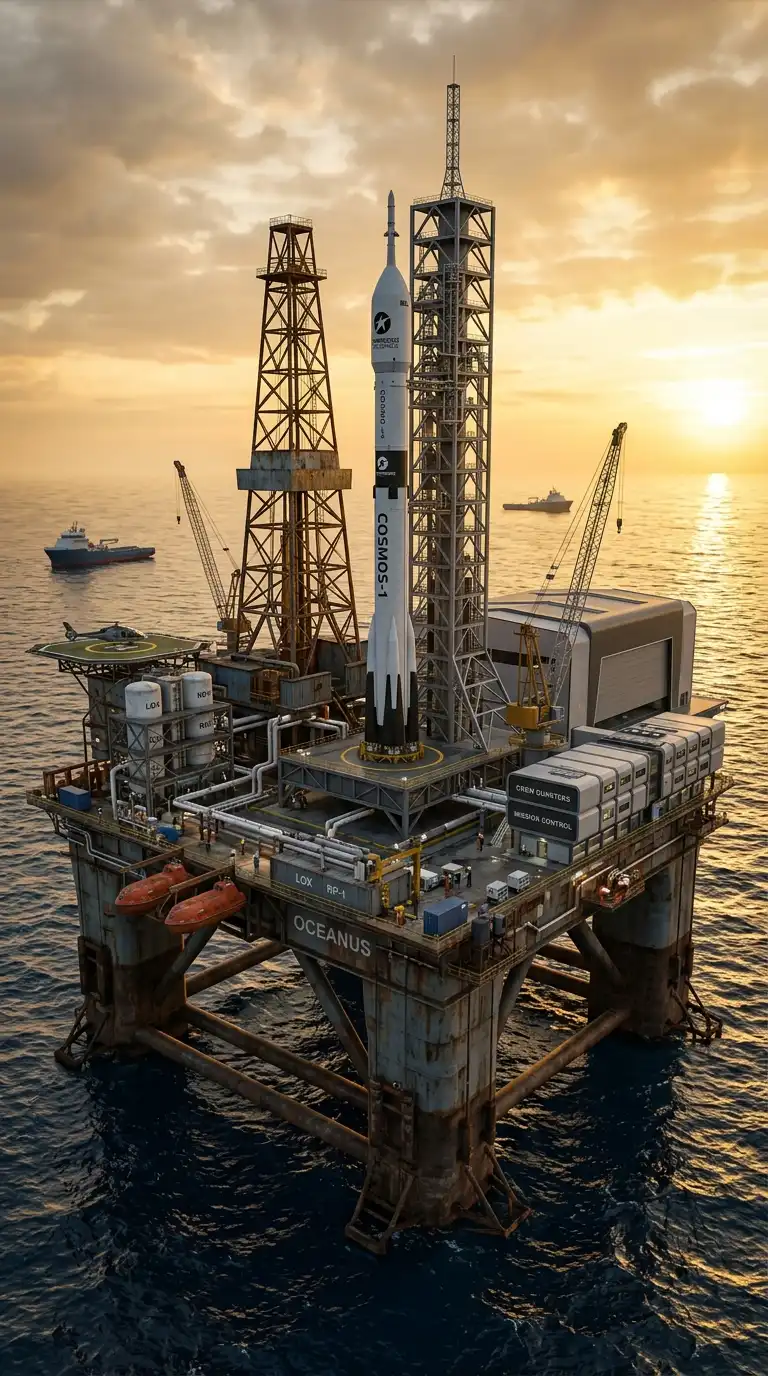
What if abandoned buildings could become spaceports? The adaptive reuse of space takes existing infrastructure — an oil rig, a missile silo, a stadium — and converts it for space launch or space habitat. The building is not new; it is repurposed.
This idea combines adaptive reuse with space exploration. The emotional effect is adaptive, repurposed, and ingenious.
Quick Tips
- The existing structure must be visible in the final design.
- New insertions must be clearly new.
- The original function must be legible.
18. The Hive City
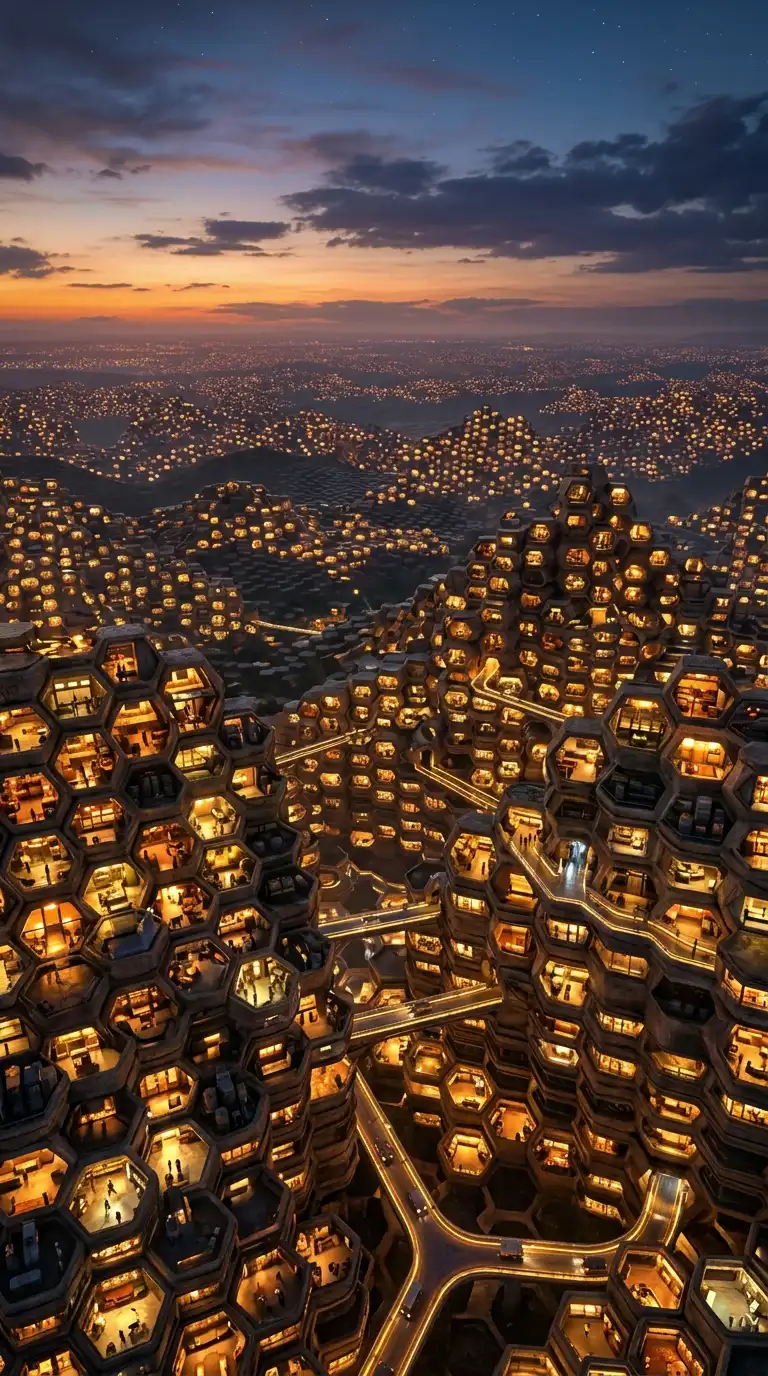
What if a city was organised like a beehive? The hive city is a hexagonal honeycomb of living and working cells. The structure is modular, repetitive, and infinitely expandable. Circulation is through the honeycomb’s corridors. The city is a single, continuous structure.
This idea explores emergent urbanism and modular construction. The emotional effect is cellular, repetitive, and insect-like.
Quick Tips
- The hexagon is the most efficient shape for modular expansion.
- Circulation must be through the cells, not separate.
- The structure must be infinitely expandable.
Final Thoughts
Futuristic architecture is not prediction. It is provocation. These 18 ideas are not blueprints — they are questions. What if a city could float? What if a building could grow? What if we could ride an elevator to space? The answers to these questions will change as technology changes. But the questions themselves are timeless.
The best futuristic architecture is not the most technologically complex — it is the most imaginative. It expands the possible. It dares to ask: what if?