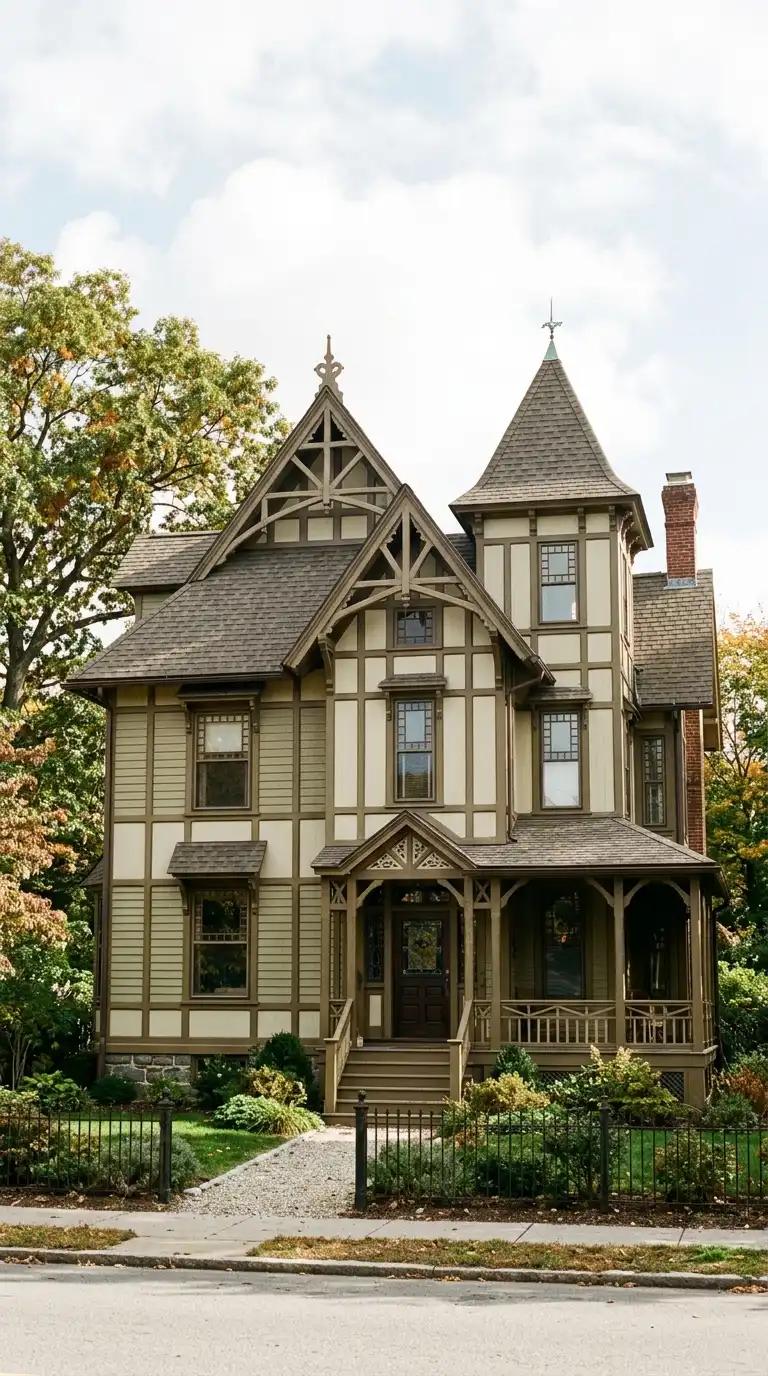
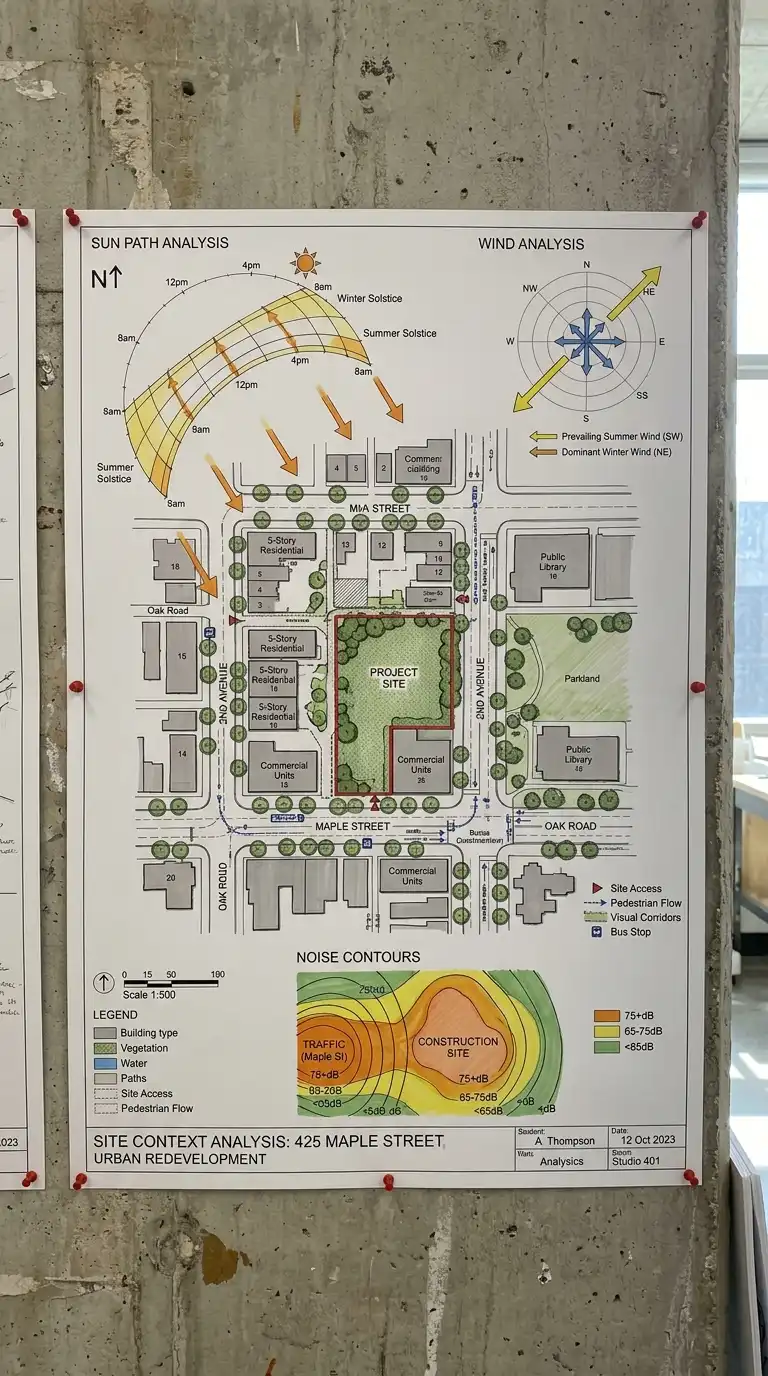
Architecture wallpaper is a digital or physical image used as a background on screens or walls. It celebrates the beauty of buildings — their lines, shadows, materials, and atmospheres. A great architecture wallpaper is not a technical drawing. It is a mood, a fragment, an abstraction. It fits the screen without demanding attention.
These 14 architecture wallpaper ideas span photography, drawing, diagram, and abstraction. Each idea includes defining characteristics, composition principles, and applications.
1. The Building Facade Grid
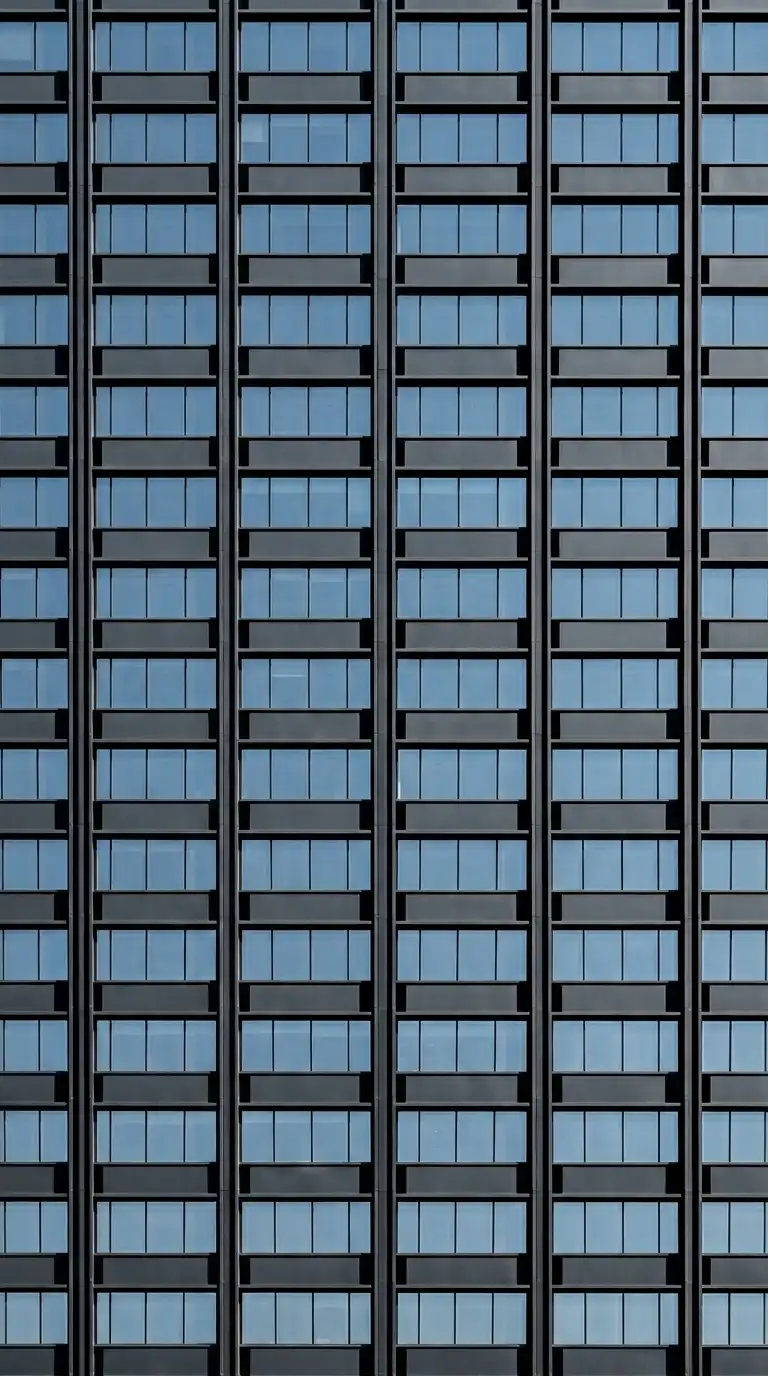
The building facade grid wallpaper features a repetitive facade pattern. The image is cropped tight — no sky, no ground, no context. Only the facade: windows, columns, spandrels, and shadows. The repetition creates a rhythm.
This wallpaper is ideal for desktops and phones. The emotional effect is rhythmic, ordered, and architectural.
Quick Tips
- Crop the image to remove sky and ground.
- The grid should be perfectly horizontal and vertical.
- High contrast emphasises the rhythm of openings.
2. The Shadow Study
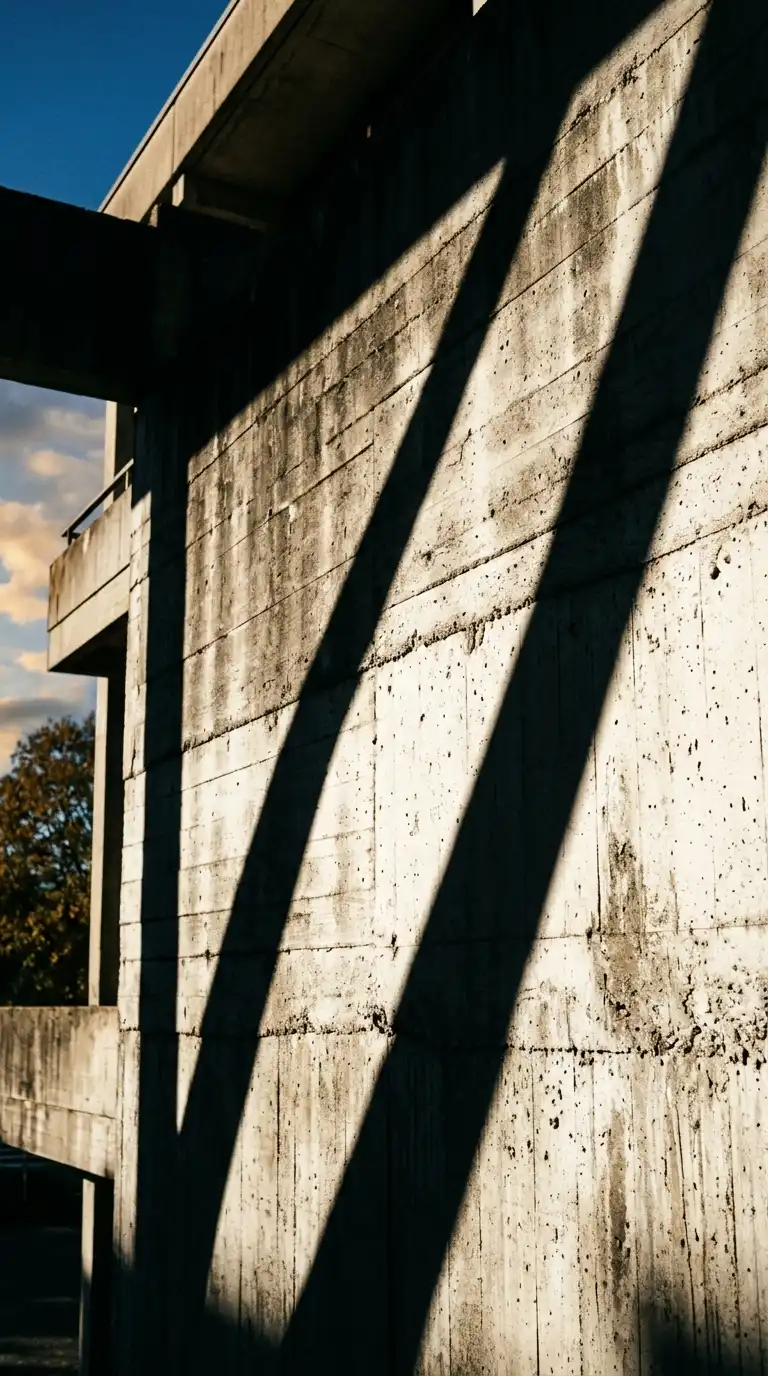
The shadow study wallpaper focuses on the play of light across a building surface. Deep shadows, bright highlights, and long diagonal lines. The building itself may be barely visible — only the shadows matter.
This wallpaper is ideal for phones and tablets. The emotional effect is dramatic, abstract, and graphic.
Quick Tips
- Photograph in late afternoon for long shadows.
- Crop to emphasise shadow patterns, not building forms.
- High contrast — deep blacks, bright whites.
3. The Plan Abstraction
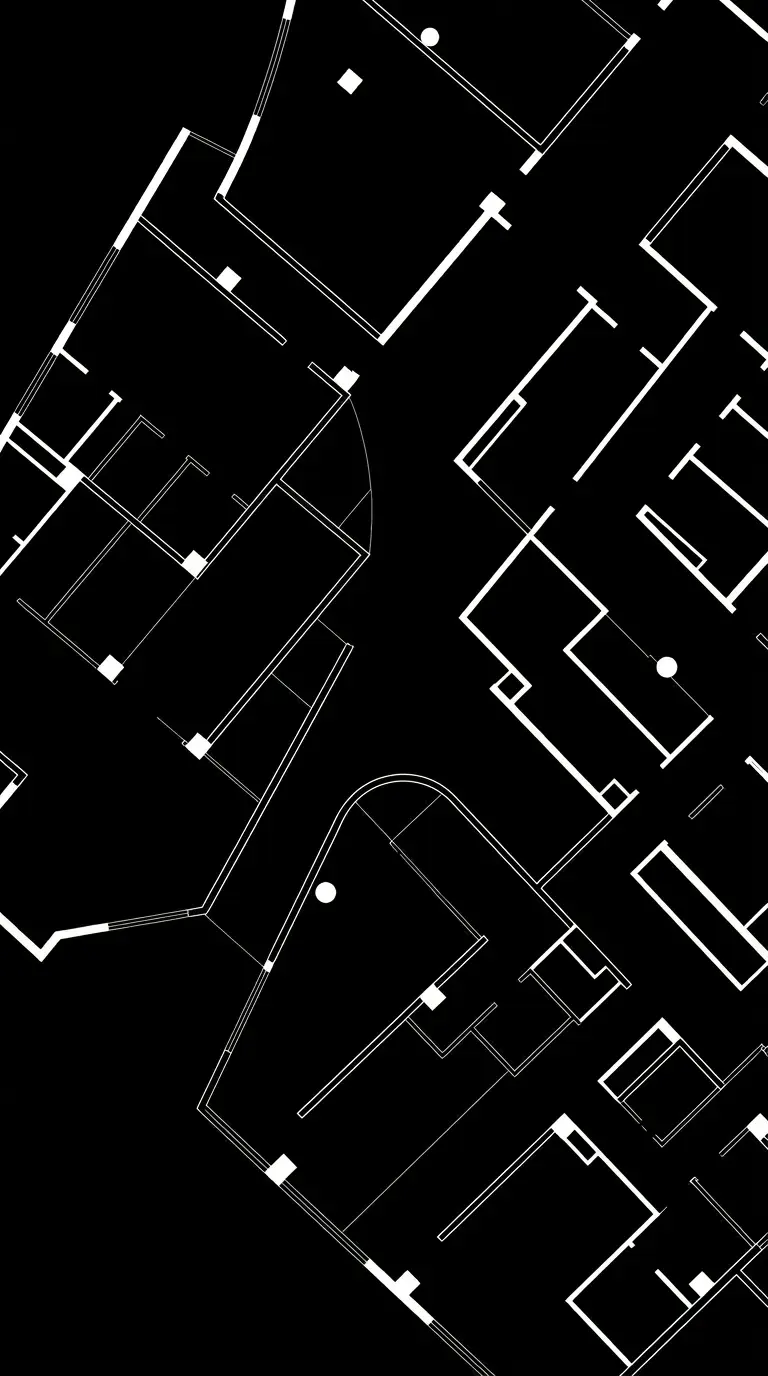
The plan abstraction wallpaper uses a building plan as a graphic image. The plan is simplified — only walls and columns remain. The image is cropped to an interesting fragment. The lines are thick and graphic.
This wallpaper is ideal for architecture students and professionals. The emotional effect is technical, graphic, and abstract.
Quick Tips
- Use a high-contrast plan — white lines on black, or black on white.
- Crop to a fragment that is visually interesting on its own.
- Remove all labels, dimensions, and notes.
4. The Section Line
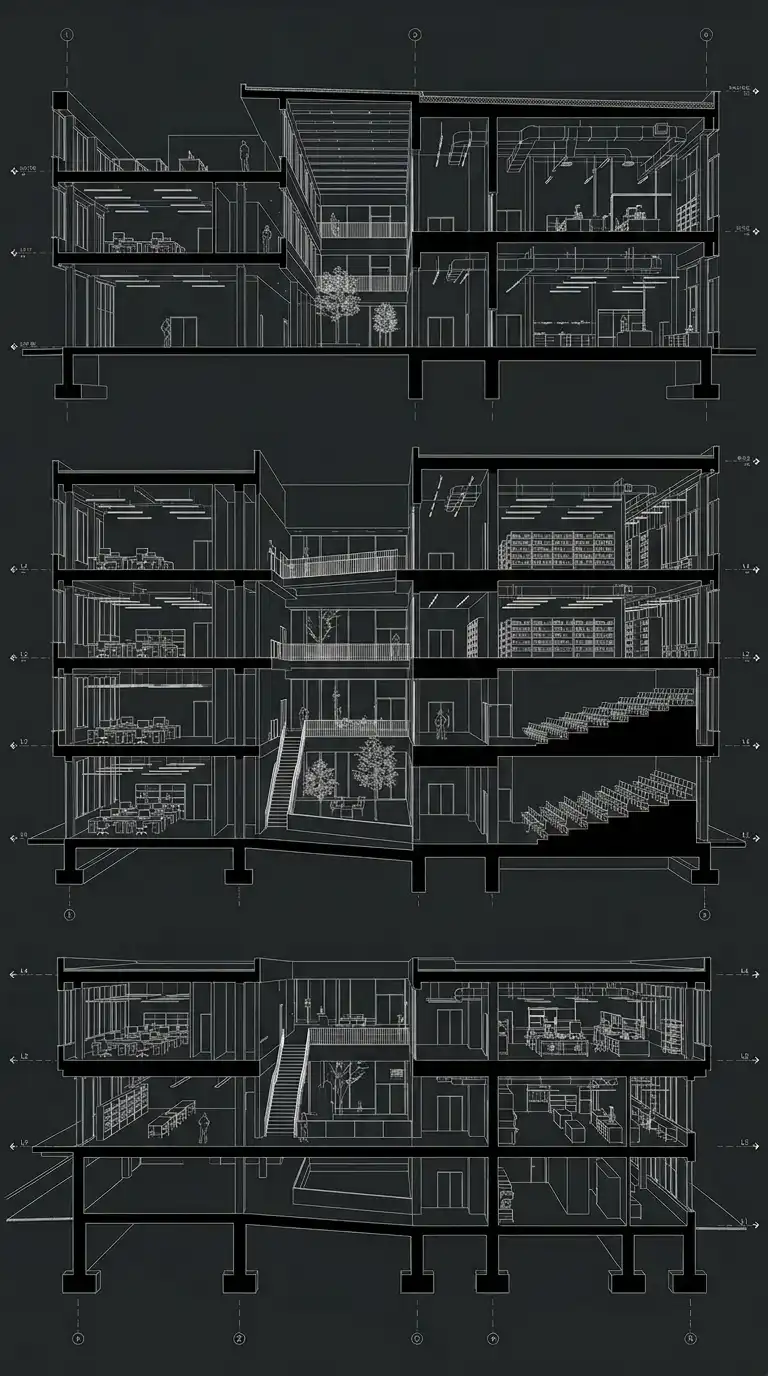
The section line wallpaper uses a building section as a horizontal or vertical band across the screen. The section is drawn in black and white. The cut surfaces are solid. The spaces beyond are line drawings.
This wallpaper is ideal for wide screens. The emotional effect is technical, horizontal, and analytical.
Quick Tips
- Use a long, continuous section — a museum, a factory, a row of houses.
- Align the section horizontally across the screen.
- Use black cut surfaces, white beyond.
5. The Axonometric City
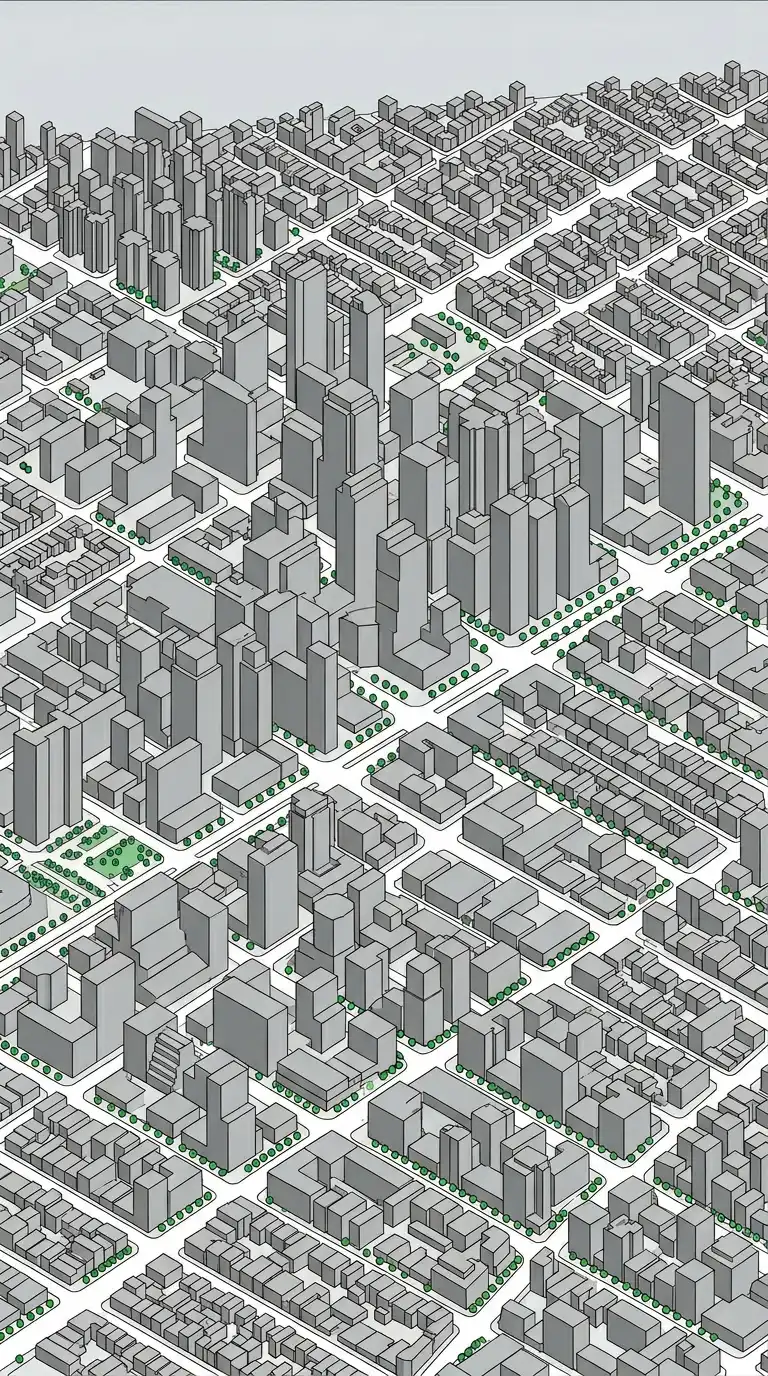
The axonometric city wallpaper shows a fragment of a city drawn in isometric or axonometric projection. Blocks of buildings, streets, and open spaces. The drawing is simplified — no details, just massing.
This wallpaper is ideal for desktops. The emotional effect is spatial, diagrammatic, and urban.
Quick Tips
- Use a consistent isometric or axonometric angle.
- Simplify buildings to simple masses — no windows, no details.
- Use a limited palette: grey, white, and one accent colour.
6. The Construction Photograph
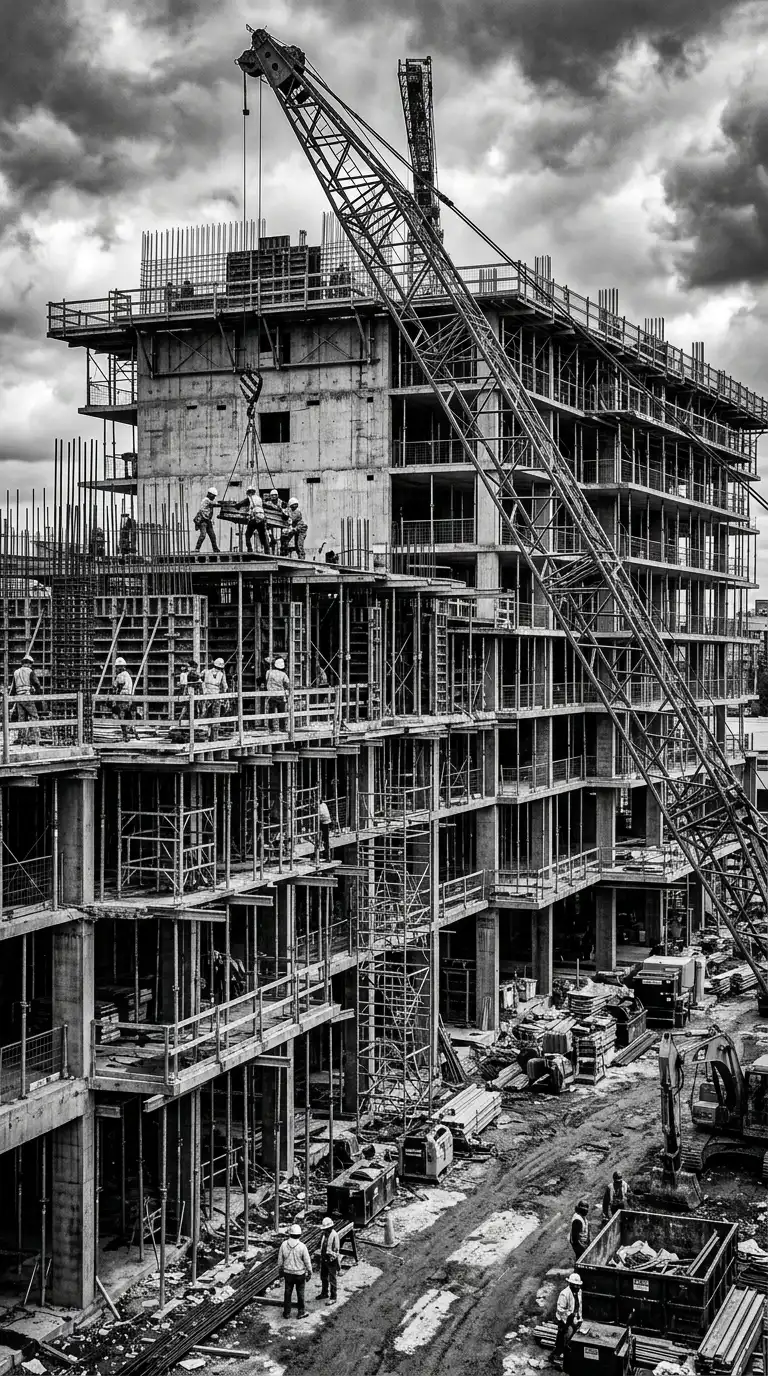
The construction photograph wallpaper captures a building under construction. Cranes, scaffolding, exposed rebar, and concrete forms. The image is raw, industrial, and honest.
This wallpaper is ideal for architecture professionals and enthusiasts. The emotional effect is raw, industrial, and honest.
Quick Tips
- Photograph from a dramatic angle — looking up or looking down.
- Emphasise geometry: diagonal cranes, horizontal scaffolding, vertical rebar.
- Convert to black and white for greater drama.
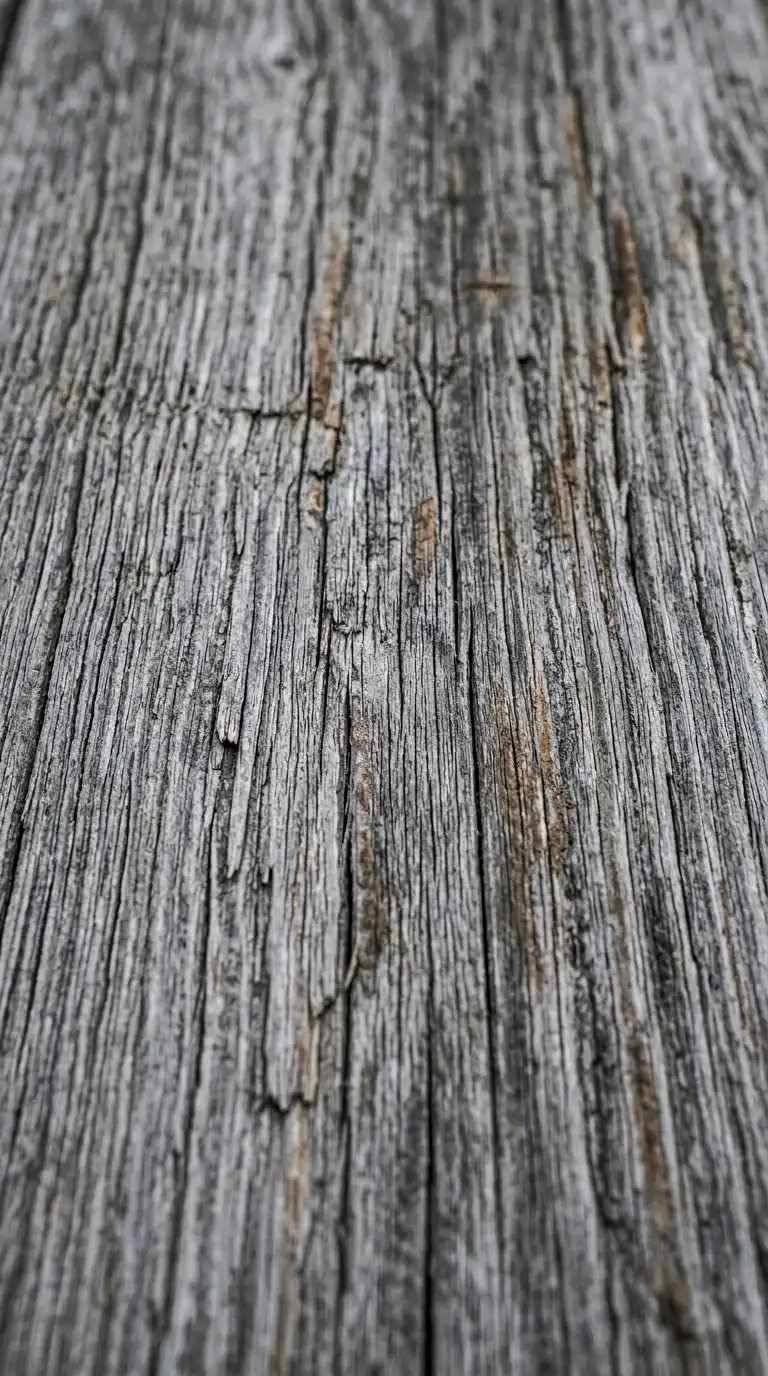
7. The Material Texture
The material texture wallpaper shows a close-up of a building material: brick, concrete, stone, timber, rusted steel, or weathered copper. The image fills the entire screen. The material is the subject.
This wallpaper is ideal for phones and tablets. The emotional effect is tactile, textured, and material.
Quick Tips
- Photograph the material in even, diffused light.
- Fill the entire frame — no edges, no context.
- High resolution is essential — texture requires detail.
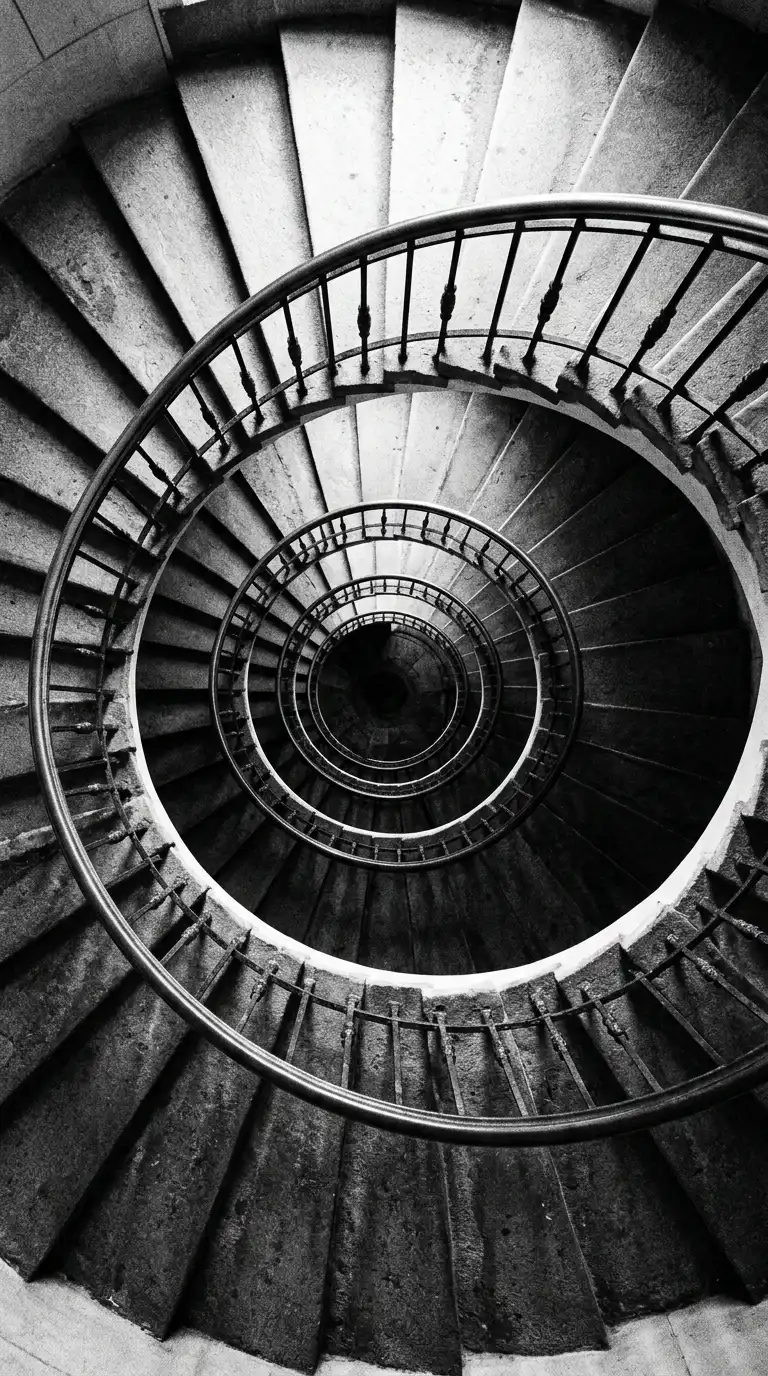
8. The Staircase Spiral
The staircase spiral wallpaper captures a staircase from above or below. The spiral dominates the composition. The geometry is circular, radial, and hypnotic.
This wallpaper is ideal for phones. The emotional effect is vertiginous, circular, and dynamic.
Quick Tips
- Photograph from directly above or directly below.
- Centre the spiral in the frame.
- Convert to black and white for graphic impact.
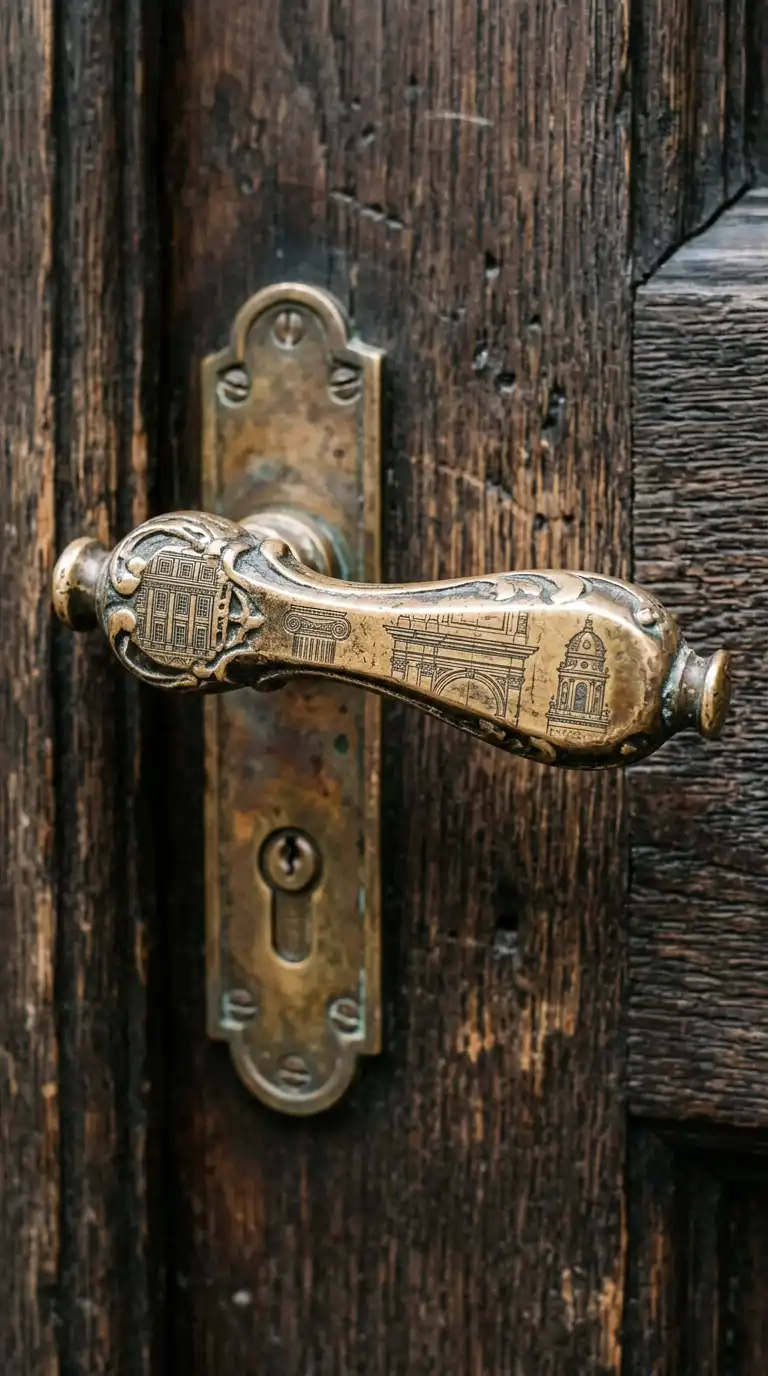
9. The Detail Fragment
The detail fragment wallpaper shows a small piece of a building at a large scale. A corner, a joint, a window frame, a door handle. The fragment is isolated from its context. The detail becomes abstract.
This wallpaper is ideal for phones. The emotional effect is precise, crafted, and intimate.
Quick Tips
- Photograph at a very close range.
- Crop to a square or rectangle that stands alone.
- The fragment should be recognisable but abstract.
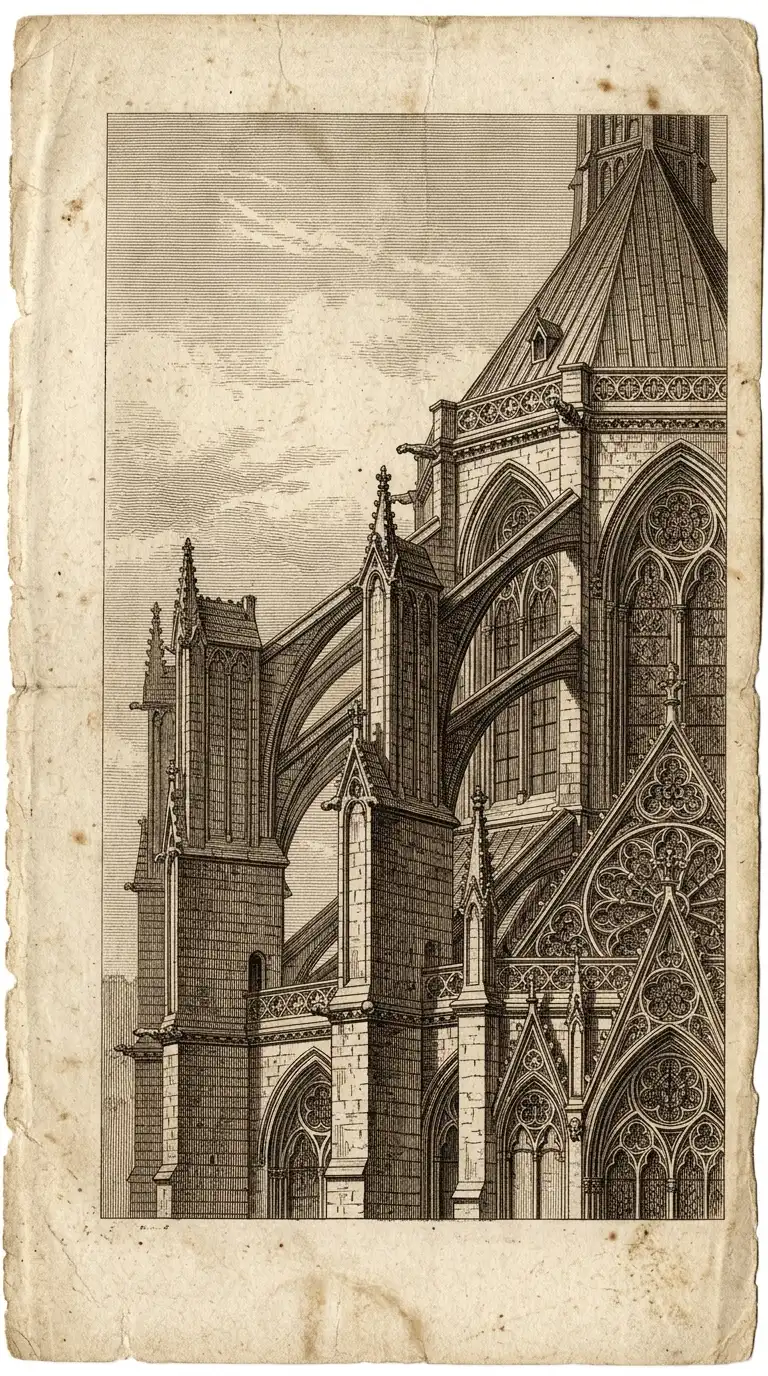
10. The Historical Engraving
The historical engraving wallpaper uses an antique architectural engraving as the image. A 19th-century elevation of a cathedral, a Piranesi prison, a Beaux-Arts rendering. The paper texture is visible. The lines are etched, not drawn.
This wallpaper is ideal for desktops and phones. The emotional effect is historical, textured, and scholarly.
Quick Tips
- Scan historical engravings at high resolution.
- Leave the paper texture visible — do not clean it.
- Crop to the most interesting fragment.
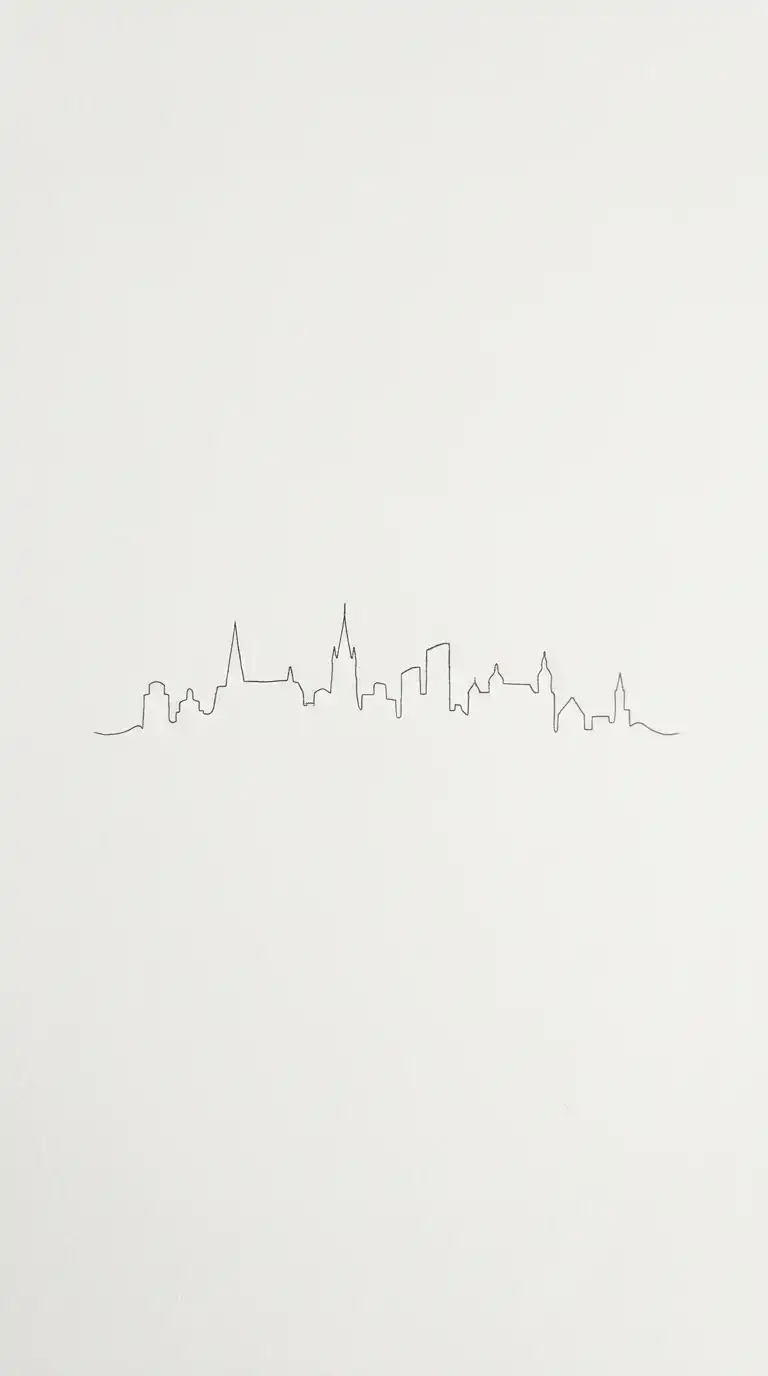
11. The Minimalist Line Drawing
The minimalist line drawing wallpaper is a single continuous line or a few parallel lines. The drawing is simple, abstract, and architectural. A single line might suggest a skyline, a section, or a column.
This wallpaper is ideal for phones. The emotional effect is minimal, calm, and precise.
Quick Tips
- Use a single line weight throughout.
- Leave generous white space around the drawing.
- The drawing should be simple enough to read at a glance.
12. The Colour Block Building
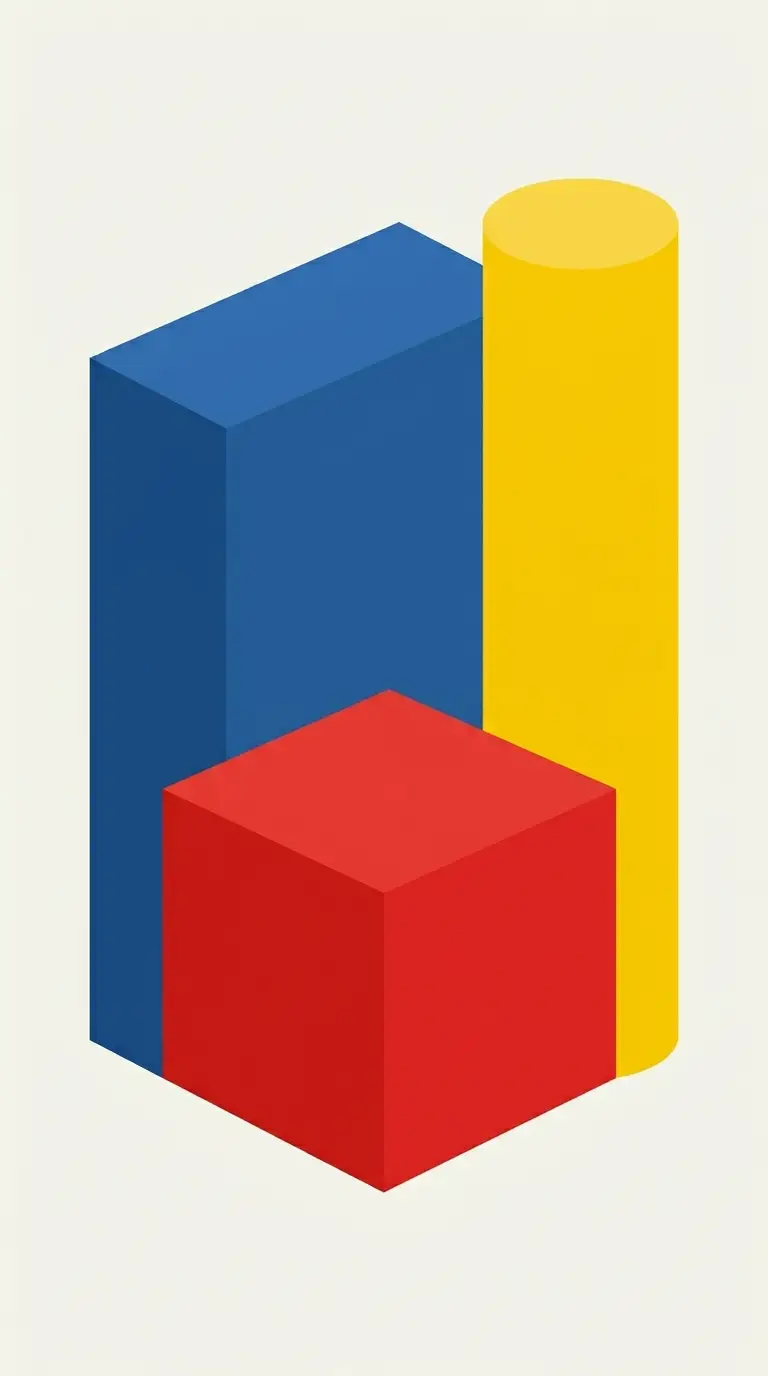
The colour block building wallpaper reduces a building to its essential masses in bold, flat colours. A red block for one volume, a blue block for another, a yellow block for a third. No details, no gradients, no shadows.
This wallpaper is ideal for desktops and phones. The emotional effect is bold, graphic, and playful.
Quick Tips
- Use 3-5 bold colours maximum.
- Simplify the building to 3-5 masses.
- No gradients, no shadows, no textures.
13. The Glass Reflection
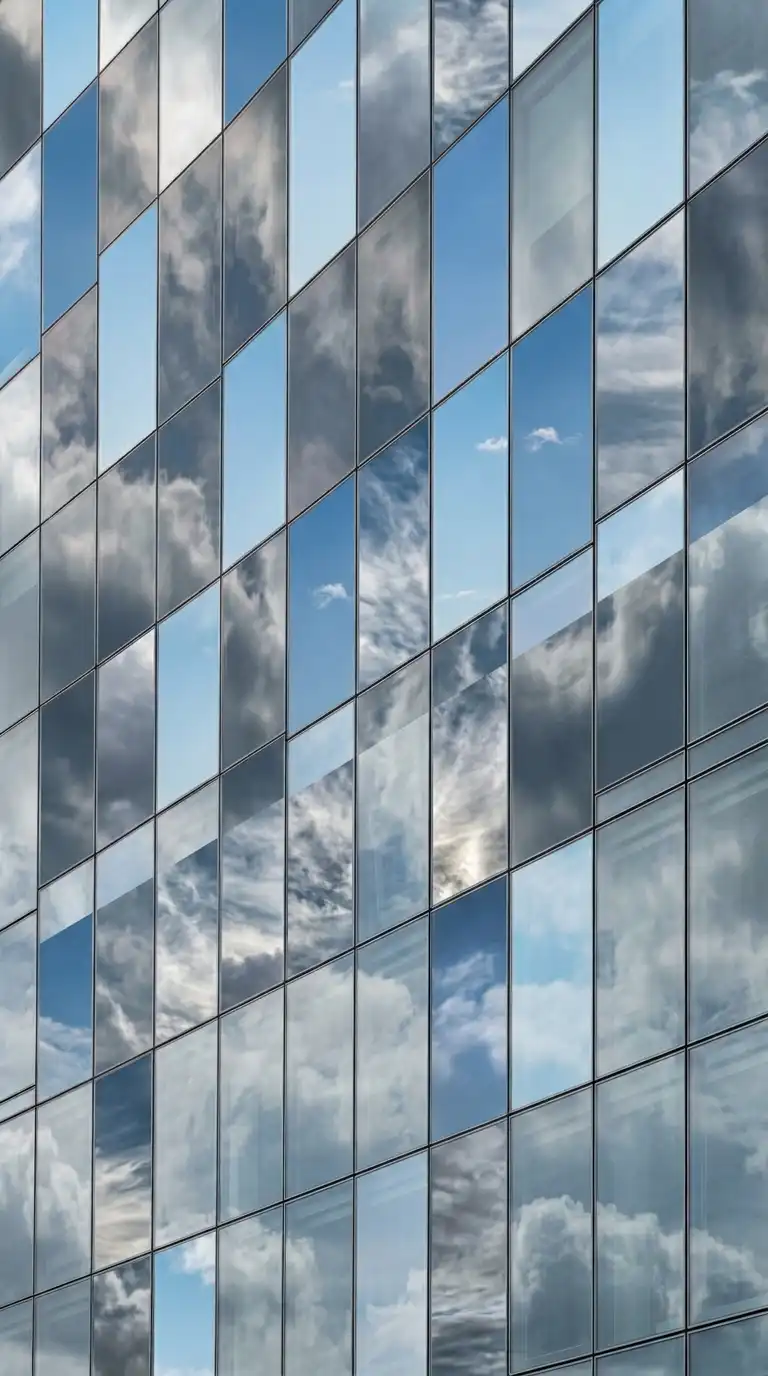
The glass reflection wallpaper captures the reflection of clouds, trees, or neighbouring buildings in a glass curtain wall. The building itself is almost invisible — only the reflection is visible. The image is abstract, layered, and luminous.
This wallpaper is ideal for desktops and phones. The emotional effect is luminous, layered, and abstract.
Quick Tips
- Photograph on a partly cloudy day for interesting reflections.
- Crop to remove the building’s frame — only glass.
- The reflection should be the subject, not the building.
14. The Night Facade
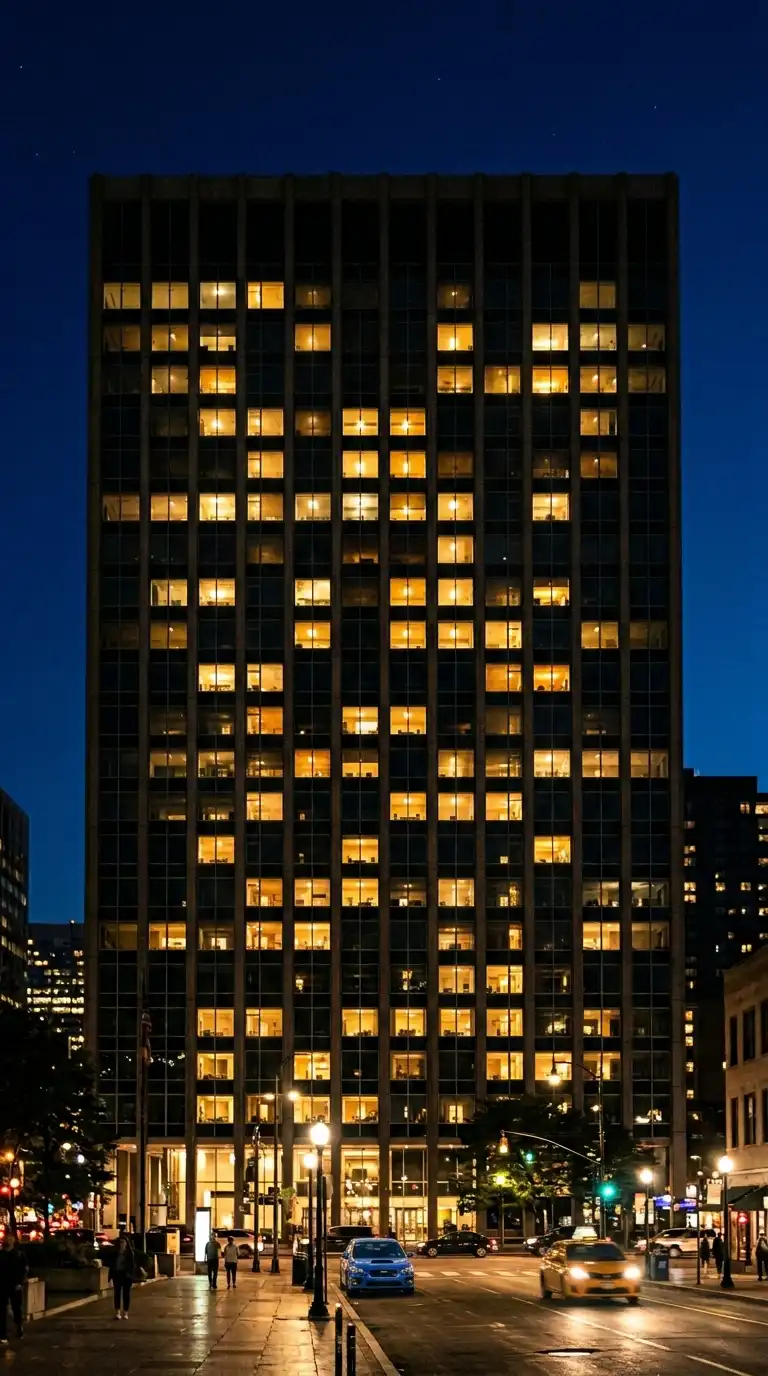
The night facade wallpaper captures a building at night, with windows lit from within. The facade is dark, but the windows glow in warm yellows and oranges. The pattern of lit windows becomes an abstract grid.
This wallpaper is ideal for desktops and phones. The emotional effect is warm, urban, and mysterious.
Quick Tips
- Photograph after sunset but before the sky is completely dark.
- The lit windows should be the brightest element.
- The facade should be dark, almost black.
Final Thoughts
Architecture wallpaper is not a drawing or a photograph — it is a background. It should not compete for attention. It should sit behind icons and windows, providing atmosphere without distraction.
These 14 wallpaper types are not mutually exclusive. A building facade grid can be a shadow study. A plan abstraction can be a colour block building. A construction photograph can be converted to black and white. The best architecture wallpapers are the ones you forget are there — until you look at them and remember why you love architecture.