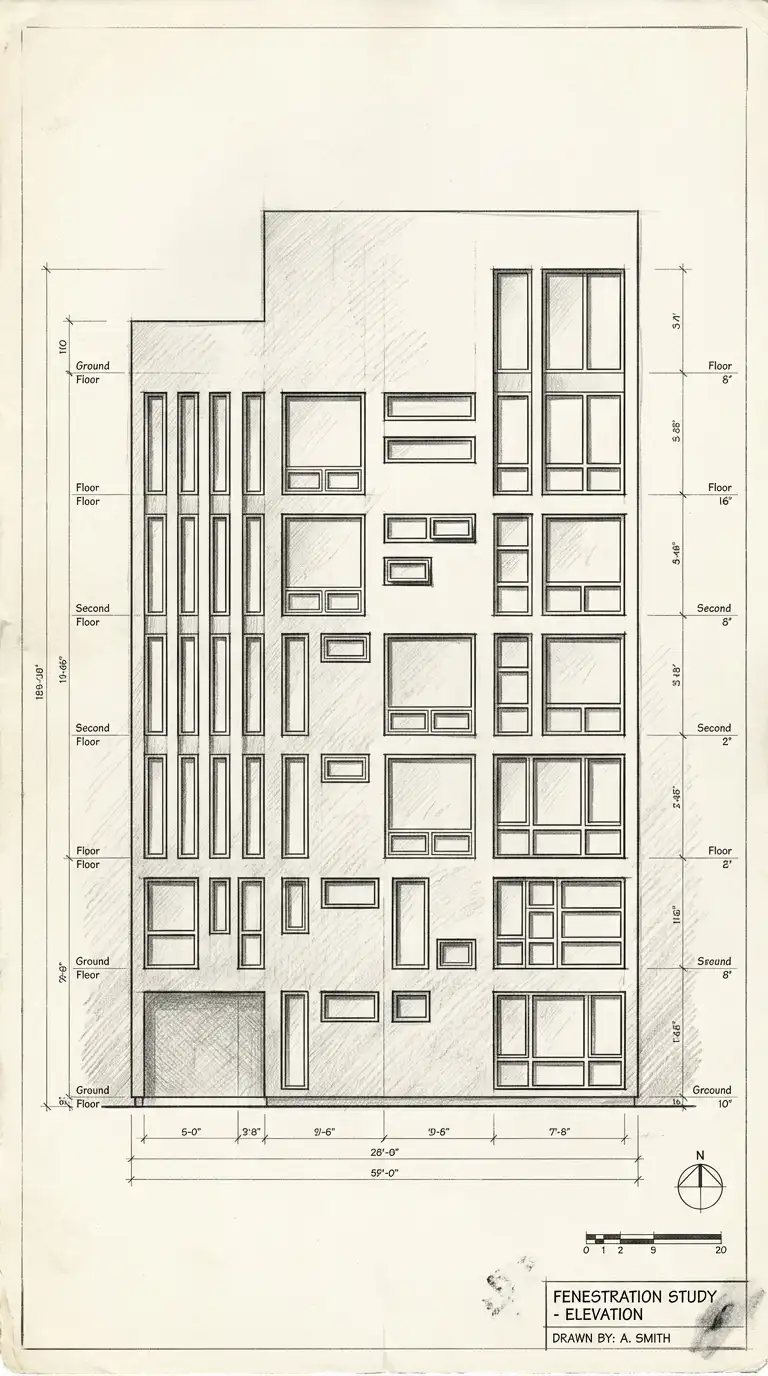
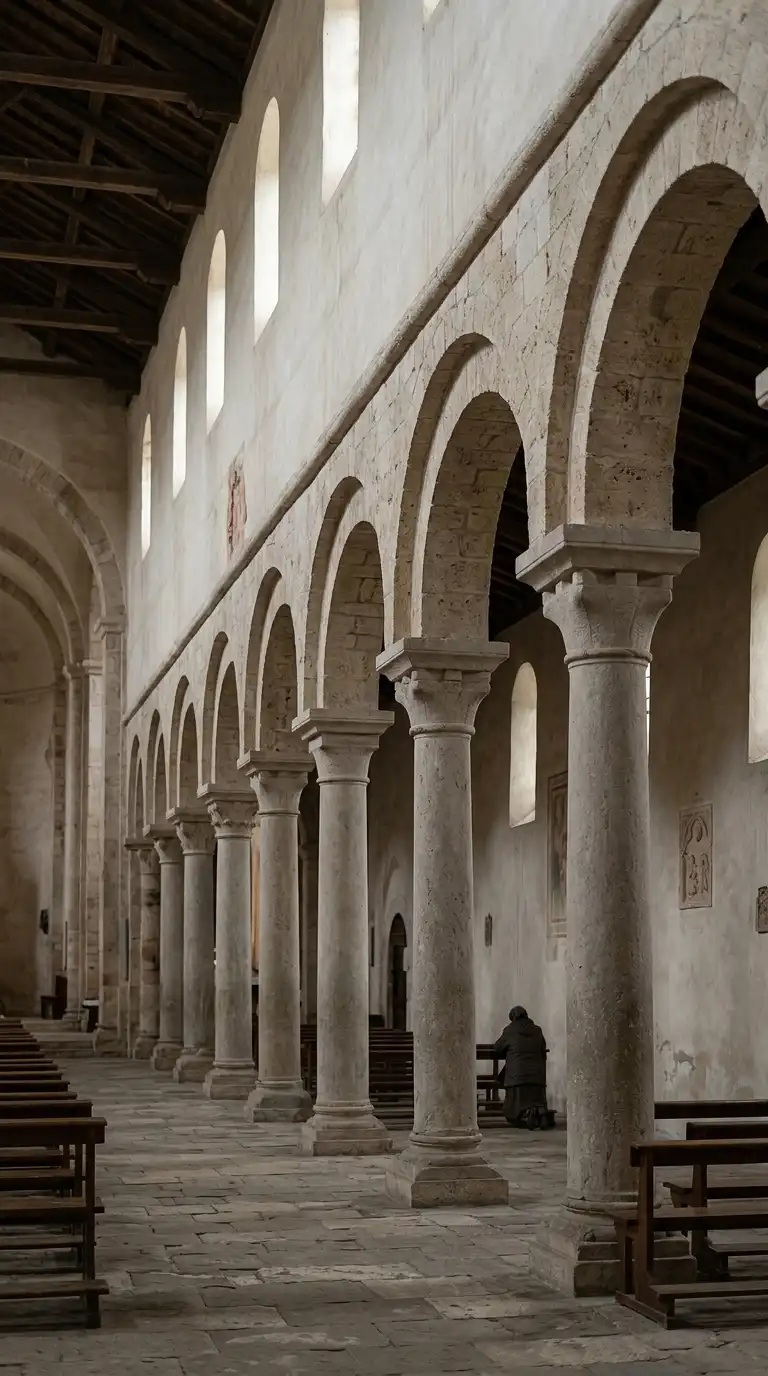
Baroque architecture emerged in late 16th-century Italy as a dramatic evolution of Renaissance forms. Where Renaissance architecture is balanced, rational, and static, Baroque is dynamic, emotional, and theatrical. Curved walls replace straight ones. Light is used dramatically, with hidden sources and deep shadows. Ornament is abundant and richly textured. The emotional effect is awe, movement, and divine ecstasy.
These 14 Baroque architecture designs span churches, palaces, fountains, and civic buildings across Italy, France, Spain, Austria, and the Americas. Each design includes defining characteristics, key examples, and architectural principles.
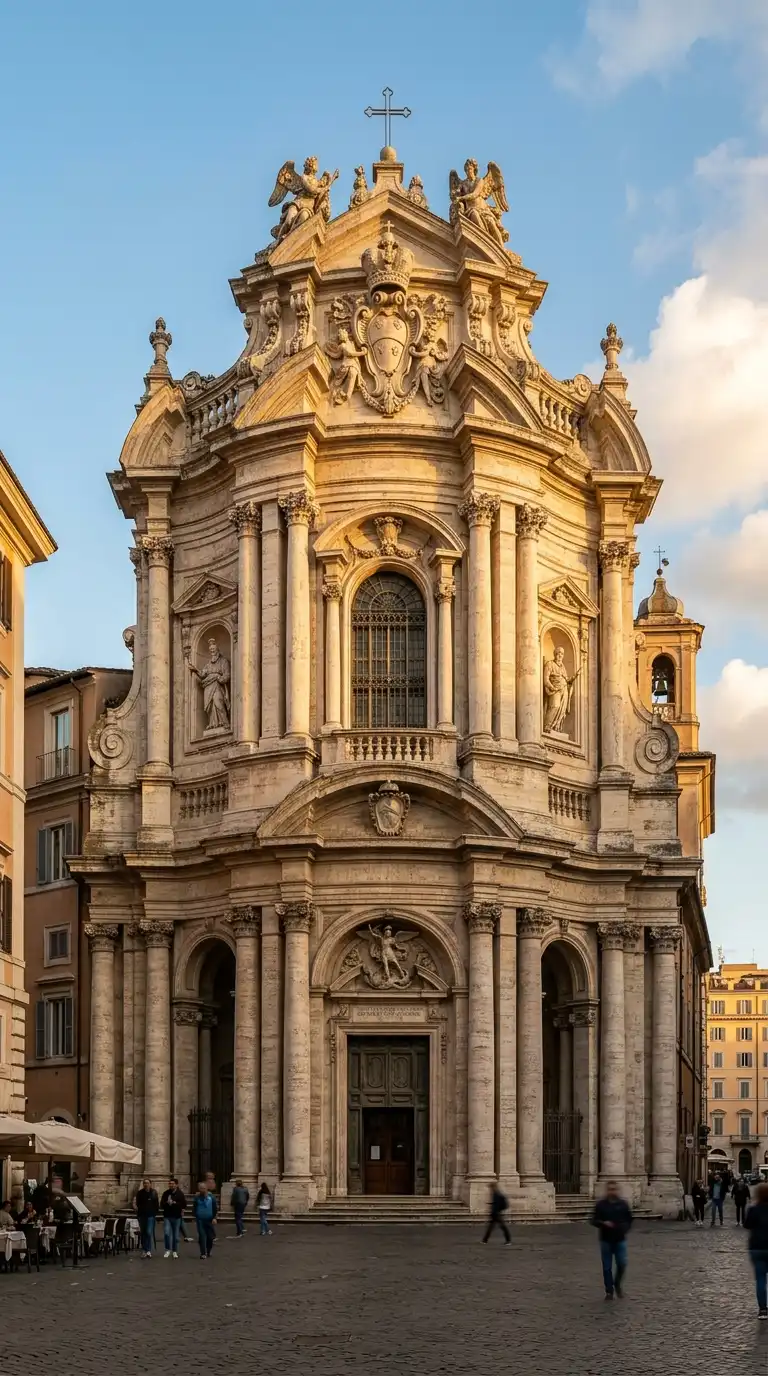
1. The Baroque Church Facade
The Baroque church facade is the most recognisable expression of the style. Unlike the flat, static facades of the Renaissance, the Baroque facade undulates. It curves inward and outward. Columns are paired or clustered. Pediments are broken or curved. The facade is a three-dimensional sculpture, not a two-dimensional screen.
The Church of the Gesù in Rome (1584) by Giacomo della Porta and the Church of San Carlo alle Quattro Fontane (1641) by Francesco Borromini are defining examples. The emotional effect is dramatic, inviting, and theatrical.
Quick Tips
- The facade should have concave and convex curves, not flat planes.
- Columns should be paired or clustered, not single.
- Pediments should be broken or curved, not triangular.
2. The Baroque Dome
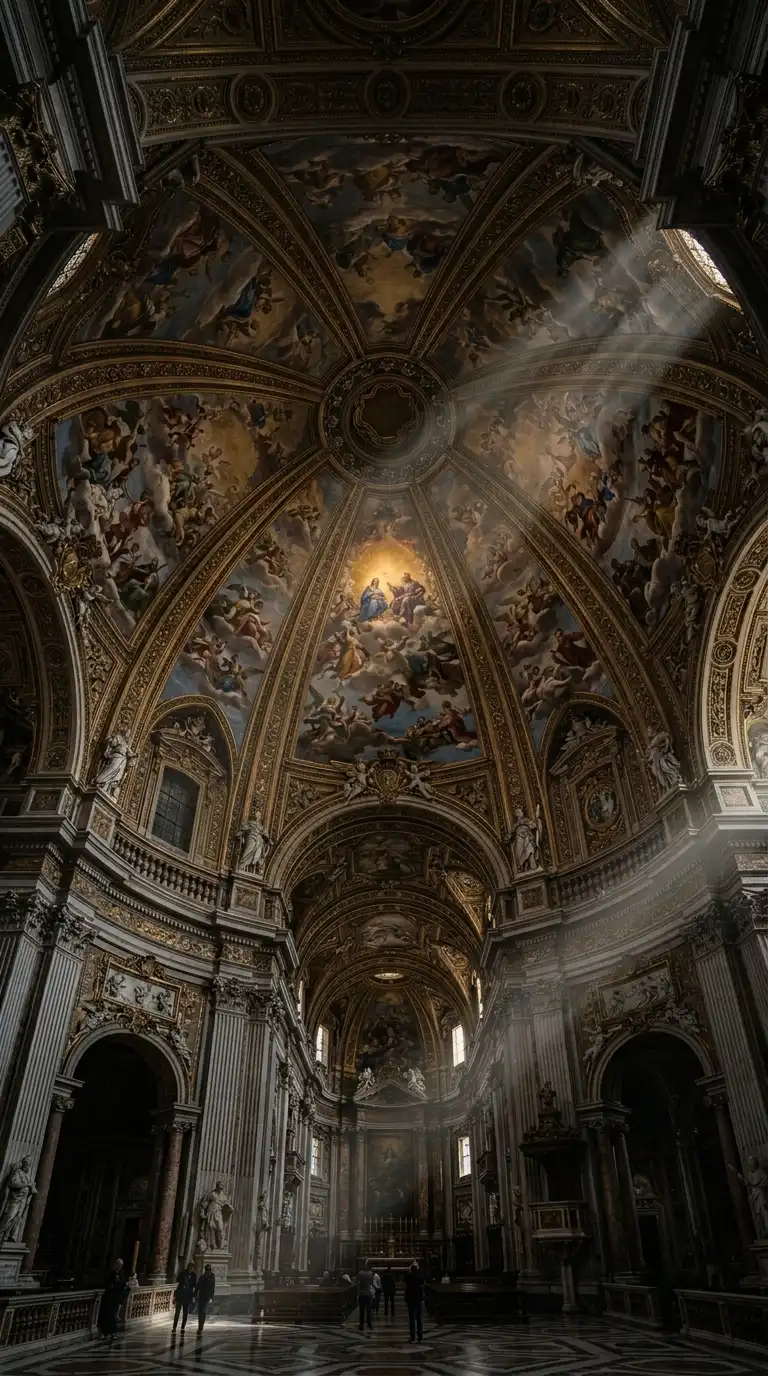
The Baroque dome is not the simple hemisphere of the Renaissance. It is tall, layered, and often double-shelled. The dome is pierced with windows that are hidden from below, creating dramatic shafts of light. The interior of the dome is decorated with frescoes that seem to open to the sky.
St. Peter’s Dome in Rome (1590) by Michelangelo and Giacomo della Porta, and the dome of Sant’Ivo alla Sapienza (1660) by Borromini, are defining examples. The emotional effect is celestial, upward-soaring, and awe-inspiring.
Quick Tips
- The dome should be taller than a hemisphere — a pointed or segmented dome is typical.
- Hidden windows should create dramatic light from above.
- The interior fresco should use di sotto in sù (from below upward) perspective.
3. The Baldacchino
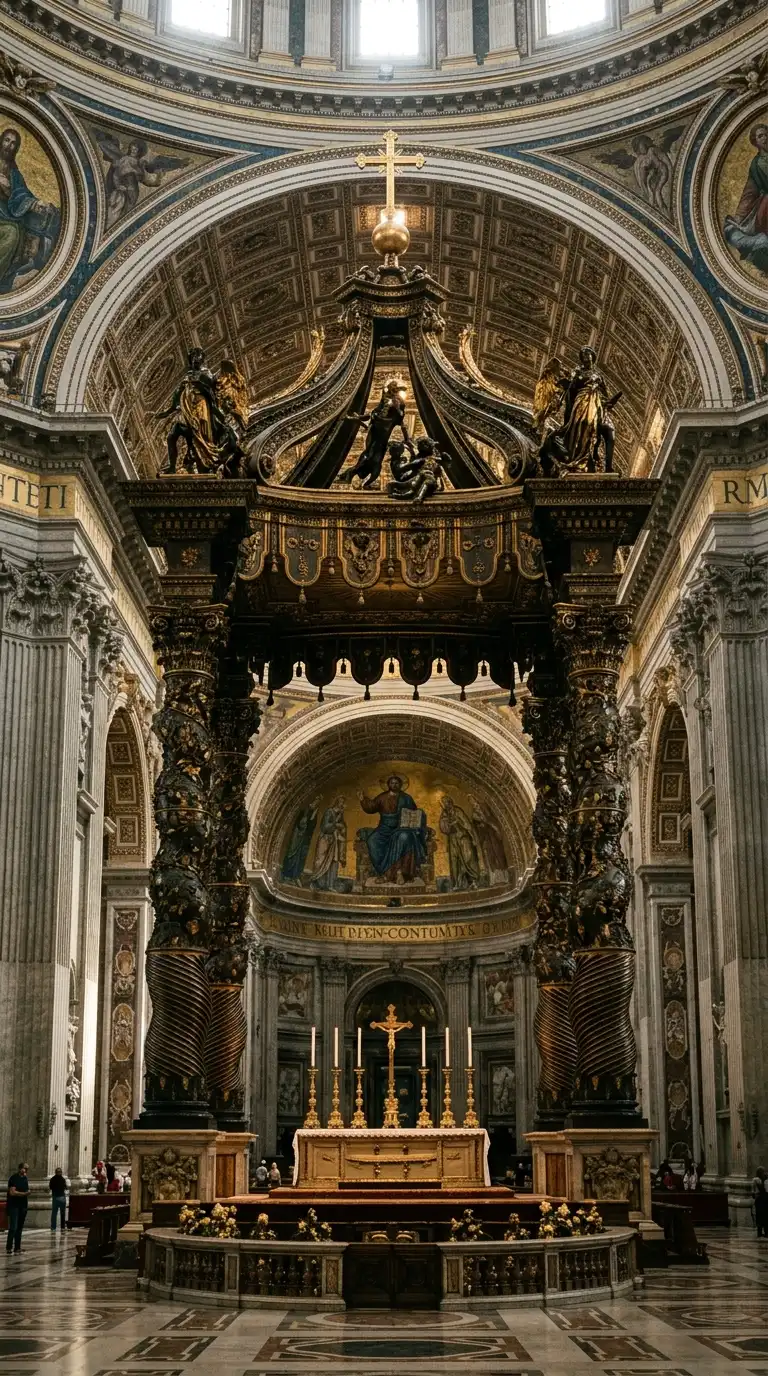
The baldacchino is a monumental canopy over the altar, supported by four columns. It is part architecture, part sculpture, part furniture. The baldacchino marks the most sacred space in the church.
Bernini’s Baldacchino in St. Peter’s Basilica (1634) is the defining example. Four spiral bronze columns support a curved canopy. The columns are wrapped with olive branches and bees. The canopy is crowned with a cross. The emotional effect is monumental, sacred, and sculptural.
Quick Tips
- The baldacchino should be scaled to the space — it must be visible from the entire church.
- Spiral or twisted columns are characteristic of Baroque baldacchini.
- The canopy should be open, not solid, so the altar remains visible.
4. The Baroque Palace
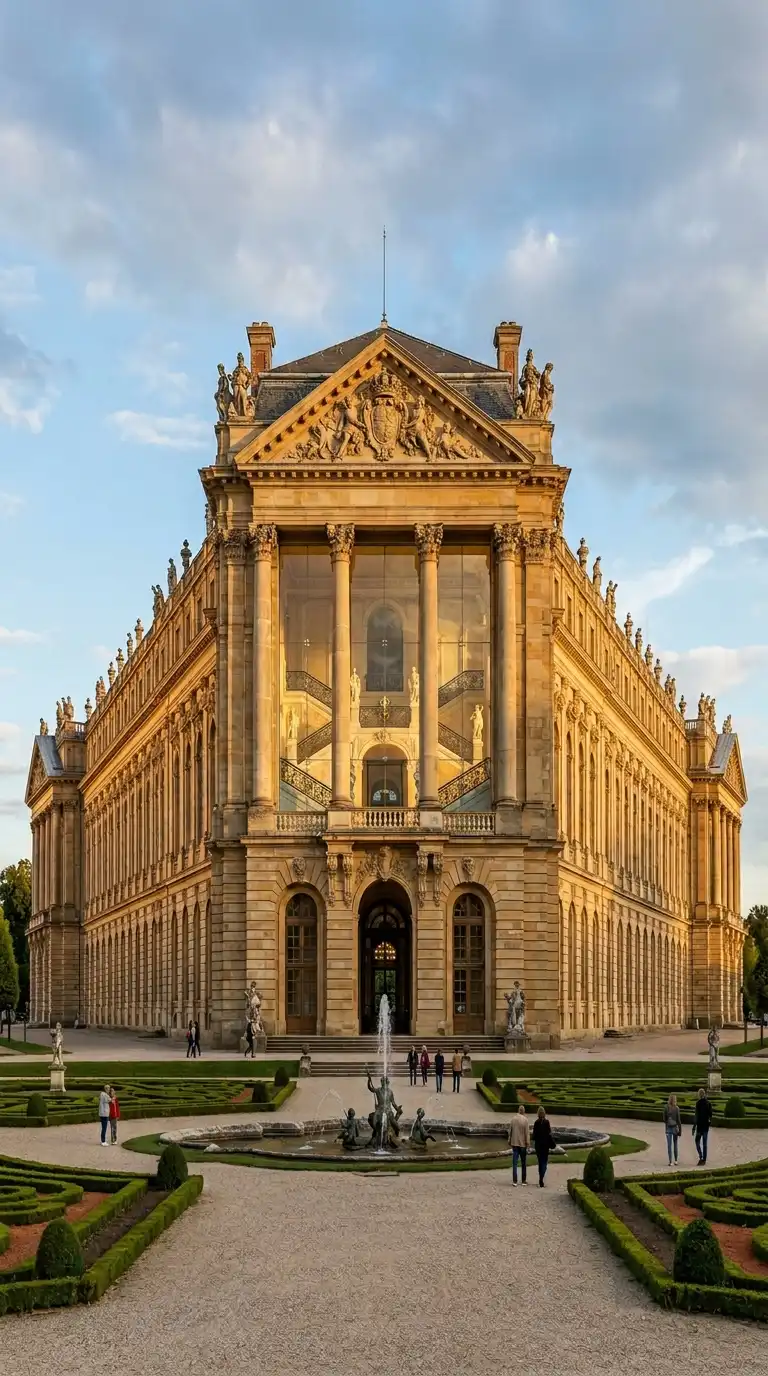
The Baroque palace is the residence of absolute power. It is vast, symmetrical, and richly decorated. The facade is long and repetitive, but broken by projecting wings, columns, and pediments. The interior is a sequence of enfilade rooms — doors aligned so the viewer sees through multiple rooms in a straight line.
The Palace of Versailles (1661-1715) by Louis Le Vau and Jules Hardouin-Mansart is the defining example. The emotional effect is overwhelming, hierarchical, and majestic.
Quick Tips
- The facade should be long with projecting central and end pavilions.
- The enfilade should align doors so the viewer sees through multiple rooms.
- The Hall of Mirrors or similar grand gallery should be the centrepiece.
5. The Baroque Staircase
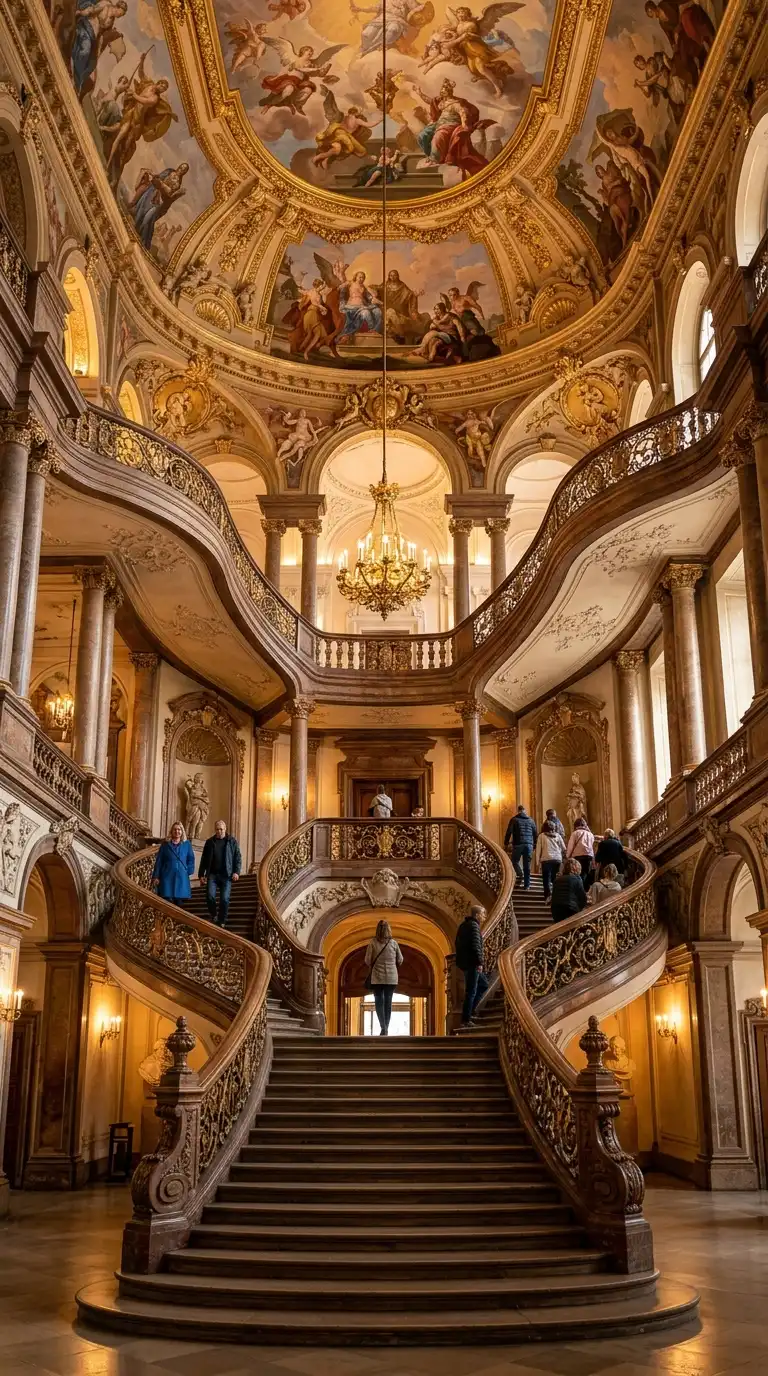
The Baroque staircase is not a means of getting from one floor to another. It is a theatrical space. The staircase is wide, curving, and often split into two flights that curve around an open centre. The staircase is designed to be seen from below, with visitors ascending slowly while being viewed from above.
The grand staircase of the Würzburg Residence (1744) by Balthasar Neumann and the staircase of the Palazzo Barberini in Rome (1633) by Bernini are defining examples. The emotional effect is dramatic, welcoming, and hierarchical.
Quick Tips
- The staircase should be visible from the entrance — it is the first thing visitors see.
- Split flights that curve around an open centre are characteristic.
- The ceiling above the staircase should be frescoed.
6. The Baroque Fountain
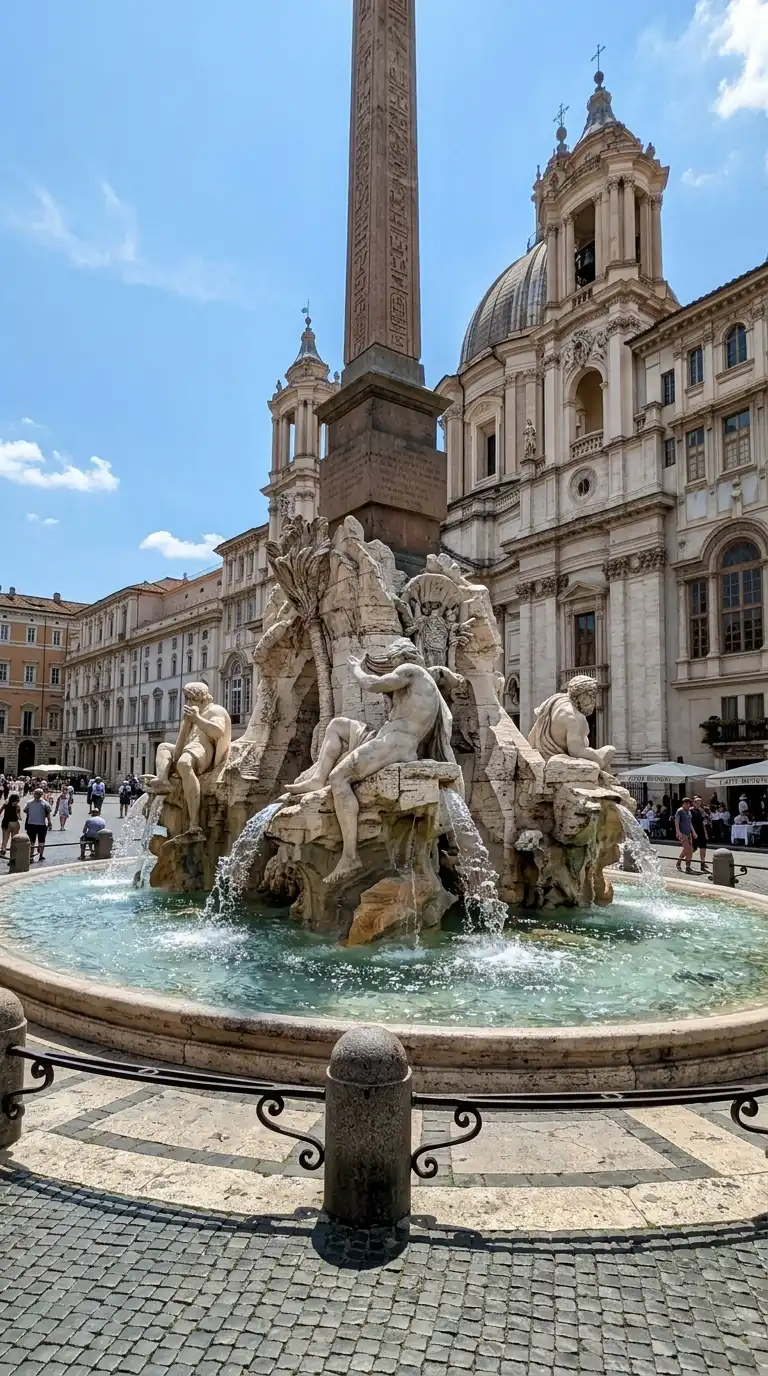
The Baroque fountain is a combination of architecture, sculpture, and hydraulics. Water is not just functional — it is theatrical. Water shoots upward, falls in curtains, and sprays from sculptures. The fountain is a performance.
Bernini’s Fontana dei Quattro Fiumi (Fountain of the Four Rivers) in Piazza Navona, Rome (1651) is the defining example. The emotional effect is cooling, dramatic, and playful.
Quick Tips
- The fountain should be the focal point of its piazza or garden.
- Water should move in multiple ways: jets, curtains, sprays, and pools.
- Sculpture should be integrated with the water — figures should appear to interact with it.
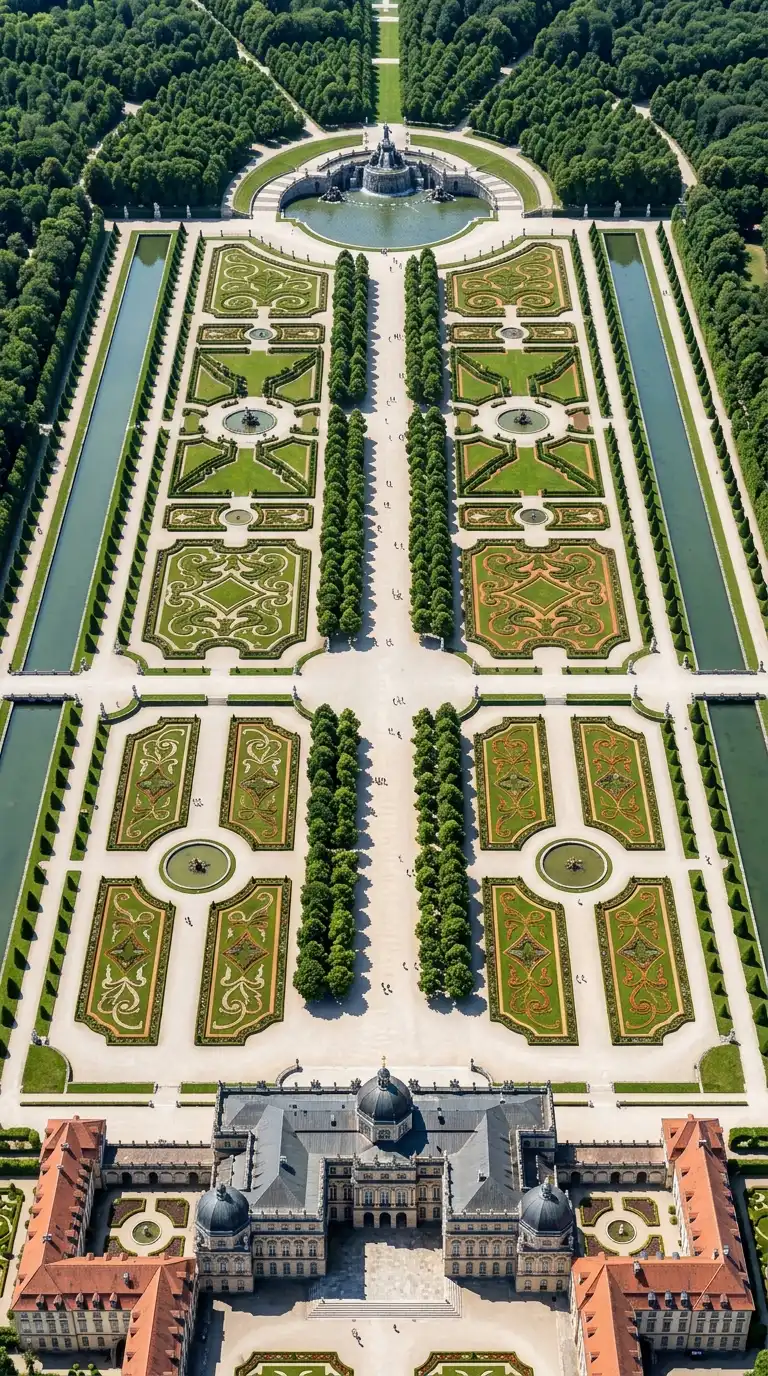
7. The Baroque Garden
The Baroque garden is the landscape equivalent of the Baroque palace. It is ordered, symmetrical, and axial. Long vistas extend from the palace to the horizon. Parterres (patterned flower beds) are laid out in geometric shapes. Water is controlled in canals, fountains, and cascades.
The Gardens of Versailles (1661-1715) by André Le Nôtre are the defining example. The emotional effect is majestic, ordered, and powerful.
Quick Tips
- A central axis should extend from the palace to the horizon.
- Parterres should be geometric and symmetrical.
- Water should be controlled in straight canals, not natural streams.
8. The Baroque Piazza
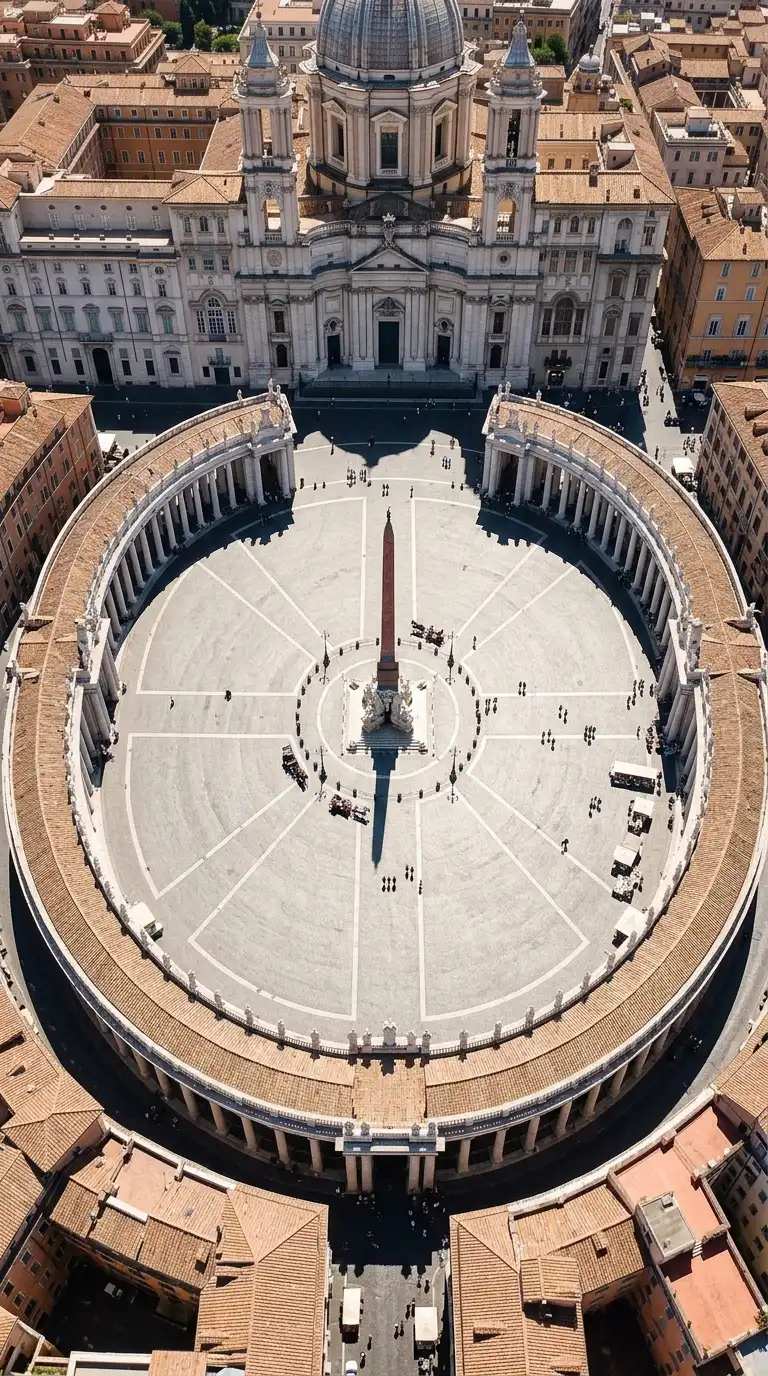
The Baroque piazza is an urban room. The space is shaped by surrounding buildings, but the shape is not a simple rectangle. It is oval, trapezoidal, or curved. The piazza is designed to be entered, crossed, and viewed from specific points.
Bernini’s Piazza San Pietro in Rome (1667) is the defining example. The emotional effect is theatrical, welcoming, and monumental.
Quick Tips
- The piazza should have a defined shape — oval, trapezoidal, or curved.
- Colonnades or arcades should frame the space.
- A focal point — an obelisk, a fountain, a church facade — should anchor the piazza.
9. The Illusionistic Ceiling
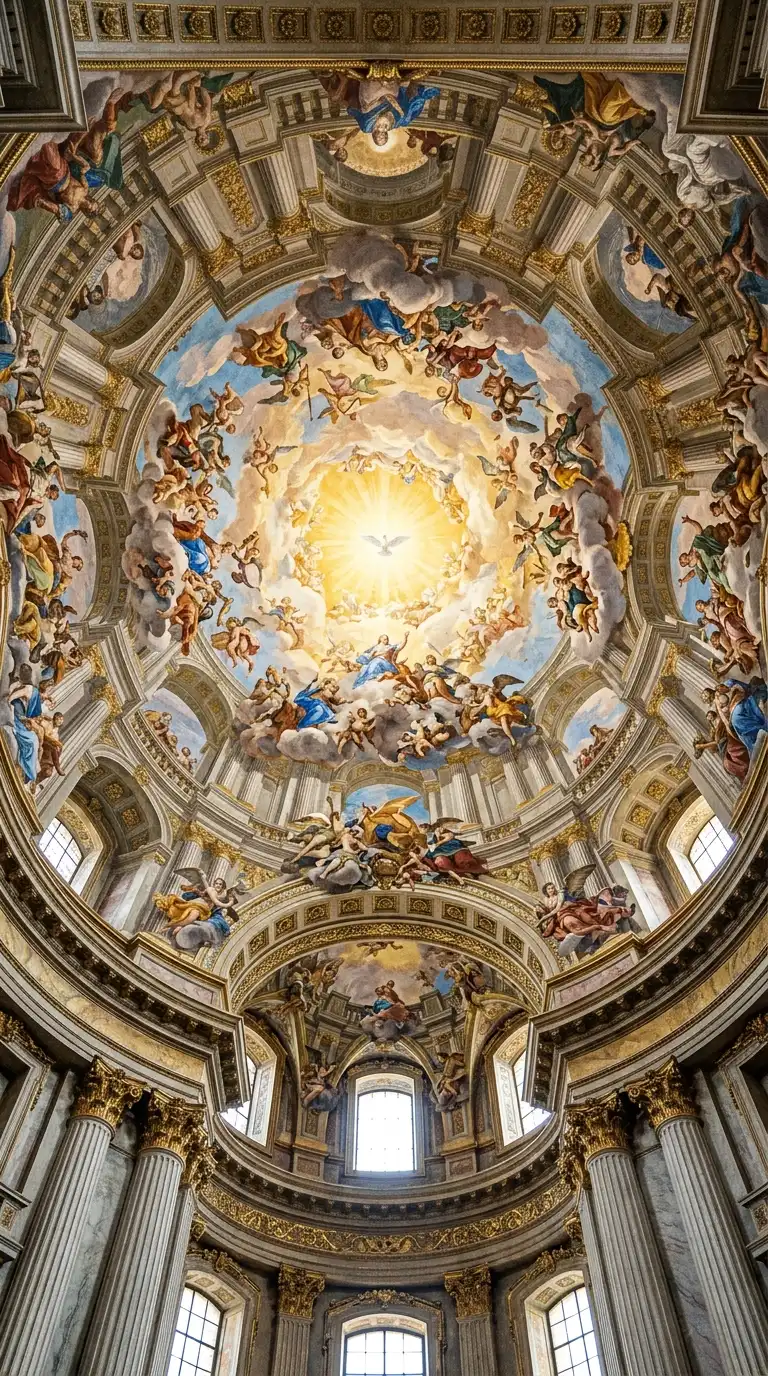
The illusionistic ceiling is a Baroque invention. The ceiling is painted with a fresco that seems to open to the sky. Figures appear to float above the viewer. Architecture is painted in perspective, extending the real architecture of the room upward.
Andrea Pozzo’s ceiling in the Church of Sant’Ignazio in Rome (1694) is the defining example. The emotional effect is vertiginous, celestial, and overwhelming.
Quick Tips
- The painting should use di sotto in sù perspective (from below upward).
- Painted architecture should continue the real architecture of the room.
- The centre should be the brightest, as if opening to heaven.
10. The Chapelle Royale
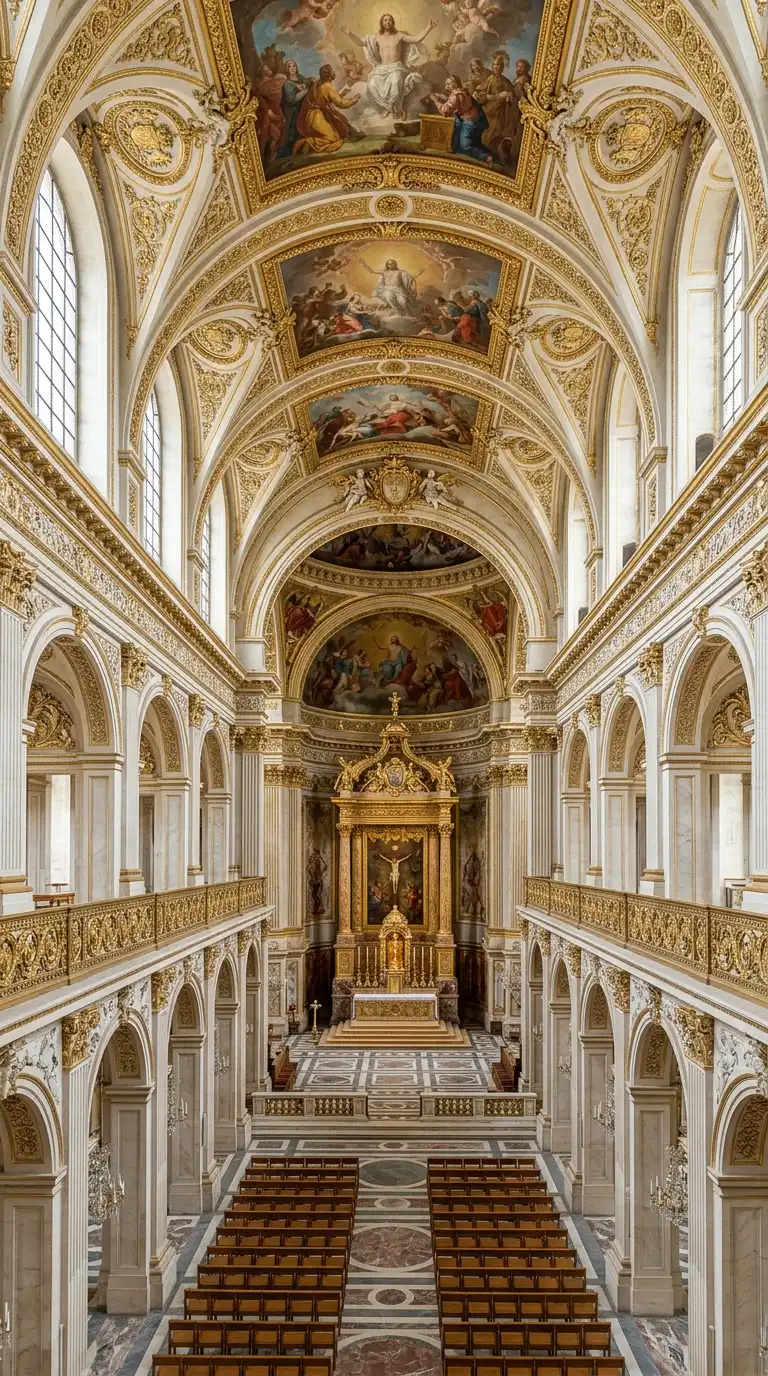
The Chapelle Royale is the private chapel of a monarch. It is a two-storey space, with the monarch’s gallery on the upper level and the congregation below. The chapel is richly decorated, with columns, sculpture, and painting.
The Chapelle Royale at Versailles (1710) by Jules Hardouin-Mansart is the defining example. The emotional effect is hierarchical, sacred, and majestic.
Quick Tips
- The royal gallery should be on the upper level, facing the altar.
- The space should be tall and light-filled.
- Decoration should be rich but restrained compared to Italian Baroque.
11. The Jesuit Church
The Jesuit church is a Baroque type that spread across Europe and the Americas. The plan is a single nave with side chapels instead of aisles. The nave is wide and tall, with a barrel vault. The crossing is covered by a dome. The decoration is rich, with gilded altars, painted ceilings, and polychrome marble.
The Church of the Gesù in Rome (1584) by Giacomo della Porta and Vignola is the prototype. The emotional effect is overwhelming, glorious, and pedagogically clear.
Quick Tips
- The plan must be a single nave with side chapels — no aisles.
- The crossing must have a dome.
- The decoration should be rich but legible from the entire nave.
12. The Spanish Churrigueresque Facade
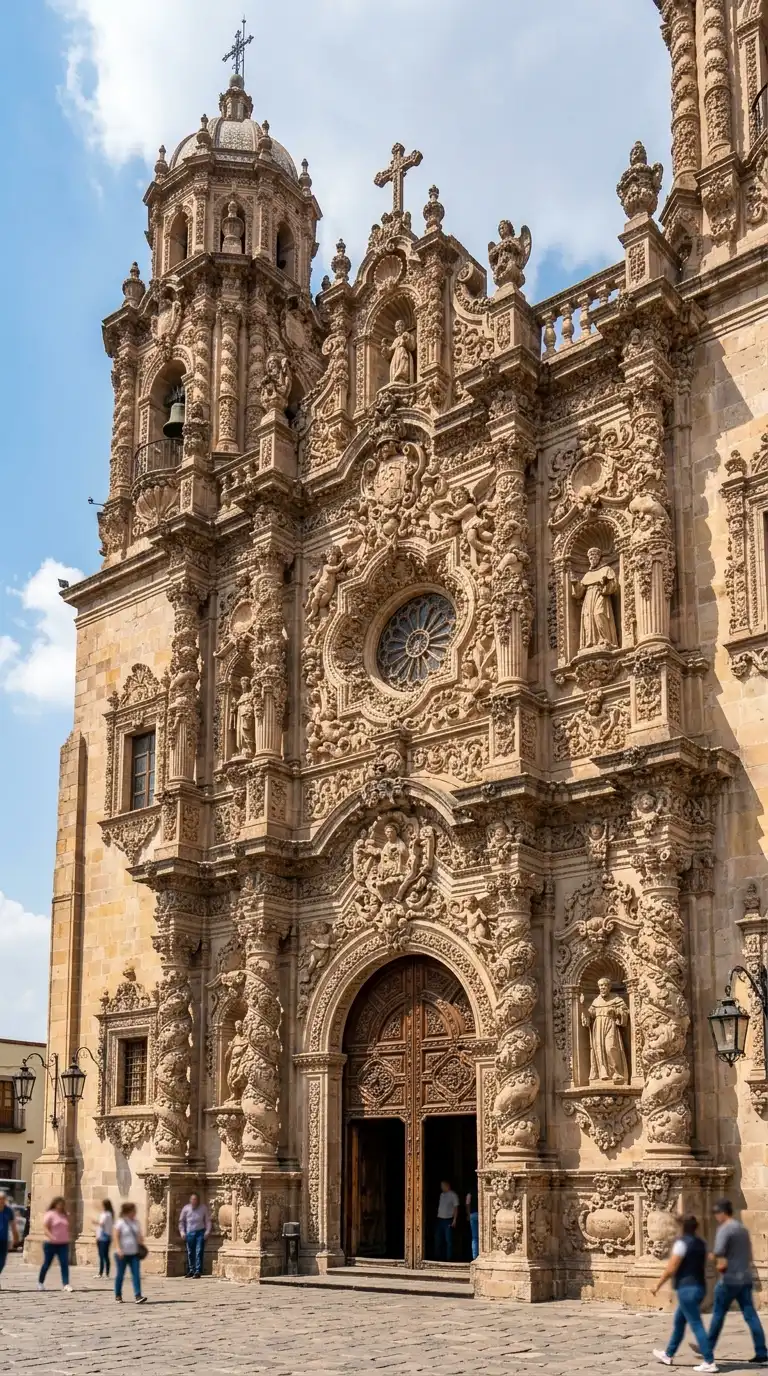
Churrigueresque is an extremely ornate Spanish Baroque style. The facade is densely decorated with ornament: columns are twisted, surfaces are carved, and shadows are deep. The decoration seems to dissolve the surface of the building.
The west facade of the Cathedral of Santiago de Compostela (1750) by Fernando de Casas Novoa is the defining example. The emotional effect is overwhelming, decorative, and almost frenzied.
Quick Tips
- Ornament should be extremely dense — no bare stone.
- Columns should be twisted (Solomonic) or clustered.
- The facade should read as a single decorative screen.
13. The Portuguese Azulejo Church
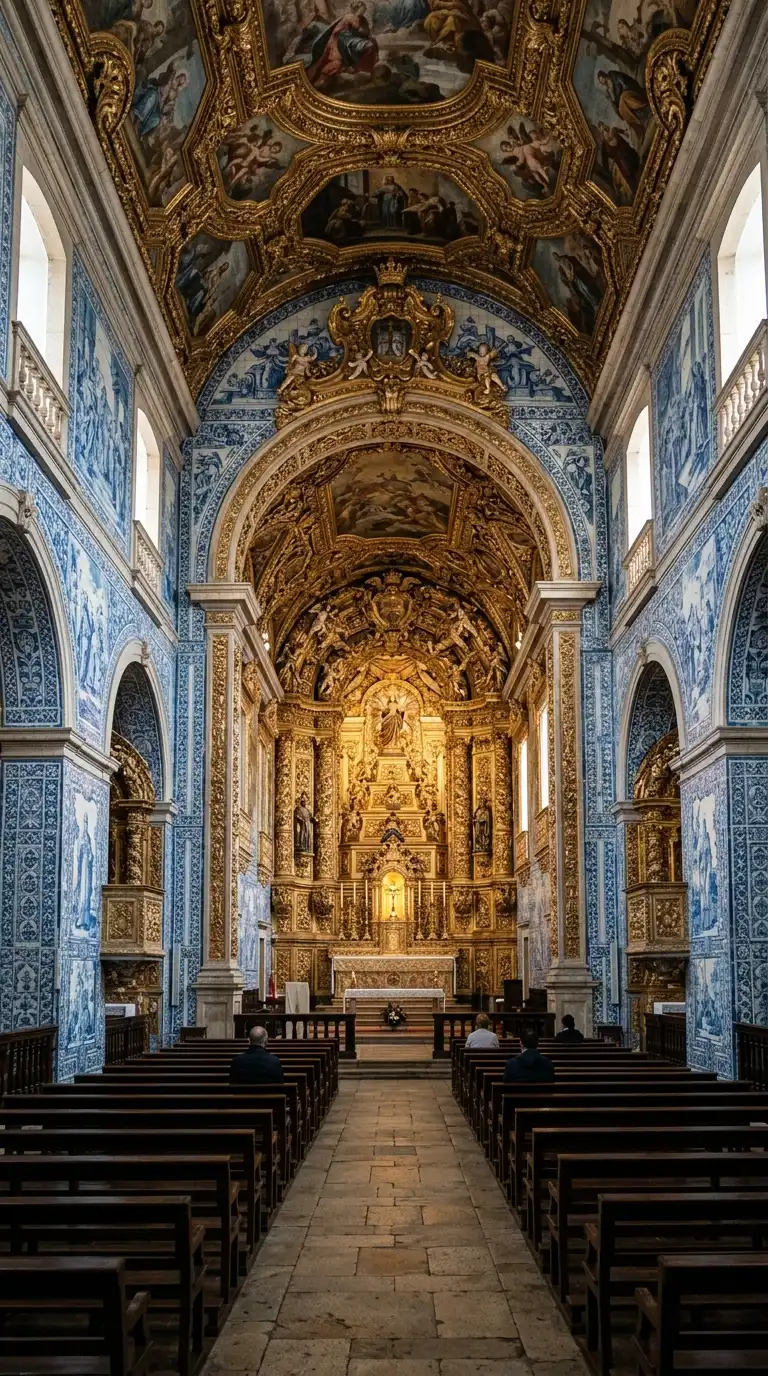
The Portuguese Baroque church is decorated with azulejos — hand-painted tin-glazed ceramic tiles. The tiles cover the walls, forming geometric patterns, biblical scenes, or floral motifs. The tiles are blue and white, contrasting with the gilded wood of the altars.
The Church of São Francisco in Porto (18th century) is the defining example. The emotional effect is patterned, cool, and uniquely Portuguese.
Quick Tips
- Azulejos should cover large wall surfaces, not just panels.
- The pattern should be geometric or narrative, not random.
- The contrast between blue tiles and gold altars is essential.
14. The Austrian Baroque Church
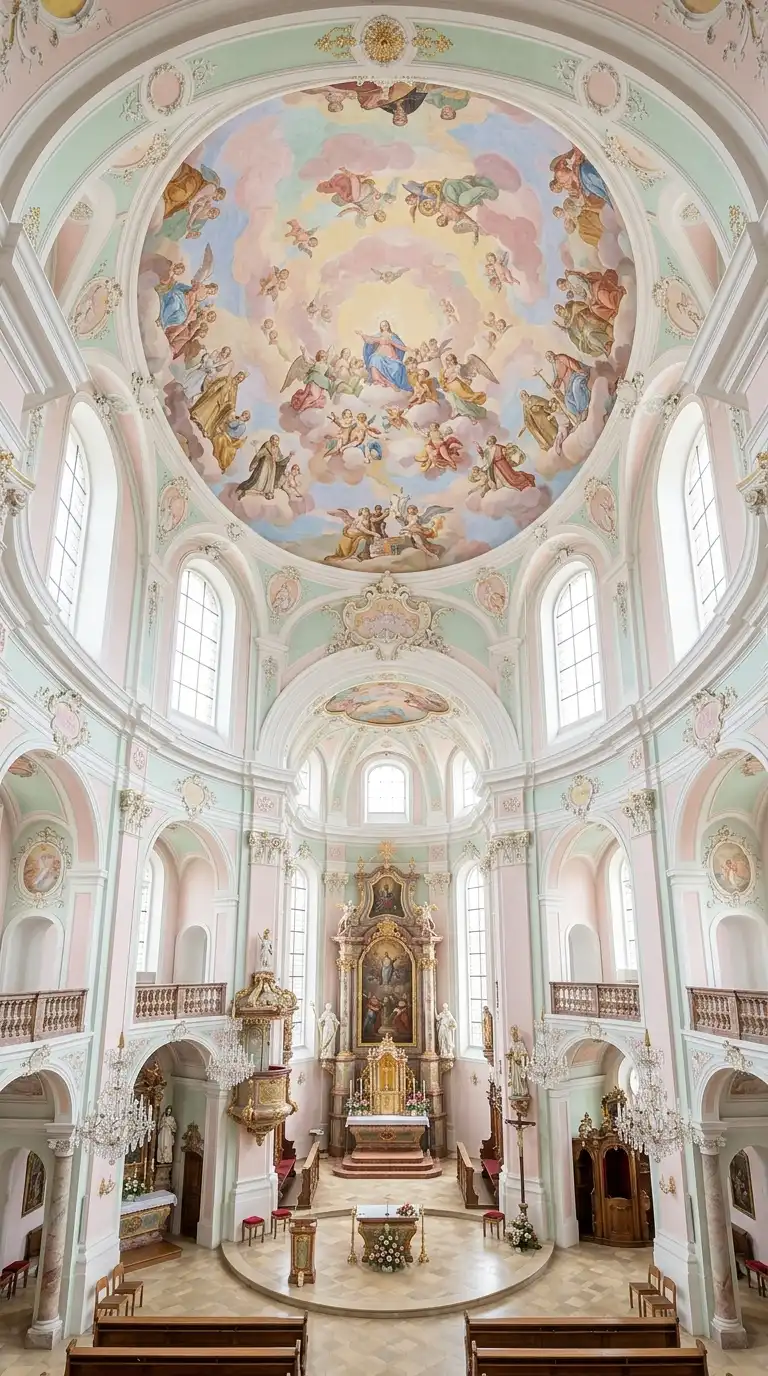
The Austrian Baroque church is lighter and more colourful than its Italian counterpart. Pastel colours — pink, pale blue, mint green — replace dark marble. The forms are curving and playful. The light is bright and even.
The Church of St. John of Nepomuk in Munich (1733) by Johann Michael Fischer and the Abbey Church of Ottobeuren (1766) are defining examples. The emotional effect is joyful, light, and celestial.
Quick Tips
- Use pastel colours on walls and ceilings — pink, pale blue, mint green.
- The plan should be curving, with oval or undulating spaces.
- Light should be bright and even, not dramatic and shadowy.
Final Thoughts
Baroque architecture is not a single style but a family of styles united by a shared sensibility: movement, drama, and the manipulation of light. From the dense ornament of Churrigueresque to the light pastels of Austrian Baroque, from the theatrical fountains of Rome to the azulejo tiles of Portugal, Baroque architecture speaks a language of emotion.
These 14 designs are not mutually exclusive. A Baroque church can have a baldacchino, an illusionistic ceiling, and a Churrigueresque facade. A Baroque palace can have a grand staircase, a fountain in the garden, and a Hall of Mirrors. The best Baroque architecture is not restrained — it is excessive, emotional, and unforgettable.