Islamic architecture spans over 1,300 years and three continents, from the Umayyad caliphate to the Ottoman, Safavid, and Mughal empires. It is not a single style but a family of traditions united by shared principles: geometric ornament, the use of water and light, the centrality of the courtyard, and the expression of structure through arches and vaults.
These 16 Islamic architecture designs cover mosques, palaces, madrasas, gardens, and urban structures. Each design includes defining characteristics, key examples, and design principles.
1. The Hypostyle Mosque
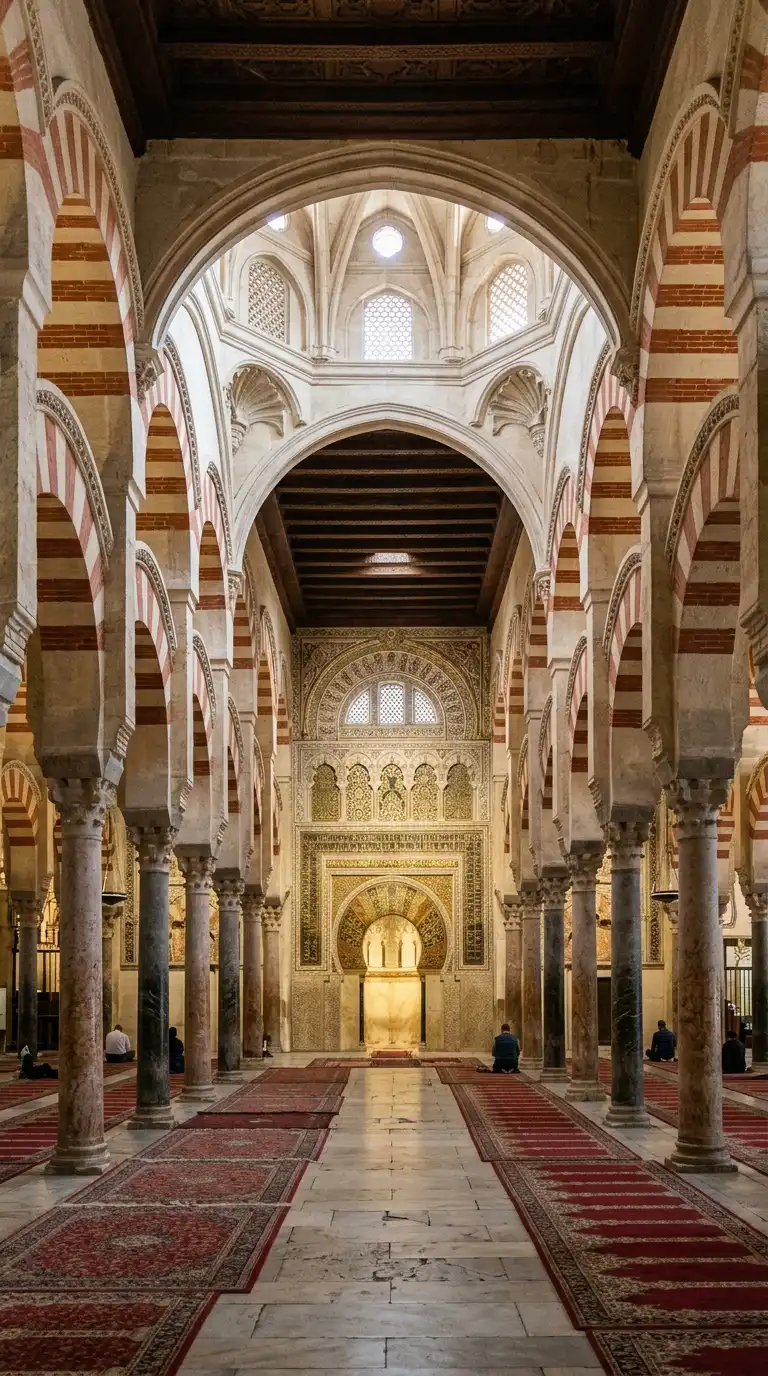
The hypostyle mosque is the earliest form of congregational mosque. The prayer hall is a forest of columns supporting a flat roof. The columns are closely spaced — typically 3-4 metres apart. The qibla wall faces Mecca, with the mihrab (niche) marking the direction of prayer.
The Great Mosque of Córdoba (Spain, 784-987) is the defining example. The emotional effect is rhythmic, infinite, and meditative.
Quick Tips
- Columns should be closely spaced to create a forest-like effect.
- The qibla wall must be perpendicular to the direction of Mecca.
- The mihrab should be the most decorated element in the prayer hall.
2. The Four-Iwan Mosque
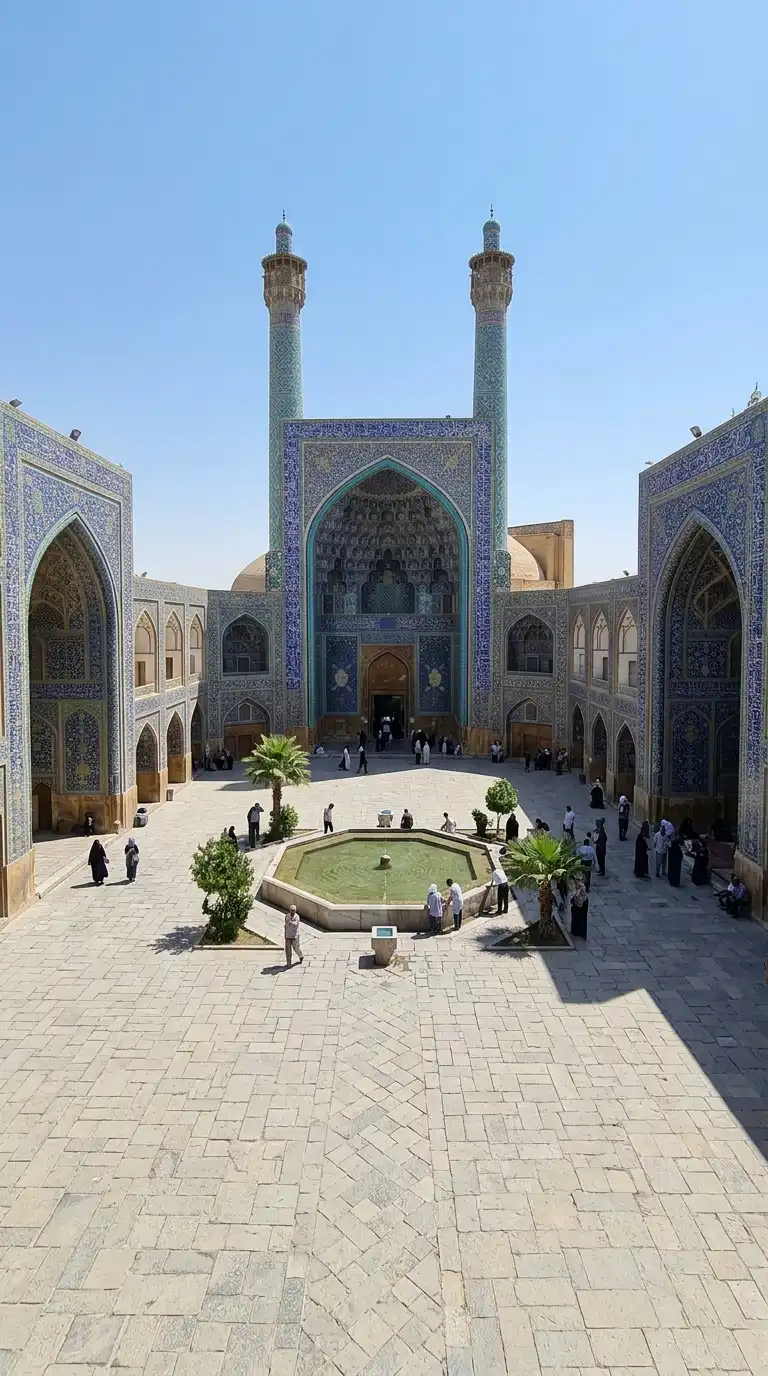
The four-iwan mosque developed in Iran and Central Asia. The mosque has a central courtyard with four iwans — vaulted halls open to the courtyard on one side — one on each side. The largest iwan leads to the domed prayer hall on the qibla side.
The iwans are framed by pishtaqs (tall, decorated portals). The courtyard has a central fountain for ablutions. The emotional effect is axial, monumental, and hierarchical.
Quick Tips
- The qibla iwan must be the largest and most decorated.
- The courtyard should be large enough for the entire congregation to gather.
- Pishtaqs should rise above the courtyard walls, framing each iwan.
3. The Domed Central Plan Mosque
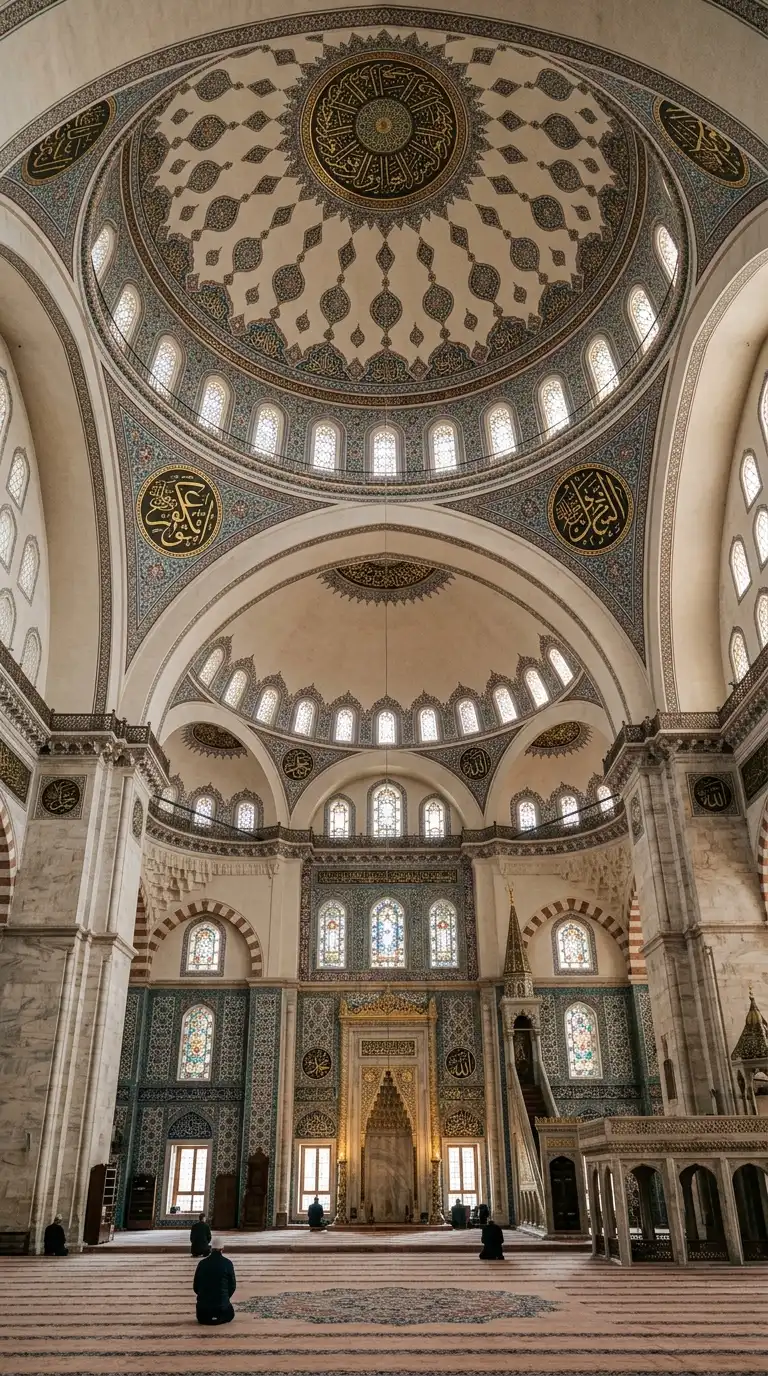
The domed central plan mosque is organised around a single large dome on a square base. The transition from square to circle is achieved with pendentives or squinches. The dome is often double-shelled: an inner dome visible from inside, an outer dome visible from outside.
The Selimiye Mosque in Edirne (Turkey, 1575) by Mimar Sinan is the masterpiece of this type. The emotional effect is centralised, celestial, and awe-inspiring.
Quick Tips
- The dome should be the dominant element, visible from outside and inside.
- Pendentives or squinches must be used to transition from square to circle.
- The mihrab should be centred beneath the dome.
4. The Ottoman Mosque Complex (Külliye)
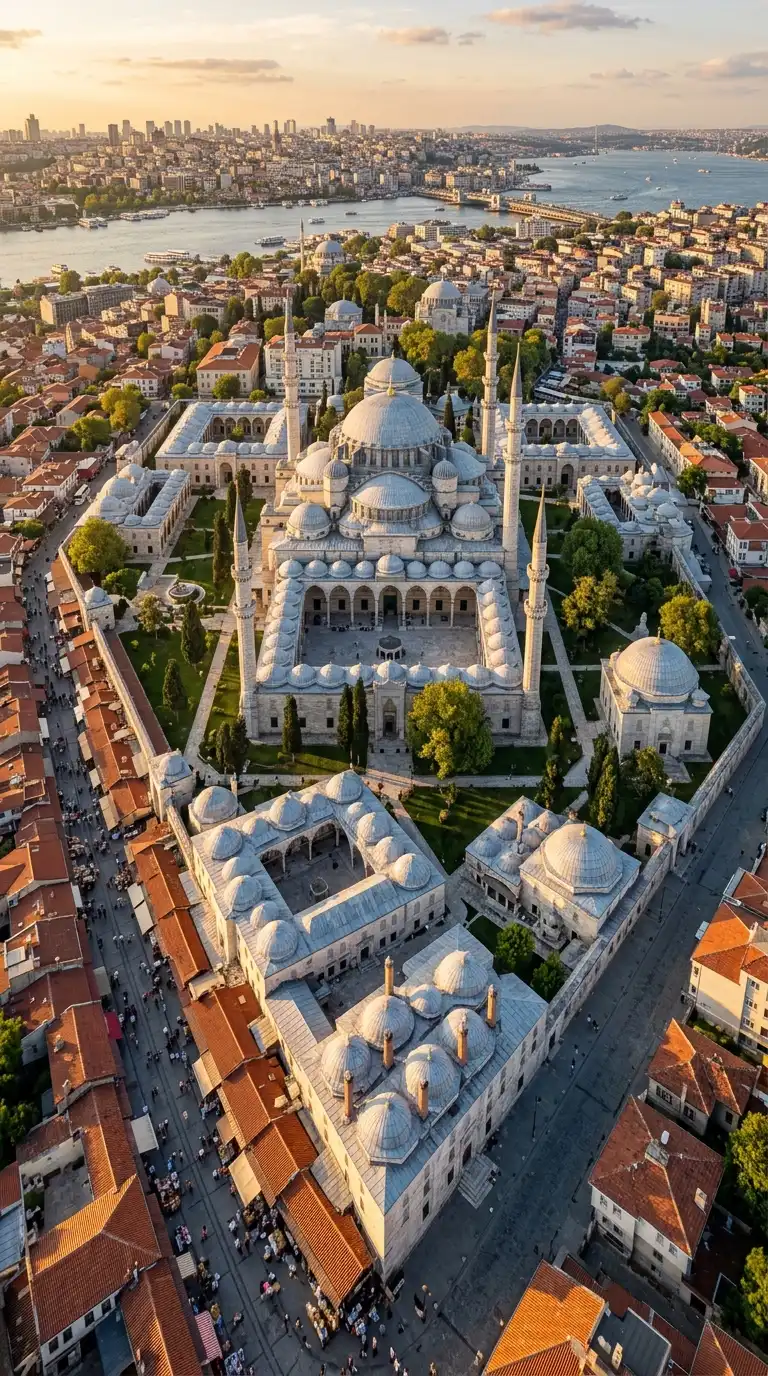
The Ottoman külliye integrated a mosque with social, educational, and charitable functions. The complex included a mosque, a madrasa (school), a hospital, a kitchen for the poor, a bathhouse, a library, and shops whose rents supported the foundation.
The Süleymaniye Complex in Istanbul (1557) by Mimar Sinan is the defining example. The emotional effect is benevolent, urban, and comprehensive.
Quick Tips
- The mosque must be the largest and most prominent building in the complex.
- Supporting buildings should be arranged symmetrically around the mosque.
- The complex should include income-generating shops or markets.
5. The Mughal Tomb
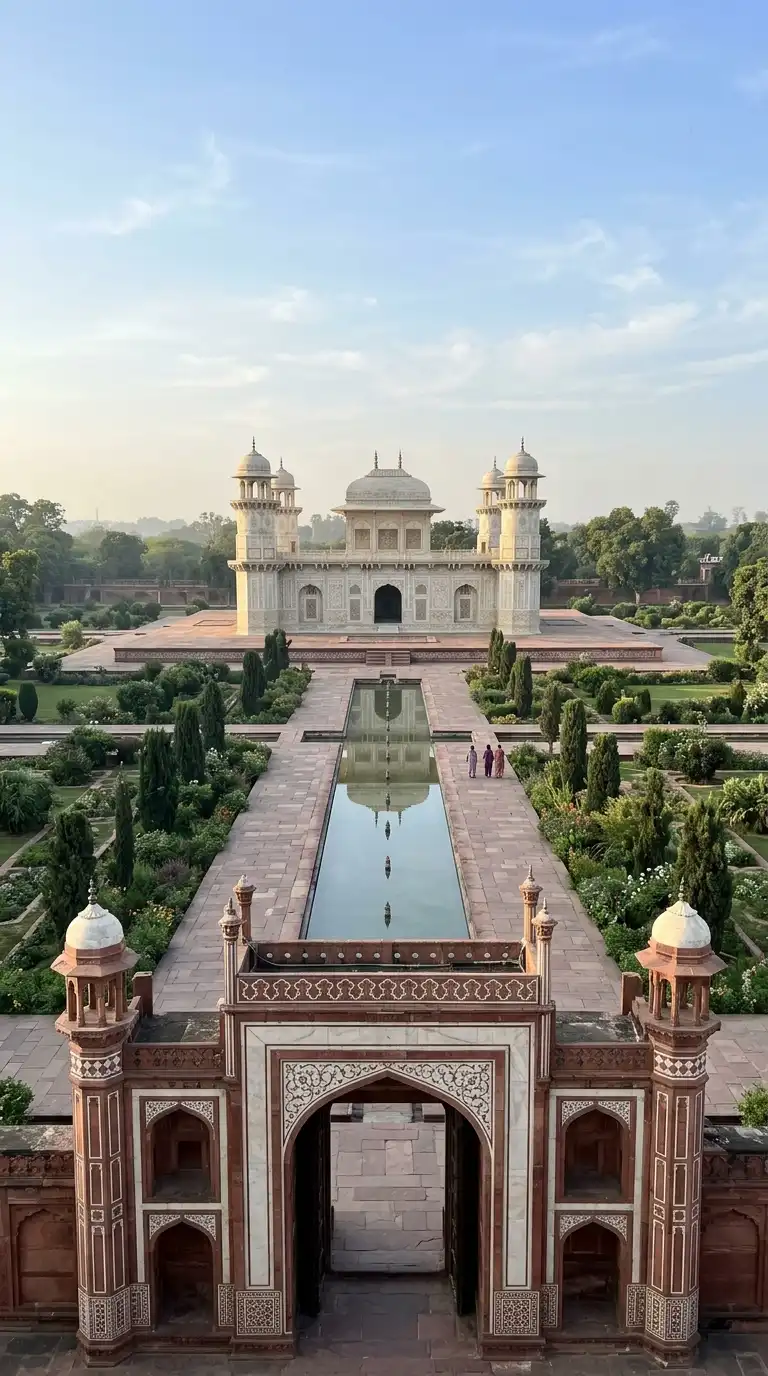
The Mughal tomb is a garden tomb set within a char bagh — a four-part garden divided by water channels. The tomb sits on a raised platform, often with an iwan on each facade. The building is symmetrical, with a central dome, corner minarets, and intricate marble inlay.
The Taj Mahal in Agra (1632-1653) is the defining example. The emotional effect is paradisiacal, symmetrical, and serene.
Quick Tips
- The tomb must be set within a four-part garden with water channels.
- The building must be symmetrical on all axes.
- The gateway should frame the view of the tomb.
6. The Madrasa
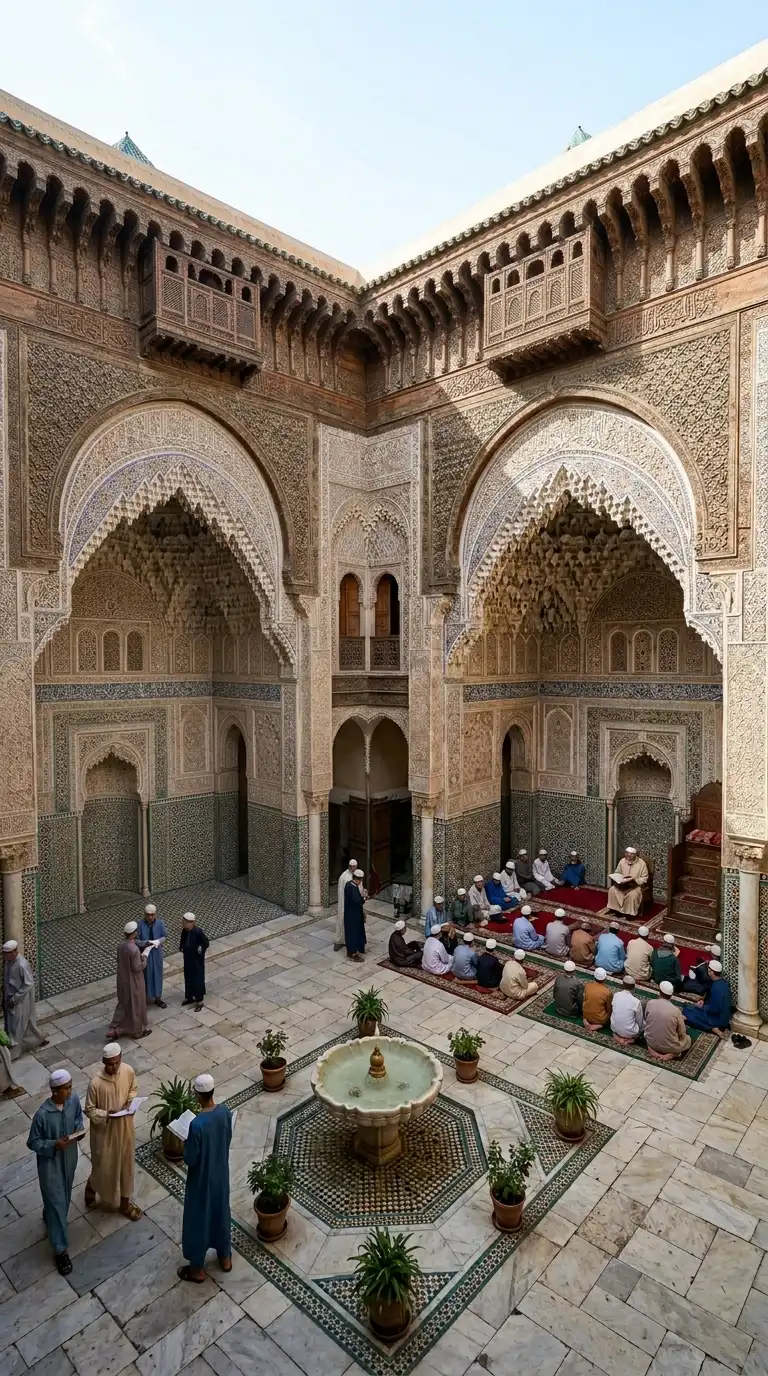
The madrasa is an Islamic school, often for higher religious education. The plan is typically a courtyard with iwans, similar to the four-iwan mosque, with student cells on the upper floors. The qibla iwan serves as the prayer hall and lecture hall.
The Ulugh Beg Madrasa in Samarkand (1420) is a defining example. The emotional effect is scholarly, communal, and pious.
Quick Tips
- Student cells should be on the upper floor, accessed by a gallery.
- The qibla iwan must be large enough for lectures and prayer.
- The courtyard should have a central fountain or basin.
7. The Caravanserai
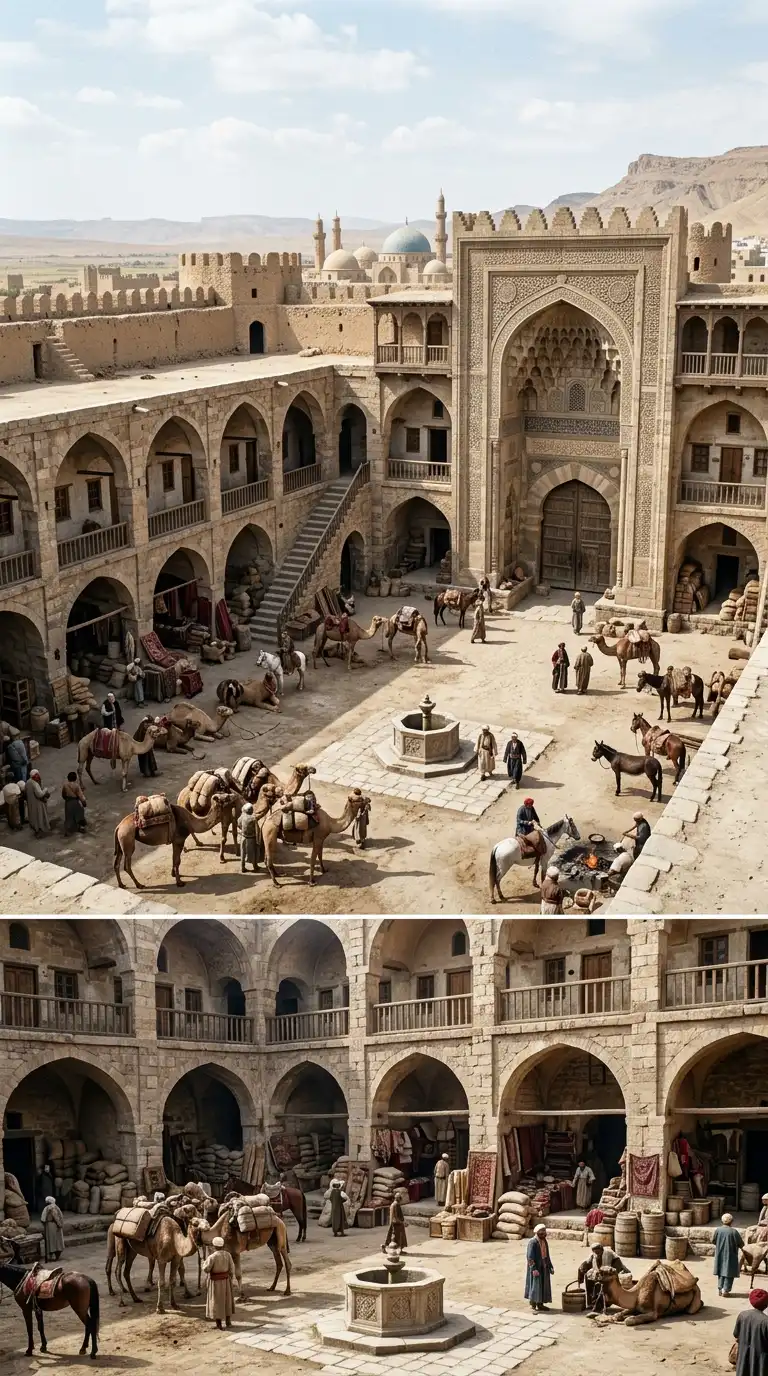
The caravanserai was a roadside inn for merchants and their caravans. The plan is a large courtyard surrounded by arcaded rooms. The courtyard is large enough for camels or horses. The rooms on the ground floor are for goods; rooms on the upper floor are for travellers.
The Sultan Han caravanserai in Turkey (1229) is a defining example. The emotional effect is protective, communal, and commercial.
Quick Tips
- The courtyard must be large enough for animals to be corralled.
- Ground floor rooms should open directly to the courtyard for loading goods.
- The gateway should be monumental, often with a decorated pishtaq.
8. The Bazaar
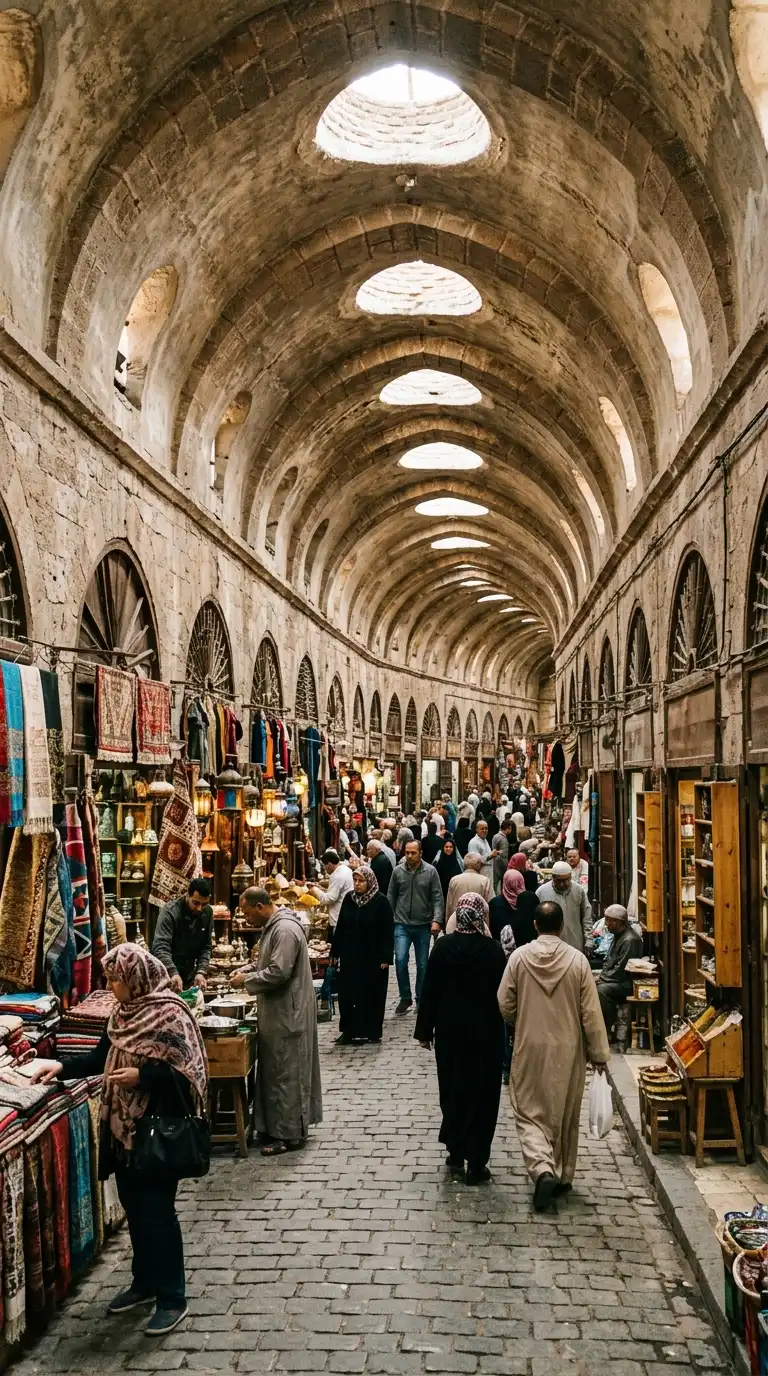
The bazaar is a covered market street. The street is lined with shops on both sides. The roof is vaulted, often with a series of domes or barrel vaults with openings for light. The bazaar is a linear space, sometimes branching into smaller streets.
The Grand Bazaar in Istanbul (1461) is the defining example. The emotional effect is bustling, shaded, and labyrinthine.
Quick Tips
- The main street should be 4-5 metres wide for comfortable pedestrian flow.
- Shops should be small and uniform, typically 2-3 metres wide.
- Domes or vaults should have openings for light and ventilation.
9. The Char Bagh Garden
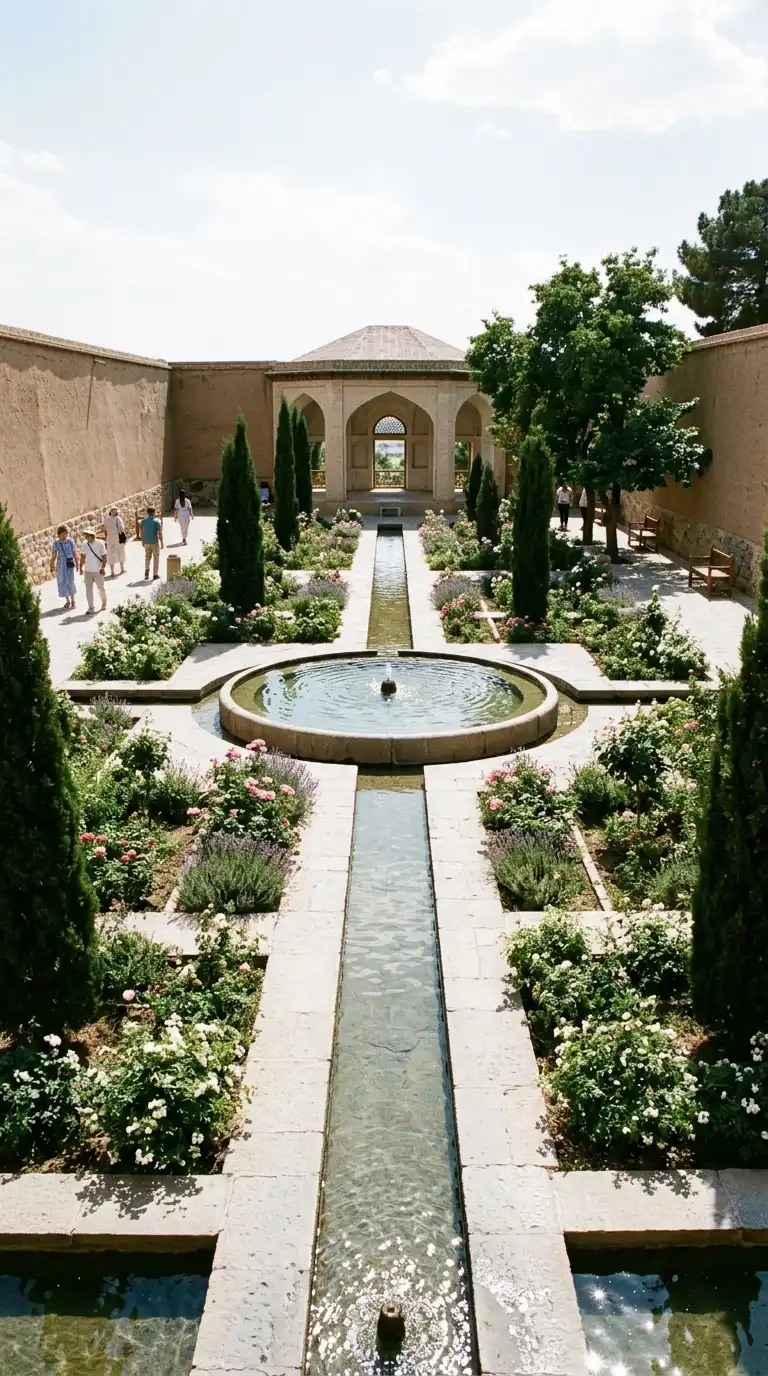
The char bagh is a four-part garden divided by water channels. The garden is a paradise on earth, symbolising the four rivers of life mentioned in the Quran. The water channels meet at a central pool or pavilion.
The Garden of Fin in Kashan (Iran, 1590) is a defining example. The emotional effect is paradisiacal, ordered, and refreshing.
Quick Tips
- The garden must be divided into four equal quadrants by water channels.
- A central pavilion or pool must mark the intersection of the channels.
- The garden must be walled for privacy and protection.
10. The Windcatcher (Badgir)
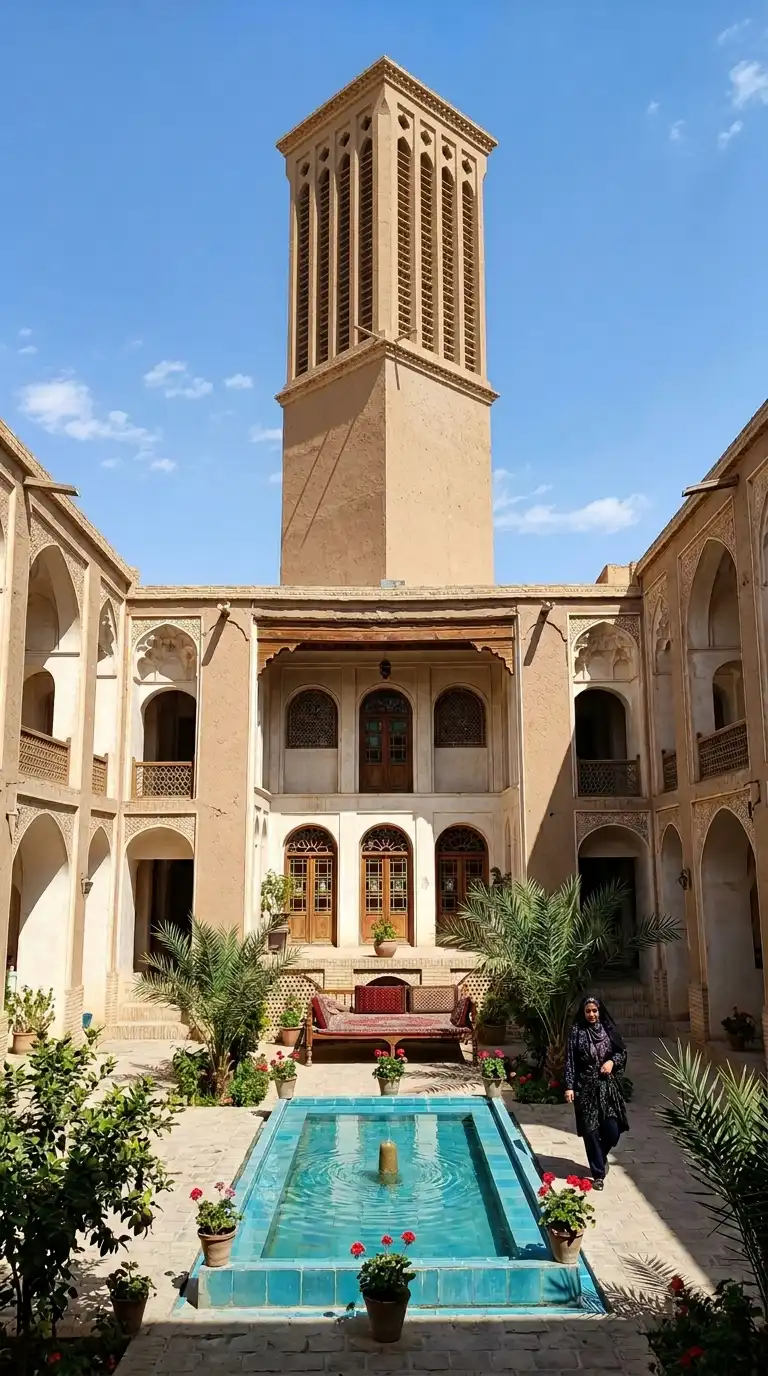
The windcatcher, or badgir, is a traditional Persian cooling structure. It is a tall tower on the roof of a building, with openings facing prevailing winds. The tower captures wind and directs it down into the building, often over a water fountain that cools the air further.
The emotional effect is cooling, sustainable, and ingeniously simple.
Quick Tips
- The windcatcher must face the prevailing wind direction.
- The tower height determines the wind pressure — taller is more effective.
- A water fountain or pool beneath the windcatcher enhances cooling.
11. The Mashrabiya Screen
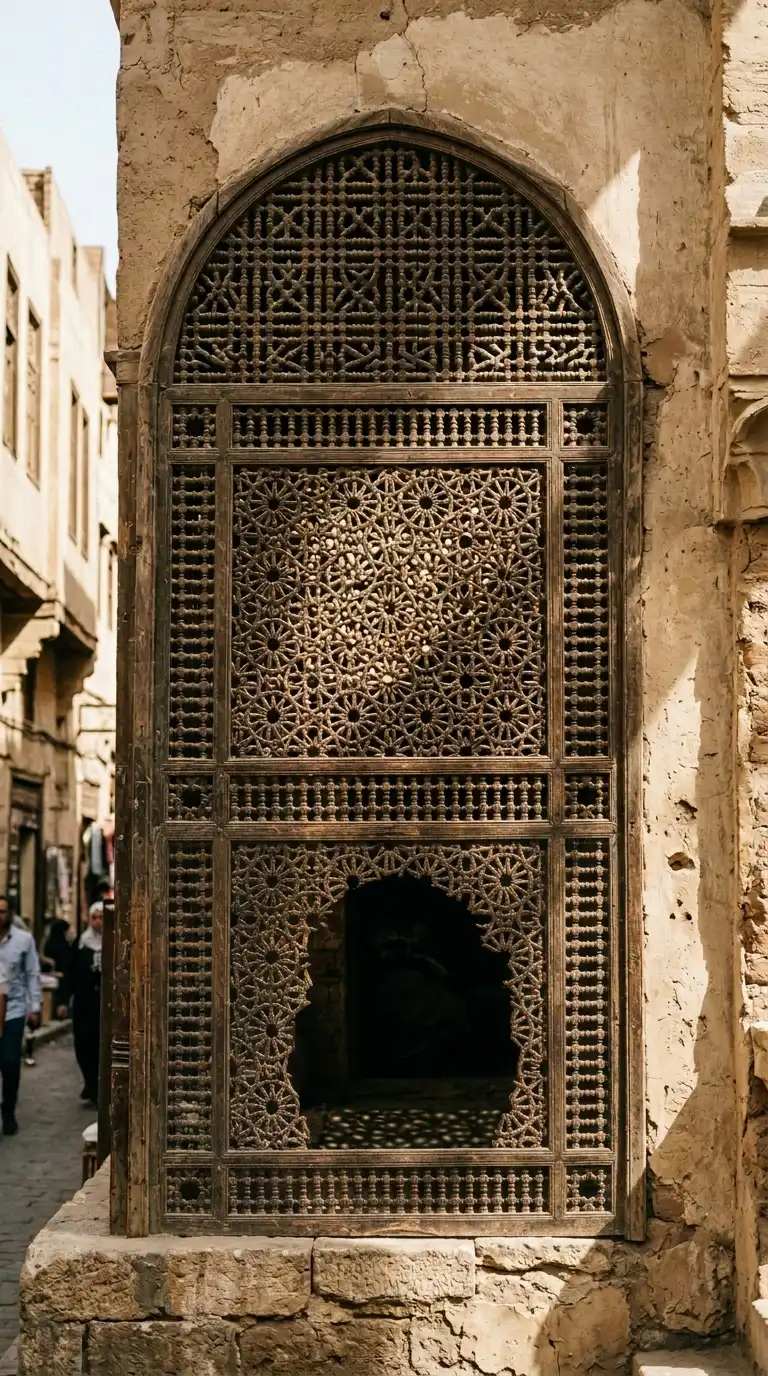
The mashrabiya is a wooden lattice screen used on windows and balconies. The screen provides privacy, shade, and ventilation. It allows the occupant to see out without being seen from the street. The lattice also breaks direct sunlight while allowing air to flow.
The emotional effect is shaded, private, and beautifully crafted.
Quick Tips
- The lattice should be dense enough for privacy but open enough for airflow.
- The pattern should be geometric and repetitive.
- The screen should be mounted on the exterior of the window.
12. The Muqarnas Vault
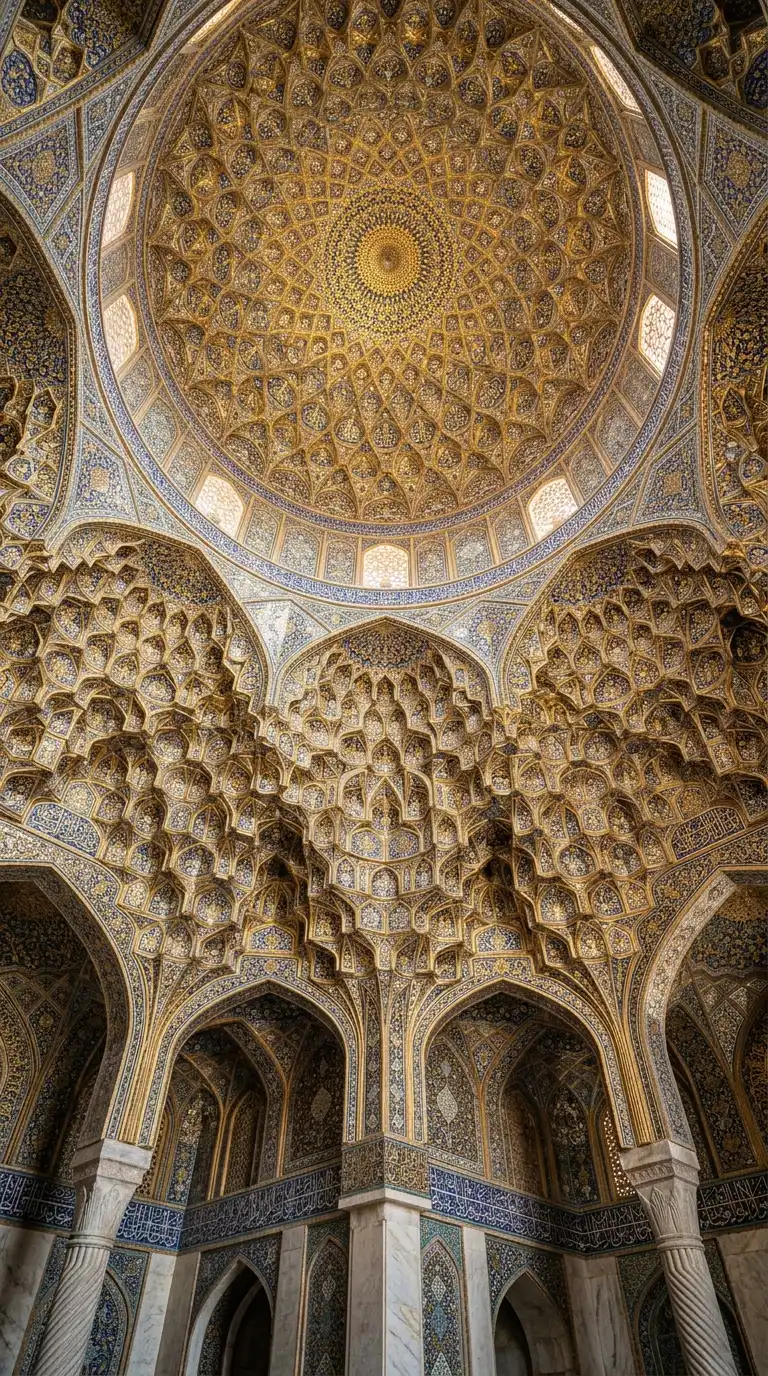
Muqarnas is a form of ornamental vaulting, resembling honeycombs or stalactites. It is used on domes, iwans, and cornices. The muqarnas is built from tiers of small niches that transition from a square or polygonal base to a circular or domed top.
The muqarnas dome of the Hall of the Abencerrajes in the Alhambra (Granada, 14th century) is a defining example. The emotional effect is complex, celestial, and dazzling.
Quick Tips
- Muqarnas should transition from a square or polygonal base to a circular or domed top.
- Each tier of niches should be smaller than the one below.
- The underside of the muqarnas should be highly decorated.
13. The Minaret
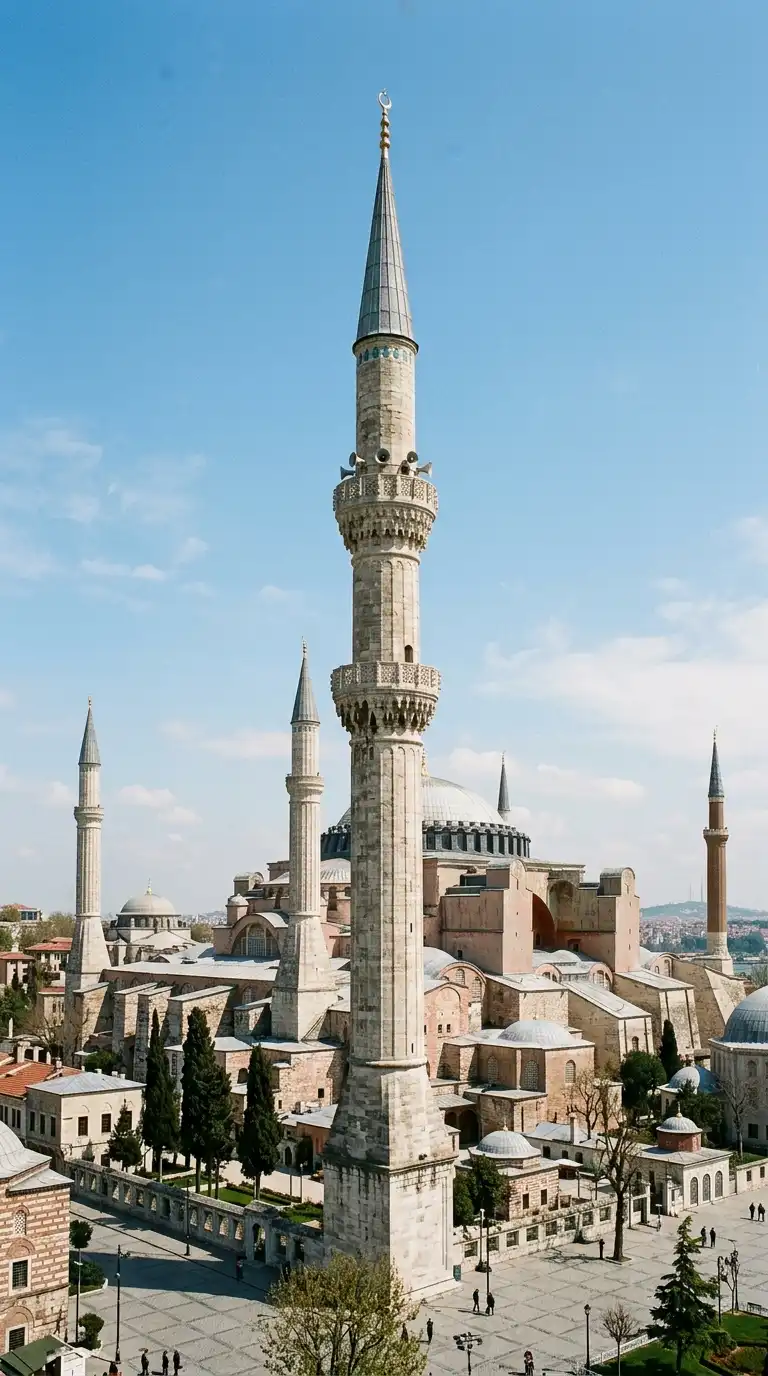
The minaret is the tower from which the call to prayer is made. Minarets vary regionally: spiral in Samarra, pencil-thin in Ottoman Turkey, square in North Africa, octagonal in Iran, and triple-tiered in India.
The Qutub Minar in Delhi (1199) is the tallest brick minaret in the world. The emotional effect is vertical, directional, and iconic.
Quick Tips
- The minaret must be tall enough to be seen and heard across the city.
- The balcony must be accessible by an internal staircase.
- Regional styles dictate form: spiral, pencil, square, octagonal, or triple-tiered.
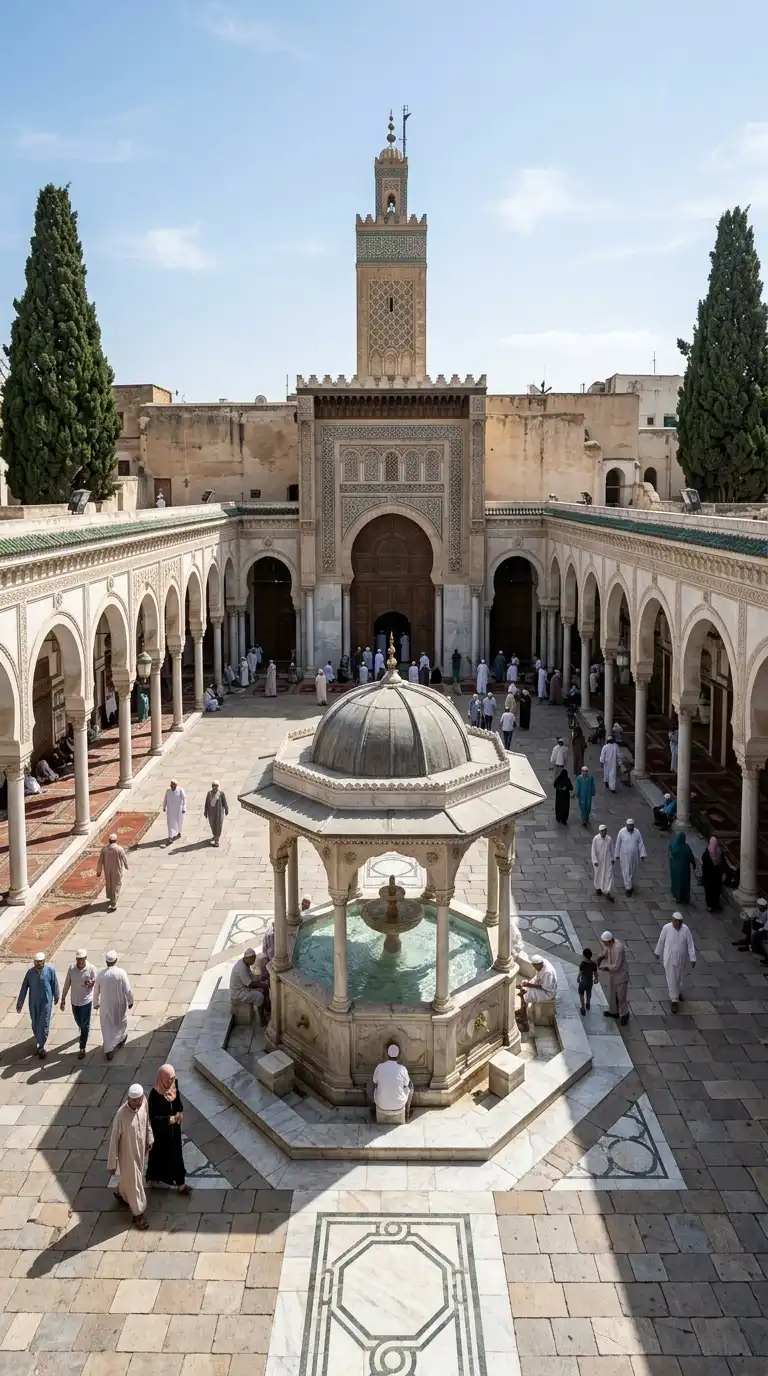
14. The Sahn Courtyard
The sahn is the courtyard of a mosque. It is a large open space, often paved with stone or marble. A fountain for ablutions is in the centre or offset. The courtyard is surrounded by a riwaq — a covered arcade on one or more sides.
The emotional effect is calm, open, and communal.
Quick Tips
- The sahn should be large enough for the entire congregation to gather.
- The ablution fountain should be accessible from all sides.
- The riwaq should provide shade for those waiting for prayer.
15. The Pishtaq
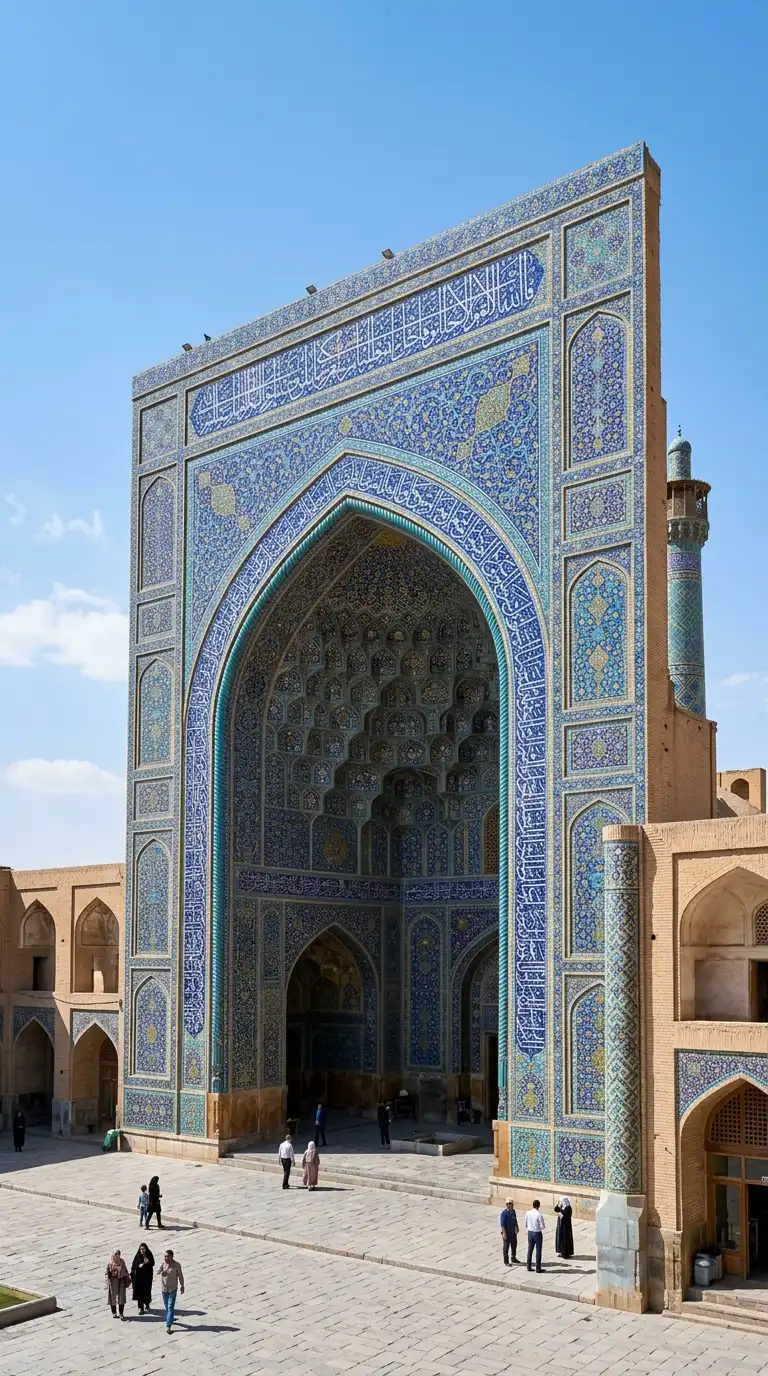
The pishtaq is a monumental portal framing an iwan. It is a tall, rectangular frame that rises above the iwan arch. The pishtaq is covered in tile decoration, calligraphy, and geometric patterns.
The emotional effect is vertical, monumental, and decorative.
Quick Tips
- The pishtaq should be taller than the iwan it frames.
- Tile decoration should cover the entire surface of the pishtaq.
- Calligraphy should be placed in a rectangular band around the arch.
16. The Hammam
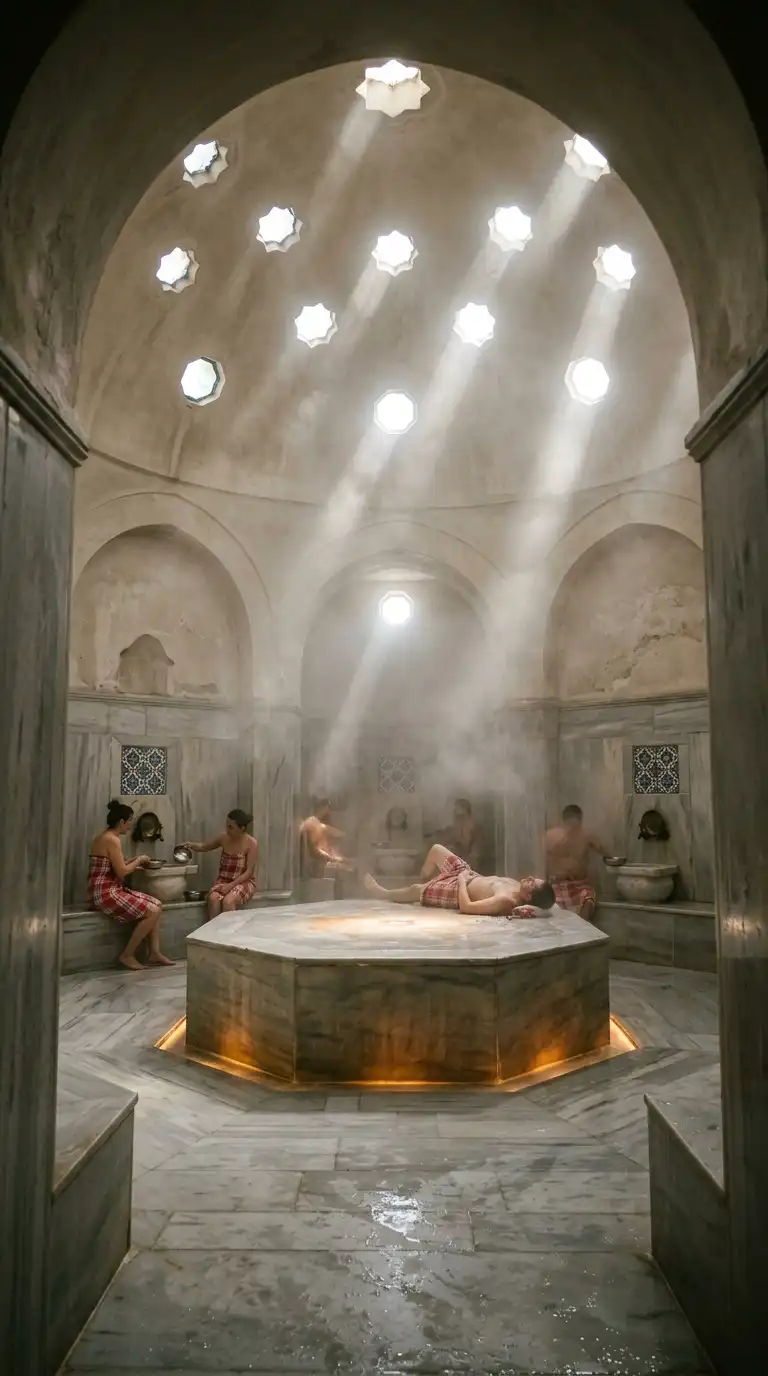
The hammam is an Islamic bathhouse. The plan is a sequence of three rooms: the cold room (apodyterium), the warm room (tepidarium), and the hot room (caldarium). The hot room has a domed ceiling with small glass openings for light. Steam rises to the dome and drips down the walls.
The hammams of Damascus and Istanbul are defining examples. The emotional effect is steamy, social, and relaxing.
Quick Tips
- The three rooms must be in sequence: cold, warm, hot.
- The hot room must have a domed ceiling with light openings.
- Floor heating (hypocaust) must be provided under the hot and warm rooms.
Final Thoughts
Islamic architecture is not a single style to copy. It is a family of traditions united by geometry, light, water, and the expression of structure. The best Islamic architecture — from Córdoba to Isfahan, from Istanbul to Delhi — transforms these principles into something local, specific, and deeply rooted in place.
These 16 designs are not exhaustive. They are starting points. Study the originals, understand their geometry, and then find your own interpretation. The principles of Islamic architecture — order, light, water, ornament — are as relevant today as they were a thousand years ago.