Greek architecture is the foundation of the Western architectural tradition. From the temples of the Acropolis to the theatres scattered across the Mediterranean, Greek architecture established the classical orders — Doric, Ionic, and Corinthian — that have been used for over two thousand years. Greek buildings are not just beautiful; they are logical, proportional, and deeply human.
These 18 Greek architecture designs span the Archaic, Classical, and Hellenistic periods. Each design includes defining characteristics, key examples, and architectural principles.
1. The Doric Temple
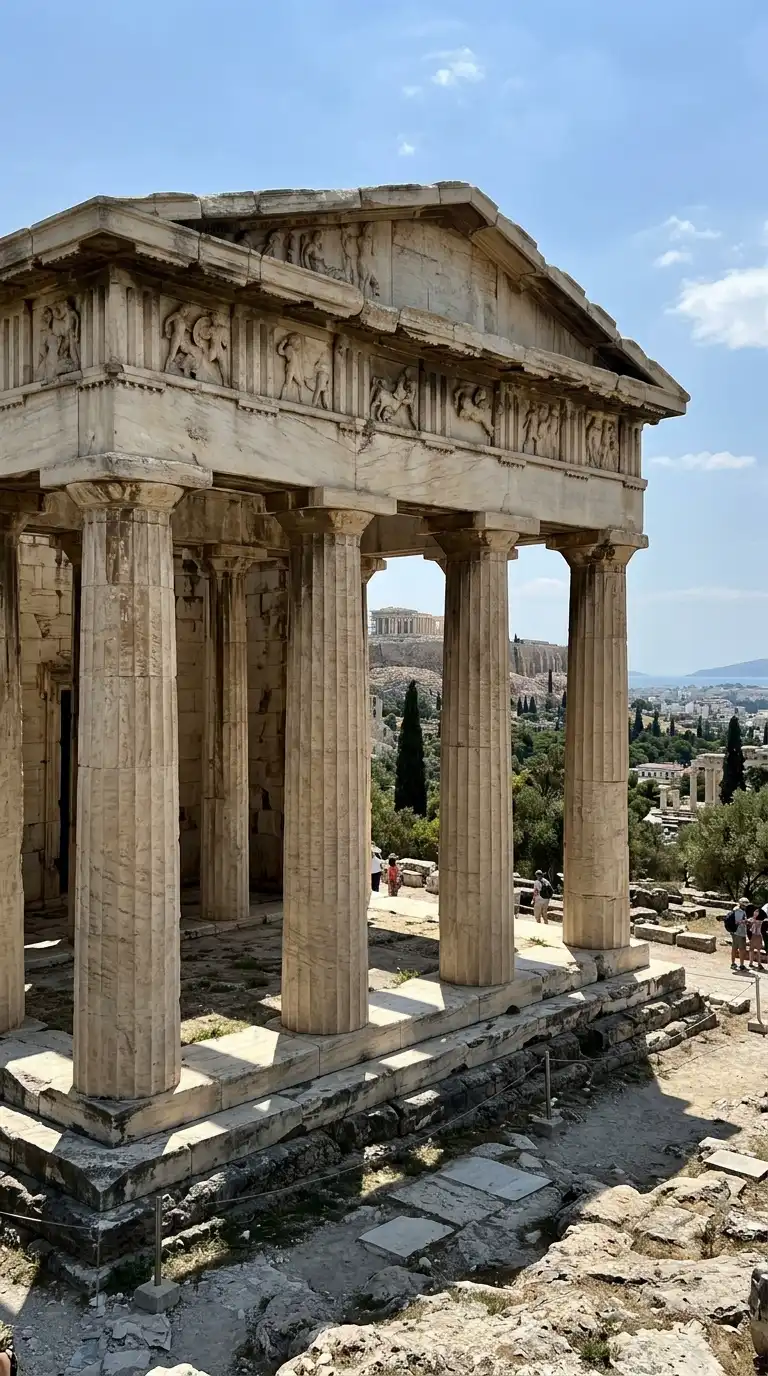
The Doric temple is the most powerful and masculine of the Greek orders. The column has no base, a fluted shaft, and a simple capital of a rounded echinus and a square abacus. The entablature has triglyphs and metopes. The pediment is low and triangular.
The Parthenon in Athens (447-432 BCE) is the defining example. The emotional effect is powerful, rational, and ideal.
Quick Tips
- Doric columns must have no base — they sit directly on the stylobate.
- The shaft must have 20 flutes with sharp arrises (edges).
- The frieze must alternate triglyphs and metopes.
2. The Ionic Temple
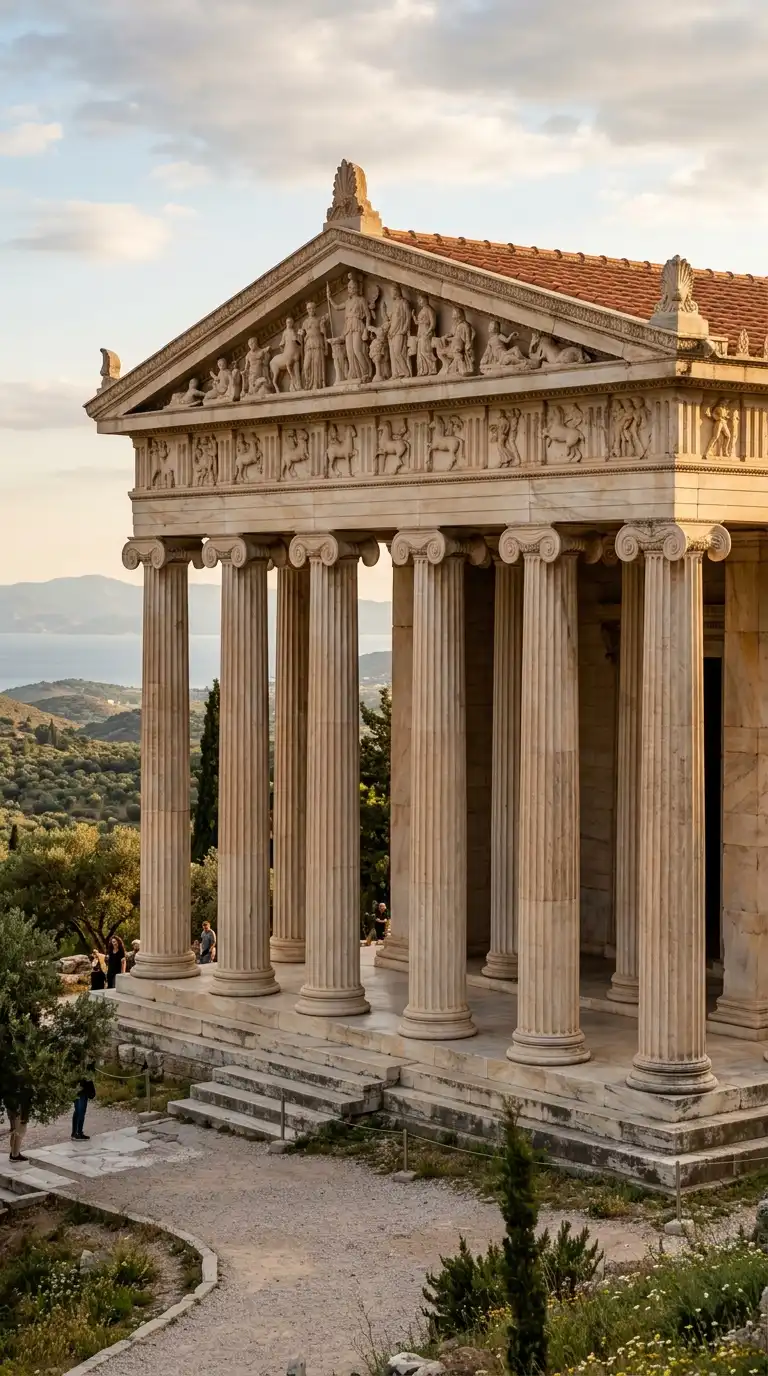
The Ionic temple is more elegant and slender than the Doric. The column has a base, a fluted shaft, and a capital with volutes (spiral scrolls). The entablature has a continuous frieze (no triglyphs). The pediment is triangular.
The Erechtheion on the Acropolis of Athens (421-406 BCE) is the defining example. The emotional effect is elegant, refined, and feminine.
Quick Tips
- Ionic columns must have bases with torus and scotia mouldings.
- The capital must have volutes on two faces (or four on corner columns).
- The frieze must be continuous — no triglyphs.
3. The Corinthian Temple
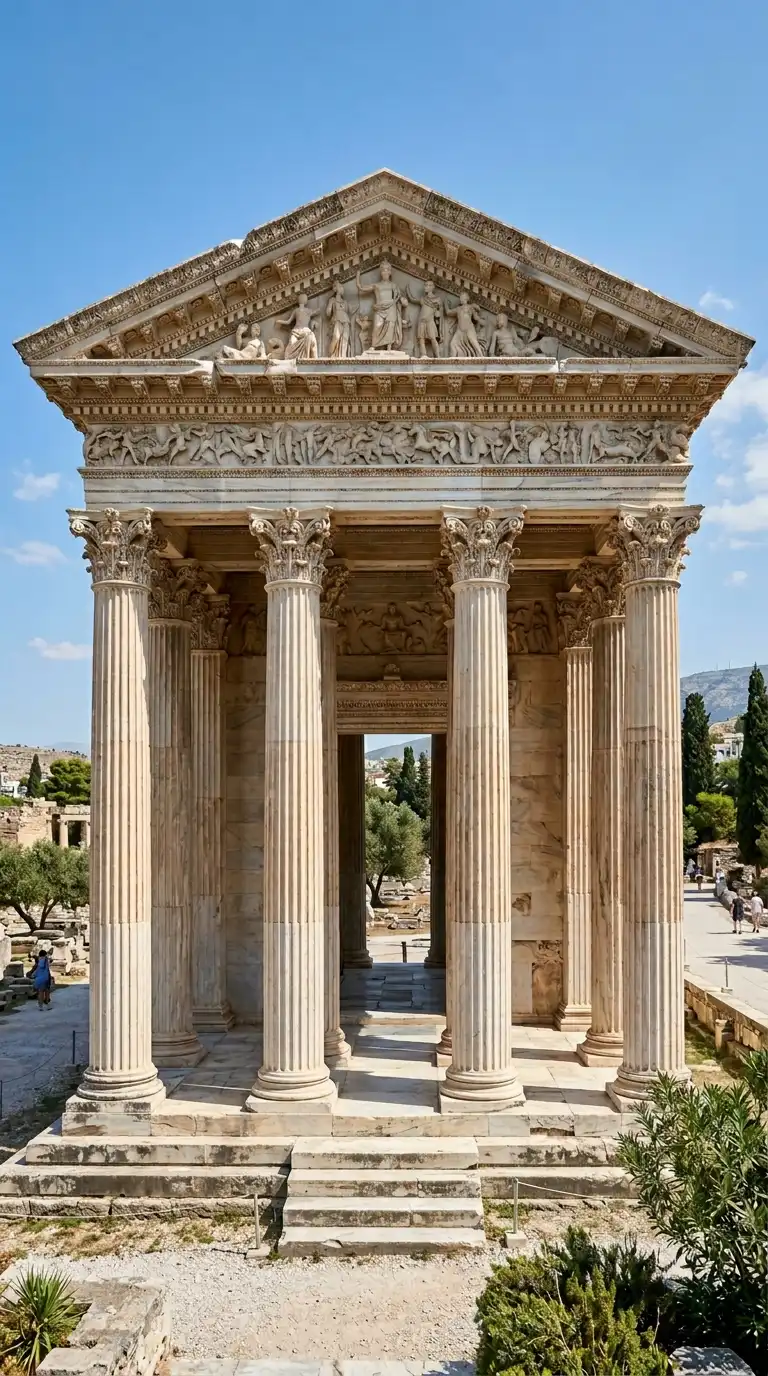
The Corinthian temple is the most ornate of the Greek orders. The column has a base, a fluted shaft, and a capital decorated with acanthus leaves. The Corinthian order was used less frequently in Greece but became dominant in Roman architecture.
The Temple of Olympian Zeus in Athens (completed 131 CE) is a late Greek example. The emotional effect is ornate, rich, and luxurious.
Quick Tips
- The capital must have two rows of acanthus leaves.
- The shaft must have 24 flutes (more than Doric or Ionic).
- The entablature is often more richly decorated.
4. The Greek Theatre
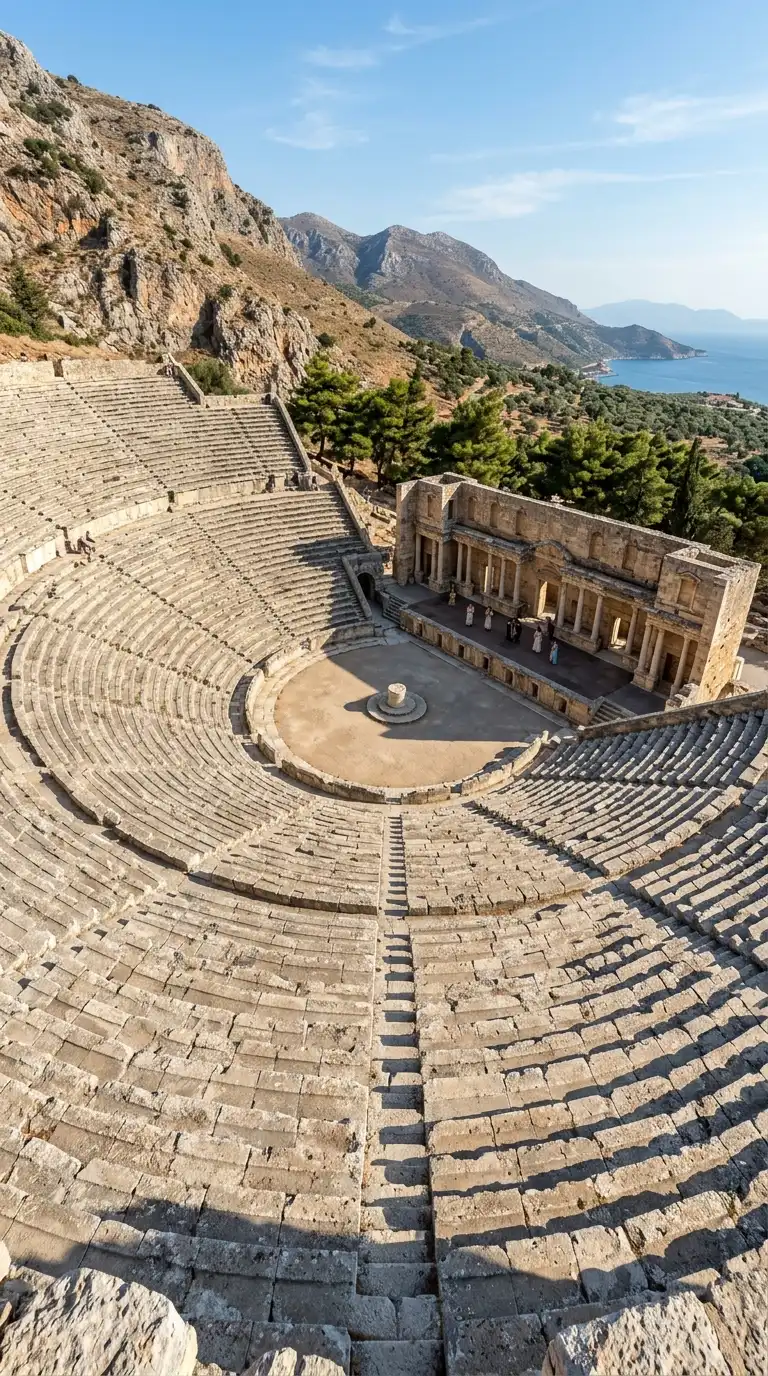
The Greek theatre is carved into a hillside. The seating (theatron) is a semicircle rising up the slope. The orchestra (dancing place) is a circle at the bottom. The skene (stage building) is behind the orchestra. The theatre is designed for acoustics — every seat can hear the stage.
The Theatre of Epidaurus (4th century BCE) is the defining example. The emotional effect is dramatic, acoustic, and landscape-integrated.
Quick Tips
- The seating must be a semicircle steeper than 30 degrees.
- The orchestra must be a full circle.
- The theatre must be carved into a hillside, not free-standing.
5. The Stoa
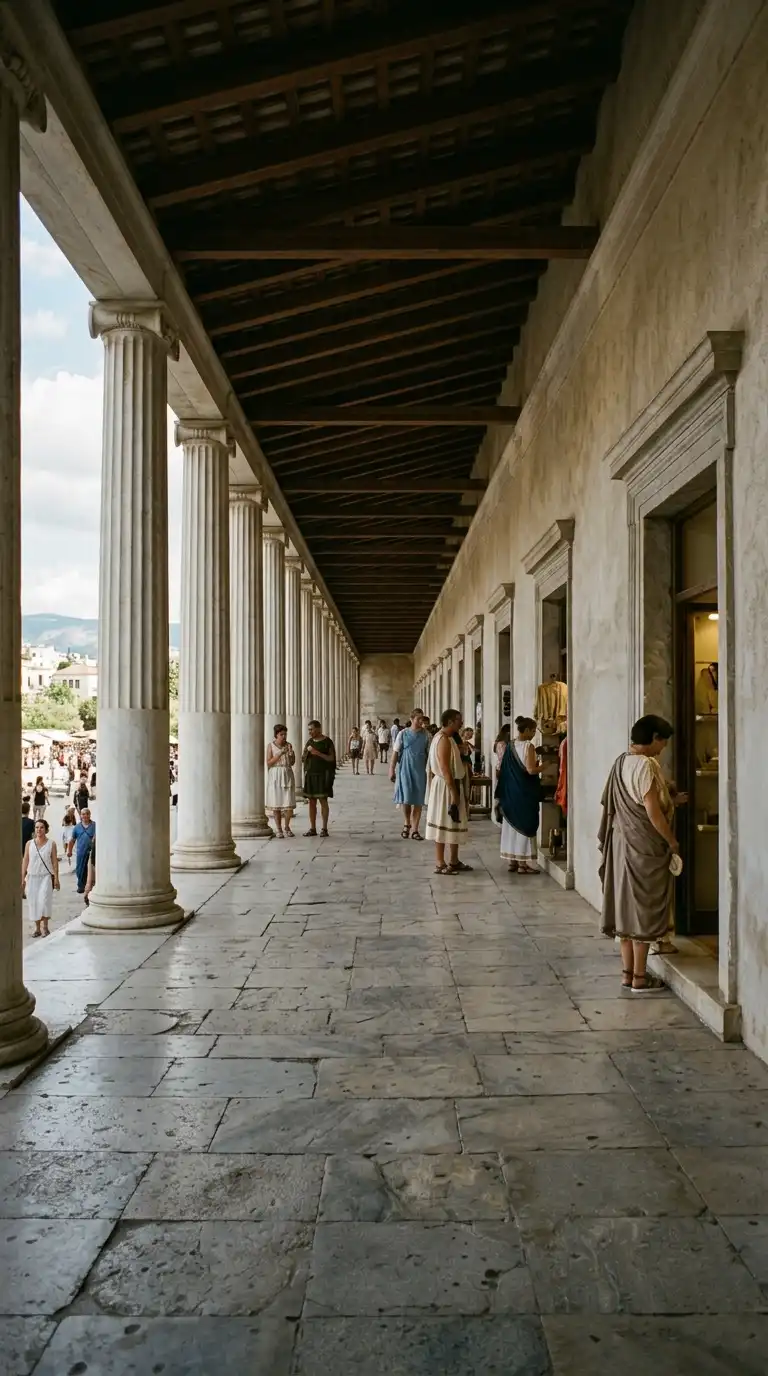
The stoa is a covered walkway or portico, open on one side with columns. The stoa was used as a public gathering place, a market, or a promenade. The stoa could be one or two storeys tall, and hundreds of metres long.
The Stoa of Attalos in the Athenian Agora (159-138 BCE, reconstructed) is the defining example. The emotional effect is civic, shaded, and public.
Quick Tips
- The stoa must have a colonnade on one side, a solid wall on the other.
- The roof must be supported by beams spanning from the wall to the columns.
- The stoa can be one or two storeys tall.
6. The Agora
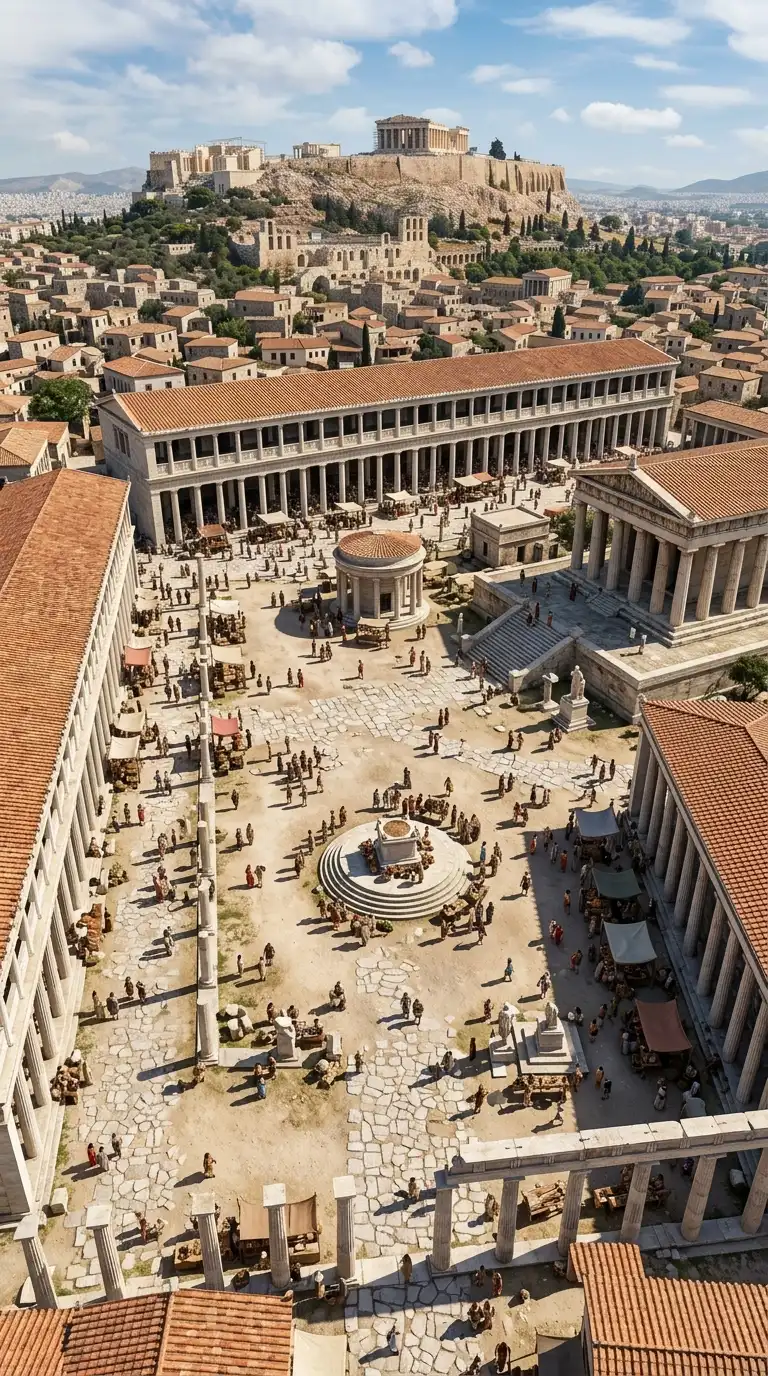
The agora was the public square of a Greek city. It was a large open space surrounded by stoas, temples, and public buildings. The agora was the centre of civic, commercial, and social life.
The Athenian Agora is the defining example. The emotional effect is civic, public, and open.
Quick Tips
- The agora should be a large open rectangle or irregular shape.
- The space should be surrounded by stoas and public buildings.
- A central altar or monument may anchor the space.
7. The Propylaea
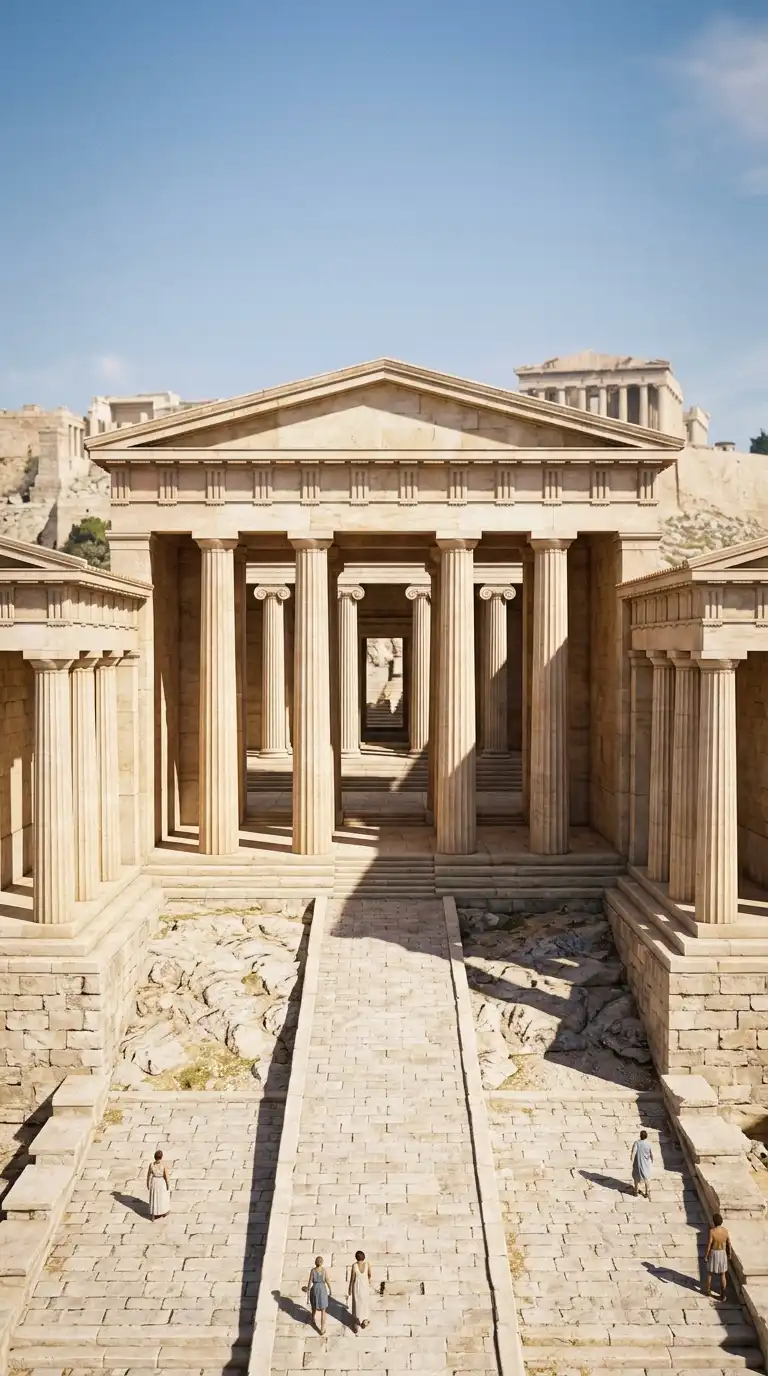
The propylaea is a monumental gateway, often at the entrance to a sacred precinct. The propylaea has a central building with a wide passage for vehicles and narrower passages for pedestrians. The building is flanked by wings.
The Propylaea of the Athenian Acropolis (437-432 BCE) by Mnesicles is the defining example. The emotional effect is monumental, welcoming, and hierarchical.
Quick Tips
- The central passage must be wider than the side passages.
- The building should have a Doric exterior and an Ionic interior.
- The wings should flank the central building symmetrically.
8. The Tholos
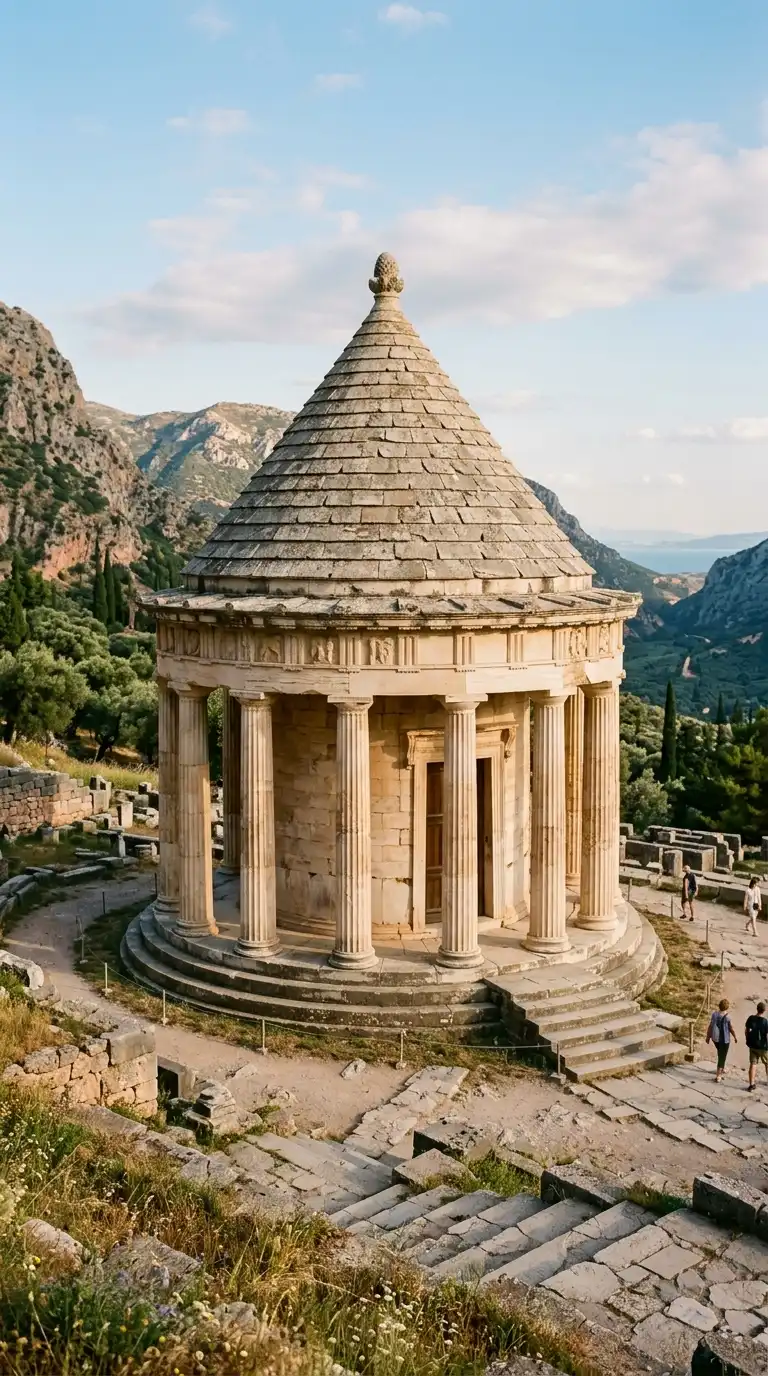
The tholos is a circular temple. The tholos has a circular cella surrounded by a peristyle of columns. The roof is conical or domed. The tholos was used for religious or funerary purposes.
The Tholos of Delphi (4th century BCE) and the Philippeion at Olympia (4th century BCE) are defining examples. The emotional effect is central, circular, and sacred.
Quick Tips
- The plan must be a circle.
- The cella must be surrounded by a peristyle of columns.
- The roof must be conical or domed.
9. The Bouleuterion
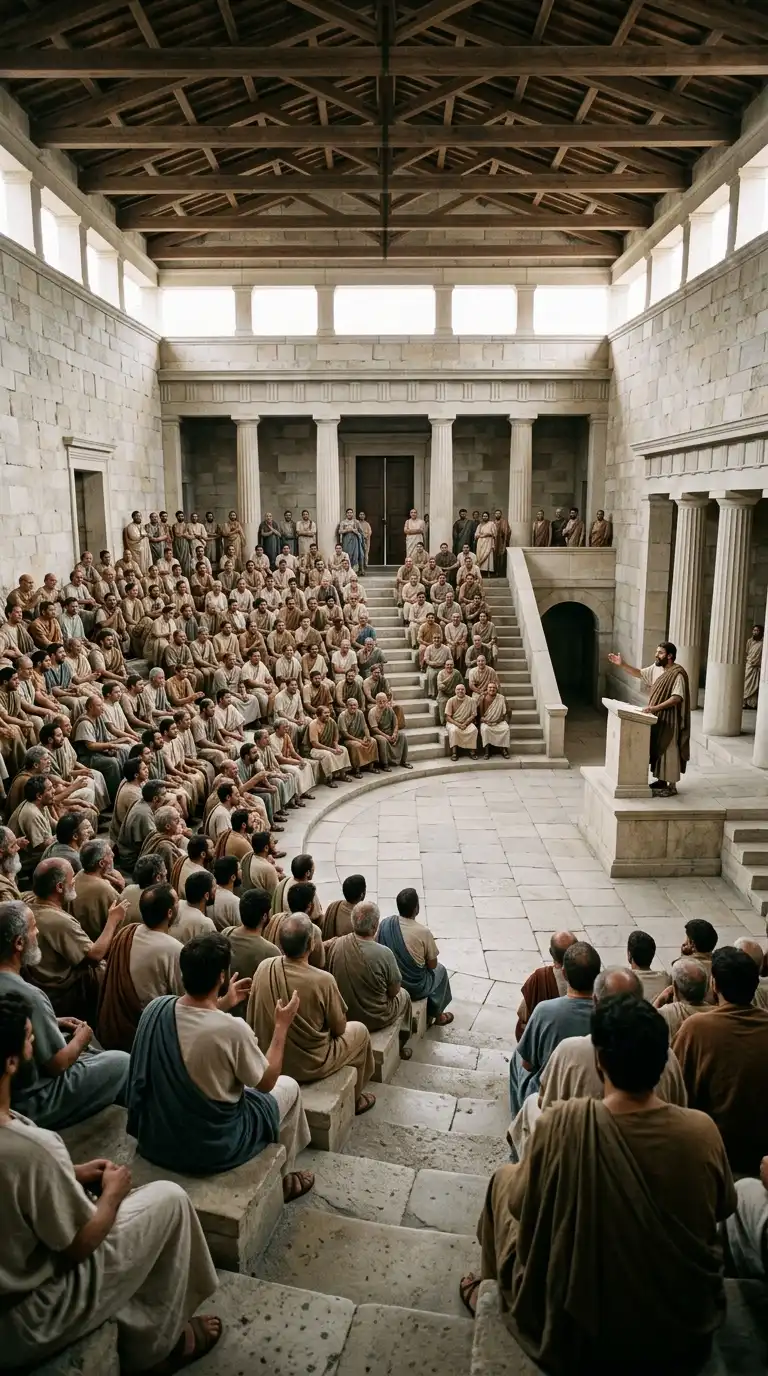
The bouleuterion was the council house of a Greek city. The building had a horseshoe or rectangular seating arrangement for the council members. A speaker’s platform was at the open end. The bouleuterion was often built into a hillside.
The Bouleuterion of Athens (late 5th century BCE) is the defining example. The emotional effect is civic, democratic, and interior.
Quick Tips
- The seating must be in a horseshoe or rectangular arrangement.
- The speaker’s platform must be at the open end.
- The building may be partially carved into a hillside.
10. The Gymnasium
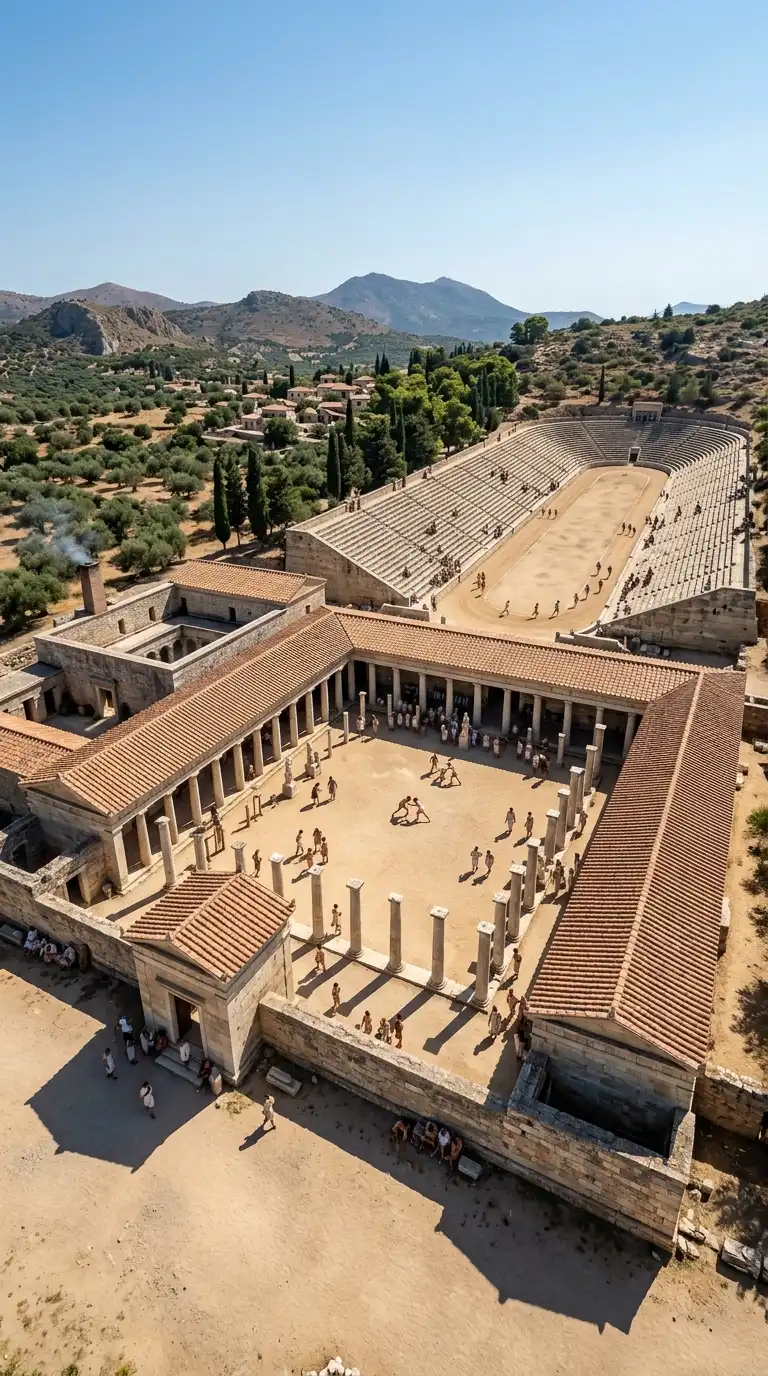
The gymnasium was a complex for athletic training, education, and socialising. The complex included a palaestra (wrestling school), a stadium, baths, and colonnaded courts. The gymnasium was an important civic institution.
The Gymnasium of Delphi (4th century BCE) is a defining example. The emotional effect is athletic, educational, and social.
Quick Tips
- The palaestra must be a square courtyard surrounded by colonnades.
- The stadium must be a long, narrow U-shaped running track.
- Baths and changing rooms must be included.
11. The Macedonian Tomb
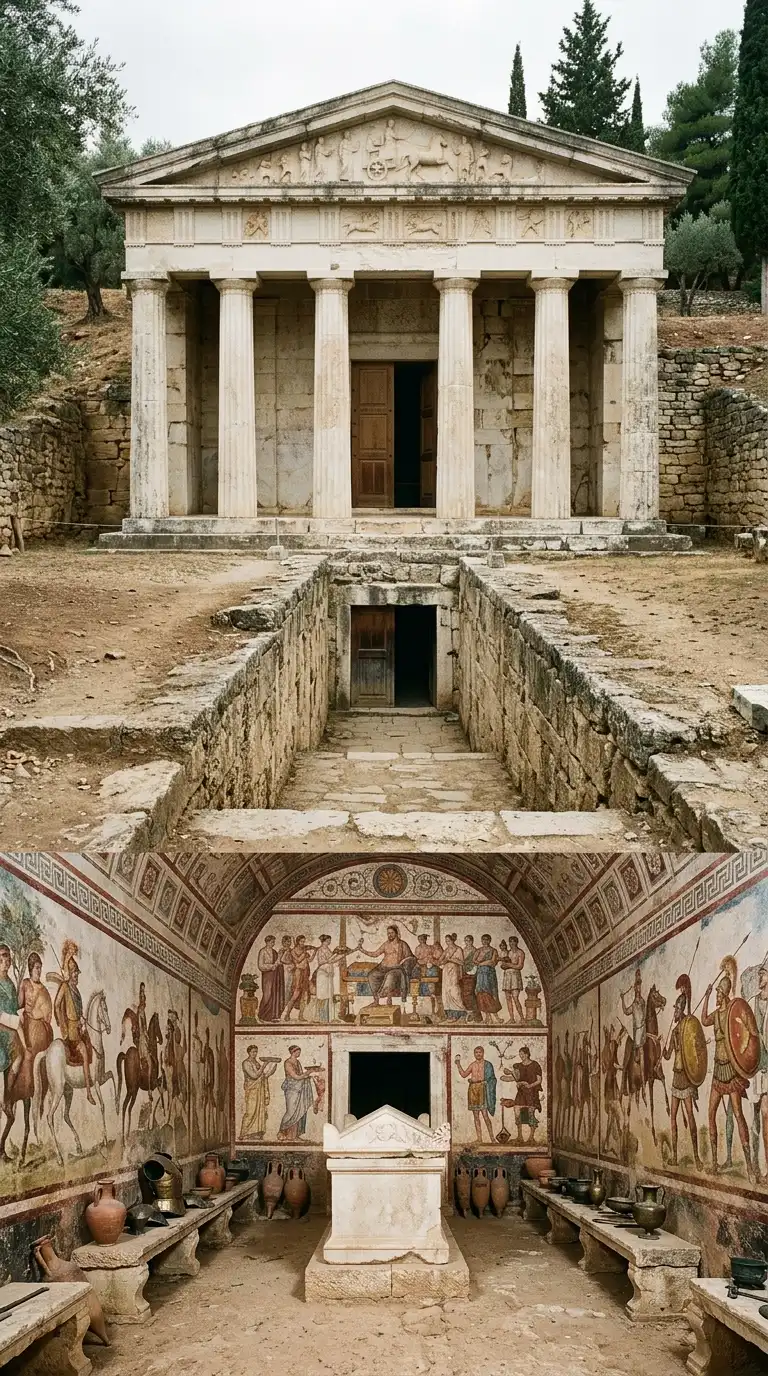
The Macedonian tomb is a built chamber tomb, often with a facade resembling a temple. The tomb has a dromos (passageway), a chamber, and a facade with columns and a pediment. The interior is painted or decorated.
The Tomb of Philip II at Vergina (4th century BCE) is the defining example. The emotional effect is funerary, monumental, and painted.
Quick Tips
- The facade must resemble a temple front with columns and a pediment.
- The dromos must be a long passageway leading to the chamber.
- The interior must be painted with funerary scenes.
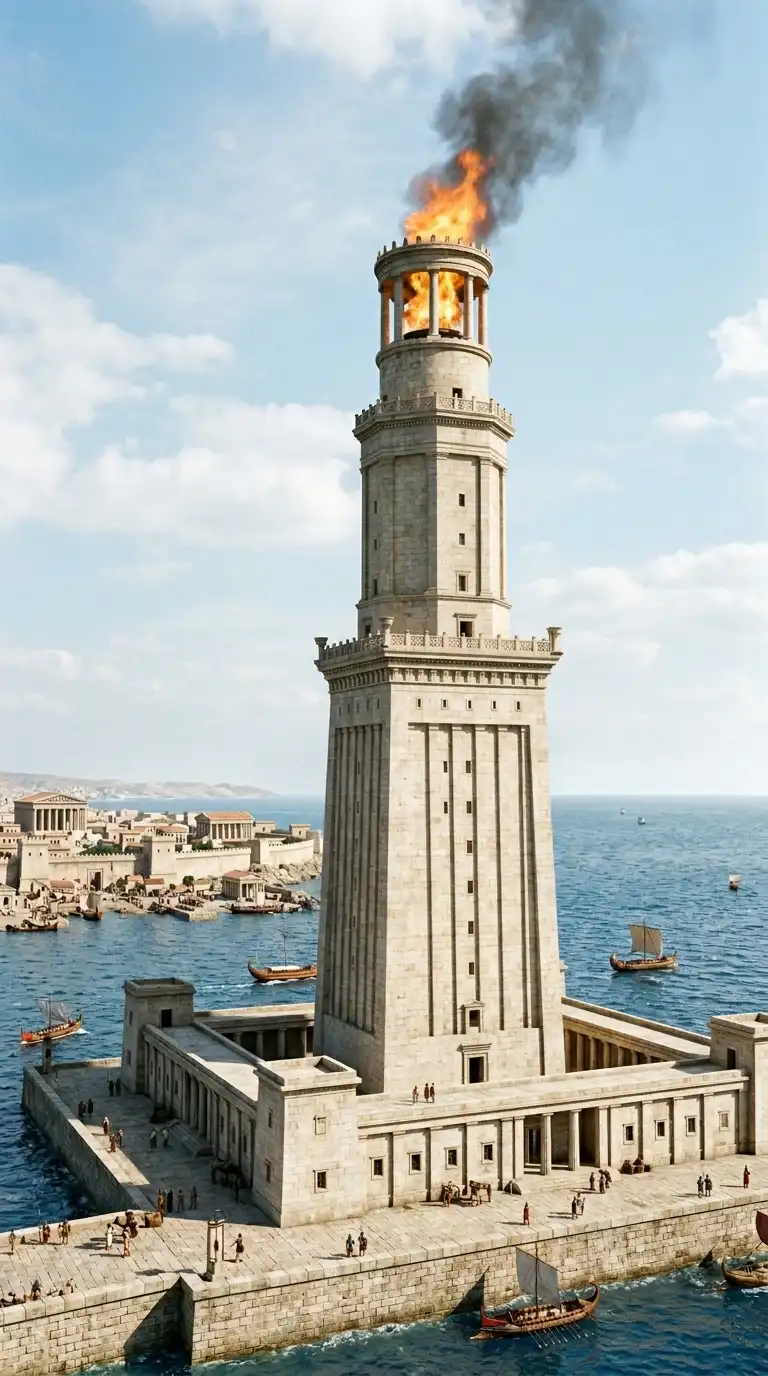
12. The Lighthouse (Pharos)
The Lighthouse of Alexandria (Pharos) was one of the Seven Wonders of the Ancient World. The lighthouse was a three-tiered tower: a square base, an octagonal middle, and a circular top. A fire burned at the top, reflected by a bronze mirror. The lighthouse was over 100 metres tall.
The emotional effect is vertical, technological, and monumental.
Quick Tips
- The tower must have three tiers: square, octagonal, and circular.
- The top must have a fire and a reflecting mirror.
- The height should be at least 100 metres.
13. The Treasuries
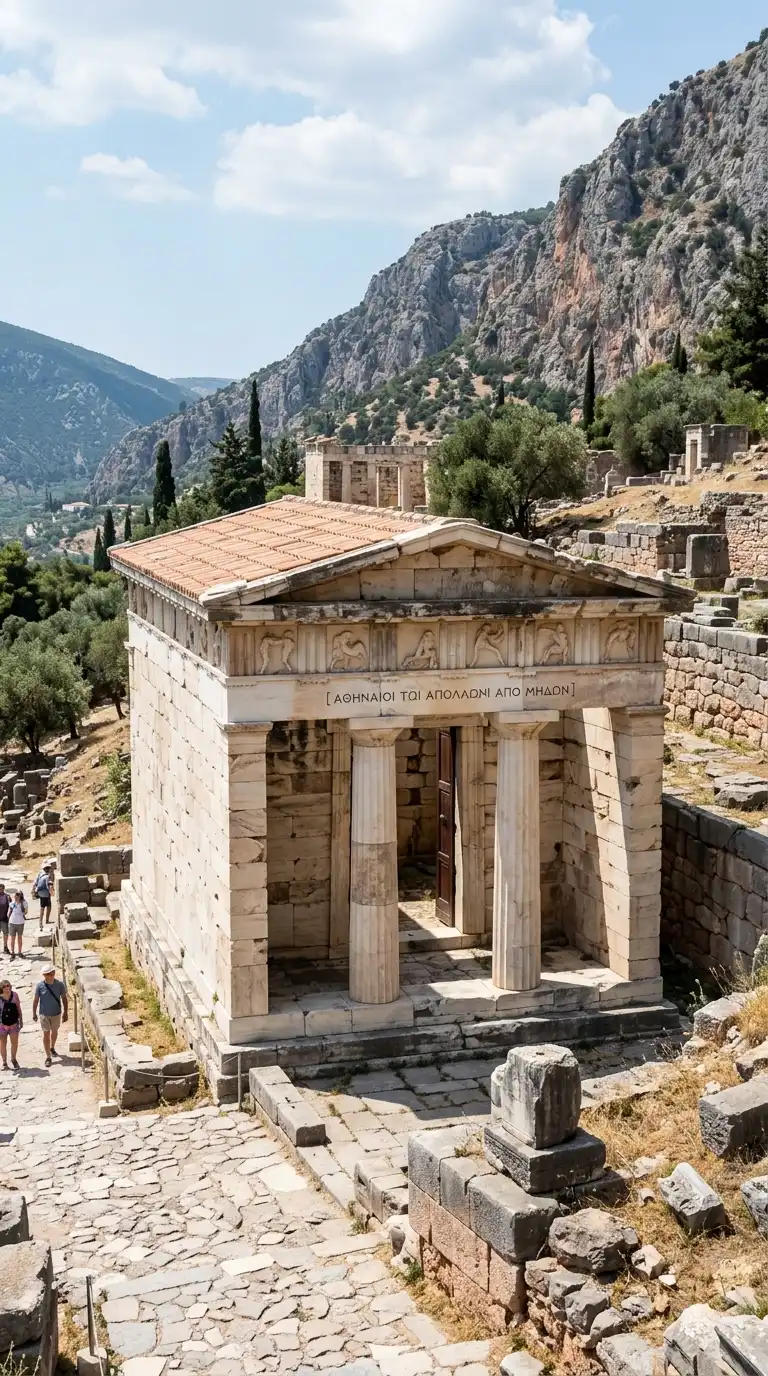
The treasuries were small temple-like buildings that housed offerings to the gods. Each city-state built its own treasury at major sanctuaries like Olympia and Delphi. The treasuries were Doric or Ionic in style, often richly decorated.
The Treasury of the Athenians at Delphi (5th century BCE) is the defining example. The emotional effect is votive, civic, and decorated.
Quick Tips
- The treasury should be a small temple-like building (antae temple or distyle in antis).
- The facade may have sculpted metopes or a continuous frieze.
- The building should be dedicated by a specific city-state.
14. The Altar
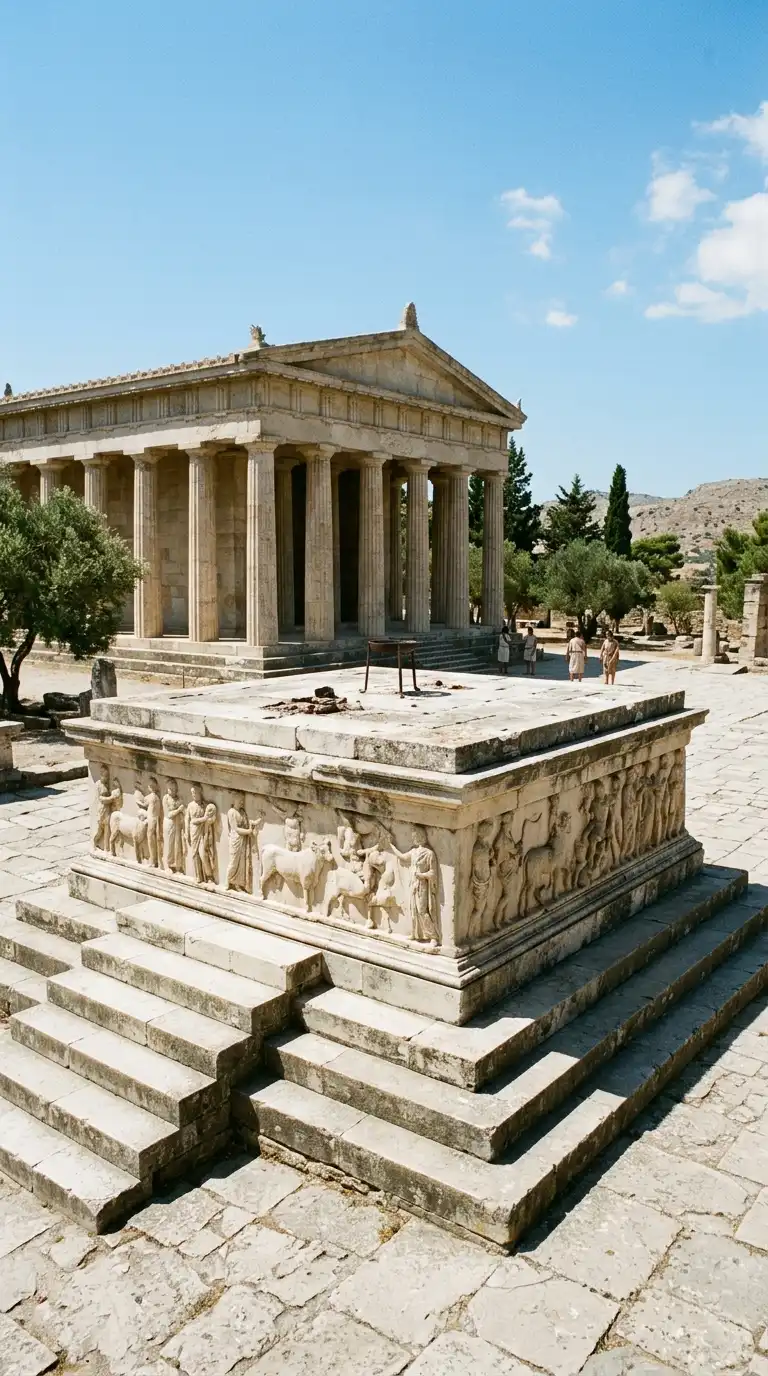
The Greek altar was a large stone platform or table for animal sacrifice. The altar was often monumental, with carved friezes and steps. The altar stood in front of a temple or in a sacred precinct.
The Altar of Hieron II at Syracuse (3rd century BCE) and the Altar of Pergamon (2nd century BCE) are defining examples. The emotional effect is sacrificial, monumental, and sculpted.
Quick Tips
- The altar must be a large stone platform or table.
- The altar must have steps for access.
- The altar may have a carved frieze.
15. The Monument of Lysicrates
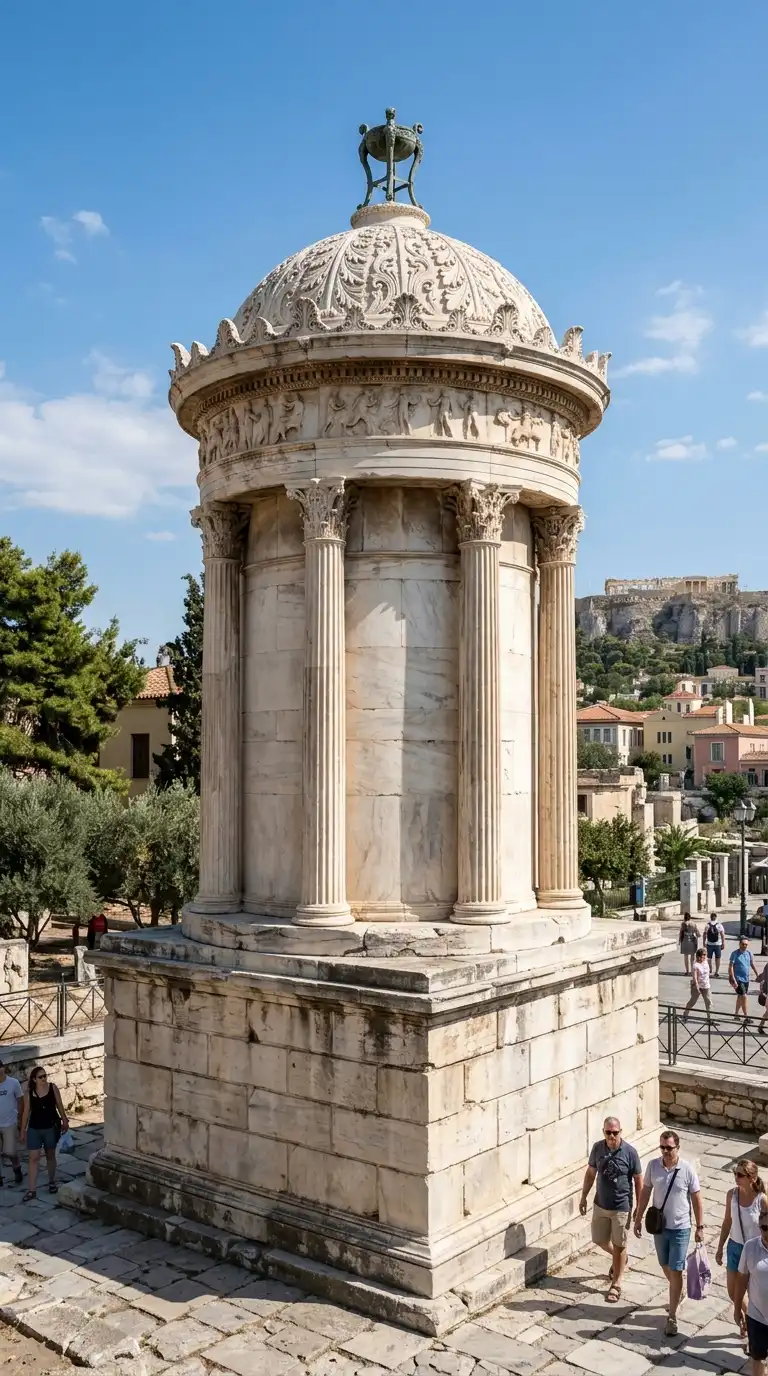
The Monument of Lysicrates in Athens (334 BCE) is a choregic monument — a prize awarded to the sponsor of a winning theatrical chorus. The monument is a small circular building (tholos) on a square base. The Corinthian columns are the first known exterior use of the Corinthian order.
The emotional effect is commemorative, ornate, and urban.
Quick Tips
- The monument must have a square base and a circular tholos above.
- The tholos must have Corinthian columns.
- The roof must be a single block of marble with acanthus leaves.
16. The Greek House (Oikos)
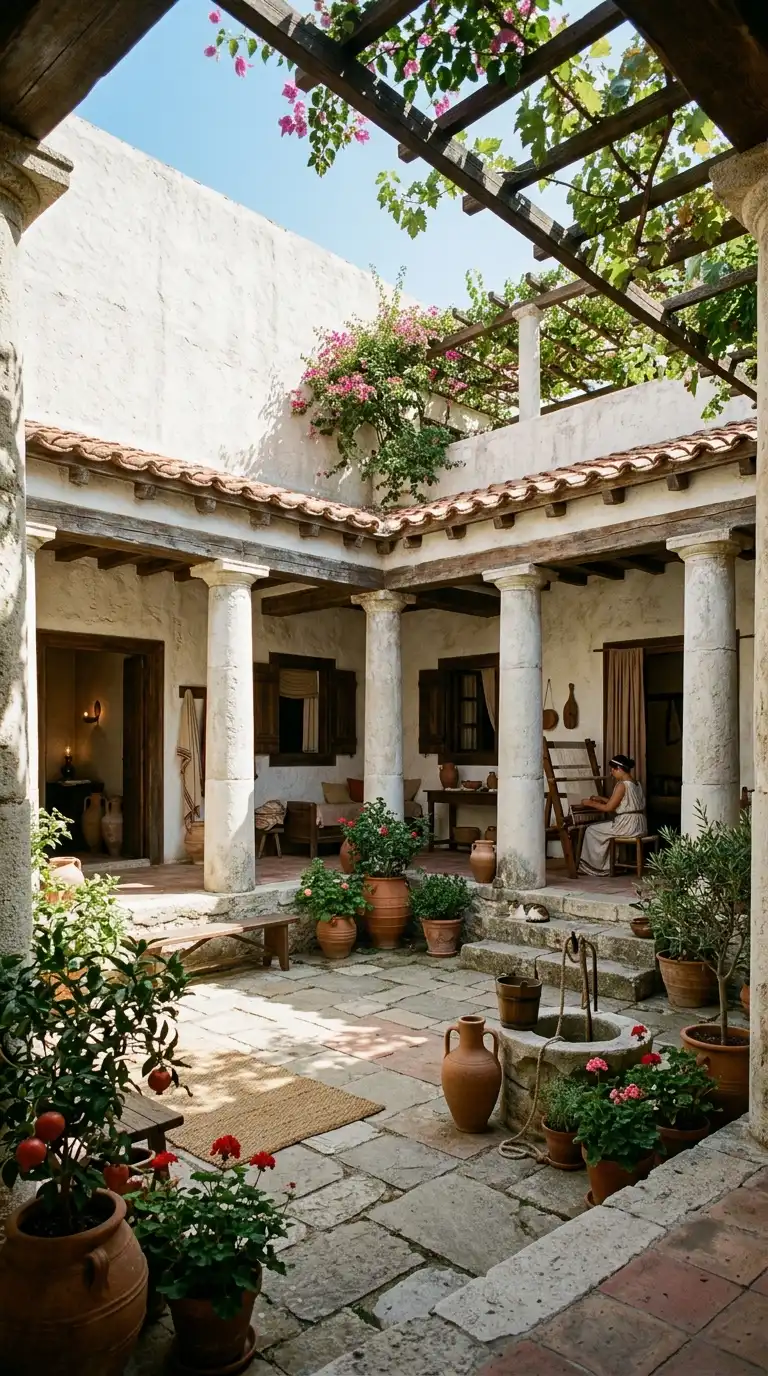
The Greek house (oikos) was organised around a central courtyard. The courtyard had a colonnade on one or more sides. The rooms — andron (men’s dining room), gynaikon (women’s quarters), kitchen, storage — opened onto the courtyard. The house was inward-facing, with blank walls on the street.
The houses on the slopes of the Athenian Acropolis (5th-4th centuries BCE) are defining examples. The emotional effect is inward-facing, domestic, and private.
Quick Tips
- The house must have a central courtyard.
- The courtyard must have a colonnade (peristyle) on at least one side.
- Street-facing walls must be blank — no windows.
17. The City Wall
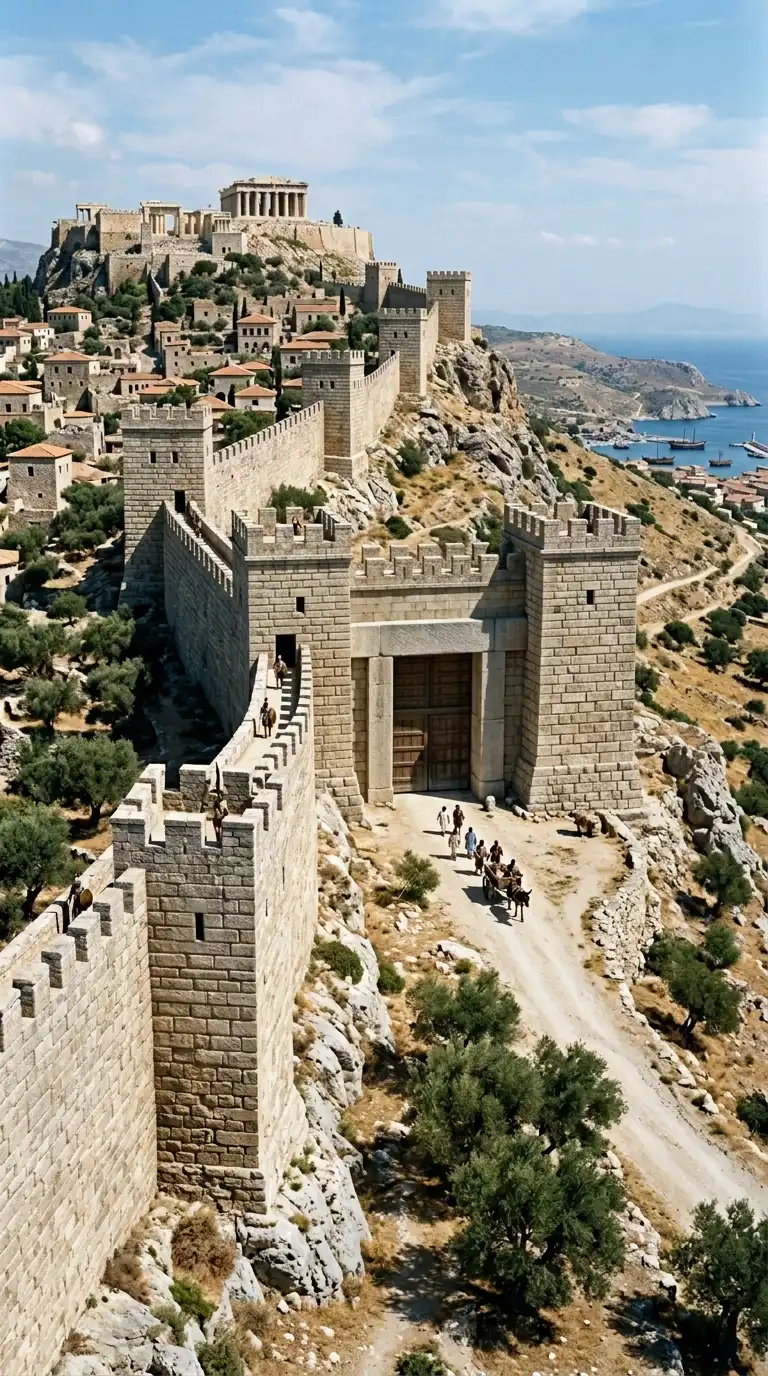
Greek city walls were massive stone fortifications protecting the city. The walls had towers at intervals and gates for access. The walls followed the contours of the hillside. The walls were built in the isodomic or polygonal masonry style.
The walls of Messene (4th century BCE) are the best-preserved example. The emotional effect is defensive, monumental, and protective.
Quick Tips
- The wall must have towers at regular intervals.
- The gates must be monumental and defensible.
- The masonry must be isodomic (regular blocks) or polygonal.
18. The Stadium
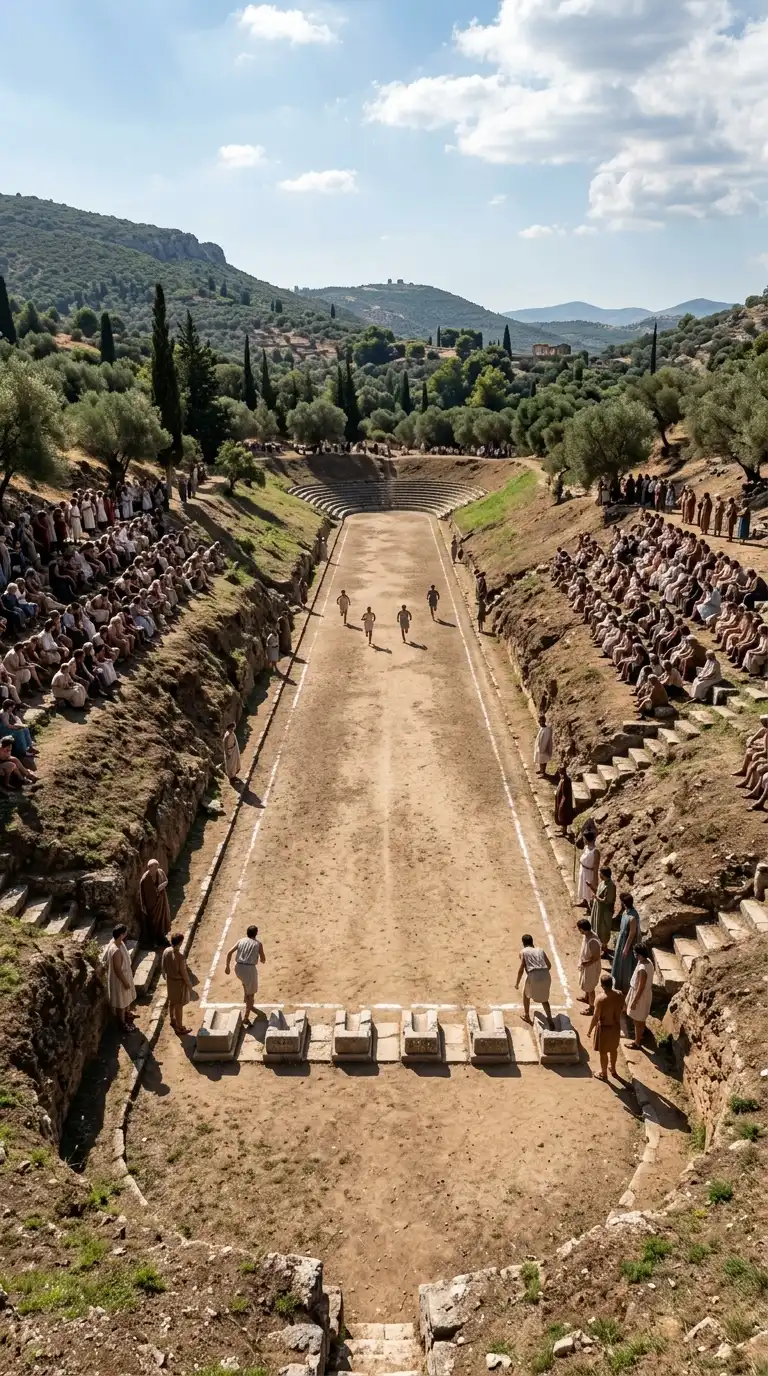
The Greek stadium was a long, narrow U-shaped track for foot races. The track was surrounded by earth banks for seating. The starting line (balbis) was a stone line across the track. The stadium was often located in a natural hollow between hills.
The Stadium at Olympia (5th century BCE) is the defining example. The emotional effect is athletic, elongated, and landscape-integrated.
Quick Tips
- The track must be long and narrow (about 200 metres).
- The seating must be earth banks on both sides and the curved end.
- The starting line must be a stone line across the track.
Final Thoughts
Greek architecture is not a style to copy. It is a system of proportions, a language of columns and beams, a way of relating buildings to landscape and to human scale. The Greeks did not invent the column or the lintel. But they perfected them.
These 18 Greek designs are not mutually exclusive. A Doric temple can have an Ionic interior. A stoa can be part of an agora. A theatre can be carved into a hillside with a tholos at its edge. The best Greek architecture is not the most decorated — it is the most measured. It is architecture of reason, balance, and humanity. It is the foundation.