Russian architecture is a story of cultural synthesis and reinvention. It draws from Byzantine, Viking, Baroque, Neoclassical, and Modernist traditions, but transforms each into something uniquely Russian. The onion dome, the tent roof, the kokoshnik gable, and the Constructivist tower are all unmistakably Russian forms.
These 15 Russian architecture designs span from medieval Kievan Rus to the Soviet avant-garde and contemporary works. Each design includes defining characteristics, key examples, and architectural principles.
1. The Cross-in-Square Church
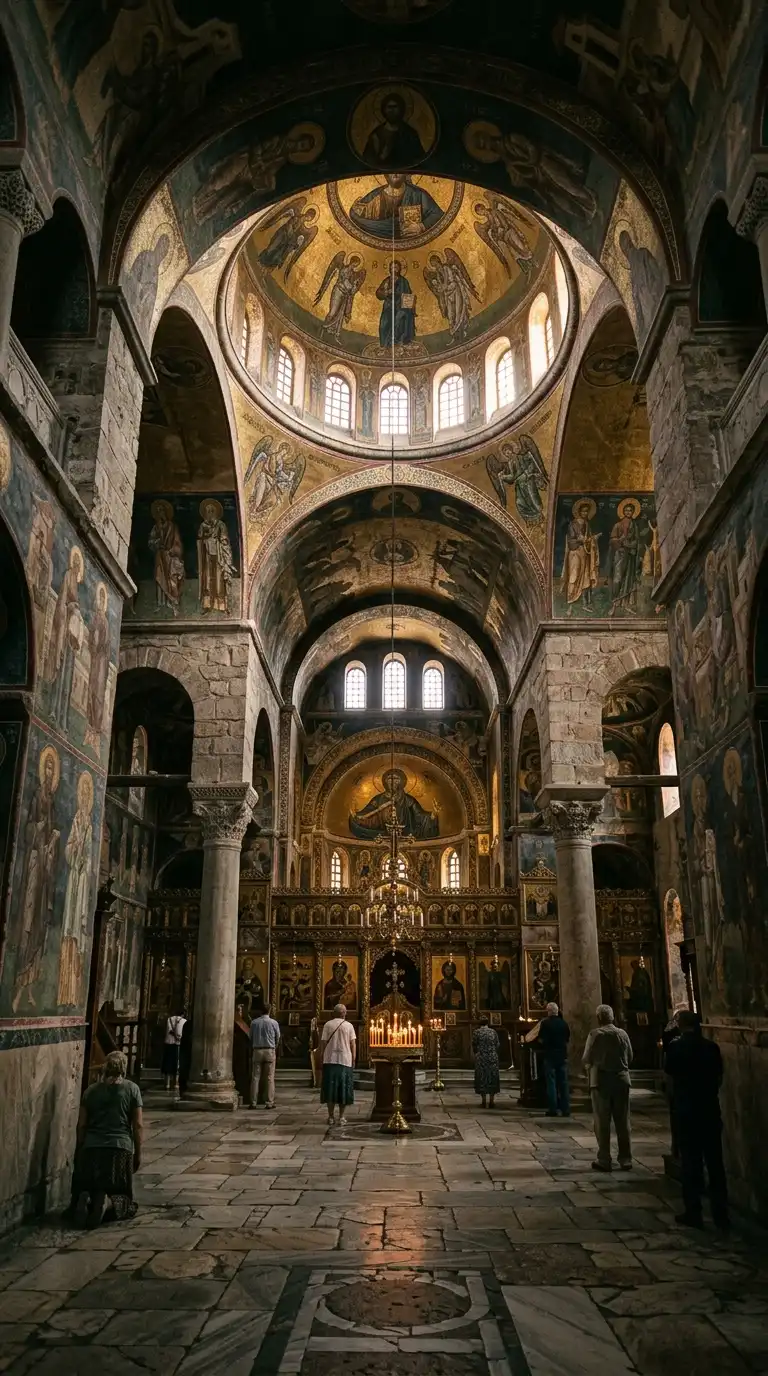
The cross-in-square church is the standard plan of Byzantine and early Russian Orthodox architecture. The plan is a square divided into nine bays by four columns. The central bay is larger and domed. The four arms of the cross are vaulted. The corners are smaller and lower.
St. Sophia Cathedral in Kiev (1037) and St. Sophia Cathedral in Novgorod (1045) are defining examples. The emotional effect is centralised, hierarchical, and mysteriously lit.
Quick Tips
- The plan must be a square divided into nine bays by four columns.
- The central bay must have a dome on pendentives.
- The four arms of the cross should be barrel-vaulted.
2. The Onion Dome
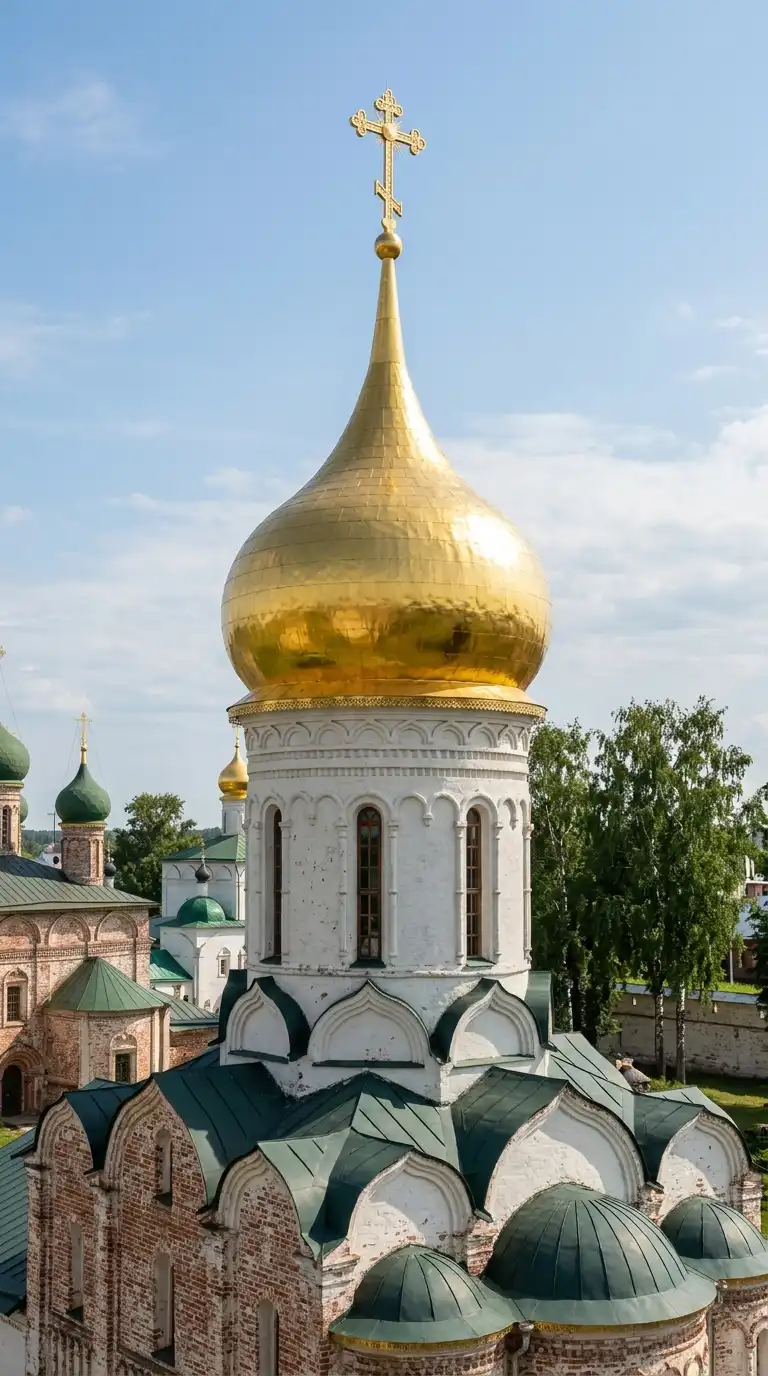
The onion dome is the most recognisable element of Russian architecture. Unlike the shallow Byzantine dome, the onion dome is tall and pointed, like a flame or an onion. It rests on a high drum pierced by windows. The dome is often gilded or painted in bright colours.
The domes of St. Basil’s Cathedral in Moscow (1561) are the defining example. The emotional effect is vertical, festive, and unmistakably Russian.
Quick Tips
- The dome should be taller than its width — a true onion shape.
- The drum should be high and pierced by narrow windows.
- The dome may be gilded or painted in bright colours.
3. The Tent Roof Church
The tent roof church replaces the dome with a steep, pyramidal roof. The roof is shaped like a tent or a spire. It rises from a square or octagonal base. The tent roof was developed in northern Russia, where wooden architecture influenced stone building.
The Church of the Ascension in Kolomenskoye (1532) is the defining example. The emotional effect is upward-soaring, vertical, and vernacular.
Quick Tips
- The roof must be a steep pyramid or octagonal spire.
- The base should be square, octagonal, or cruciform.
- No dome — the tent roof is the termination.
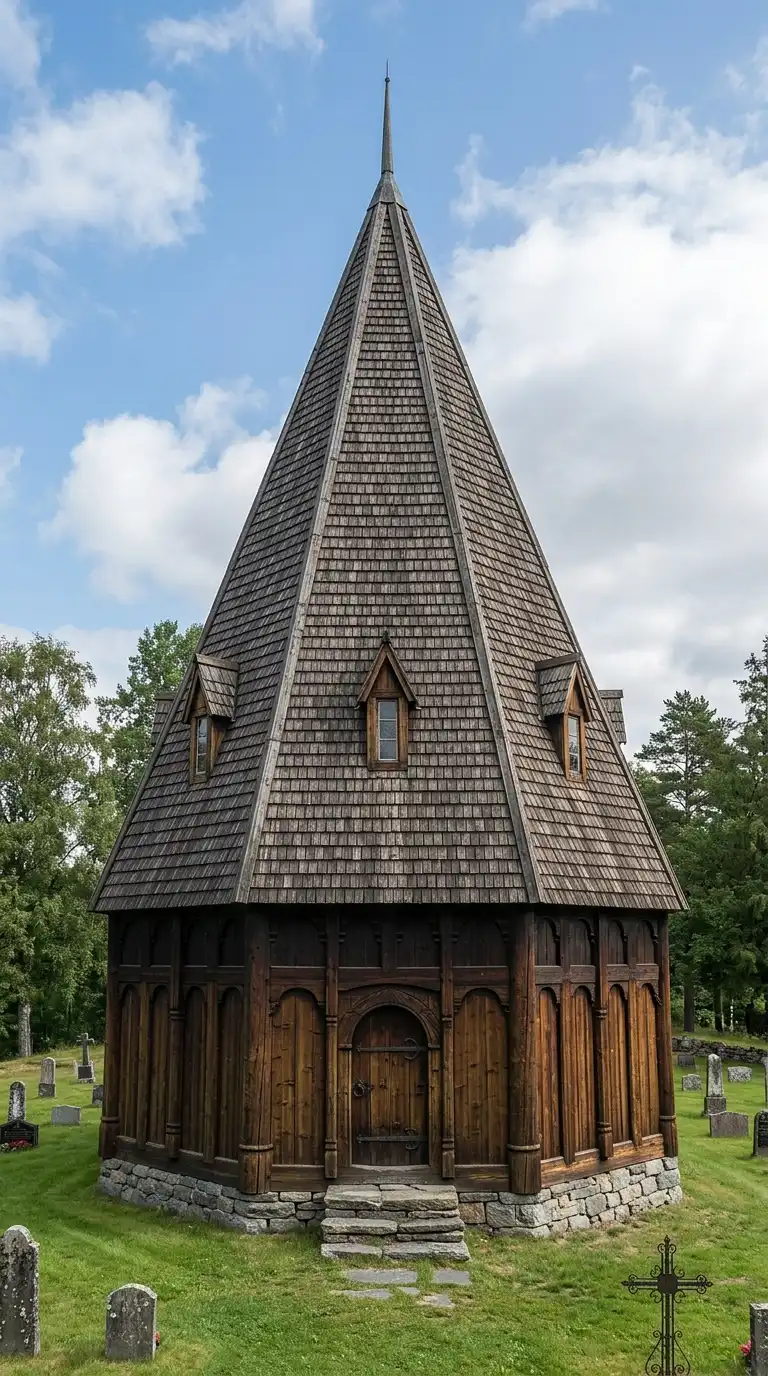
4. The Kokoshnik
The kokoshnik is a decorative gable, shaped like a keel or an arch. Kokoshniks are stacked in rows on the walls, drums, and roofs of Russian churches. They have no structural function — they are pure ornament.
The kokoshniks on St. Basil’s Cathedral and the Church of the Saviour on Spilled Blood in St. Petersburg are defining examples. The emotional effect is decorative, rhythmic, and richly textured.
Quick Tips
- The kokoshnik should be shaped like a keel or a pointed arch.
- Stack kokoshniks in rows of increasing size toward the top.
- Use kokoshniks on drums, walls, and below domes.
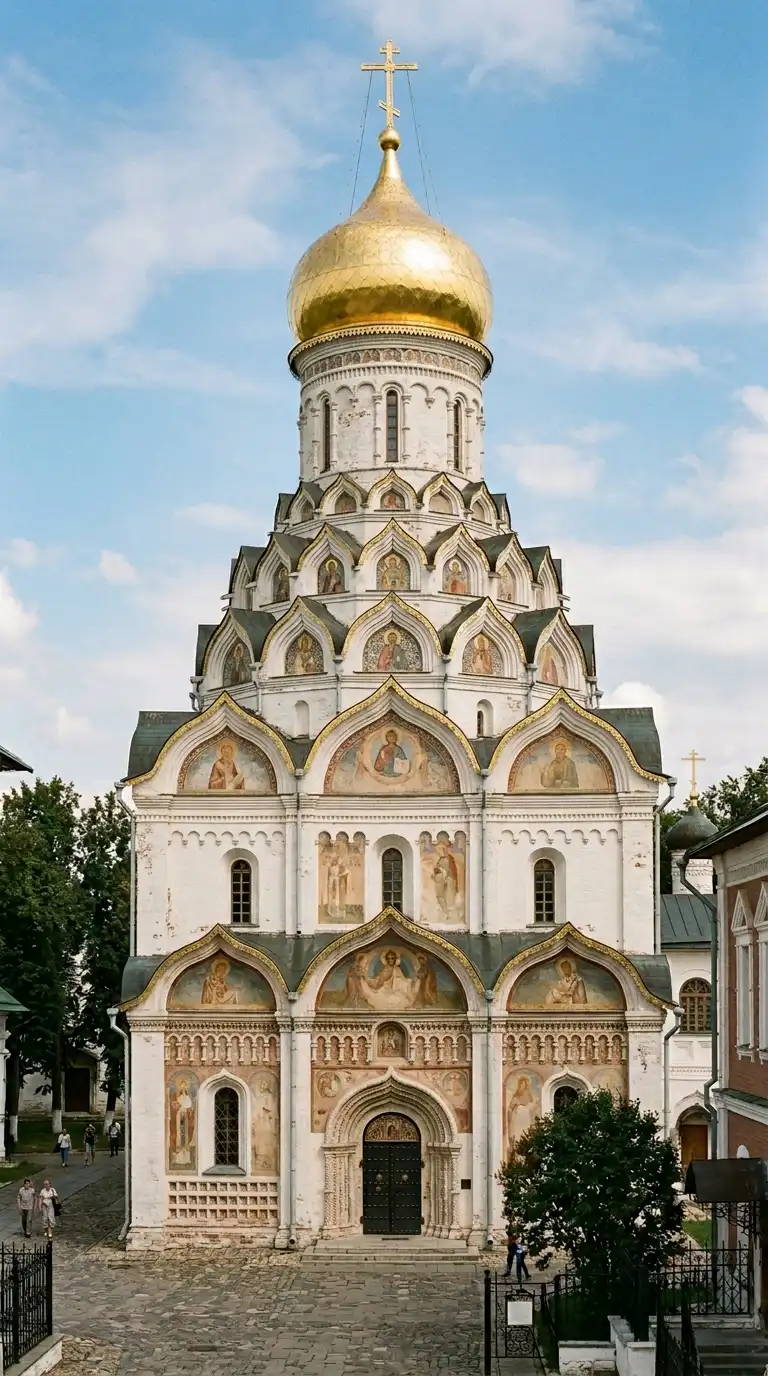
5. The St. Basil’s Cathedral Type
St. Basil’s Cathedral in Moscow (1561) is the most famous Russian building. It is not one church but nine chapels clustered around a central tent roof. Each chapel has its own onion dome. The domes are different colours and patterns. The whole composition is asymmetrical and joyous.
The emotional effect is festive, whimsical, and overwhelming.
Quick Tips
- Cluster multiple chapels around a central vertical element.
- Each chapel should have its own dome.
- The composition should be asymmetrical.
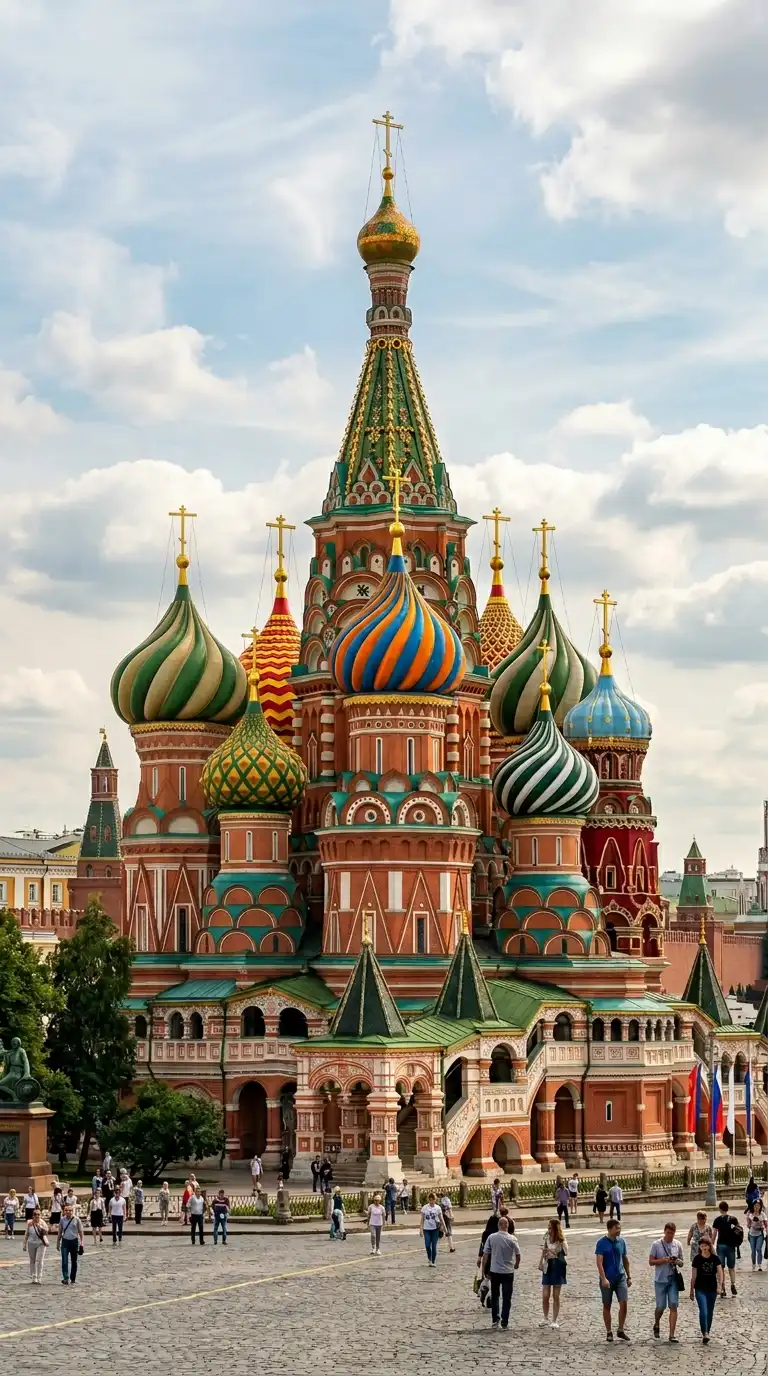
6. The Naryshkin Baroque
Naryshkin Baroque, also called Moscow Baroque, was the first Russian Baroque style. It combined traditional Russian forms (onion domes, kokoshniks) with Western Baroque ornament. The most distinctive feature is the use of red brick and white stone trim.
The Church of the Intercession at Fili in Moscow (1694) is the defining example. The emotional effect is decorative, colourful, and hybrid.
Quick Tips
- Use red brick walls with white stone trim.
- The plan should be octagonal or cruciform.
- Windows should have carved white stone frames and pediments.
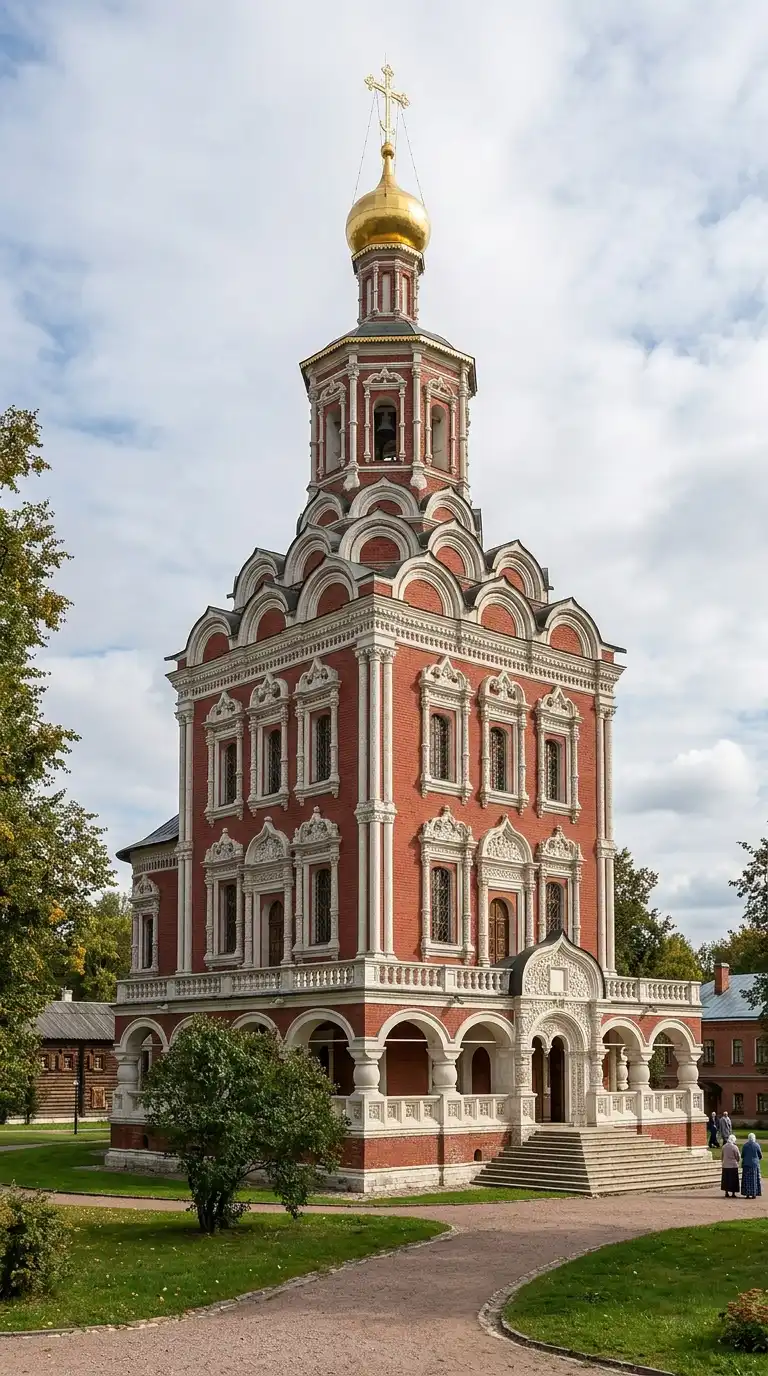
7. The Russian Baroque Palace
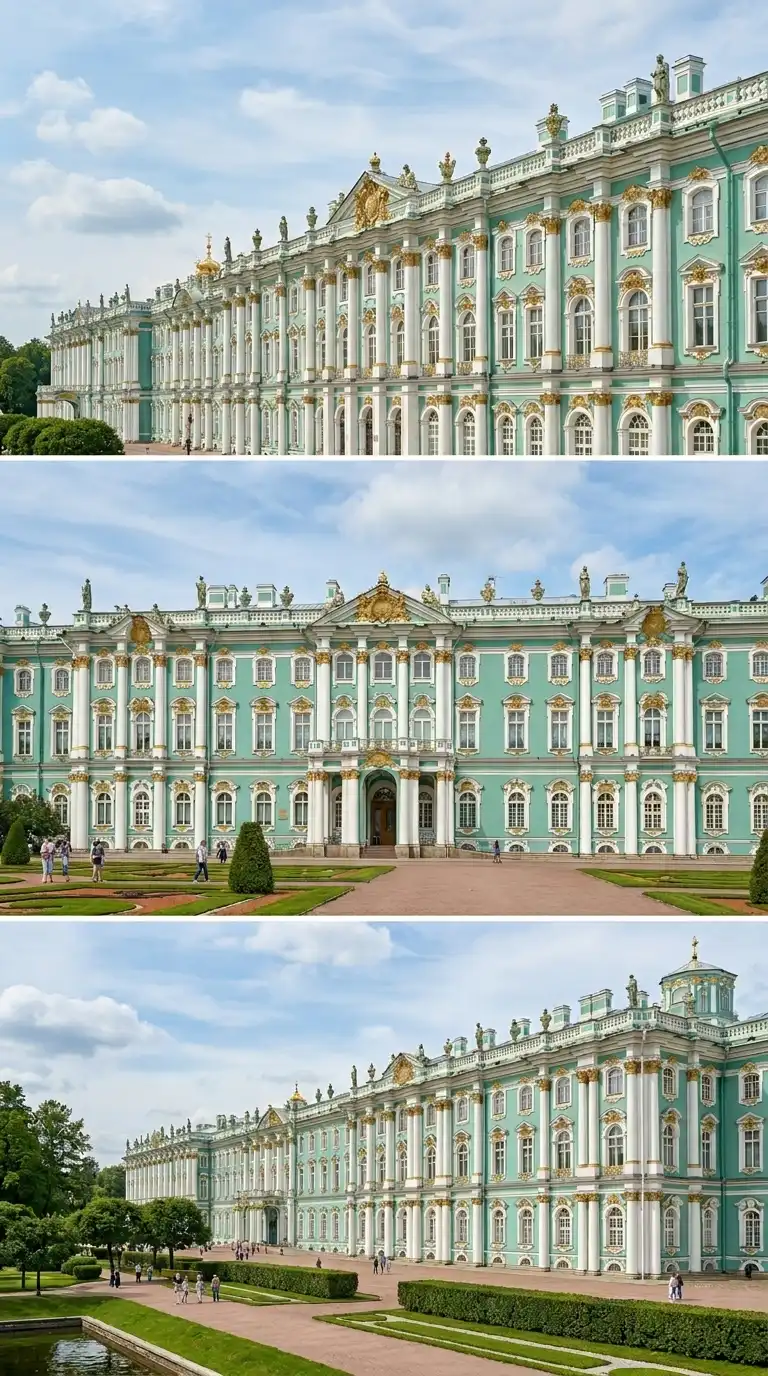
The Russian Baroque palace, built under Empress Elizabeth, is a lavish interpretation of European Baroque. The facades are long and painted in bright colours — pale blue, yellow, pink, green. The windows are framed with white columns and pediments. The roofs are gilded.
The Winter Palace in St. Petersburg (1762) by Bartolomeo Rastrelli is the defining example. The emotional effect is extravagant, colourful, and imperial.
Quick Tips
- Facades should be long and painted in bright pastel colours.
- Use white columns and pediments to frame windows.
- The roof should be gilded or copper.
8. The Rastrelli Staircase
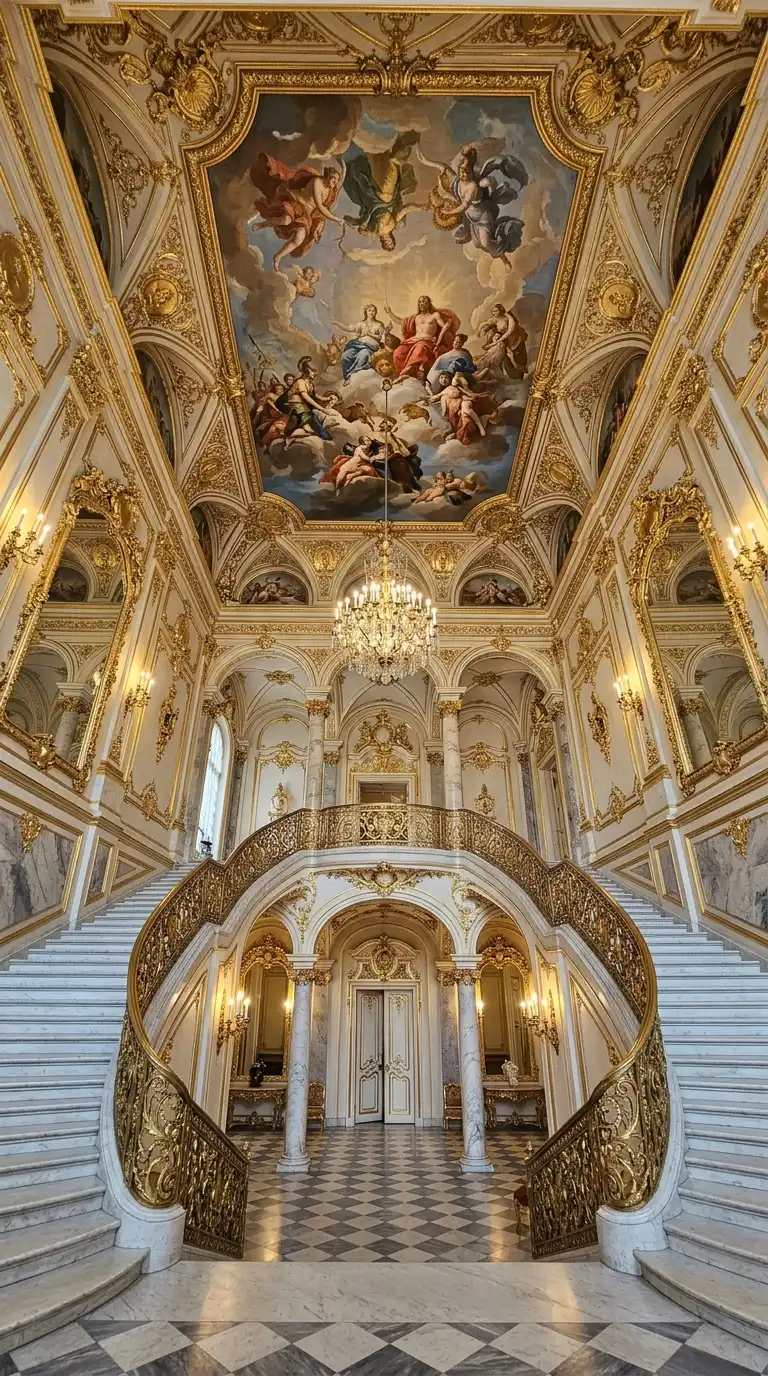
The Rastrelli staircase is a grand, two-flight staircase with a dramatic ceiling. The staircase splits into two flights that curve around an open centre. The ceiling is frescoed with a scene of the gods. The stairs are marble. The walls are gilded.
The Jordan Staircase in the Winter Palace by Rastrelli is the defining example. The emotional effect is theatrical, monumental, and welcoming.
Quick Tips
- The staircase must split into two flights curving around an open centre.
- The ceiling must be frescoed with a dramatic scene.
- The stairs should be marble, the walls gilded.
9. The Neoclassical Russian Palace
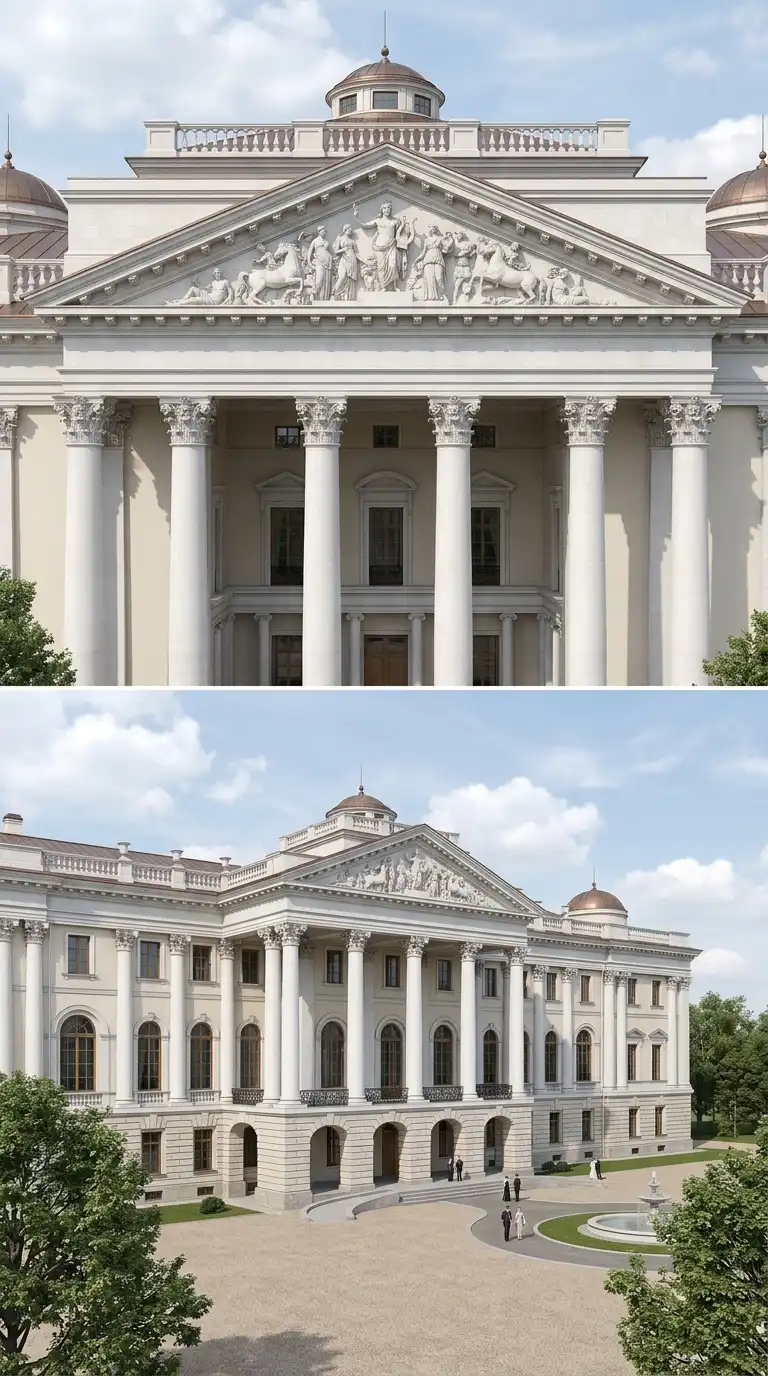
Neoclassicism replaced Baroque in Russia under Catherine the Great. The Russian Neoclassical palace is restrained, rational, and Greek or Roman in inspiration. The facades are symmetrical. Columns are Greek Doric, Ionic, or Corinthian. The colours are natural stone or white.
The Palace of the Senate in the Moscow Kremlin (1788) by Matvey Kazakov is the defining example. The emotional effect is rational, dignified, and imperial.
Quick Tips
- The facade must be symmetrical with a central portico.
- Columns must follow the Greek orders correctly.
- Colour should be white or natural stone.
10. The Russian Revival Church
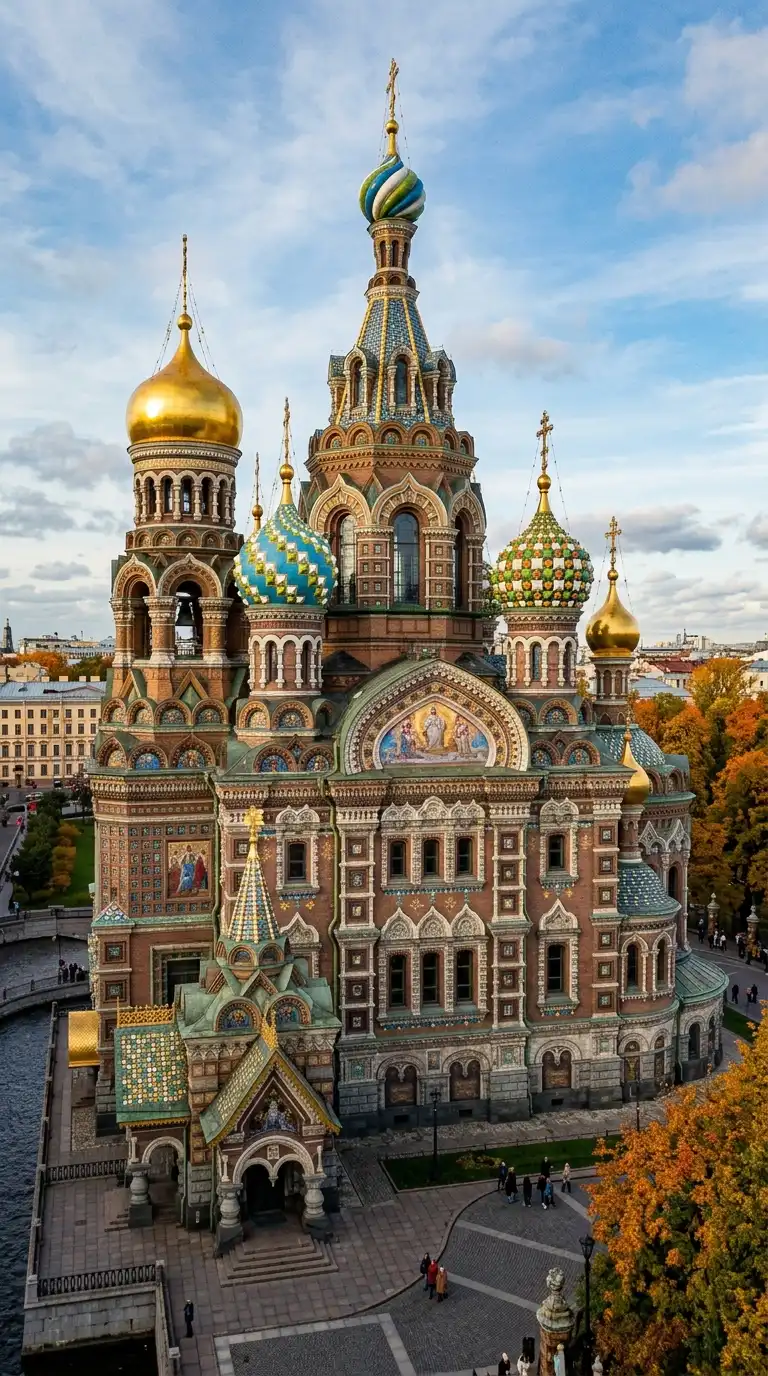
The Russian Revival style of the 19th century looked back to pre-Petrine Russian architecture. It used onion domes, tent roofs, kokoshniks, and decorative brickwork. The style was promoted as a national style, free from Western influence.
The Church of the Saviour on Spilled Blood in St. Petersburg (1883-1907) is the defining example. The emotional effect is nationalistic, rich, and nostalgic.
Quick Tips
- Use traditional Russian forms: onion domes, tent roofs, kokoshniks.
- Walls should be decorated with brick patterns or mosaics.
- The composition should be asymmetrical and clustered.
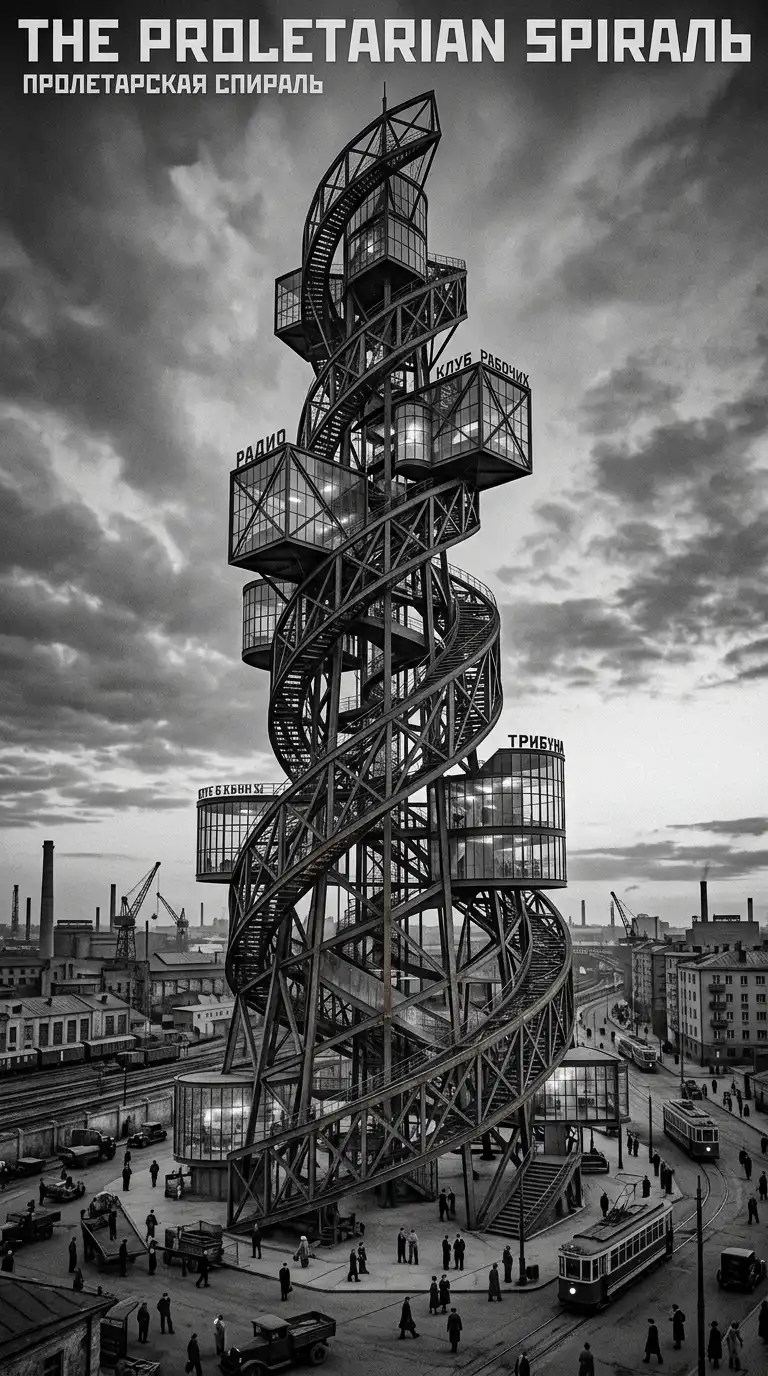
11. The Constructivist Tower
Constructivism was the Russian avant-garde movement of the 1920s. It rejected ornament for pure geometry, industrial materials, and revolutionary forms. The Constructivist tower is a dynamic composition of glass, steel, and concrete.
Vladimir Tatlin’s Monument to the Third International (1919) is the defining example, though never built. The emotional effect is revolutionary, futuristic, and dynamic.
Quick Tips
- Use industrial materials: steel, glass, concrete.
- The form should be dynamic and asymmetrical.
- Ornament is prohibited.
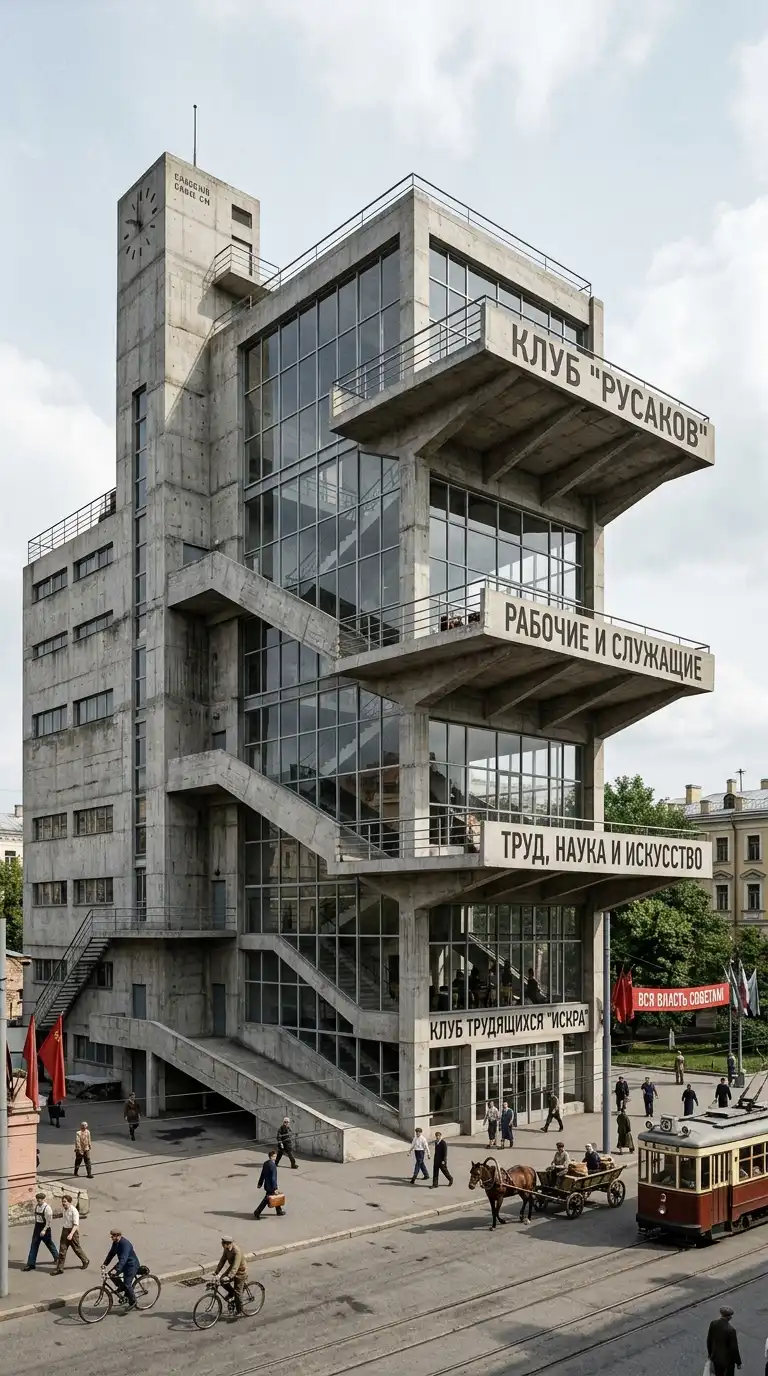
12. The Constructivist Worker’s Club
The Constructivist worker’s club was a social centre for factory workers. It contained a theatre, library, classrooms, and cafes. The architecture was geometric, with large glass surfaces and exposed concrete. The building expressed its function.
The Rusakov Workers’ Club in Moscow (1928) by Konstantin Melnikov is the defining example. The emotional effect is functional, modern, and revolutionary.
Quick Tips
- The form should express the function — theatre volume, library volume, etc.
- Use concrete, glass, and steel.
- The facade should be dynamic and asymmetrical.
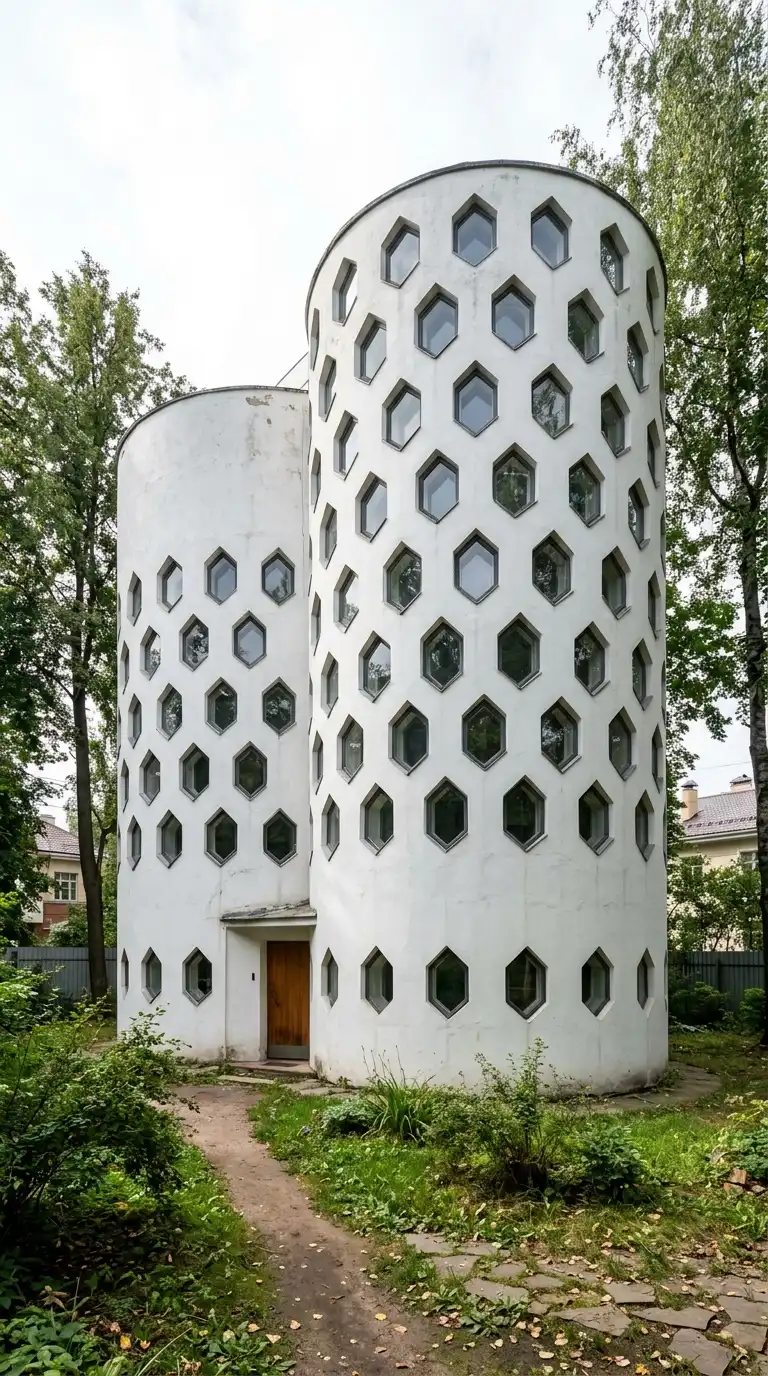
13. The Melnikov House
The Melnikov House in Moscow (1929) by Konstantin Melnikov is the most famous Constructivist house. It is a cylindrical tower composed of two intersecting cylinders. The windows are hexagonal, arranged in a dynamic grid. The interior is a single continuous space.
The emotional effect is sculptural, efficient, and intensely personal.
Quick Tips
- The form should be geometric and sculptural.
- Windows should be arranged in a dynamic pattern.
- The interior should be a continuous space, not divided into rooms.
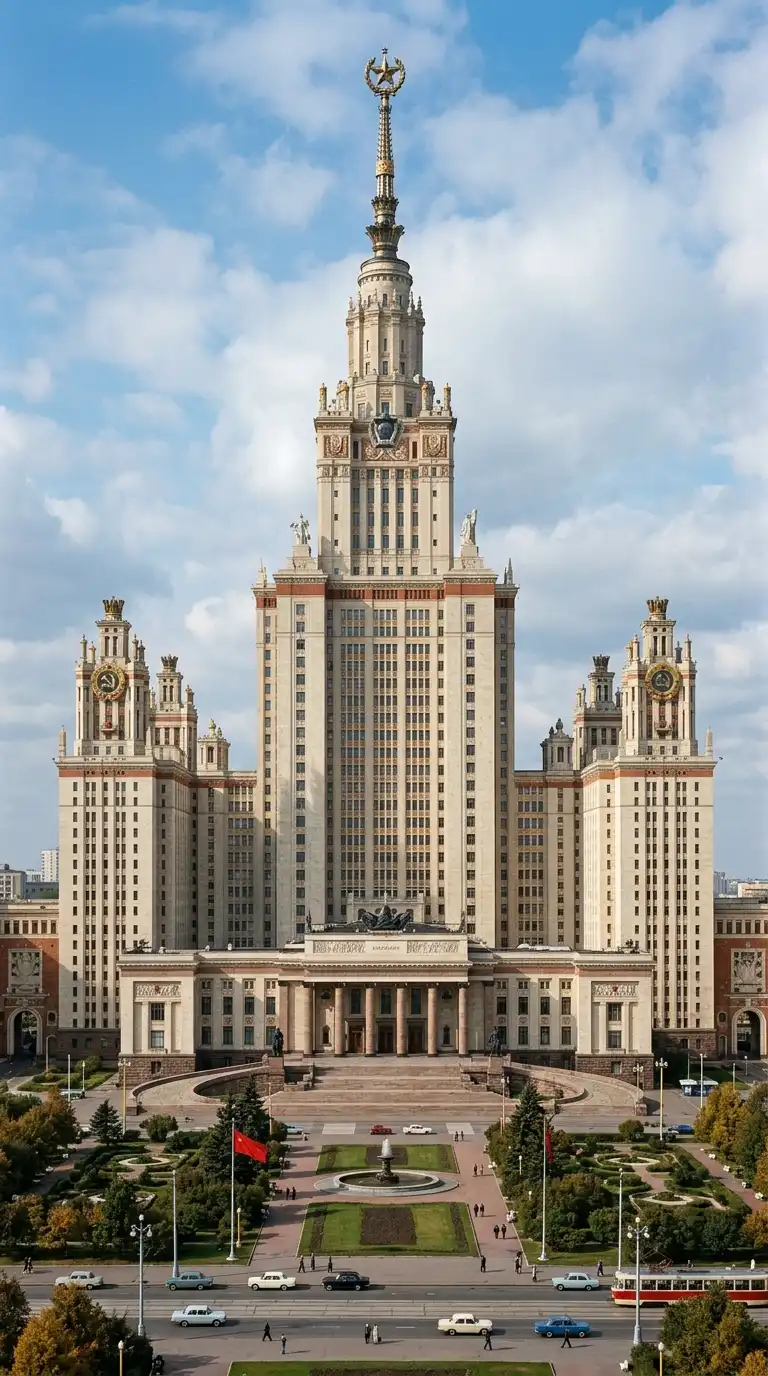
14. The Soviet Stalinist Skyscraper
Stalinist skyscrapers, also called Seven Sisters, were built in Moscow in the 1950s. They combine American skyscraper technology with Russian Gothic and Baroque details. The towers have stepped bases, central spires, and richly decorated facades.
Moscow State University (1953) is the defining example. The emotional effect is monumental, vertical, and authoritarian.
Quick Tips
- The tower must have a stepped base, central tower, and spire.
- The facade should be decorated with Soviet symbols: stars, crowns, sheaves.
- The composition should be symmetrical and monumental.
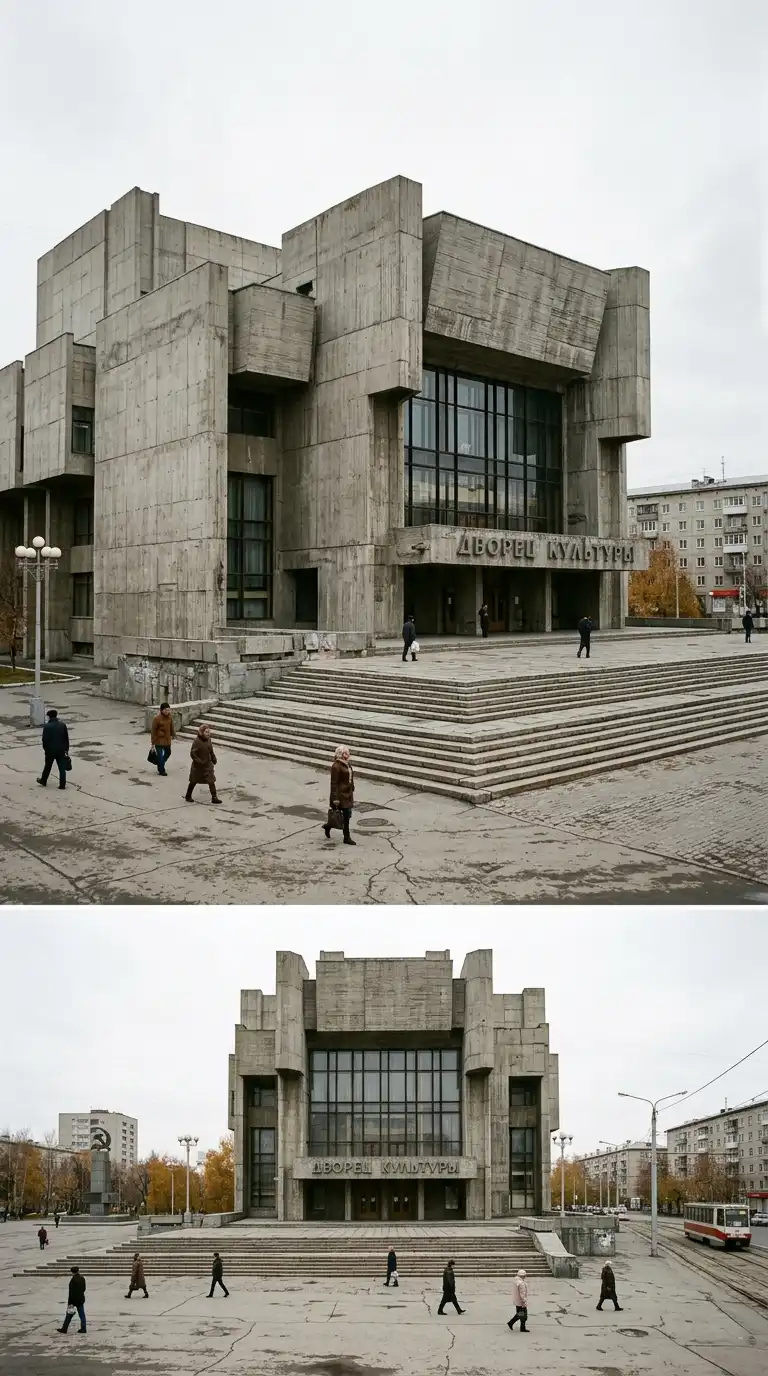
15. The Soviet Brutalist Palace of Culture
Soviet Brutalism adapted the Western Brutalist aesthetic to Soviet needs. The Palace of Culture is a large, sculptural concrete building containing a theatre, exhibition halls, and meeting rooms. The concrete is board-formed, with visible grain and seam marks.
The Palace of Youth in St. Petersburg (1970s) is a defining example. The emotional effect is monumental, sculptural, and heavy.
Quick Tips
- Use board-formed concrete as the primary material.
- The form should be sculptural and massive.
- The building should contain cultural functions: theatre, exhibition, meeting.
Final Thoughts
Russian architecture is not one style but many. It is the cross-in-square church and the Constructivist tower. It is the onion dome and the Khrushchyovka. It is the gilded palace and the timber church without nails. What unites these diverse forms is a willingness to transform foreign influences into something uniquely Russian.
These 15 designs are not mutually exclusive. A Naryshkin Baroque church can have onion domes and kokoshniks. A Stalinist skyscraper can use Gothic details. A contemporary museum can expose Constructivist concrete. The best Russian architecture honours its past while building its future.