Mughal architecture developed in the Indian subcontinent under the Mughal Empire (1526-1857). It is a synthesis of Persian, Indian, and Central Asian traditions. The style is characterised by red sandstone and white marble, large bulbous domes, slender minarets, grand iwans, and intricate decorative arts — pietra dura (marble inlay), carving, and calligraphy. The Mughals built not only mosques and tombs but also palaces, forts, gardens, and entire cities.
These 14 Mughal architecture designs span the reigns of Babur to Aurangzeb. Each design includes defining characteristics, key examples, and architectural principles.
1. The Mughal Tomb
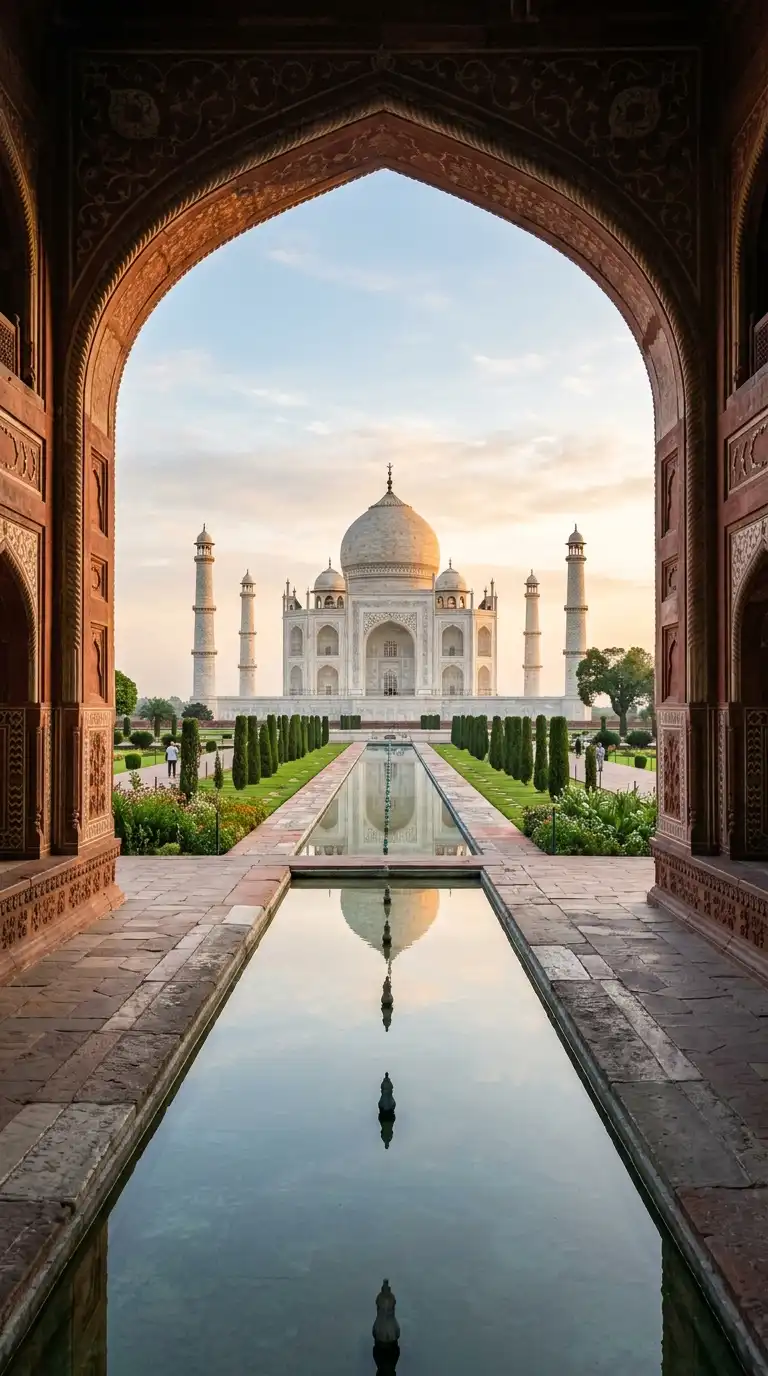
The Mughal tomb is the most celebrated building type of the empire. The tomb sits on a raised platform, often with an iwan on each facade. The building is perfectly symmetrical, with a large central dome, corner minarets (in later tombs), and a double shell. The tomb is set within a char bagh (four-part garden) divided by water channels.
The Taj Mahal in Agra (1632-1653) is the defining example. The emotional effect is paradisiacal, symmetrical, and serene.
Quick Tips
- The tomb must be set within a four-part garden with water channels.
- The building must be symmetrical on all axes.
- The dome should be bulbous, not hemispherical.
2. The Red Fort
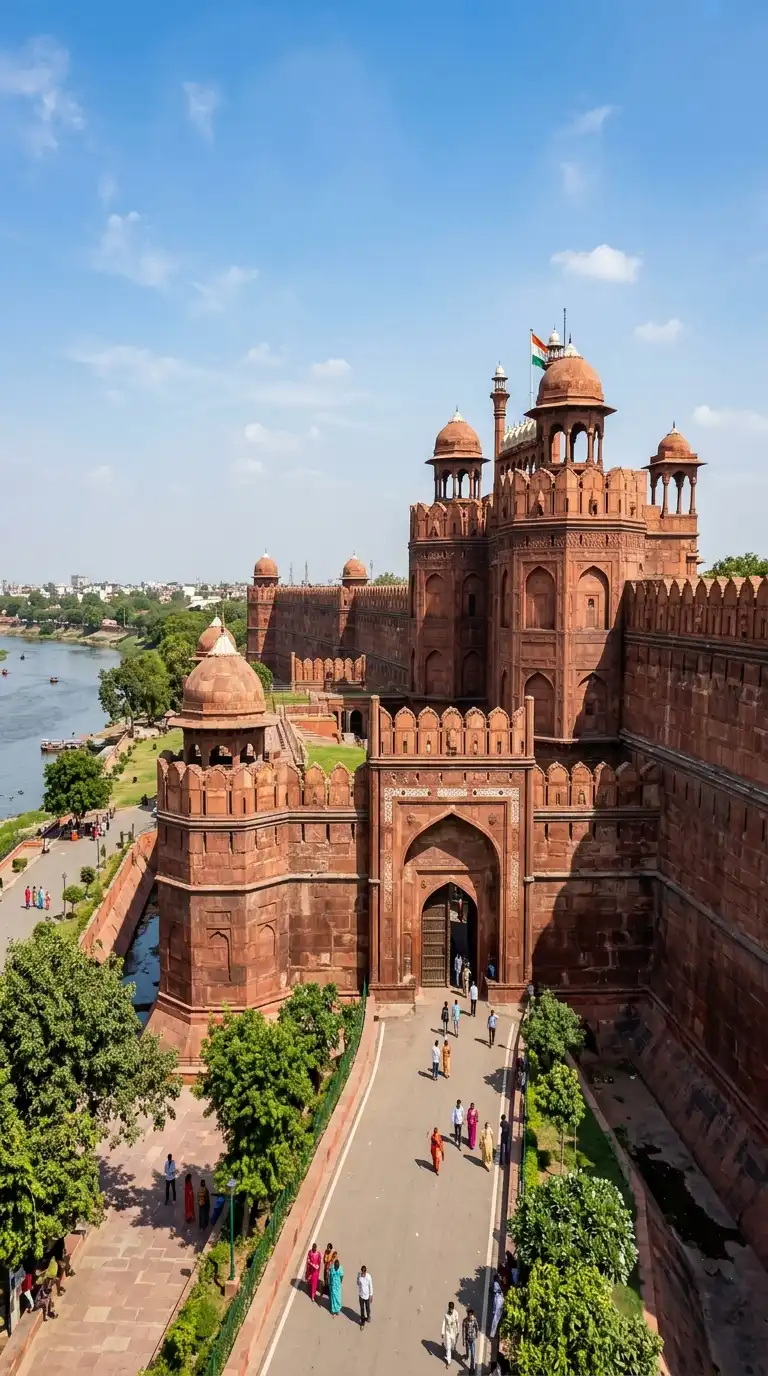
The Red Fort is a palace-fortress of red sandstone. The fort has massive walls with battlements, gates, and towers. Inside are palaces, halls, mosques, and gardens. The plan is irregular, following the riverbank. The public and private audiences are separate.
The Red Fort in Delhi (1639-1648) by Shah Jahan is the defining example. The emotional effect is imperial, defensive, and palatial.
Quick Tips
- The walls must be red sandstone with battlements.
- The entrance gate must be monumental and defensible.
- Public and private courts must be separated.
3. The Bulbous Dome
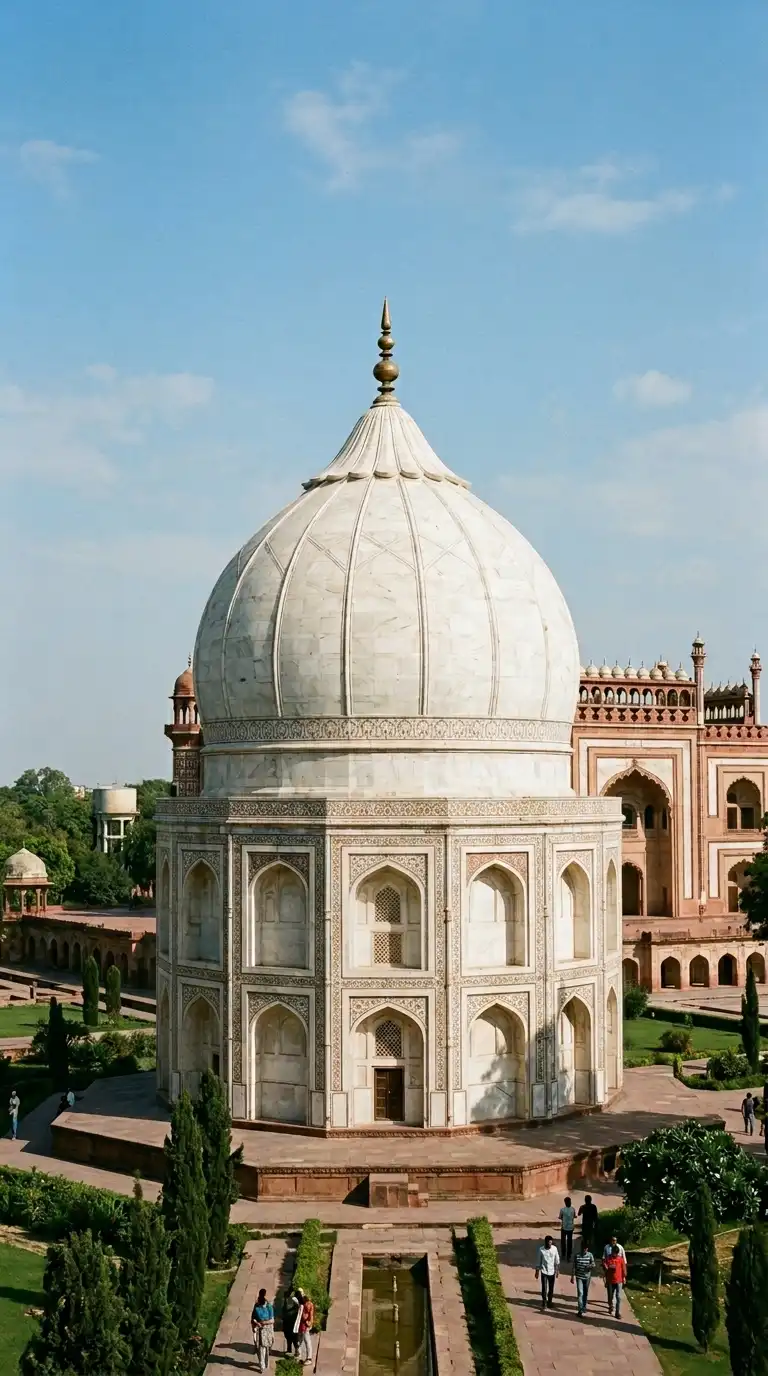
The bulbous dome is the signature Mughal roof form. Unlike the hemispherical Persian dome, the Mughal dome is bulbous — swelling outward near the base and rising to a pointed tip. The dome rests on a cylindrical drum. The drum is often decorated with arches and inlay.
The dome of the Taj Mahal is the defining example. The emotional effect is bulbous, vertical, and celestial.
Quick Tips
- The dome must swell outward near the base, then taper to a point.
- The drum must be cylindrical and decorated.
- The dome should be taller than its width.
4. The Char Bagh Garden
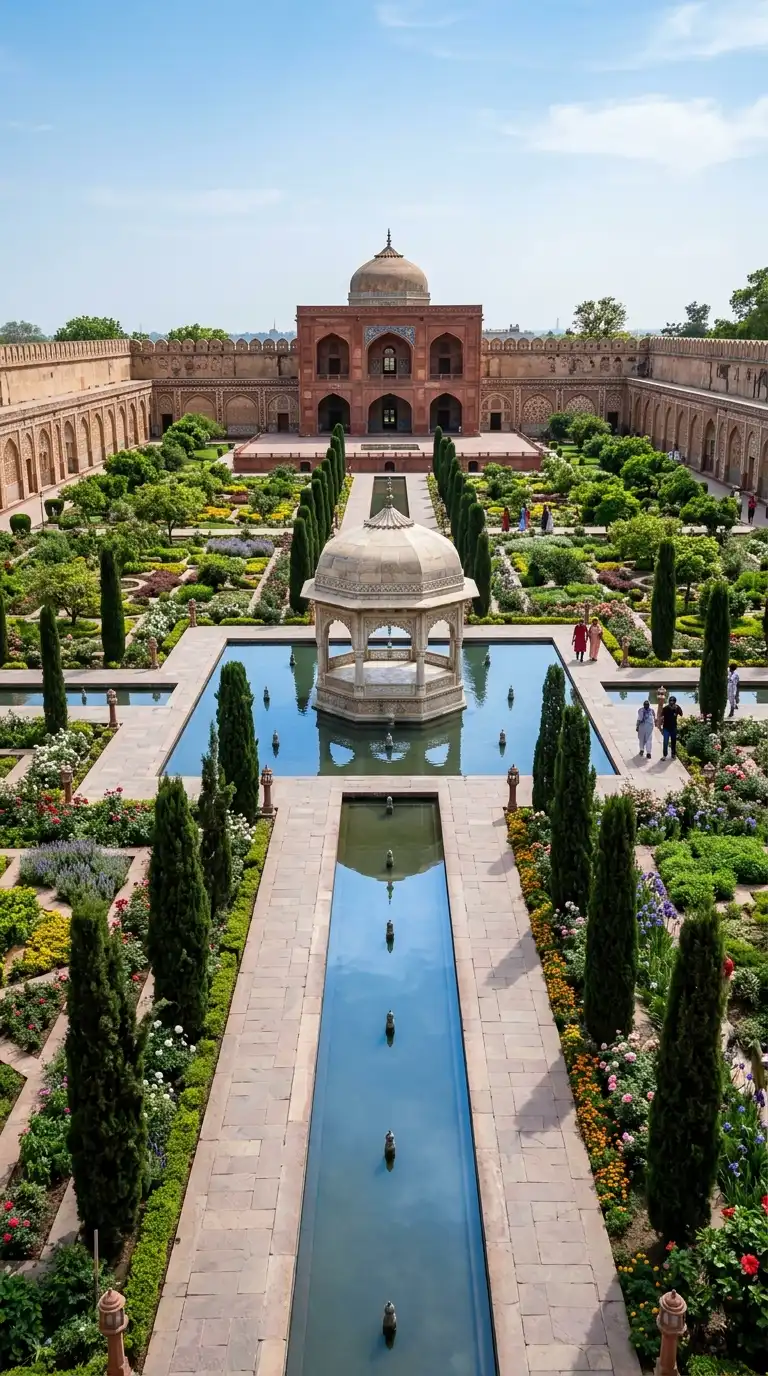
The char bagh is a four-part garden divided by water channels. The garden is a paradise on earth, symbolising the four rivers of life mentioned in the Quran. The water channels meet at a central pool or pavilion. The garden is walled.
The Gardens of the Taj Mahal and the Shalimar Gardens in Lahore are defining examples. The emotional effect is paradisiacal, ordered, and refreshing.
Quick Tips
- The garden must be divided into four equal quadrants by water channels.
- A central pavilion or pool must mark the intersection of the channels.
- The garden must be walled for privacy and protection.
5. The Diwan-i-Aam
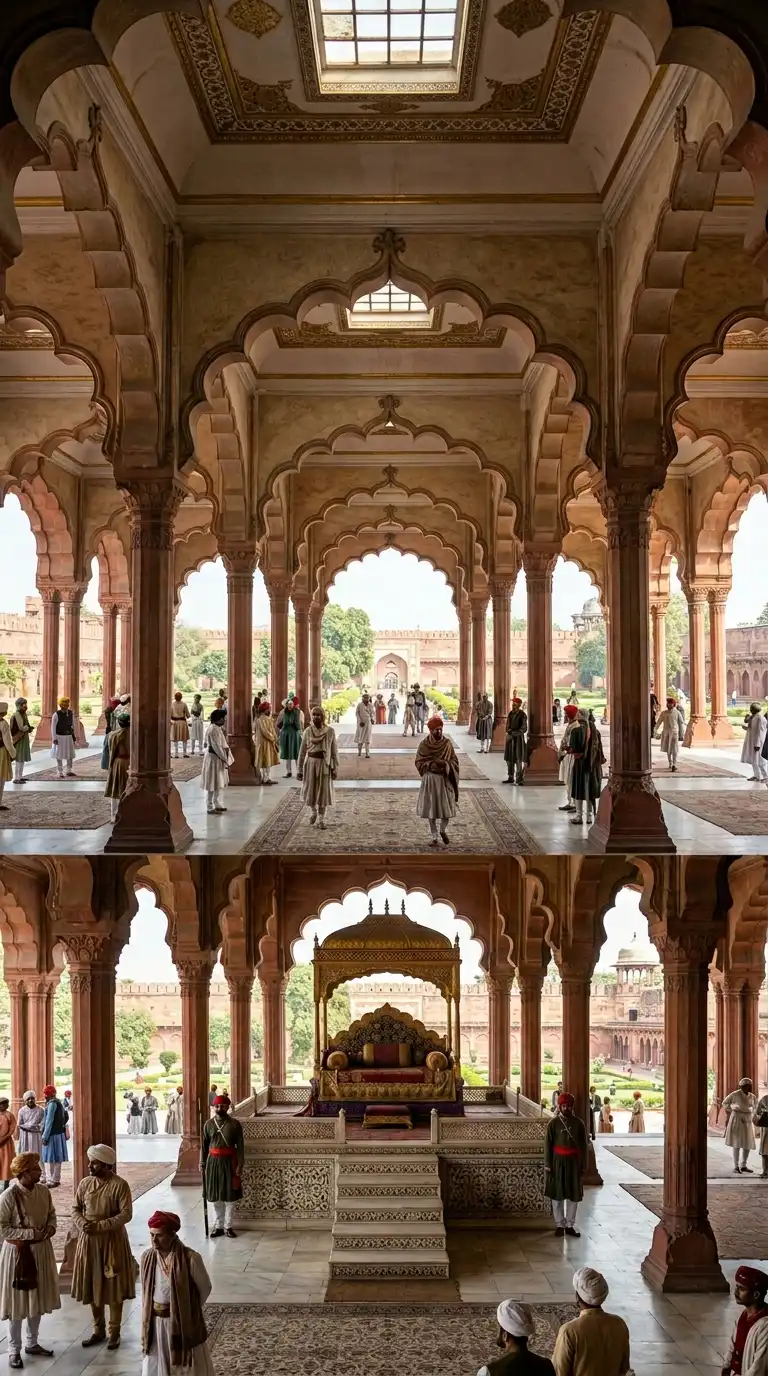
The Diwan-i-Aam is the Hall of Public Audience. The hall is a large, open space with a throne platform at one end. The hall is supported by columns. The roof is flat or vaulted. The hall is connected to the court outside.
The Diwan-i-Aam in the Red Fort, Delhi, is the defining example. The emotional effect is public, imperial, and accessible.
Quick Tips
- The hall must be open on three sides for public access.
- The throne platform must be at one end, raised.
- The columns should be slender and closely spaced.
6. The Diwan-i-Khas
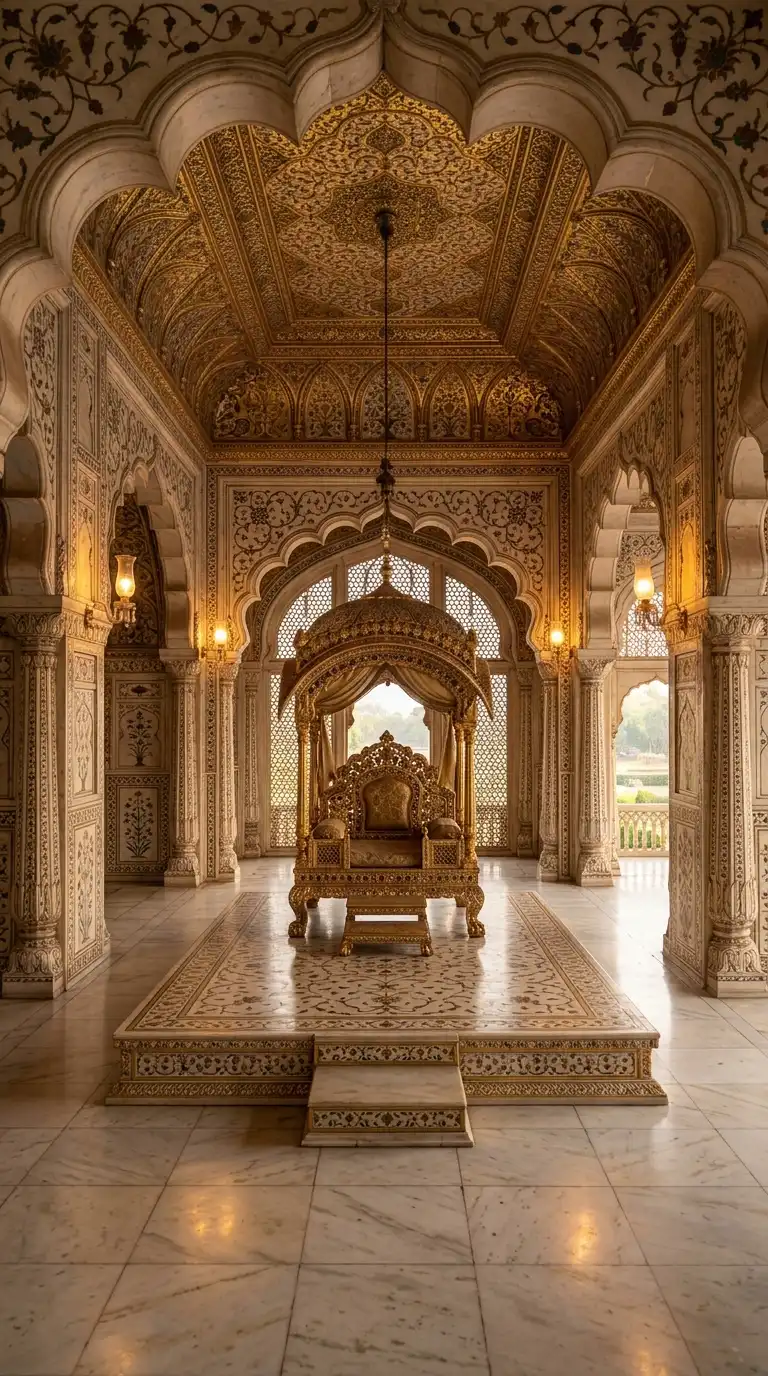
The Diwan-i-Khas is the Hall of Private Audience. The hall is smaller and more ornate than the Diwan-i-Aam. The hall is decorated with marble inlay, carving, and gilding. The Peacock Throne once stood here.
The Diwan-i-Khas in the Red Fort, Delhi, is the defining example. The emotional effect is private, imperial, and luxurious.
Quick Tips
- The hall should be smaller and more ornate than the Diwan-i-Aam.
- The decoration should include marble inlay and carving.
- The throne should be at the centre.
7. The Pietra Dura (Marble Inlay)
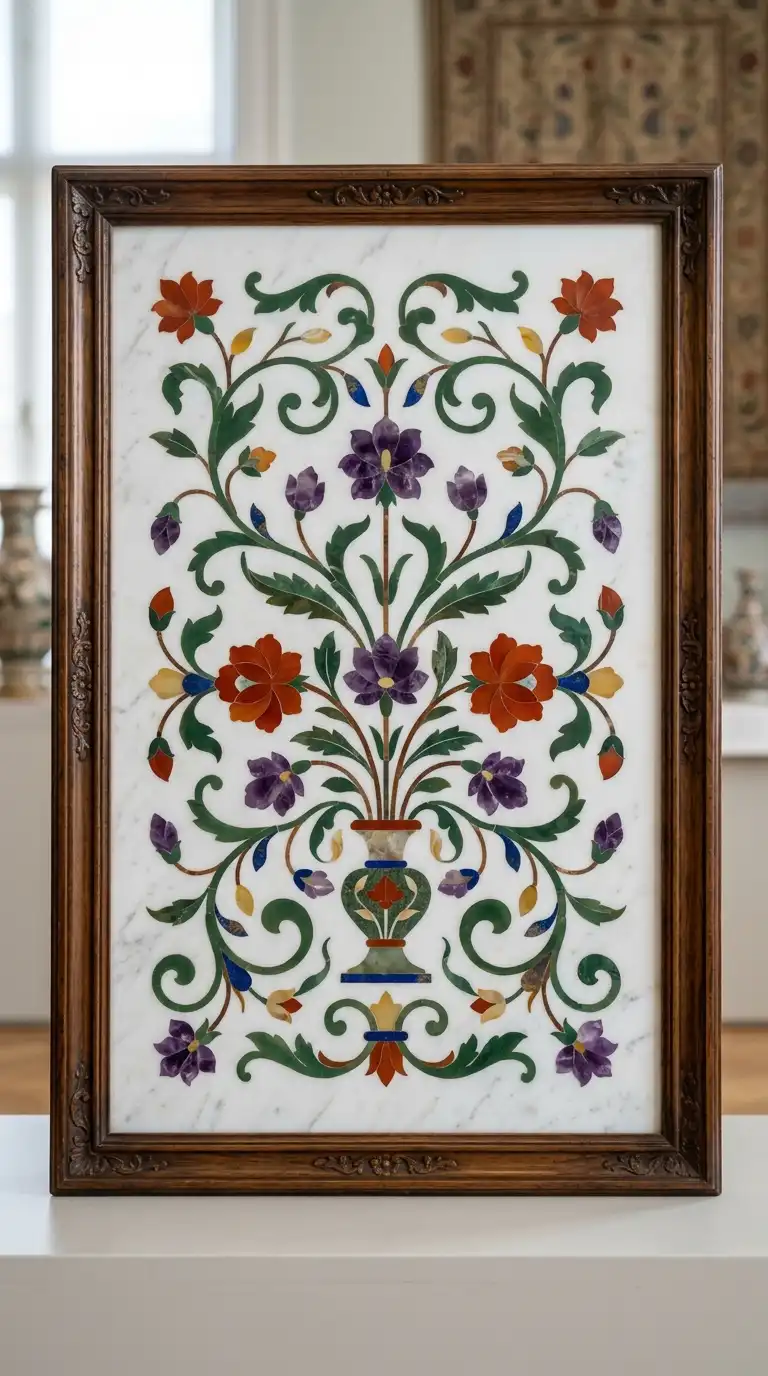
Pietra dura is the art of inlaying coloured stones into white marble. The stones are cut precisely to fit together. The designs are floral or geometric. Pietra dura is used on tombstones, cenotaphs, and palace walls.
The pietra dura on the Taj Mahal’s cenotaphs is the defining example. The emotional effect is precious, intricate, and floral.
Quick Tips
- The base must be white marble.
- The inlay stones must be semiprecious: jade, amethyst, carnelian, lapis lazuli.
- The design must be floral or geometric, not figurative.
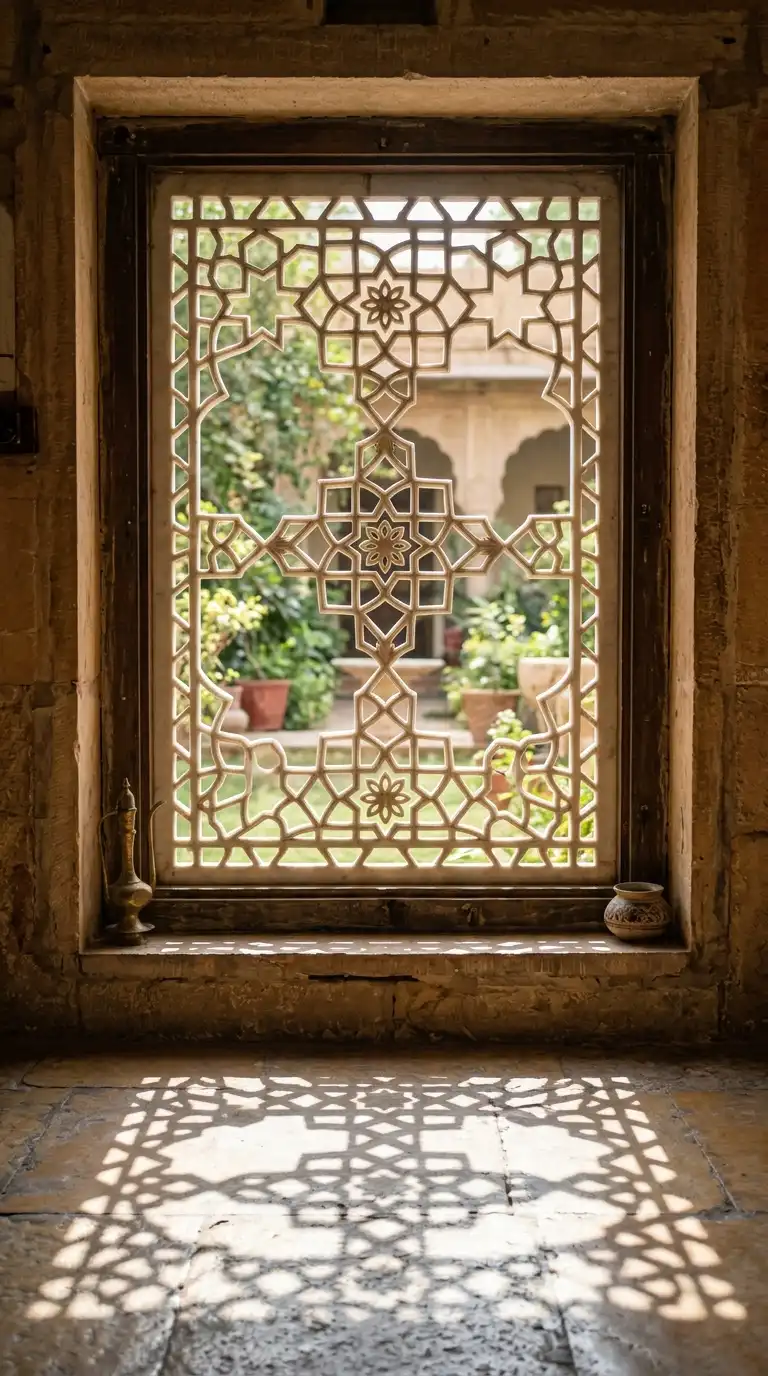
8. The Jali Screen
The jali is a perforated stone screen. The screen is carved with geometric or floral patterns. The jali admits light and air while providing privacy and shade. The screen is often used in windows, balconies, and railings.
The jali screens in the Taj Mahal’s mosque and in Fatehpur Sikri are defining examples. The emotional effect is patterned, private, and luminous.
Quick Tips
- The screen must be carved from a single slab of stone (marble or red sandstone).
- The pattern must be geometric or floral.
- The openings should be smaller than a fist for privacy.
9. The Iwan
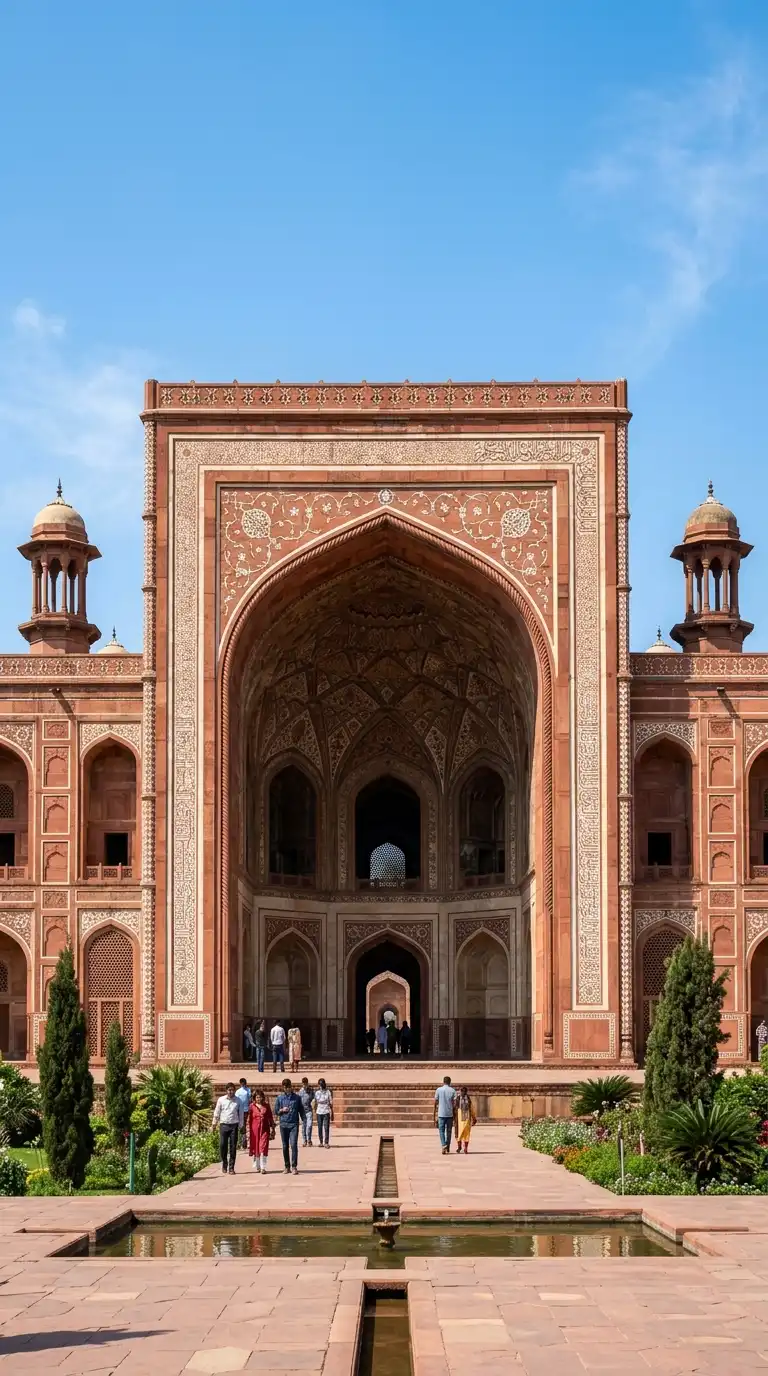
The iwan is a vaulted hall open to the courtyard on one side. The iwan is framed by a pishtaq — a tall, decorated portal. The iwan is used as an entrance or a prayer niche. In Mughal architecture, the iwan is often the main entrance to a tomb or mosque.
The iwan of the Taj Mahal is the defining example. The emotional effect is axial, monumental, and welcoming.
Quick Tips
- The iwan must be a vaulted hall open on one side.
- The pishtaq must be taller than the iwan arch.
- The iwan should be centrally located on the facade.
10. The Charbagh Pavilion
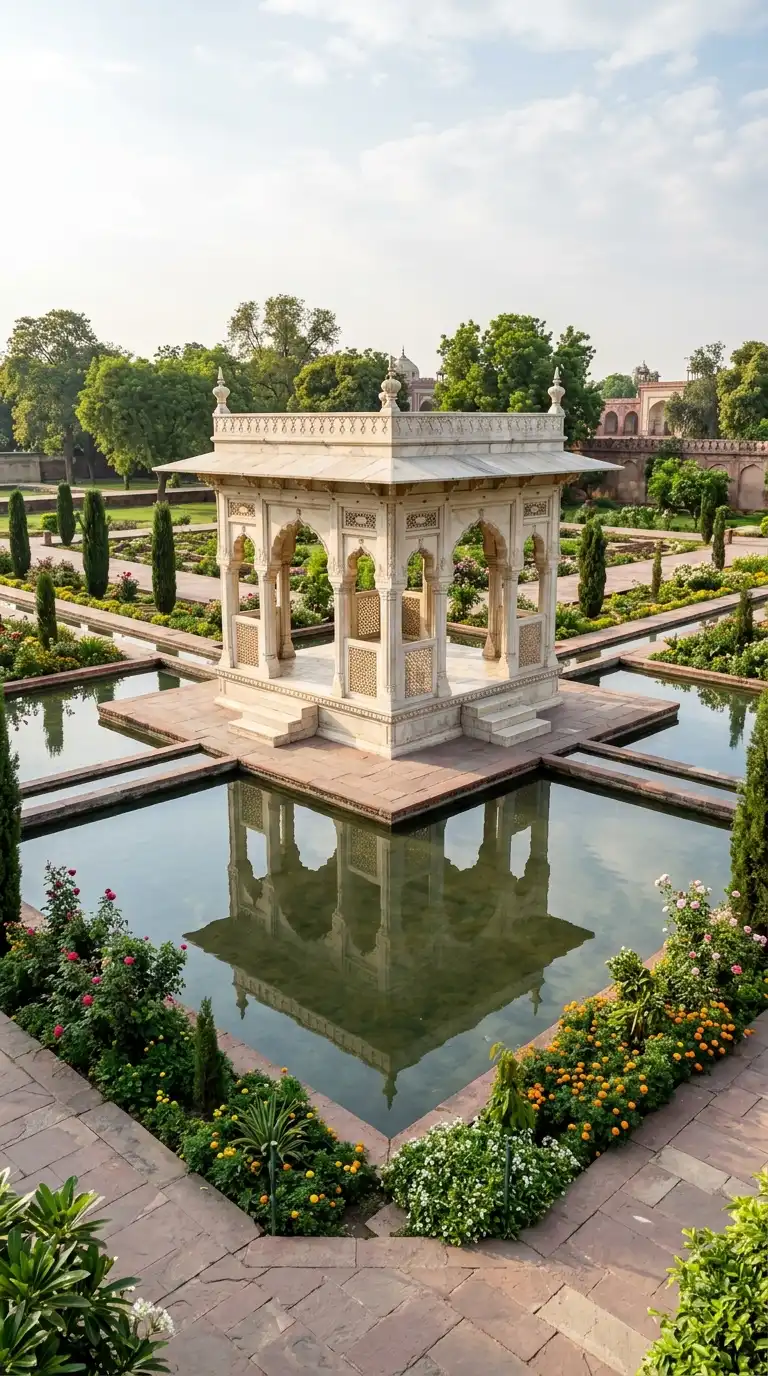
The charbagh pavilion is a small garden pavilion set within a four-part garden. The pavilion is open on all four sides, with arches and columns. The roof is flat or domed. The pavilion sits at the intersection of water channels.
The pavilions in the Shalimar Gardens, Lahore, are defining examples. The emotional effect is open, garden-framed, and refreshing.
Quick Tips
- The pavilion must be open on all four sides.
- The pavilion should sit at the intersection of water channels.
- The roof should be flat or a shallow dome.
11. The Mughal Mosque
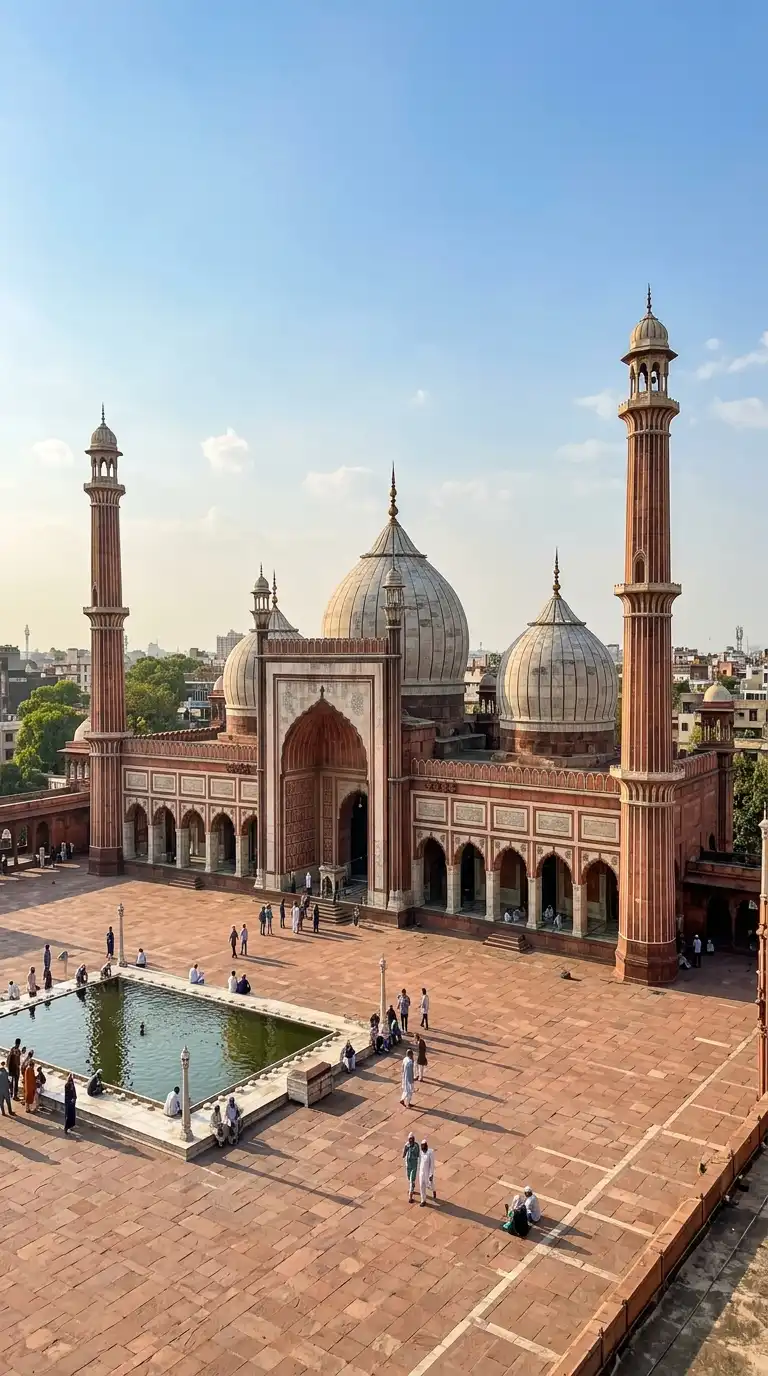
The Mughal mosque combines Persian and Indian elements. The mosque has a large iwan, a bulbous dome, and slender minarets. The prayer hall is a single space or has three domes. The courtyard has an ablution tank.
The Badshahi Mosque in Lahore (1673) is the defining example. The emotional effect is imperial, monumental, and symmetrical.
Quick Tips
- The prayer hall should have three domes (one large, two small).
- The minarets should be slender and at the corners.
- The courtyard should have a central ablution tank.
12. The Serai (Caravanserai)
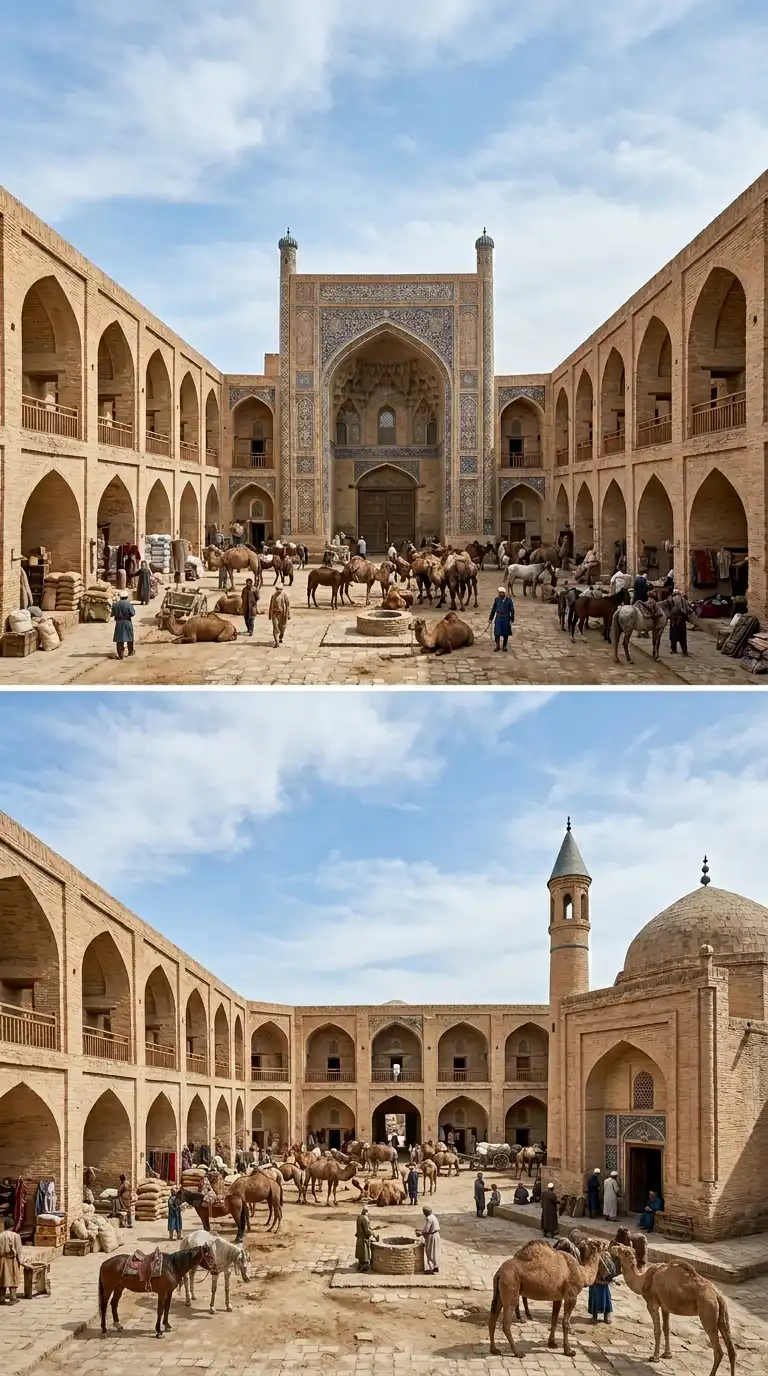
The serai was a roadside inn for merchants and travellers. The serai has a large courtyard surrounded by arcaded rooms. The courtyard is large enough for camels and horses. The gateway is monumental. A small mosque is often attached.
The serai is a functional building, but Mughal serais are beautifully built. The emotional effect is protective, communal, and commercial.
Quick Tips
- The courtyard must be large enough for animals.
- The gateway must be monumental with an iwan.
- A small mosque should be attached.
13. The Baradari
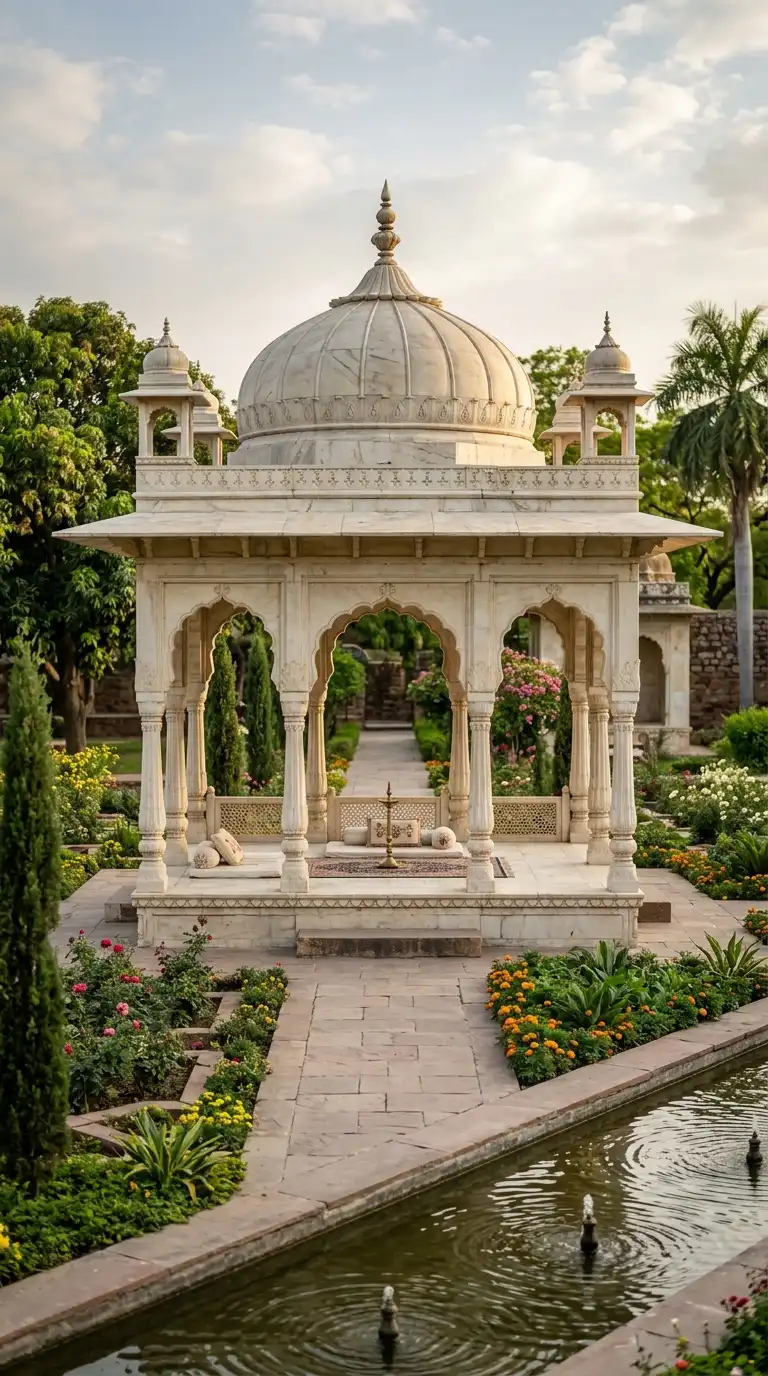
The baradari is a pavilion with twelve doors (barah dari). The pavilion is open on all sides, with three arches on each facade. The roof is flat or domed. The baradari is used for pleasure, music, and poetry.
The baradari in the Shalimar Gardens, Lahore, and in the Red Fort, Delhi, are defining examples. The emotional effect is open, airy, and poetic.
Quick Tips
- The pavilion must have twelve doors (three on each side).
- The pavilion must be open on all sides.
- The roof should be flat or a shallow dome.
14. The Stepwell (Baoli)
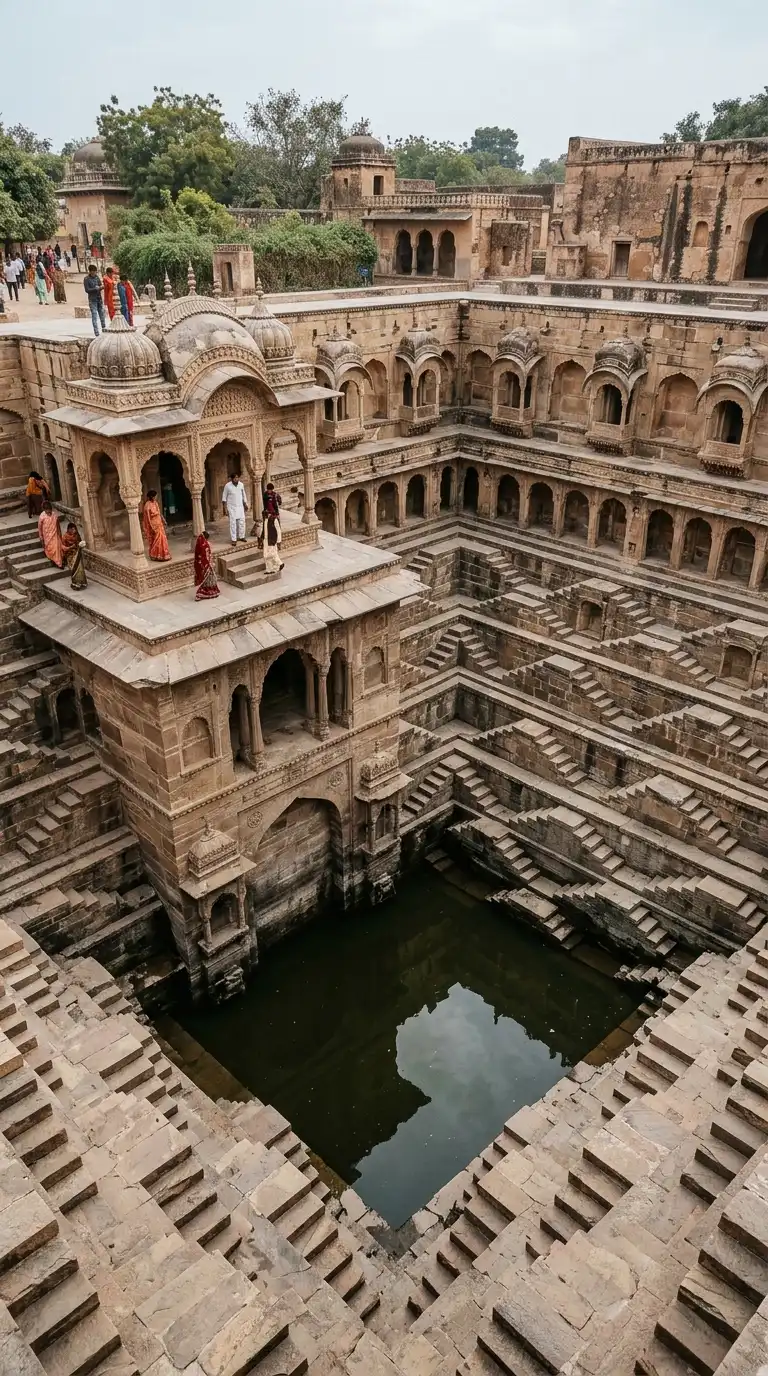
The stepwell is a well with steps descending to the water. The stepwell is a public water source and a place for gathering. The stepwell is often decorated with arched niches and small pavilions. The water is cool, and the steps create a shaded microclimate.
The stepwells of Gujarat and Rajasthan were built during the Mughal period. The emotional effect is cool, communal, and descending.
Quick Tips
- The well must have steps descending on three or four sides.
- The walls should have arched niches for shade.
- A small pavilion should be at the top.
Final Thoughts
Mughal architecture is the architecture of paradise on earth. The gardens are paradise. The domes are the vault of heaven. The inlay is the stars. The light passing through jali screens is divine. Mughal architecture is not just beautiful — it is symbolic.
These 14 Mughal designs are not mutually exclusive. A Mughal tomb can have a char bagh garden, a bulbous dome, iwans, jali screens, and pietra dura. A Red Fort can have a Diwan-i-Aam, a Diwan-i-Khas, and a baradari. A mosque can have three domes, slender minarets, and an ablution tank. The best Mughal architecture is not the most restrained — it is the most perfect. It is the architecture of symmetry, light, and paradise.