Japanese architecture is a tradition of remarkable continuity and subtle transformation. For over a thousand years, Japanese buildings have been defined by the same core principles: wood construction, modular tatami-based planning, deep eaves, translucent screens, and a fluid relationship between inside and outside. Modern Japanese architecture has taken these principles and translated them into concrete, steel, and glass.
These 18 Japanese architecture designs span from ancient shrines to contemporary masterpieces. Each design includes defining characteristics, key examples, and design principles.
1. The Shinto Shrine
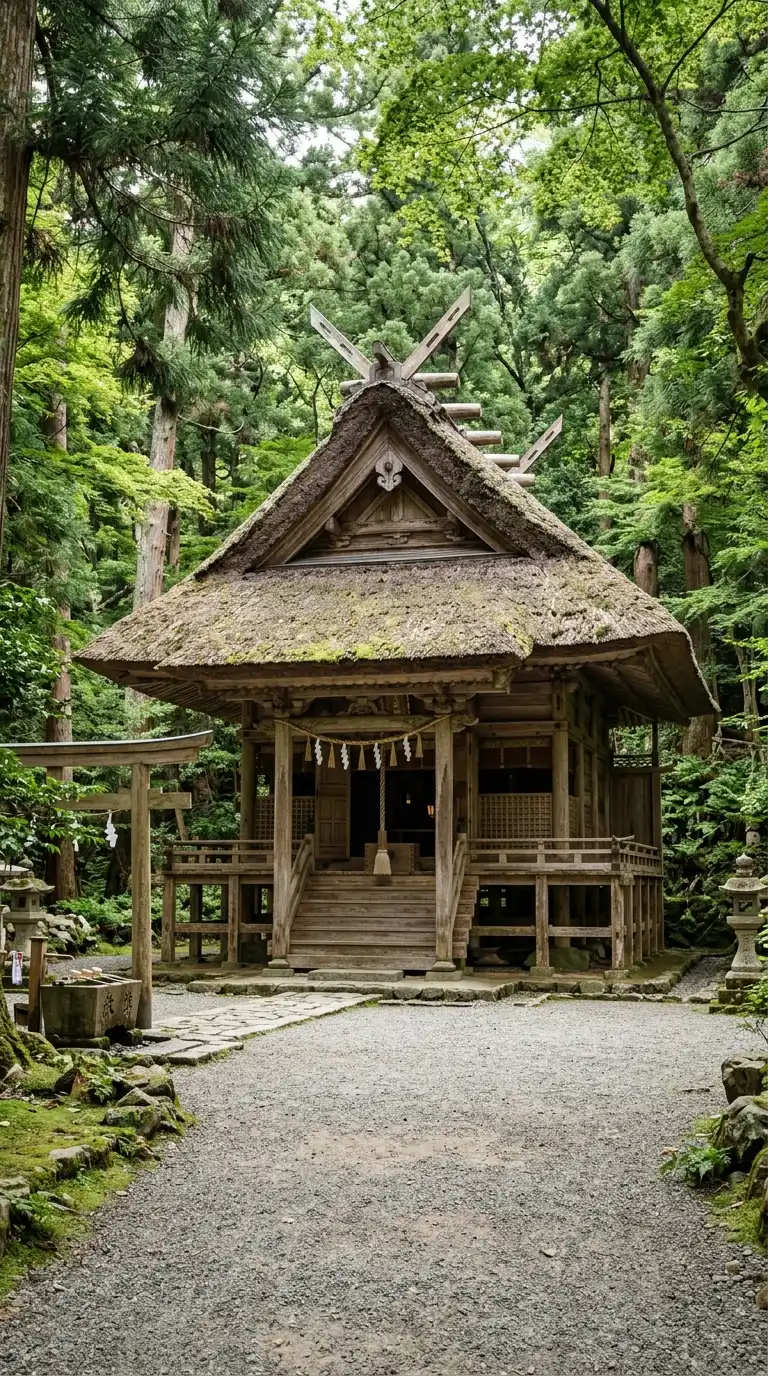
The Shinto shrine is the most ancient Japanese building type. The shrine is built of unfinished Japanese cypress (hinoki), with a steeply pitched roof of thatch or bark. The roof has large, crossed finials (chigi) at the gable ends. The shrine is raised on posts, not on a stone foundation.
The Ise Grand Shrine (rebuilt every 20 years since the 7th century) is the defining example. The emotional effect is pure, ancient, and deeply Japanese.
Quick Tips
- Use unfinished cypress wood — no paint or varnish.
- The roof must be steep with crossed finials at the gable ends.
- The building must be raised on posts, not a stone foundation.
2. The Buddhist Temple (Wayō Style)
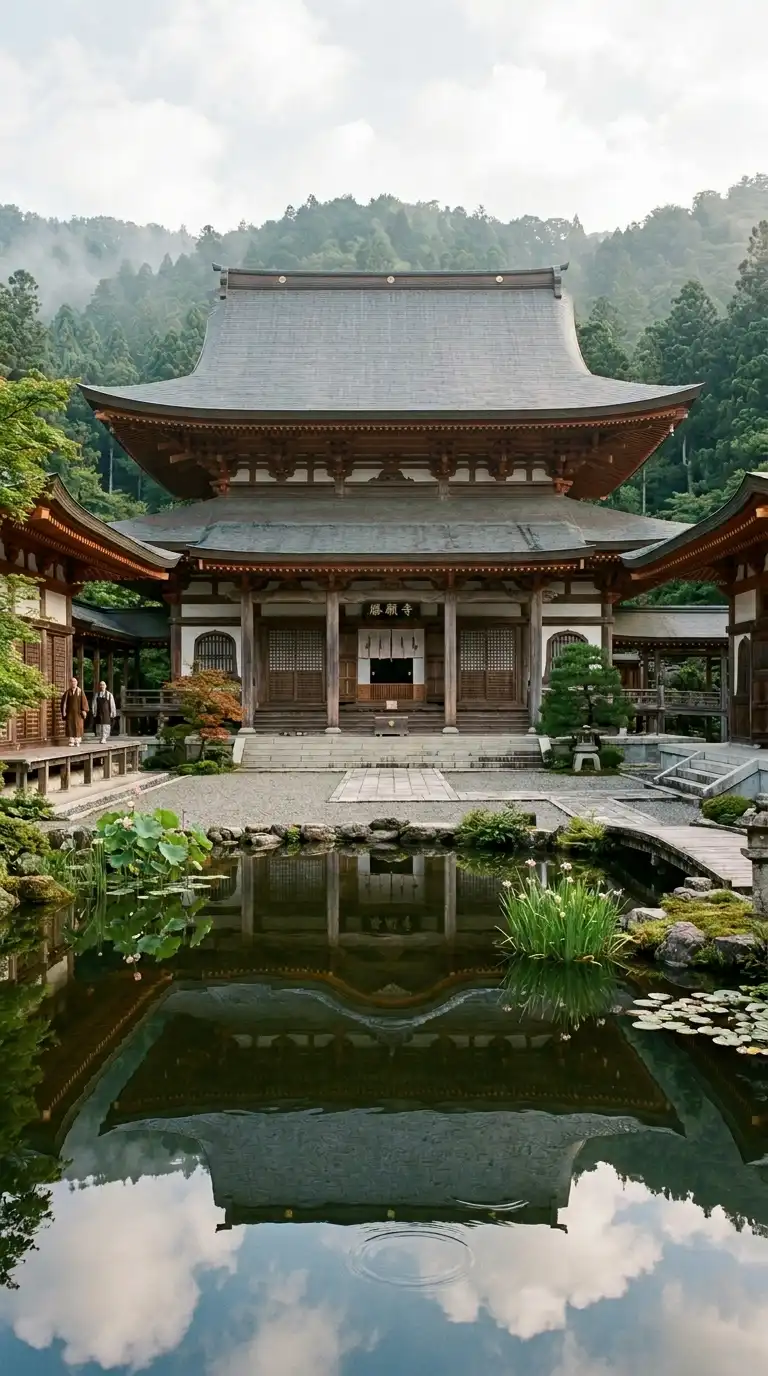
The Wayō (Japanese style) Buddhist temple developed in the Heian period (794-1185). The temple has a simple, symmetrical plan. The roof is large and gently curved, with deep eaves. The building is made of wood, with minimal decoration. The Phoenix Hall at Byōdō-in (1053) is the defining example.
The emotional effect is peaceful, symmetrical, and refined.
Quick Tips
- The plan should be symmetrical with a central hall and two wings.
- The roof must be large with deep eaves and gentle curves.
- Use natural wood with occasional vermilion accents.
3. The Zen Buddhist Temple
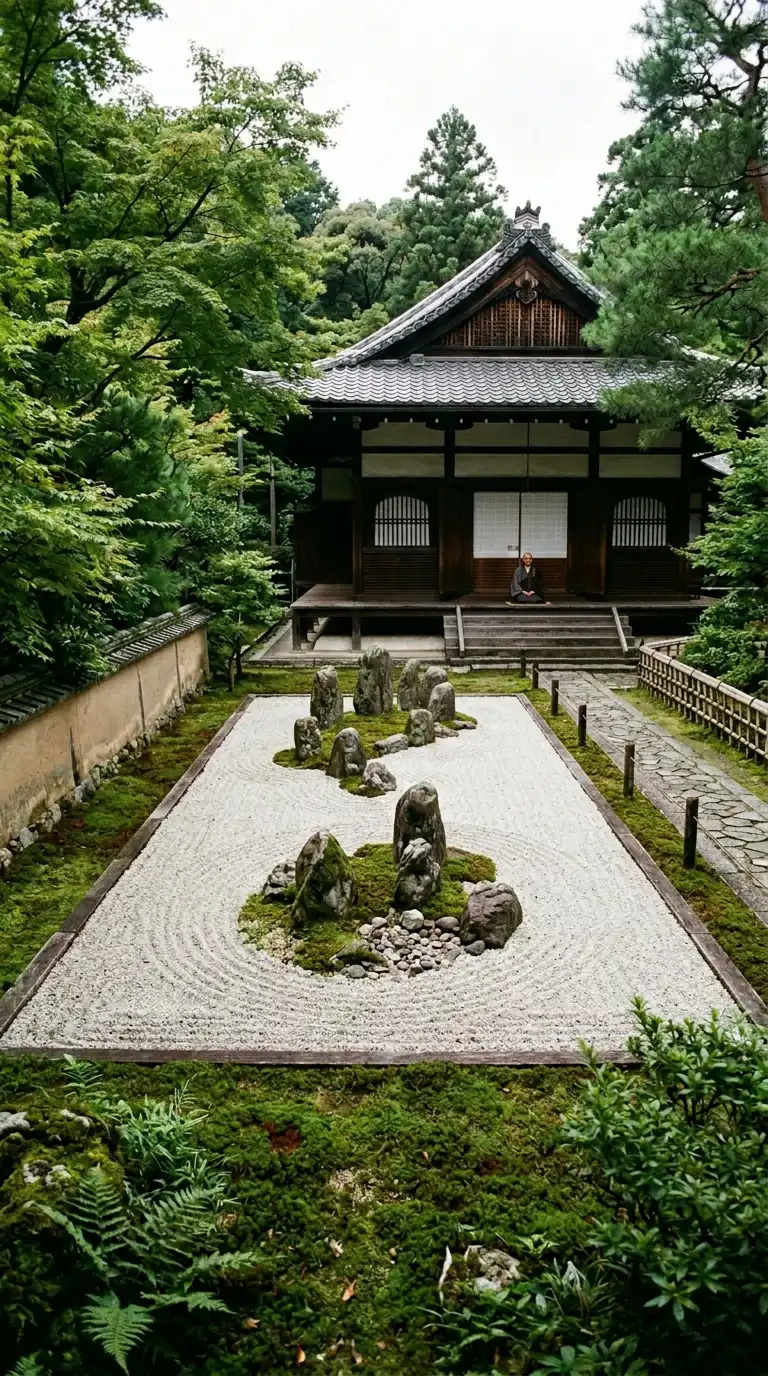
The Zen Buddhist temple is austere and minimalist. The buildings are simple, dark wood structures with dark roofs. The temple includes a rock garden (karesansui) for meditation. The garden has raked gravel and carefully placed stones, representing water and mountains.
The Ryōan-ji temple in Kyoto (15th century) is the defining example. The emotional effect is austere, meditative, and abstract.
Quick Tips
- The architecture should be dark, simple, and unadorned.
- The rock garden should have raked gravel and fifteen stones.
- Use natural materials: wood, stone, gravel, moss.
4. The Shoin-Zukuri Style
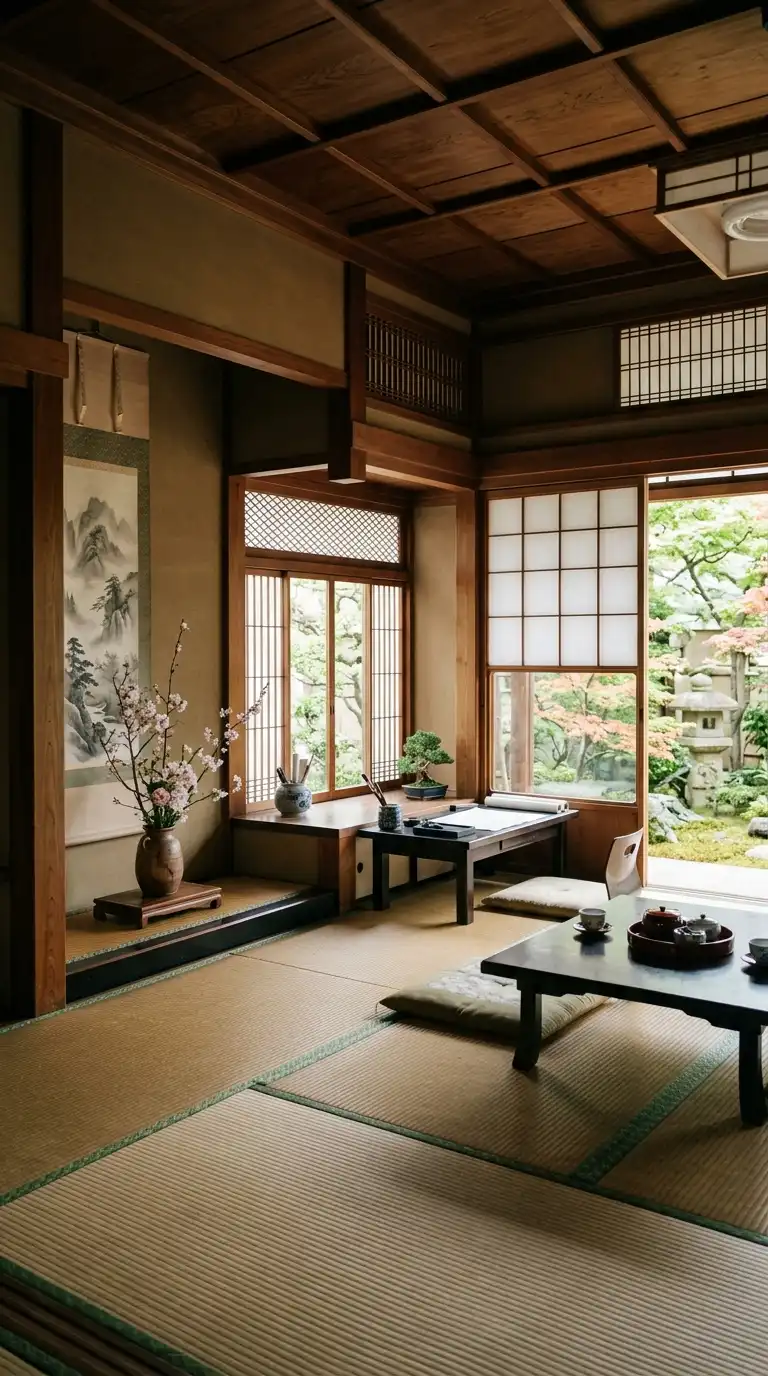
Shoin-zukuri is the residential style of the Muromachi and Momoyama periods (14th-16th centuries). The style features a tokonoma (alcove for art), chigaidana (shelves), and tsukeshoin (a built-in desk by a window). The floors are covered with榻榻米 (rice straw mats). Sliding doors (fusuma) painted with landscapes divide rooms.
The emotional effect is refined, scholarly, and distinctly Japanese.
Quick Tips
- Every room must have a tokonoma alcove for art or flowers.
- Floors must be covered with榻榻米 in a standard grid.
- Sliding doors (fusuma) should have painted landscapes.
5. The Sukiya-Zukuri Teahouse
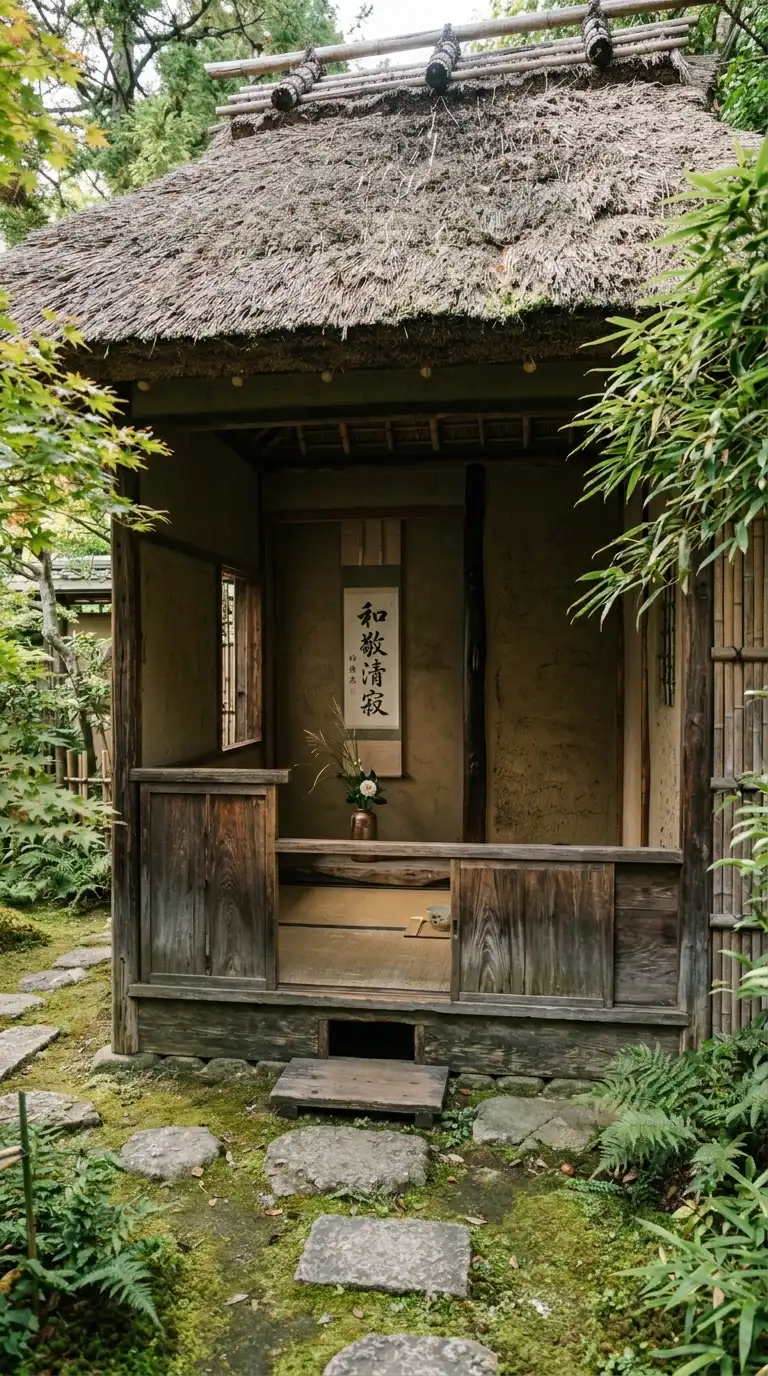
Sukiya-zukuri is the style of the Japanese teahouse (chashitsu). The building is small, rustic, and simple. The entrance is a small crawl-through door (nijiriguchi), forcing humility. The interior is a single榻榻米-sized room. Natural materials — bamboo, mud, wood — are left unfinished.
The Tai-an teahouse by Sen no Rikyū (16th century) is the defining example. The emotional effect is humble, rustic, and meditative.
Quick Tips
- The entrance must be a small crawl-through door (nijiriguchi).
- The interior should be one or two榻榻米 in size.
- Use natural, unfinished materials: bamboo, mud, rough wood.
6. The Castle (Tenshu)
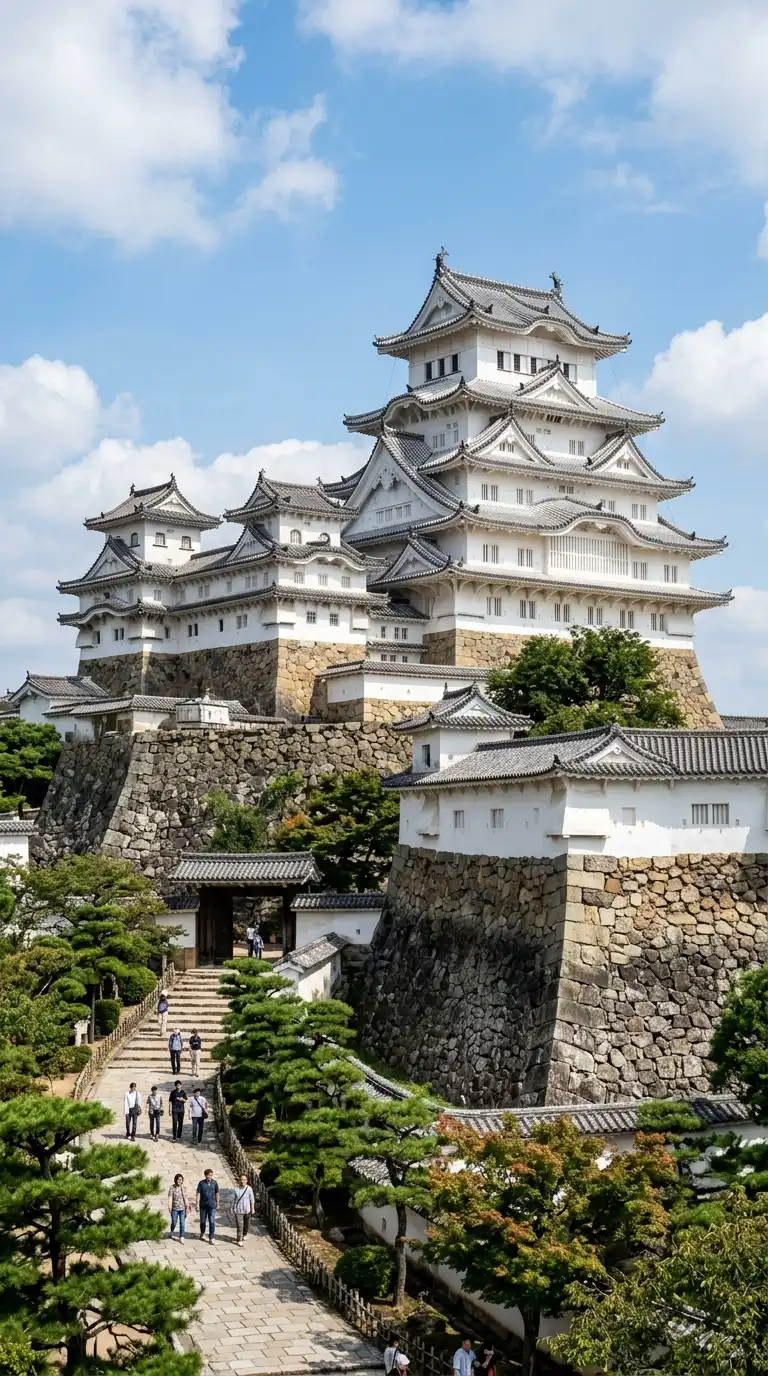
The Japanese castle (tenshu) is a defensive structure of stone and wood. The castle has a massive stone base, white plaster walls, and multiple roofs. The roofs are curved and layered, with decorative gables (kayahafu). The castle is asymmetrical and vertical.
Himeji Castle (1609) is the defining example. The emotional effect is vertical, defensive, and monumental.
Quick Tips
- The stone base must be massive and sloping.
- White plaster walls must dominate the upper floors.
- The roofs must be layered and asymmetrical.
7. The Machiya Townhouse
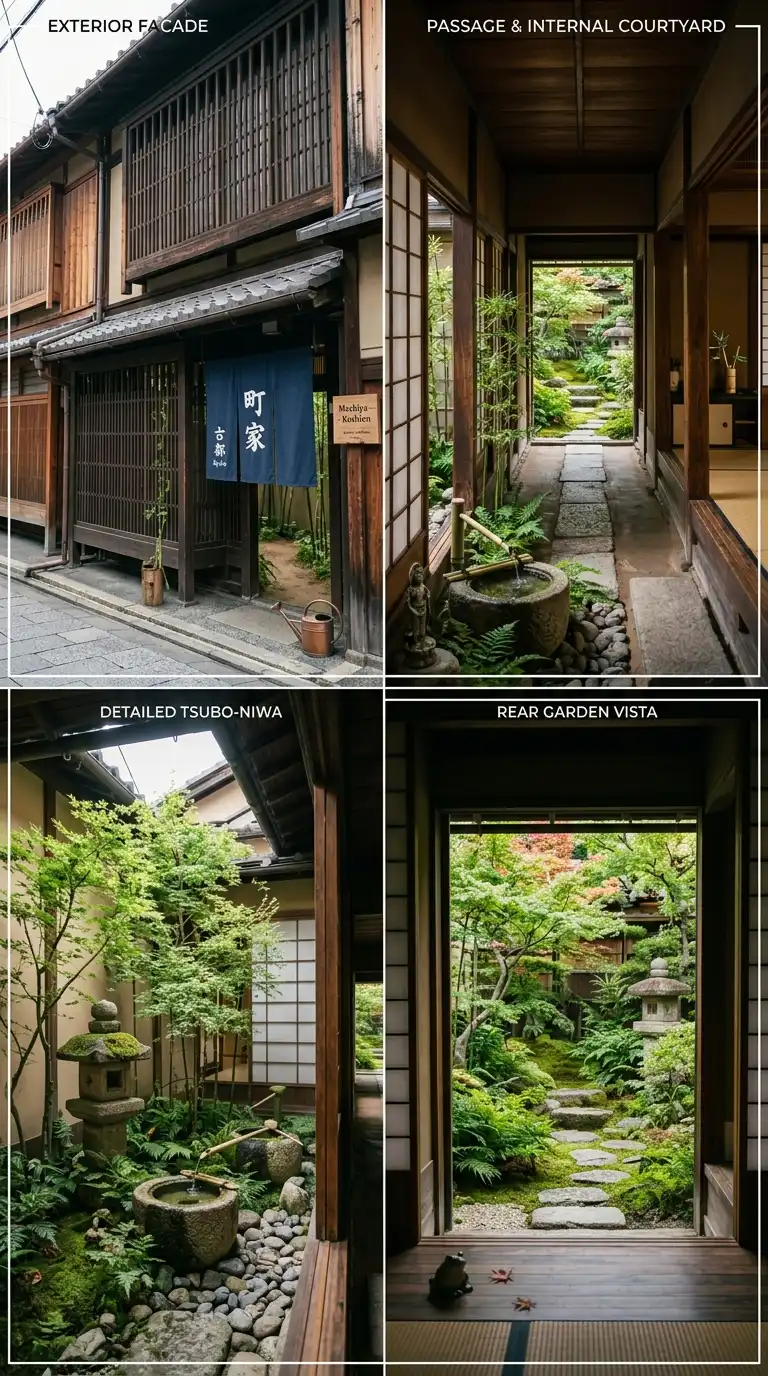
The machiya is the traditional Kyoto townhouse. The building is narrow (4-5 metres wide) but deep (20 metres or more). The front has a wooden lattice facade. A long passage (tōriniwa) leads from the street to the rear garden. The interior has a small courtyard (tsuboniwa) bringing light and air to the centre.
The emotional effect is urban, narrow, and unexpectedly deep.
Quick Tips
- The width should be 4-5 metres, depth 15-25 metres.
- The front facade must have a wooden lattice (kōshi).
- A small courtyard (tsuboniwa) must be in the centre of the plan.
8. The Minka Farmhouse
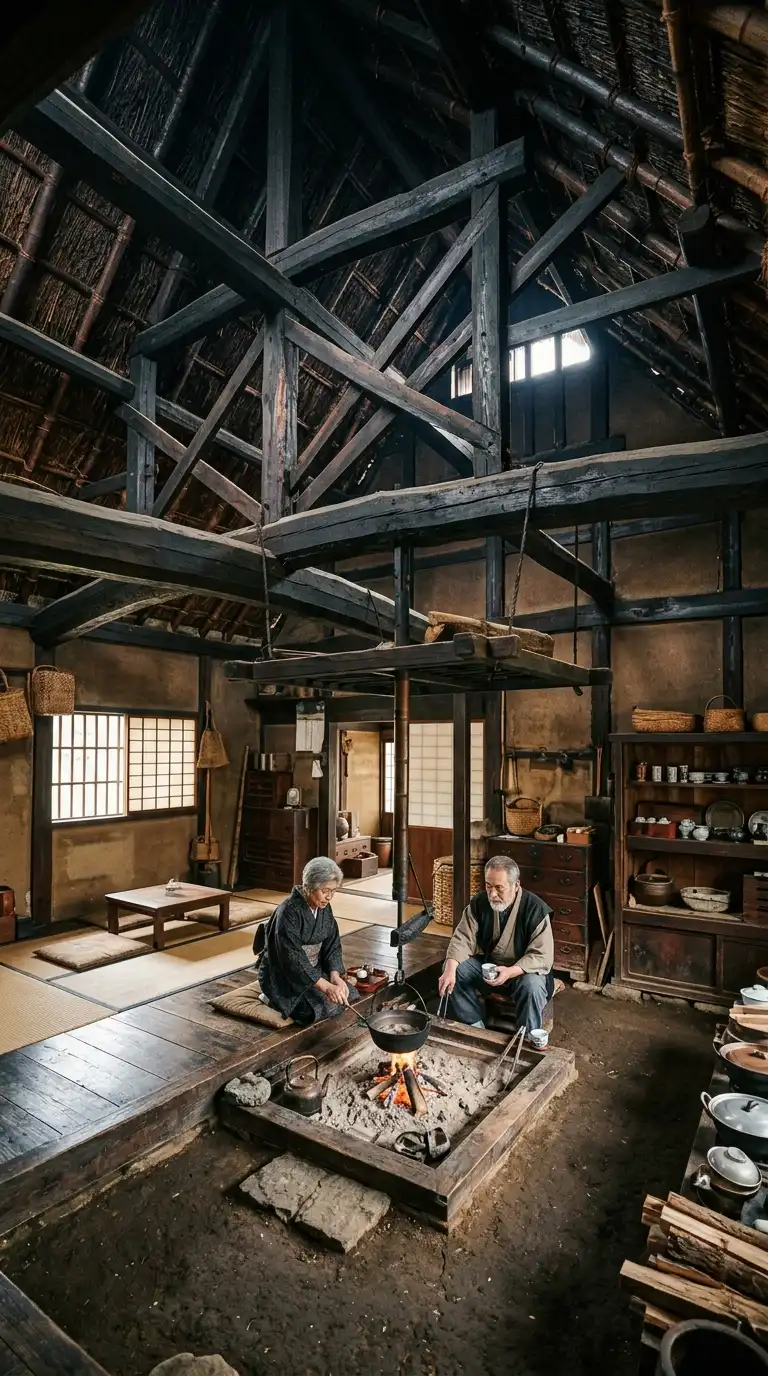
The minka is the traditional Japanese farmhouse. The building has a steep thatched or shingled roof. The roof structure is massive and visible inside. The floor is earth in the kitchen area, raised wood in the living area. A sunken hearth (irori) is the centre of family life.
The emotional effect is rustic, massive, and domestic.
Quick Tips
- The roof must be steep and thatched or shingled.
- The roof structure must be visible from inside.
- A sunken hearth (irori) must be the centre of the living space.
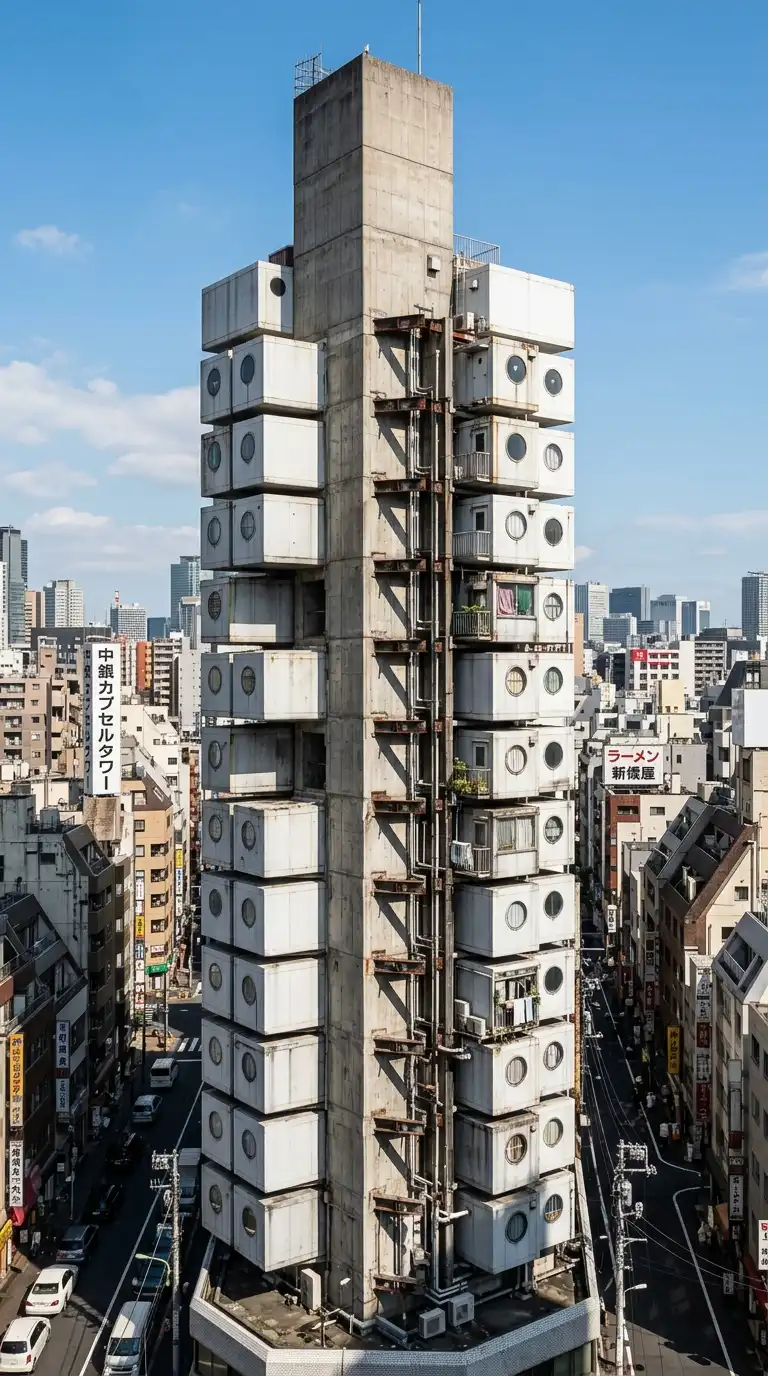
9. The Metabolist Capsule Tower
Metabolism was a Japanese architectural movement of the 1960s. Metabolist buildings have permanent cores with replaceable capsule units. The capsules are prefabricated and can be swapped out over time. The building is designed for growth and change.
Kisho Kurokawa’s Nakagin Capsule Tower in Tokyo (1972) is the defining example. The emotional effect is futuristic, adaptable, and technologically optimistic.
Quick Tips
- The building must have a permanent core and replaceable capsules.
- Capsules must be prefabricated and standardised.
- The connection between core and capsules must be visible.
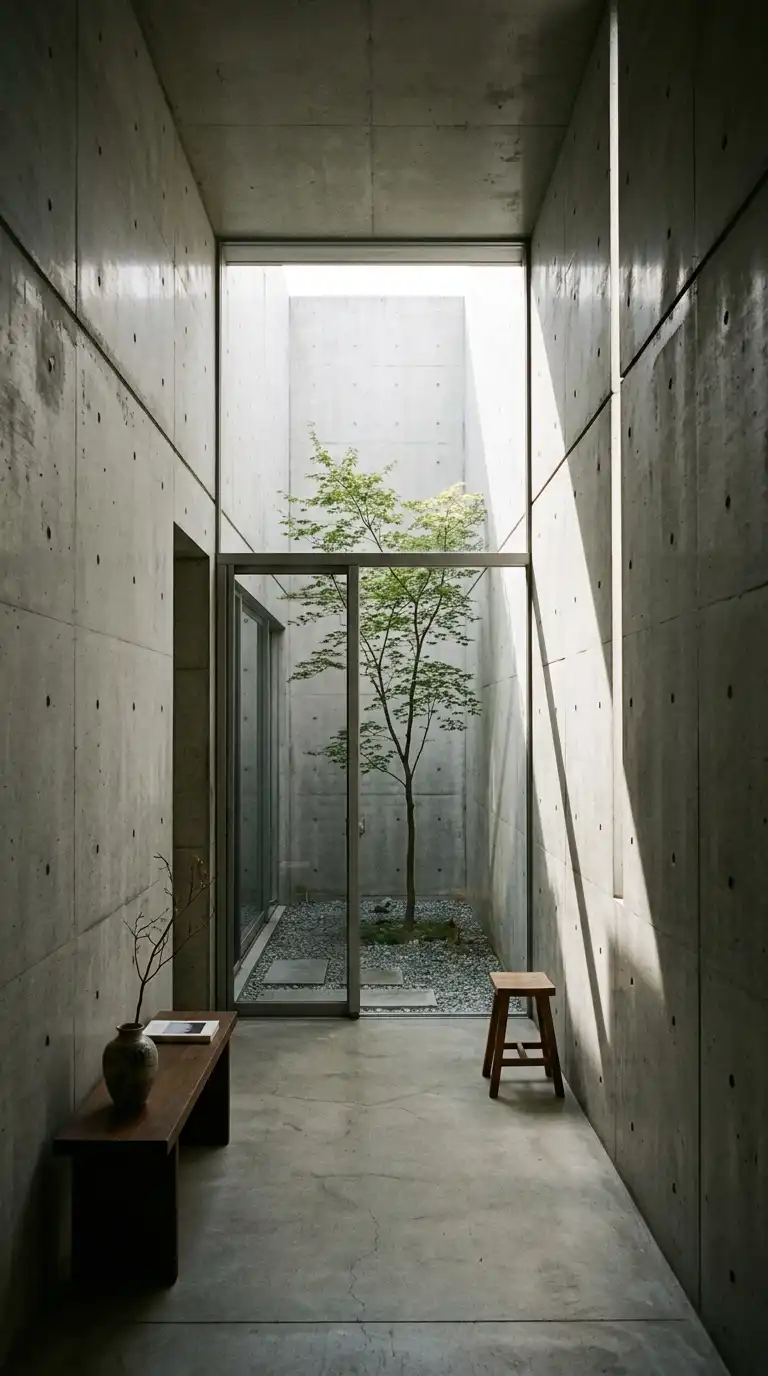
10. The Minimalist House by Tadao Ando
Tadao Ando’s houses are made of exposed concrete, with geometric forms and dramatic light. The houses are often organised around a courtyard. Light enters from above or through narrow slits. The concrete is smooth and board-formed. The space is silent and meditative.
Ando’s Row House in Sumiyoshi (1976) is the defining example. The emotional effect is silent, meditative, and precisely geometric.
Quick Tips
- Use smooth, board-formed concrete as the primary material.
- Organise the plan around a courtyard or light well.
- Light must enter dramatically from above or through narrow slits.
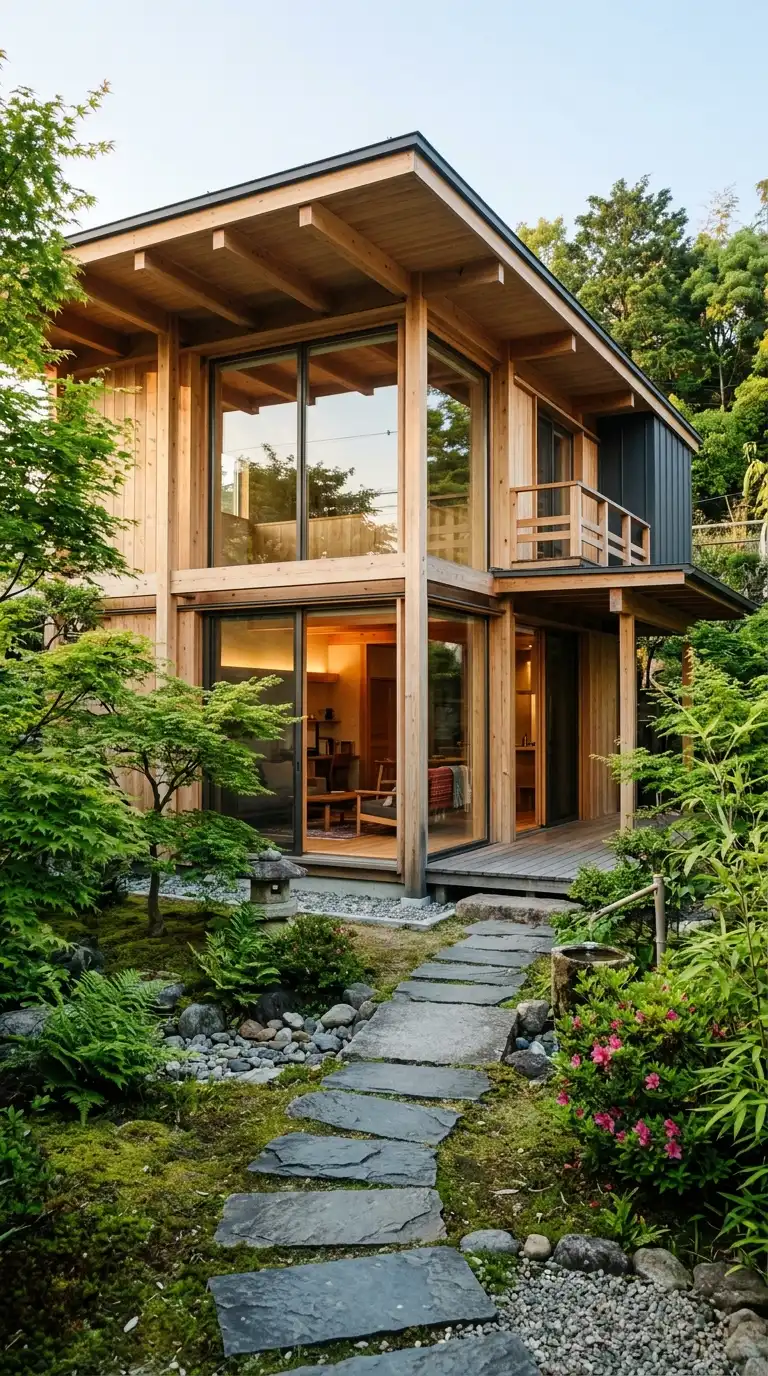
11. The Contemporary Wooden House
Contemporary Japanese wooden houses use traditional joinery and materials but with modern forms. The structure is exposed timber, often left natural. The forms are simple cubes or rectangles. Deep eaves provide shade. Large glass walls open to small gardens.
The emotional effect is warm, natural, and contemporary.
Quick Tips
- Expose the timber structure — do not hide it.
- Use traditional Japanese joinery without metal fasteners.
- The form should be simple and cubic.
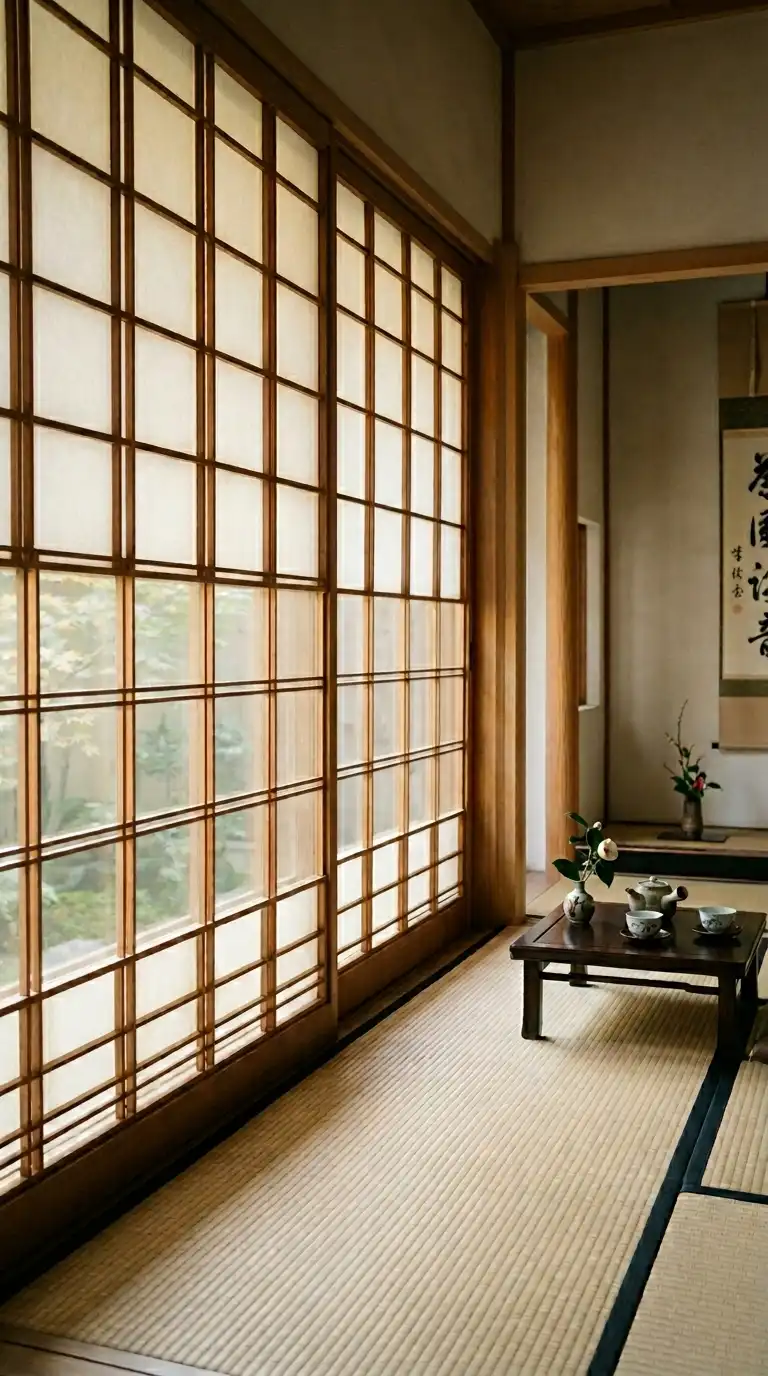
12. The Shoji Screen Interior
Shoji are translucent paper screens on wooden lattices. They slide open to connect interior and exterior, or to divide rooms. Light passes through shoji, creating soft, diffuse illumination. The wooden lattice casts delicate shadows.
This interior type is ideal for traditional and contemporary Japanese homes. The emotional effect is soft, diffuse, and luminous.
Quick Tips
- The lattice should be a simple grid of thin wooden members.
- The paper must be translucent white — not opaque.
- Shoji should be used as exterior walls and interior partitions.
13. The Engawa Veranda
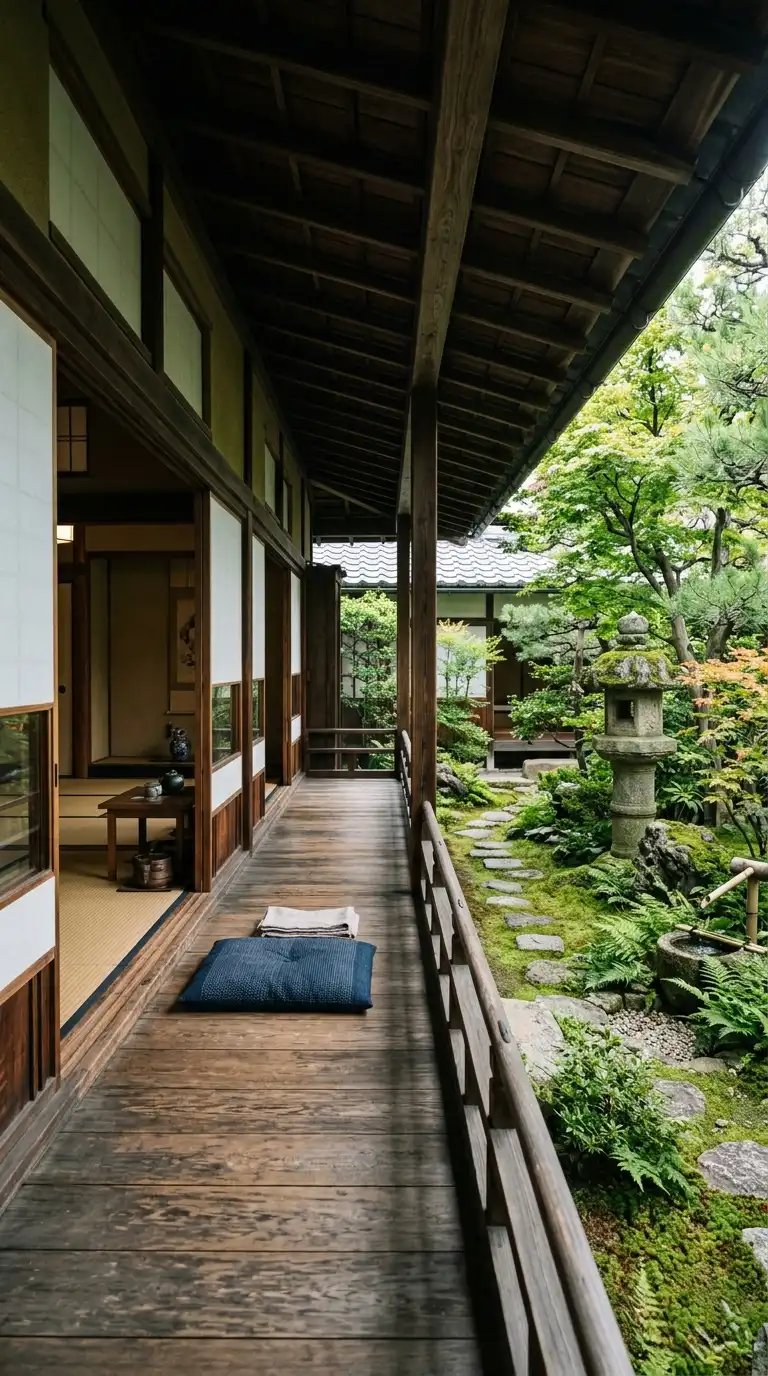
The engawa is a wooden veranda that runs along the exterior of a traditional Japanese house. It is neither inside nor outside. It is a threshold space, shaded by deep eaves. One can sit on the engawa, looking into the garden or into the interior.
The emotional effect is threshold, shaded, and contemplative.
Quick Tips
- The engawa must be at least 90cm wide for sitting.
- The floor must be unfinished wood.
- Deep eaves must shade the engawa from direct sun.
14. The Ryoan-ji Rock Garden
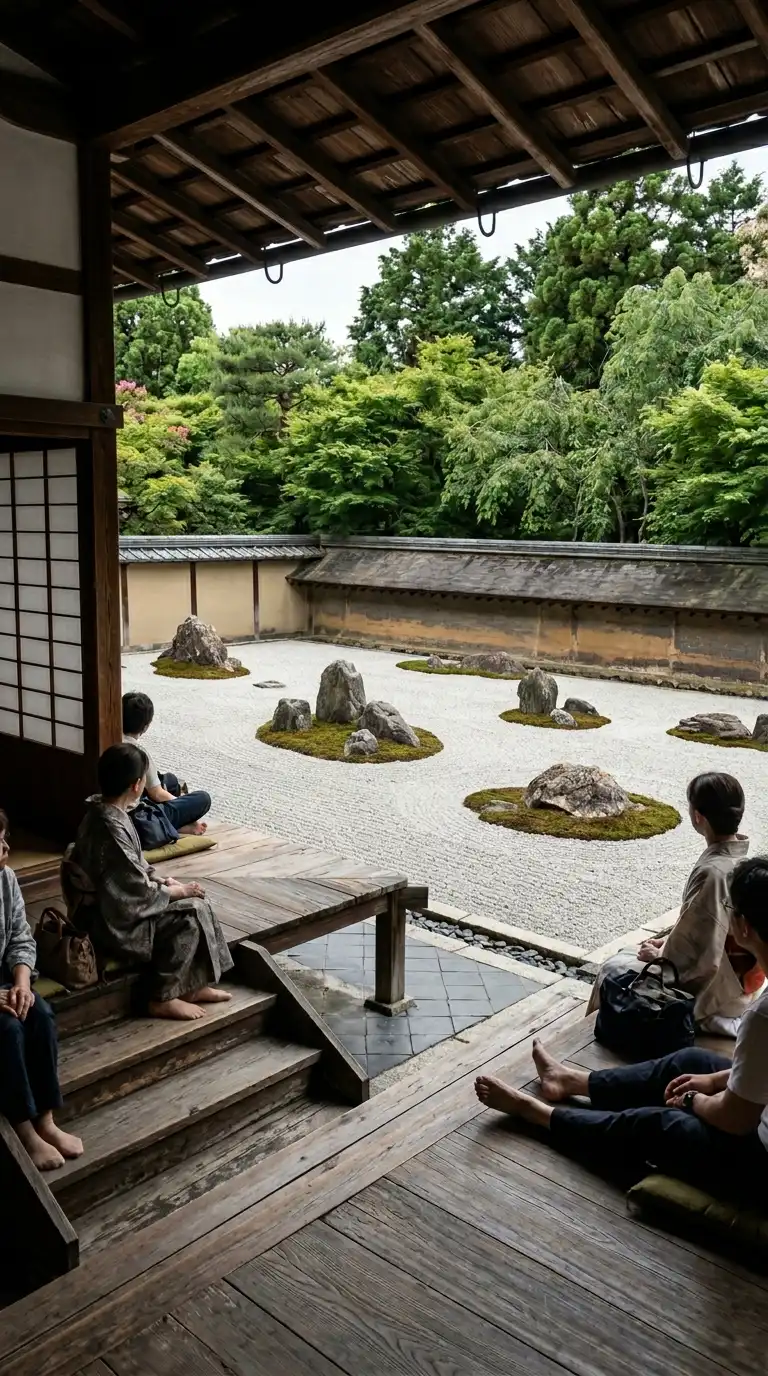
The rock garden (karesansui) at Ryoan-ji is a abstract landscape of raked gravel and fifteen stones. The stones are arranged so that one stone is always hidden from view, no matter where you sit. The garden is meant for meditation, not walking.
The emotional effect is abstract, meditative, and infinitely deep.
Quick Tips
- The gravel must be raked in straight lines around the stones.
- The stones must be arranged in small groups.
- The garden must be viewed from a seated position on a veranda.
15. The Japanese Garden Bridge
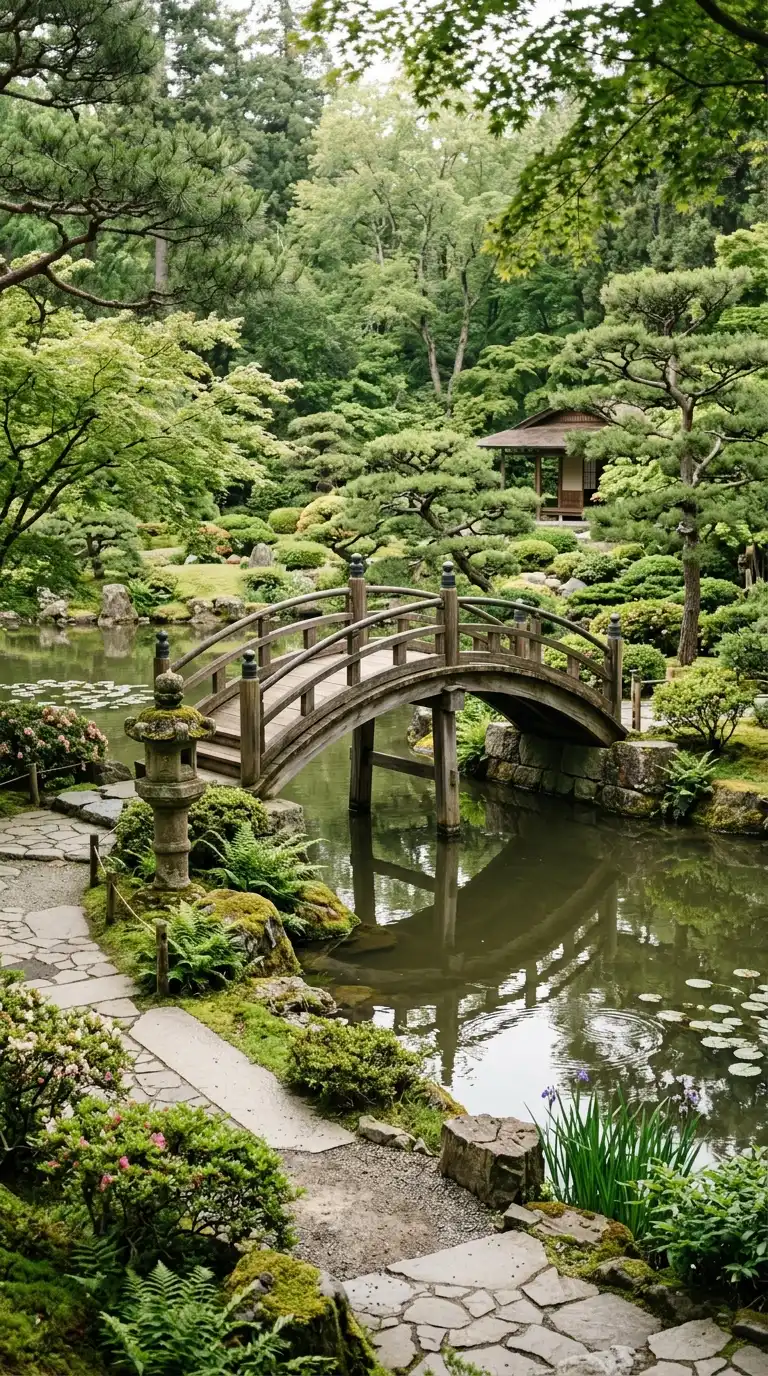
The Japanese garden bridge is a wooden bridge, often arched, over a pond or stream. The bridge is made of natural wood, with a simple railing. The bridge is part of a larger garden composition with stones, lanterns, and pruned trees.
The emotional effect is picturesque, romantic, and crafted.
Quick Tips
- The bridge should be arched, not flat.
- Use natural, unfinished wood.
- The bridge should be part of a larger garden composition.
16. The Oribe Lantern
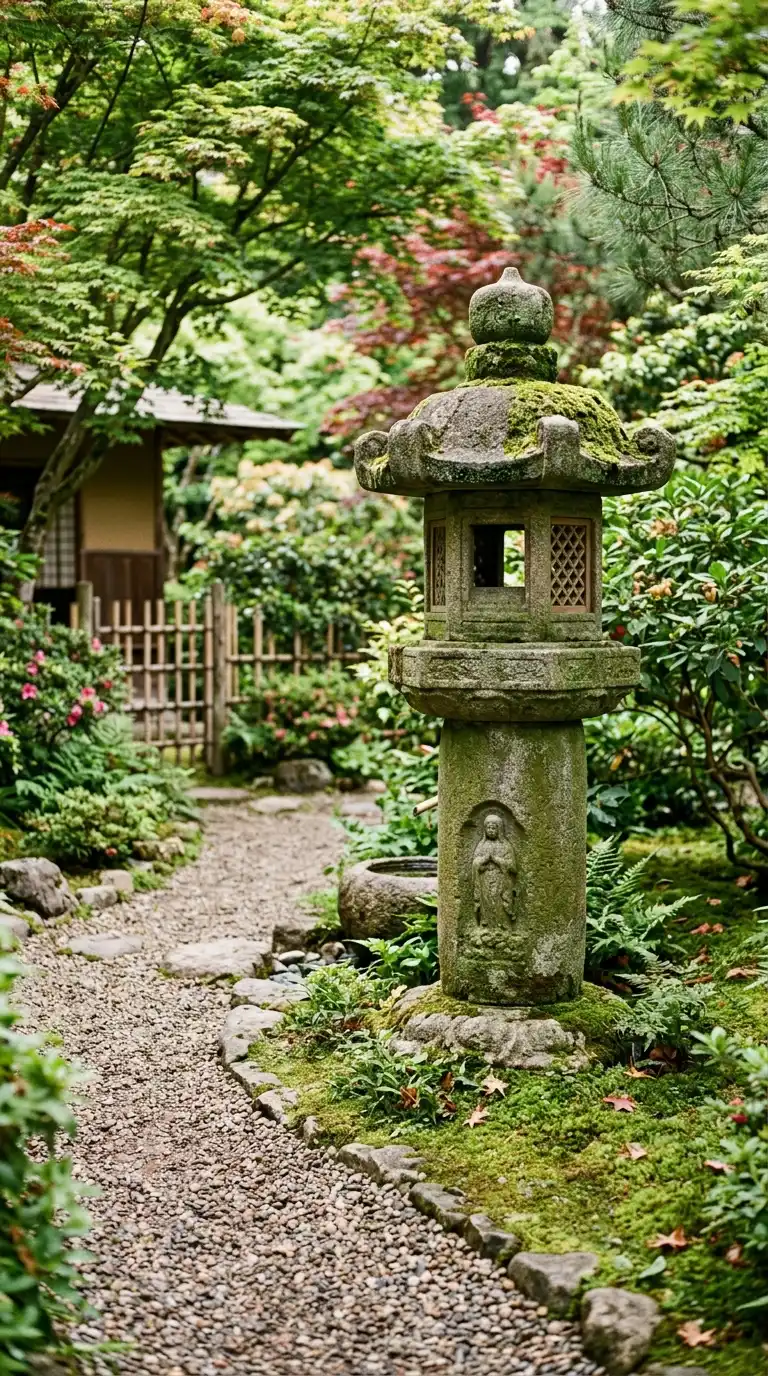
The Oribe lantern is a stone lantern used in Japanese gardens. Unlike other lanterns, the Oribe has a distinctive faceted shape and often a carved human or animal figure. The lantern is placed near water or at a path intersection.
The emotional effect is sculptural, whimsical, and crafted.
Quick Tips
- The lantern must be made of stone.
- The shape must be faceted, not cylindrical.
- A carved figure (human, animal, or demon) is characteristic.
17. The Katsura Imperial Villa
Katsura Imperial Villa in Kyoto (17th century) is the masterpiece of Japanese architecture. The villa is a complex of buildings, gardens, and tea houses. The architecture is simple, refined, and perfectly proportioned. Every element — the榻榻米 mats, the sliding doors, the verandas, the garden views — is considered.
The emotional effect is refined, harmonious, and transcendent.
Quick Tips
- The architecture must be simple and unadorned.
- The garden must be viewed from the buildings.
- The composition must be asymmetrical and picturesque.
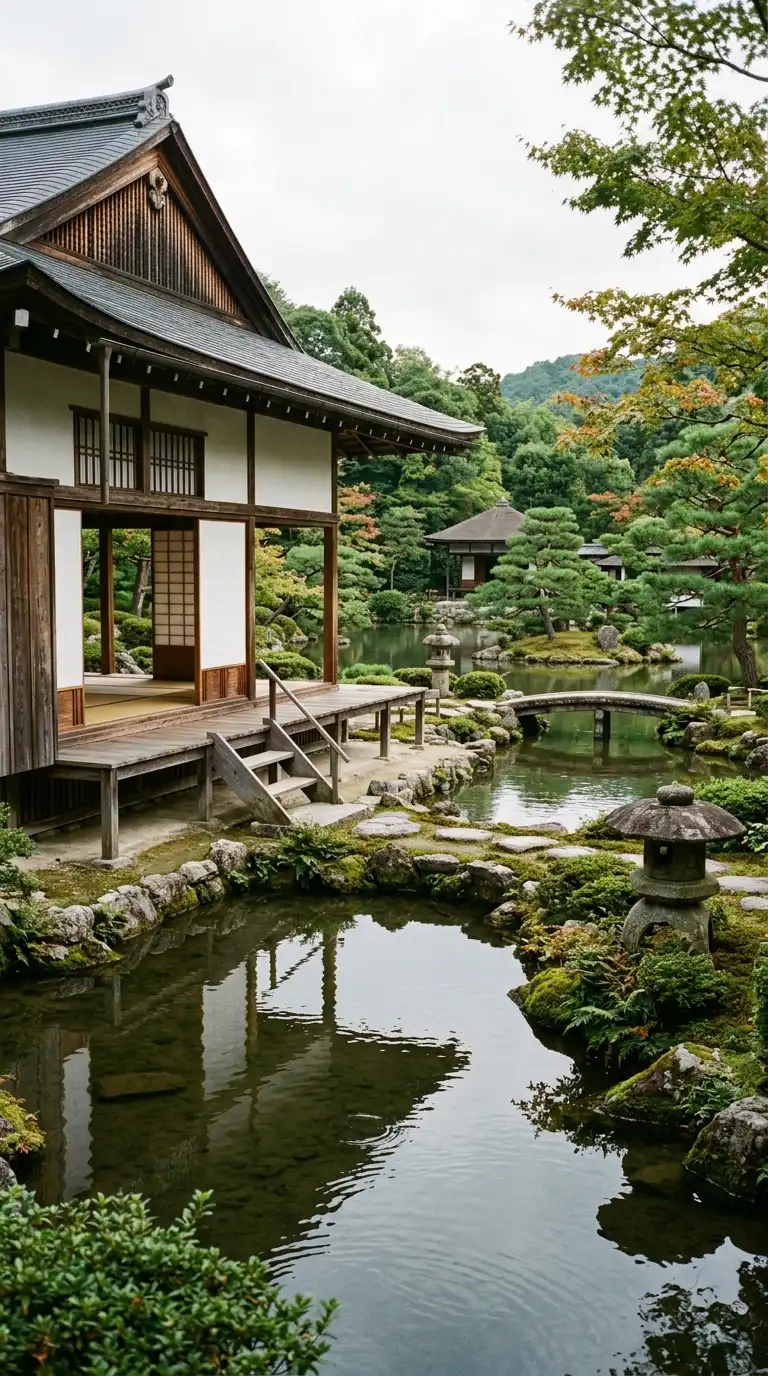
18. The Contemporary Museum by SANAA
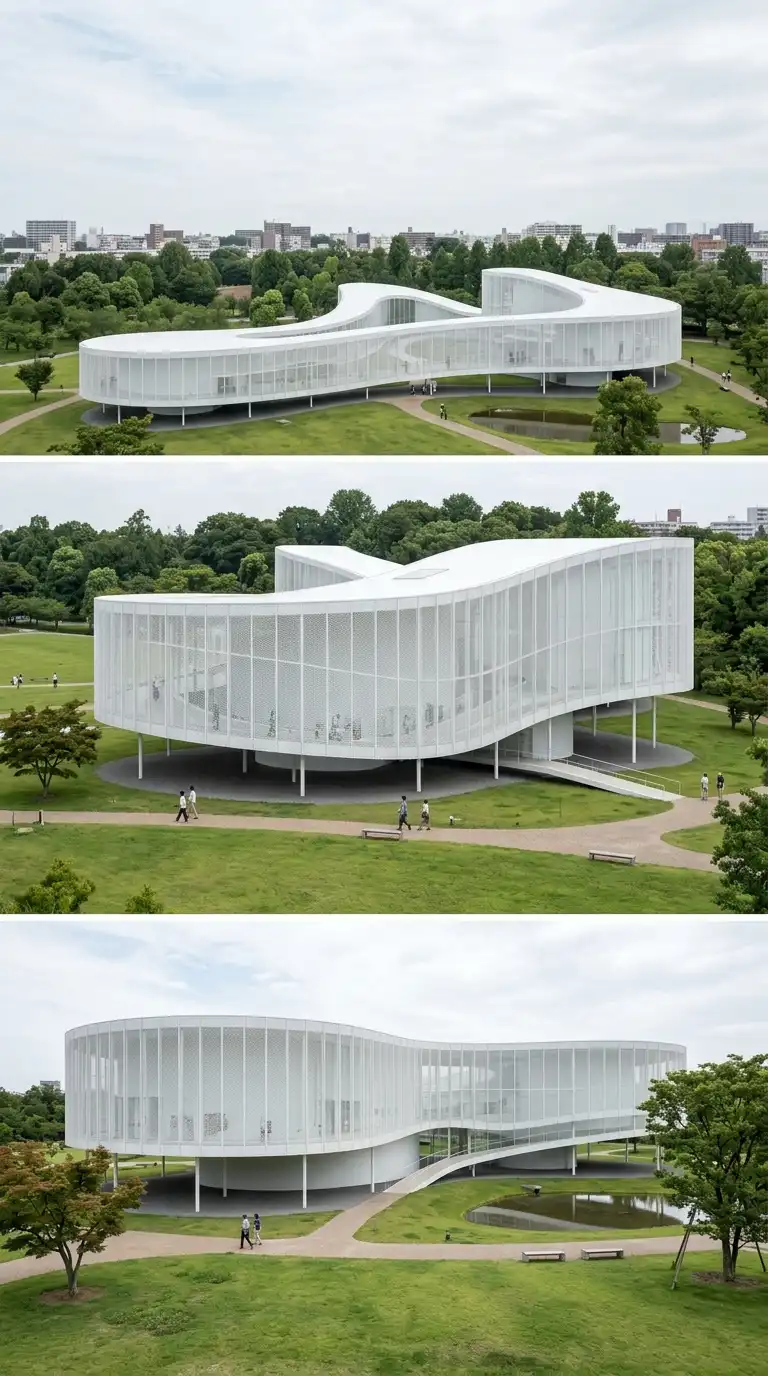
SANAA (Kazuyo Sejima and Ryue Nishizawa) designs buildings that are light, transparent, and floating. The forms are simple — cubes, cylinders, or curves. The skin is glass or white metal mesh. The building blurs into its surroundings.
The Rolex Learning Center at EPFL (2010) is a defining example. The emotional effect is light, transparent, and floating.
Quick Tips
- The form must be simple and continuous.
- The skin must be glass or white mesh.
- The building should appear to float or blur.
Final Thoughts
Japanese architecture is not a single style. It is a tradition of refinement. The same principles — wood,榻榻米, sliding screens, deep eaves, and the integration of garden and building — appear in Shinto shrines, Zen temples, farmhouses, and contemporary museums.
These 18 designs are not mutually exclusive. A contemporary house can have an engawa. A Zen temple can have a shoji interior. A castle can have a rock garden. The best Japanese architecture honours the past while serving the present. It is not nostalgic — it is timeless.