Architecture building designs are the synthesis of concept, program, structure, and site. Unlike speculative concept architecture, building designs are intended for construction. They must work structurally, function programmatically, and respond to real sites and clients. Yet within those constraints, extraordinary design is possible.
These 12 architecture building designs span residential, civic, cultural, and commercial types. Each design includes defining characteristics, organisational principles, and architectural strategies.
1. The Courtyard Building
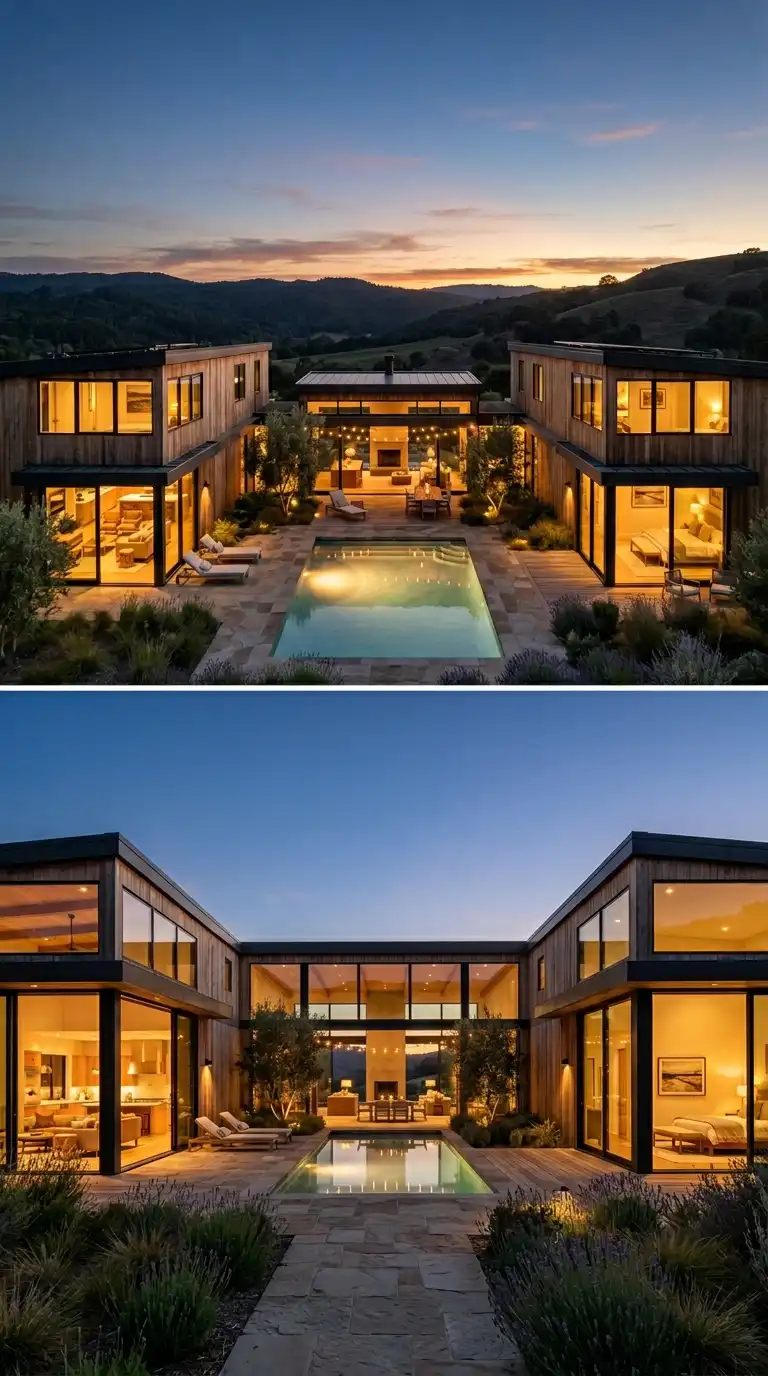
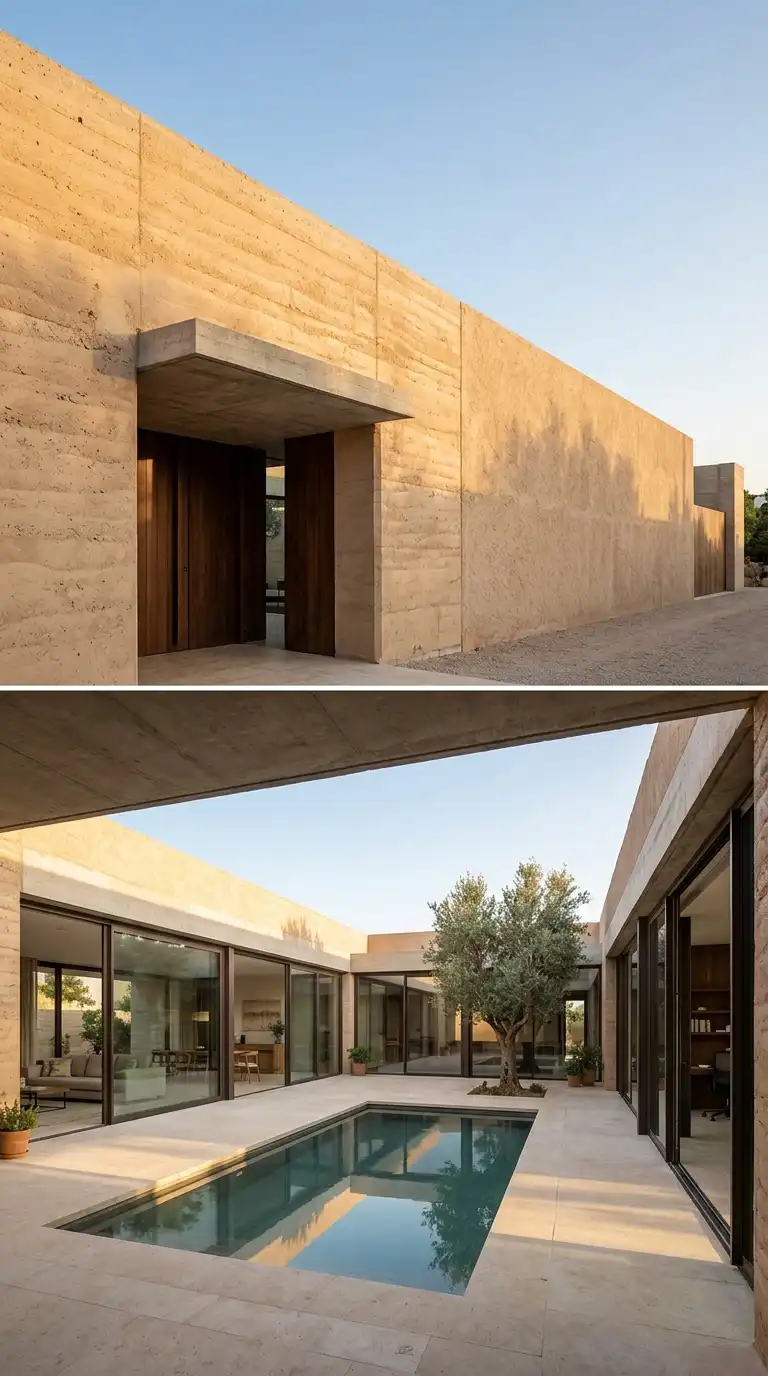
The courtyard building wraps a single volume around an open centre. The exterior is solid and private. The interior opens entirely to the courtyard. This typology is ancient — Roman domus, Chinese siheyuan, Moroccan riad — but remains one of the most effective building designs ever invented.
The courtyard provides light, air, outdoor space, and privacy. All major rooms face the courtyard. The exterior walls have few or no windows. The emotional effect is calm, private, and centred.
Quick Tips
- The courtyard should be at least 5×5 metres to feel usable.
- All major living spaces should open onto the courtyard.
- A single feature tree or water feature anchors the courtyard visually.
2. The Tower Building
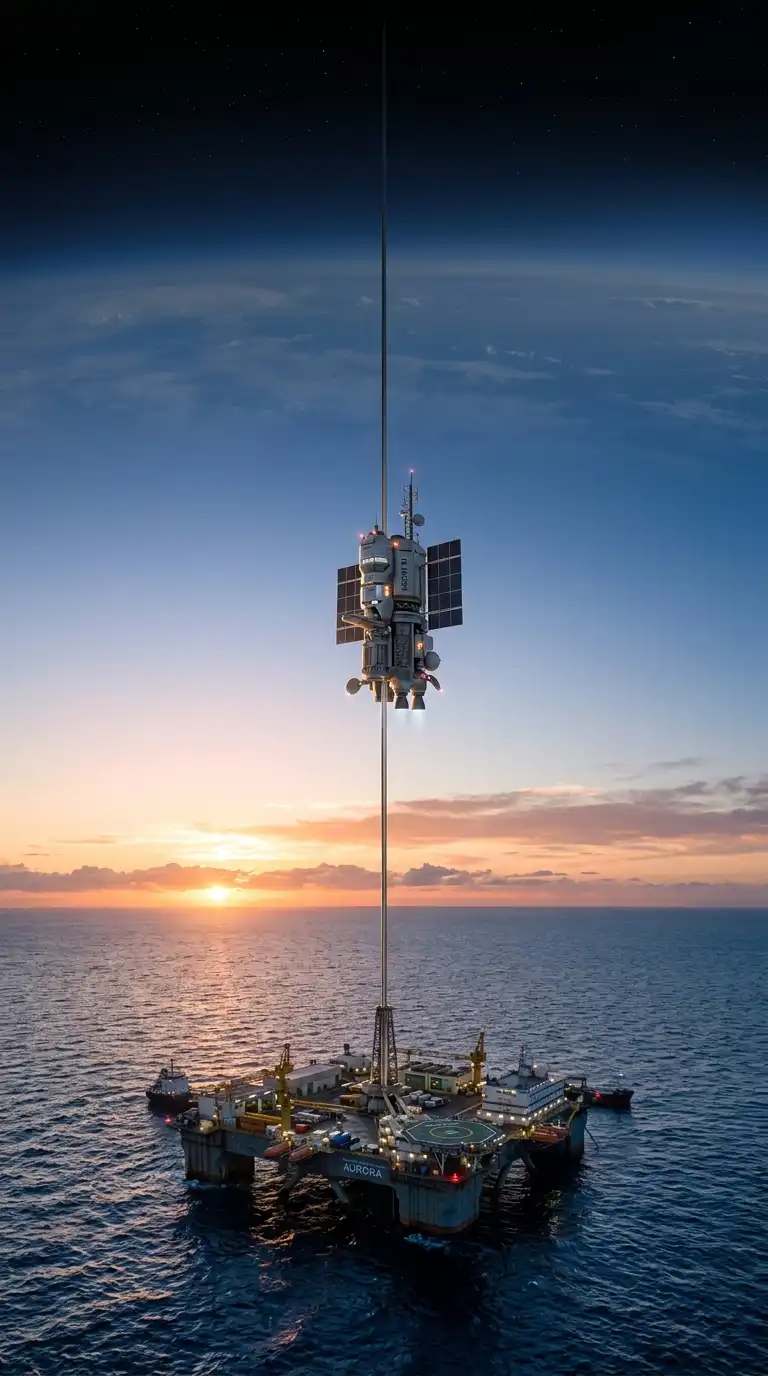
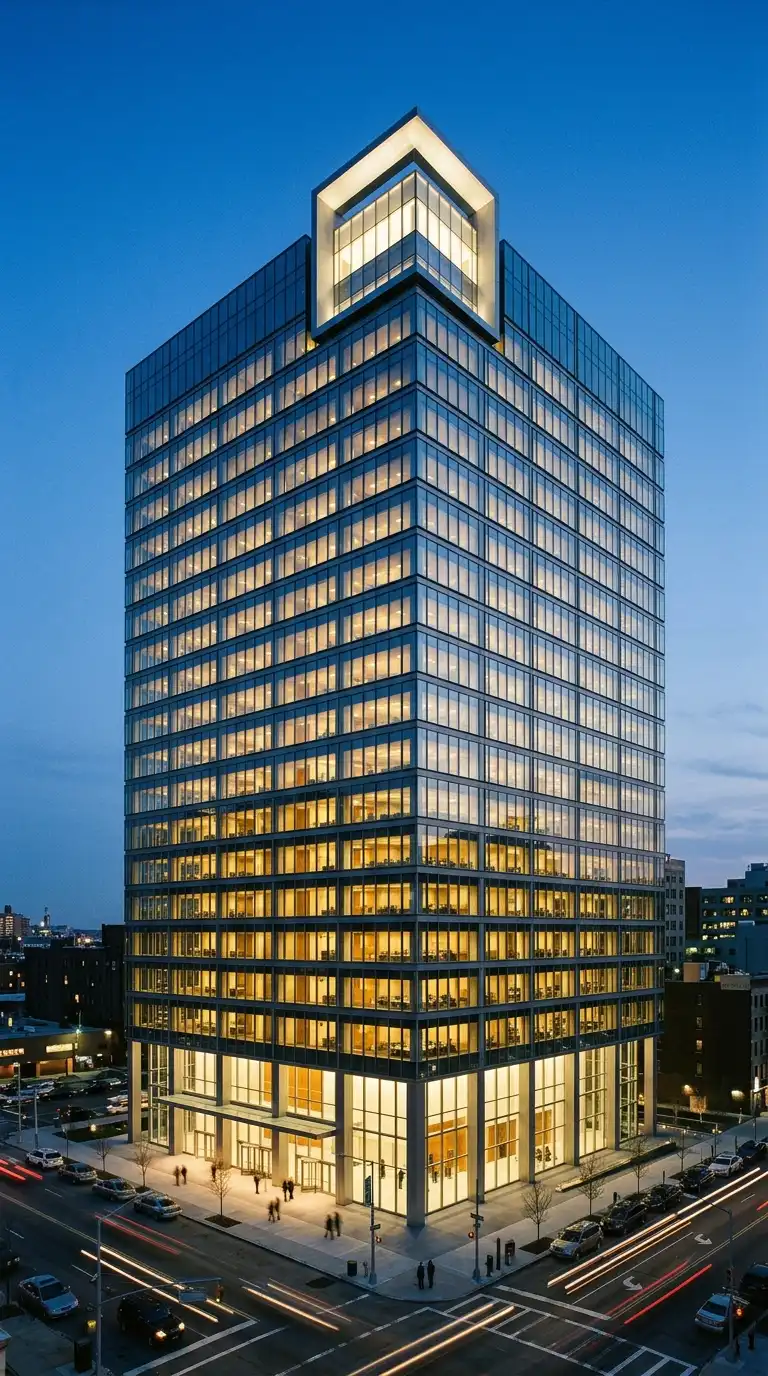
The tower building builds up instead of out. On a small footprint, the tower rises to capture views, density, or prominence. The plan is compact and efficient. The section is dramatic.
The tower can be residential, office, or mixed-use. The ground floor is public and transparent. The upper floors are private. The top is sculptural — a crown, a terrace, a mechanical floor. The emotional effect is vertical, efficient, and iconic.
Quick Tips
- The footprint should be simple — square, rectangle, or circle.
- The core (stairs, elevators, shafts) should be central or offset for efficiency.
- The top should have a distinct termination — no flat roof without gesture.
3. The Bar Building
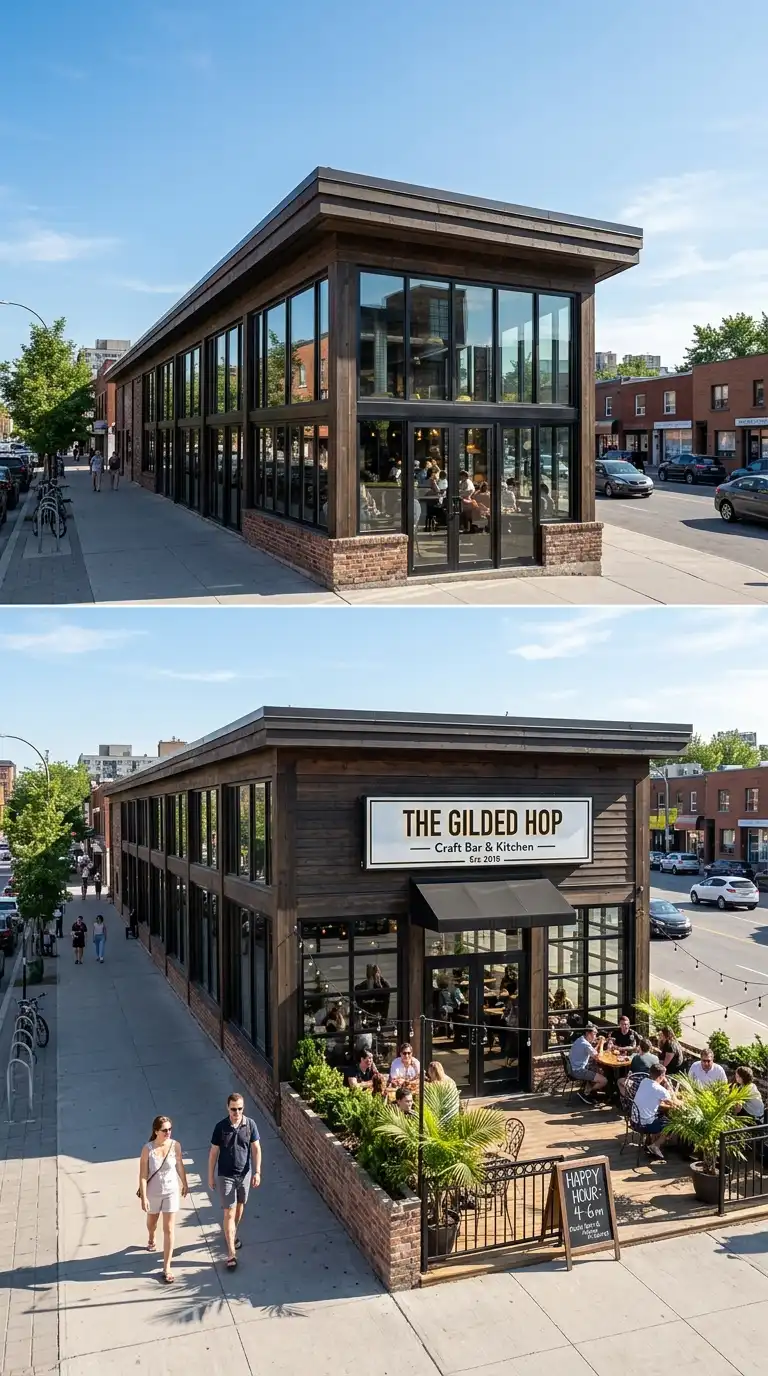
The bar building is long and narrow. Its length allows every room to have windows on two sides. Its narrowness brings light deep into the plan. The bar can be straight, L-shaped, U-shaped, or zigzag.
The bar building is ideal for housing, schools, offices, and hotels. The long facade can be oriented for solar gain, views, or street presence. The emotional effect is rational, efficient, and well-lit.
Quick Tips
- The depth should be no more than 12-15 metres for natural light.
- The long facade should face south (northern hemisphere) for solar gain.
- Break long bars with courtyards or shifts in direction.
4. The Atrium Building
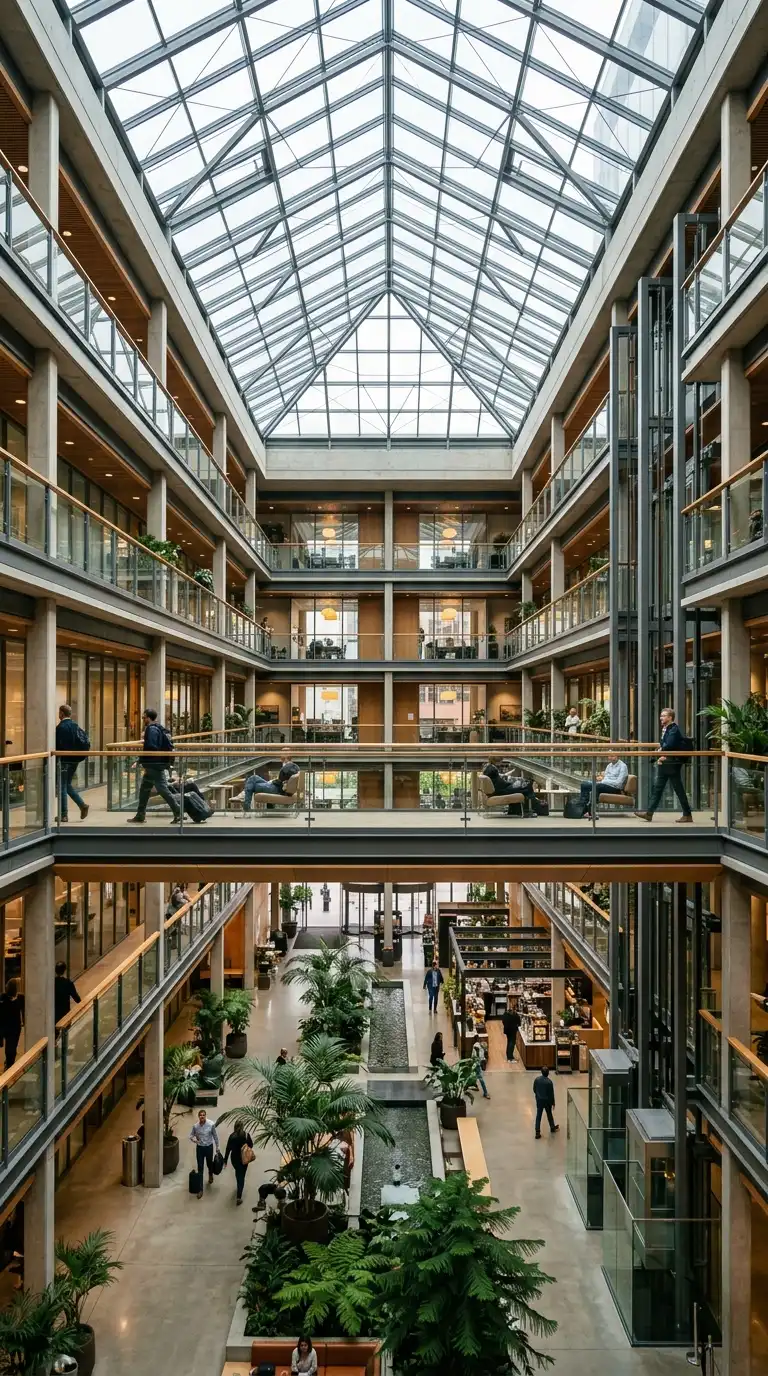
The atrium building has a large central space open to the sky, surrounded by smaller rooms on multiple levels. The atrium is the heart of the building — a vertical courtyard. Light enters from above and filters down to all levels.
The atrium building is ideal for libraries, museums, offices, and hotels. The atrium creates visual connection between levels and a dramatic sense of space. The emotional effect is vertical, luminous, and communal.
Quick Tips
- The atrium should be at least 6 metres wide to feel generous.
- Balconies or bridges should surround the atrium on each level.
- The roof over the atrium should be glass, with shading for summer.
5. The Clustered Pavilion Building
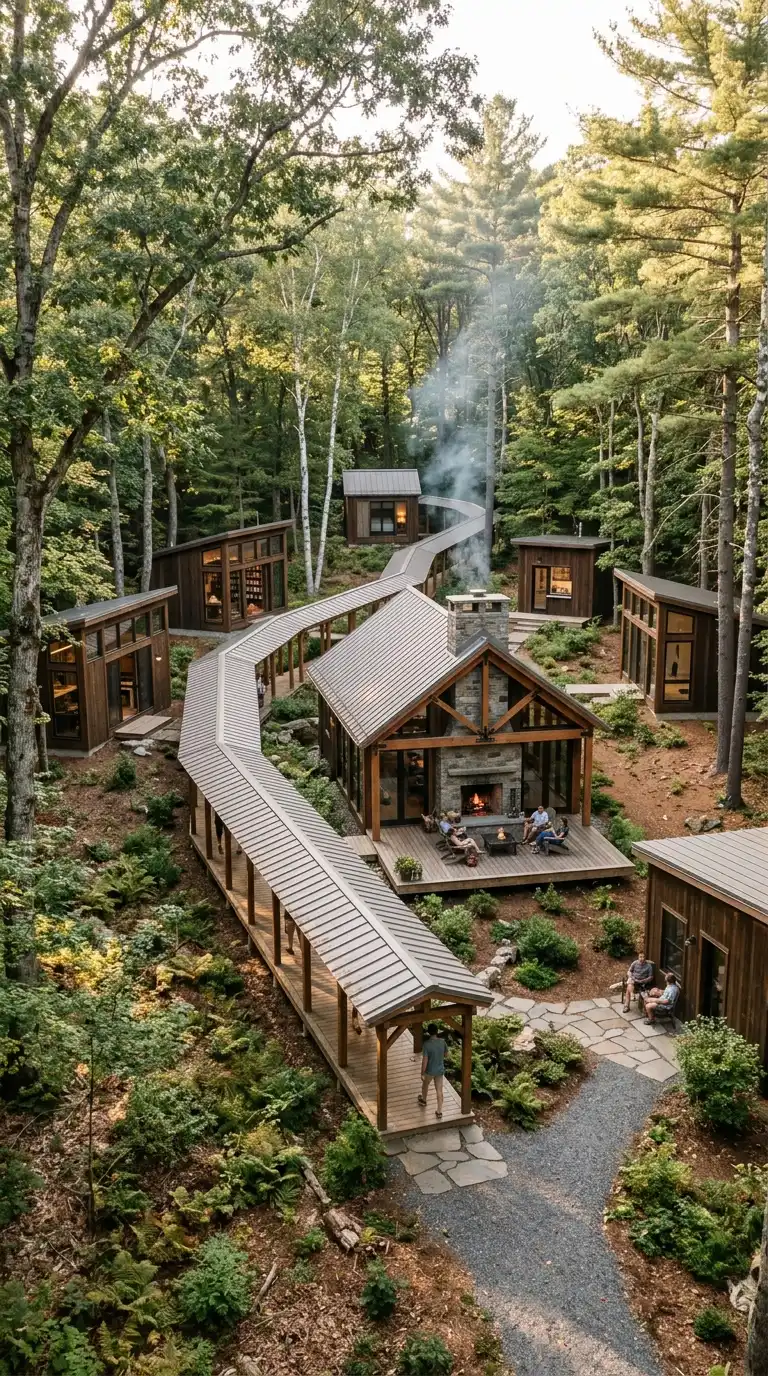
The clustered pavilion building spreads functions across multiple small volumes instead of one large one. Pavilions are connected by covered walkways, glass bridges, or courtyards. Each pavilion has a single purpose: sleeping, cooking, working, gathering.
This typology works on large sites in warm climates. The landscape flows between the pavilions. The emotional effect is relaxed, resort-like, and connected to nature.
Quick Tips
- Each pavilion should be no larger than 50-80 square metres.
- Walkways should be covered but open on the sides.
- The landscape should flow between pavilions, not just around them.
6. The Terraced Building
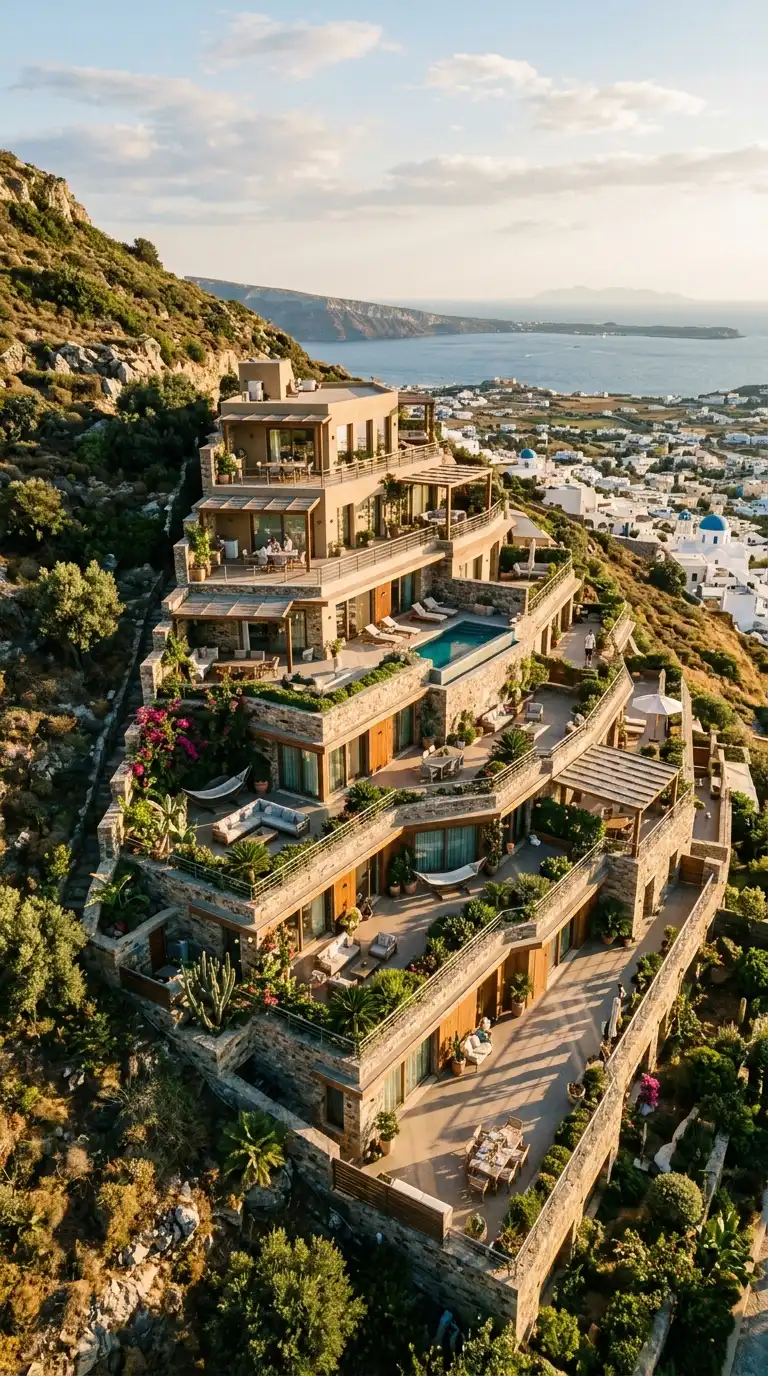
The terraced building steps down a slope. Each floor is set back from the floor below, creating outdoor terraces on every level. The building follows the topography instead of fighting it.
The terraced building is ideal for hillside sites. The terraces provide private outdoor space for each unit. The roof of one unit is the terrace of the unit above. The emotional effect is dramatic, site-responsive, and outdoor-oriented.
Quick Tips
- Each terrace should step back 1.5 to 3 metres.
- The building should follow the slope, not cut into it excessively.
- Terraces should be deep enough for outdoor furniture — at least 2 metres.
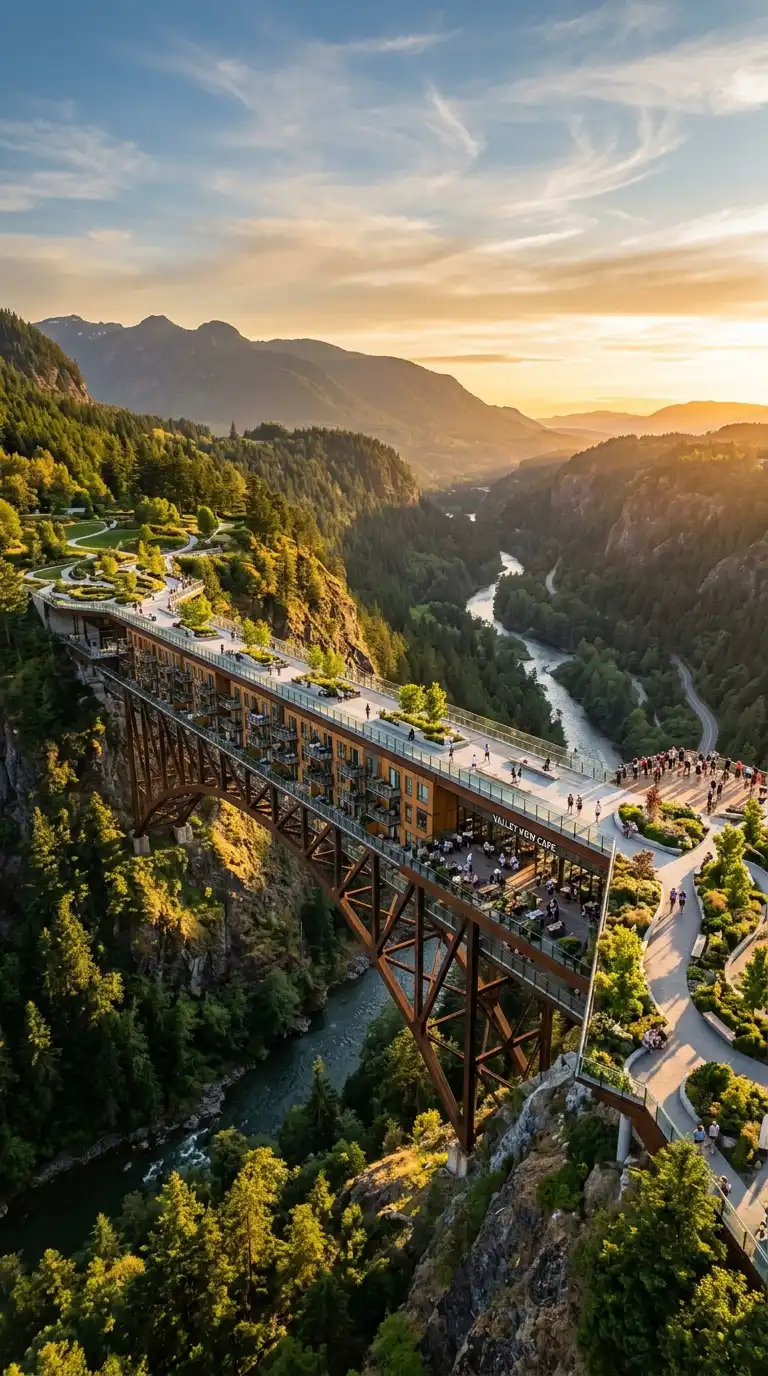
7. The Bridge Building
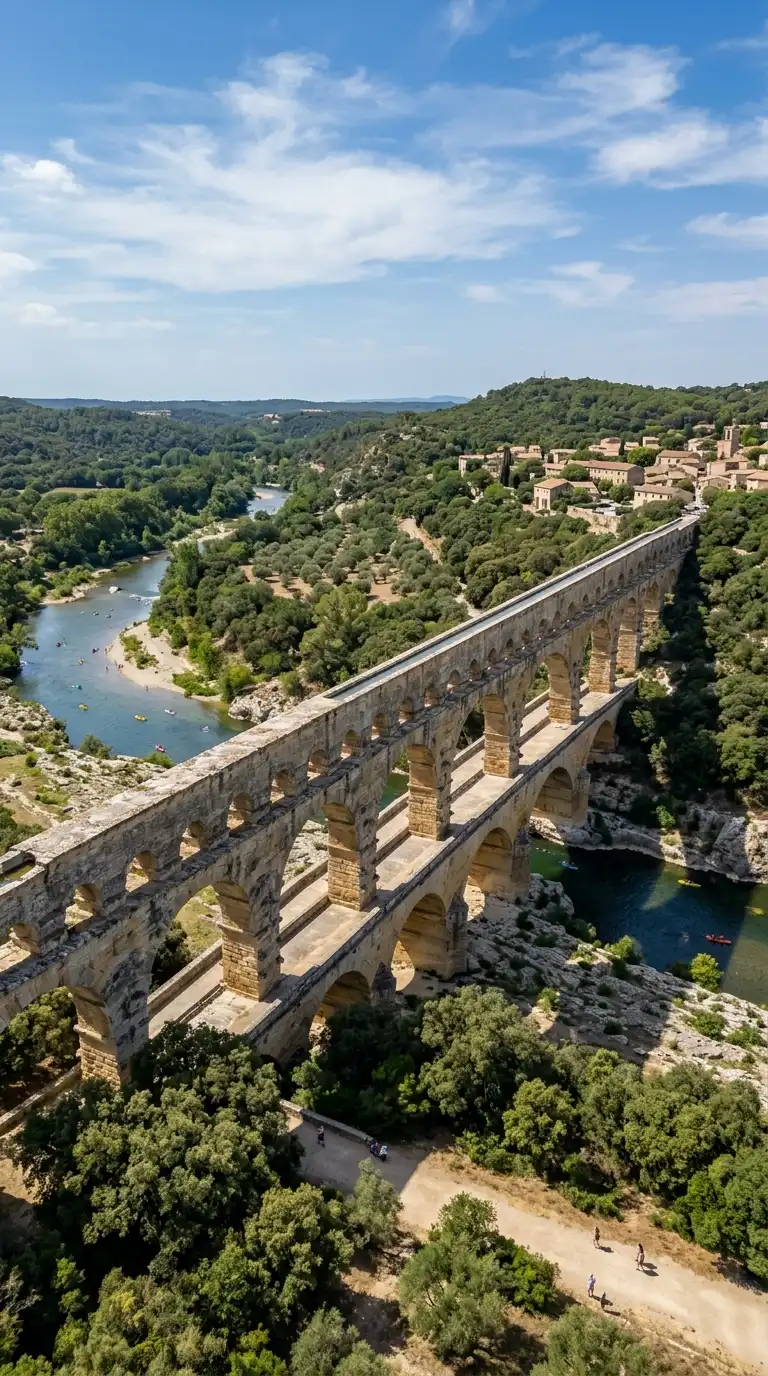
The bridge building spans across a valley, river, or road. Occupied space is integrated into the structure. The building is both bridge and destination.
The span creates two distinct conditions: the centre, where views are extraordinary, and the ends, where the building settles into the landscape. The emotional effect is dramatic, infrastructural, and site-specific.
Quick Tips
- The structural span determines the plan — keep services near supports.
- Use the depth of the bridge structure for habitable space.
- Make the centre of the span public to capitalise on the view.
8. The Pinwheel Building
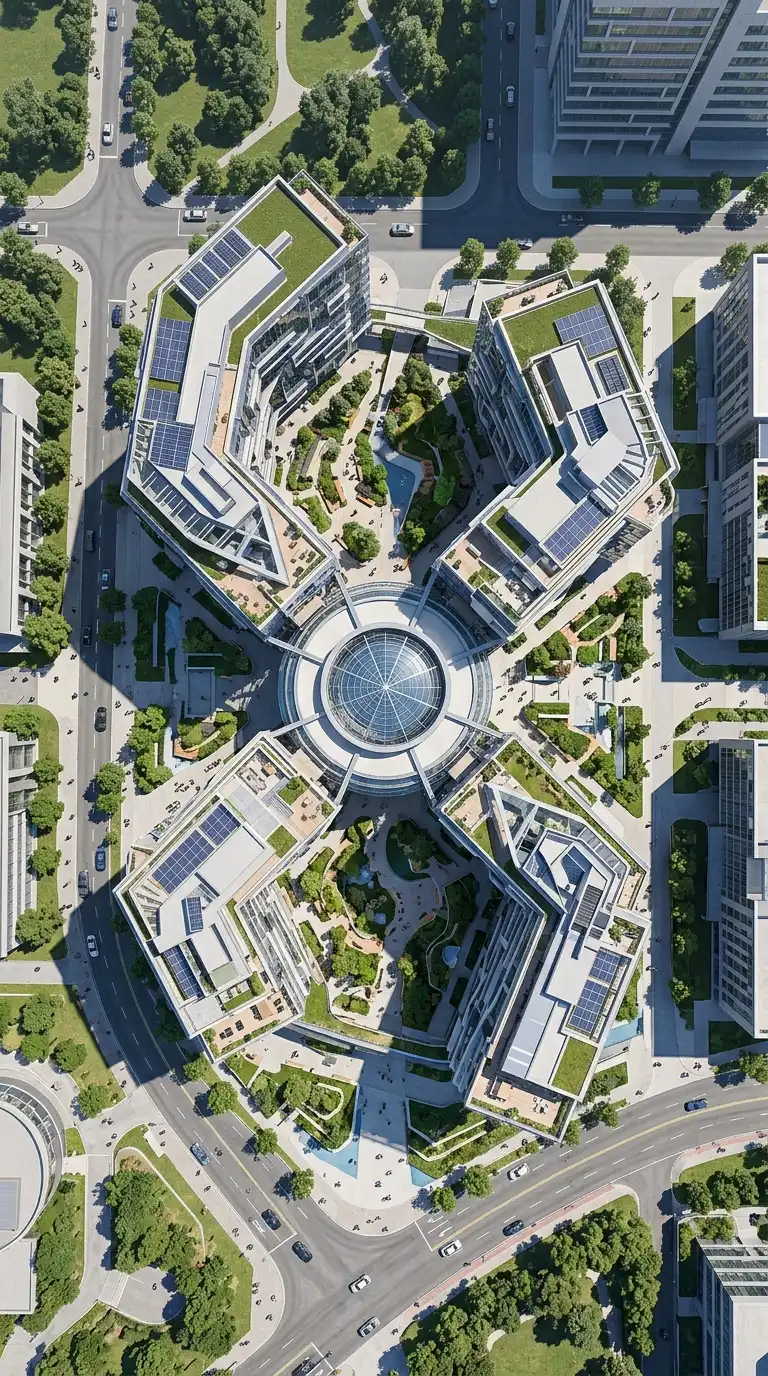
The pinwheel building has wings radiating from a central core like the blades of a pinwheel. Each wing is rotated slightly from the next. The central core contains vertical circulation and shared amenities.
The pinwheel plan creates varied views from each wing. It breaks down a large building into smaller, more human-scaled pieces. The emotional effect is dynamic, varied, and non-repetitive.
Quick Tips
- Each wing should be rotated 30-45 degrees from the next.
- The central core should contain stairs, elevators, and shared spaces.
- The gaps between wings become courtyards or gardens.
9. The Double-Loaded Corridor Building
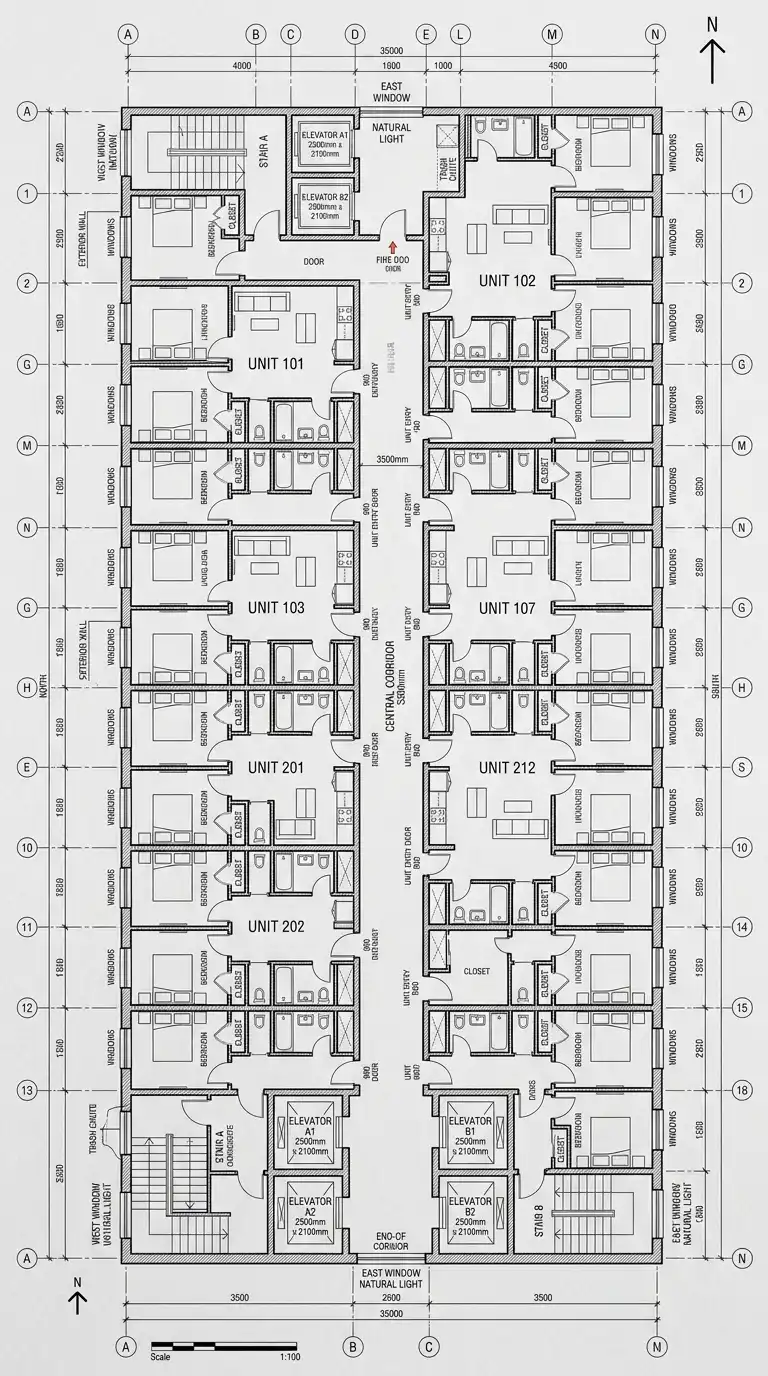
The double-loaded corridor building is the most efficient plan for housing, hotels, and offices. A central corridor runs the length of the building, with rooms on both sides. Every room has a window on the exterior.
The plan is simple and repetitive. The corridor provides access and separation. The emotional effect is rational, efficient, and familiar.
Quick Tips
- The corridor should be at least 1.5 metres wide for two people to pass.
- Rooms on opposite sides of the corridor should be offset to reduce noise transfer.
- Natural light must reach the corridor through windows at the ends.
10. The Single-Loaded Corridor Building
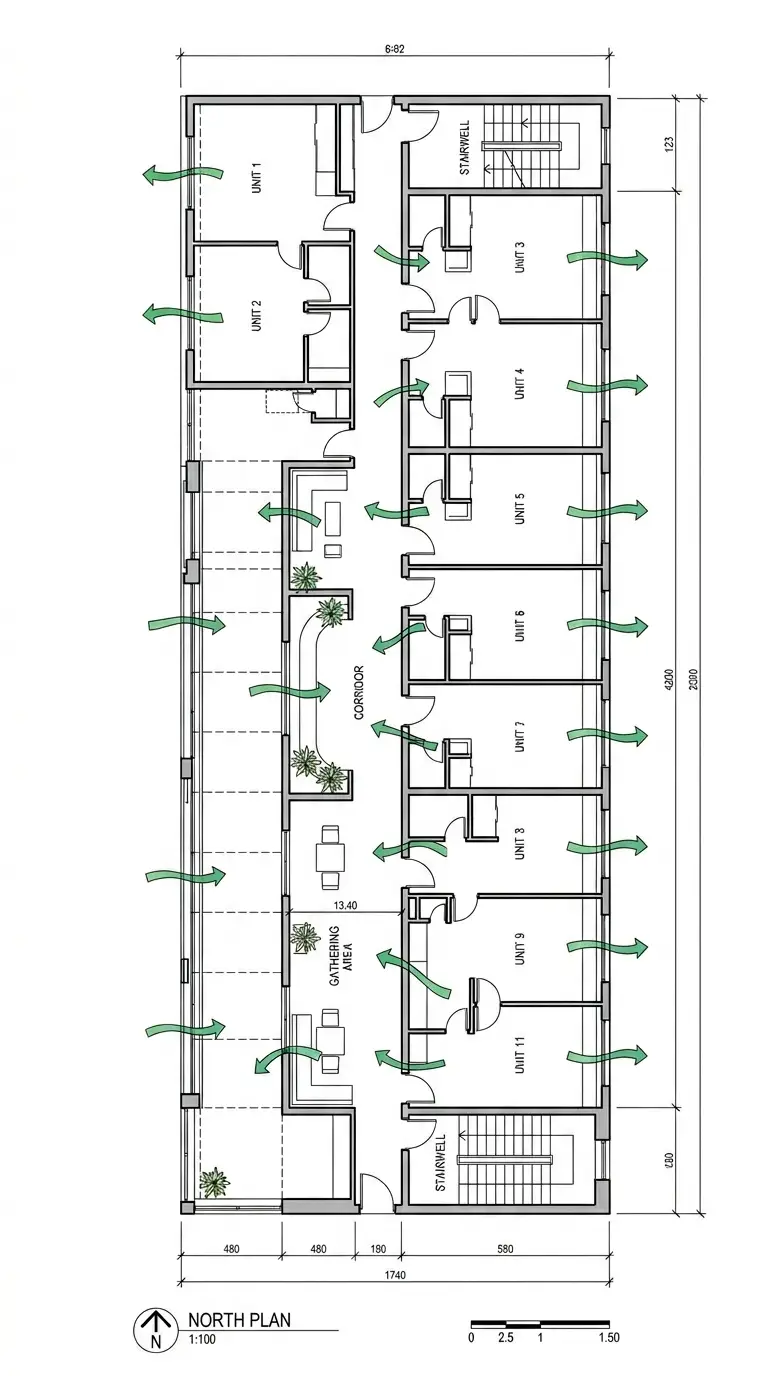
The single-loaded corridor building has a corridor on one side of the rooms, with the other side open to the exterior. All rooms have windows, and the corridor also has windows. The plan is less efficient than double-loaded but provides better light and ventilation.
This typology is ideal for schools, dormitories, and buildings in warm climates. The emotional effect is open, well-lit, and well-ventilated.
Quick Tips
- The corridor should face south (northern hemisphere) for passive solar gain.
- The corridor should be at least 1.8 metres wide to feel generous.
- Operable windows on both sides of the corridor create cross-ventilation.
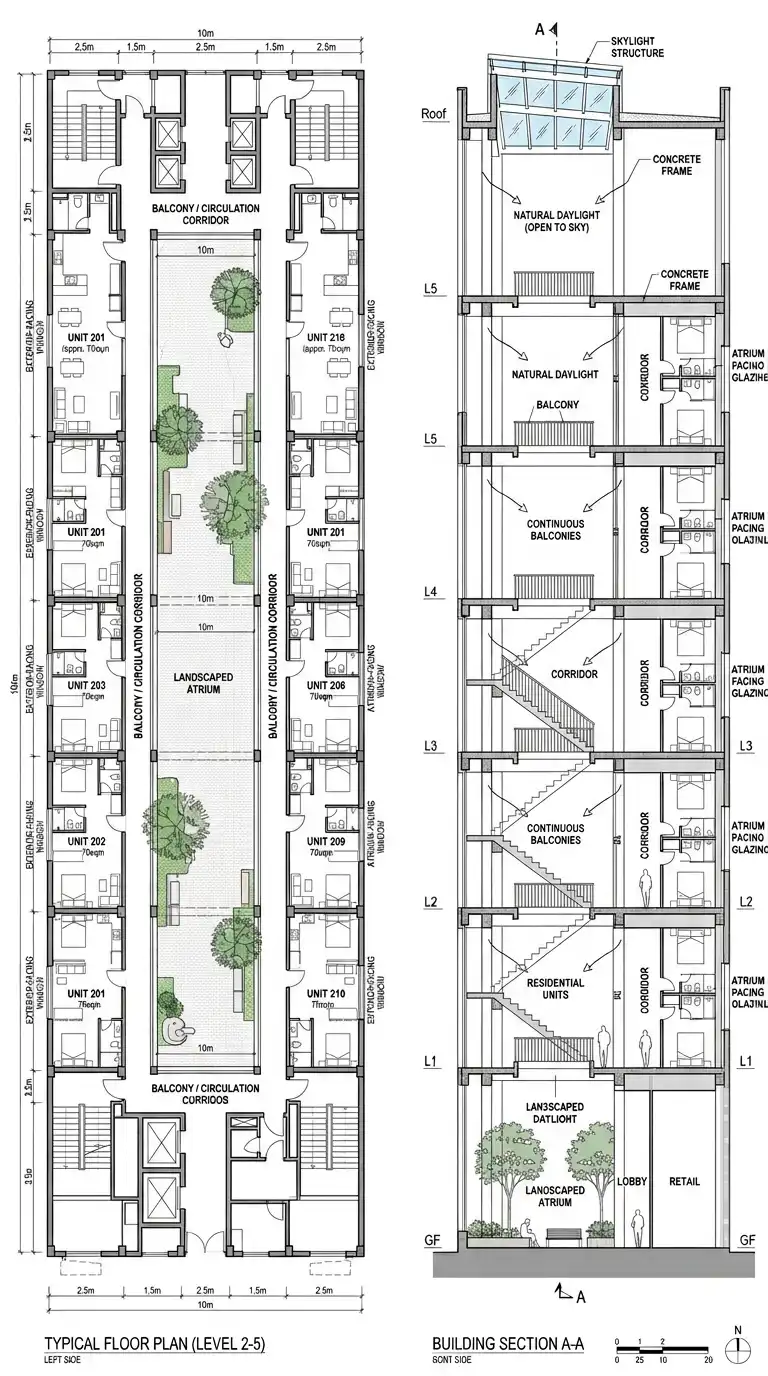
11. The Atrium-Loaded Building
The atrium-loaded building combines the double-loaded corridor with a central atrium. The corridor faces the atrium instead of an exterior wall. Rooms face the exterior on one side and the atrium on the other. Every room has two sources of light and ventilation.
This typology is ideal for deep plans where exterior wall space is limited. The atrium brings light and air into the centre of the building. The emotional effect is luminous, connected, and generous.
Quick Tips
- The atrium must be wide enough for light to reach the corridor — at least 4 metres.
- Balconies or walkways should line the atrium on each floor.
- The atrium roof should be glass, with shading for summer.
12. The Hybrid Building
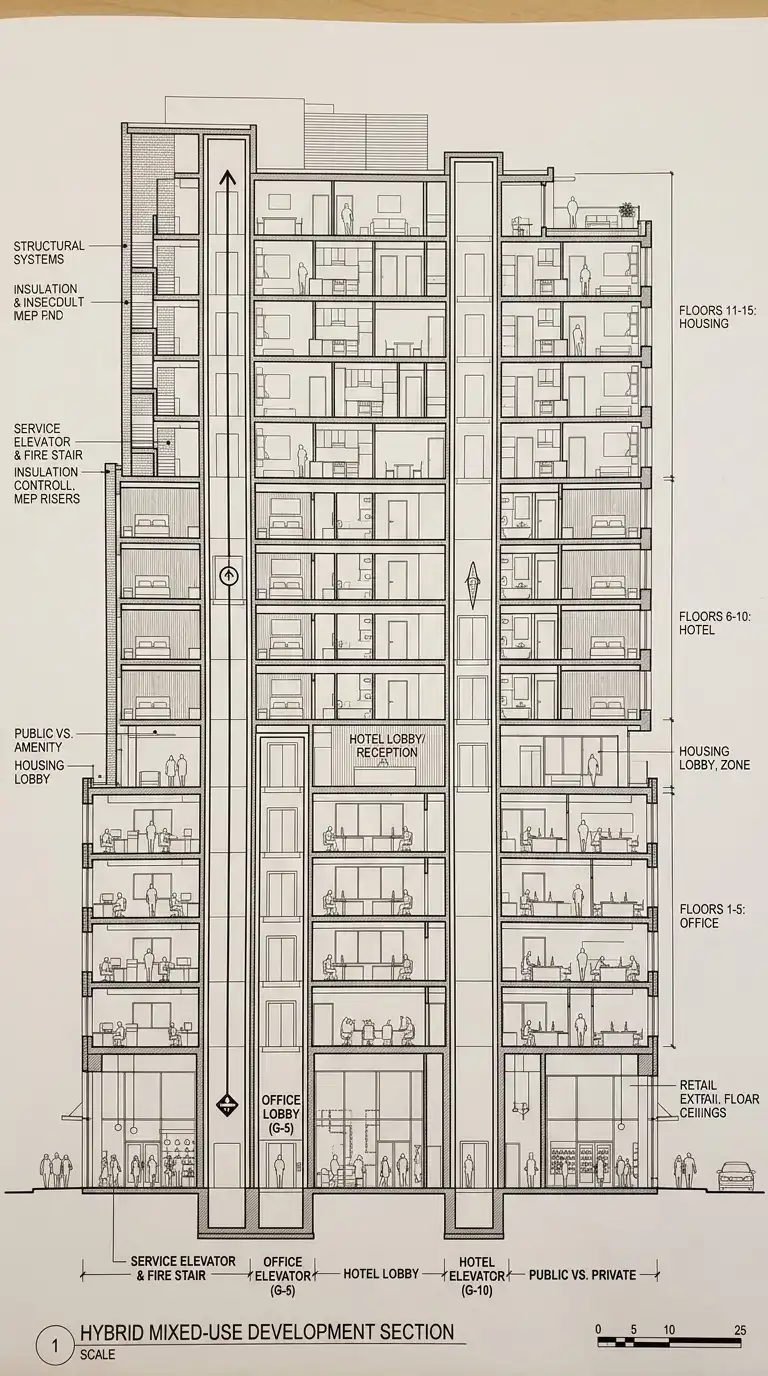
The hybrid building combines multiple functions in a single volume: housing, offices, retail, hotel, cultural. The different functions are stacked or interwoven. The building is a vertical neighbourhood.
The hybrid building is the typology of the contemporary city. It maximises land use, creates 24-hour activity, and supports transit. The emotional effect is urban, diverse, and efficient.
Quick Tips
- Place retail and public functions at the ground floor.
- Place office or hotel in the middle for access to light and views.
- Place housing at the top for quiet and views.
Final Thoughts
These 12 building designs are not mutually exclusive. A courtyard building can be a tower. A terraced building can use a single-loaded corridor. A hybrid building can be organised around an atrium. The best building designs draw from multiple typologies, adapting and combining to fit the specific site, program, and client.
A building design is not a formula. It is a response to a unique set of conditions. The typologies described here are starting points — proven solutions to common problems. But the architect’s task is to transform the typology into something specific, local, and new.