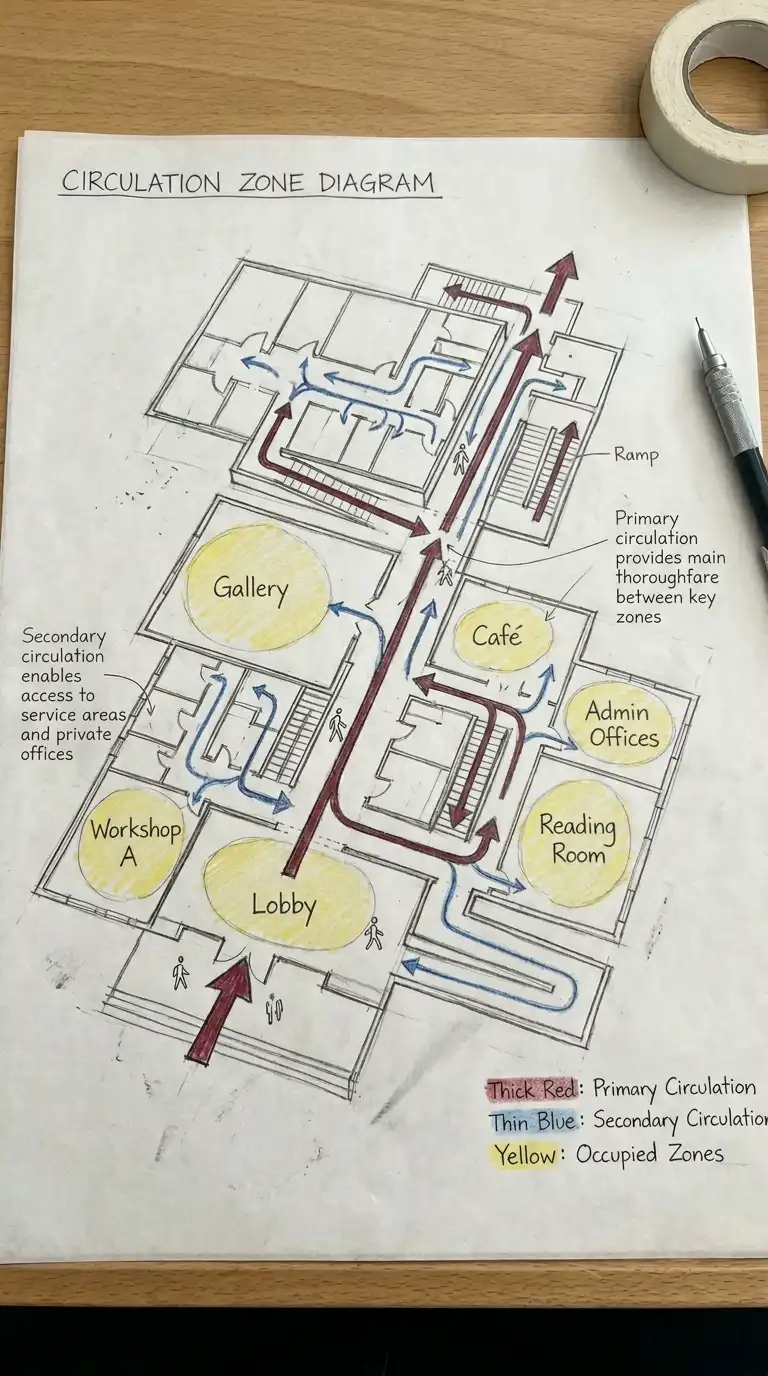
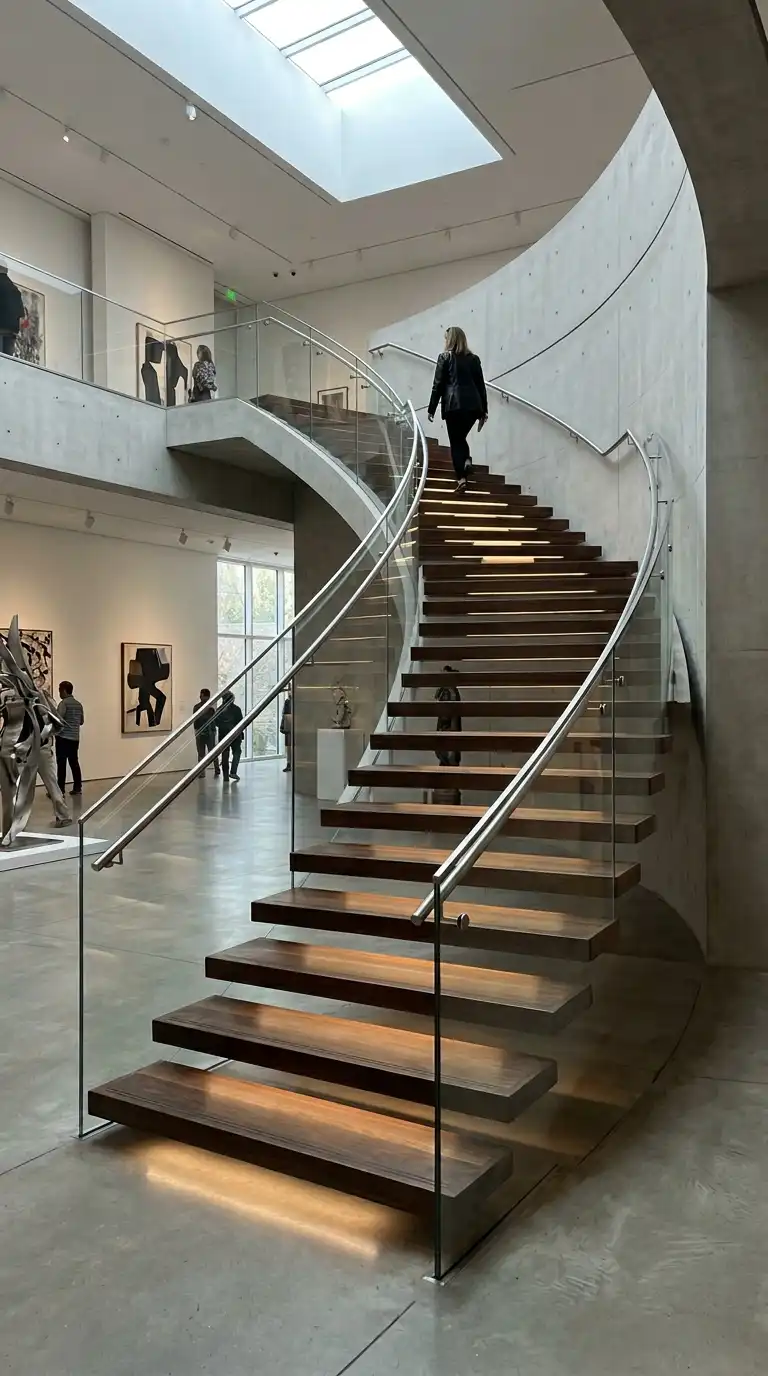
An apartment building is not just a stack of units. It is a vertical community, a piece of the city, and a home for dozens or hundreds of people. A well-designed apartment building balances privacy and community, efficiency and delight, light and density. It gives each unit a view, a connection to the street, and a sense of identity.
These 12 apartment architecture designs span low-rise to high-rise, urban to suburban, affordable to luxury. Each design includes defining characteristics, spatial principles, and unit organisation strategies.
1. The Single-Loaded Corridor Apartment
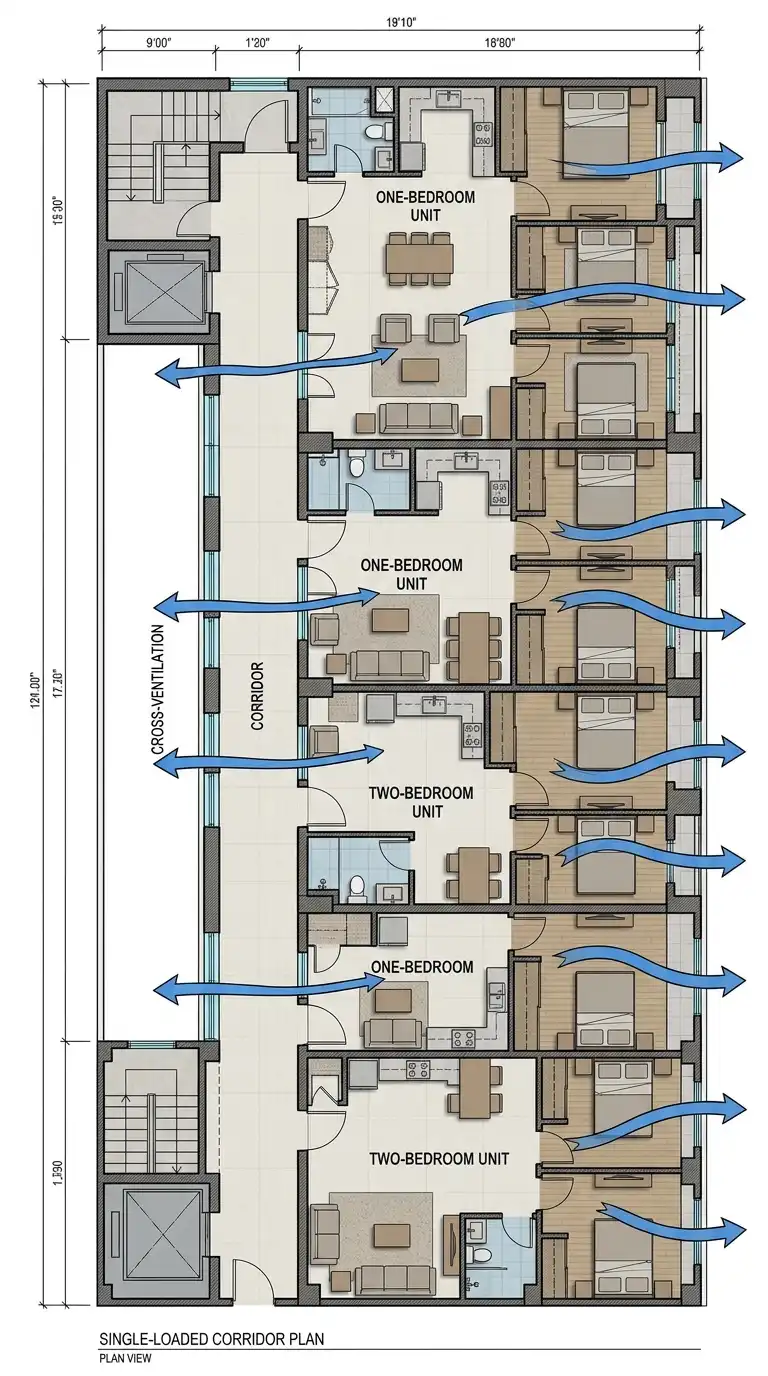
The single-loaded corridor apartment has a corridor on one side of the units, with windows on the opposite exterior wall. Every unit has windows on two sides (exterior and corridor), and the corridor also has windows. Cross-ventilation is possible. This plan is less efficient than double-loaded but provides better light, air, and privacy.
This design is ideal for warm climates and buildings up to 4-5 storeys. The emotional effect is open, well-lit, and well-ventilated.
Quick Tips
- The corridor should face south for passive solar gain.
- The corridor should be at least 1.5 metres wide.
- Operable windows on both sides create cross-ventilation.
2. The Double-Loaded Corridor Apartment
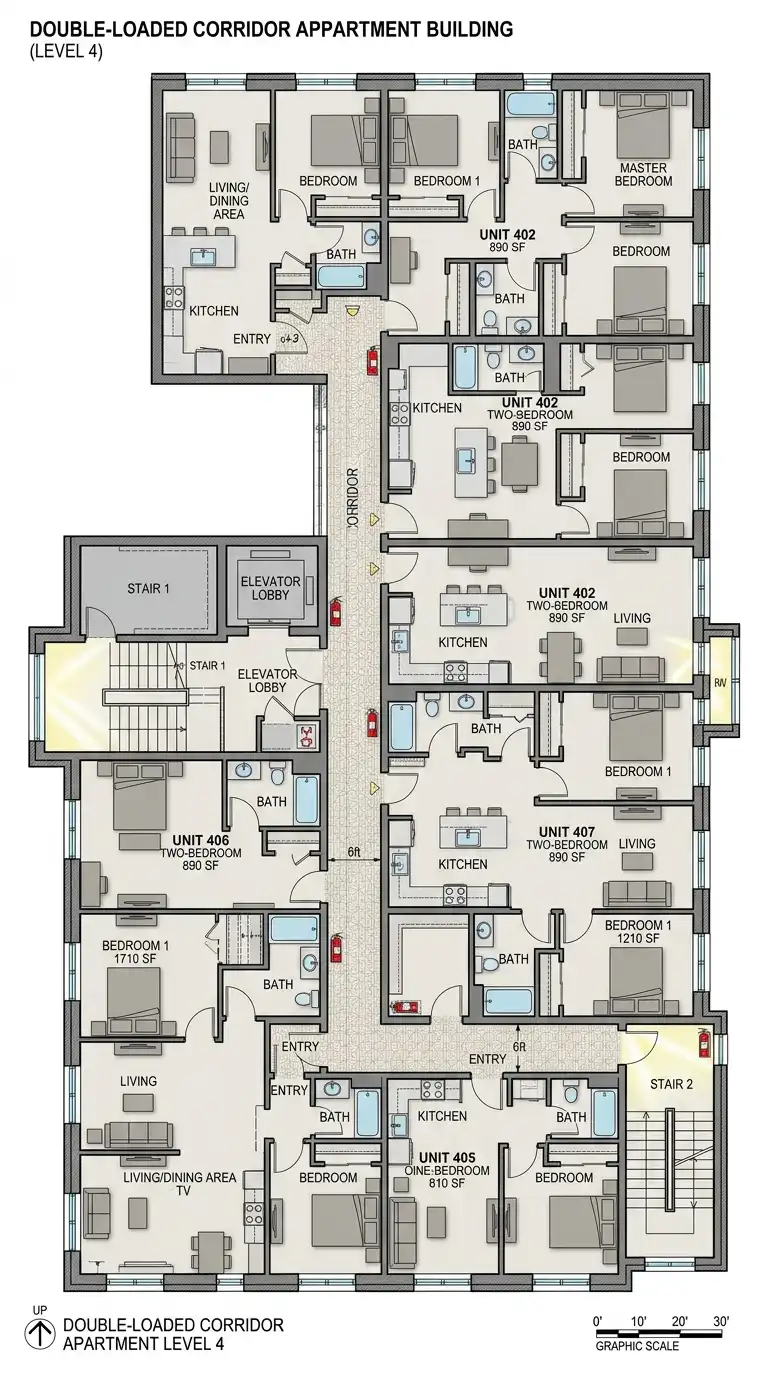
The double-loaded corridor apartment has a central corridor with units on both sides. This is the most efficient apartment plan. It uses space well and keeps circulation compact. However, units on the north side have less light, and the corridor has no windows.
This design is ideal for cold climates and budget-conscious projects. The emotional effect is rational, efficient, and familiar.
Quick Tips
- The corridor should be at least 1.5 metres wide.
- Place windows at the ends of the corridor for natural light.
- Use borrowed light (glass walls between corridor and unit).
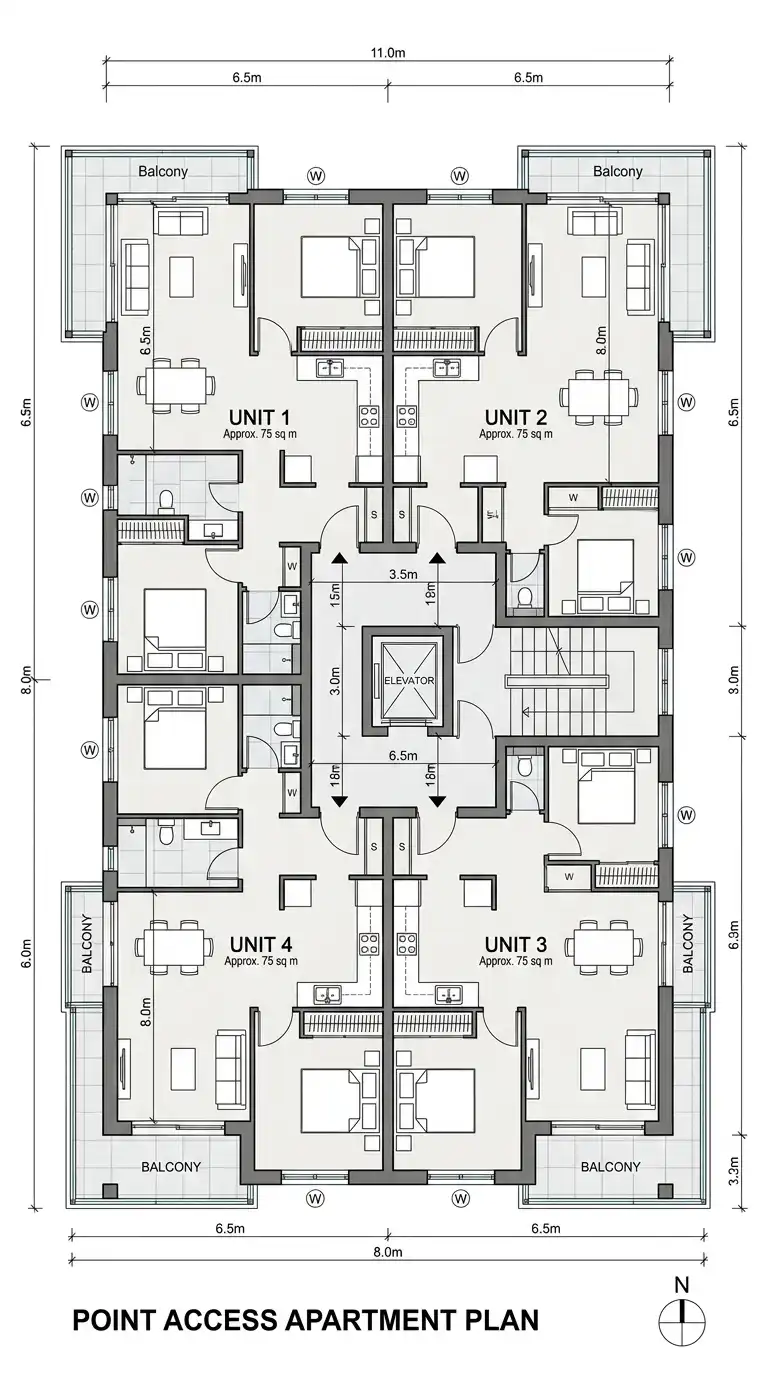
3. The Point Access Apartment
The point access apartment has a central stair and elevator core, with 2-4 units per floor arranged around the core. Each unit has windows on two or three sides. There is no long corridor — each unit opens directly off the core. This plan is efficient and provides excellent light and ventilation.
This design is ideal for small sites and buildings up to 8-10 storeys. The emotional effect is compact, efficient, and well-lit.
Quick Tips
- The core should contain stairs, elevator, and meter rooms.
- Two to four units per floor is optimal.
- Each unit should have windows on at least two facades.
4. The Cross Plan Apartment
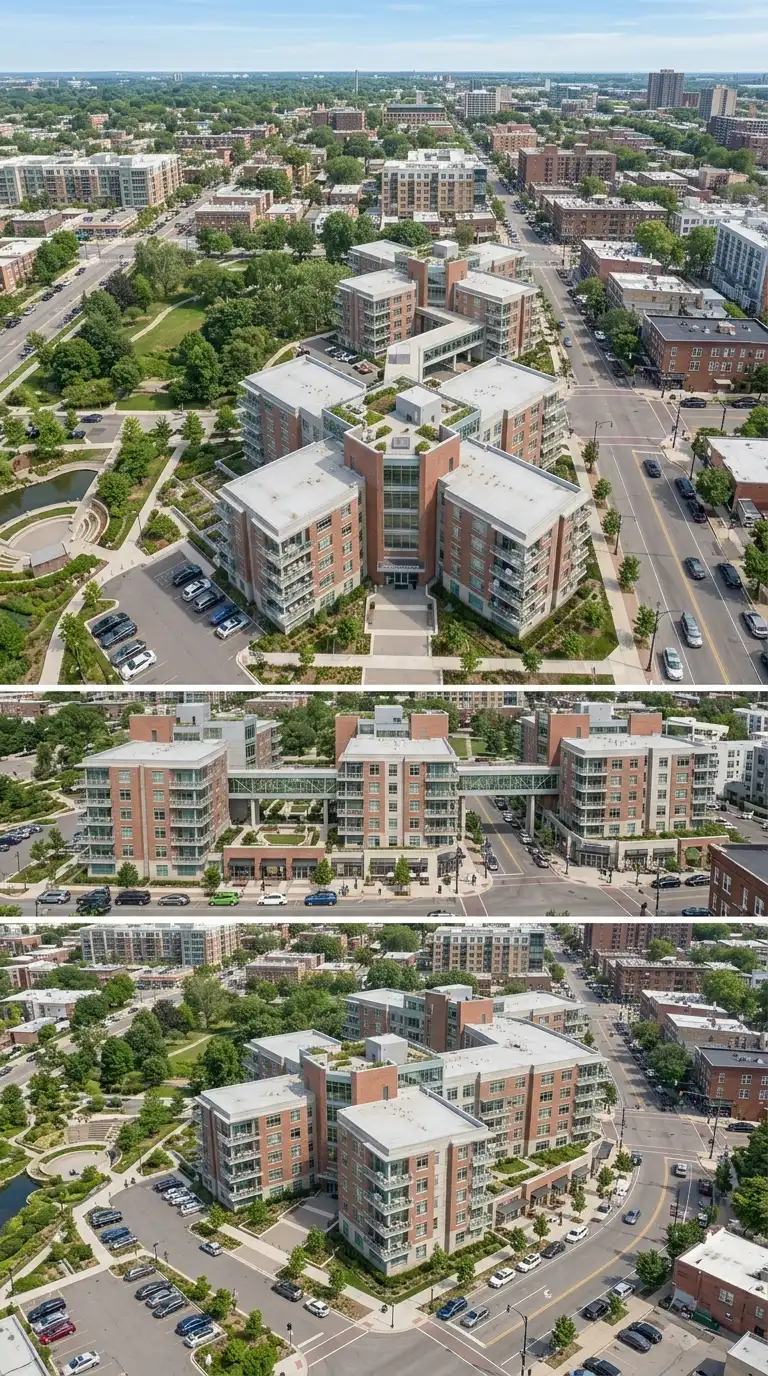
The cross plan apartment has a central core with four wings radiating at 90-degree angles. Each wing contains one or two units. The cross plan gives every unit windows on three sides. The plan is efficient and provides excellent light.
This design is ideal for tall buildings on prominent sites. The emotional effect is radial, efficient, and well-lit.
Quick Tips
- The core should be at the centre of the cross.
- Each wing should have one or two units.
- Each unit should have windows on three sides.
5. The Courtyard Apartment
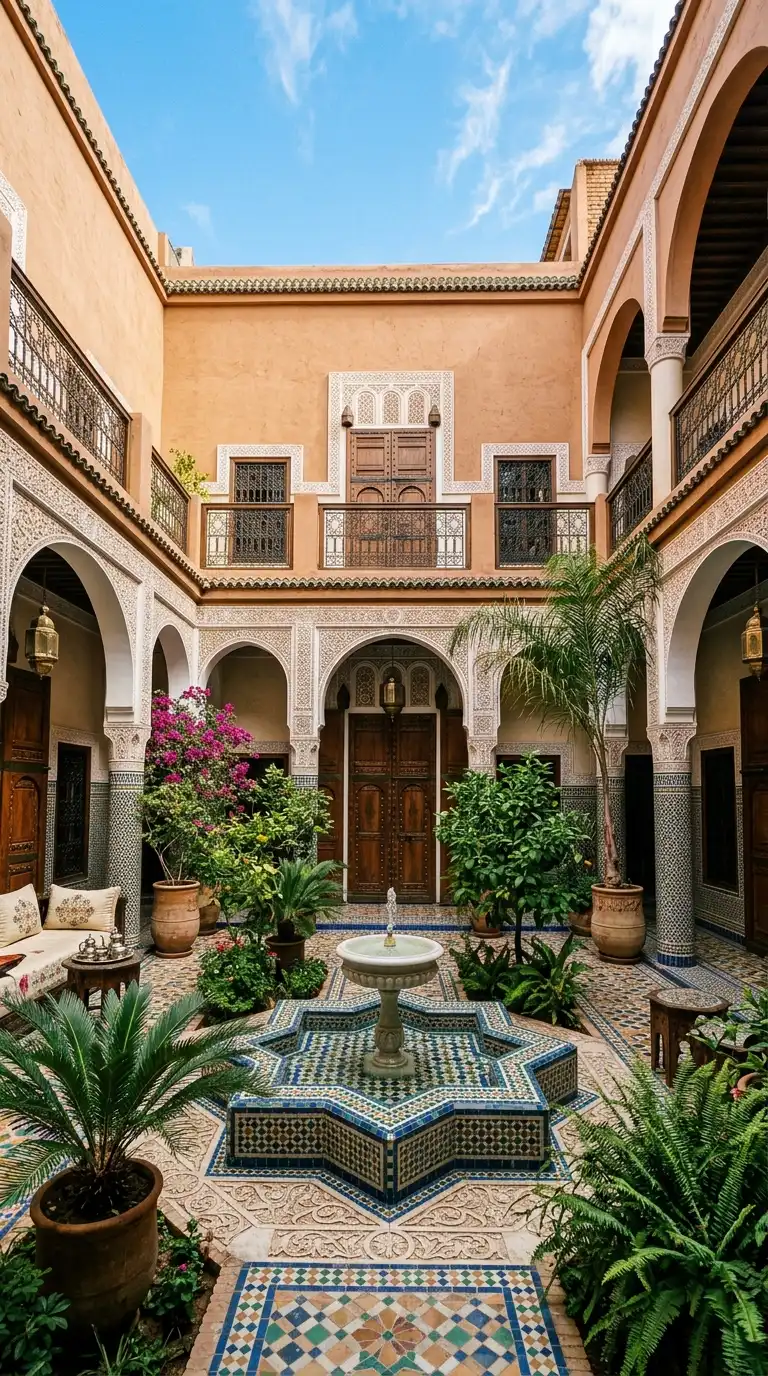
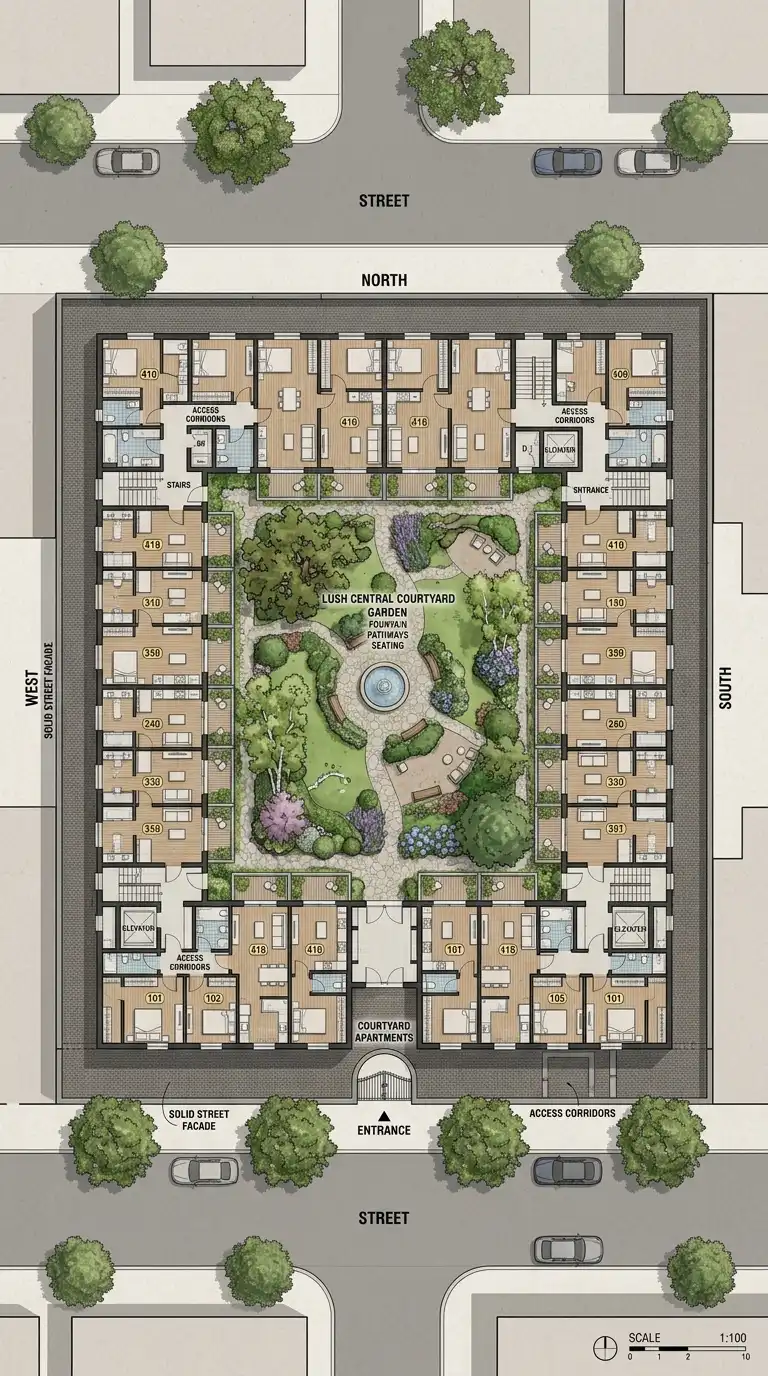
The courtyard apartment wraps units around a central courtyard. The courtyard provides light, air, outdoor space, and a sense of community. The building presents a solid face to the street, with the courtyard hidden inside. Units have windows facing the courtyard and sometimes the street.
This design is ideal for large urban sites and family-oriented buildings. The emotional effect is calm, private, and communal.
Quick Tips
- The courtyard should be at least 10×10 metres to feel generous.
- Each unit should have a window or balcony facing the courtyard.
- The ground floor should have shared amenities: laundry, bike storage, gardens.
6. The Slab Apartment
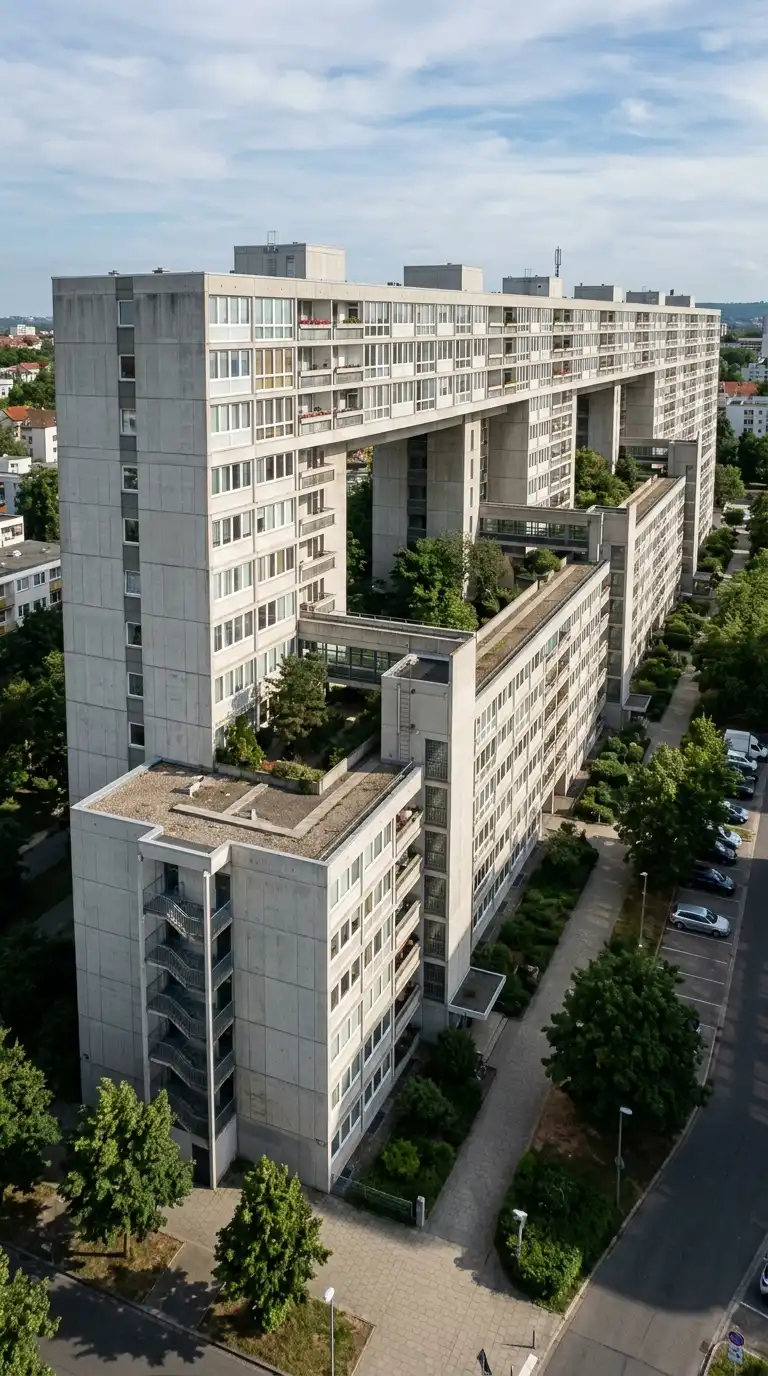
The slab apartment is a long, rectangular block, typically 5-15 storeys tall. The slab is oriented east-west, with units on both long sides. The slab is efficient and provides good solar orientation. The slab can be straight, L-shaped, or U-shaped.
This design is ideal for large sites and high-density development. The emotional effect is rational, efficient, and horizontal.
Quick Tips
- Orient the slab east-west for solar gain.
- The slab should be 12-15 metres deep for double-loaded units.
- Break long slabs with courtyards or shifts in direction.
7. The Tower Apartment
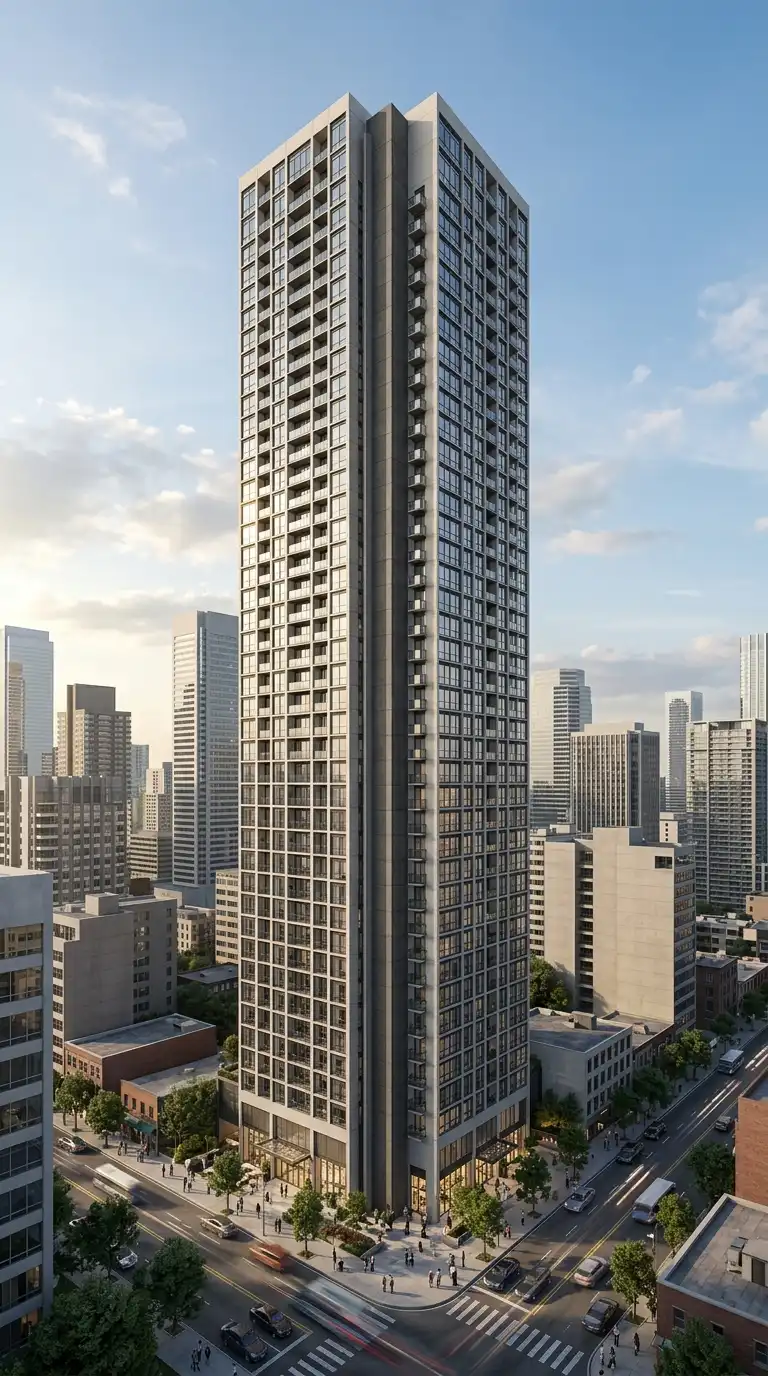
The tower apartment is a tall, slender building on a small footprint. The tower is 15-50 storeys tall. The footprint is square or rectangular. The core is in the centre, with units wrapping around all four sides. The tower maximises density and views.
This design is ideal for urban sites with excellent views. The emotional effect is vertical, dense, and spectacular.
Quick Tips
- The footprint should be square or nearly square.
- The core should be centrally located for equal access.
- Units should have windows on one or two sides.
8. The Finger Apartment
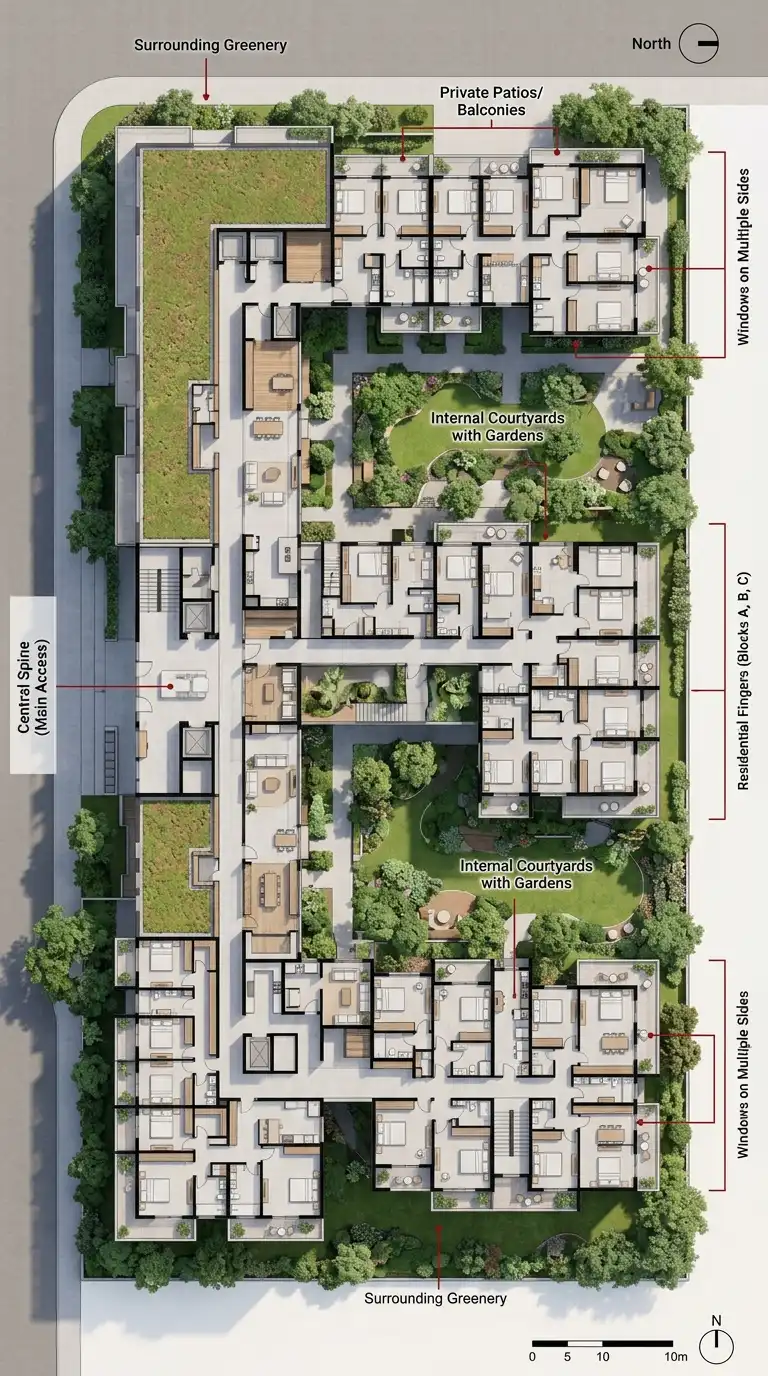
The finger apartment extends fingers of units from a central spine. Each finger is a linear cluster of units, 2-4 units wide. The fingers are separated by courtyards or gardens. The plan brings light and air to every unit.
This design is ideal for large suburban sites. The emotional effect is green, open, and nature-connected.
Quick Tips
- The spine should contain the core and shared amenities.
- Fingers should be 2-4 units wide.
- Fingers should be separated by courtyards or gardens.
9. The Terraced Apartment
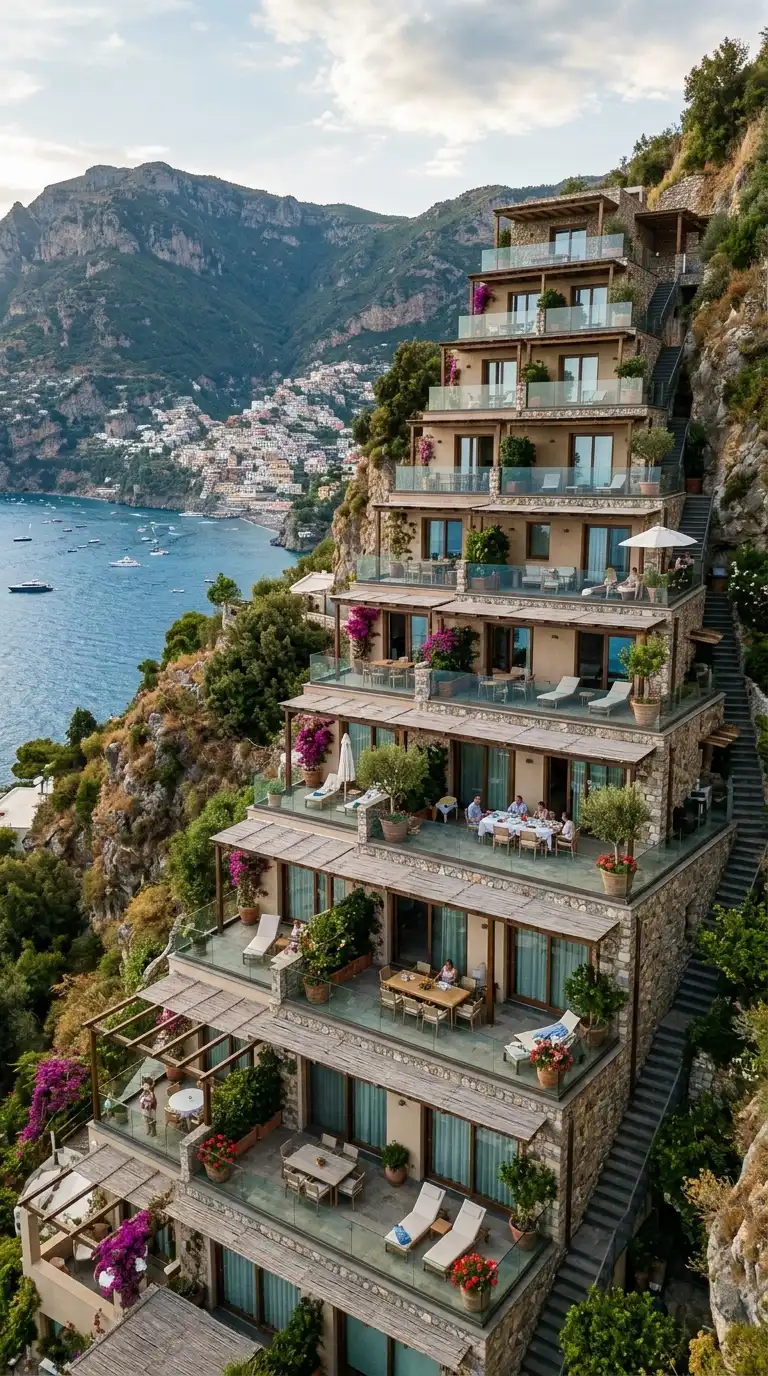
The terraced apartment steps down a slope. Each floor is set back from the floor below, creating outdoor terraces on every level. The building follows the topography instead of fighting it. Each unit has direct access to an outdoor terrace.
This design is ideal for hillside sites. The emotional effect is dramatic, site-responsive, and outdoor-oriented.
Quick Tips
- Each terrace should step back 1.5 to 3 metres.
- The building should follow the slope, not cut into it.
- Terraces should be deep enough for outdoor furniture.
10. The Atrium Apartment
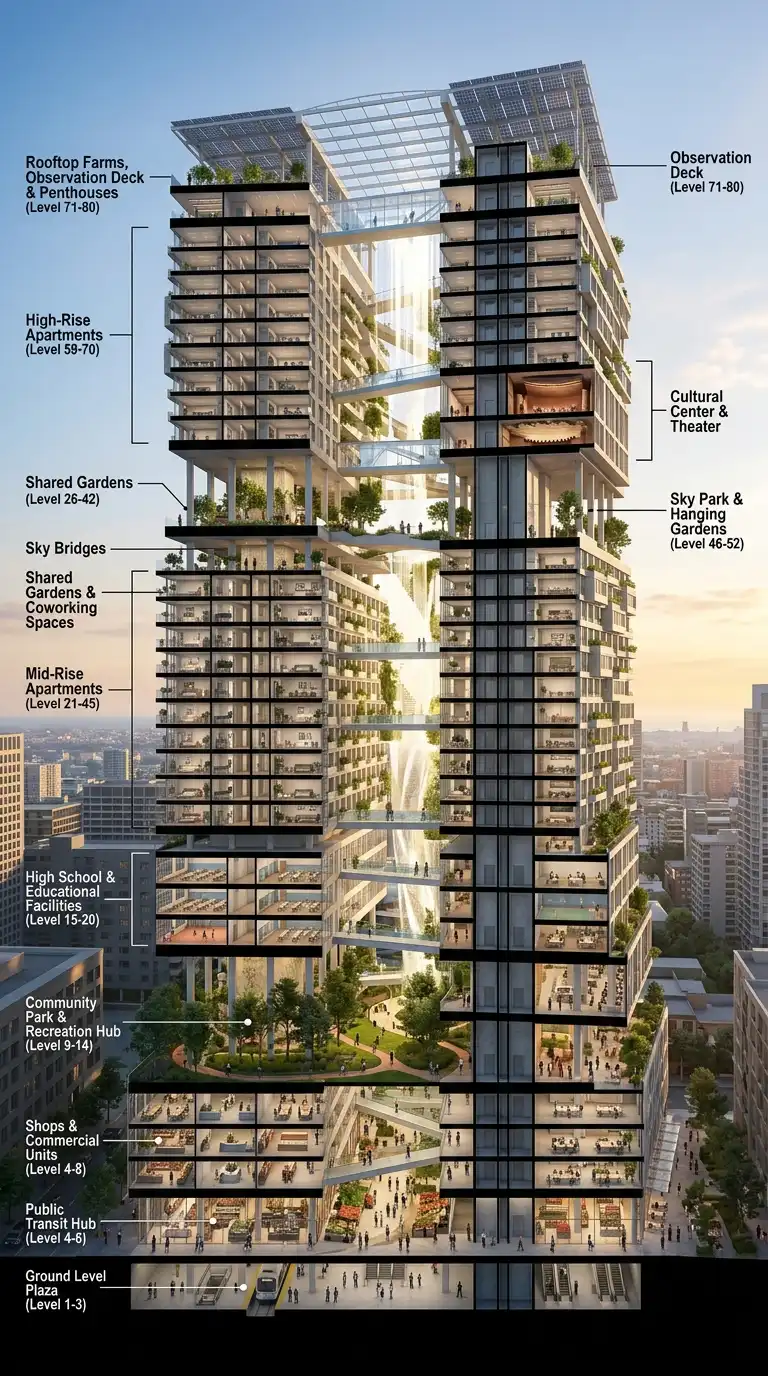
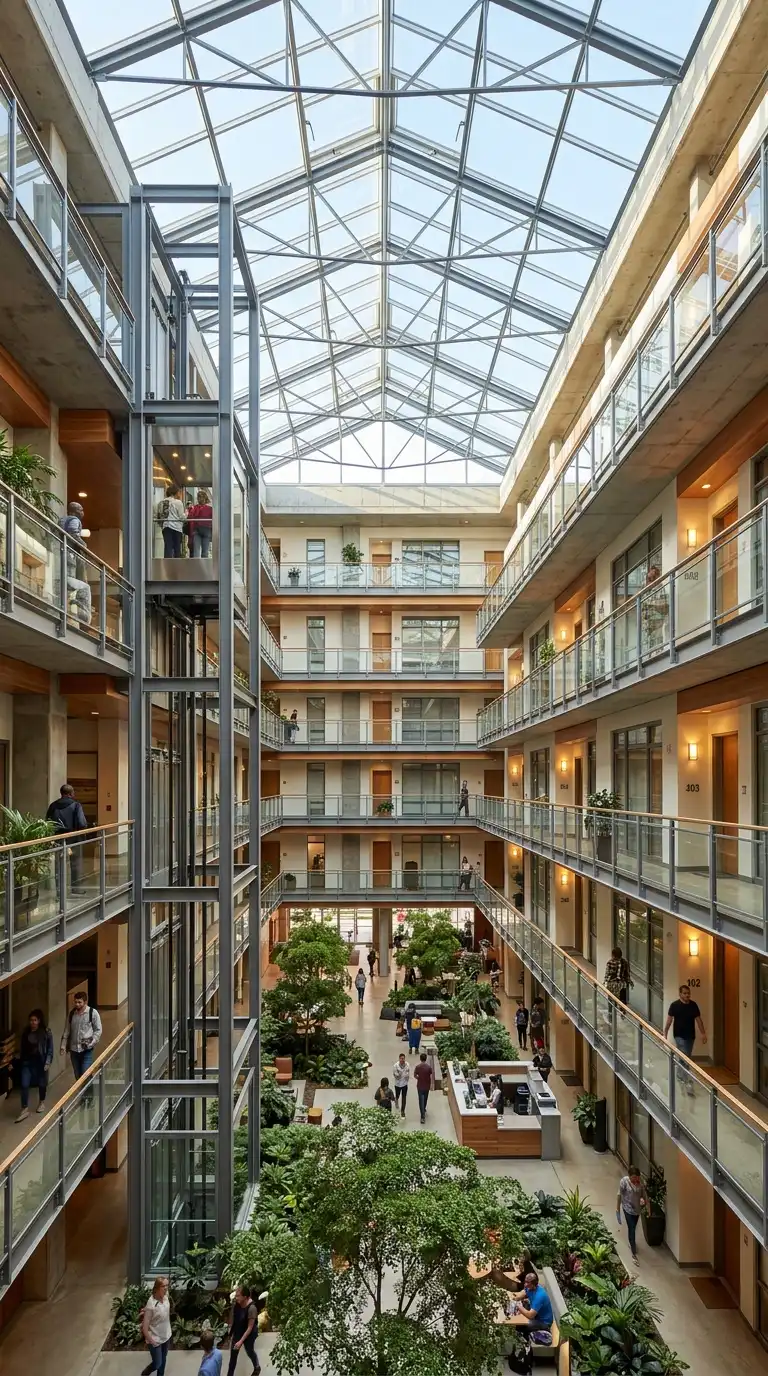
The atrium apartment has a large central space open to the sky, surrounded by units on multiple levels. The atrium is the heart of the building — a shared garden, a gathering space, a source of light. Units have windows facing the atrium and sometimes the exterior.
This design is ideal for deep, dense sites. The emotional effect is luminous, communal, and vertical.
Quick Tips
- The atrium should be at least 6 metres wide to feel generous.
- Balconies or bridges should surround the atrium on each level.
- The roof over the atrium should be glass, with shading for summer.
11. The Loft Apartment Building
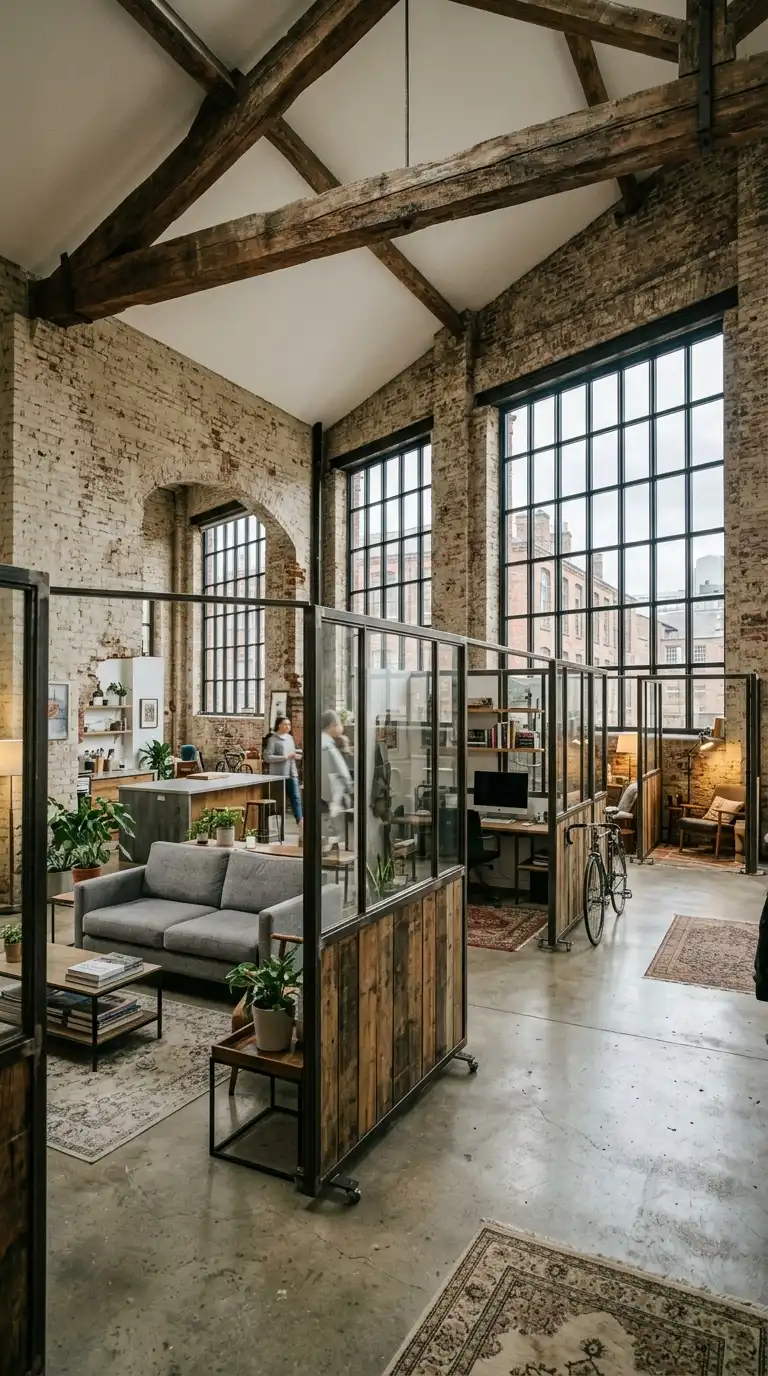
The loft apartment building is a converted industrial or commercial building — a warehouse, a factory, a department store. The spaces are open and flexible, with high ceilings, large windows, and exposed structure. Units are defined by furniture and partitions, not walls.
This design is ideal for urban sites with existing industrial buildings. The emotional effect is industrial, flexible, and creative.
Quick Tips
- Preserve original windows, columns, beams, and brick walls.
- Units should be open with movable partitions.
- Keep the ceiling high and exposed.
12. The Mixed-Use Apartment
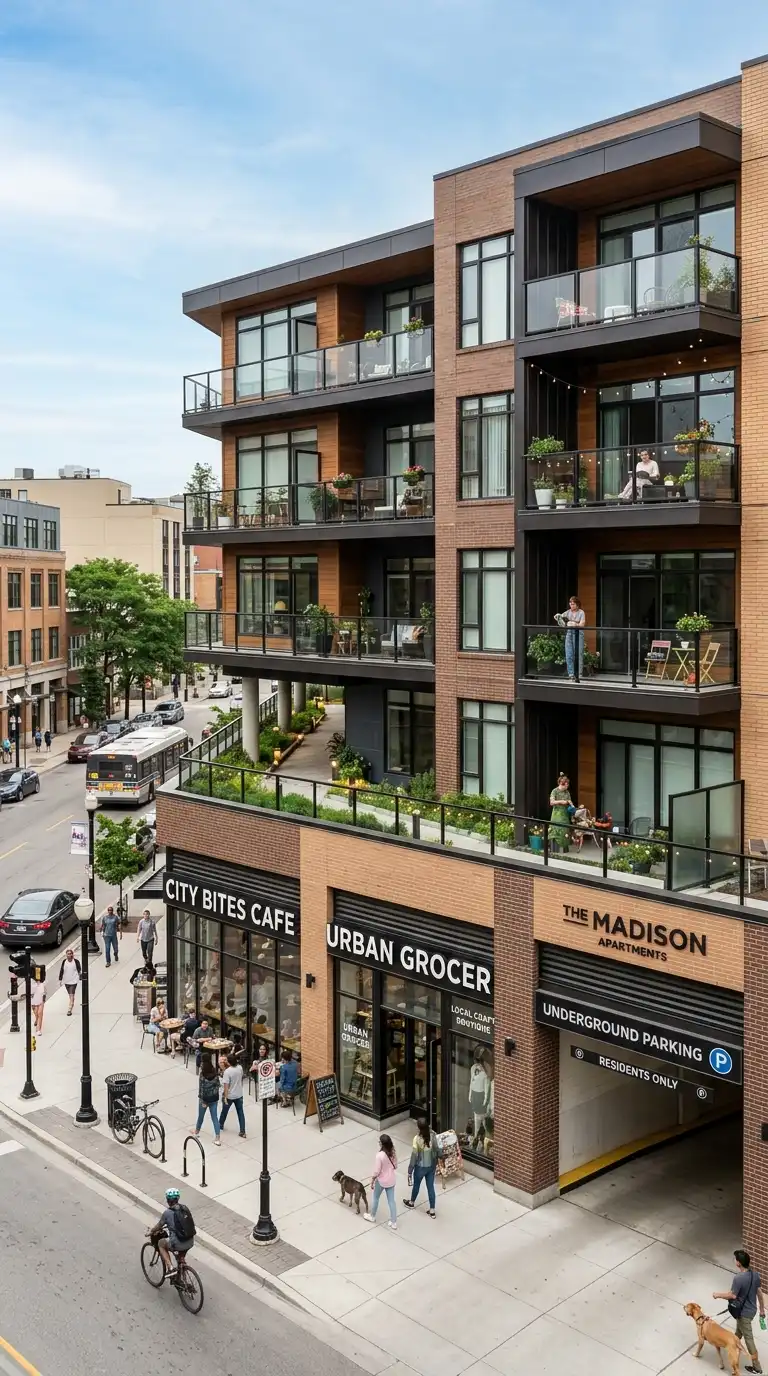
The mixed-use apartment combines residential units with retail, office, or civic uses. Retail is on the ground floor, facing the street. Housing is above, set back from the street. The building is active at all hours. The mix of uses creates a lively street.
This design is ideal for urban infill and transit-oriented development. The emotional effect is urban, lively, and diverse.
Quick Tips
- Retail should be at the street edge on the ground floor.
- Housing should be above, set back from the street.
- Parking should be underground or in a structure.
Final Thoughts
An apartment building is not a stack of boxes. It is a vertical community, a piece of the city, and a home. A single-loaded corridor gives every unit light and air. A point access plan eliminates long corridors. A courtyard creates a shared garden. A tower captures views. A terraced building follows the hill.
These 12 apartment designs are not mutually exclusive. A tower can have an atrium. A slab can be terraced. A mixed-use building can be a courtyard building. The best apartment buildings are not the most efficient — they are the most humane. They give each resident a view, a connection to the street, and a sense of home. They are not just buildings — they are neighbourhoods stacked vertically.