Art Nouveau, flourishing from 1890 to 1910, was a radical break from historical revival styles. It rejected classical symmetry and historical ornament for organic, flowing forms inspired by nature. The style is sinuous, asymmetrical, and total — furniture, light fixtures, door handles, and windows are all designed as a unified whole. The whiplash curve is the signature motif.
These 12 Art Nouveau architecture ideas span buildings, interiors, and decorative elements across Europe. Each idea includes defining characteristics, key examples, and design principles.
1. The Whiplash Curve Facade
The whiplash curve is the most recognisable Art Nouveau motif. The curve is dynamic, asymmetrical, and organic — like a cracking whip. The curve appears in ironwork, stone carving, and ceramic decoration on building facades. The curve is never a perfect arc; it accelerates and decelerates.
Victor Horta’s Hôtel Tassel in Brussels (1893) is the defining example. The emotional effect is dynamic, organic, and energetic.
Quick Tips
- The curve must be asymmetrical and accelerating — no perfect arcs.
- Use iron, stone, or ceramic for the curving lines.
- The curve should appear on railings, beams, or decorative panels.
2. The Iron and Glass Canopy
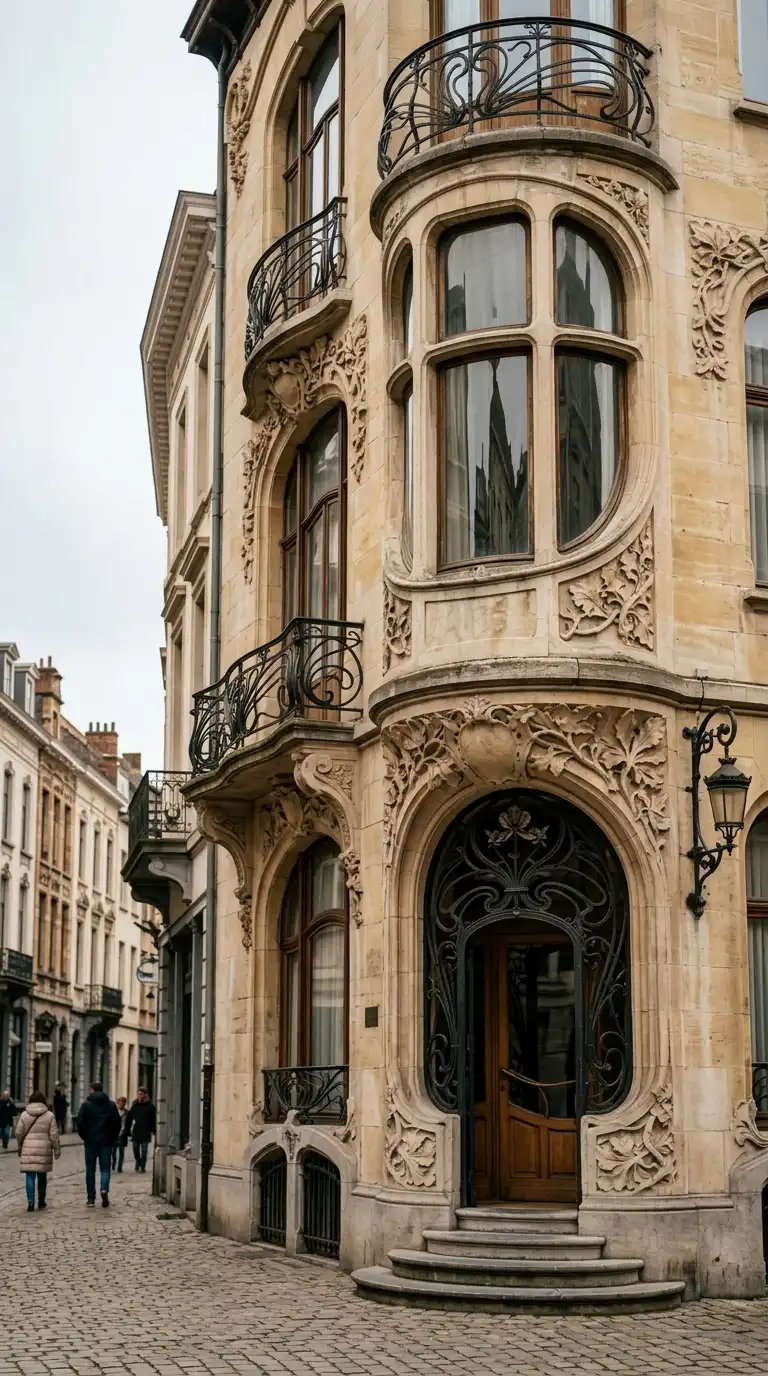
The Art Nouveau iron and glass canopy is a dramatic entrance feature. The canopy is supported by slender iron columns that branch into curving forms like tree branches or plant stems. The glass is curved and patterned. The canopy shelters the entrance while announcing the building’s modernity.
Hector Guimard’s Paris Métro entrances (1900) are the defining examples. The emotional effect is organic, welcoming, and futuristic.
Quick Tips
- The iron structure must branch like plant stems or tree branches.
- The glass must be curved and often coloured or patterned.
- The canopy must be asymmetrical and organic in form.
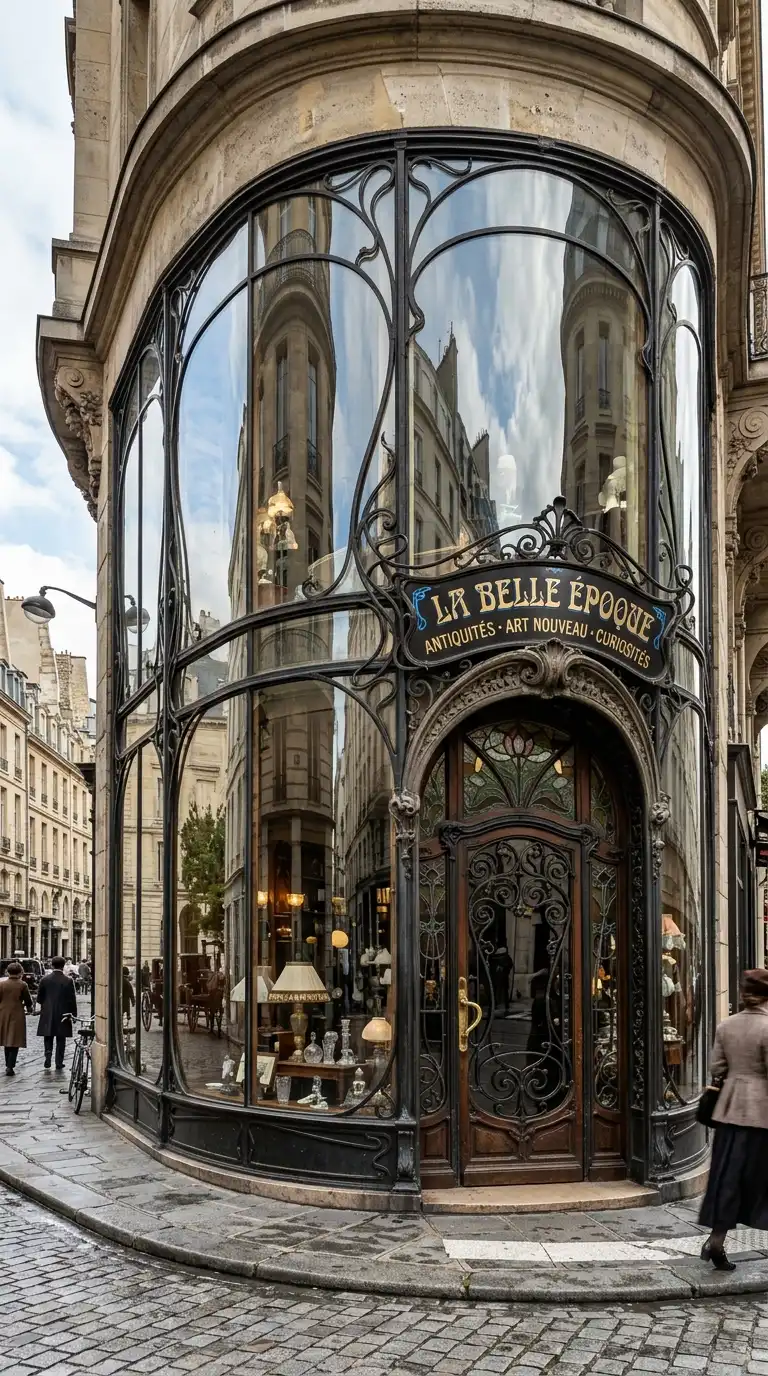
3. The Curved Glass Shopfront
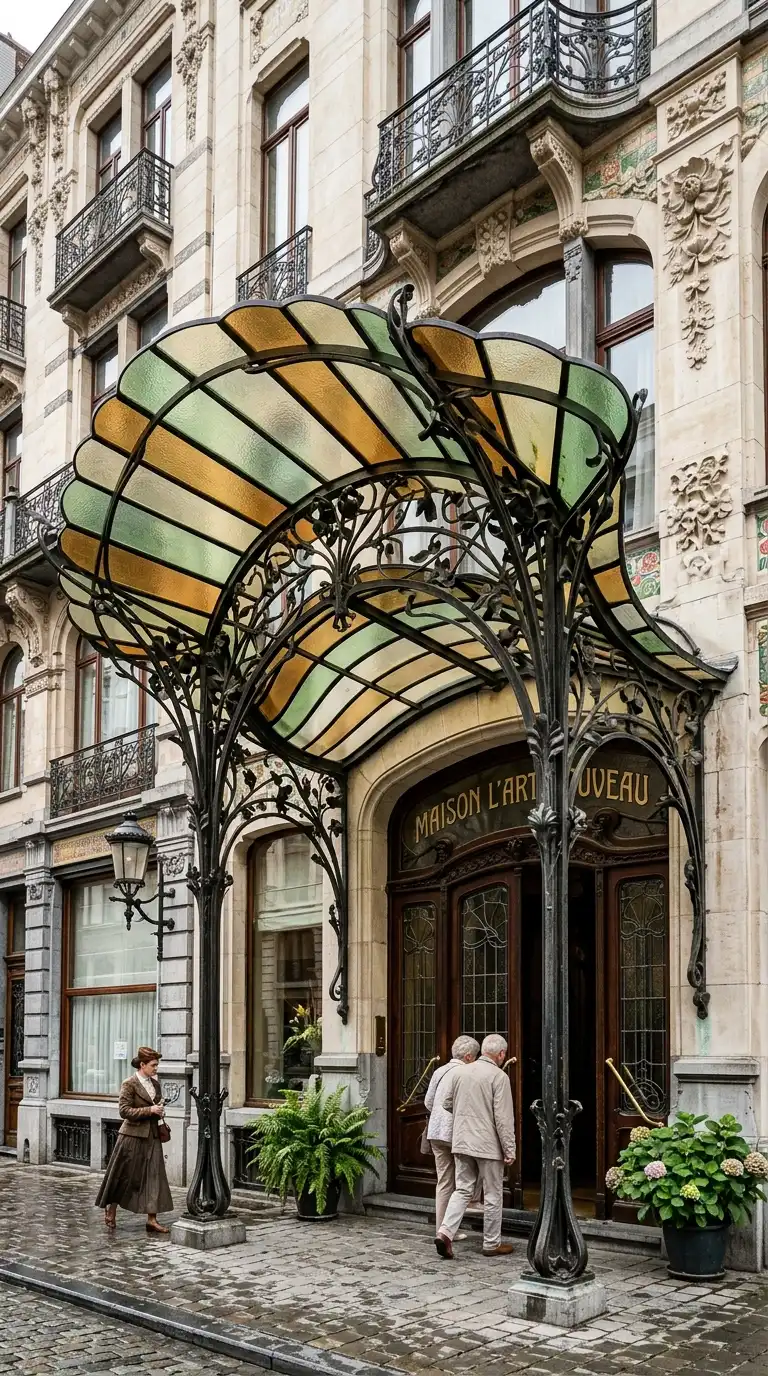
The Art Nouveau shopfront features large curved glass windows. The glass is not flat — it curves around corners or bulges outward. The frames are slender iron or wood, flowing in organic curves. The entrance is recessed and welcoming.
The Shop of the Céramique Moderne in Paris (1900) by Guimard is a defining example. The emotional effect is inviting, transparent, and flowing.
Quick Tips
- The glass must be curved, not flat — wrap around corners.
- The frames must be slender with organic curves.
- The entrance must be recessed from the street.
4. The Plant Column
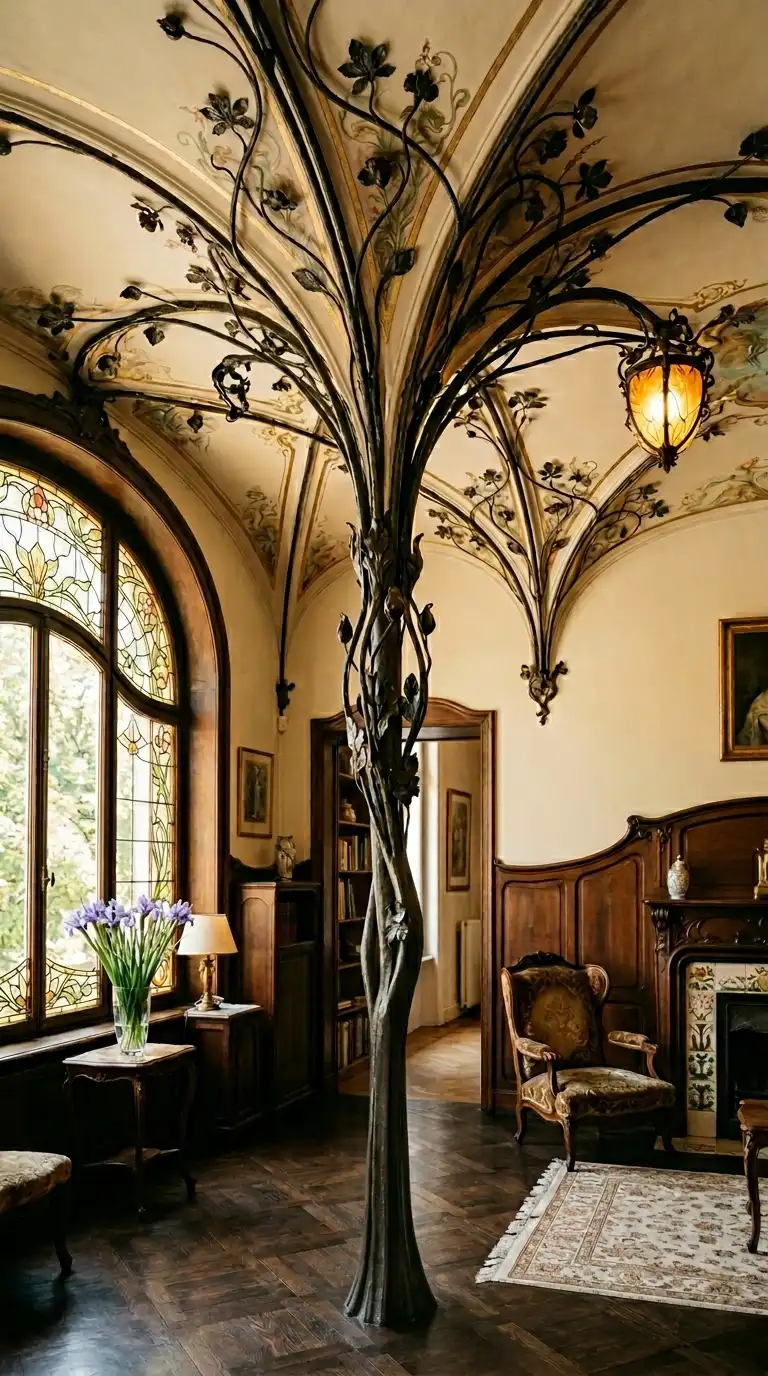
The Art Nouveau column is not a classical column. It has no base, no shaft, no capital in the traditional sense. Instead, the column is shaped like a plant stem — thickening and thinning, branching at the top. The column is made of iron or stone, but it appears organic.
Victor Horta’s columns in the Hôtel Tassel are the defining examples. The emotional effect is organic, structural, and surprising.
Quick Tips
- The column must taper and swell like a plant stem.
- The top must branch into curving ribs or beams.
- No classical elements — no base, no capital, no fluting.
5. The Stained Glass Window
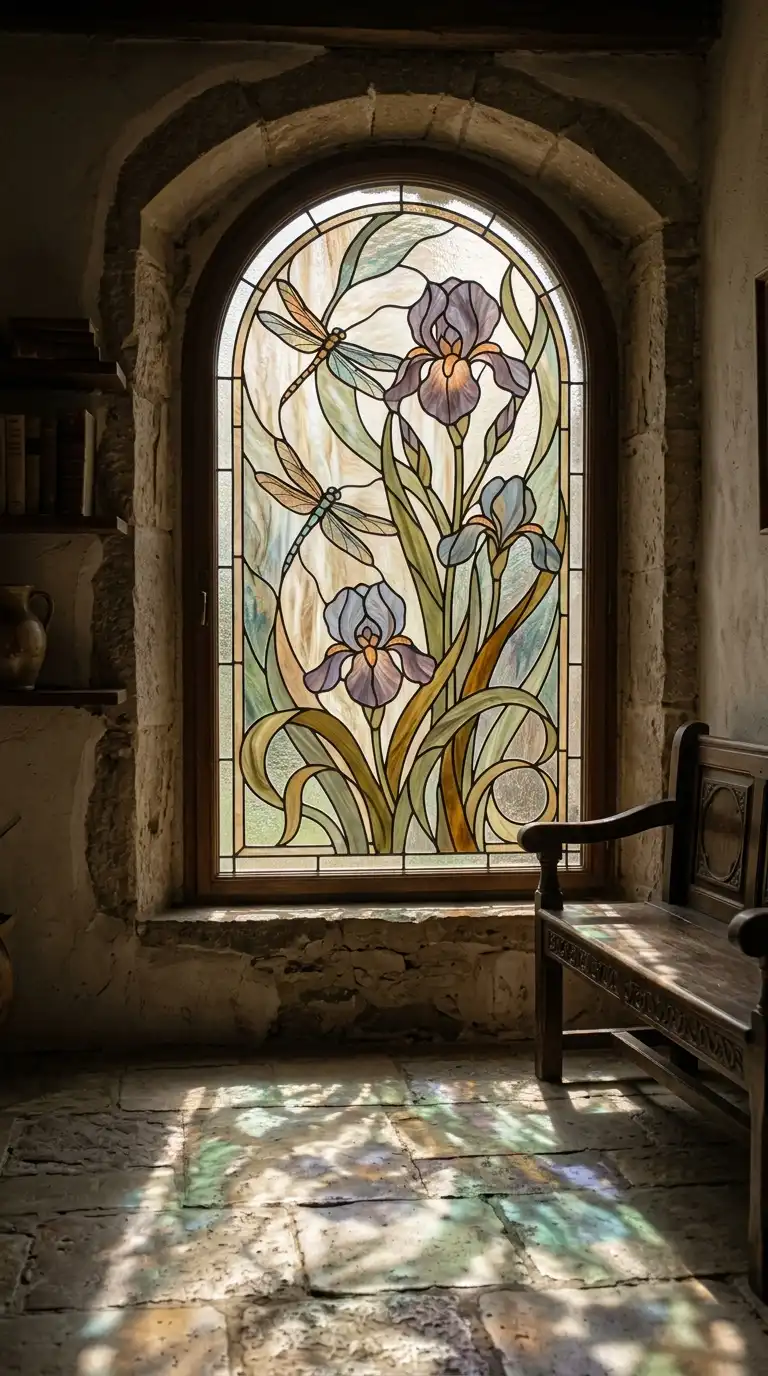
Art Nouveau stained glass is not religious. It is natural. The windows feature irises, lilies, dragonflies, and peacocks. The colours are muted — greens, ambers, mauves, and soft blues. The glass is leaded, with the lead lines forming organic curves.
Émile Gallé’s windows are the defining examples. The emotional effect is luminous, natural, and poetic.
Quick Tips
- The subject must be natural: flowers, insects, birds, or leaves.
- Colours must be muted — no bright primary colours.
- The lead lines must follow organic curves, not straight lines.
6. The Whiplash Staircase
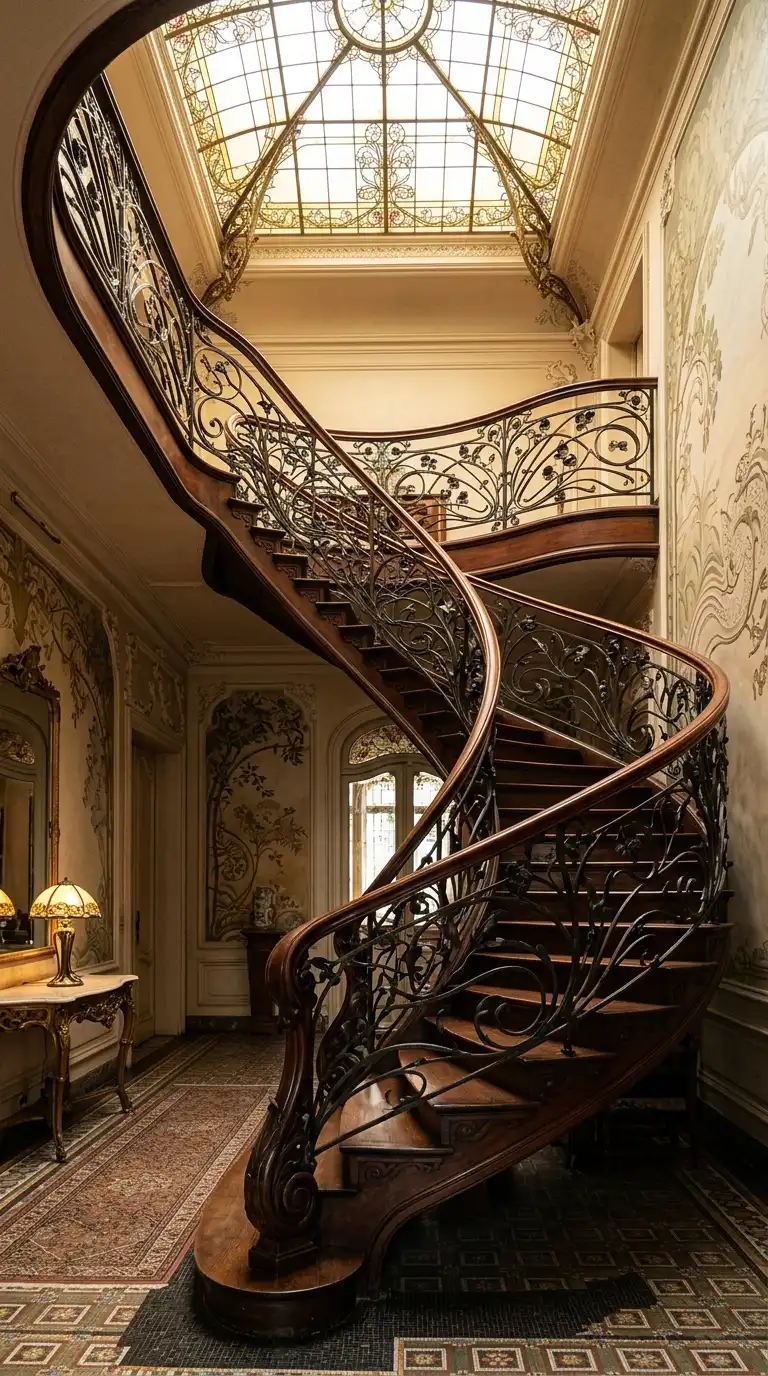
The Art Nouveau staircase is a continuous, flowing form. The handrail is a single whiplash curve, uninterrupted from top to bottom. The balusters are organic, branching forms. The staircase is often in the centre of the building, visible from the entrance.
Victor Horta’s staircase in the Hôtel Tassel is the defining example. The emotional effect is flowing, dramatic, and continuous.
Quick Tips
- The handrail must be a single continuous curve.
- Balusters must branch like plant stems.
- The staircase must be visible from the entrance.
7. The Organic Doorway
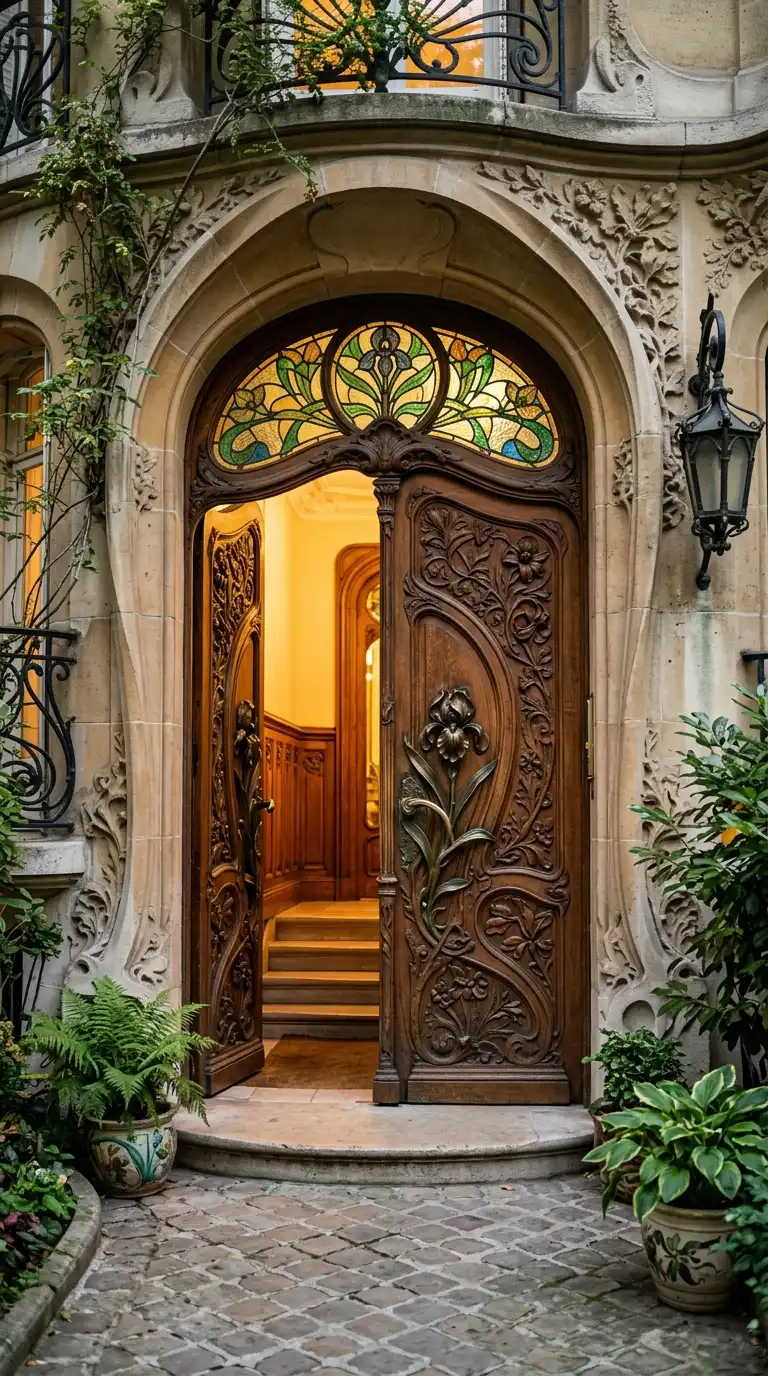
The Art Nouveau doorway is not rectangular. The opening is curved, often with a sinuous, asymmetrical shape. The door itself is made of wood with carved organic panels. The door handle is bronze, shaped like a flower or a vine. The doorway is a total work of art.
Antoni Gaudí’s doorways in the Casa Batlló (1904) are defining examples. The emotional effect is surprising, organic, and crafted.
Quick Tips
- The opening must be curved or asymmetrical — no rectangles.
- The door must have carved organic panels.
- The door handle must be sculptural bronze.
8. The Gaudi Facade
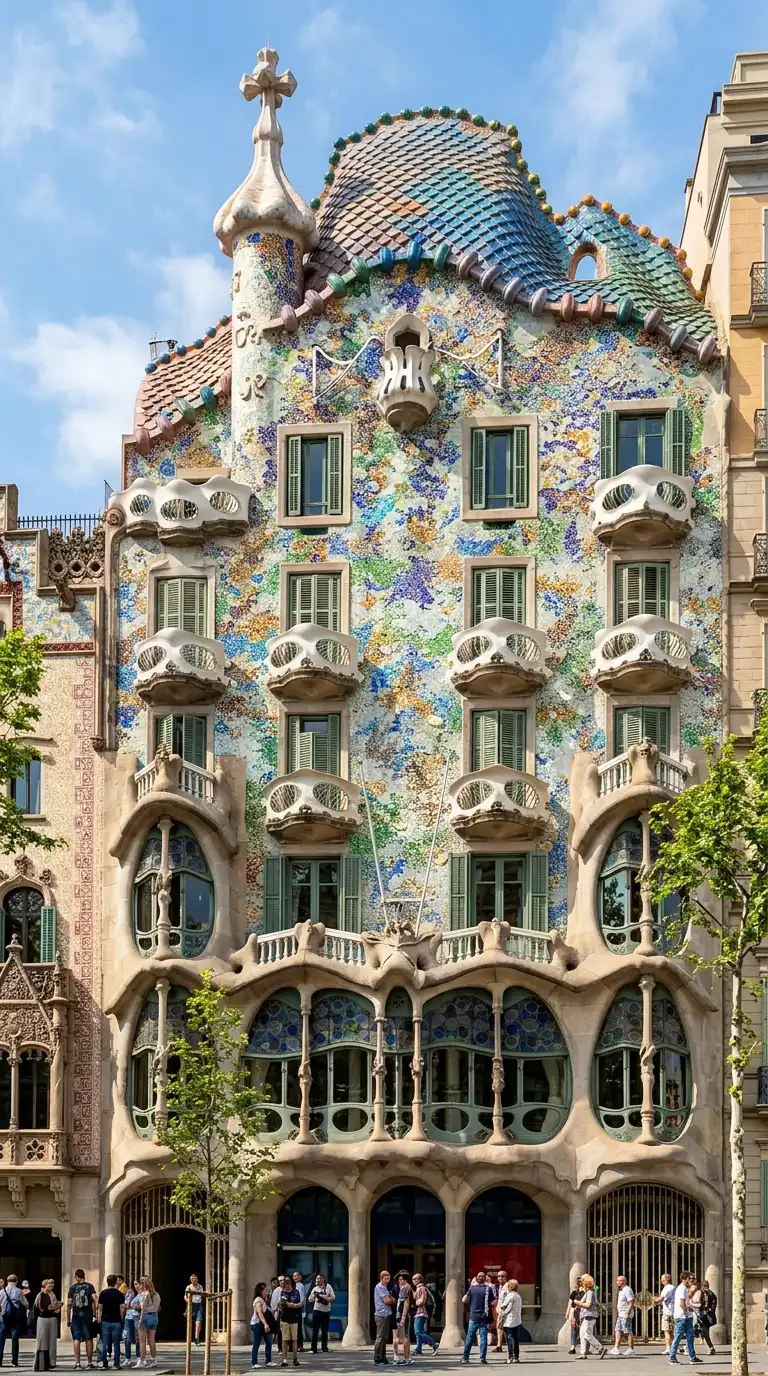
Antoni Gaudí’s facades are the most extreme expression of Art Nouveau. The stone appears to melt and flow. There are no straight lines. The balconies are bone-like. The towers are pepper pots. The surface is covered in colourful mosaic (trencadís).
The Casa Batlló and Casa Milà facades in Barcelona are the defining examples. The emotional effect is surreal, organic, and dazzling.
Quick Tips
- No straight lines — everything must curve.
- Use trencadís (broken tile mosaic) for colour.
- Balconies should be sculptural, like bone or seaweed.
9. The Peacock Motif
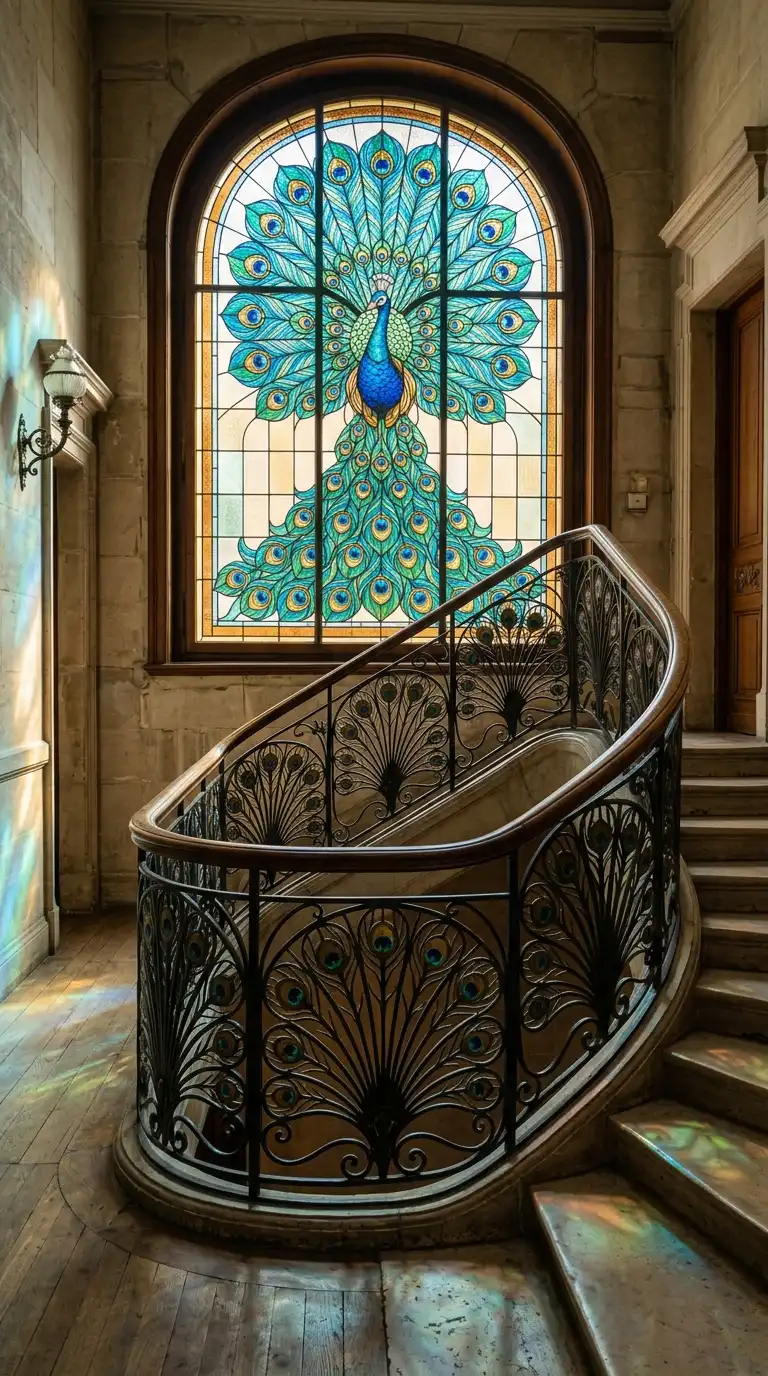
The peacock is a recurring motif in Art Nouveau. The peacock’s tail feathers — their eyes, their iridescent colours, their fan shape — appear in stained glass, tiles, and ironwork. The peacock symbolises beauty, vanity, and nature’s excess.
Charles Rennie Mackintosh’s Glasgow School of Art (1899) features peacock motifs. The emotional effect is decorative, colourful, and symbolic.
Quick Tips
- Use peacock feathers as a repeating pattern.
- Colours should be peacock blues, greens, and golds.
- The fan shape of the tail can become an architectural form.
10. The Total Interior
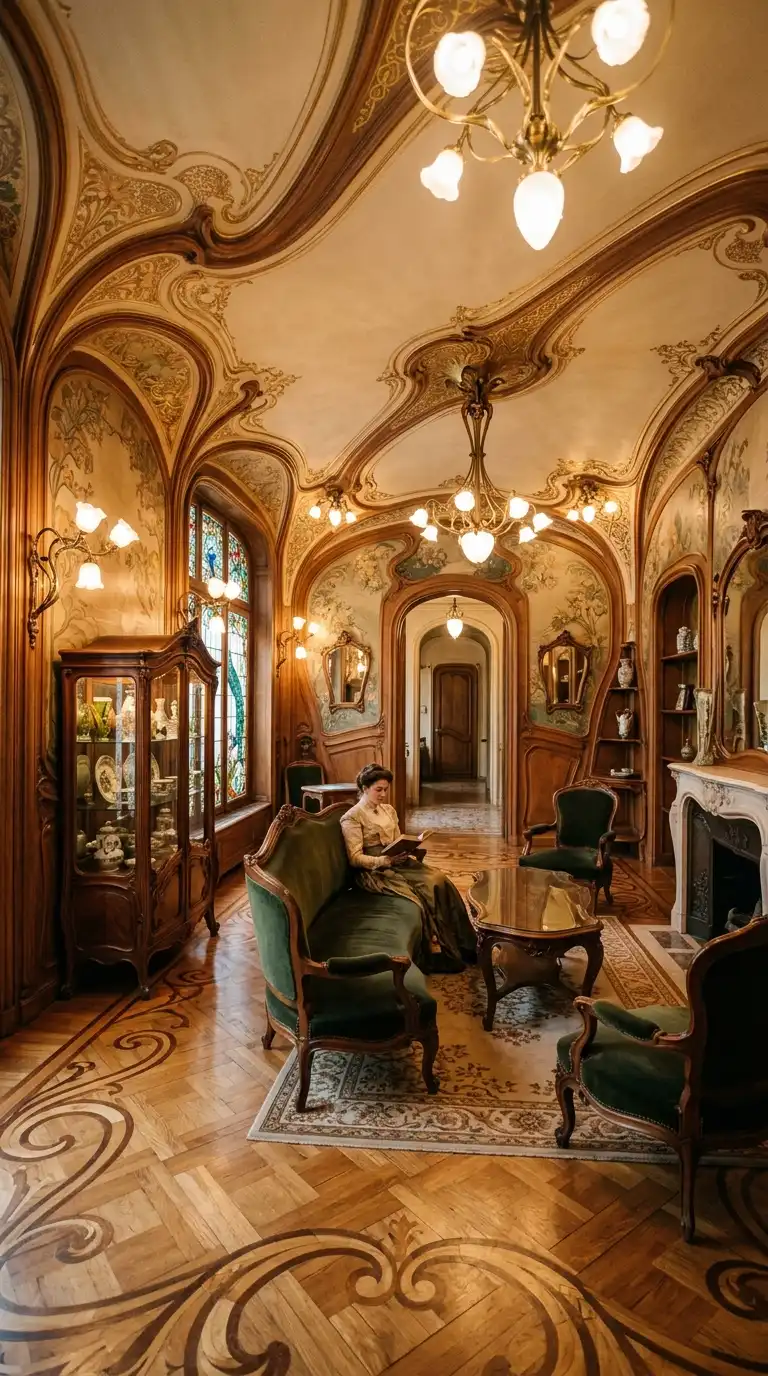
The Art Nouveau interior is a total work of art (Gesamtkunstwerk). Everything is designed together: walls, ceiling, floor, furniture, light fixtures, door handles, even the ventilation grilles. The space is unified by a single organic vocabulary of curves.
Victor Horta’s Hôtel Tassel interior is the defining example. The emotional effect is immersive, unified, and overwhelming.
Quick Tips
- Every surface must be decorated with organic curves.
- Furniture must be custom-designed for the space.
- Light fixtures must be integrated into the architecture.
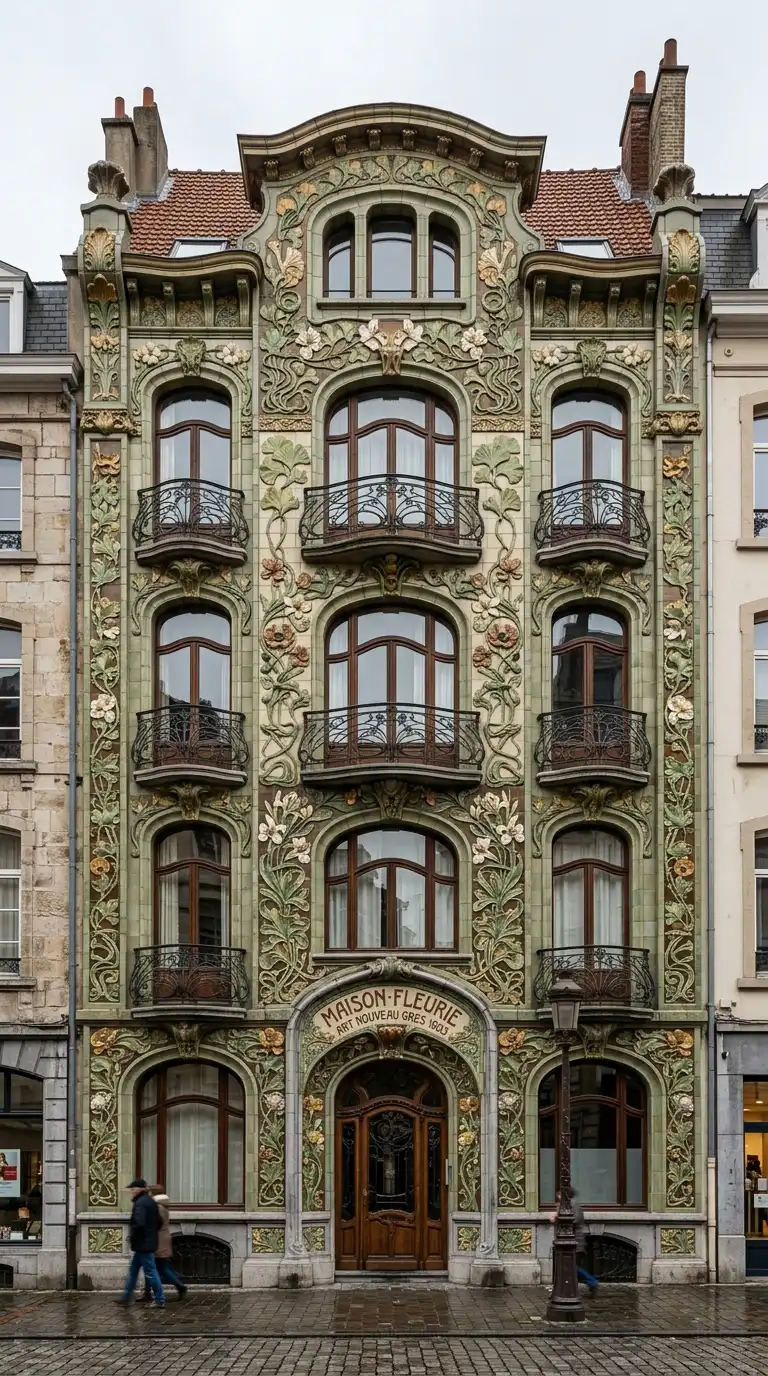
11. The Gres Building
Gres (glazed ceramic) was a favourite Art Nouveau material. The ceramic tiles are moulded in organic shapes — leaves, flowers, vines — and glazed in muted greens, yellows, and browns. The tiles cover entire facades, creating a textured, colourful surface.
The Ceramic House in Brussels (1900) by Paul Hankar is a defining example. The emotional effect is textured, colourful, and crafted.
Quick Tips
- Tiles must be moulded in organic, natural forms.
- Glazes must be muted — no bright primary colours.
- The tiles must cover large areas of the facade.
12. The Vienna Secession Building
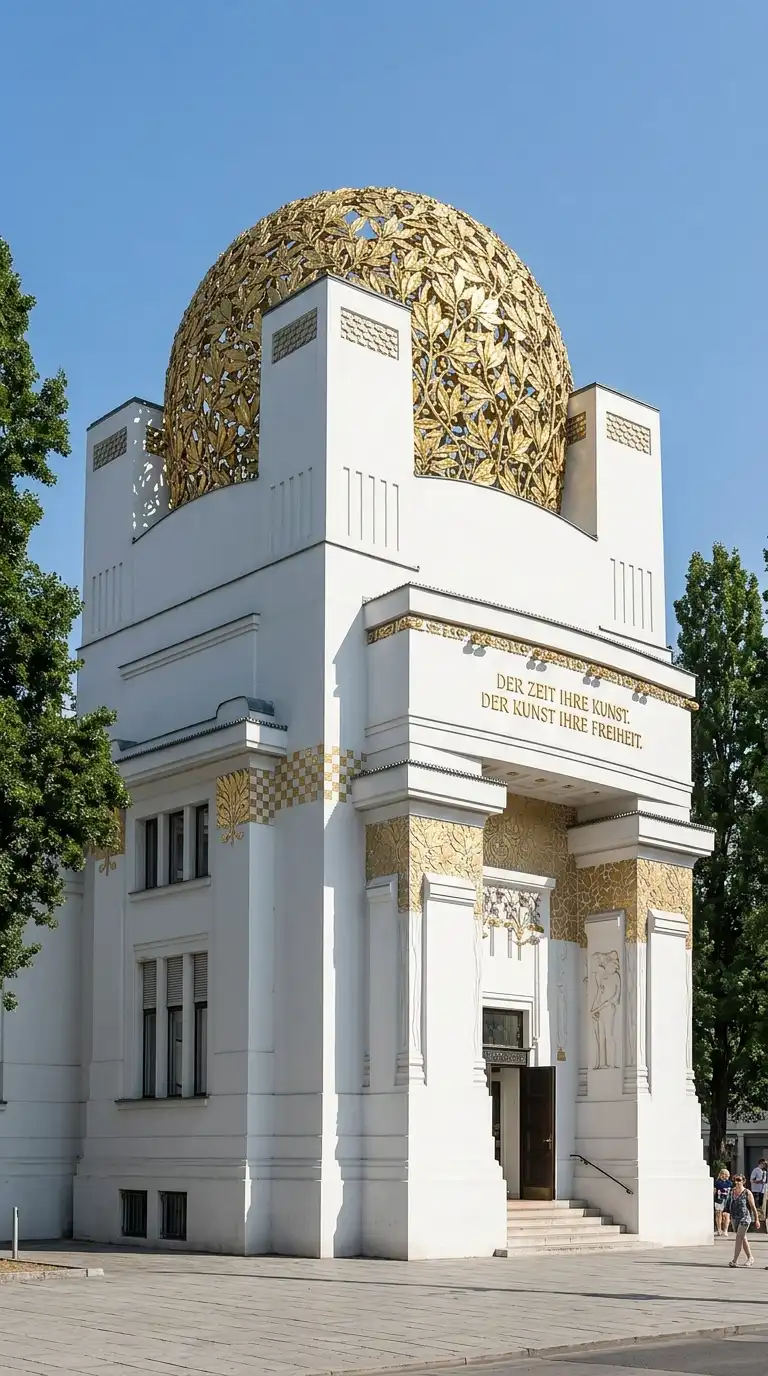
The Vienna Secession was the Austrian branch of Art Nouveau. The Secession Building in Vienna (1898) by Joseph Maria Olbrich is a geometric, restrained version of Art Nouveau. The building has a white cubic form, a golden dome of laurel leaves, and the words “To every age its art, to art its freedom” above the entrance.
The emotional effect is geometric, symbolic, and restrained.
Quick Tips
- The form should be cubic and geometric, not flowing.
- Ornament should be symbolic — laurel leaves, owls, Greek keys.
- The building should be white with gold accents.
Final Thoughts
Art Nouveau was a brief moment — barely twenty years — but its influence has never disappeared. The style rejected the past and embraced nature, craft, and the total work of art. It transformed cities with its flowing ironwork, curved glass, and organic facades.
These 12 Art Nouveau ideas are not mutually exclusive. A whiplash facade can have a peacock stained glass window. A total interior can have a Gaudí staircase. A gres building can have a Vienna Secession door. The best Art Nouveau architecture is not pure — it is personal, crafted, and utterly distinctive. It is architecture that dares to curve.