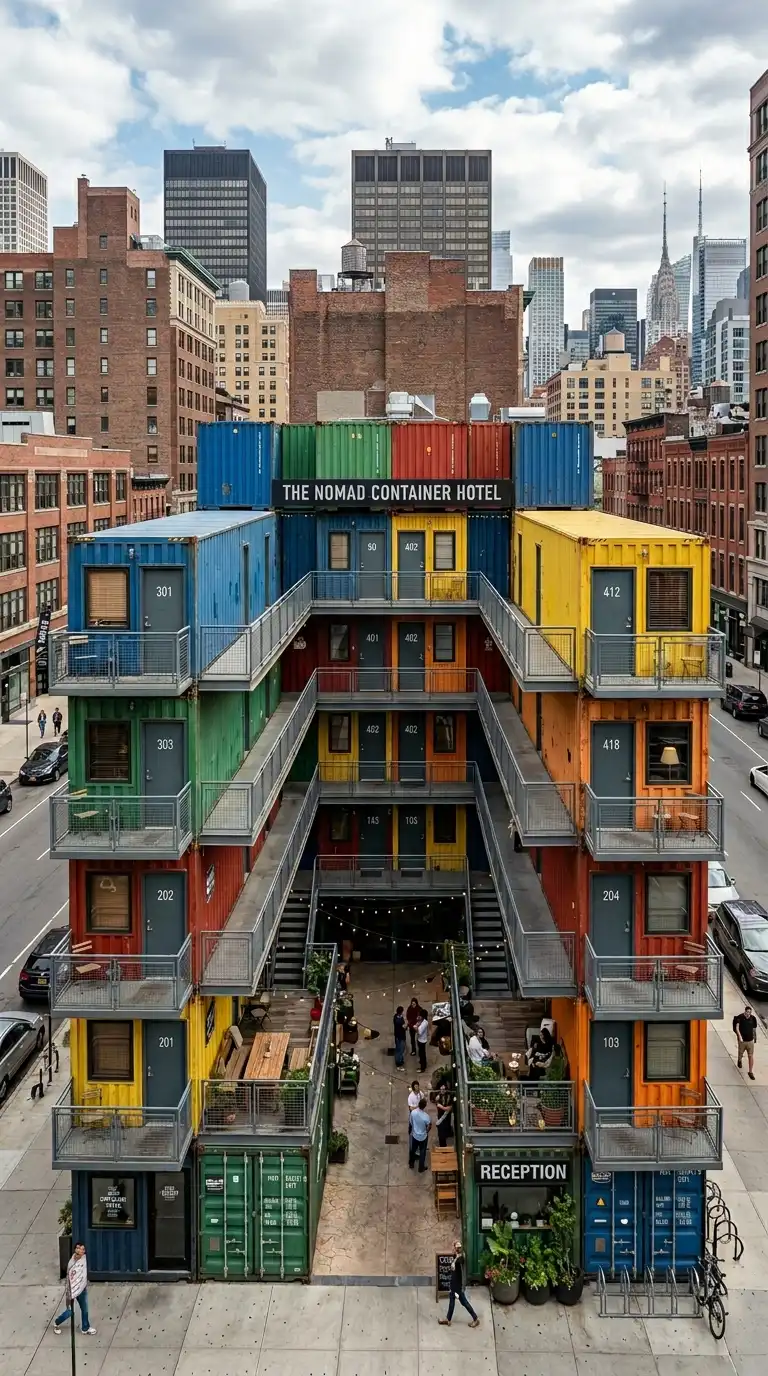
Landscape architecture is the design of outdoor space. It is not gardening at scale — it is the shaping of land, water, plants, and structures to create functional, beautiful, and ecologically resilient environments. A well-designed landscape manages stormwater, provides habitat, moderates temperature, frames views, and supports human activity.
These 18 landscape architecture designs span residential gardens, public parks, urban plazas, and ecological restoration projects. Each design includes defining characteristics, design principles, and applications.
1. The Rain Garden
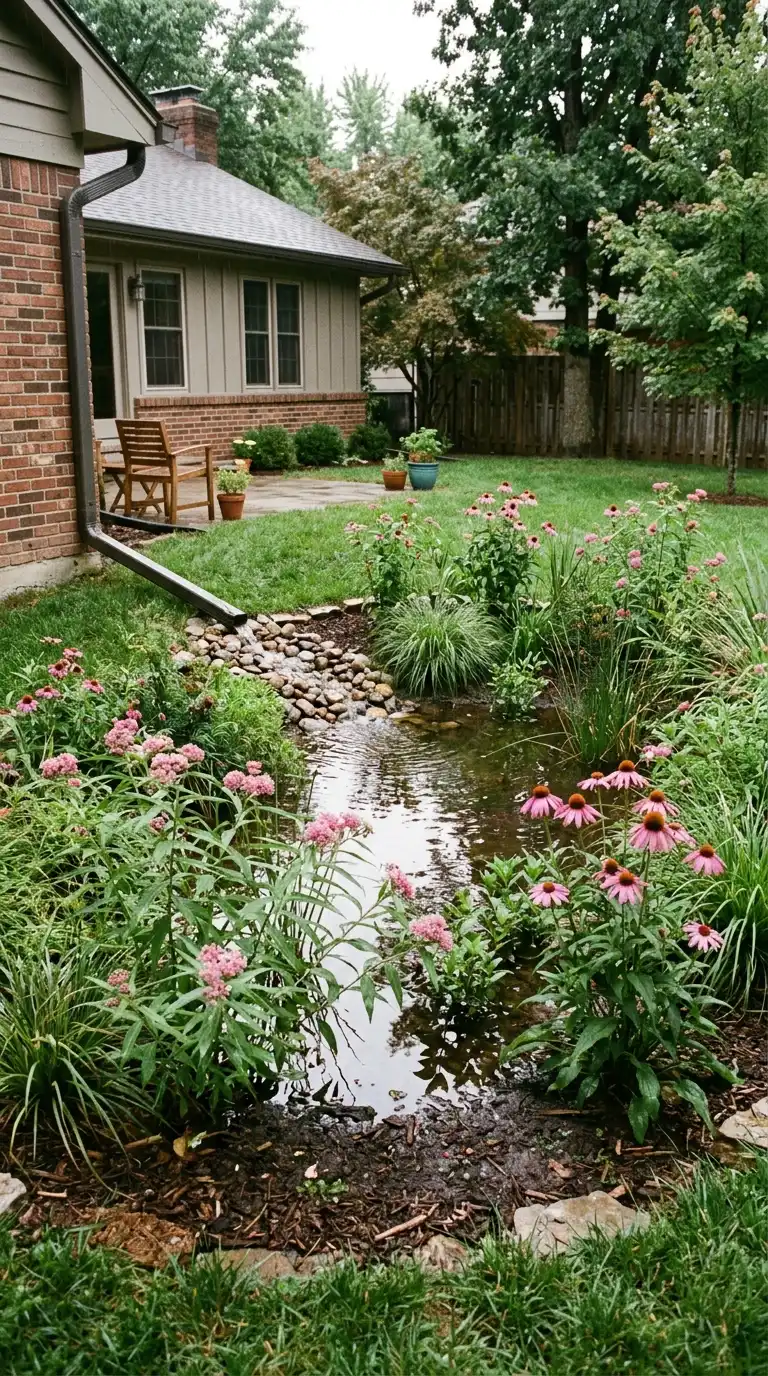
The rain garden is a planted depression that captures stormwater runoff from roofs, driveways, and streets. Water soaks into the ground within 24-48 hours, filtering pollutants and recharging groundwater instead of overwhelming sewer systems.
The garden is planted with deep-rooted, water-tolerant native plants. The bottom is flat to spread water evenly. The inlet and outlet are designed to handle overflow during heavy storms. The emotional effect is ecological, functional, and surprisingly beautiful.
Quick Tips
- Locate the rain garden at least 3 metres from building foundations.
- Size the garden to capture runoff from the contributing drainage area.
- Use native wetland plants: sedges, rushes, swamp milkweed, dogwood.
2. The Green Roof
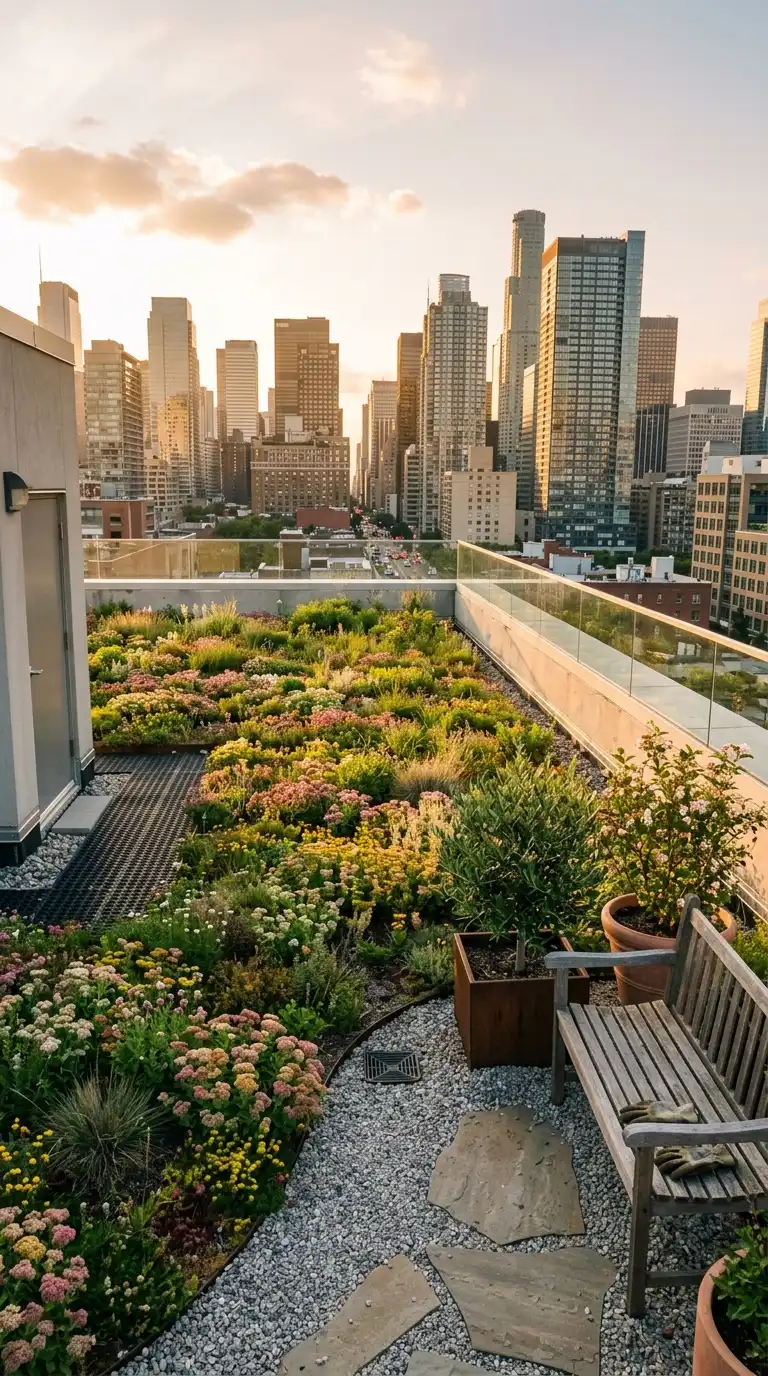
The green roof is a vegetated layer installed on top of a building. Extensive green roofs are shallow (5-15cm of growing medium) and support drought-tolerant sedums and grasses. Intensive green roofs are deeper (15-50cm) and support shrubs, small trees, and even vegetable gardens.
Green roofs manage stormwater, reduce heating and cooling loads, extend roof lifespan, and provide habitat. The emotional effect is ecological, urban, and surprising.
Quick Tips
- Consult a structural engineer — wet green roofs are heavy.
- Extensive roofs are lower maintenance but less biodiverse.
- Use sedum mats for instant coverage, seeds for lower cost.
3. The Permeable Pavement Plaza
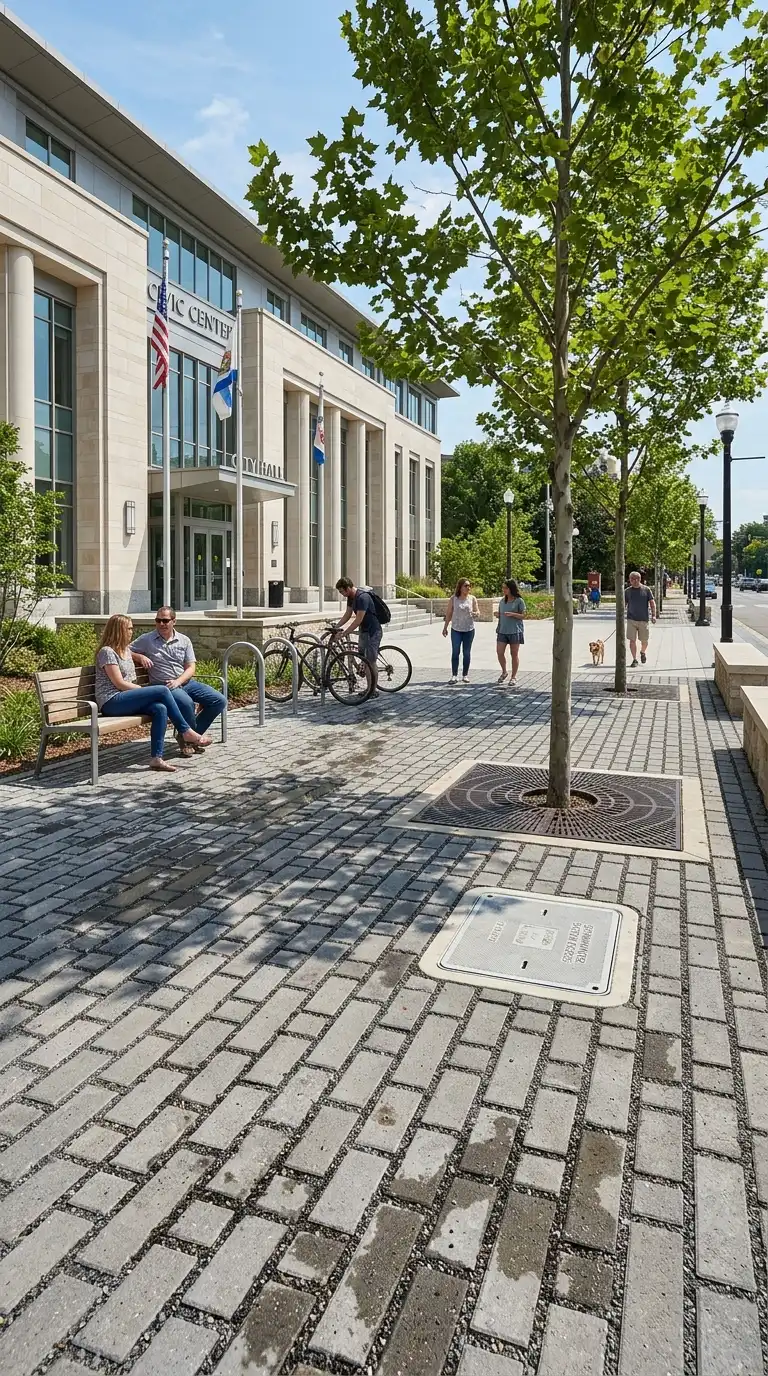
Permeable pavement allows water to infiltrate through the surface into a stone reservoir below, where it slowly soaks into the subsoil. The plaza is paved but does not shed water — it absorbs it.
This technique transforms parking lots, plazas, and driveways from impervious surfaces into stormwater management systems. Materials include porous asphalt, pervious concrete, and permeable pavers. The emotional effect is civic, functional, and environmentally responsible.
Quick Tips
- Permeable pavement requires a stone reservoir layer at least 30cm deep.
- Do not use permeable pavement on slopes over 5%.
- Regular vacuuming prevents clogging.
4. The Native Meadow
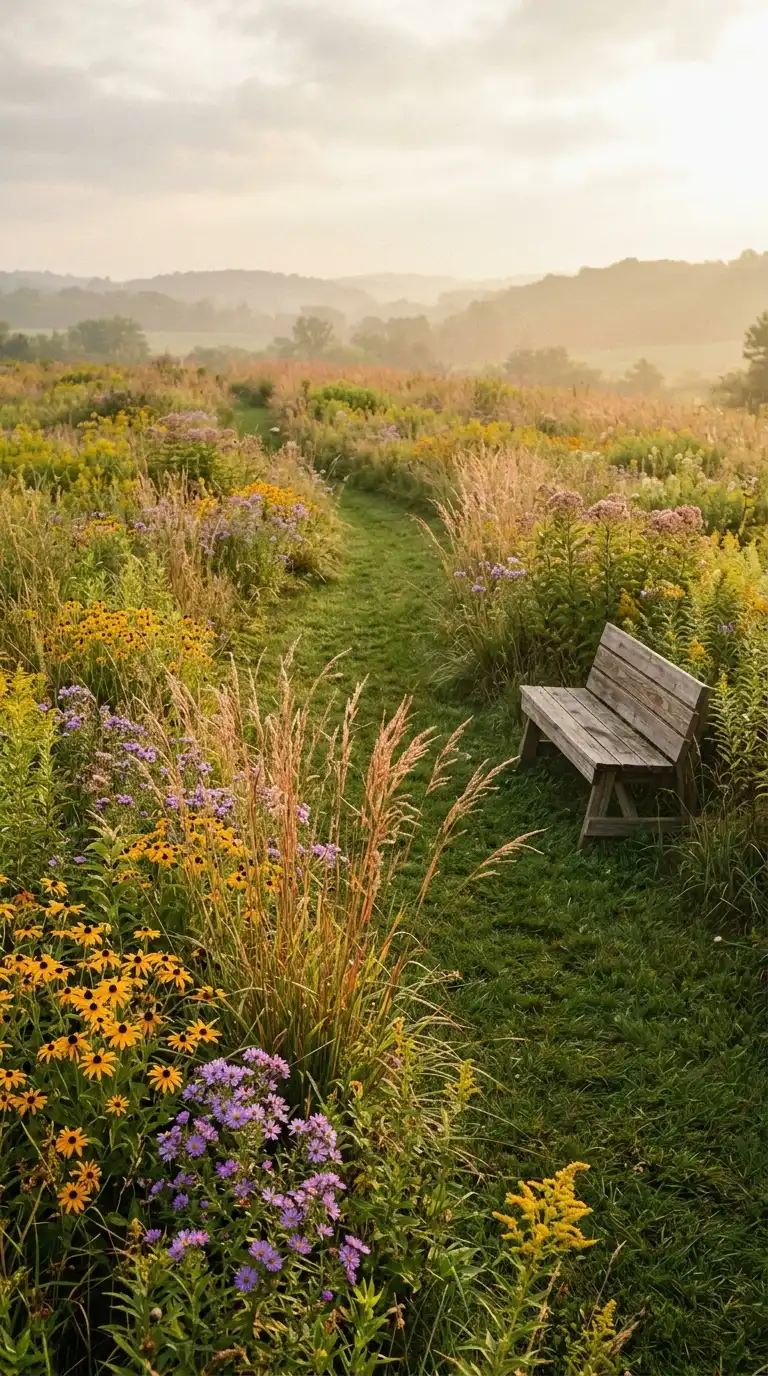
The native meadow replaces lawn with a diverse planting of native grasses and wildflowers. The meadow is mowed once a year (in late winter) to manage woody plants. In between, it is left to grow, bloom, and set seed.
Meadows provide habitat for pollinators, birds, and beneficial insects. They require no fertiliser, little water after establishment, and far less mowing than lawn. The emotional effect is wild, seasonal, and ecologically rich.
Quick Tips
- Remove existing lawn and weeds before planting — meadow establishment takes 2-3 years.
- Use a seed mix of at least 20 native species for diversity.
- A mown edge or path signals intention, not neglect.
5. The Bioswale
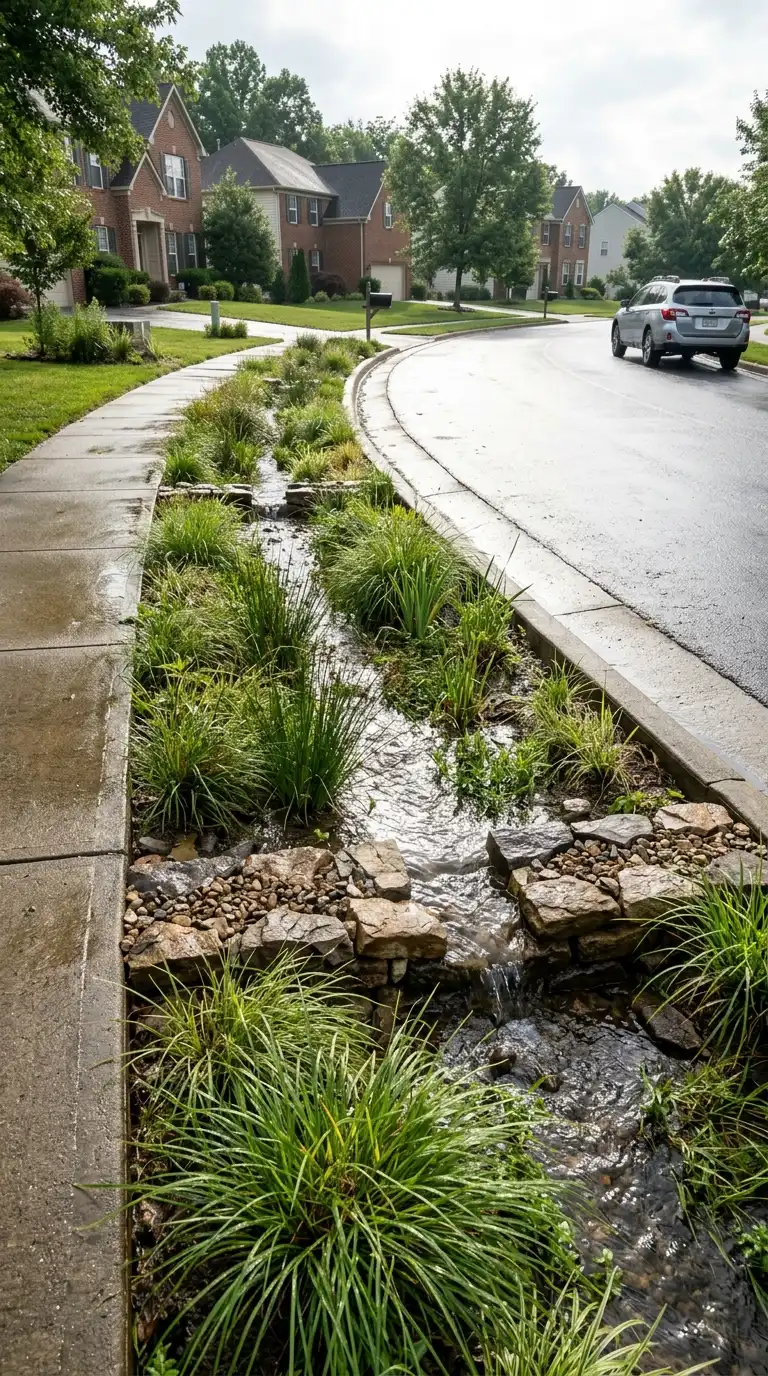
The bioswale is a linear vegetated channel that conveys and treats stormwater. Unlike a pipe, which moves water quickly underground, a bioswale slows water, allowing it to infiltrate and filter through plants and soil.
Bioswales are typically planted with grasses, rushes, and sedges that tolerate both flooding and drought. They are ideal along streets, parking lots, and building edges. The emotional effect is infrastructural, ecological, and gracefully engineered.
Quick Tips
- The channel should slope gently — 1-2% is ideal.
- Check dams (small stone barriers) slow water and create pooling.
- Plants must tolerate both saturated and dry conditions.
6. The Pocket Park
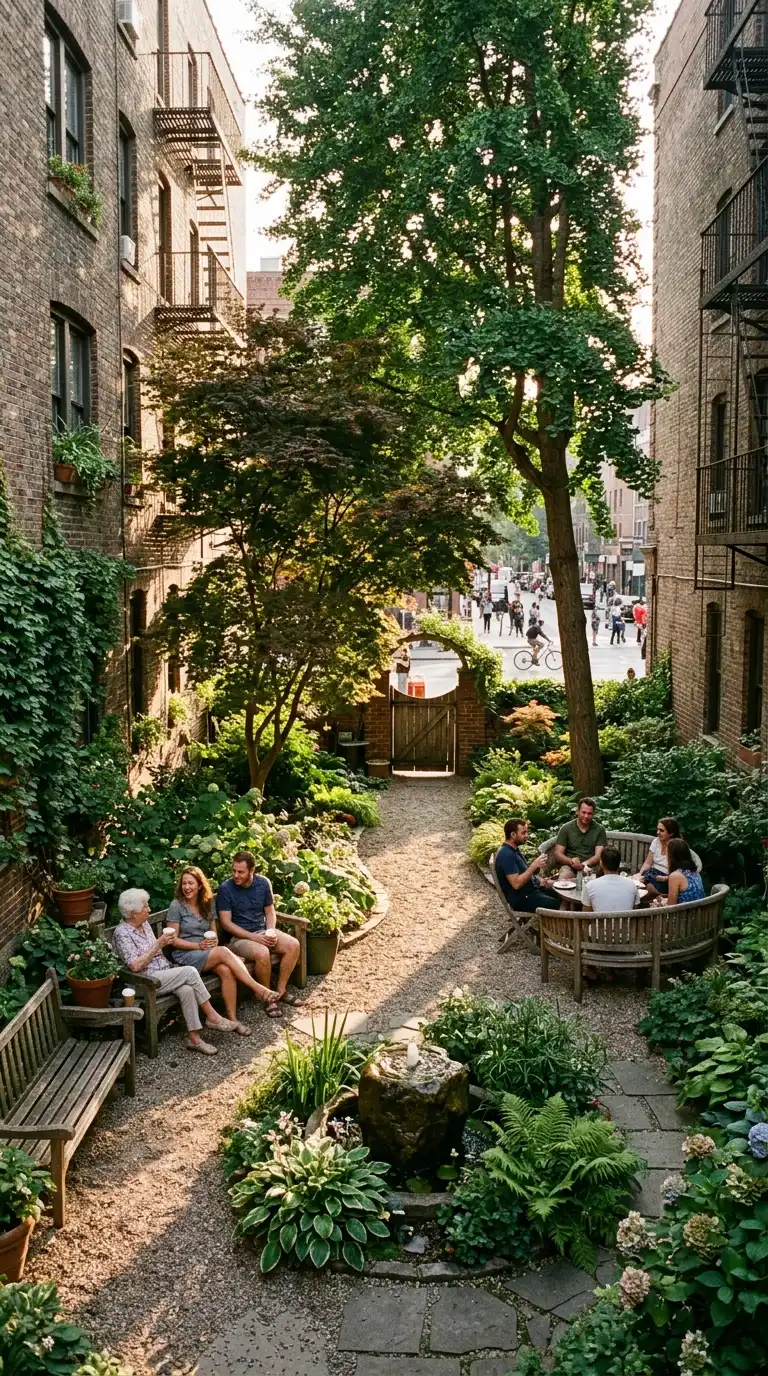
The pocket park is a small public park, typically one lot or less in size, tucked into a dense urban neighbourhood. It provides seating, shade, planting, and sometimes a small playground or water feature.
Pocket parks transform vacant lots, street corners, and odd-shaped parcels into community assets. The best pocket parks are designed with neighbours, maintained by neighbours, and used daily. The emotional effect is intimate, community-scaled, and urban.
Quick Tips
- Pocket parks should be 200-800 square metres — walkable in under a minute.
- Include at least three seating areas for different group sizes.
- Choose fast-growing shade trees for immediate impact.
7. The Rooftop Farm
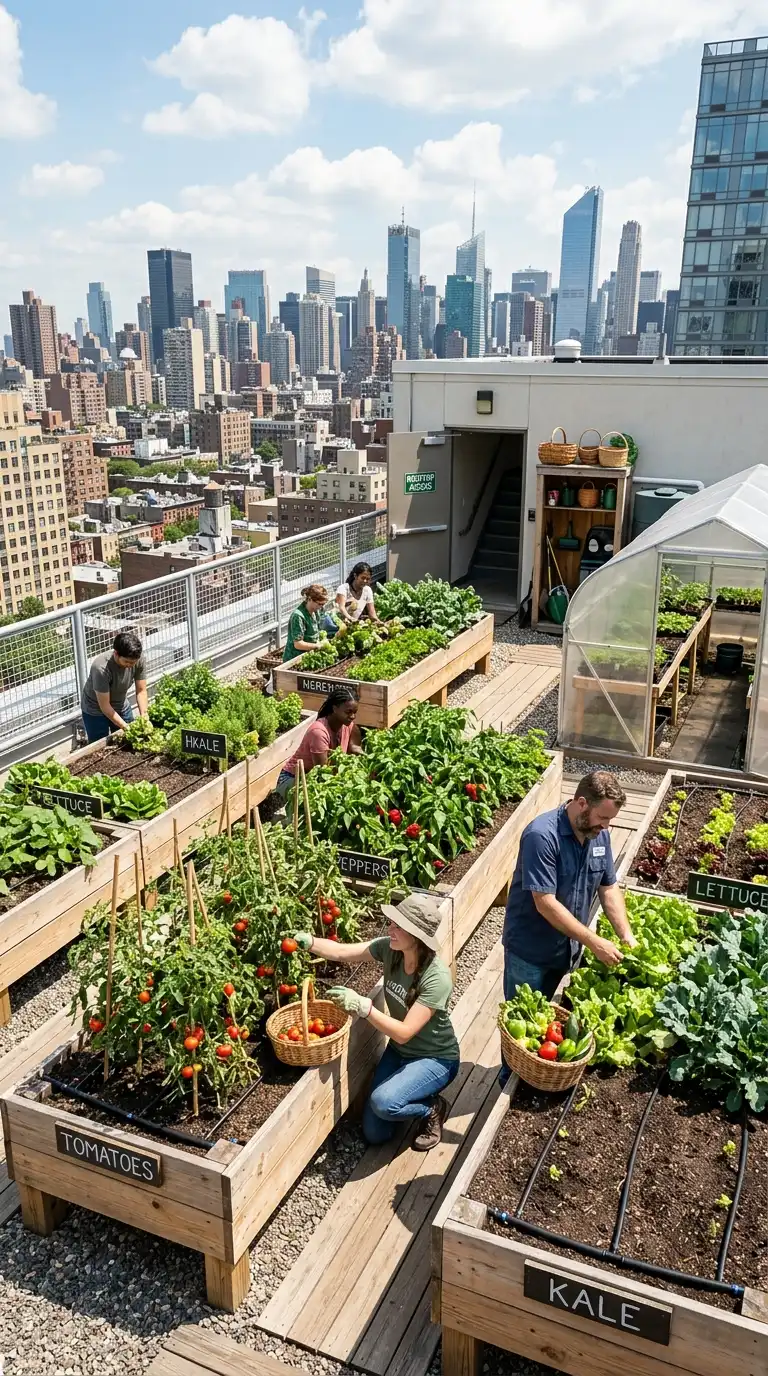
The rooftop farm is an intensive green roof designed for food production. Growing medium is deeper (30-60cm) and planted with vegetables, herbs, and sometimes small fruit trees. The farm may be community-run or commercial.
Rooftop farms provide local food, reduce the urban heat island effect, manage stormwater, and create green jobs. The emotional effect is productive, communal, and hopeful.
Quick Tips
- Structural capacity must be verified — wet soil is extremely heavy.
- Irrigation is essential — rooftop farms dry out faster than ground farms.
- Access for volunteers, deliveries, and compost removal must be designed.
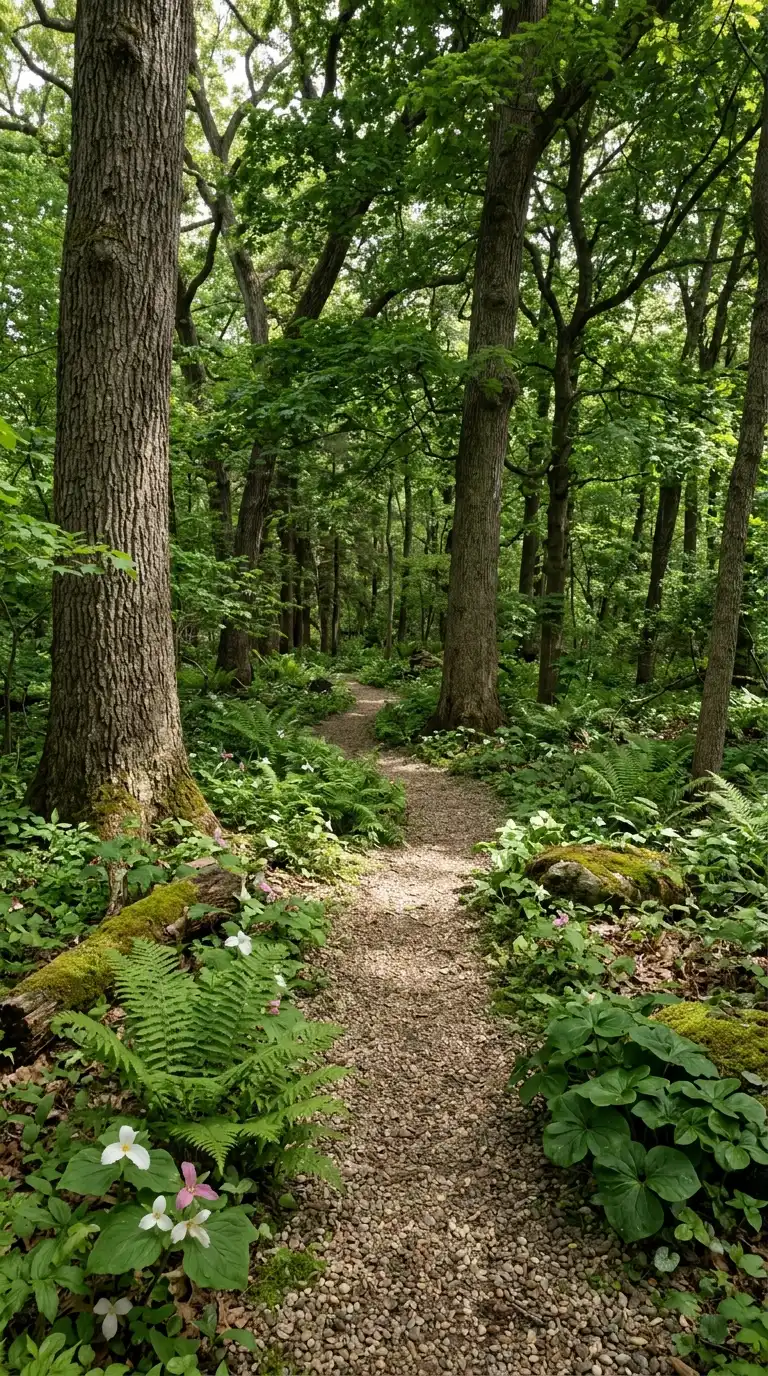
8. The Woodland Garden
The woodland garden is planted beneath an existing forest canopy. The understory is cleared of invasive species and replanted with native shade-tolerant plants: ferns, wildflowers, shrubs, and small trees.
This approach restores degraded woodlands while preserving the mature canopy. The garden is experienced on foot along winding paths. The emotional effect is shaded, layered, and deeply natural.
Quick Tips
- Preserve mature trees at all costs — they are irreplaceable.
- Remove invasive species before planting natives.
- Use paths to guide visitors and protect sensitive areas.
9. The Coastal Dune Restoration
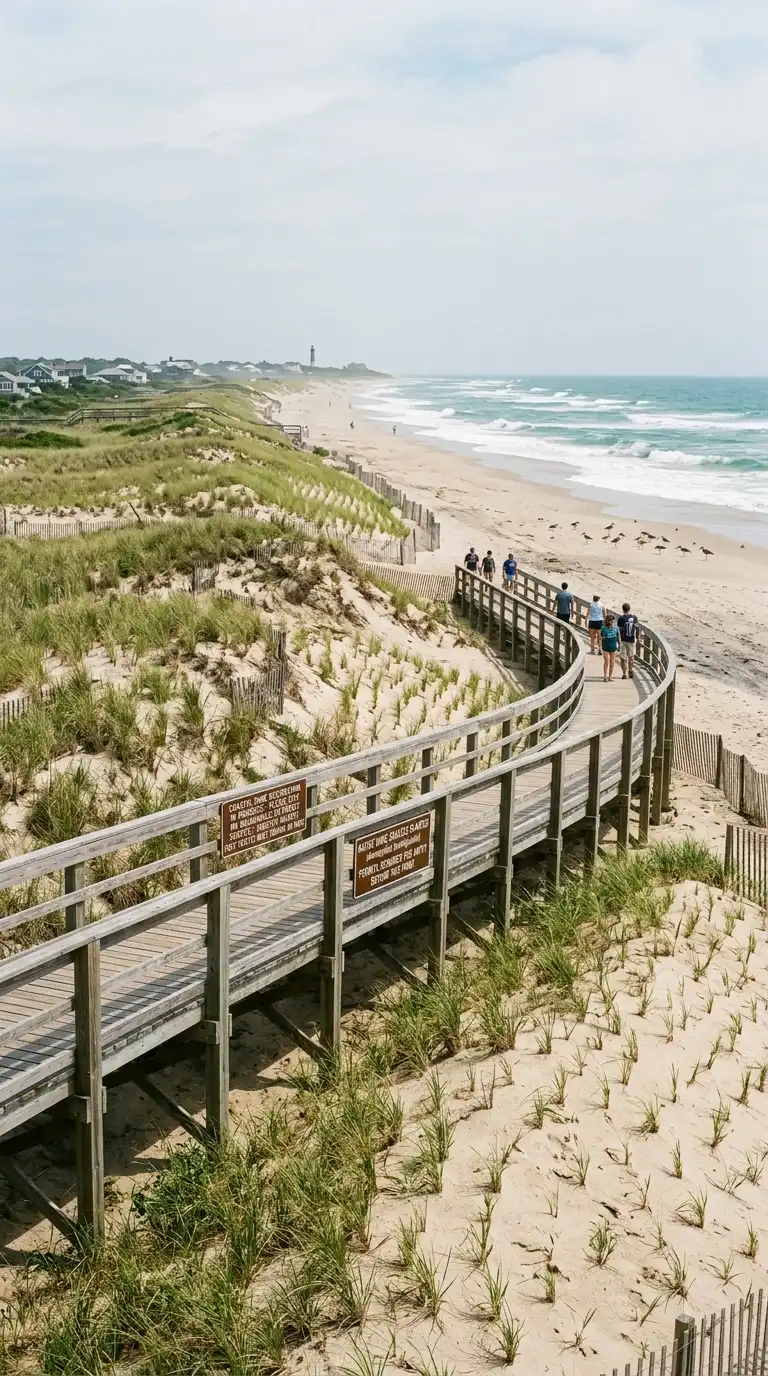
Coastal dune restoration rebuilds and stabilises sand dunes damaged by development, storms, or foot traffic. Native dune grasses are planted to trap sand and build dune height. Access is limited to boardwalks to protect vegetation.
The restored dune provides habitat for shorebirds, protects inland areas from storm surge, and maintains the coastal landscape. The emotional effect is wild, resilient, and ecologically critical.
Quick Tips
- Use native dune grasses: American beachgrass, sea oats, or panic grass.
- Install boardwalks to concentrate foot traffic.
- Dune restoration requires permits — consult local authorities.
10. The Urban Forest
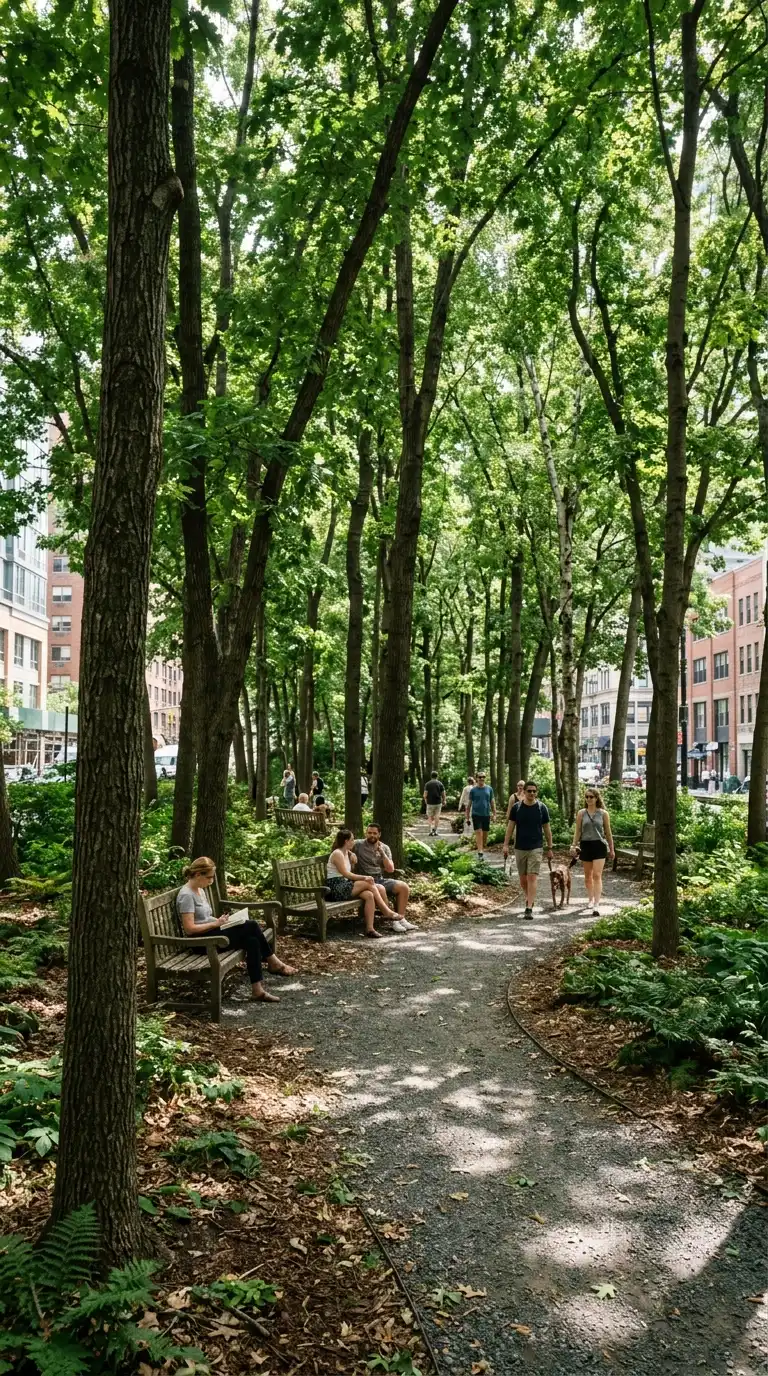
The urban forest is a dense planting of trees in a city — not a park, but a forest. Trees are planted close together (2-4 metres apart) in large planting pits or continuous soil trenches. The canopy closes, creating a shaded, cool microclimate.
Urban forests reduce air temperature, absorb stormwater, sequester carbon, and provide habitat. They are planted in plazas, along streets, and in former parking lots. The emotional effect is immersive, cooling, and transformative.
Quick Tips
- Plant trees at 2-4 metre spacing for a closed canopy.
- Use large planting pits with structural soil for root growth.
- Choose climate-resilient, native or adapted tree species.
11. The Healing Garden
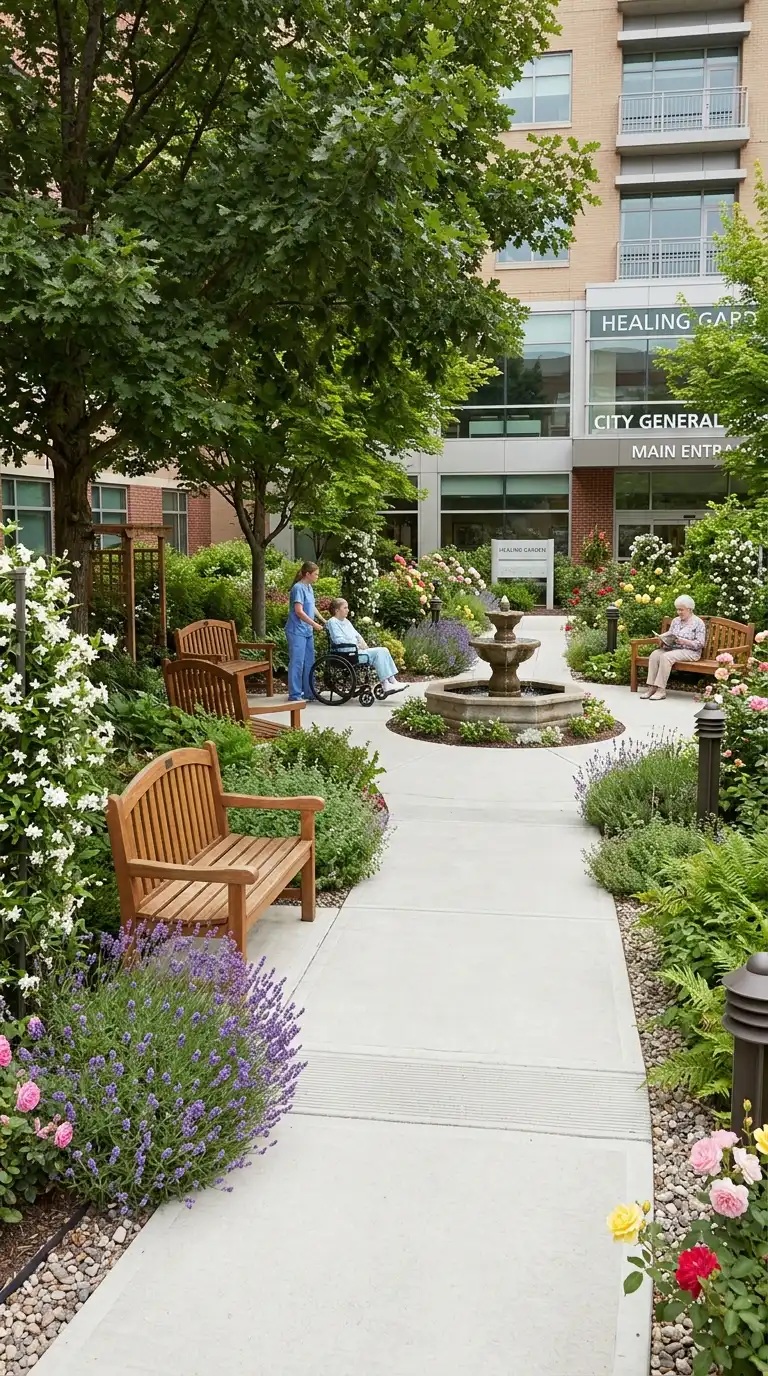
The healing garden is designed for hospitals, hospices, and healthcare facilities. The garden provides accessible paths, comfortable seating, sensory plants (fragrant, textured, colourful), shade, and protection from wind.
Research shows that views of nature and access to gardens reduce stress, lower blood pressure, and speed recovery. The emotional effect is calm, restorative, and accessible.
Quick Tips
- Paths must be wide enough for wheelchairs and beds (at least 2 metres).
- Seating should include benches with backs and armrests.
- Plants should engage all senses: sight, smell, touch, sound.
12. The Stormwater Wetland
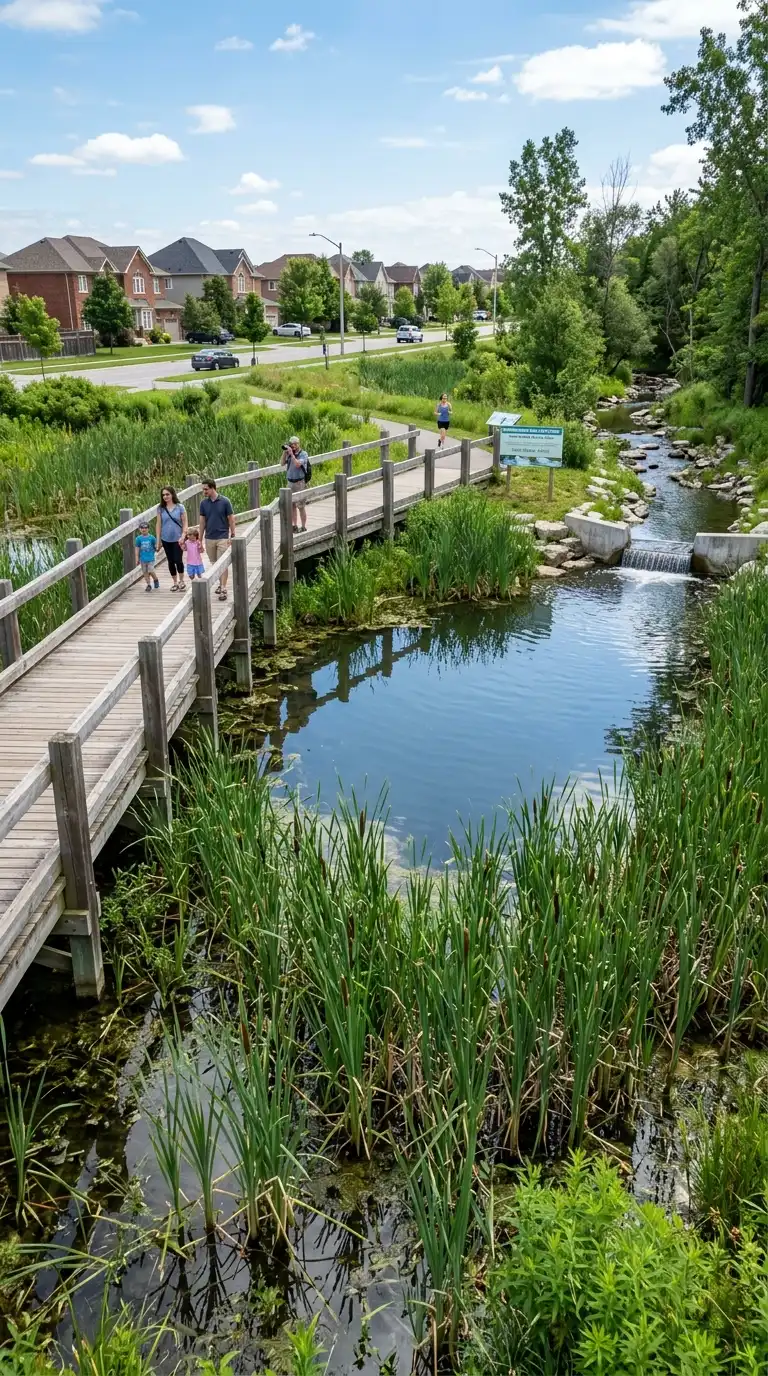
The stormwater wetland is a constructed wetland designed to treat runoff from surrounding development. Water flows into the wetland, where plants and microbes remove pollutants, and then discharges cleaner water to a stream or aquifer.
The wetland is planted with emergent aquatic plants: cattails, bulrushes, pickerelweed. It includes a deep pool for sediment settling, a shallow marsh for plant growth, and an outlet structure. The emotional effect is wild, ecologically productive, and infrastructural.
Quick Tips
- The wetland must have a permanent pool of water, not just seasonal.
- Use native wetland plants adapted to your region.
- Provide public access with boardwalks and overlooks.
13. The Productive Home Garden
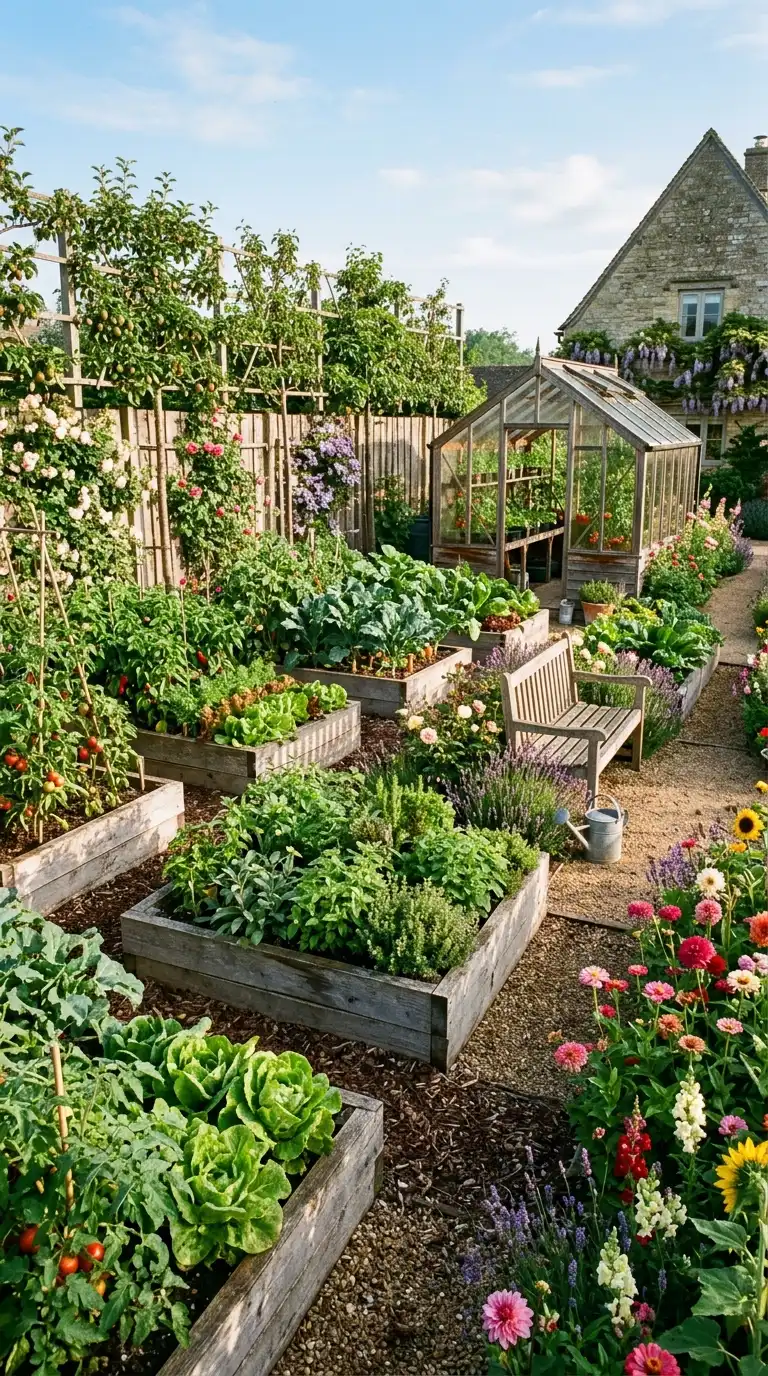
The productive home garden integrates food production into the residential landscape. Vegetables, fruits, herbs, and cut flowers replace some or all of the lawn. The garden is designed for beauty as well as yield: edible plants are arranged in patterns, with paths, seating, and trellises.
This garden provides fresh food, reduces grocery bills, supports pollinators, and connects residents to the seasons. The emotional effect is abundant, beautiful, and deeply satisfying.
Quick Tips
- Place the garden in full sun (6+ hours per day).
- Build raised beds for better soil control and easier maintenance.
- Include paths wide enough for wheelbarrows and kneeling.
14. The Meditation Garden
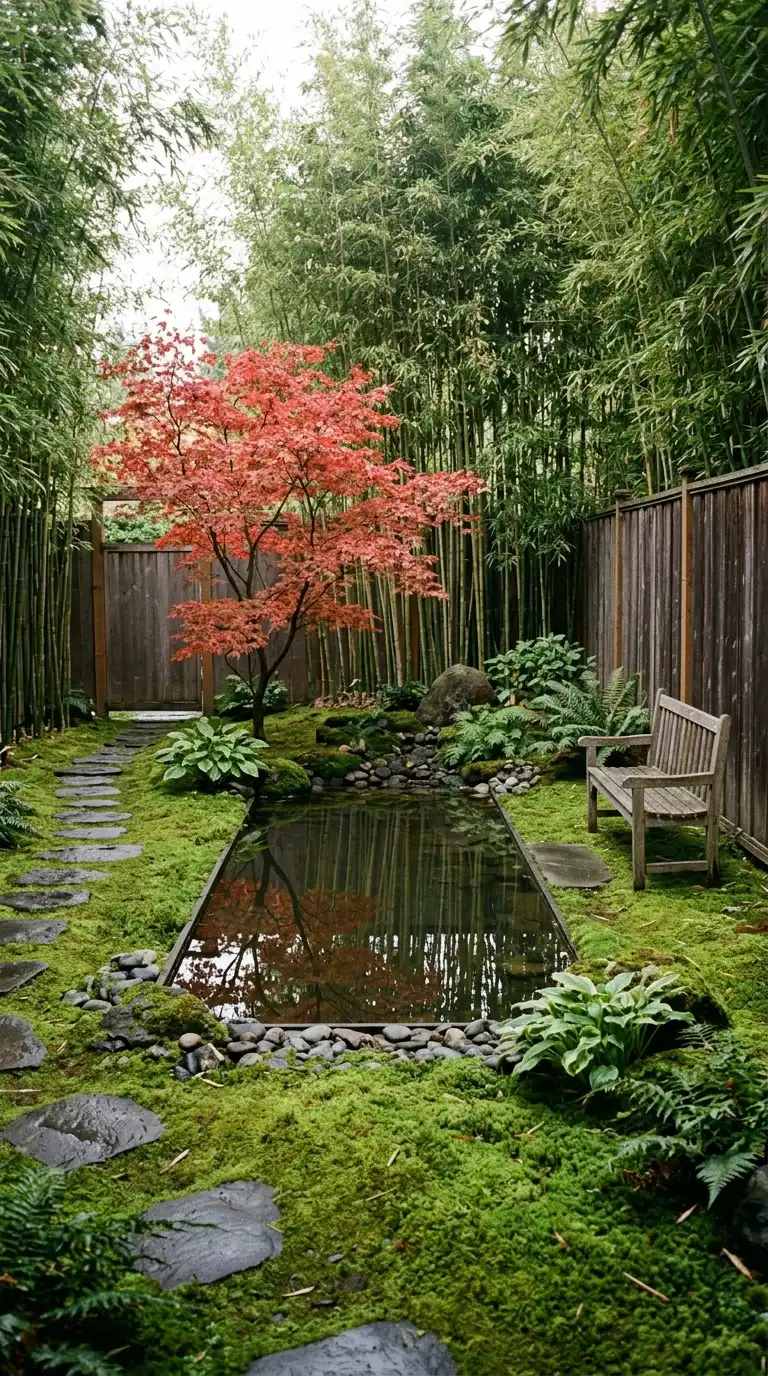
The meditation garden is designed for quiet contemplation. The space is enclosed, often by walls, hedges, or fences. The planting is simple and restrained — evergreens, moss, bamboo, a single tree. Water is often present as a still pool or a small fountain.
The garden is entered through a gate, leaving the outside world behind. The emotional effect is calm, enclosed, and meditative.
Quick Tips
- The garden should be enclosed on all sides for privacy.
- Use a limited palette of plants — green and white only.
- Include a seating area facing a single focal point.
15. The Children’s Play Garden
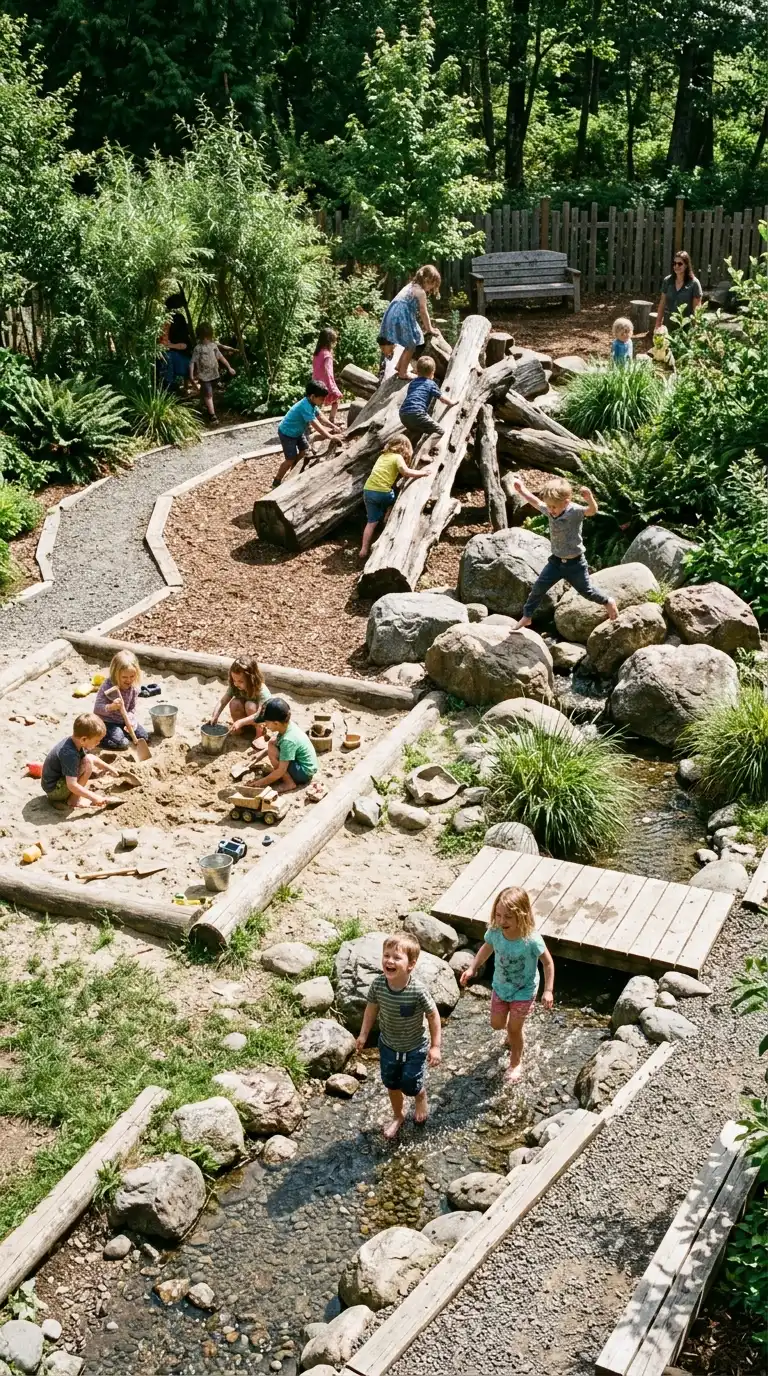
The children’s play garden is designed for active play, exploration, and discovery. The garden includes natural play elements: logs to climb, boulders to jump from, sand to dig, water to splash, plants to hide in.
Unlike a standard playground with plastic equipment, the play garden uses natural materials. The emotional effect is joyful, adventurous, and child-centred.
Quick Tips
- Use natural materials: logs, boulders, sand, water, plants.
- Include zones for different types of play: active, quiet, imaginative.
- Ensure sightlines for supervision from seating areas.
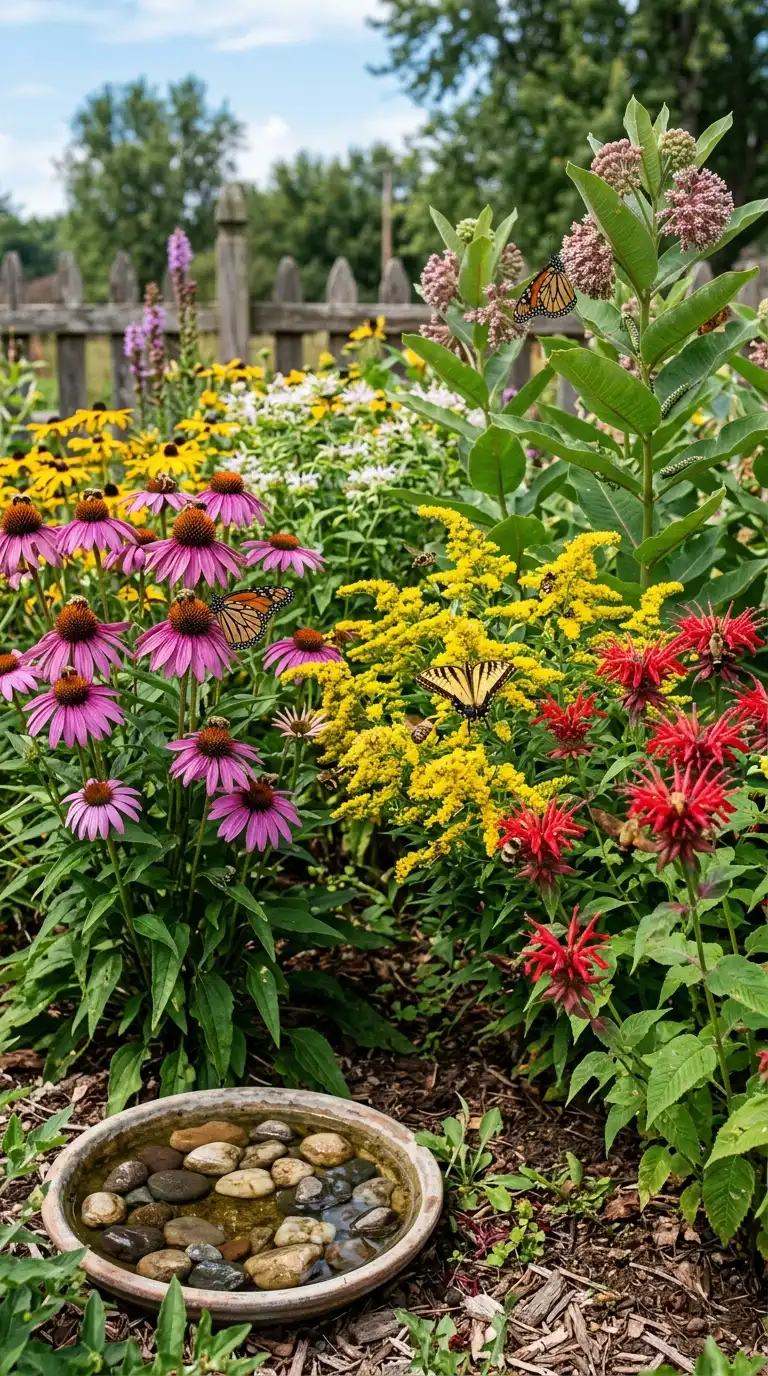
16. The Pollinator Garden
The pollinator garden is designed specifically to attract bees, butterflies, hummingbirds, and other pollinators. The garden is planted with native, nectar-rich flowers that bloom in sequence from spring to autumn.
The garden avoids pesticides and provides bare soil or hollow stems for nesting. The emotional effect is lively, colourful, and ecologically vital.
Quick Tips
- Plant at least 3 different species that bloom in each season.
- Provide a shallow water source for butterflies and bees.
- Leave some bare soil and dead stems for nesting.
17. The Xeriscape Garden
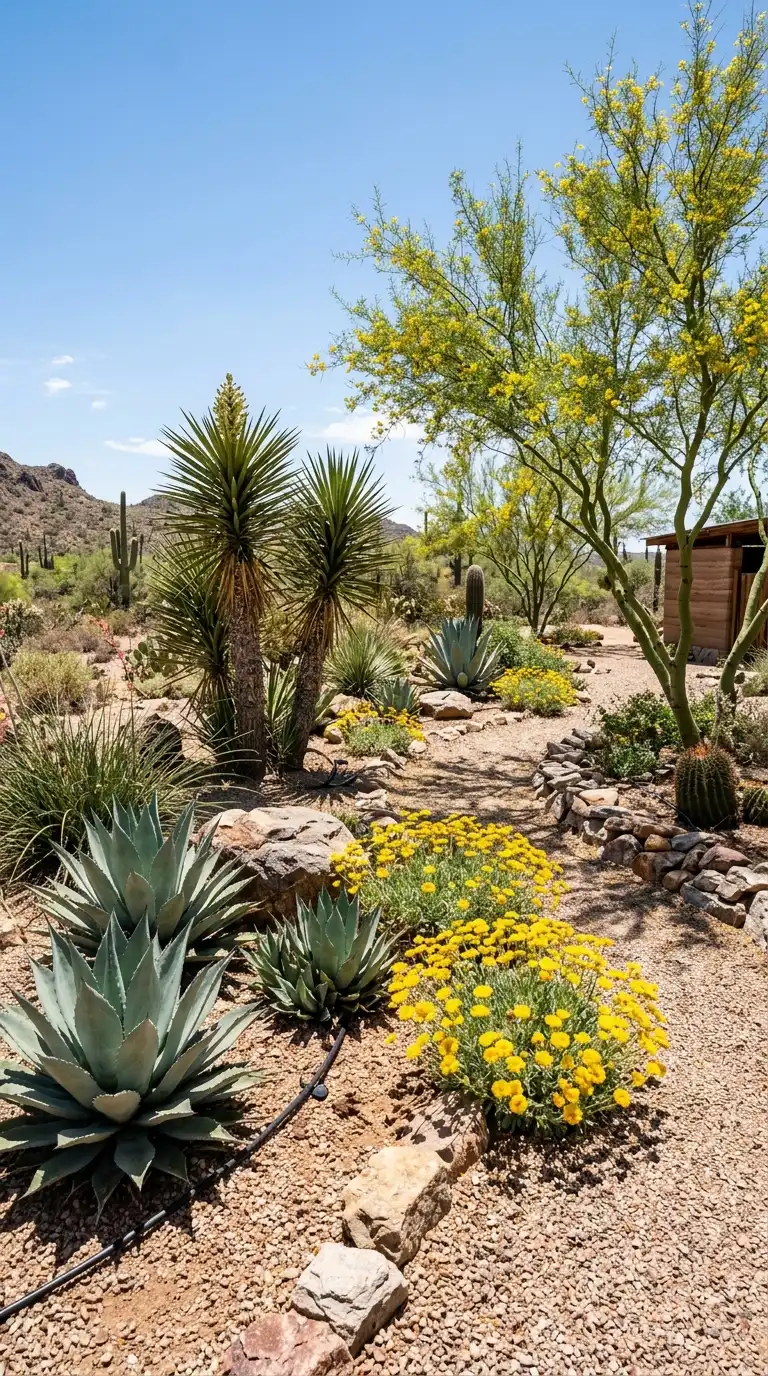
The xeriscape garden is designed for arid climates with minimal irrigation. Plants are drought-tolerant natives: succulents, grasses, shrubs, and desert trees. The garden uses gravel, stone, and mulch instead of lawn.
Water is used sparingly, often collected from roofs and directed to the most thirsty plants. The emotional effect is arid, beautiful, and water-wise.
Quick Tips
- Group plants by water needs — high-water plants near the house.
- Use gravel and stone as mulch to reduce evaporation.
- Eliminate or greatly reduce lawn area.
18. The Community Garden
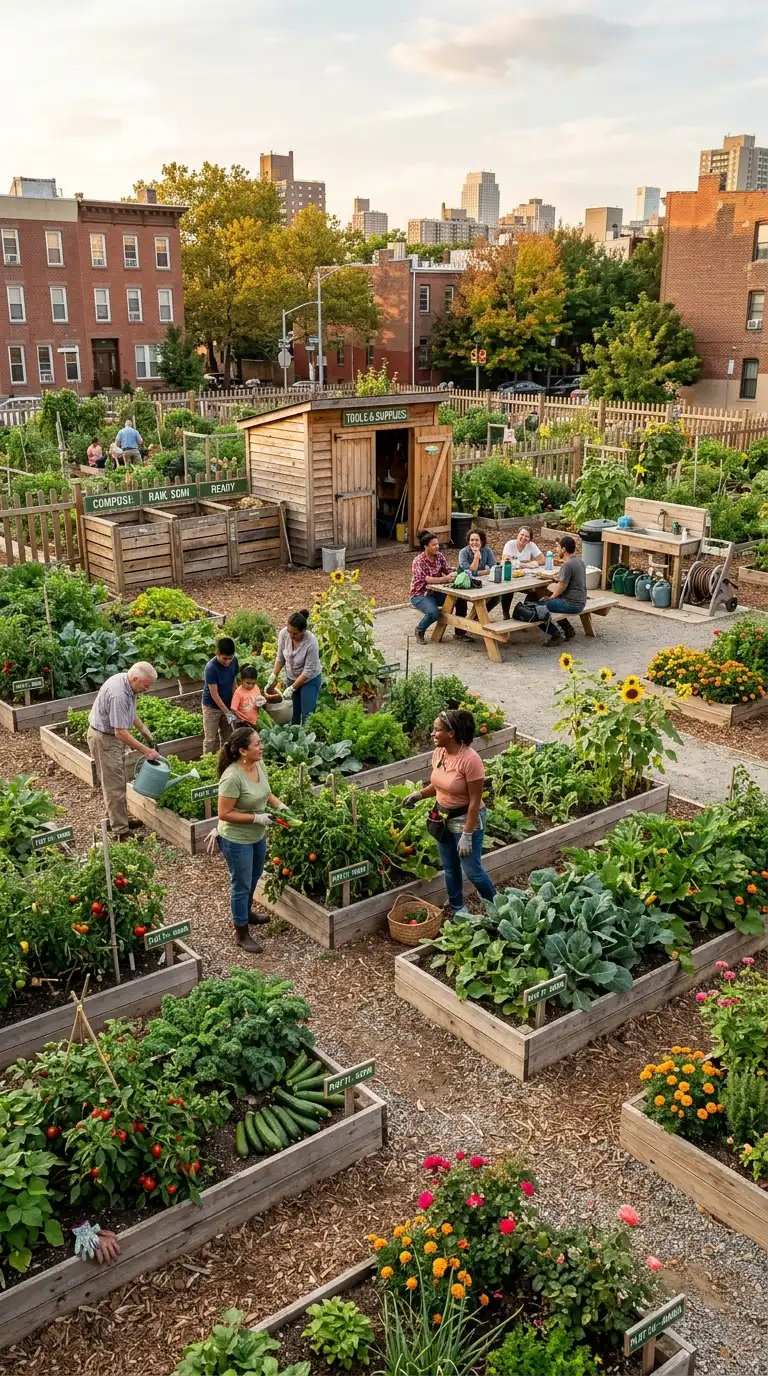
The community garden is a shared space where residents grow food together. The garden is divided into individual plots, with shared paths, compost, water, and tool storage. A communal seating area provides space for gatherings.
The community garden builds social connections, provides fresh food, and beautifies the neighbourhood. The emotional effect is communal, productive, and welcoming.
Quick Tips
- Individual plots should be 3×3 metres or 3×6 metres.
- Provide a shared tool shed, compost bins, and water access.
- Include a communal seating area for gatherings and events.
Final Thoughts
Landscape architecture is not decoration. It is infrastructure. It manages water, supports life, moderates climate, and provides space for human activity. A rain garden is not just pretty — it is functional. A green roof is not trendy — it is responsible. A native meadow is not messy — it is ecologically rich.
These 18 landscape designs are not mutually exclusive. A rooftop farm can have a green roof. A stormwater wetland can be a healing garden. A productive home garden can include a rain garden. The best landscape architecture integrates multiple functions into a single, beautiful, resilient design.