Architecture collage is a visual technique that combines fragments of drawings, photographs, textures, and found images to explore design ideas. Unlike a rendered perspective, which presents a single finished vision, collage embraces juxtaposition, surprise, and ambiguity. It is ideal for early design exploration, conceptual presentations, and portfolio work.
These 14 architecture collage ideas range from analogue cut-and-paste to digital compositing. Each idea includes defining characteristics, technical approaches, and applications for architectural design.
1. The Site Analysis Collage
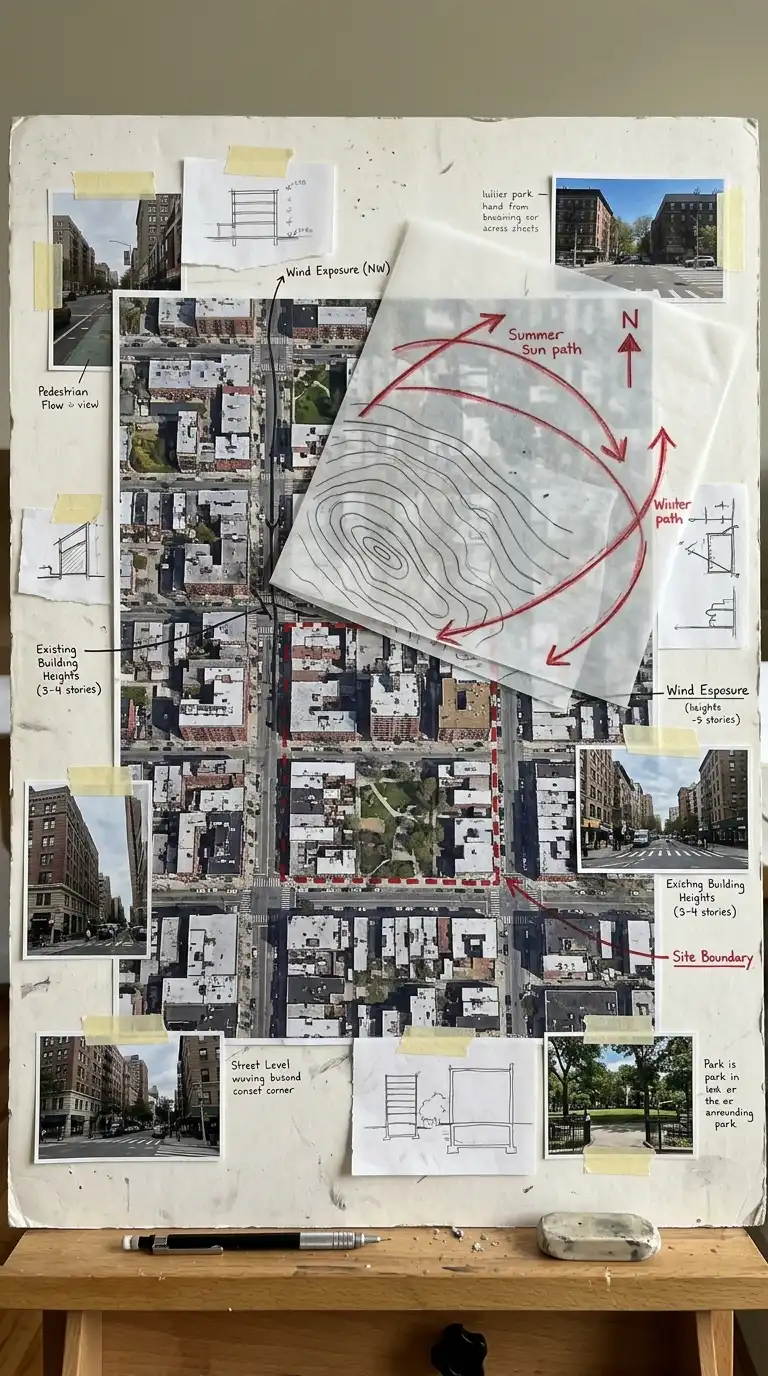
The site analysis collage overlays multiple layers of site information — maps, photographs, diagrams, textures — into a single rich image. Instead of separate diagrams for sun, wind, circulation, and context, the collage presents them simultaneously.
The effect is dense and layered. Aerial photographs sit beneath hand-drawn sun path diagrams. Street-level photos are collaged with contour lines and vegetation textures. The emotional effect is comprehensive, messy, and generative.
Quick Tips
- Use transparency to allow lower layers to show through upper layers.
- Vary scale dramatically — a huge sun diagram over a tiny site photo.
- Hand-drawn elements mixed with photographic elements create energy.
2. The Material Palette Collage
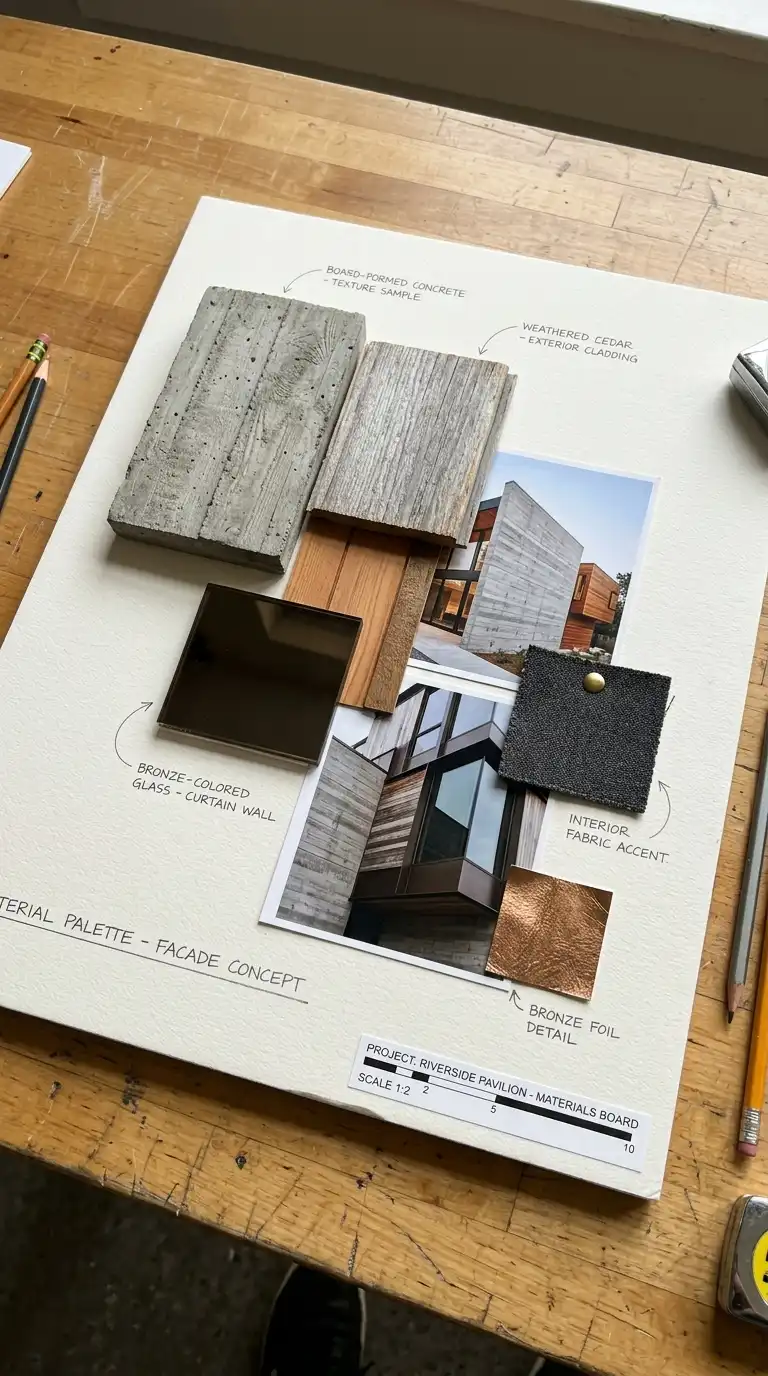
The material palette collage assembles samples, textures, and photographs of proposed materials into a single composition. The goal is to show how materials relate to each other — how concrete feels next to timber, how glass reflects stone.
This collage type is both analytical and aesthetic. It can include actual material samples (photographed or scanned) alongside images of buildings where those materials are used well. The emotional effect is tactile, sensory, and materially intelligent.
Quick Tips
- Include materials at actual scale where possible — a 1:1 brick photograph.
- Show materials in combination, not isolation.
- Add annotations: material names, suppliers, finish specifications.
3. The Atmospheric Collage
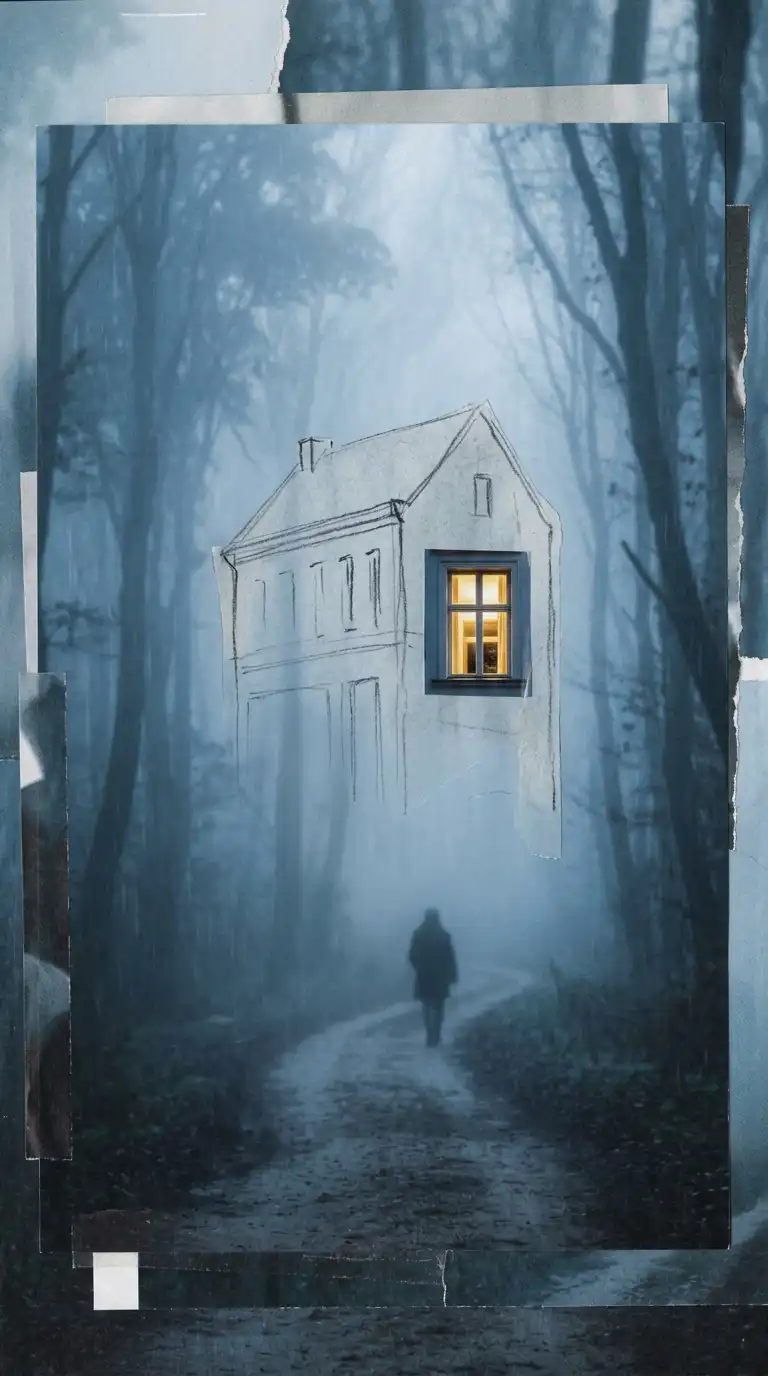
The atmospheric collage focuses on mood, light, and feeling rather than technical accuracy. It might combine a photograph of a foggy forest with a hand-drawn building silhouette, a cut-out figure, and a painted sky.
This collage type is subjective and expressive. It communicates how a space should feel — calm, dramatic, mysterious, joyful — before the design is fully resolved. The emotional effect is poetic, evocative, and open to interpretation.
Quick Tips
- Start with a found image that has the desired atmosphere.
- Add architectural elements sparingly — a single window, a column, a stair.
- Use colour grading: warm colours for cosy atmospheres, cool colours for calm.
4. The Sectional Collage
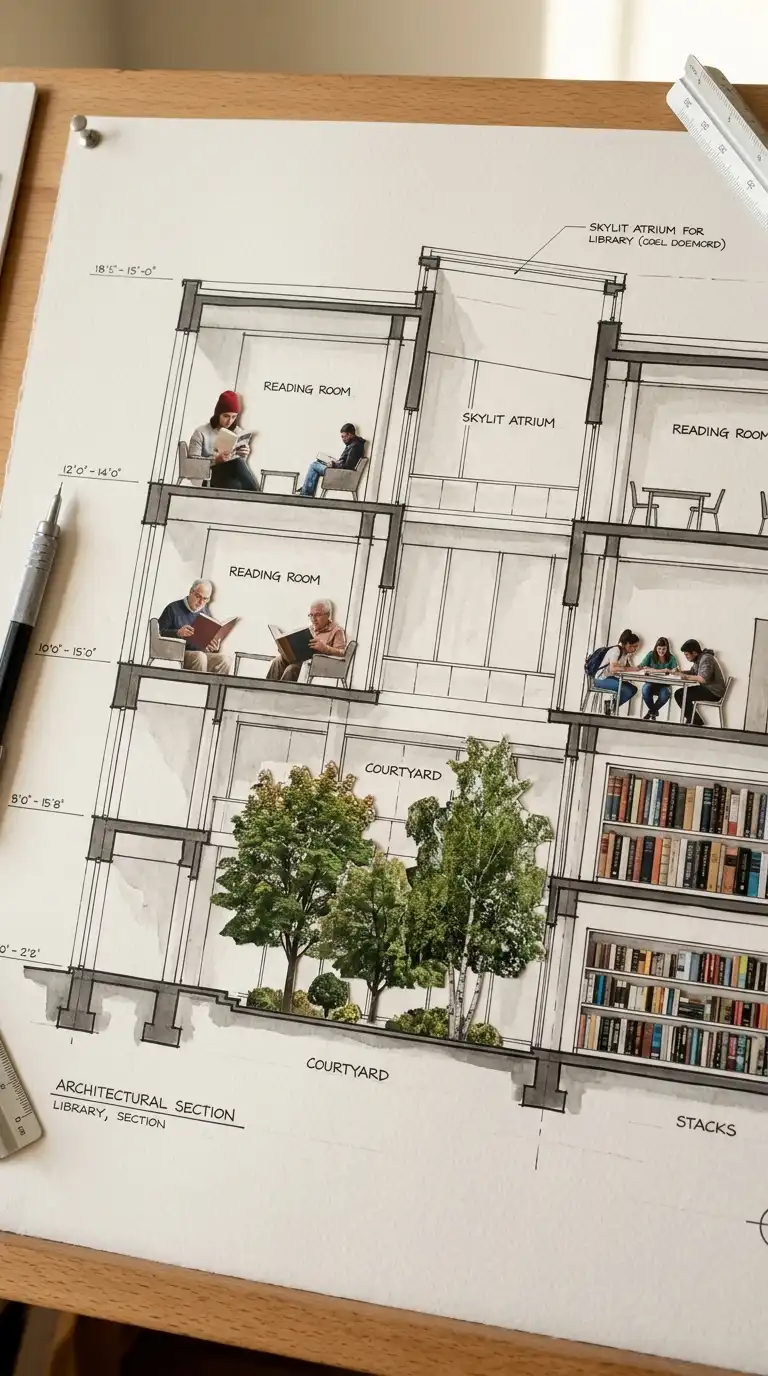
The sectional collage combines a building section with found images that illustrate activities, materials, and atmospheres within each space. A library section might have a photograph of a reading figure collaged into the reading room, a tree image in the courtyard, a book stack texture on the shelves.
This technique makes sections readable and engaging. Instead of abstract hatches and generic figures, the collage shows specific activities and qualities. The emotional effect is lively, specific, and narrative.
Quick Tips
- Draw the section accurately, then collage images into it.
- Use figures from photographs, not generic silhouettes.
- Background textures (wood, brick, concrete) can be collaged from photographs.
5. The Elevation Collage
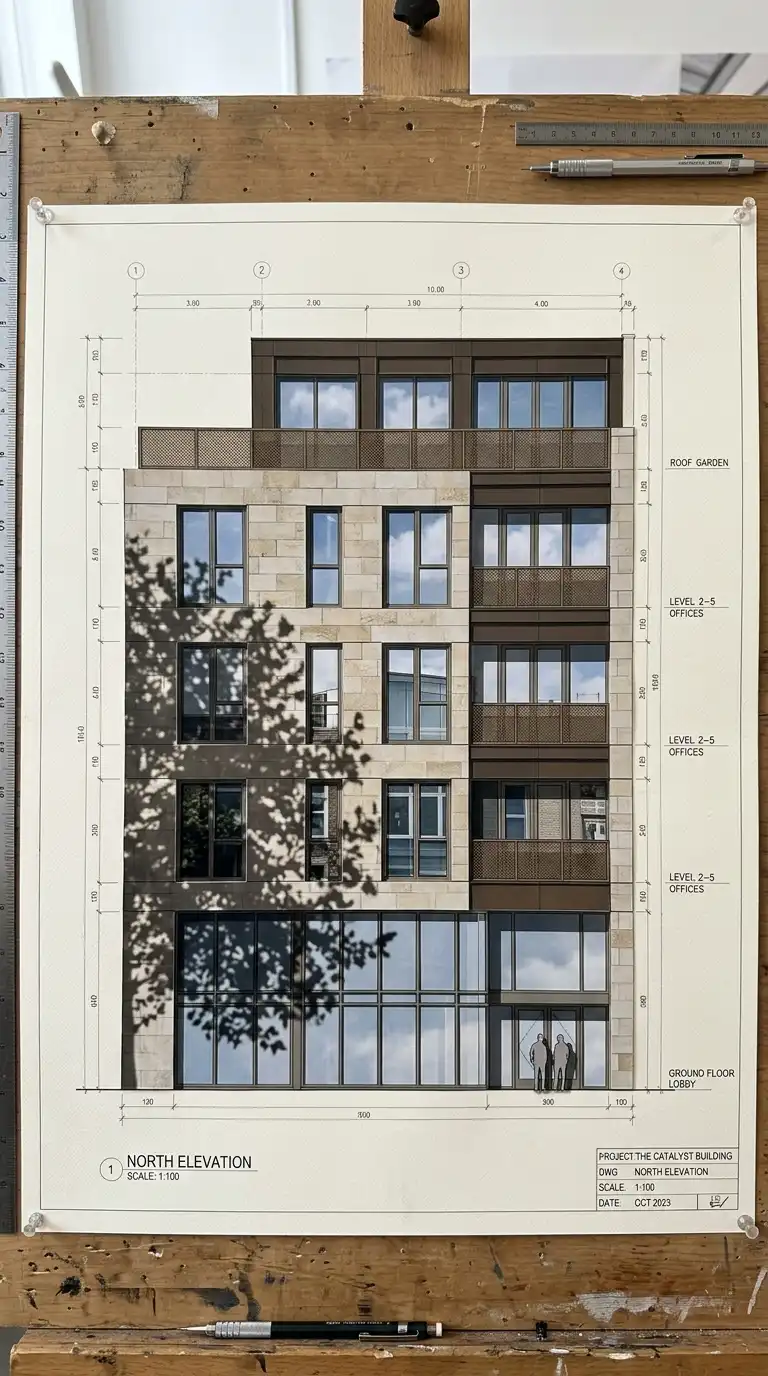
The elevation collage treats a building facade as a surface for collage. Different materials, fenestration patterns, and contextual elements are collaged onto a drawn elevation base. The result is a rich, textured facade study.
This technique is ideal for exploring material combinations and window patterns. A brick texture from one photograph, a window from another, a shadow pattern from a third. The emotional effect is textured, exploratory, and materially rich.
Quick Tips
- Use photographs of real materials at the correct scale.
- Shadows can be collaged from other building photographs.
- The base drawing must be accurate to scale.
6. The Plan Collage
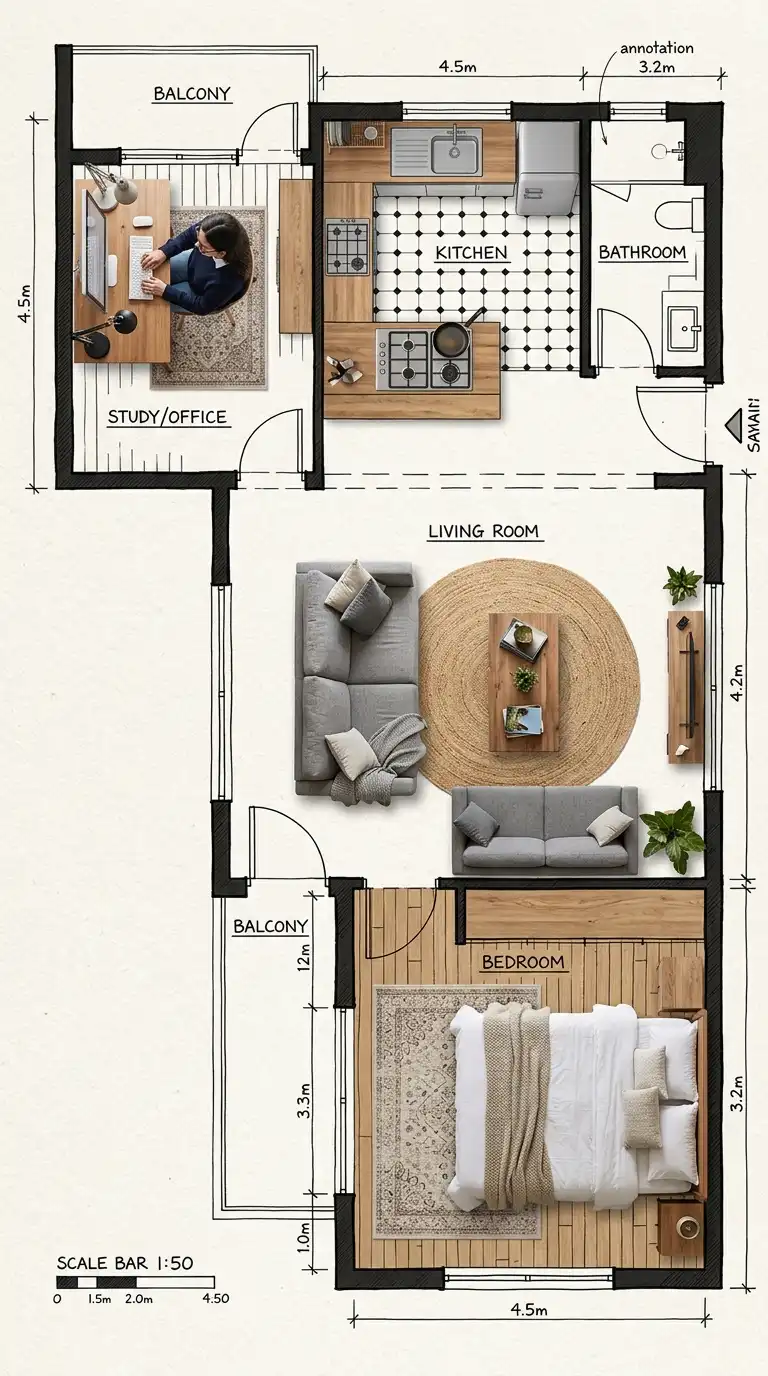
The plan collage fills a drawn floor plan with images that suggest activities, furnishings, and atmospheres in each room. A kitchen plan might have a photograph of a stove, a cutting board texture, a figure cooking. A bedroom plan might have a bed image, a soft rug texture, a sleeping figure.
This technique makes plans readable to non-architects. Instead of abstract symbols, the collage shows what each space is for. The emotional effect is accessible, narrative, and warm.
Quick Tips
- Keep the plan drawing accurate and visible beneath the collage.
- Use top-down photographs of furniture and figures where possible.
- Leave some space un-collaged so the plan remains readable.
7. The Scale Figure Collage
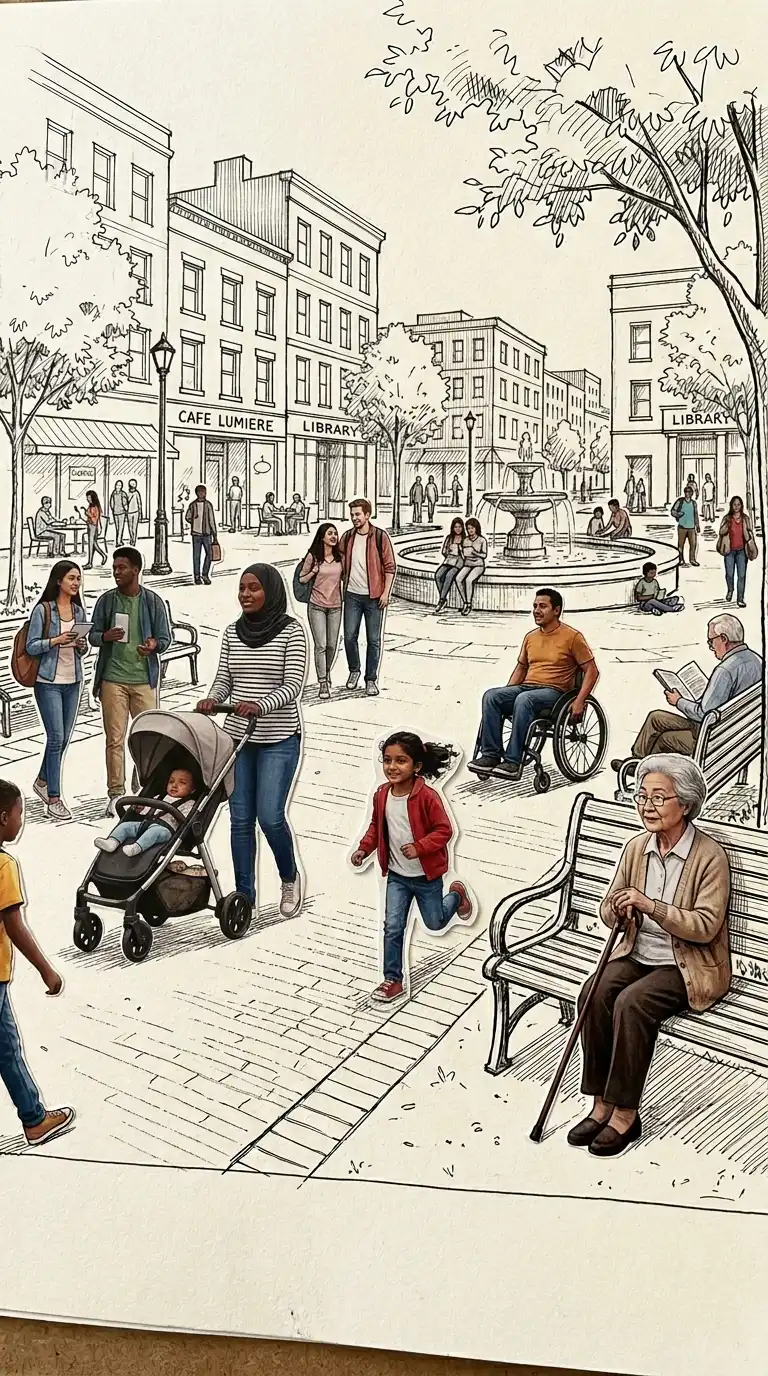
The scale figure collage populates an architectural drawing with figures cut from photographs, magazines, or other sources. The figures are not generic silhouettes — they are specific people with specific clothes, poses, and expressions.
This technique brings architecture to life. A museum perspective with a child looking at a painting, a teenager on their phone, an elderly couple walking slowly. The emotional effect is human, diverse, and alive.
Quick Tips
- Cut figures from magazines, not just from architecture sources.
- Vary age, gender, ethnicity, and ability in your figures.
- Scale figures accurately to the drawing.
8. The Historical Collage
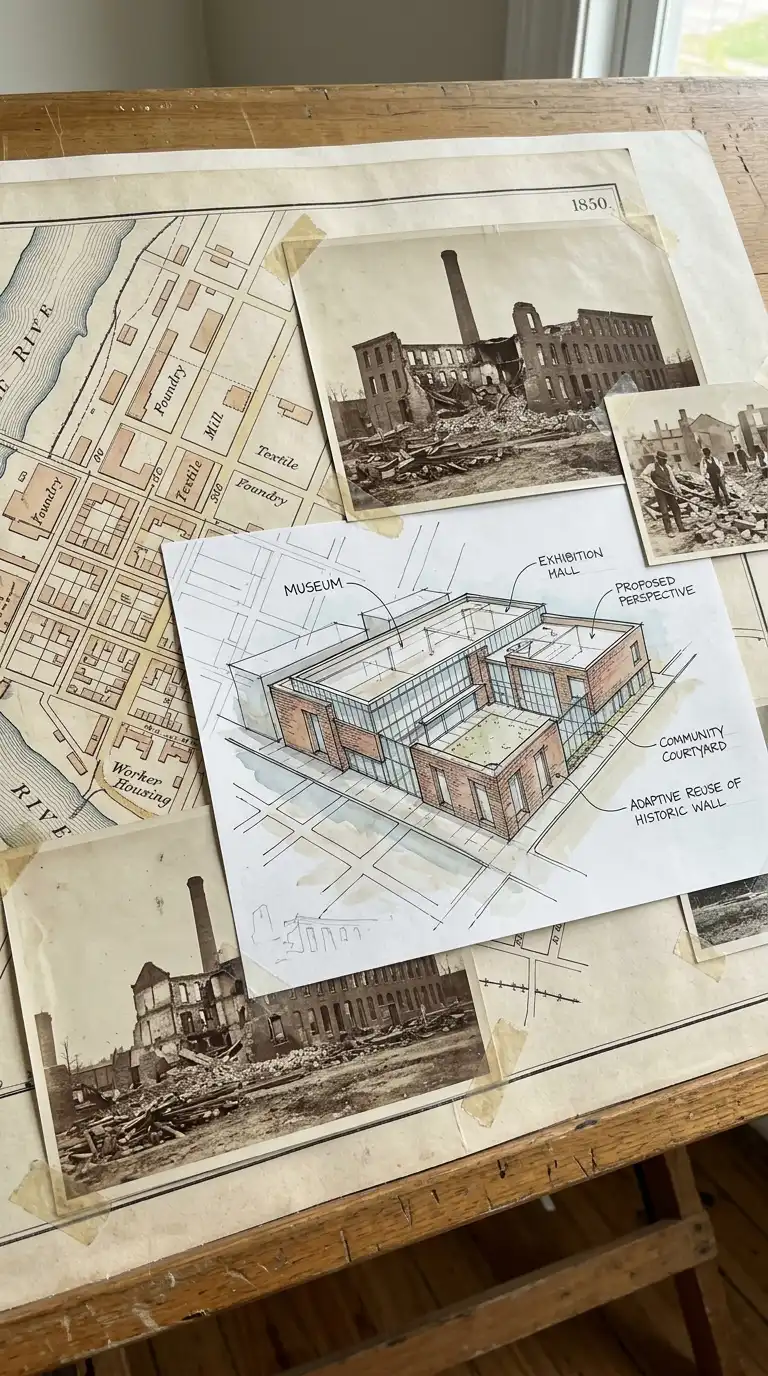
The historical collage layers historical images, drawings, and photographs over contemporary architectural drawings. A new building proposal might be collaged over a historical map of the site, a photograph of a demolished building, or a painting of the original landscape.
This technique acknowledges and engages with site history. The new design is not erasing the past but entering into dialogue with it. The emotional effect is layered, respectful, and historically conscious.
Quick Tips
- Research the site history before starting the collage.
- Use archival images: old maps, photographs, paintings, postcards.
- The new design should be drawn clearly, not blended into the history.
9. The Structural Collage
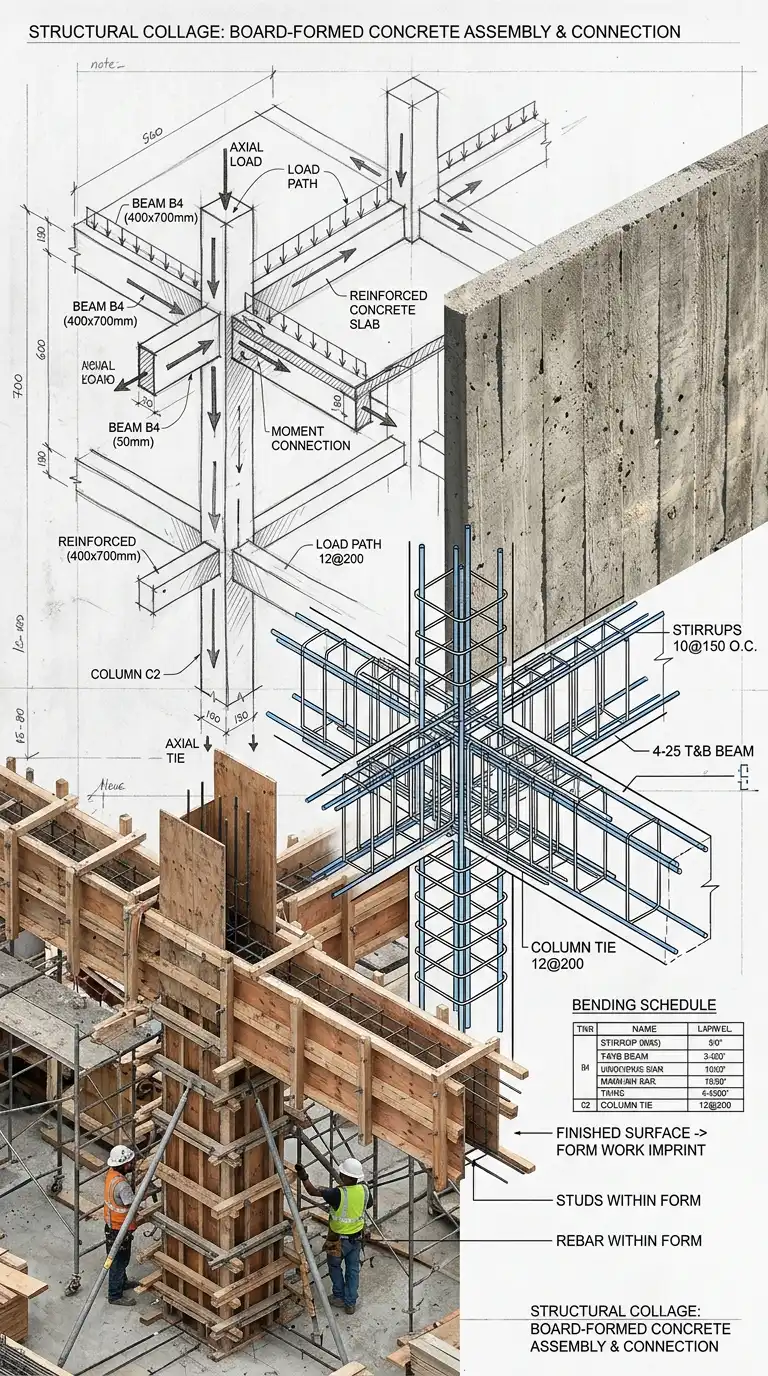
The structural collage reveals the building’s structure by layering structural diagrams, construction photographs, and material textures over architectural drawings. A concrete frame might be shown with a photograph of board-formed concrete, a diagram of rebar placement, and a construction photo of formwork.
This technique is ideal for technical presentations and construction documentation. The emotional effect is honest, technical, and educational.
Quick Tips
- Use construction photographs from similar projects.
- Structural diagrams should be drawn clearly.
- Material textures should come from photographs of the actual material.
10. The Shadow and Light Collage
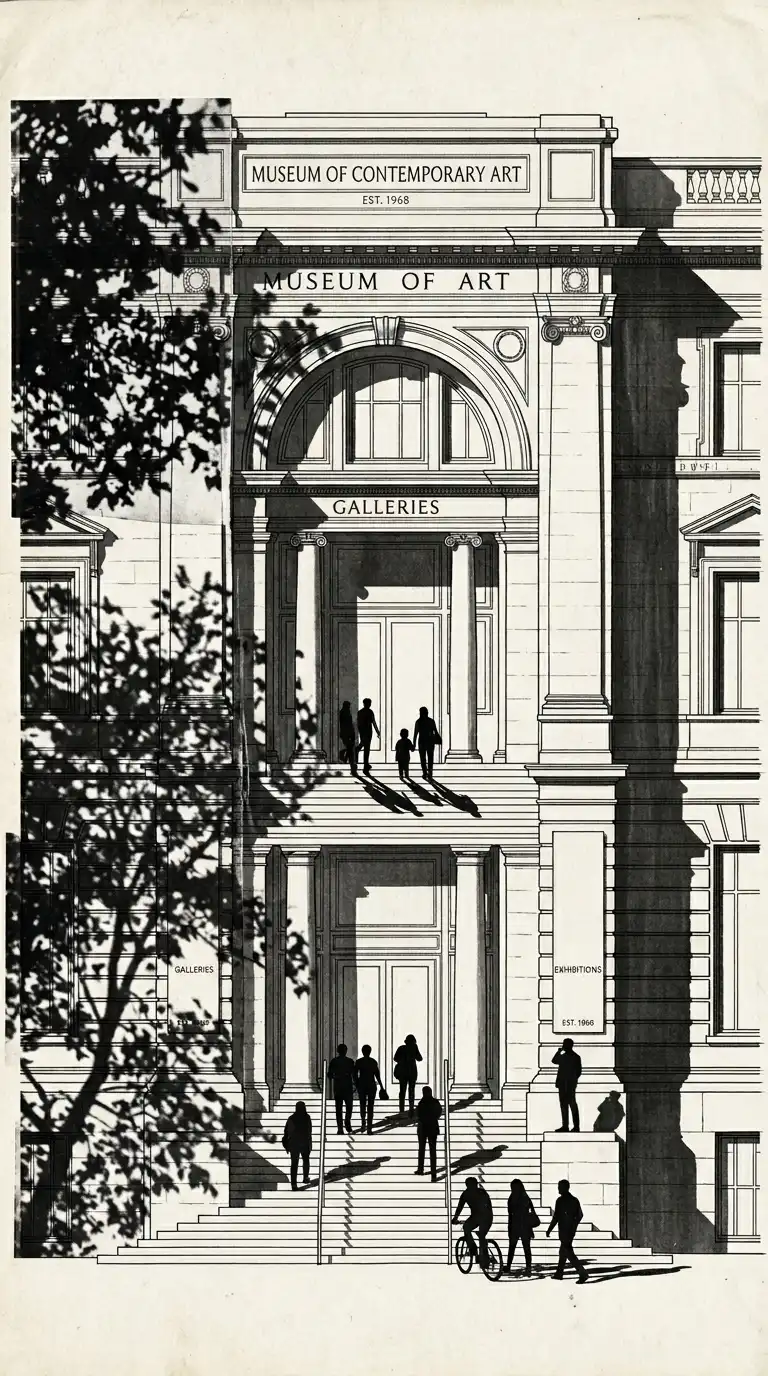
The shadow and light collage uses high-contrast images to study how light falls across a building. Black and white photographs of shadows from other buildings are collaged onto elevation or perspective drawings. The effect is dramatic and analytical.
This technique is ideal for studying facade shadow patterns, interior daylighting, and seasonal sun angles. The emotional effect is dramatic, graphic, and technically informative.
Quick Tips
- Use high-contrast black and white images for maximum impact.
- Shadow shapes should be accurate to the building’s geometry.
- Overlay shadows with partial transparency.
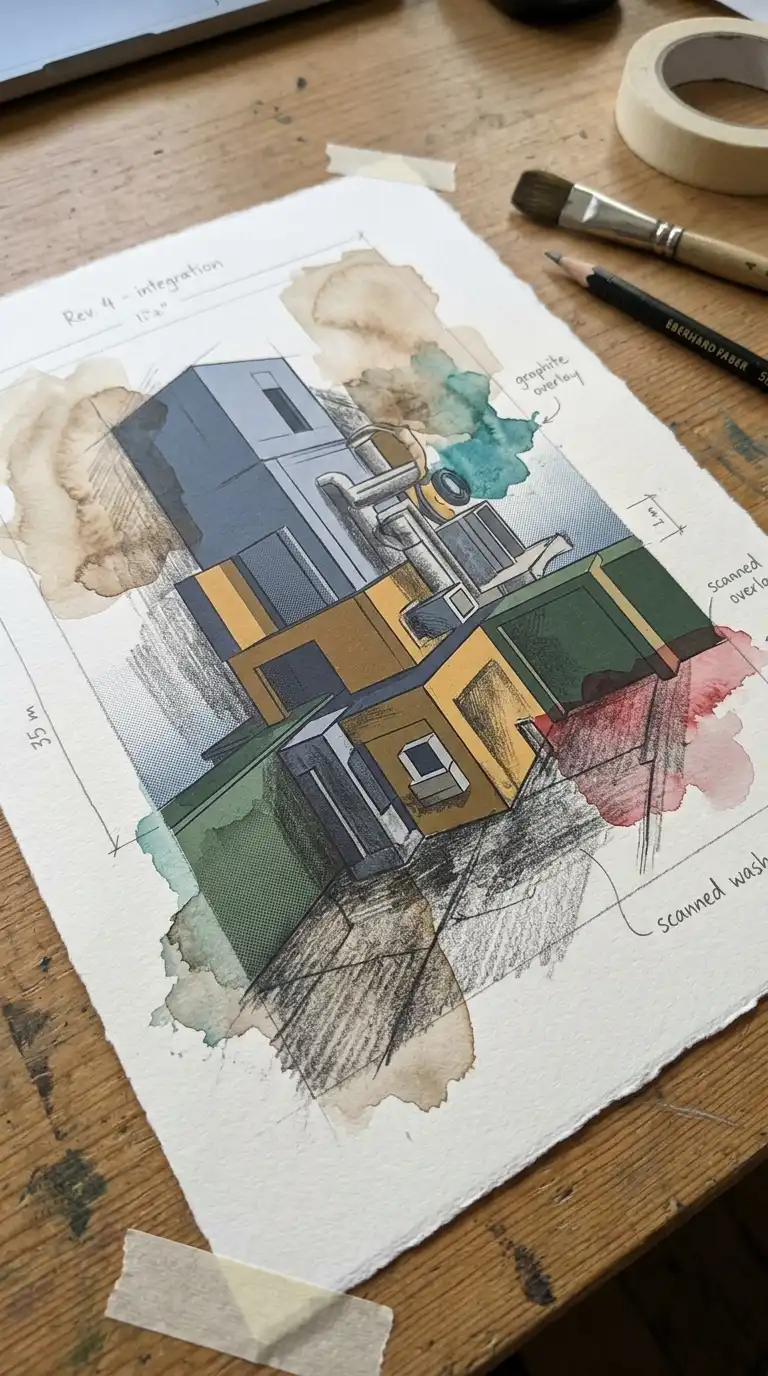
11. The Digital-Analogue Collage
The digital-analogue collage combines digital tools (3D renderings, Photoshop, Illustrator) with analogue techniques (hand drawing, paint, paper cut-outs, scanning). A 3D model is rendered flat, printed, then painted over by hand. Or a hand-drawn sketch is scanned and combined with digital textures.
This technique bridges the precision of digital tools with the warmth and expressiveness of hand work. The emotional effect is hybrid, contemporary, and craft-conscious.
Quick Tips
- Start digital, print, then add hand work. Or start analogue, scan, then add digital layers.
- Use low-opacity digital layers over hand drawing so both are visible.
- Scan hand-drawn textures (watercolour, charcoal, pencil) for digital use.
12. The Narrative Collage
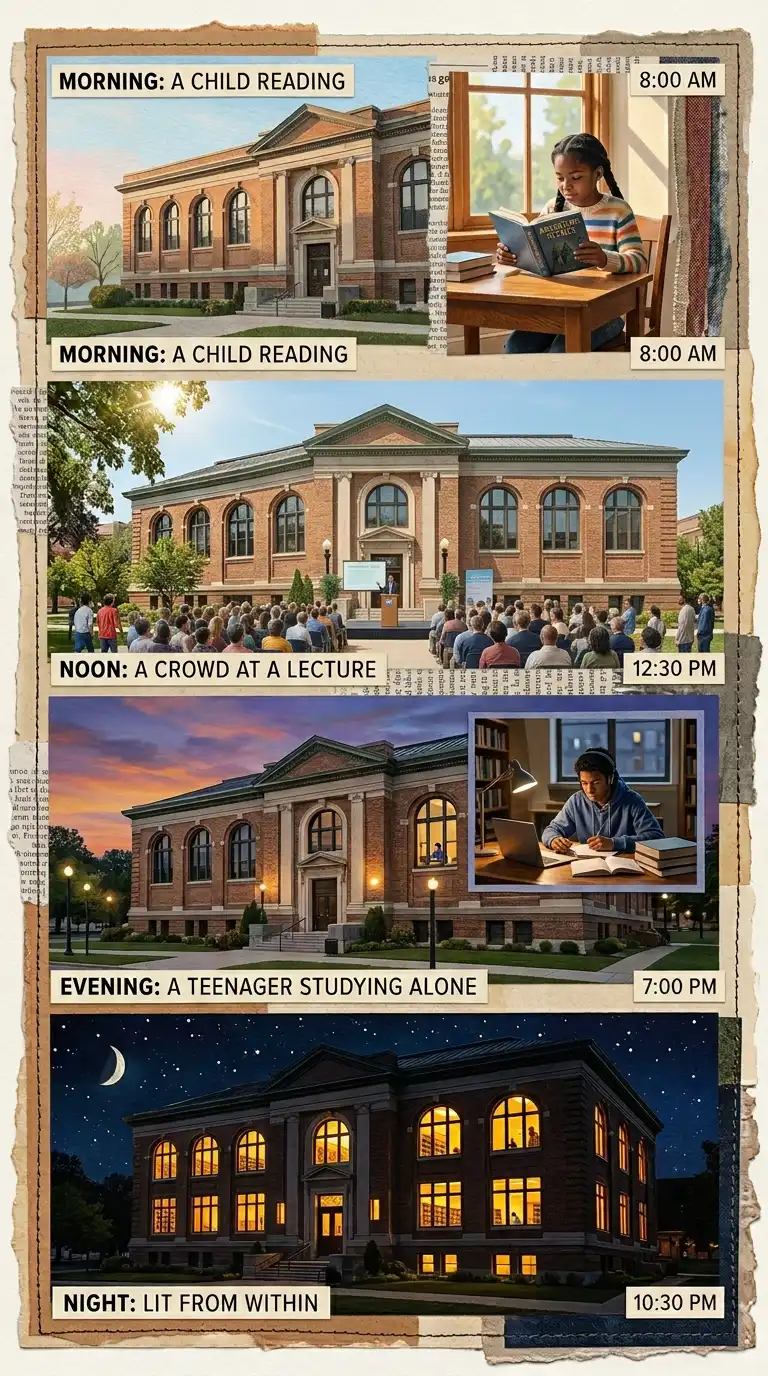
The narrative collage tells a story across time. A series of collaged panels shows a building being used over a day, a season, or a lifetime. Morning light, afternoon activity, evening gathering. Summer shade, autumn colour, winter light, spring growth.
This technique is ideal for public presentations and competitions. It shows the building not as a static object but as a stage for life. The emotional effect is temporal, narrative, and deeply human.
Quick Tips
- Create a sequence of 3-6 panels showing different times or seasons.
- Use consistent drawing and collage techniques across all panels.
- Show the same spaces across time so changes are visible.
13. The Surrealist Collage
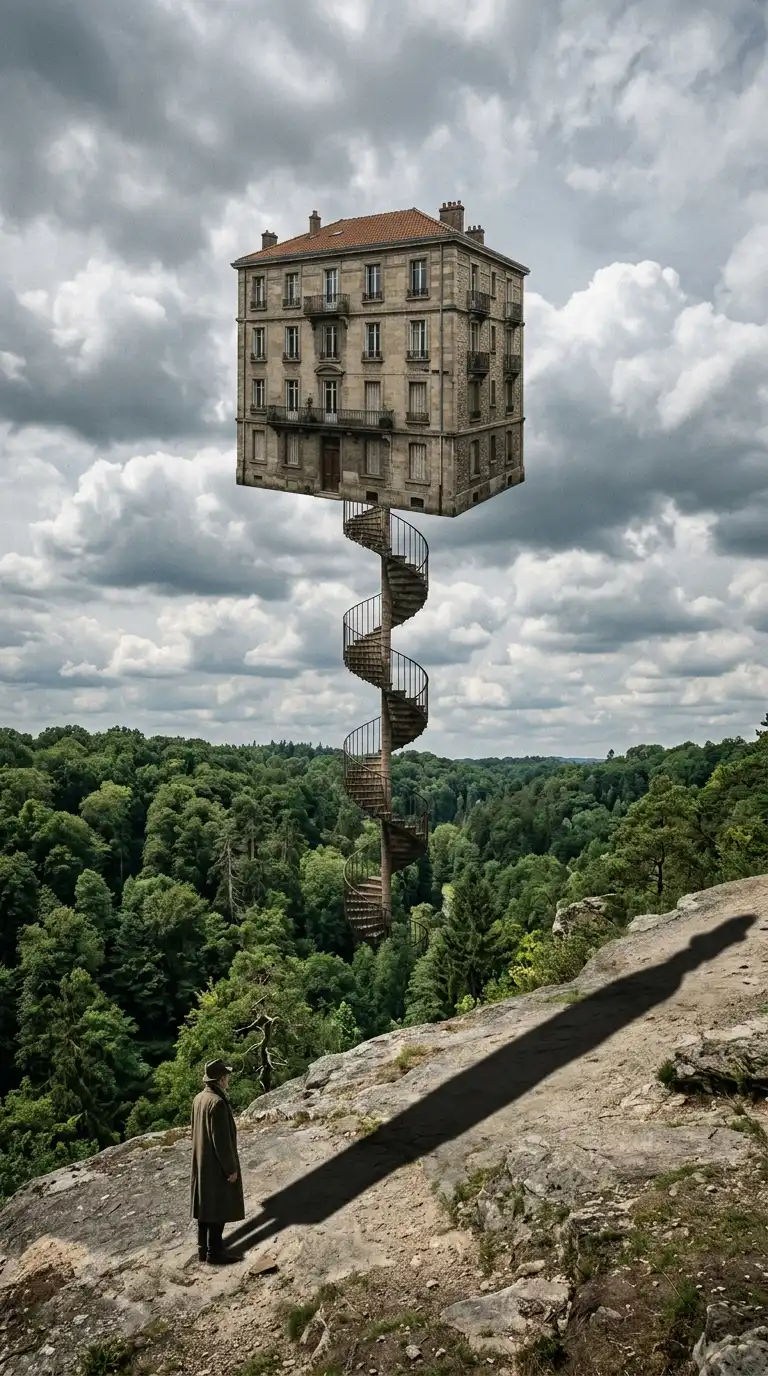
The surrealist collage combines unrelated images to create unexpected, dreamlike juxtapositions. A building floats in the sky. A staircase leads to nowhere. A room opens onto a forest. The goal is not realism but surprise.
This technique is ideal for conceptual projects and speculative designs. The emotional effect is dreamlike, surprising, and thought-provoking.
Quick Tips
- Combine images from completely different sources and scales.
- Do not try to make the collage realistic — embrace the impossible.
- Use unexpected juxtapositions to generate new ideas.
14. The Graphic Composition Collage
The graphic composition collage uses architectural drawings as graphic elements rather than representational images. Plans, sections, and elevations are cropped, rotated, and overlapped to create abstract compositions. The original meaning of the drawings is lost; only the lines, shapes, and textures remain.
This technique is ideal for posters, covers, and conceptual presentations. The emotional effect is abstract, graphic, and visually striking.
Quick Tips
- Crop drawings tightly to remove their original context.
- Rotate drawings so they are no longer readable as architecture.
- Use high contrast between black and white.
Final Thoughts
Architecture collage is not a replacement for drawing or rendering. It is a different mode of thinking — associative, layered, and generative. Collage forces you to make unexpected connections, to see familiar things in new combinations, to embrace imperfection and surprise.
These 14 collage ideas are starting points, not recipes. The best collages break the rules, mix unexpected sources, and find their own logic. A collage of a building with a sky cut from a Renaissance painting. A plan with figures from a fashion magazine. A section with textures from a botanical atlas. The only limit is your source material and your willingness to cut it up.