An open plan kitchen living room combo is not two rooms made into one. It is a single space designed for multiple activities—cooking, eating, talking, watching, working, playing—without walls to separate them. Unlike traditional plans, where the cook is isolated in the kitchen, the open plan places the kitchen at the social center. The challenge is zoning: without walls, you must use furniture, lighting, flooring, and ceiling changes to define areas. The reward is connection: the person at the stove can talk to the person on the sofa.
These 6 open plan kitchen living room combos span L-shaped, galley, island-centric, U-shaped, peninsula, and double-island configurations. Each includes defining characteristics, dimensional guidelines, and a prompt for visualization.
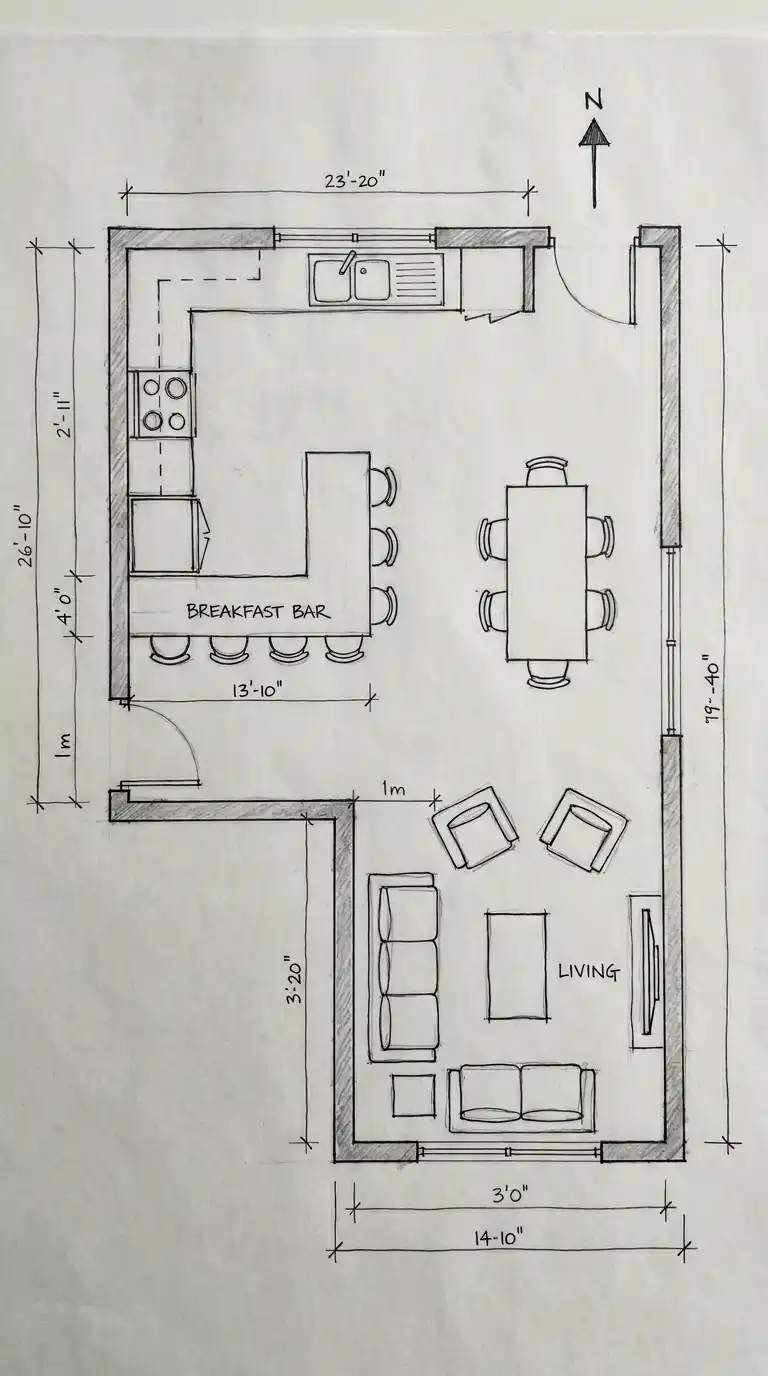
1. The L-Shaped Combo (Kitchen on Two Walls, Living in the Corner)
The kitchen occupies two perpendicular walls (L-shape). The living area is in the corner opposite the kitchen or adjacent to it. The L-shaped kitchen creates a natural corner for dining (a small table or breakfast bar). The living area is open to the kitchen but visually separated by the change in furniture (sofa facing away from the kitchen or toward a TV). This is the most common open plan configuration for small to medium spaces.
This plan is for apartments, small houses, or any space where the kitchen and living area share a square or rectangular footprint. The emotional effect is cornered, efficient, and connected.
Quick Specs
- Kitchen leg lengths: 2.5-4m each (L-shape).
- Living area depth: 3-5m.
- Total room size: 4m x 6m to 6m x 8m.
- Circulation path: between kitchen and living area (minimum 1m).
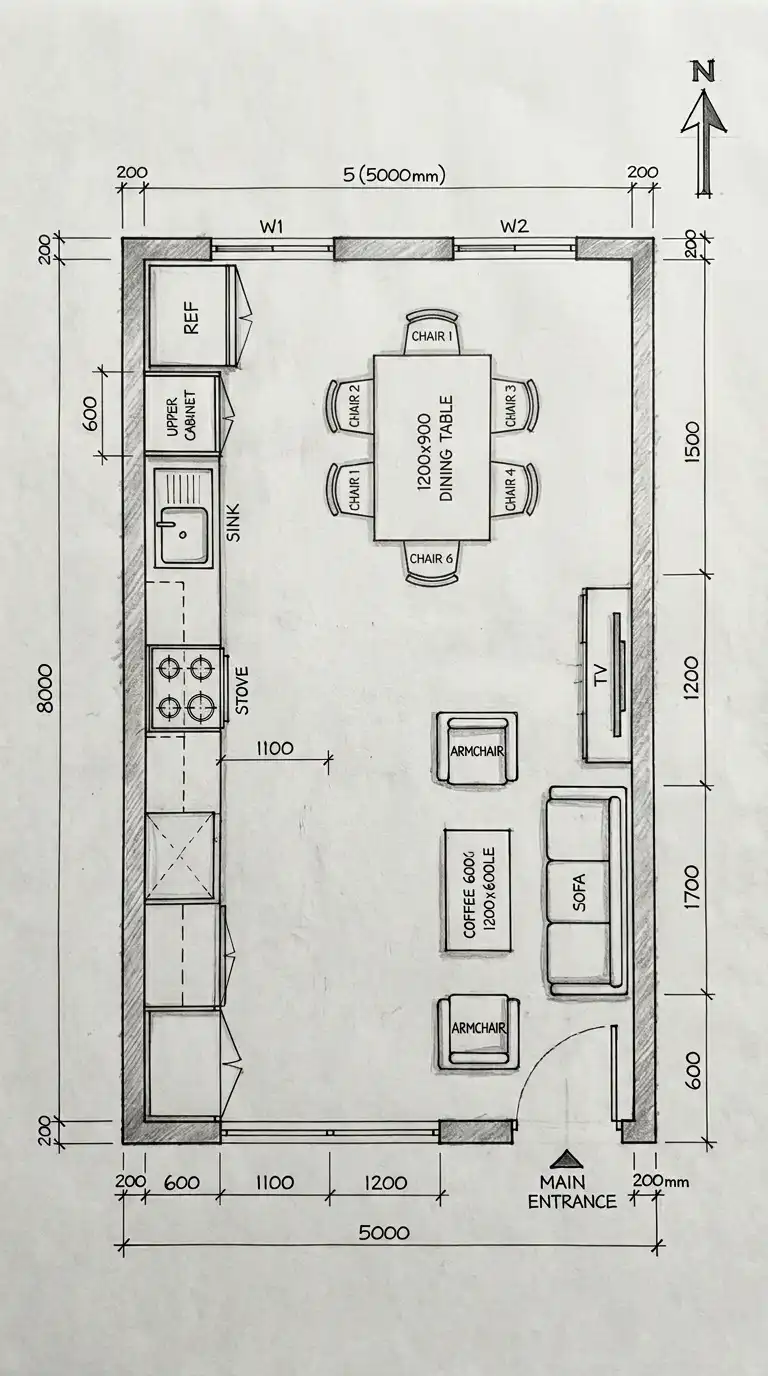
2. The Galley Combo (Kitchen on One Wall, Living Opposite)
The kitchen is a straight line (galley) along one wall. The living area is on the opposite side of the room. The dining table is between them, often centered. This plan is long and narrow. The galley kitchen is efficient (everything within reach) but limits counter space. The living area faces the kitchen across the room. This plan works well in long, narrow spaces (converted warehouses, loft apartments).
This plan is for lofts, narrow apartments, or any long, rectangular room. The emotional effect is linear, axial, and efficient.
Quick Specs
- Kitchen length: 3-5m (along one wall).
- Room width: 4-6m (kitchen to living wall).
- Room length: 6-10m.
- Circulation: along the long axis (between kitchen and dining/living).
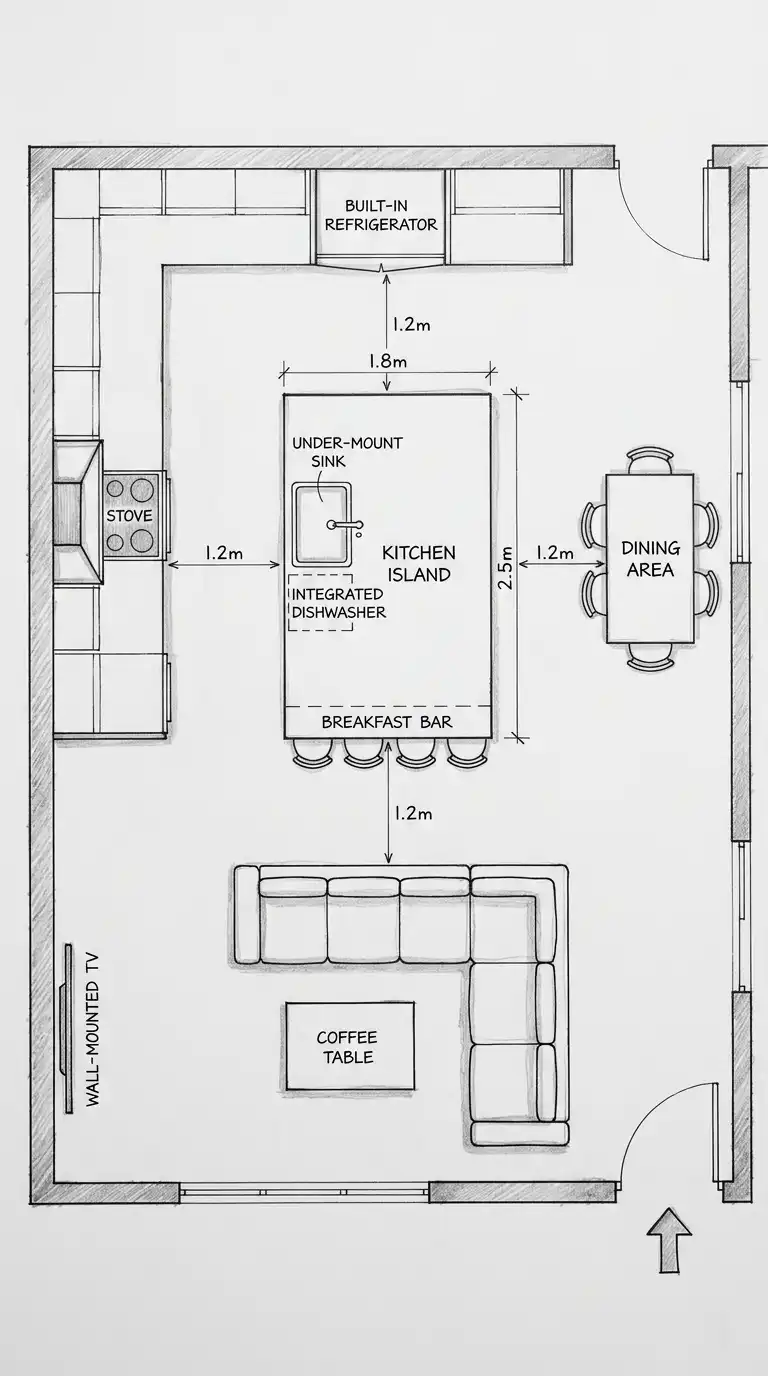
3. The Island-Centric Combo (Kitchen Island as Hub)
The kitchen is arranged around a large central island. The island contains the sink, dishwasher, and breakfast bar (seating on the living side). The stove and refrigerator are on the perimeter walls. The living area is on one side of the island, the dining area on another side. The island is the social hub—the cook faces the living area, not the wall. This plan is for larger spaces where the kitchen is the center of family life.
This plan is for family homes, large apartments, or any client who entertains frequently. The emotional effect is island-centric, hub-like, and social.
Quick Specs
- Island size: 1.5m x 2.5m to 2m x 3m.
- Clearance around island: 1-1.5m on all sides.
- Living area depth: 3-5m from the island.
- Total room size: 5m x 7m to 7m x 10m.
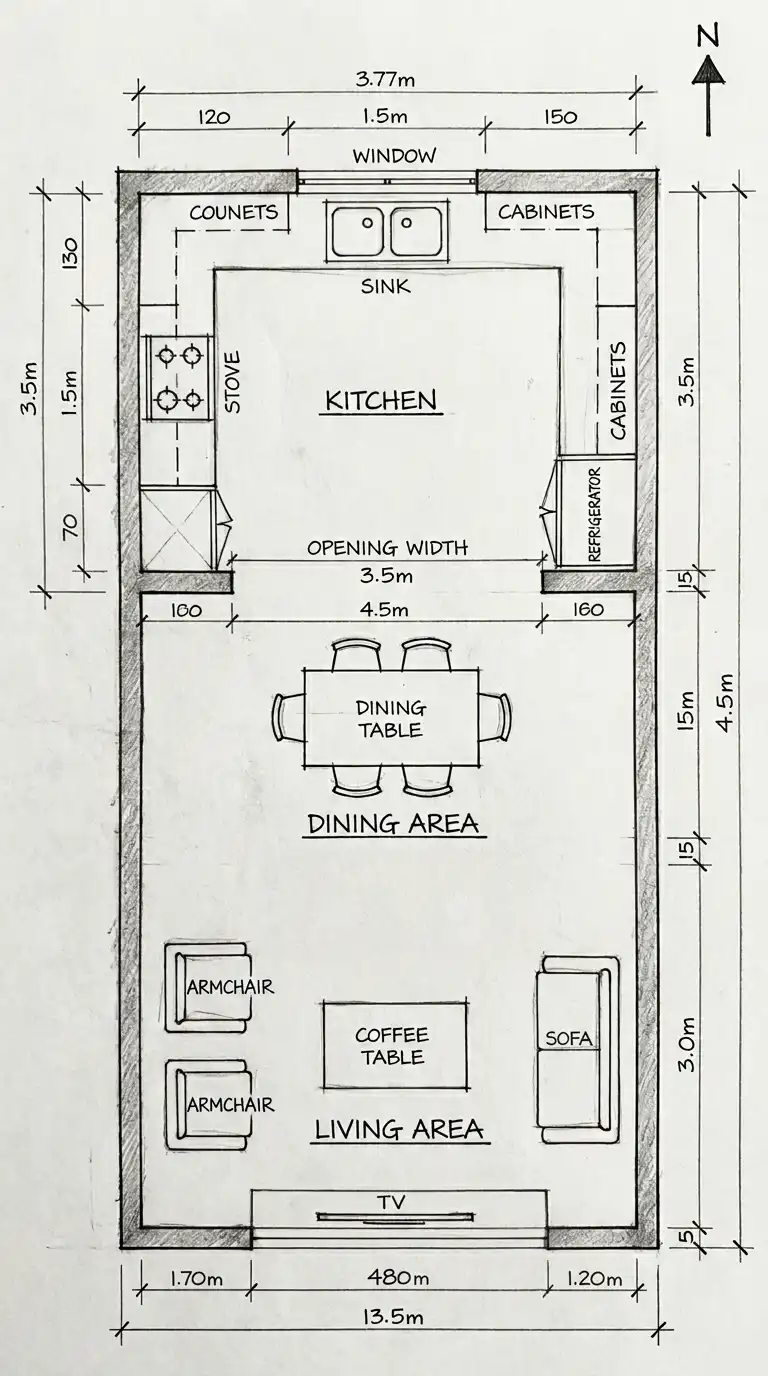
4. The U-Shaped Combo (Kitchen on Three Walls, Living in the Opening)
The kitchen occupies three walls (U-shape). The open side of the U faces the living and dining areas. The U-shaped kitchen maximizes counter and cabinet space. The cook faces the living area (not the wall). The living area is in the opening of the U. This plan works well in larger spaces where kitchen storage is a priority.
This plan is for large family homes, avid cooks, or any client who needs maximum kitchen storage. The emotional effect is U-shaped, enclosing, and efficient.
Quick Specs
- U dimensions: 3-4m wide x 3-4m deep.
- Opening width: 2-3m (facing living area).
- Living area depth: 3-5m from the opening.
- Total room size: 6m x 8m to 8m x 10m.
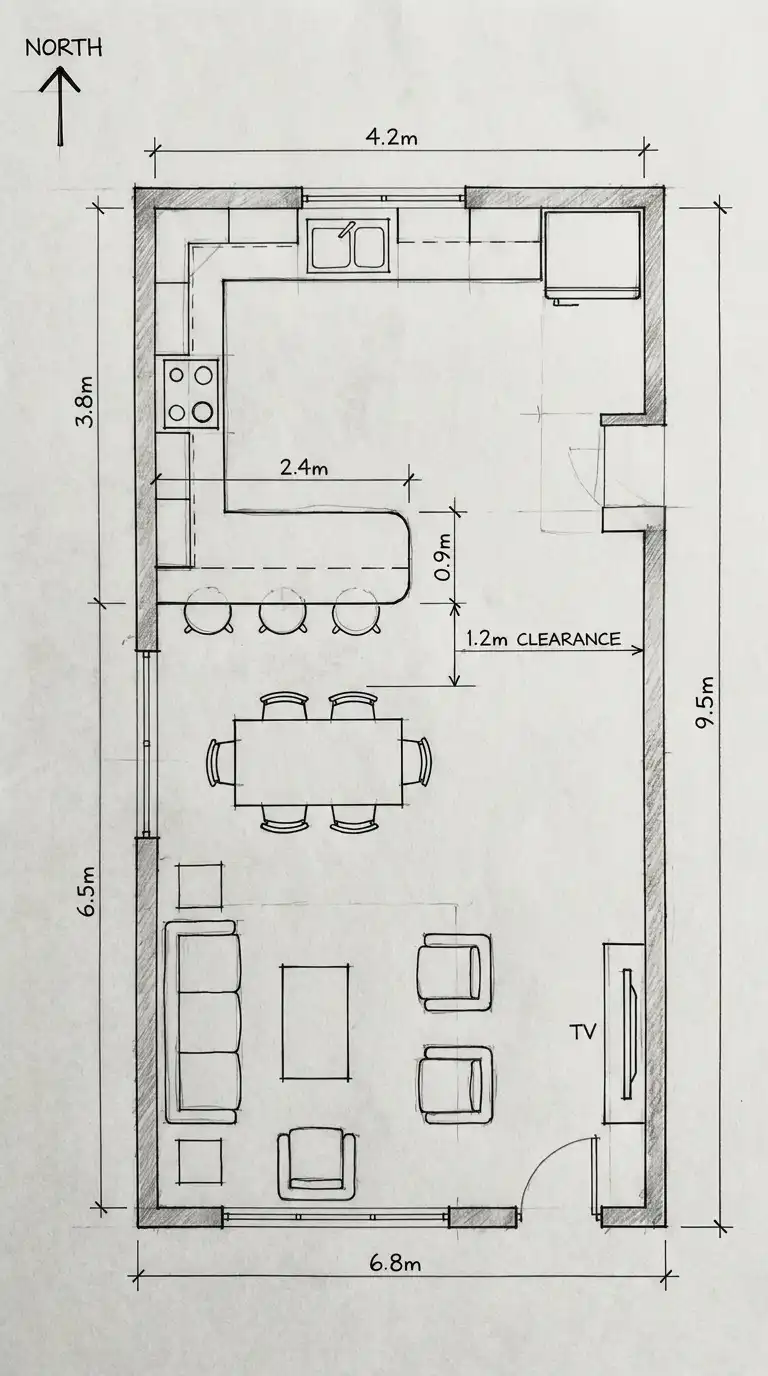
5. The Peninsula Combo (Kitchen with Bar, Living Beyond)
The kitchen is arranged in a G-shape or L-shape with a peninsula (a counter that projects into the room, attached to the kitchen at one end). The peninsula has seating on the living side (breakfast bar). The living area is beyond the peninsula. The peninsula separates the kitchen from the living area without a wall—it defines zones while keeping them visually connected. This plan is for medium-sized spaces that cannot accommodate a full island (peninsula uses less floor space).
This plan is for apartments, townhouses, or any space where an island would be too large. The emotional effect is peninsular, zoned, and space-efficient.
Quick Specs
- Peninsula length: 1.5-2.5m.
- Peninsula depth: 0.6-1m (counter) + 0.3m overhang for seating.
- Clearance in front of peninsula: 1-1.5m.
- Total room size: 4m x 6m to 6m x 8m.
6. The Double-Island Combo (Two Islands: Prep and Eat)
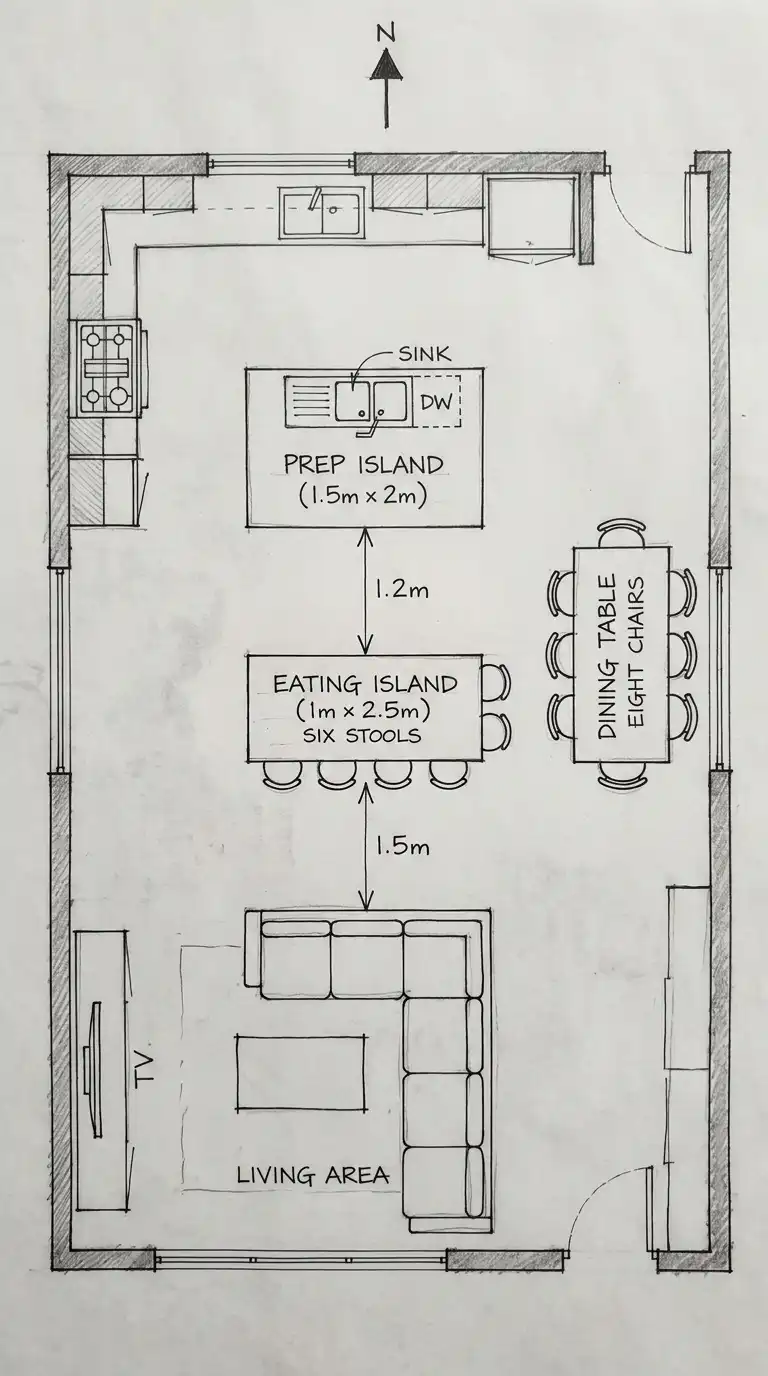
A large open plan with two islands. The first island (prep island) contains the sink, dishwasher, and prep space. It is closest to the stove and refrigerator. The second island (eating island) is for seating and casual dining. It has no sink or stove—only counter space and stools. The living area is beyond both islands. This plan is for large family homes, professional cooks, or clients who entertain frequently. It separates the work zone (prep island) from the social zone (eating island).
This plan is for large spaces (minimum 7m x 8m), luxury homes, or any client who wants a professional-grade kitchen. The emotional effect is double-island, work-separated, and generous.
Quick Specs
- Prep island size: 1.2m x 2m (sink, dishwasher, prep space).
- Eating island size: 1m x 2.5m (seating for 4-6).
- Distance between islands: 1.2-1.5m.
- Total room size: 7m x 8m to 9m x 12m.
Comparison Summary
| Combo Type | Kitchen Configuration | Best For | Space Required | Social Hub |
|---|---|---|---|---|
| L-Shaped | L-shape on two walls | Small to medium spaces, apartments | 4m x 6m to 6m x 8m | Breakfast bar or dining table |
| Galley | Straight line on one wall | Long, narrow spaces (lofts, narrow apartments) | 5m x 8m to 6m x 10m | Dining table (centered) |
| Island-Centric | Perimeter walls + central island | Family homes, entertaining | 5m x 7m to 7m x 10m | Central island (seating) |
| U-Shaped | Three walls, open side facing living | Large homes, avid cooks | 6m x 8m to 8m x 10m | Dining table (in the opening) |
| Peninsula | L or G with attached peninsula | Medium spaces, apartments | 4m x 6m to 6m x 8m | Peninsula breakfast bar |
| Double-Island | Prep island + eating island | Large luxury homes, professional cooks | 7m x 8m to 9m x 12m | Eating island (social) |
Conclusion
The open plan kitchen living room combo is not a trend. It is a response to how families actually live: the cook no longer wants to be isolated; parents want to watch children while cooking; guests want to talk to the host. The wall between kitchen and living room has become obsolete.
But removing a wall does not create a good room. It creates a large, undifferentiated space that must be zoned by other means. The six combos presented here offer different strategies for zoning without walls:
The L-Shaped Combo uses the natural corner of the kitchen to define the cooking zone. The living area occupies the opposite corner. The dining table bridges the gap. This is the most flexible and common configuration.
The Galley Combo accepts a long, narrow room and uses the length to separate cooking from living. The dining table sits between them like a bridge. This works well in lofts and converted industrial spaces.
The Island-Centric Combo places the kitchen island at the social center. The cook faces the living area. The island becomes the heart of the home. This requires the most space but offers the most connection.
The U-Shaped Combo maximizes kitchen storage and counter space while keeping the cook facing the living area. The open side of the U frames the living area like a proscenium.
The Peninsula Combo offers the benefits of an island (seating, zoning) in a smaller footprint. The peninsula attaches to the kitchen at one end, using less floor space than a freestanding island.
The Double-Island Combo separates the work zone (prep island) from the social zone (eating island). This is for serious cooks who need prep space but still want to be connected to the living area.
When designing an open plan kitchen living room combo, consider:
Circulation. People need to move between the kitchen, dining, and living areas without walking through the cooking zone. Minimum clearance is 1m; 1.2m is comfortable.
The Work Triangle. The sink, stove, and refrigerator should form a triangle with legs between 1.2m and 2.7m. No leg of the triangle should pass through the living area.
Sightlines. The cook should see the living area (especially if children are present). The person on the sofa should not see the dirty dishes. A peninsula or island can block the view of the sink while keeping the cook visible.
Ventilation. Cooking smells travel. A range hood that vents to the exterior is essential. In some jurisdictions, a makeup air system is required for high-CFM hoods.
Lighting. The kitchen needs task lighting (under-cabinet, pendant over island). The living area needs ambient and accent lighting. The dining table needs a pendant or chandelier. These lighting zones should be on separate switches.
Flooring. Many open plans use different flooring to define zones: tile in the kitchen (water-resistant), wood in the living area (warm), and a transition strip at the boundary. The same flooring throughout creates a more unified space but requires more maintenance in the kitchen.
The best open plan is not the one with the most square meters. It is the one where the person at the stove and the person on the sofa can talk without shouting, where the cook does not feel like a servant, and where the dirty dishes are not the first thing a guest sees. It is a plan for connection, not just for space.