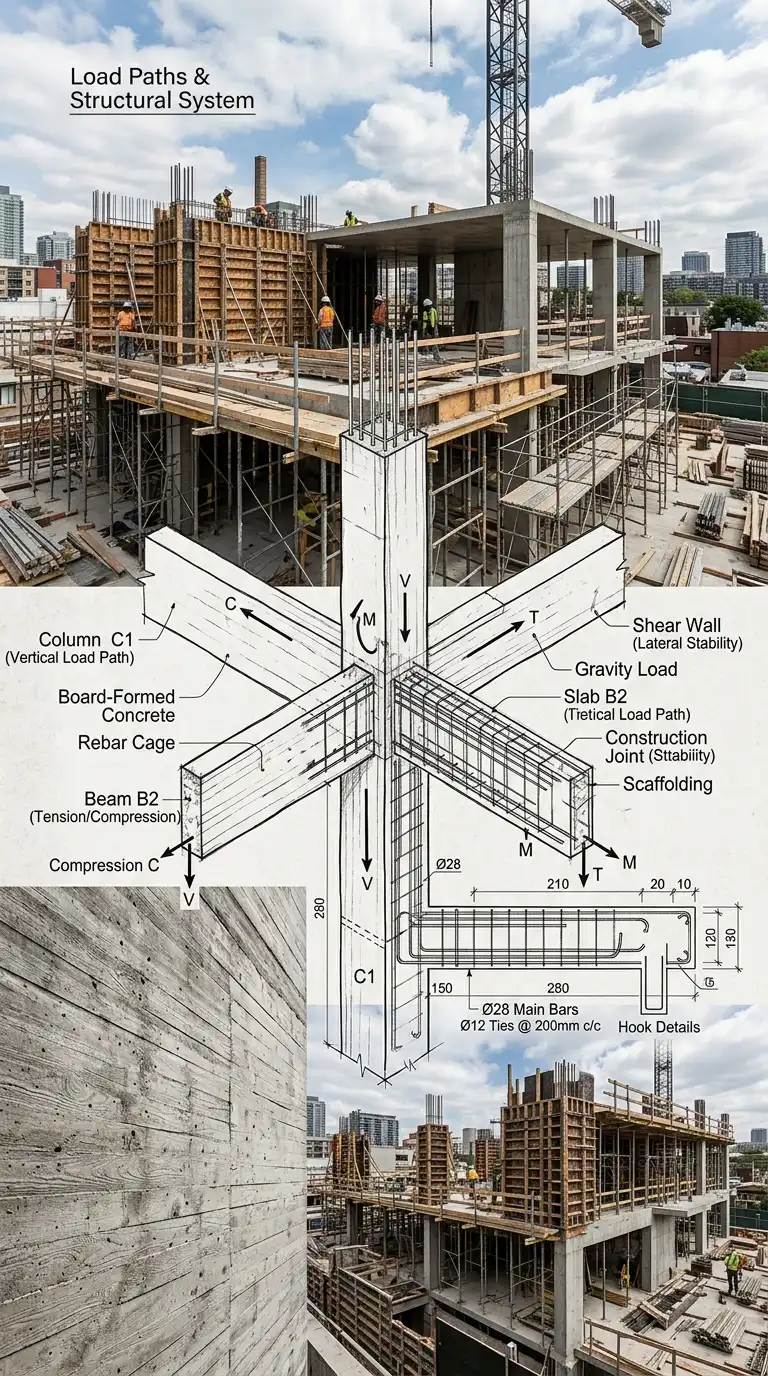
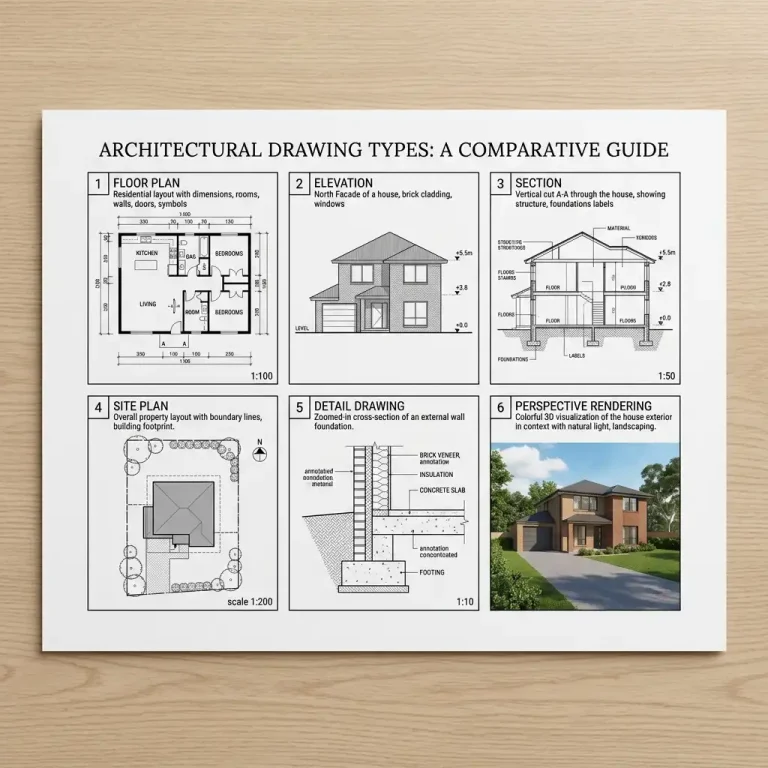
An architecture sketchbook is not a finished portfolio. It is a laboratory. A place to think, to fail, to explore, to practice. The best sketchbooks are messy — erasures, smudges, overlapping lines, notes in the margin. A sketchbook is for the architect, not for the audience. It is where ideas are born.
These architecture sketchbook ideas span drawing exercises, observational studies, and conceptual explorations. Each idea includes defining characteristics, practice strategies, and creative approaches.
1. The Daily Building Sketch
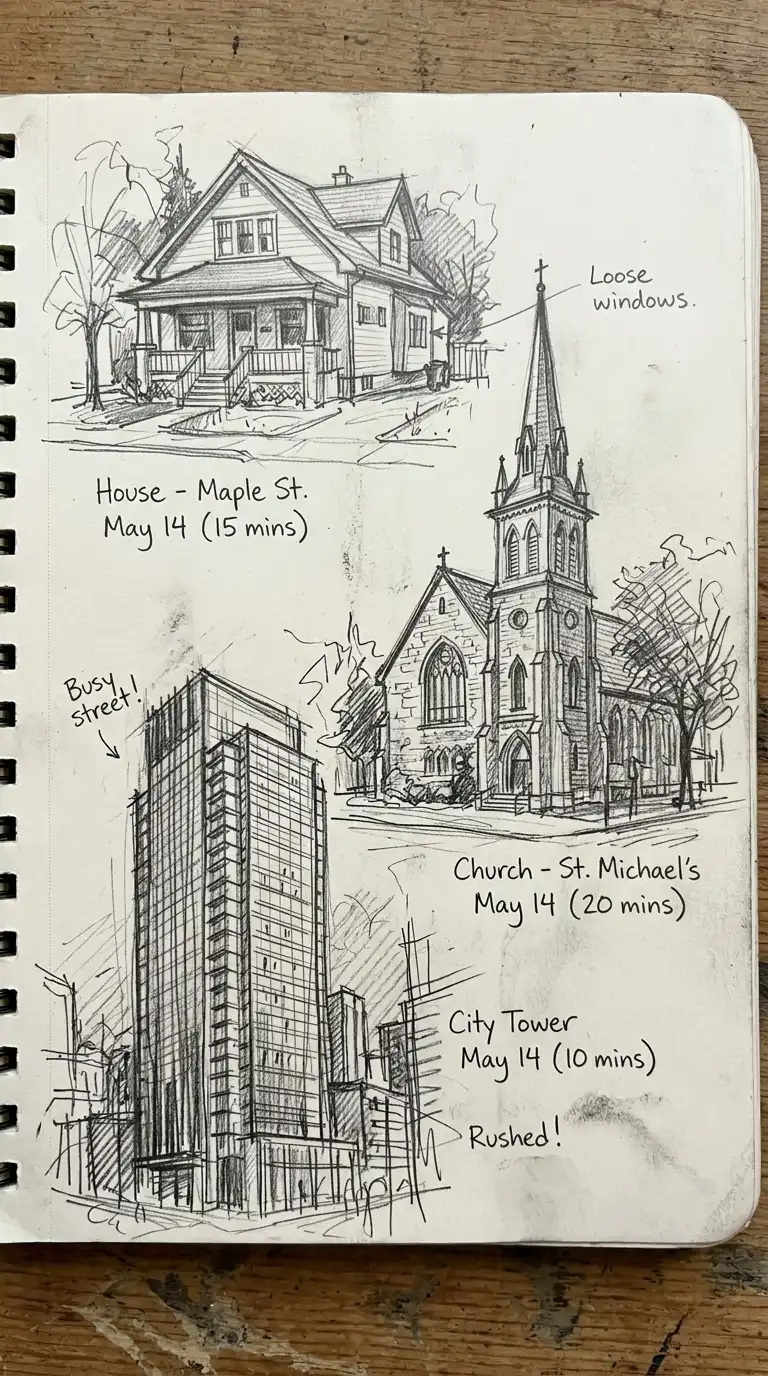
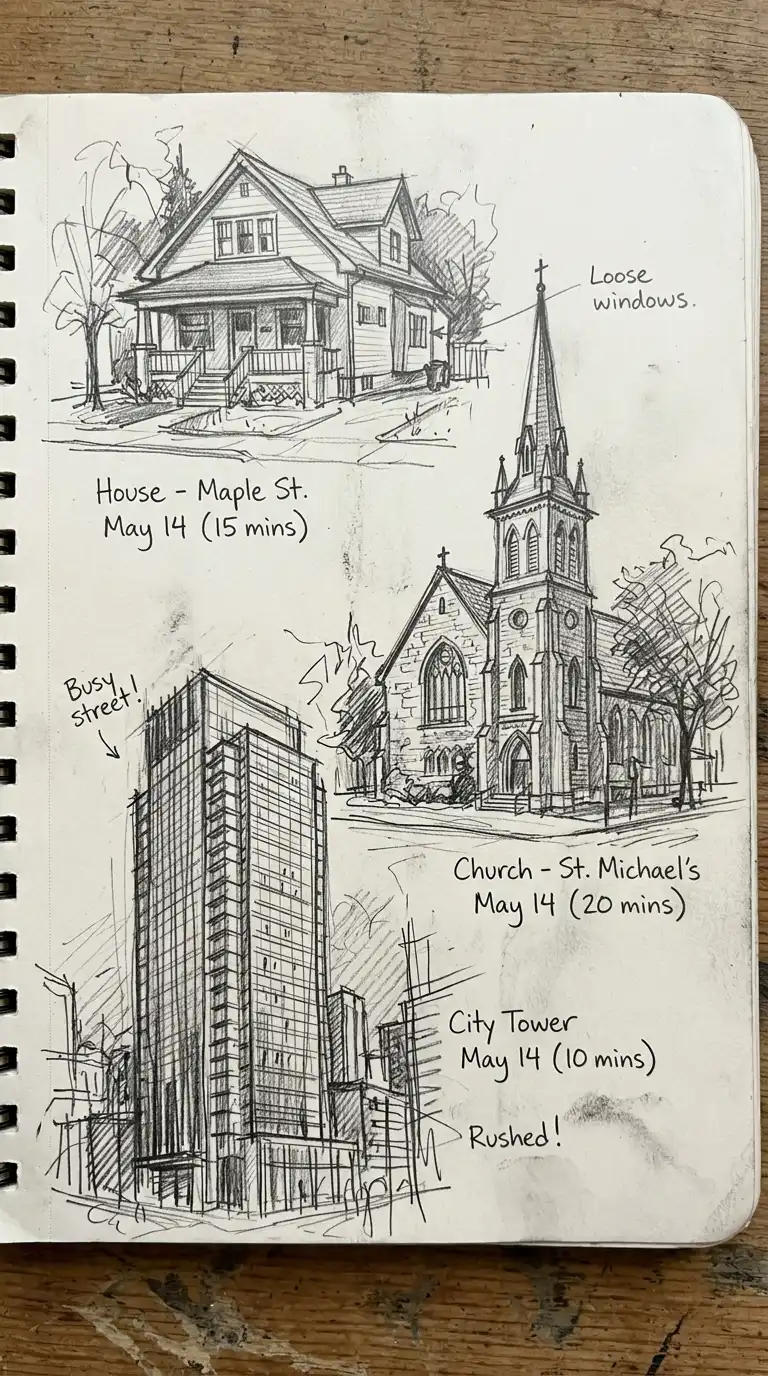
Draw one building every day. It can be your house, a coffee shop, a church, a skyscraper. Spend 10-20 minutes. Do not worry about accuracy. Capture the mass, the shadow, the feeling. The daily building sketch is about habit, not perfection.
This exercise is ideal for improving observation and hand-eye coordination. The emotional effect is habitual, observational, and daily.
Quick Tips
- Set a timer for 15 minutes.
- Draw from life, not from photos.
- Do not erase — draw over mistakes.
2. The Shadow Study
Fill a page with shadows. Draw a building at different times of day. Draw the shadow of a tree on a wall. Draw the shadow of a column on the floor. The shadow study is about light, not form.
This exercise is ideal for understanding light and shadow. The emotional effect is tonal, dramatic, and shadow-focused.
Quick Tips
- Use the side of a soft pencil (4B or 6B).
- Draw only shadows — no outlines.
- Observe how shadows change with time.
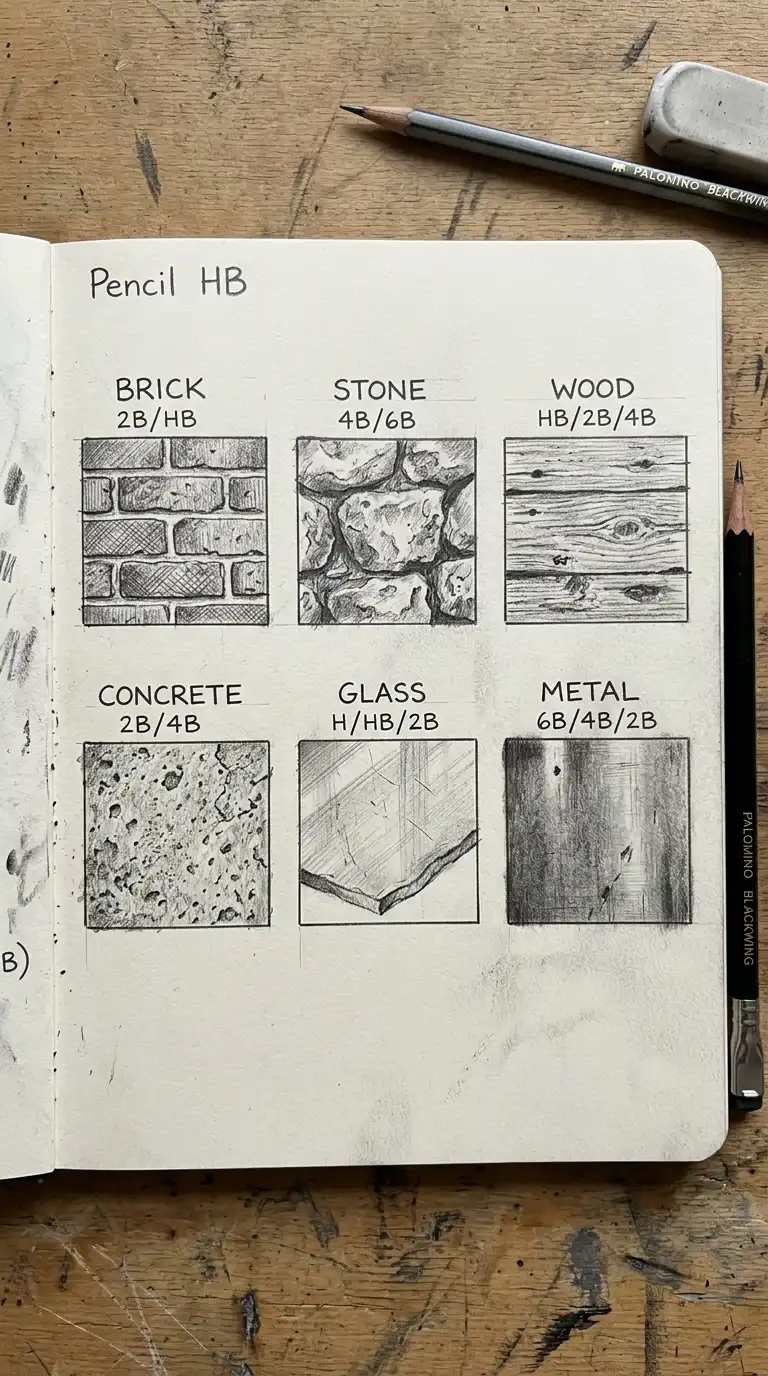
3. The Texture Page
Fill a page with textures. Brick, stone, wood, concrete, glass, metal. Draw each texture as a small square. Label each texture. The texture page is about material, not form.
This exercise is ideal for learning to draw materials. The emotional effect is textured, material, and labelled.
Quick Tips
- Draw each texture in a 5cm square.
- Use different pencils for different textures (hard for brick, soft for concrete).
- Label each texture.
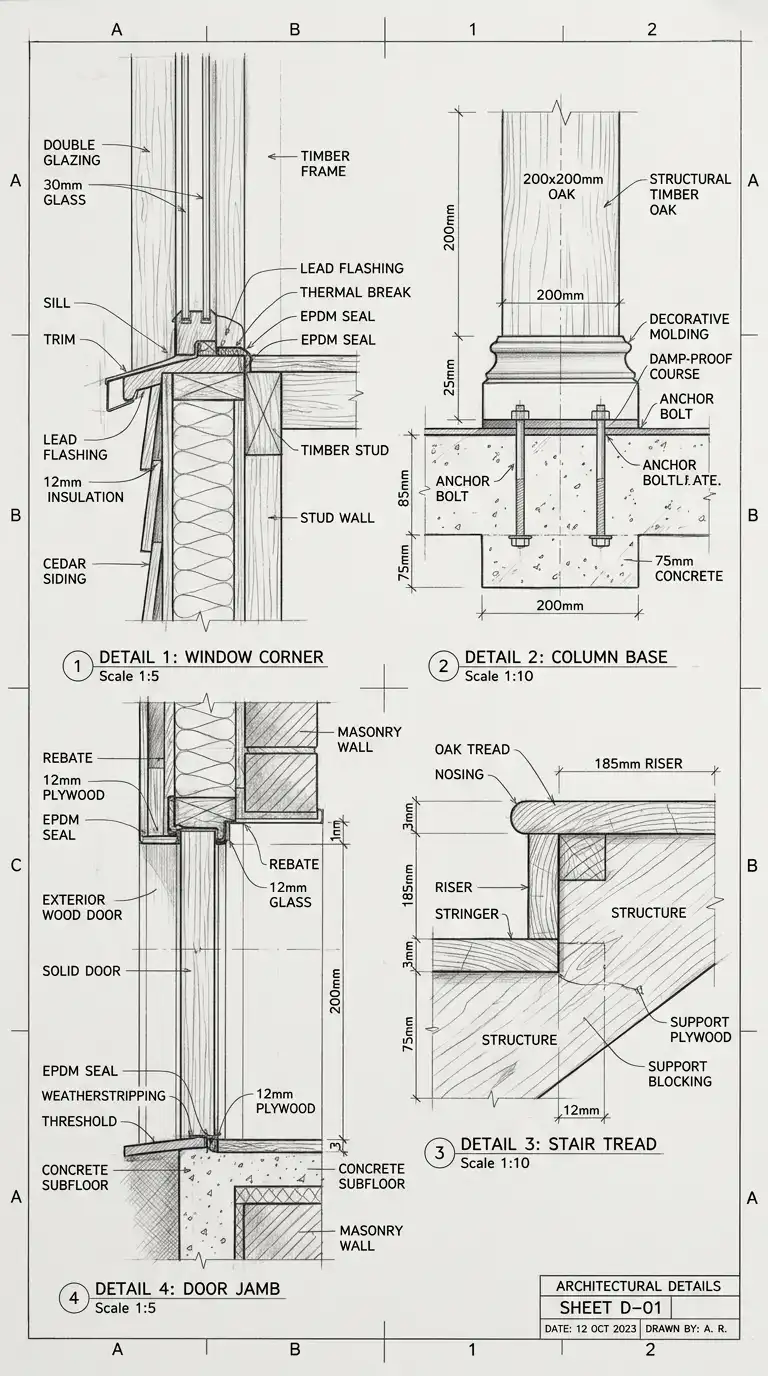
4. The Detail Page
Fill a page with architectural details. A corner, a window, a door, a stair, a handrail, a column capital. Draw each detail at a large scale. The detail page is about connection, not composition.
This exercise is ideal for understanding how buildings go together. The emotional effect is detailed, connected, and large-scale.
Quick Tips
- Draw each detail at 1:5 or 1:10 scale.
- Show how materials connect.
- Add notes and dimensions.
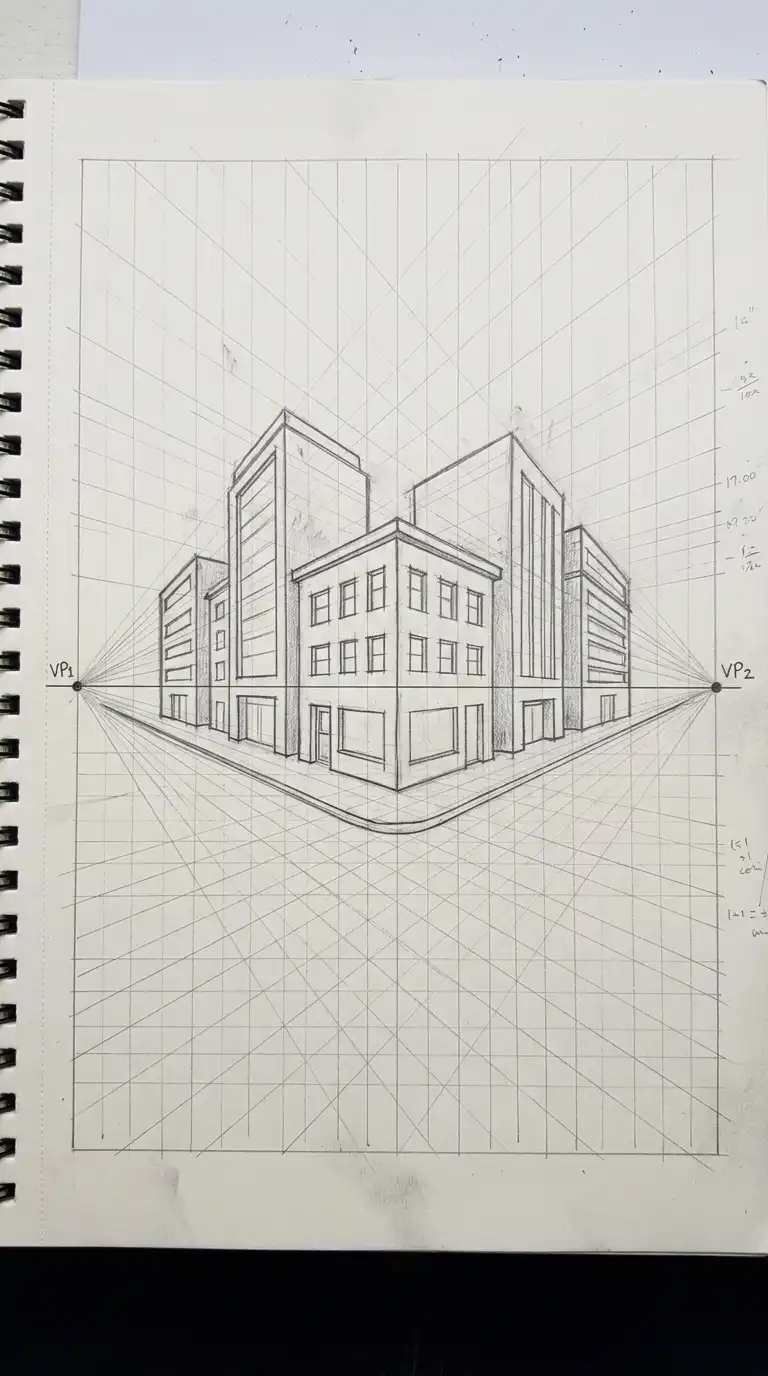
5. The Perspective Grid Page
Draw a perspective grid. A horizon line, vanishing points, and converging lines. Then draw buildings on the grid. The perspective grid page is about geometry, not drawing.
This exercise is ideal for learning perspective. The emotional effect is geometric, gridded, and structural.
Quick Tips
- Draw the horizon line first.
- Place vanishing points far apart.
- Draw the grid lightly, then draw buildings over it.
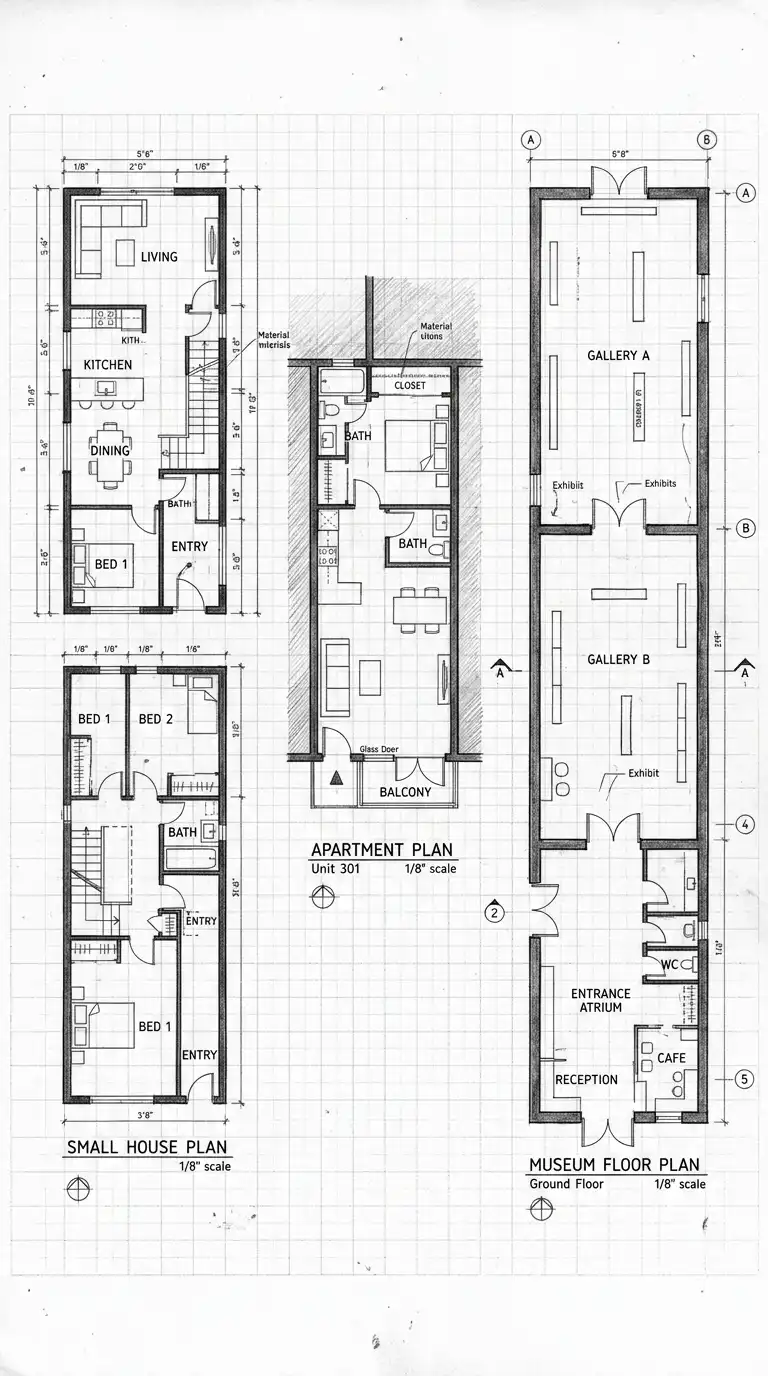
6. The Plan Sketch Page
Fill a page with plan sketches. A house plan, an apartment plan, a museum plan. Draw the walls, doors, windows, and stairs. Keep the plans simple — 3-5 rooms each. The plan sketch page is about organisation, not detail.
This exercise is ideal for learning spatial organisation. The emotional effect is planimetric, organised, and simple.
Quick Tips
- Use thick lines for walls, thin lines for furniture.
- Draw door swings as quarter-circles.
- Keep each plan small (5-10cm square).
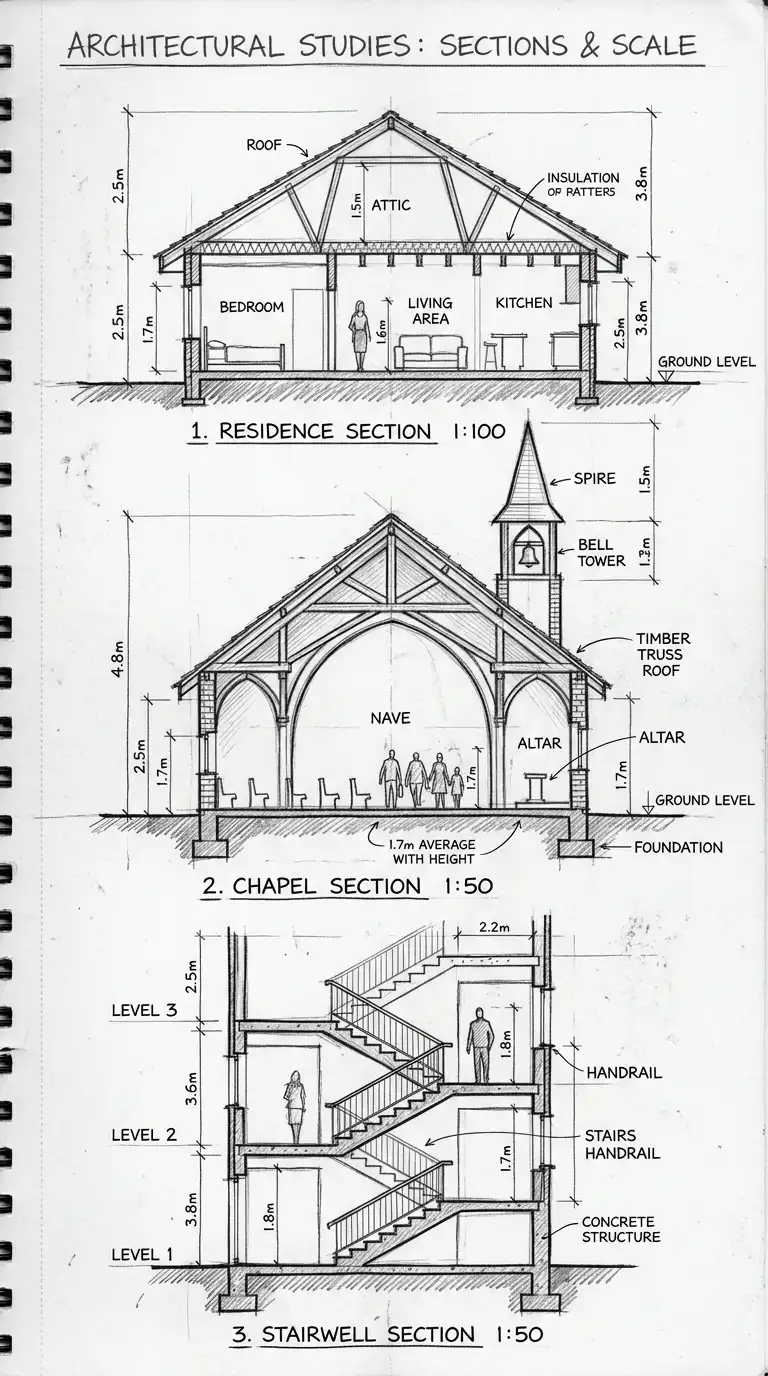
7. The Section Sketch Page
Fill a page with section sketches. A house section, a church section, a stair section. Draw the ground, floors, walls, roof. Add a human figure for scale. The section sketch page is about vertical relationships, not horizontal.
This exercise is ideal for learning vertical organisation. The emotional effect is sectional, vertical, and scaled.
Quick Tips
- Draw the ground line first.
- Add floors at regular intervals.
- Add a human figure (about 1.5cm tall) for scale.
8. The Elevation Sketch Page
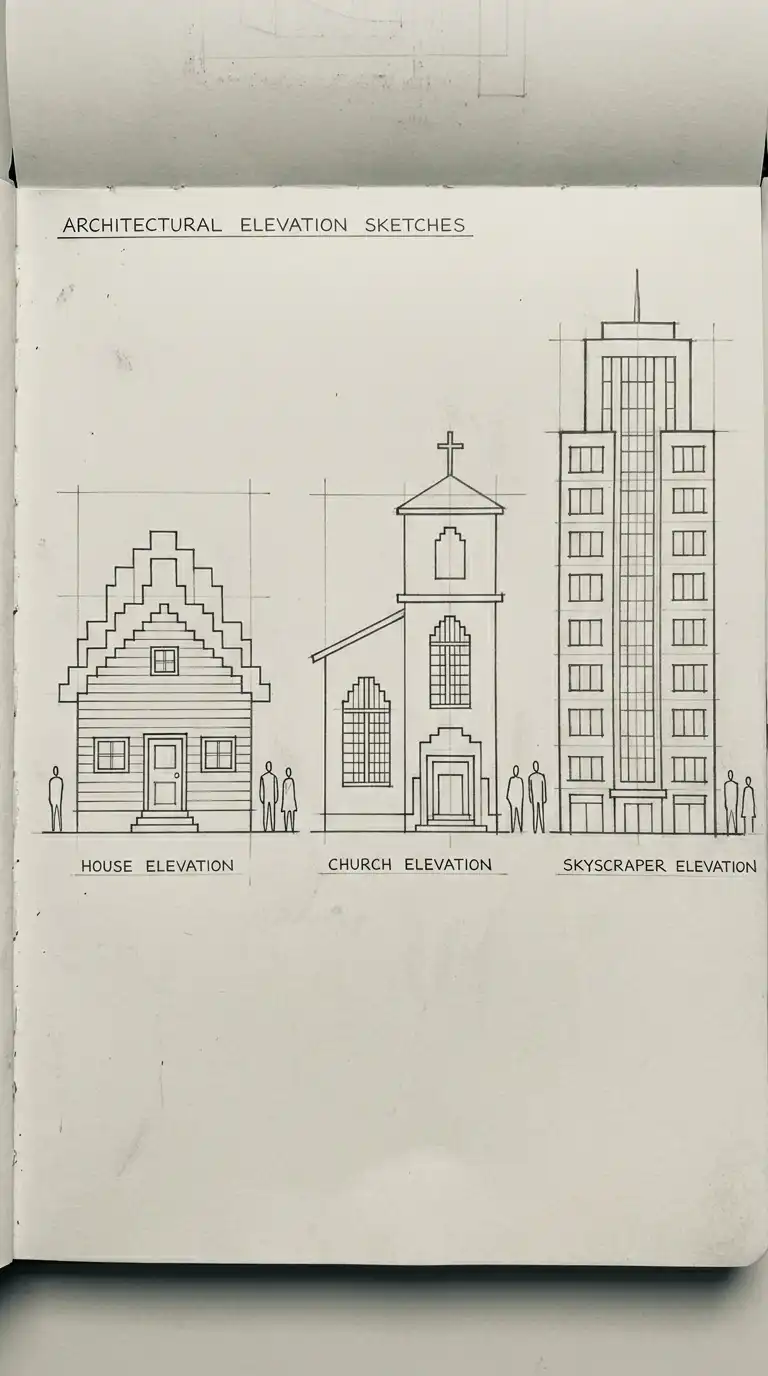
Fill a page with elevation sketches. A house facade, a church facade, a skyscraper. Draw the outline, windows, doors, roof. Keep the elevations flat (no perspective). The elevation sketch page is about proportion, not depth.
This exercise is ideal for learning facade composition. The emotional effect is elevational, proportional, and flat.
Quick Tips
- Keep all lines vertical or horizontal (no perspective).
- Draw the outline first, then windows, then doors.
- Add a human figure for scale.
9. The Urban Sketch Page
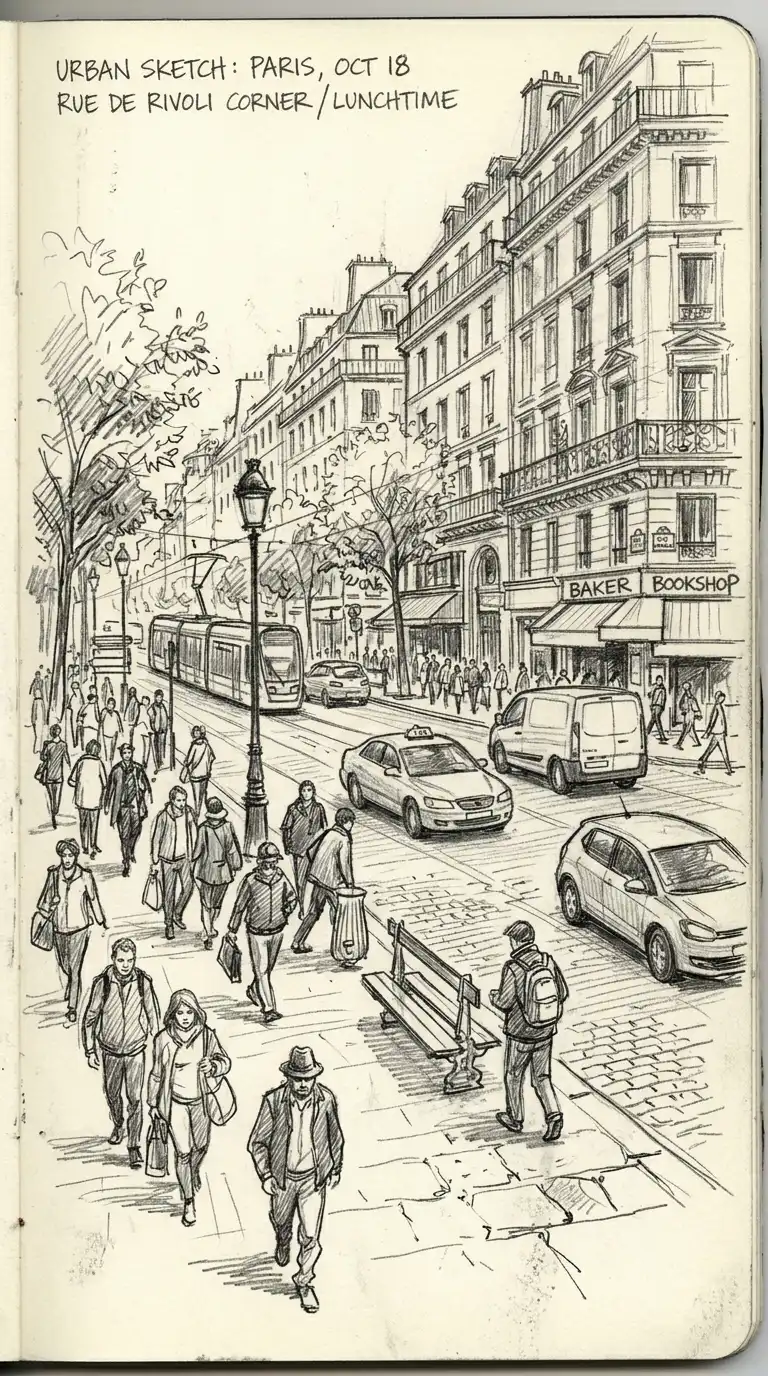
Go outside and sketch a street corner. Include buildings, streets, people, trees, cars, streetlights. Spend 20-30 minutes. The urban sketch page is about place, not building.
This exercise is ideal for learning to sketch on location. The emotional effect is urban, on-location, and place-based.
Quick Tips
- Draw on location, not from a photo.
- Work quickly — 20-30 minutes.
- Add people for scale and life.
10. The Massing Sketch Page
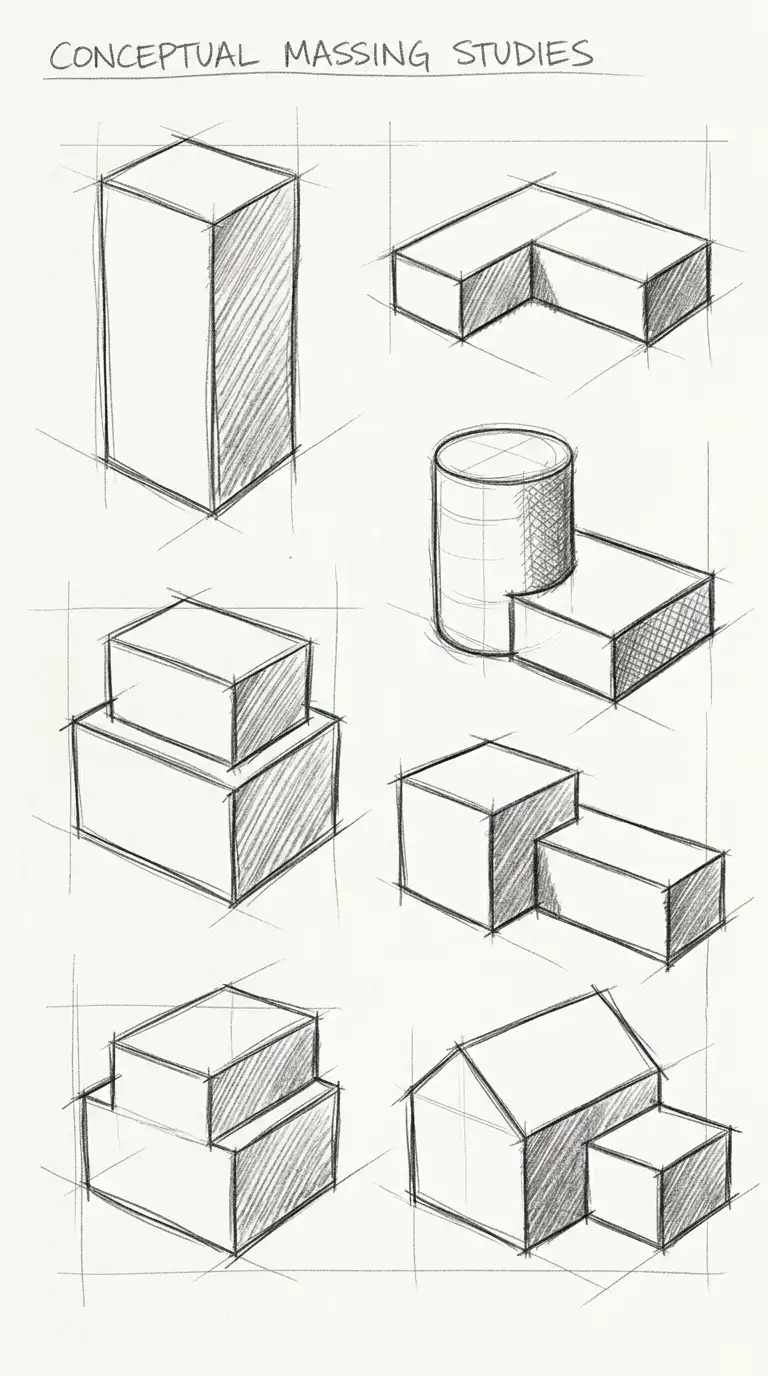
Fill a page with massing sketches. Draw buildings as simple cubes, rectangles, and cylinders. No windows, no doors, no details. Shade one side for depth. The massing sketch page is about volume, not detail.
This exercise is ideal for learning form and mass. The emotional effect is massed, volumetric, and simple.
Quick Tips
- Use simple geometric volumes (cubes, rectangles, cylinders).
- No details — no windows, no doors.
- Shade one side for depth.
11. The Human Figure Page
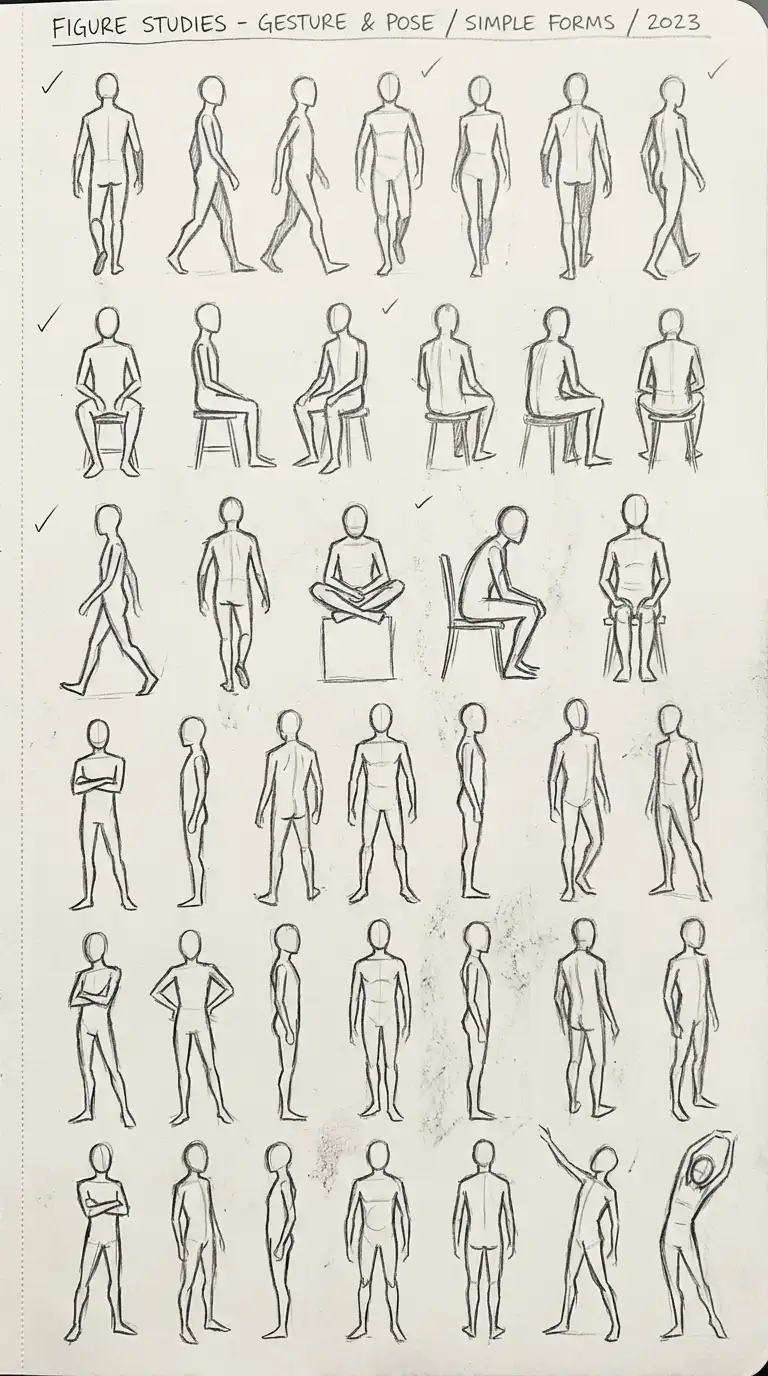
Fill a page with human figures. Draw people walking, sitting, standing, talking. Draw them from the front, side, and back. Keep the figures simple — stick figures or simple silhouettes. The human figure page is about scale, not anatomy.
This exercise is ideal for learning to draw figures for scale. The emotional effect is figural, scaled, and simple.
Quick Tips
- Keep figures simple (stick figures are acceptable).
- Draw people in different poses (walking, sitting, standing).
- Draw people from front, side, and back.
12. The Concept Sketch Page
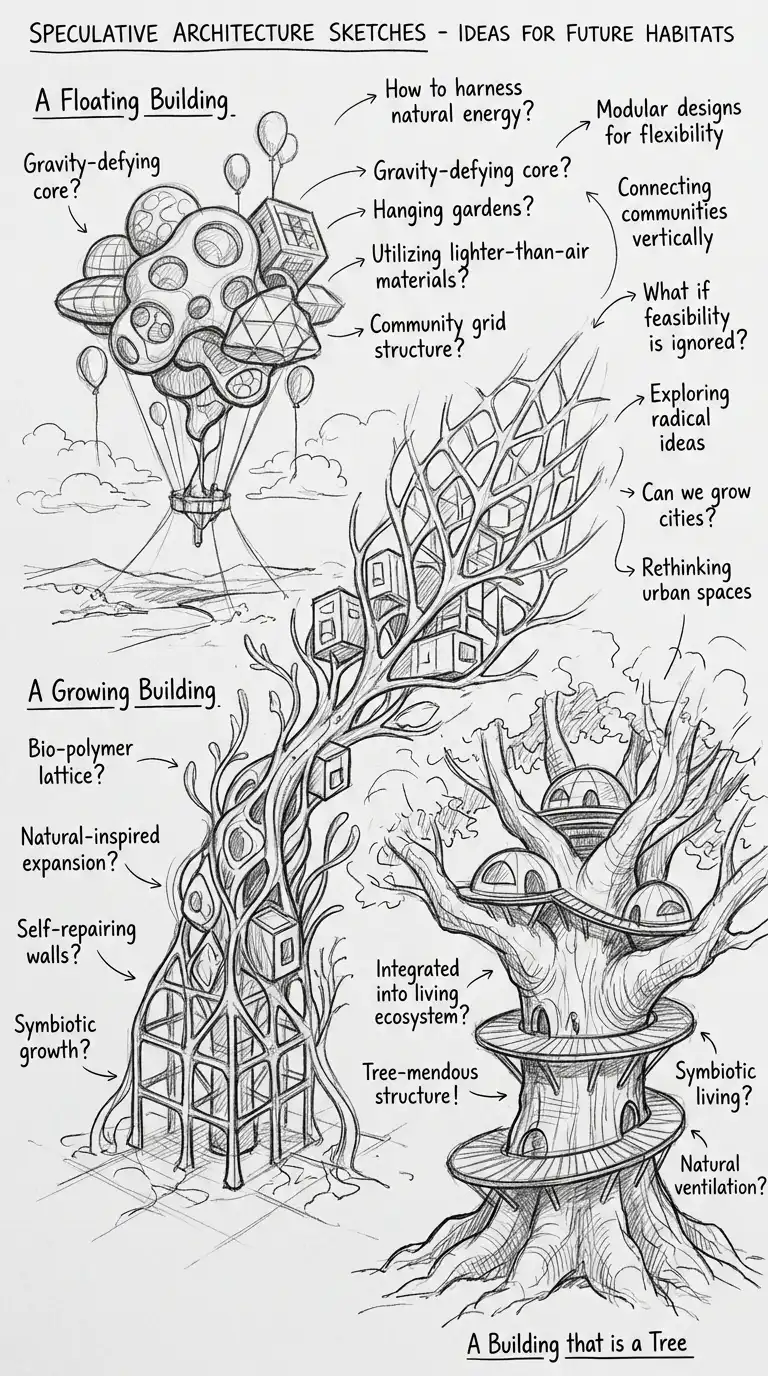
Fill a page with concept sketches. Draw a building that floats, a building that grows, a building that is a tree. Do not worry about feasibility. The concept sketch page is about imagination, not reality.
This exercise is ideal for creative thinking. The emotional effect is conceptual, imaginative, and speculative.
Quick Tips
- Do not worry about feasibility.
- Draw quickly — 2-5 minutes per sketch.
- Write notes in the margin.
Final Thoughts
These 12 sketchbook ideas are not mutually exclusive. A daily building sketch can be a shadow study. An urban sketch can include human figures. A concept sketch can be a massing sketch. The best sketchbooks are not the most beautiful — they are the most used. They are filled with bad drawings, good drawings, and ideas that never became buildings. They are the record of a mind at work. They are the sketchbook. They are architecture thinking out loud.