An architecture sketch is not a finished drawing. It is a thought made visible. A sketch can be loose, quick, and imperfect. The goal is not beauty — it is understanding. A great sketch captures an idea, a proportion, a relationship, or a feeling. It does not need to be accurate. It needs to be clear.
These 13 easy architecture sketch ideas are for beginners, students, and anyone who wants to practice seeing like an architect. Each idea includes defining characteristics, simple techniques, and drawing tips.
1. The Single-Point Perspective Room
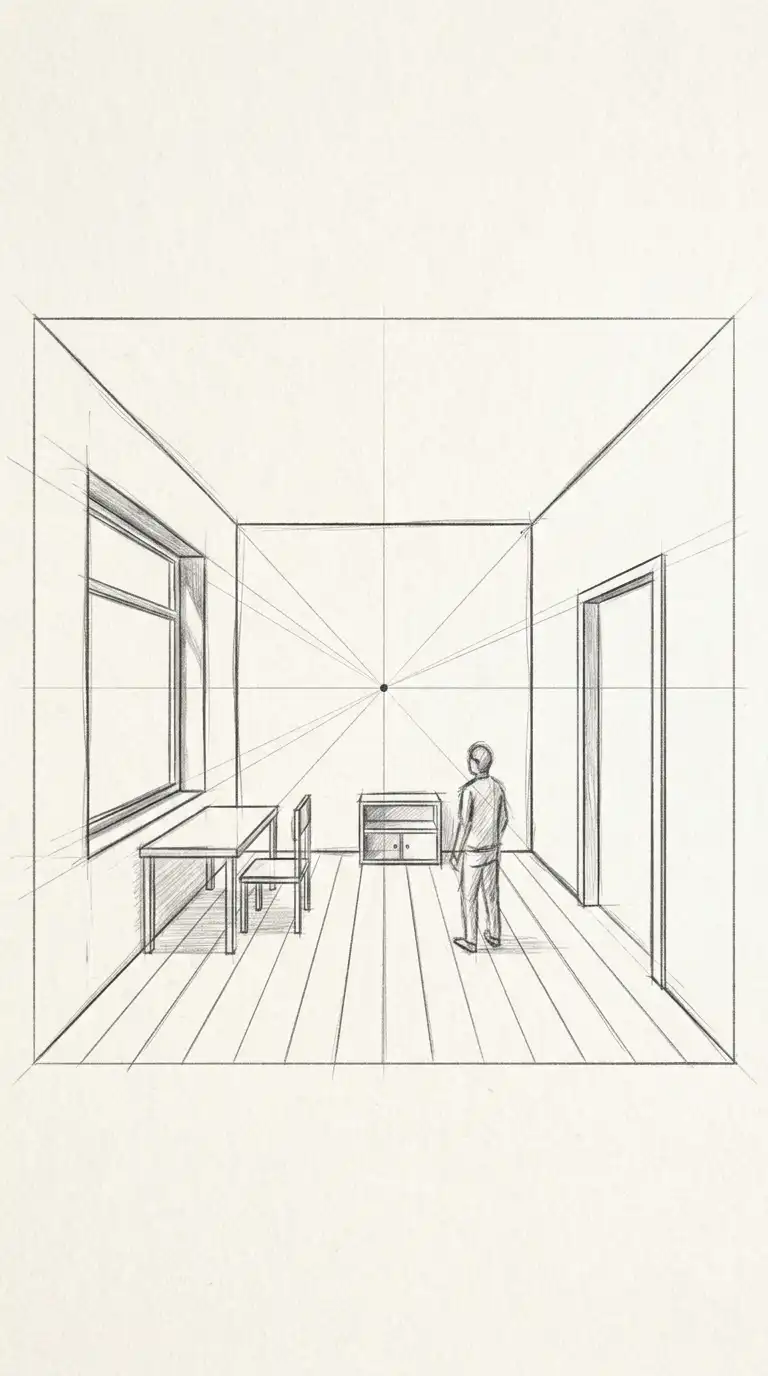
The single-point perspective room is the easiest way to create depth on a flat page. Draw a rectangle for the back wall. Place a dot in the centre (the vanishing point). Draw lines from the corners of the rectangle to the dot. These are the floor, ceiling, and walls. Add a door, a window, or a piece of furniture along these lines.
This sketch is ideal for understanding interior space. The emotional effect is deep, spatial, and inviting.
Quick Tips
- Keep the vanishing point centred.
- Use a ruler for the initial lines, then sketch freehand.
- Add a figure for scale.
2. The Two-Point Perspective Box
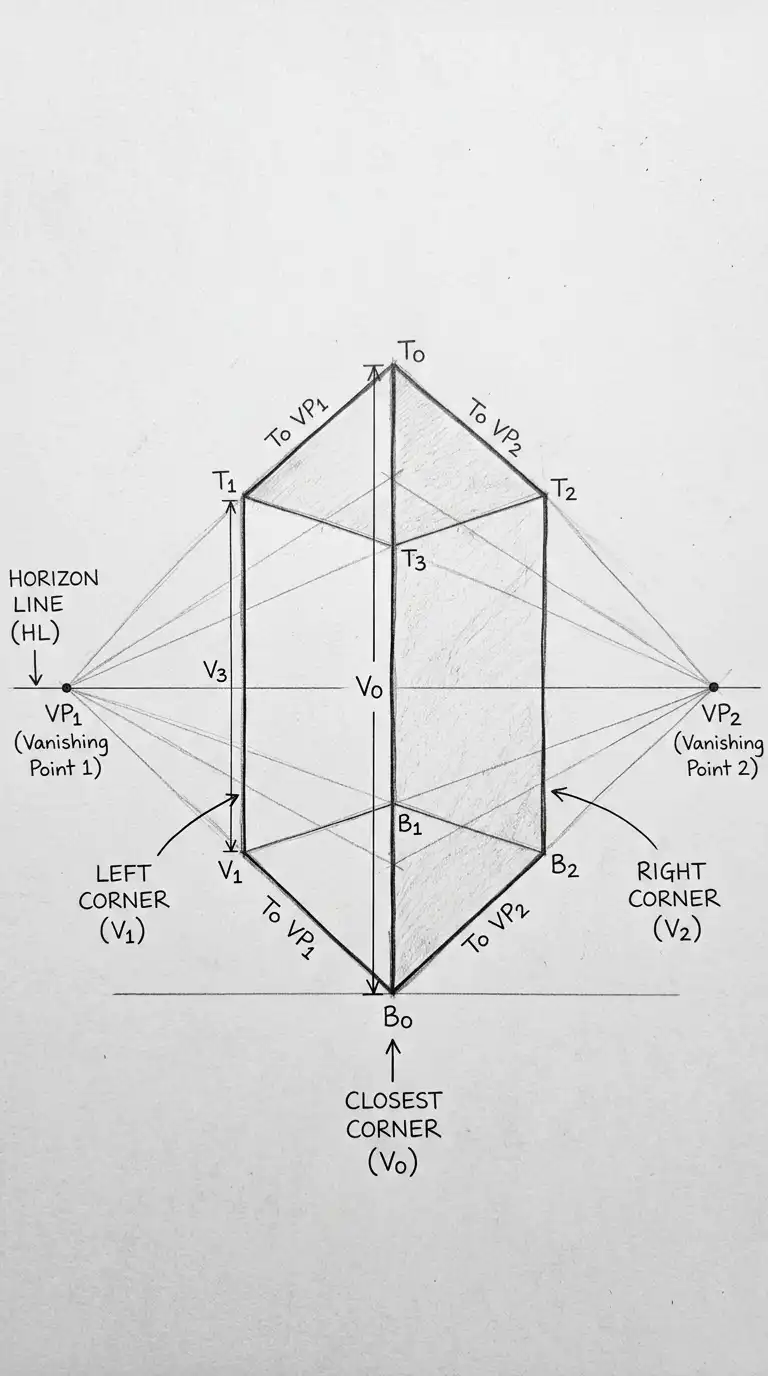
The two-point perspective box is the simplest way to sketch a building from the corner. Draw a vertical line for the closest corner. Choose two vanishing points, one on the left and one on the right. Draw lines from the top and bottom of the vertical line to both vanishing points. Add vertical lines for the other corners.
This sketch is ideal for understanding building massing. The emotional effect is three-dimensional, solid, and architectural.
Quick Tips
- Place the vanishing points far apart to avoid distortion.
- The closest vertical line should be the tallest.
- Add a horizon line through the vanishing points.
3. The Silhouetted City Skyline
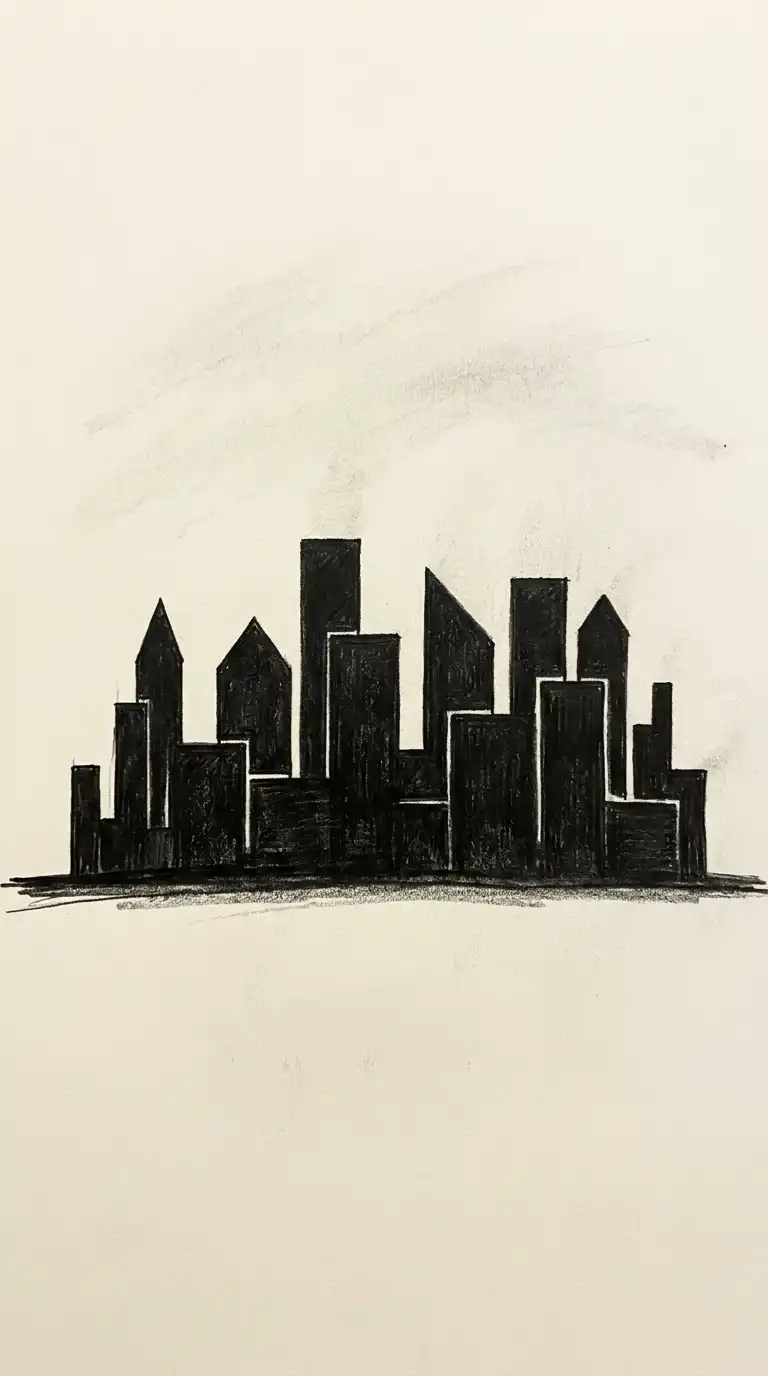
The silhouetted city skyline is the easiest architecture sketch. Draw a horizontal line for the ground. Draw a series of rectangles of different heights. Add triangles for roofs, rectangles for towers. Keep everything black or dark. No details, no windows, no shadows. Just the outline.
This sketch is ideal for understanding skyline composition. The emotional effect is graphic, bold, and urban.
Quick Tips
- Vary the heights of the buildings.
- Use a single dark value for all buildings.
- Add a few antennae or spires for interest.
4. The Simple Floor Plan
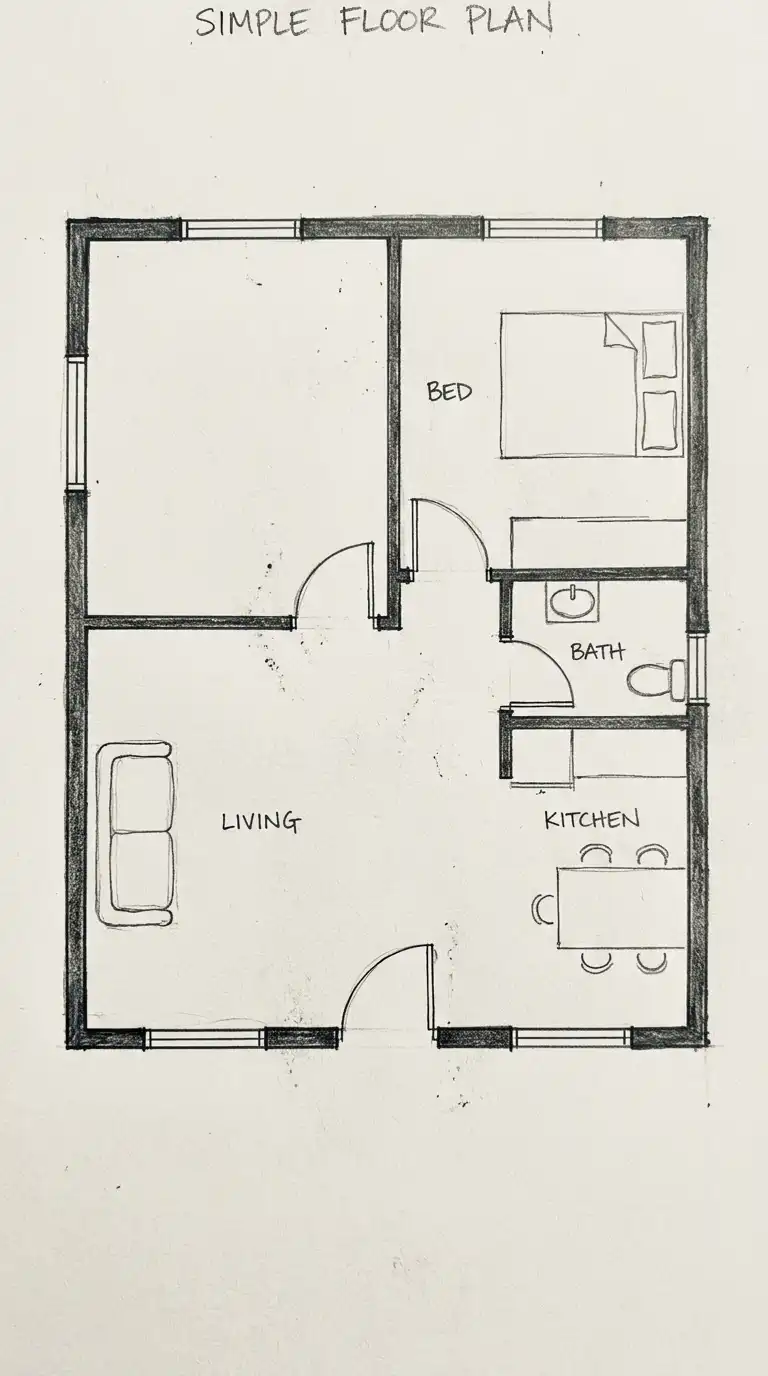
The simple floor plan is a bird’s-eye view of a room or building. Draw a rectangle for the outer walls. Add interior walls as thinner lines. Draw a square for the door (with an arc for the swing). Draw rectangles for windows on the exterior walls. Add simple furniture: rectangles for beds, squares for tables.
This sketch is ideal for understanding spatial relationships. The emotional effect is clear, rational, and organised.
Quick Tips
- Use thick lines for walls, thin lines for furniture.
- Door swings should be quarter-circles.
- Keep the plan simple — 3-5 rooms maximum.
5. The Building Section
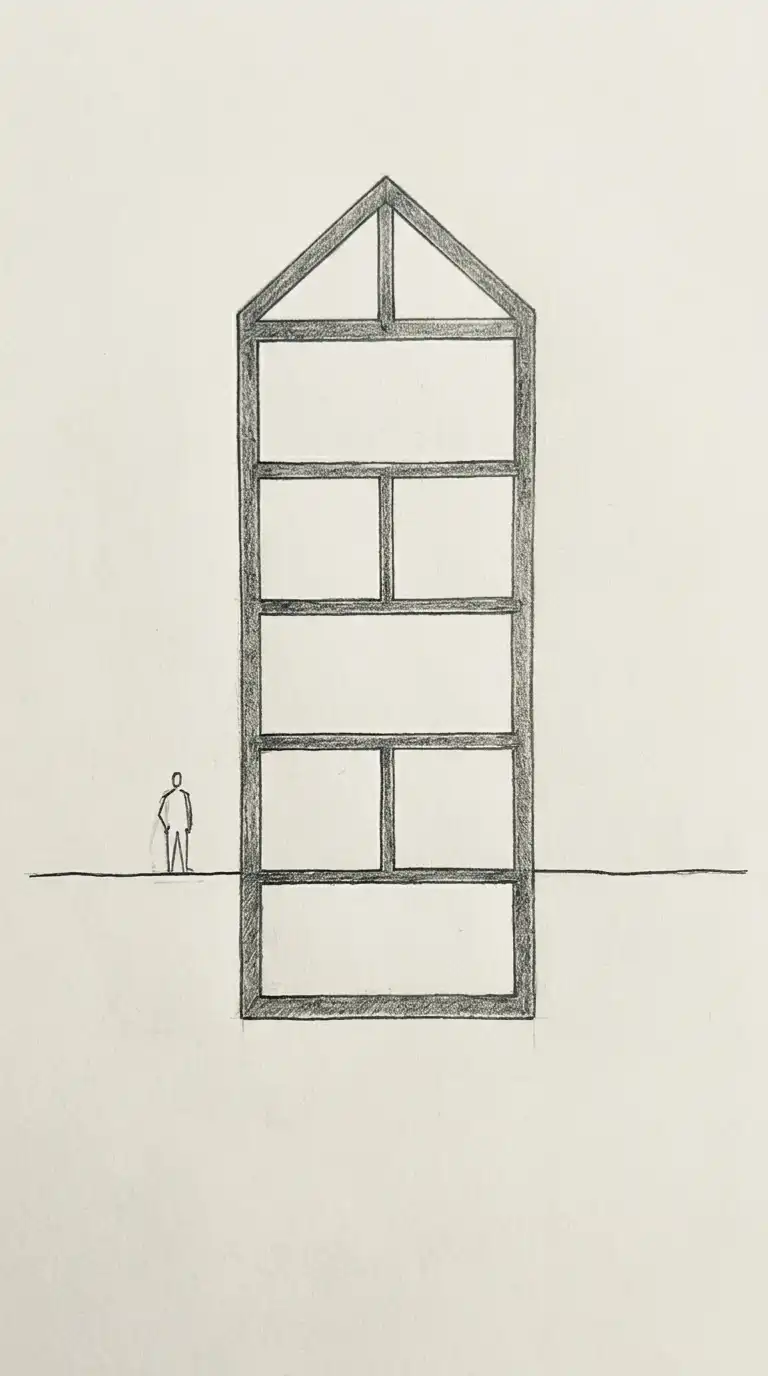
The building section is a vertical cut through a building. Draw a ground line. Draw a rectangle for the building above ground. Draw another rectangle for the foundation below ground. Add a horizontal line for each floor. Add a triangle for the roof. Add a human figure for scale.
This sketch is ideal for understanding vertical relationships. The emotional effect is structural, sectional, and scaled.
Quick Tips
- Keep the section simple — one building, one roof.
- Add a human figure (about 1.5cm tall) for scale.
- Shade the cut surfaces (walls, floors, roof).
6. The Architectural Detail
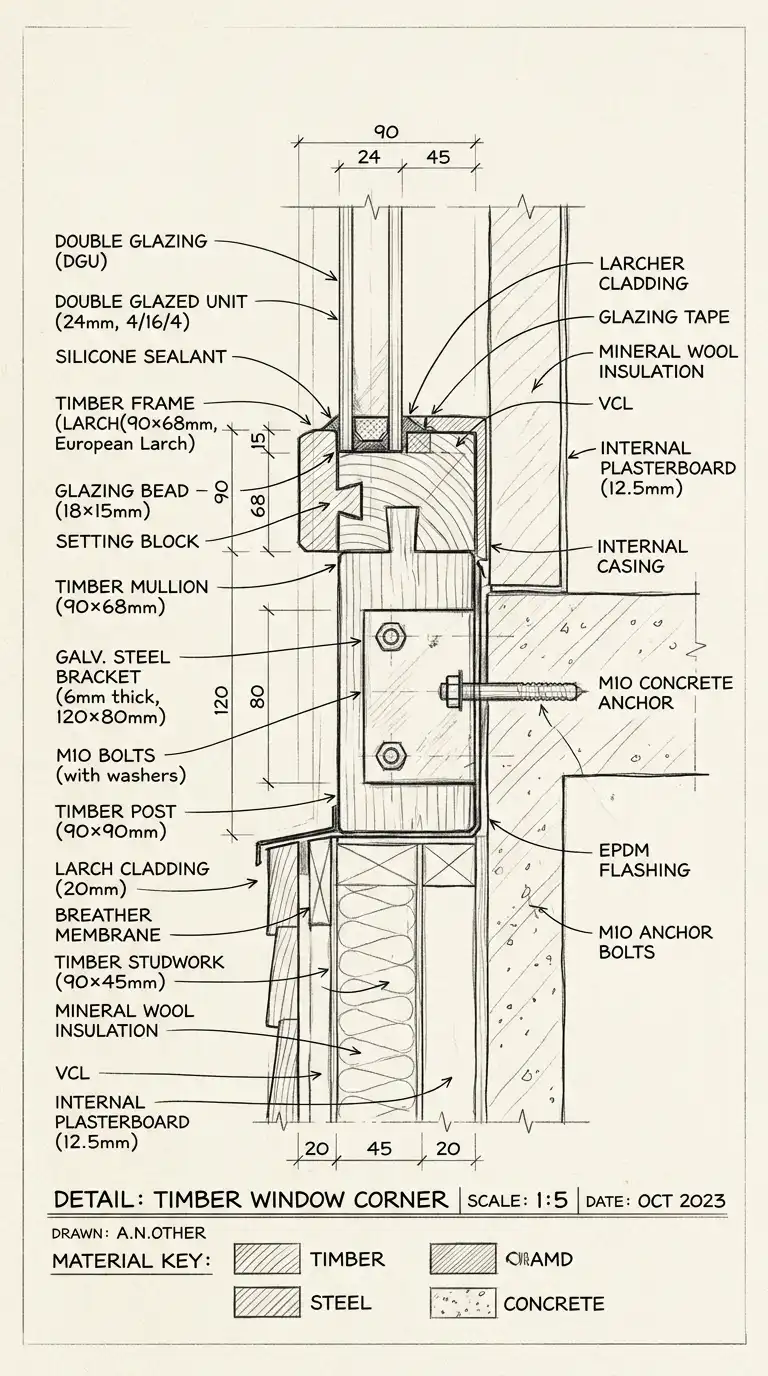
The architectural detail is a close-up of a small part of a building. A corner, a window, a door, a column capital, a stair tread. The detail is drawn at a large scale (1:10, 1:5, or 1:2). The detail focuses on how things connect.
This sketch is ideal for understanding construction and material. The emotional effect is precise, tectonic, and crafted.
Quick Tips
- Draw only one small part of the building.
- Show how materials connect (wood to concrete, glass to steel).
- Add notes and dimensions.
7. The Shadow Study
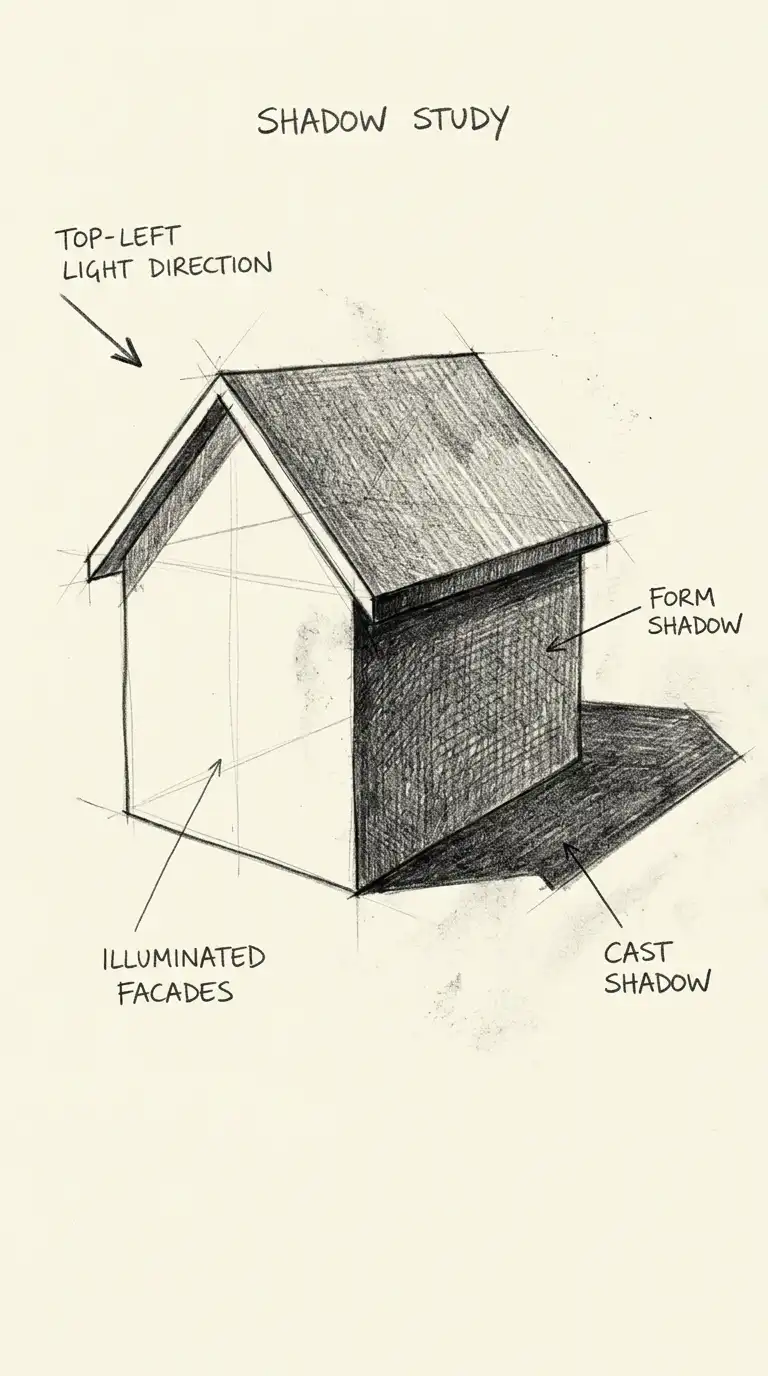
The shadow study is a sketch of a building with its shadows. Draw a simple building (a cube or a house). Choose a light direction (top-left, top-right). Shade the surfaces away from the light. Add a cast shadow on the ground. The shadow study is about light, not form.
This sketch is ideal for understanding how light falls on buildings. The emotional effect is dramatic, tonal, and luminous.
Quick Tips
- Keep the building simple (a cube or a house).
- Choose one light direction and stick to it.
- Shade the shadow surfaces with parallel hatching.
8. The Roofscape
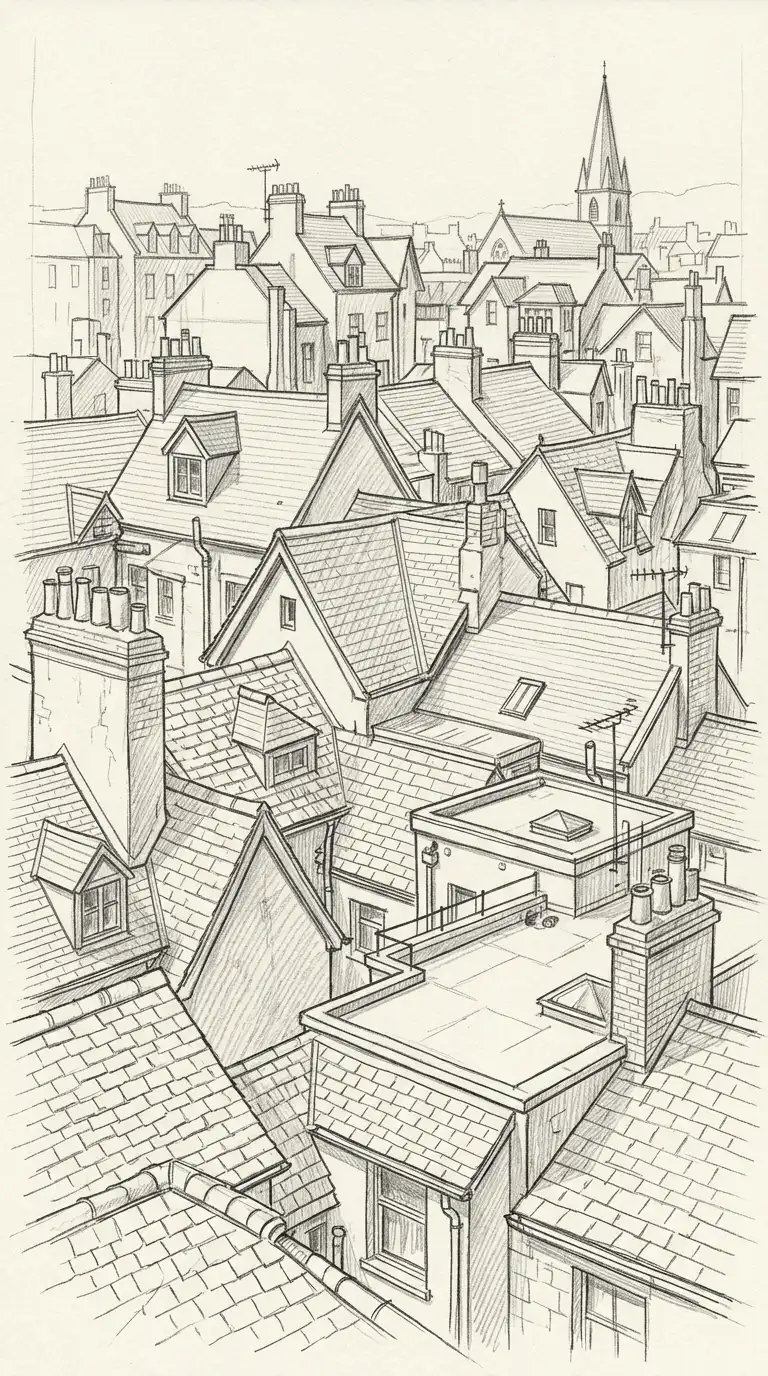
The roofscape is a sketch of rooftops seen from above. Draw a series of overlapping triangles (pitched roofs) and rectangles (flat roofs). Add chimneys, dormers, and skylights. The roofscape is about rhythm, repetition, and texture.
This sketch is ideal for understanding urban form and rooflines. The emotional effect is rhythmic, textured, and aerial.
Quick Tips
- Vary the heights and angles of the roofs.
- Add small details (chimneys, dormers) for interest.
- Use light shading on one side of each roof.
9. The Doorway
The doorway is a simple architectural subject. Draw a tall rectangle for the door. Add a pointed or rounded arch at the top. Add a frame around the door. Add a step at the bottom. The doorway is about entrance, scale, and detail.
This sketch is ideal for understanding architectural character. The emotional effect is welcoming, scaled, and detailed.
Quick Tips
- The door should be taller than it is wide.
- Add an arch (pointed or rounded) for character.
- Add a human figure next to the door for scale.
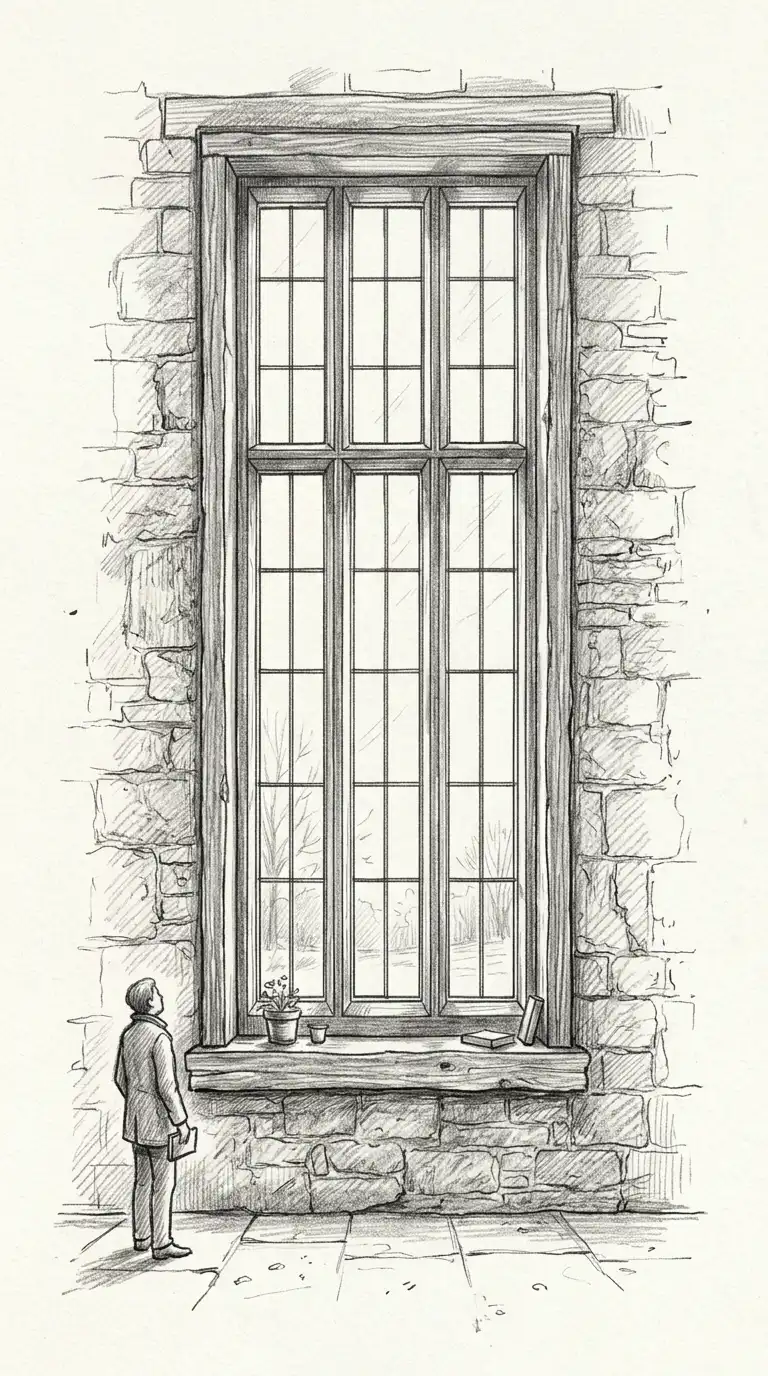
10. The Window
The window is a simple architectural subject. Draw a rectangle. Add a horizontal line for the sill. Add vertical lines for mullions. Add a horizontal line for the transom. Add a frame around the window. The window is about light, view, and proportion.
This sketch is ideal for understanding proportion and detail. The emotional effect is framed, luminous, and simple.
Quick Tips
- The window should be taller than it is wide (or square).
- Add mullions (vertical) and transoms (horizontal).
- Add a human figure for scale.
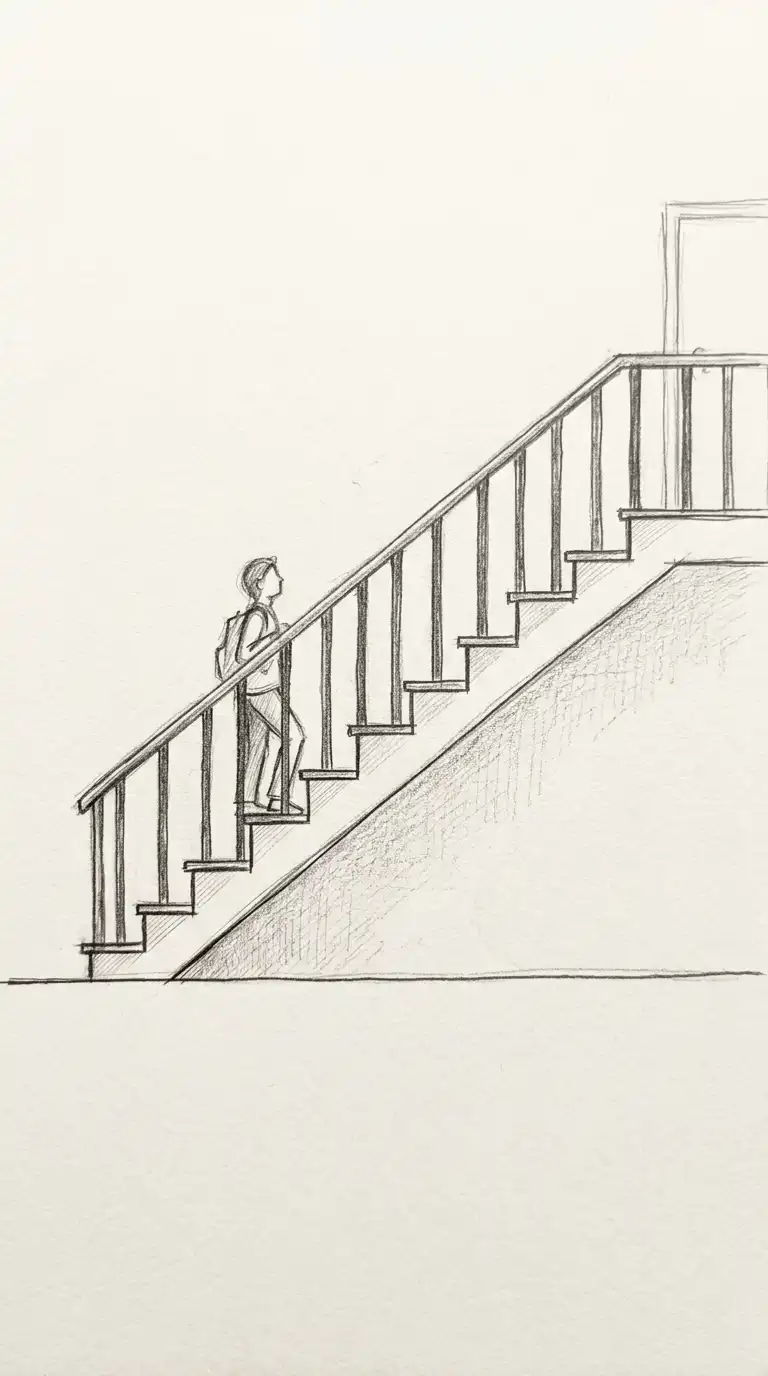
11. The Staircase
The staircase is a simple architectural subject in profile. Draw a horizontal line for the floor. Draw a series of vertical lines for the risers (equal spacing). Draw a series of horizontal lines for the treads (equal spacing). The staircase is about repetition, rhythm, and ascent.
This sketch is ideal for understanding repetition and scale. The emotional effect is rhythmic, repetitive, and ascending.
Quick Tips
- All risers must be the same height.
- All treads must be the same depth.
- Add a human figure on the stairs for scale.
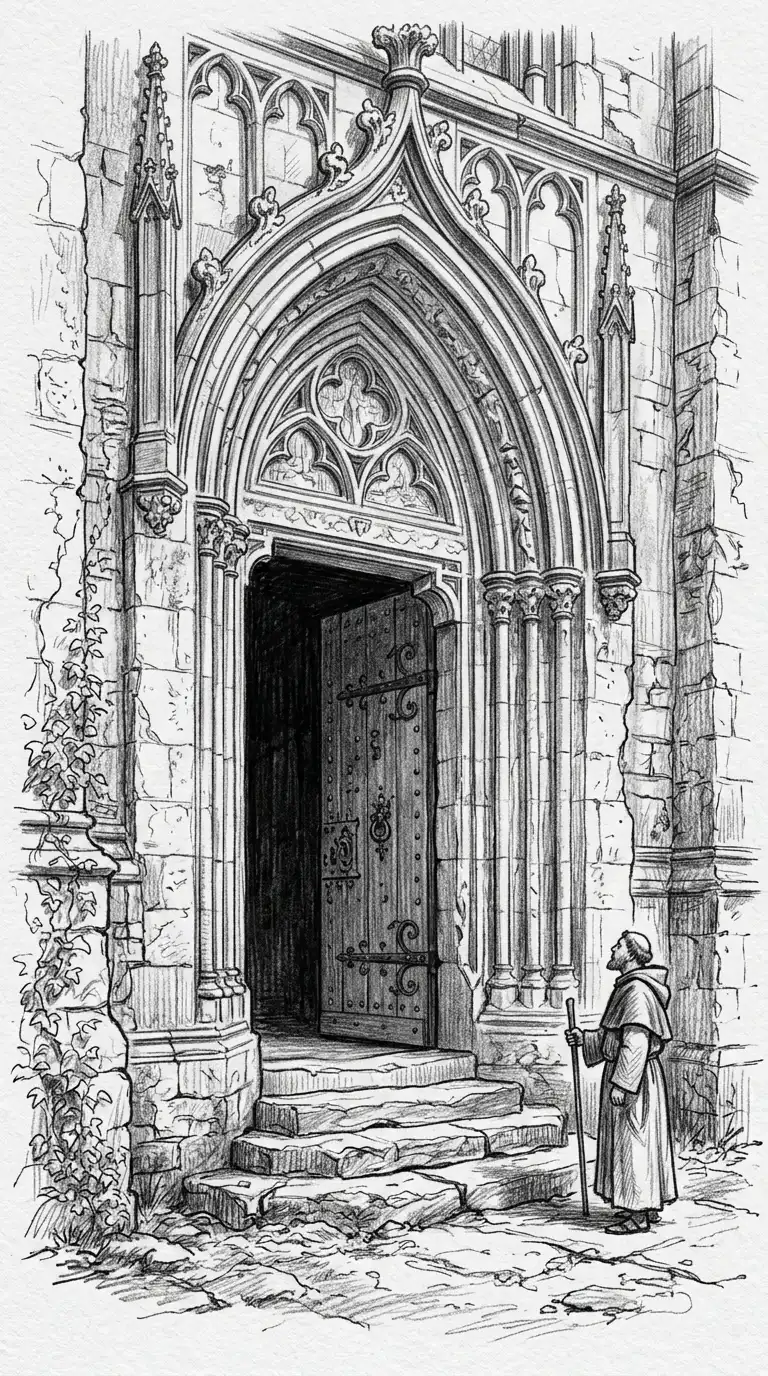
12. The Arcade
The arcade is a row of arches. Draw a horizontal line for the ground. Draw a row of vertical lines for columns (equal spacing). Draw a row of arches connecting the columns (semicircular or pointed). The arcade is about repetition, rhythm, and sequence.
This sketch is ideal for understanding repetitive elements. The emotional effect is rhythmic, sequential, and arched.
Quick Tips
- All columns must be equally spaced.
- All arches must be the same size.
- Use a ruler for the columns, freehand for the arches.
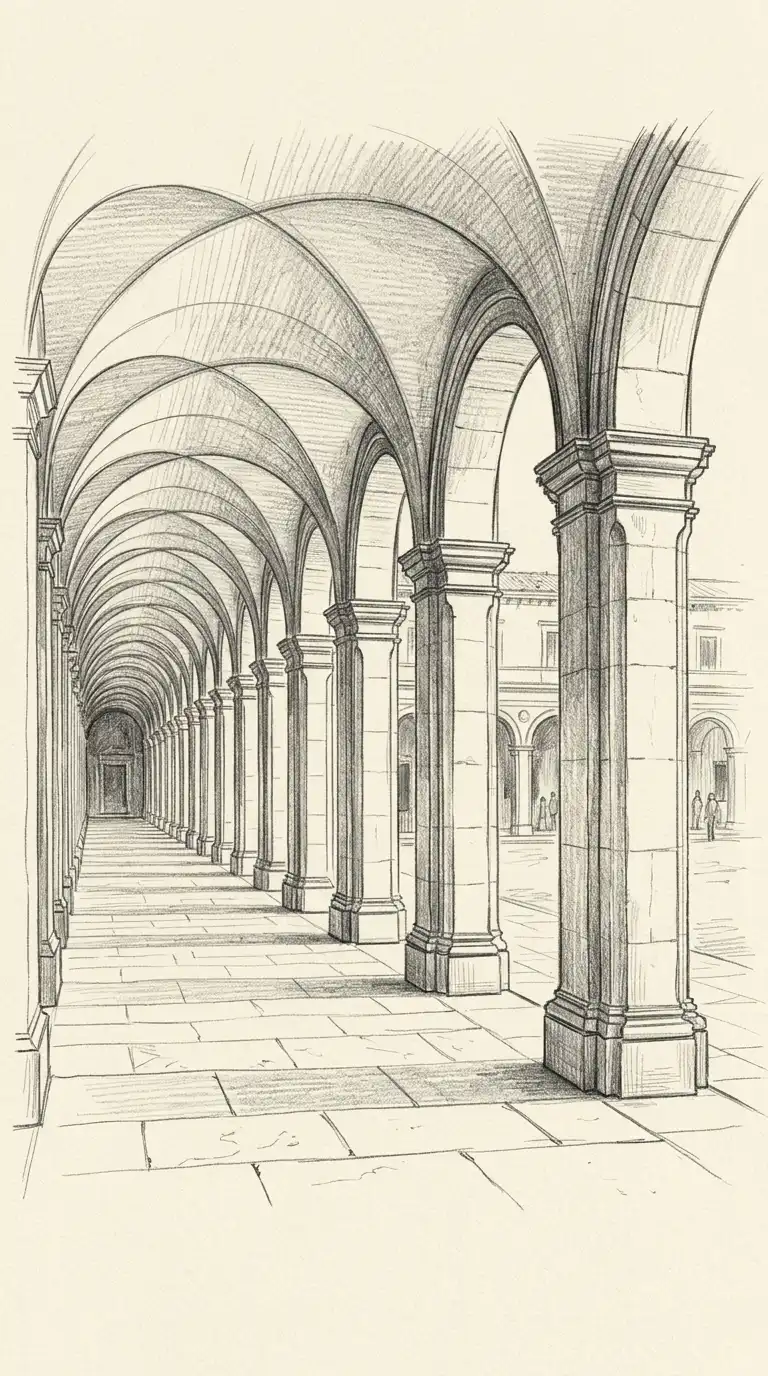
13. The Human Figure
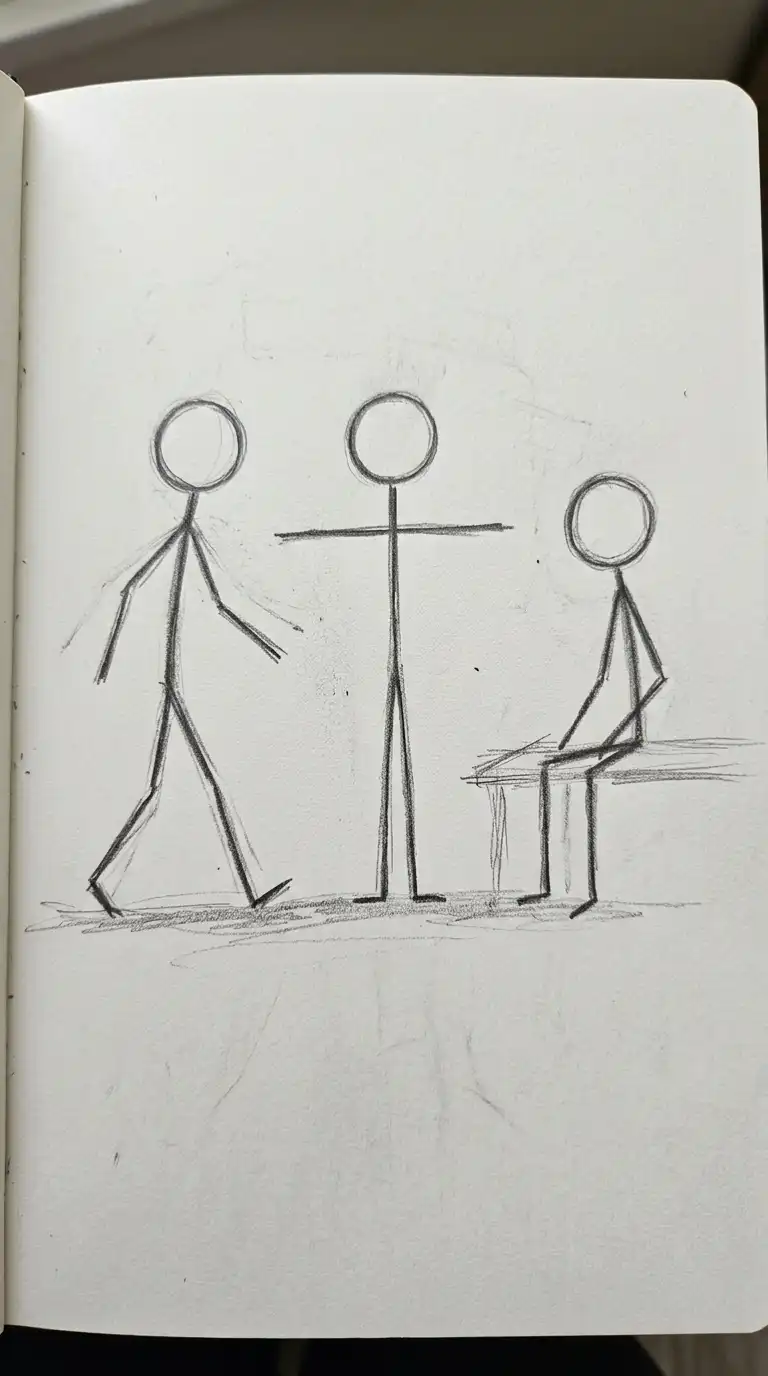
The human figure is the most important element in any architecture sketch. A figure gives scale to a building. Draw a vertical line for the body. Add a circle for the head. Add a horizontal line for the arms. Add two vertical lines for the legs. The figure can be a simple stick figure or a slightly more detailed silhouette.
This sketch is ideal for understanding scale and proportion. The emotional effect is scaled, human, and relatable.
Quick Tips
- The figure should be about 1.5cm tall (at 1:100 scale).
- Keep the figure simple — a stick figure is enough.
- Place figures in groups for activity (walking, sitting, talking).
Final Thoughts
An architecture sketch is not a rendering. It is a thought. A single-point perspective room is about depth. A two-point perspective box is about mass. A silhouetted skyline is about composition. A floor plan is about organisation. A section is about vertical relationships. A detail is about construction. A shadow study is about light. A roofscape is about texture. A doorway is about entrance. A window is about view. A staircase is about ascent. An arcade is about rhythm. A figure is about scale.
These 13 easy sketches are not mutually exclusive. A section can have a figure. A doorway can be in perspective. A roofscape can be a shadow study. The best sketches are not the most detailed — they are the most clear. They capture the idea, not the building. They are sketches.