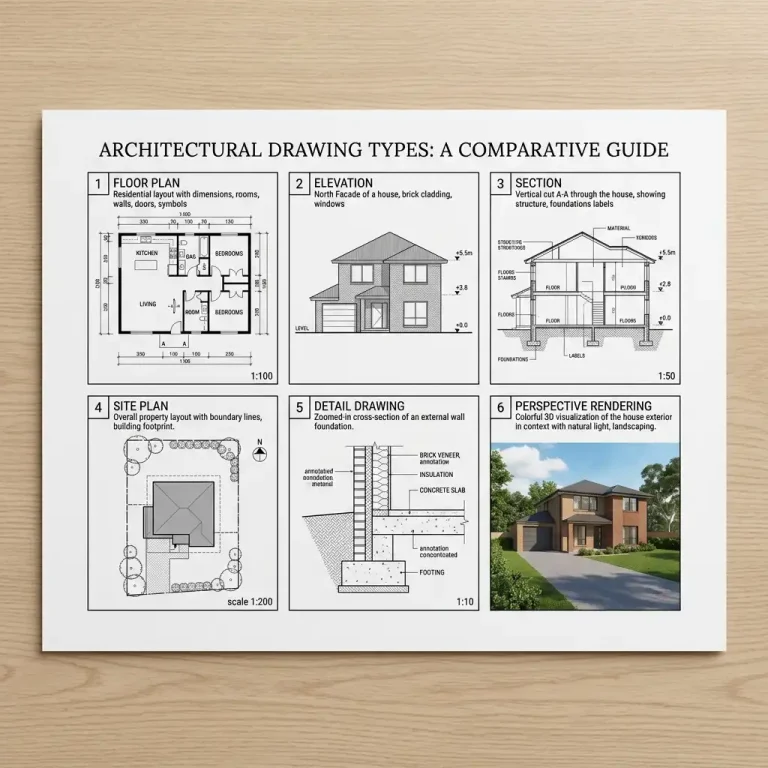
The farmhouse is one of the most enduring and beloved building types. It is practical, honest, and rooted in the landscape. The traditional farmhouse was built by farmers for farmers — simple, durable, and functional. The contemporary farmhouse adapts these principles for modern life: open plans, large windows, and sustainable materials, while keeping the warmth and honesty of the original.
These 14 farmhouse architecture designs span traditional and contemporary, large and small, rural and suburban. Each design includes defining characteristics, material principles, and spatial strategies.
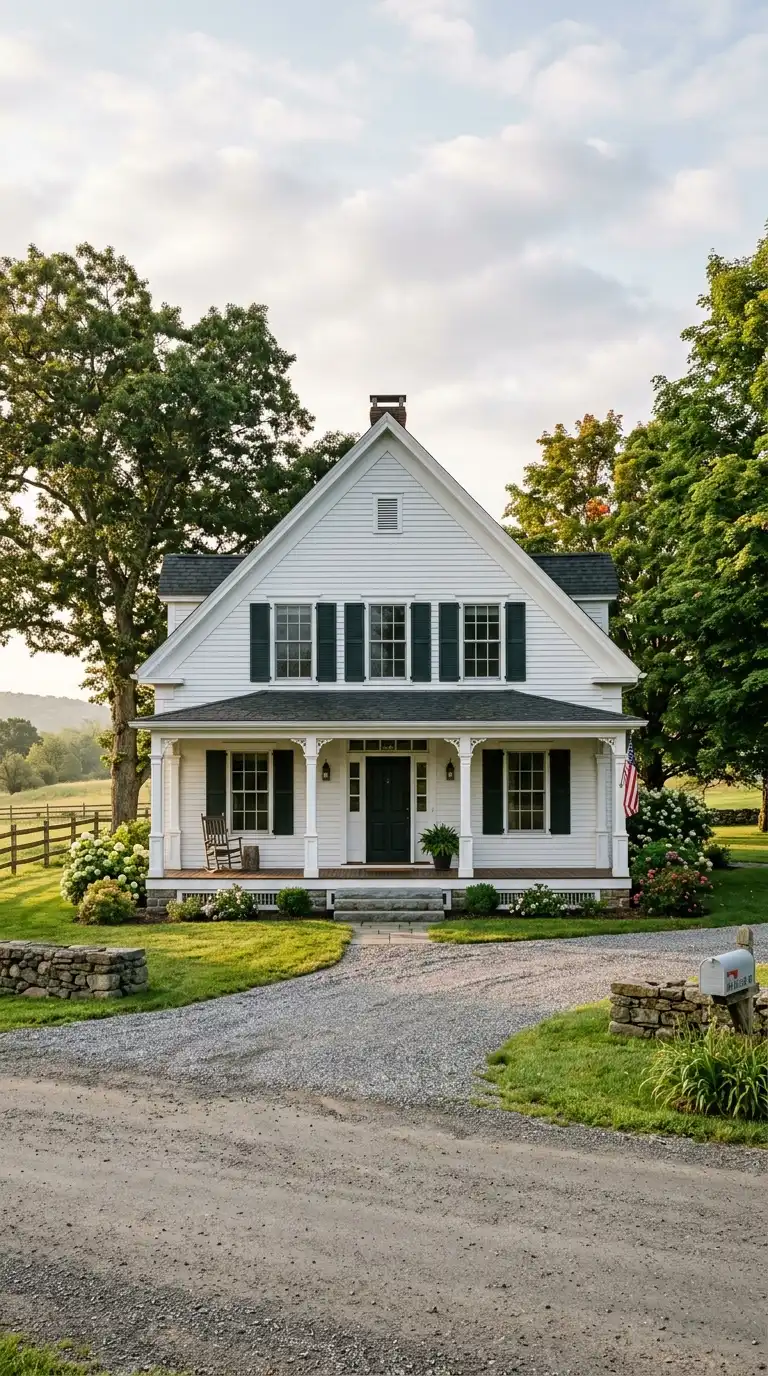
1. The Gable-Front Farmhouse
The gable-front farmhouse is the most iconic form. The gable end faces the road, with the front door centred in the gable. The roof is steep (10:12 or steeper). The house is two storeys, with a loft or attic under the roof. The porch spans the full width of the front.
This design is ideal for rural and suburban sites. The emotional effect is iconic, welcoming, and deeply American.
Quick Tips
- The gable must face the road with the door centred.
- The roof pitch should be at least 10:12.
- The porch should span the full width of the front facade.
2. The Side-Gable Farmhouse
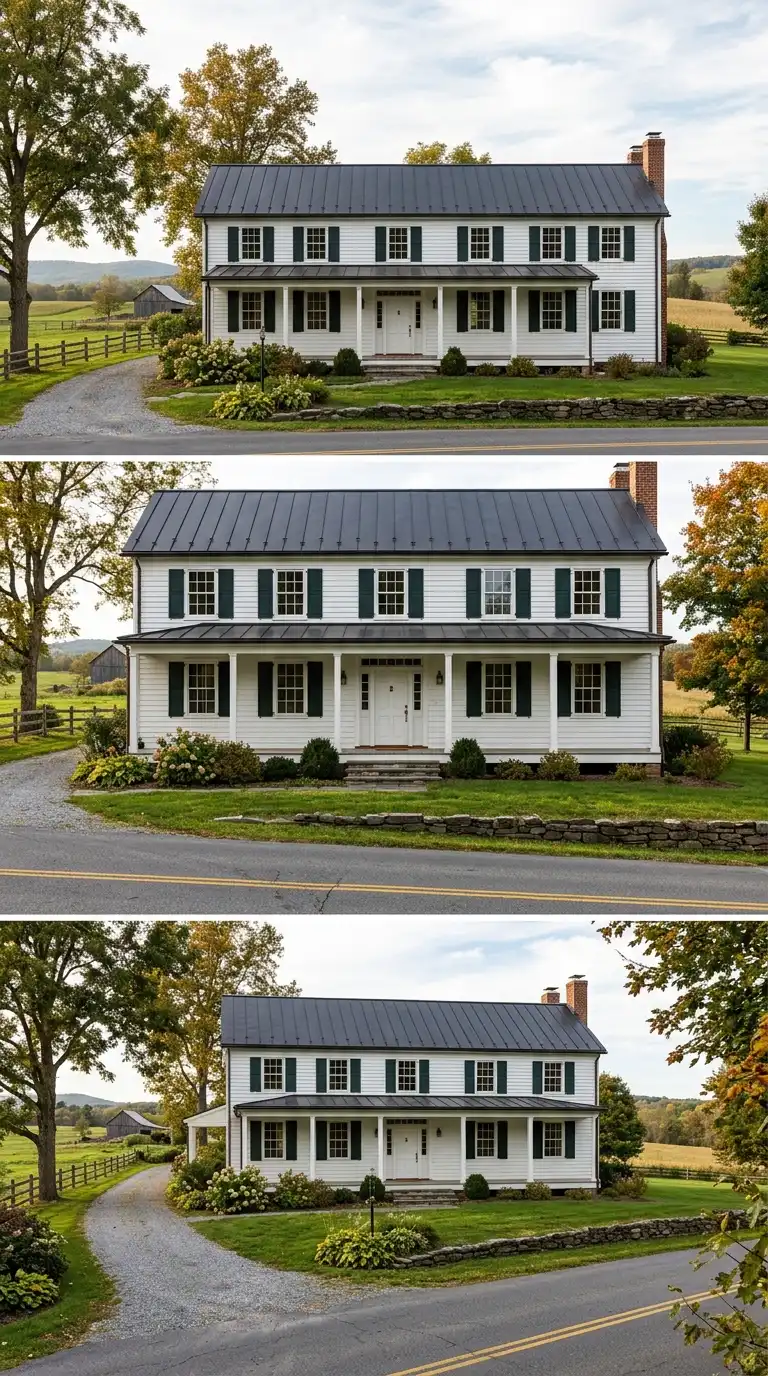
The side-gable farmhouse has the gable on the side, not the front. The roof ridge runs parallel to the road. The front facade is a long, horizontal wall with a centred door and evenly spaced windows. The side-gable form is longer and lower than the gable-front.
This design is ideal for larger farmhouses and additions. The emotional effect is horizontal, balanced, and grounded.
Quick Tips
- The roof ridge must run parallel to the road.
- Windows should be evenly spaced on the front facade.
- The front door should be centred or offset to one side.
3. The Saltbox Farmhouse
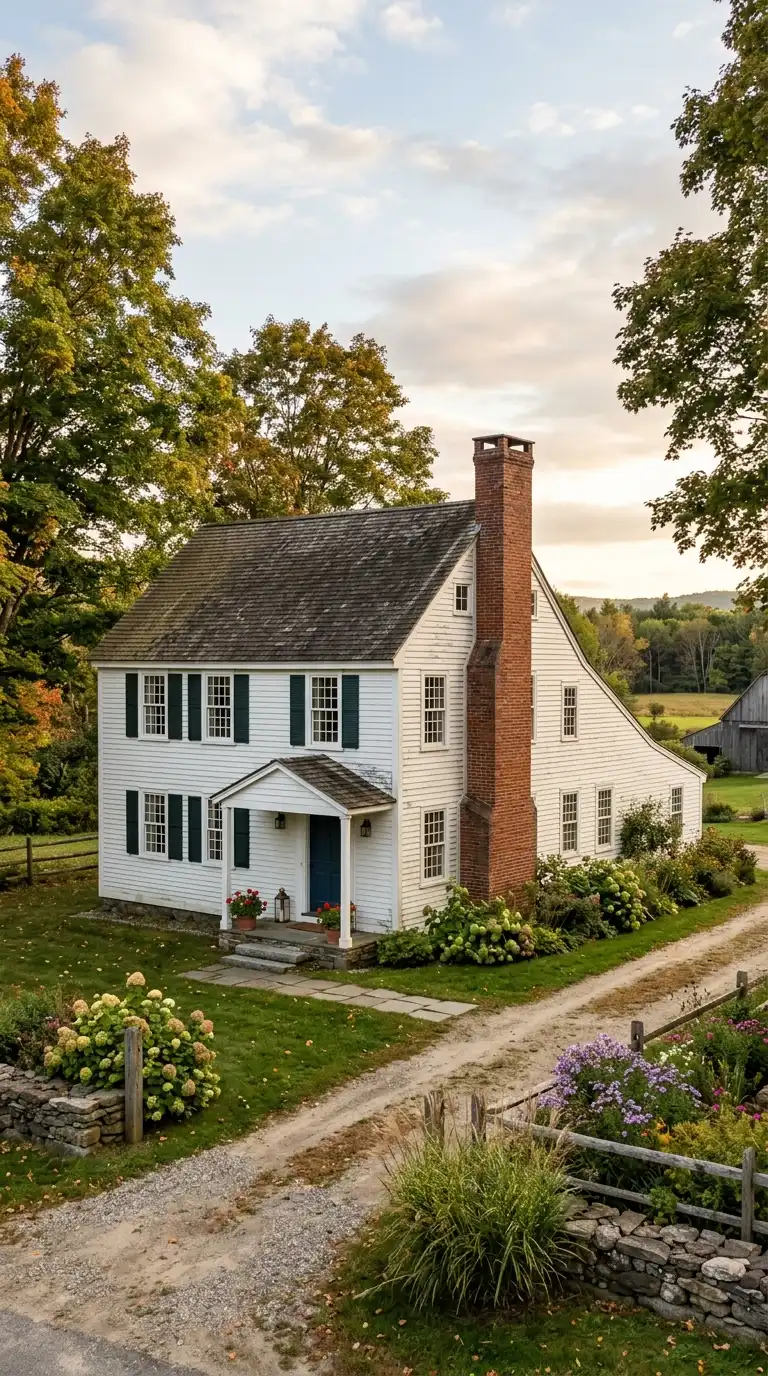
The saltbox farmhouse has a long, sloping roof that extends down to one storey at the rear. The front is two storeys. The rear is one storey. The roof slope is continuous. The saltbox form was created by adding a lean-to addition to a two-storey house.
This design is ideal for New England sites and traditionalists. The emotional effect is asymmetrical, historical, and cosy.
Quick Tips
- The front must be two storeys, the rear one storey.
- The roof must be a single continuous slope.
- The chimney should be at the centre or the gable end.
4. The Dogtrot Farmhouse
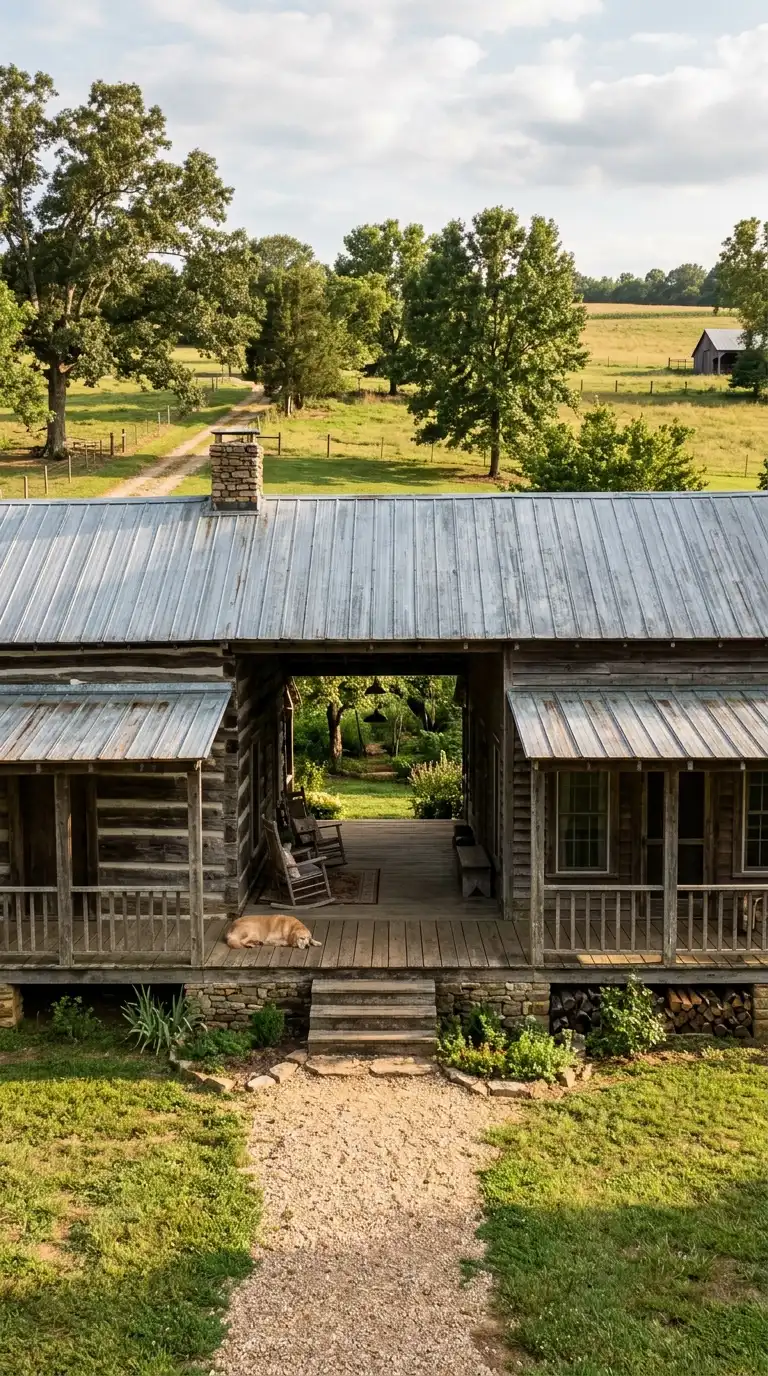
The dogtrot farmhouse has two separate living areas connected by an open breezeway (the dogtrot). The breezeway runs through the centre of the house, from front to back. The two wings are covered by a single roof. The dogtrot provides shade and ventilation in hot climates.
This design is ideal for the American South and hot climates. The emotional effect is open, breezy, and vernacular.
Quick Tips
- The breezeway must run through the centre of the house.
- The breezeway should be at least 2 metres wide.
- Both wings should be covered by a single roof.
5. The I-House Farmhouse
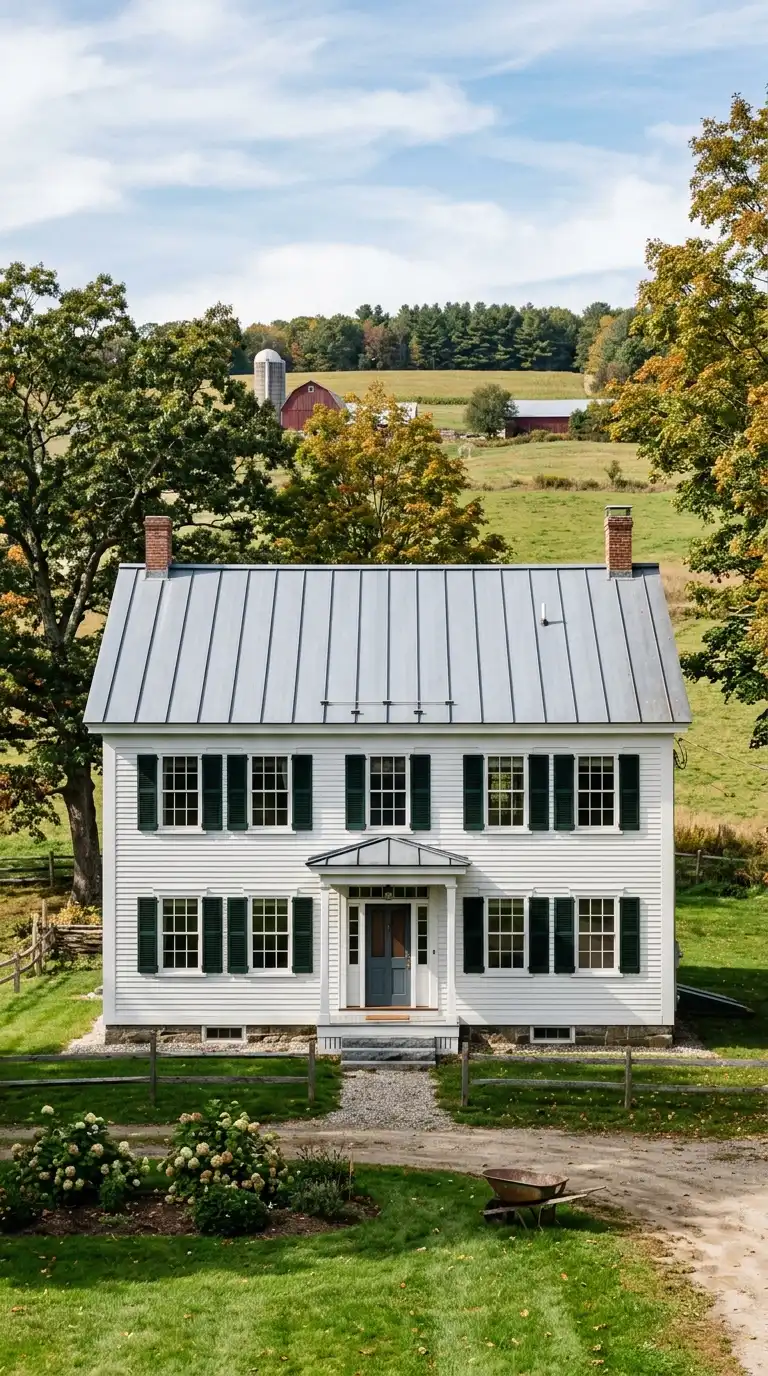
The I-house farmhouse is two storeys tall and one room deep. The form is a simple rectangle. The front door is centred, with two windows on each side on both floors. The I-house is named for its I-shaped appearance in states like Indiana, Illinois, and Iowa.
This design is ideal for the American Midwest. The emotional effect is simple, rational, and symmetrical.
Quick Tips
- The house must be two storeys tall and one room deep.
- The front door must be centred.
- Two windows must flank the door on each floor.
6. The Contemporary Barn House
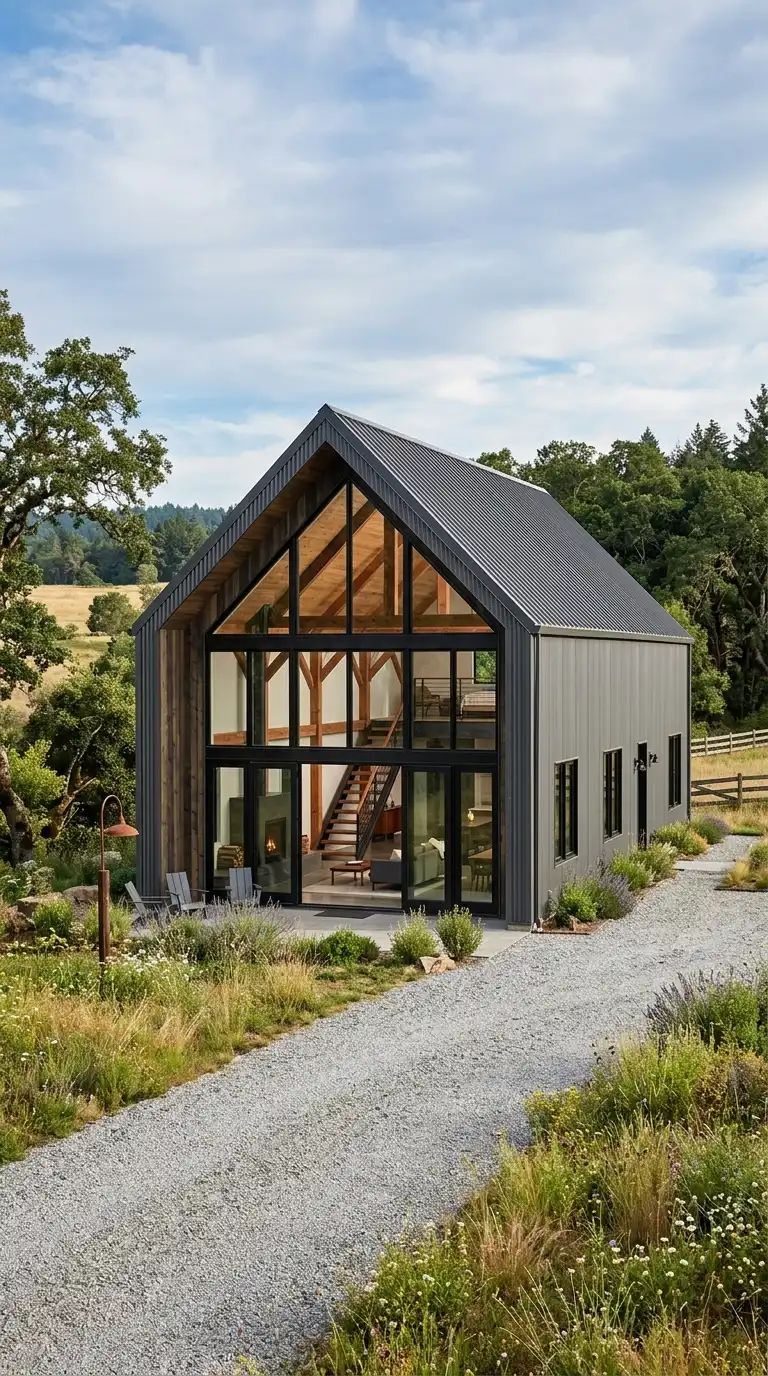
The contemporary barn house adapts the agricultural barn for residential use. The form is a simple rectangle with a steep gable roof. The roof is the dominant element. The interior is a single, open volume. The exterior is corrugated metal or board-and-batten.
This design is ideal for rural sites and modernists. The emotional effect is rustic, honest, and spacious.
Quick Tips
- The roof must be steep and gabled.
- The exterior should be corrugated metal or board-and-batten.
- The interior should be open with exposed structure.
7. The Modern Farmhouse
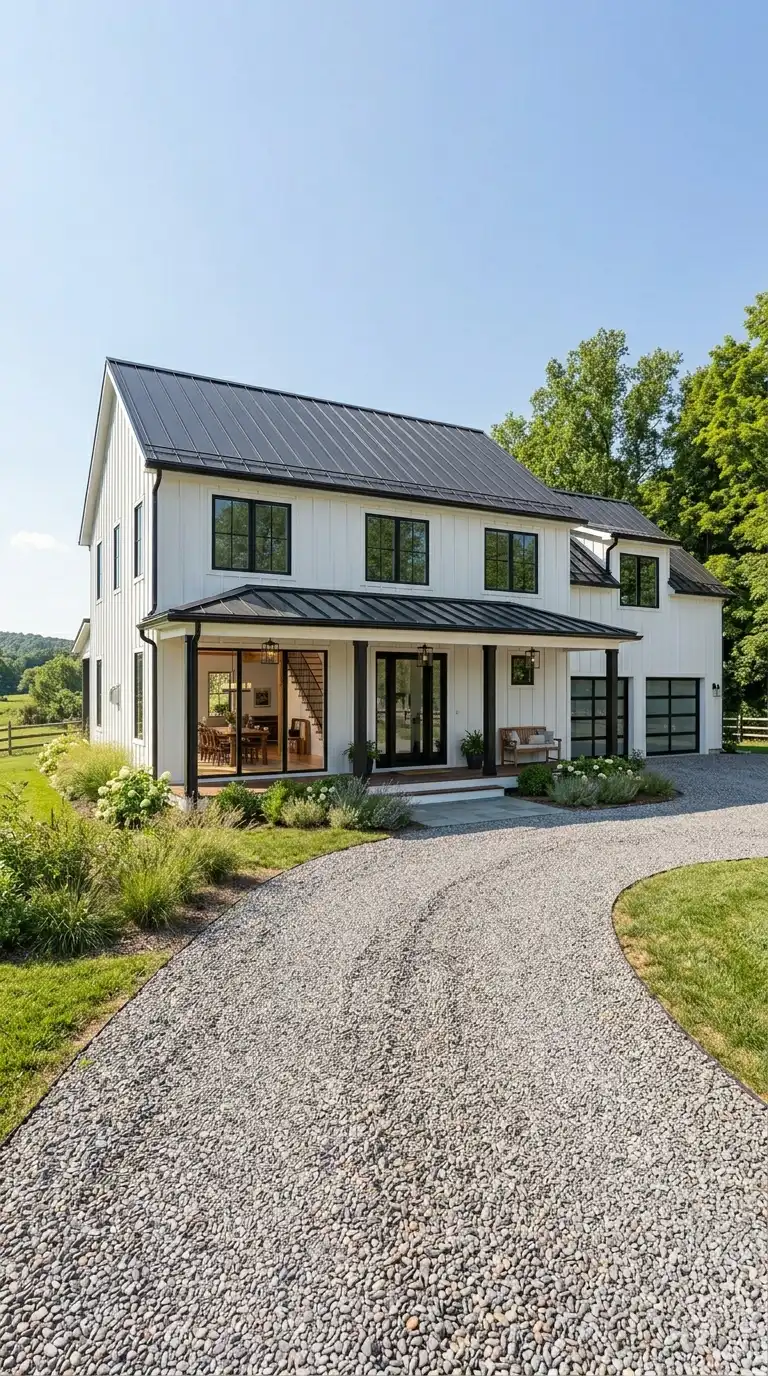
The modern farmhouse updates traditional farmhouse forms for contemporary life. The form is simple — often a side-gable or L-shape. The materials are white board-and-batten or vertical siding, black metal roofs, and large black-framed windows. The interior is open and bright.
This design is ideal for suburban sites and young families. The emotional effect is fresh, bright, and Instagram-friendly.
Quick Tips
- Use white vertical siding (board-and-batten) or smooth clapboard.
- Use black metal roofing and black window frames.
- The interior should be open with a large kitchen island.
8. The Stone Farmhouse
The stone farmhouse is built of local stone, often fieldstone or limestone. The walls are thick and massive. The windows are small and deep-set. The roof is steep and covered in slate or metal. The stone farmhouse is durable, cool in summer, and warm in winter.
This design is ideal for the Northeast and Midwest. The emotional effect is solid, permanent, and grounded.
Quick Tips
- Use local stone — fieldstone, limestone, or sandstone.
- Walls should be at least 45cm thick.
- Windows should be small and deep-set.
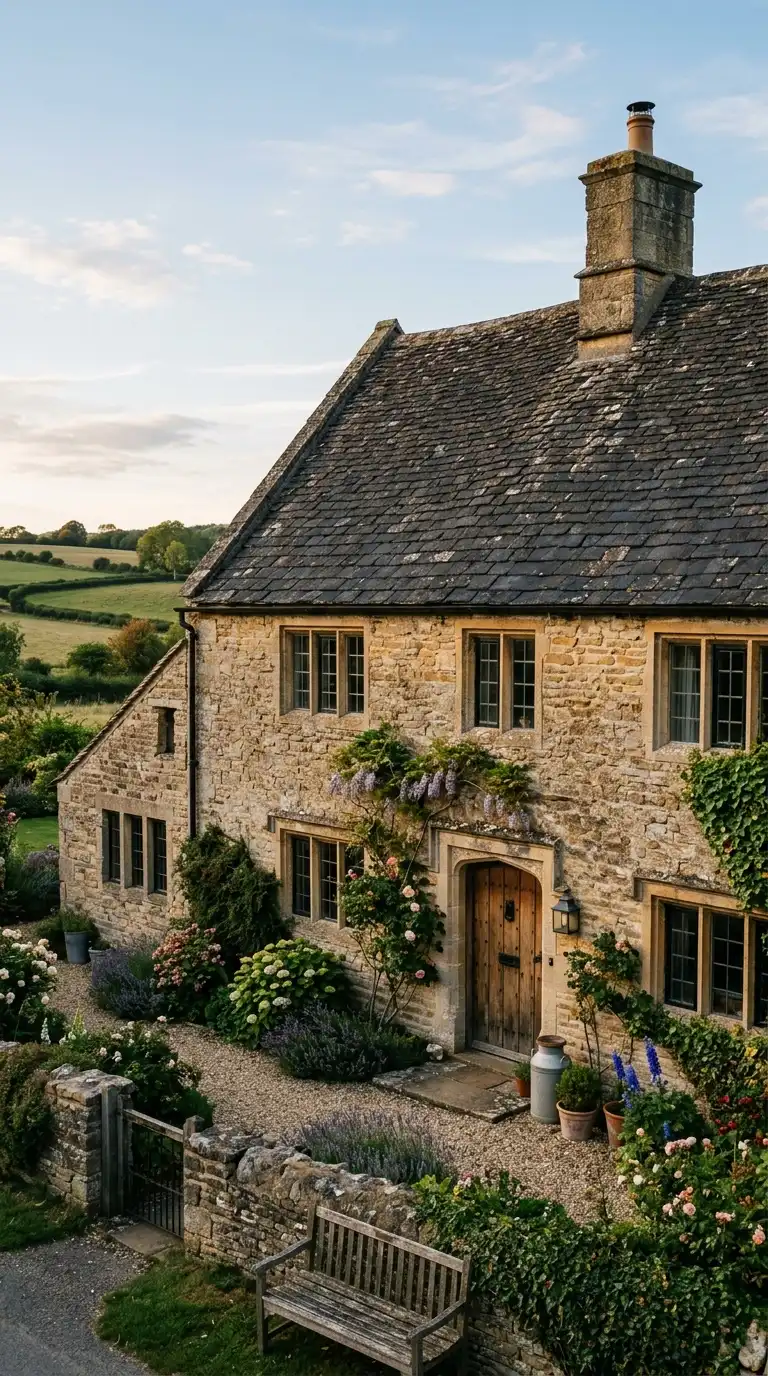
9. The Log Farmhouse
The log farmhouse is built of hand-hewn or milled logs. The logs are left exposed on the exterior and interior. The corners are dovetailed or saddle-notched. The roof is steep with wide eaves. The porch is deep.
This design is ideal for wooded sites and mountain regions. The emotional effect is rustic, warm, and cabin-like.
Quick Tips
- Logs must be exposed on both exterior and interior.
- Corner notching should be visible (dovetail or saddle).
- The roof should have wide eaves to protect the logs.
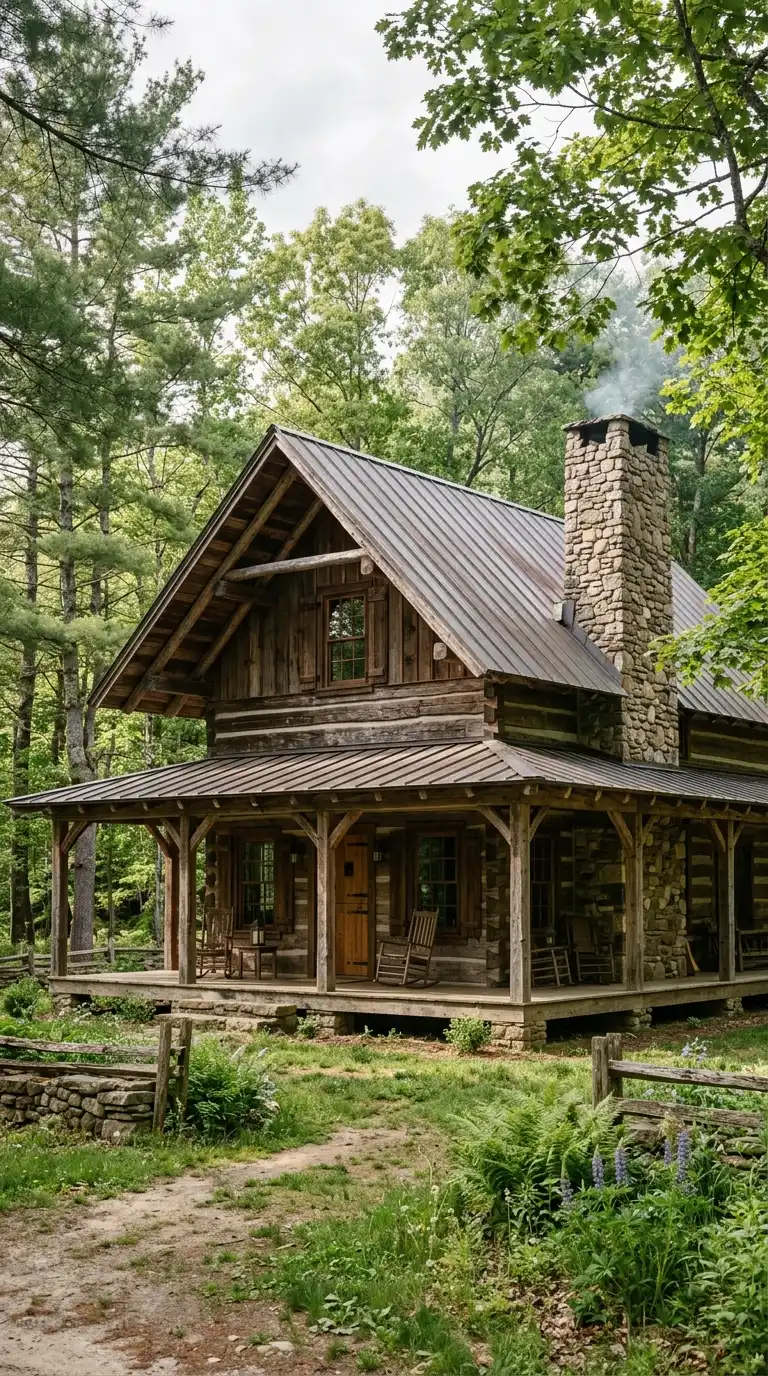
10. The Adobe Farmhouse
The adobe farmhouse is built of sun-dried mud bricks (adobe). The walls are thick (45-60cm) and plastered with mud or lime. The roof is flat or low-pitched with vigas (wood beams) extending through the walls. The floors are flagstone or concrete.
This design is ideal for the American Southwest and hot, dry climates. The emotional effect is earthy, solid, and Southwestern.
Quick Tips
- Walls must be thick (45-60cm) and plastered.
- Roof vigas must extend through the walls.
- Floors should be flagstone or concrete.
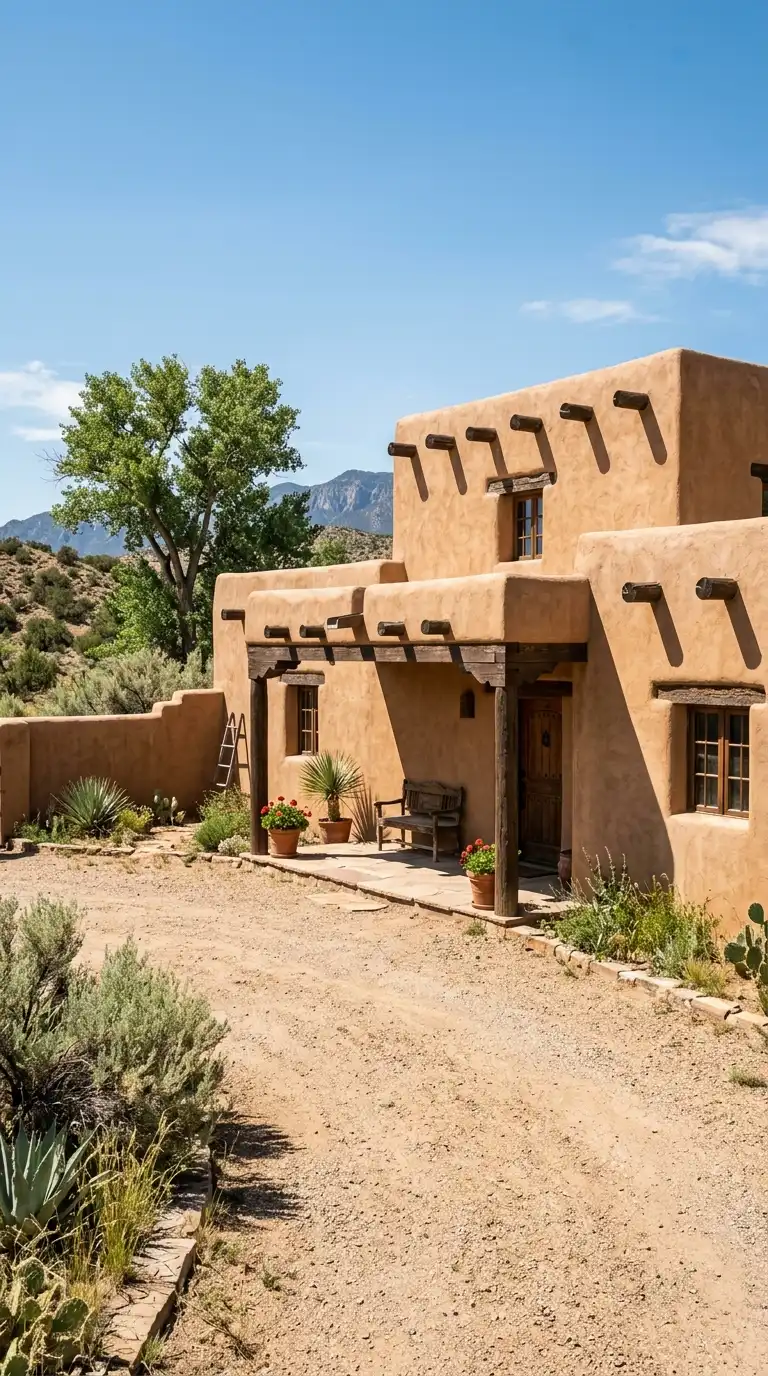
11. The L-Shaped Farmhouse
The L-shaped farmhouse has two wings meeting at a corner. The inside corner becomes a sheltered courtyard or porch. One wing contains the living and kitchen areas. The other wing contains the bedrooms. The L-shape is simple, flexible, and private.
This design is ideal for corner lots and exposed sites. The emotional effect is balanced, clear, and quietly clever.
Quick Tips
- Each wing should be at least 6 metres long.
- The sheltered corner should face south for maximum outdoor use.
- Place the kitchen at the inside corner for easy access to both wings.
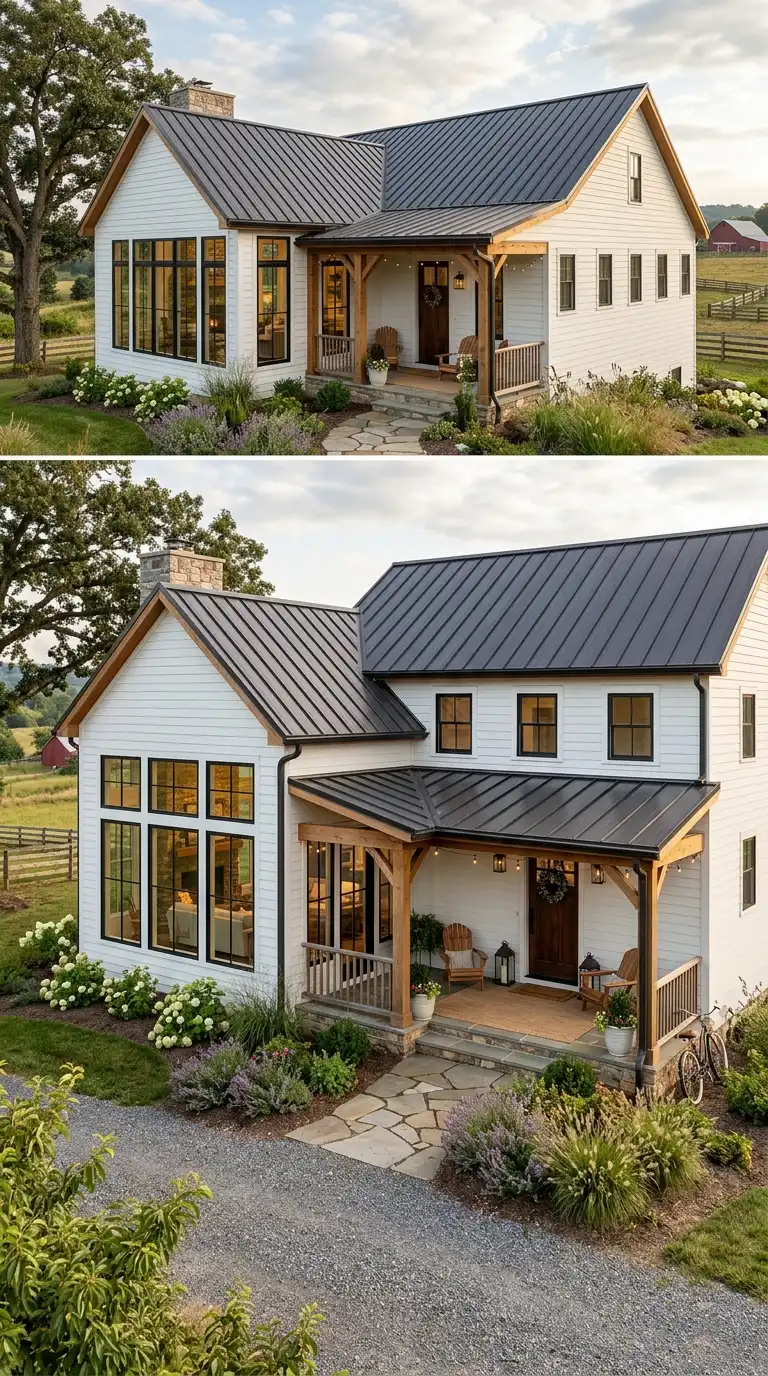
12. The U-Shaped Farmhouse
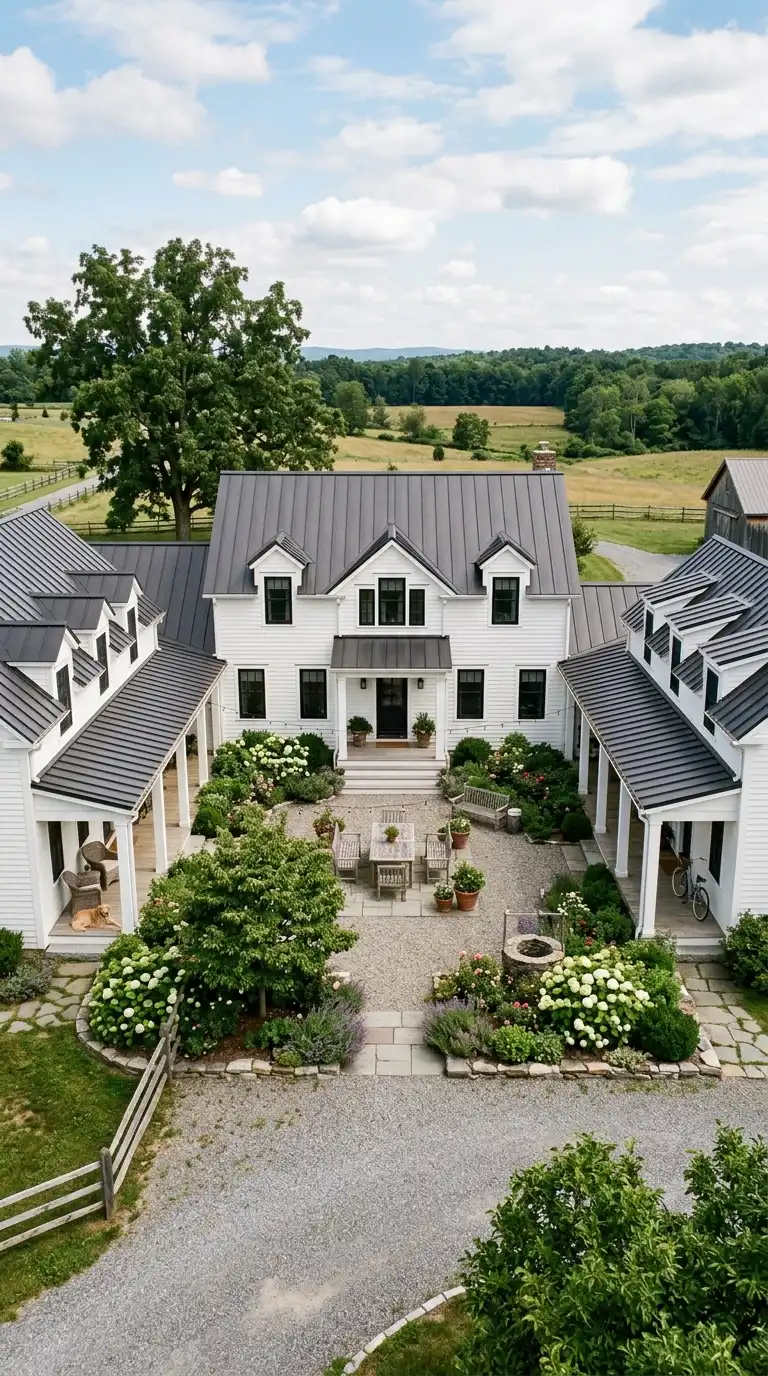
The U-shaped farmhouse has three wings forming a U around a central courtyard. The courtyard is enclosed on three sides, open on the fourth. This configuration provides privacy, shelter from wind, and a secure space for children and animals.
This design is ideal for large farmsteads and exposed sites. The emotional effect is sheltered, private, and generous.
Quick Tips
- Each wing should be at least 5 metres long.
- The open side of the U must face south for solar access.
- Place the main living spaces on the courtyard side of each wing.
13. The Farmhouse with Wraparound Porch
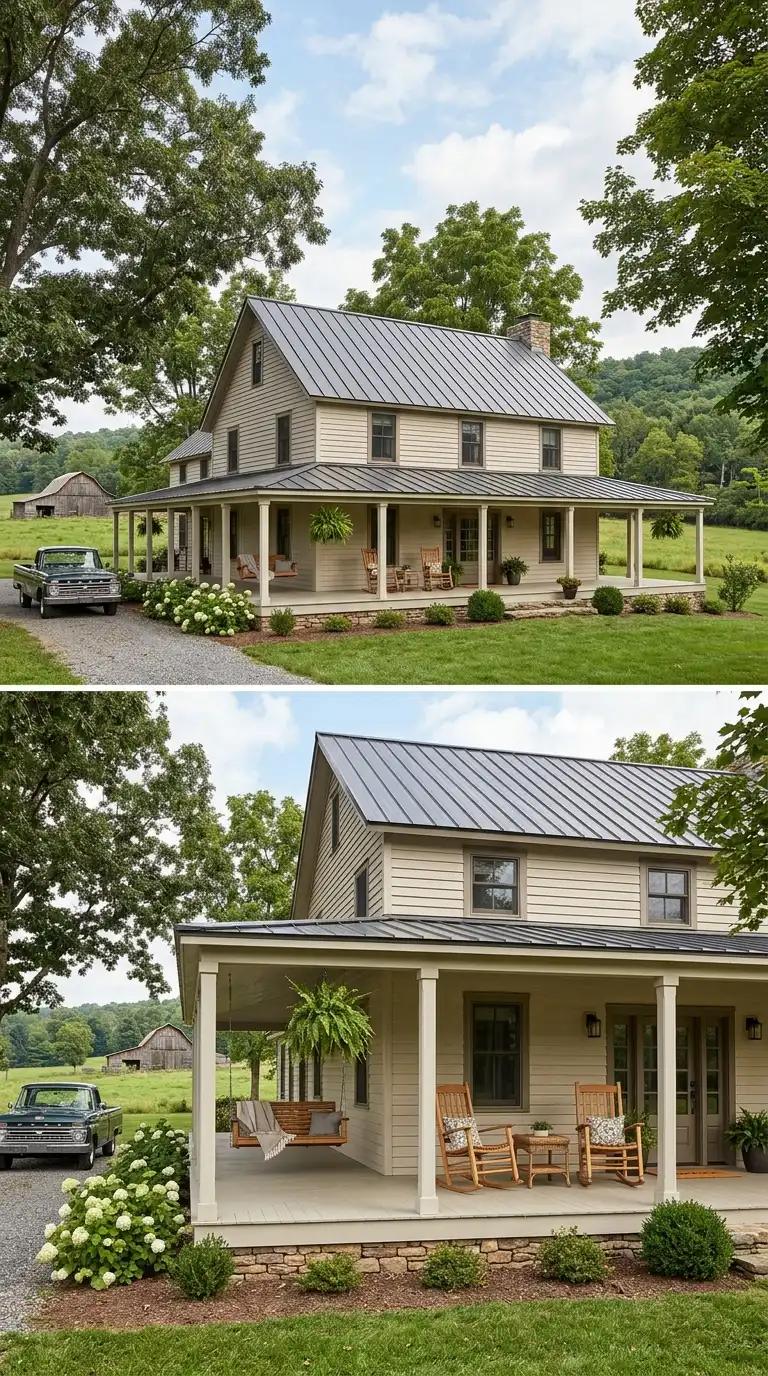
The wraparound porch extends around two or three sides of the house. The porch is deep enough for furniture (at least 2 metres). The porch roof is supported by simple columns. The porch provides shade, outdoor living space, and a transition between inside and outside.
This design is ideal for warm climates and family living. The emotional effect is welcoming, shaded, and leisurely.
Quick Tips
- The porch should be at least 2 metres deep.
- The porch should wrap around at least two sides.
- Columns should be simple — square or round, wood or metal.
14. The Passive Solar Farmhouse
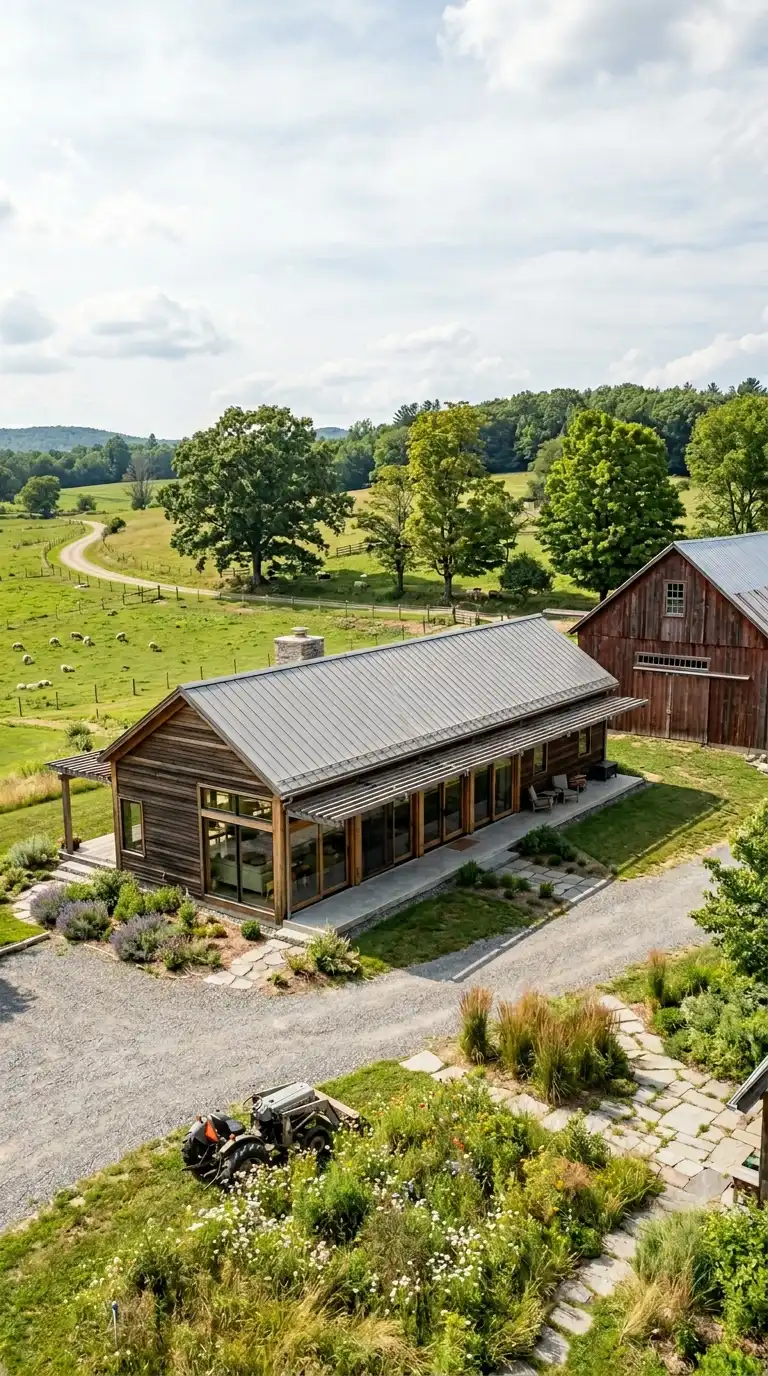
The passive solar farmhouse is oriented for maximum solar gain. The long axis runs east-west. Large windows face south. Deep overhangs block summer sun. Thermal mass (concrete, stone, or water) stores heat. The farmhouse heats itself.
This design is ideal for cold climates and off-grid sites. The emotional effect is warm, bright, and self-sufficient.
Quick Tips
- Orient the long axis east-west, with south-facing glazing.
- Use thermal mass (concrete, stone, water) inside the south-facing spaces.
- Size overhangs to block summer sun, admit winter sun.
Final Thoughts
The farmhouse is not a style. It is a way of building — honest, durable, and rooted in the land. A gable-front farmhouse faces the road. A saltbox farmhouse shelters from the wind. A dogtrot farmhouse opens to the breeze. A modern farmhouse is bright and open. But all farmhouses share the same values: simplicity, practicality, and warmth.
These 14 farmhouse designs are not mutually exclusive. A modern farmhouse can be a passive solar farmhouse. A stone farmhouse can have a wraparound porch. An L-shaped farmhouse can be a log farmhouse. The best farmhouses are not the most decorated — they are the most honest. They are built for living, not for looking. They are farmhouses.