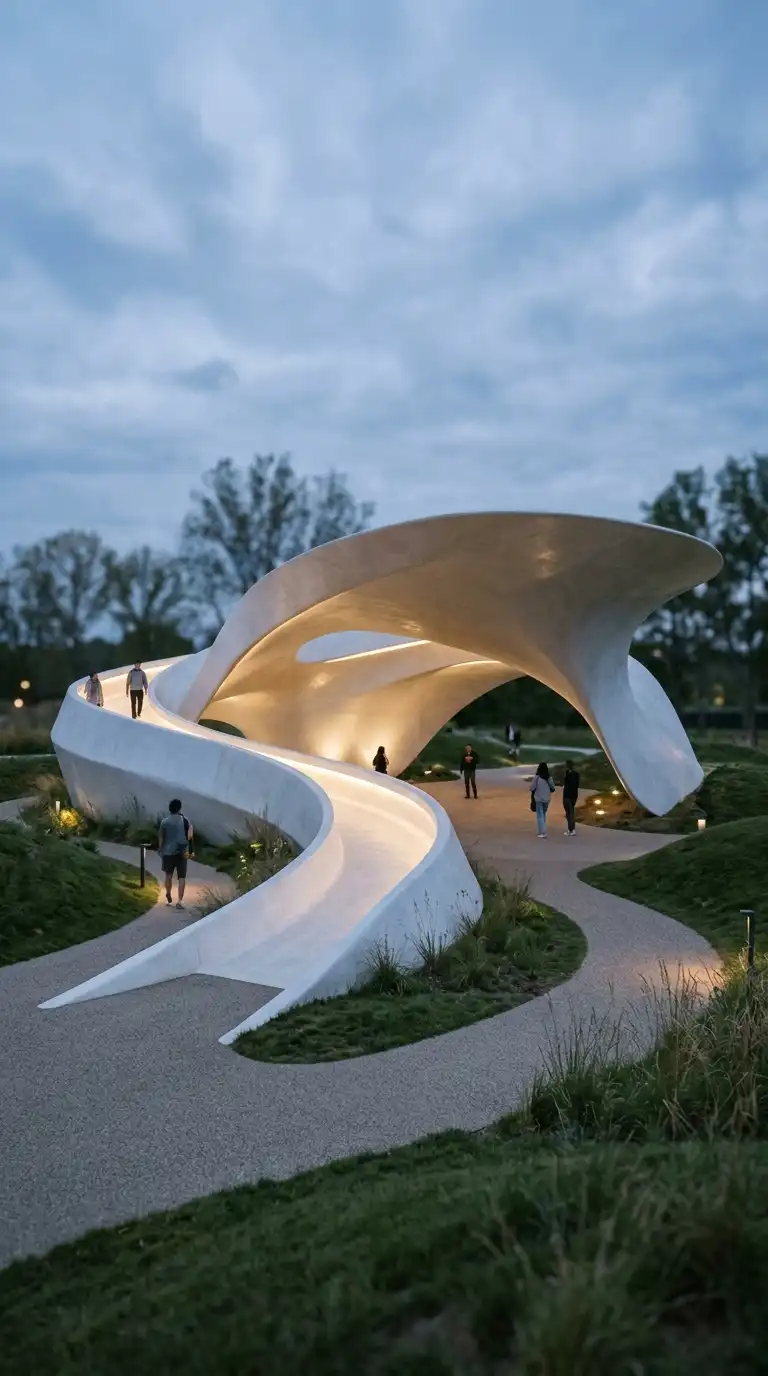
Origami is the Japanese art of paper folding. A single square sheet, folded, becomes a bird, a flower, a box. Origami architecture applies these principles to buildings: flat sheets folded into three-dimensional forms. The folds create structure, space, and ornament simultaneously. Origami architecture is lightweight, efficient, and dramatic.
These 12 origami architecture designs span pavilions, houses, towers, and temporary structures. Each design includes defining characteristics, folding principles, and structural strategies.
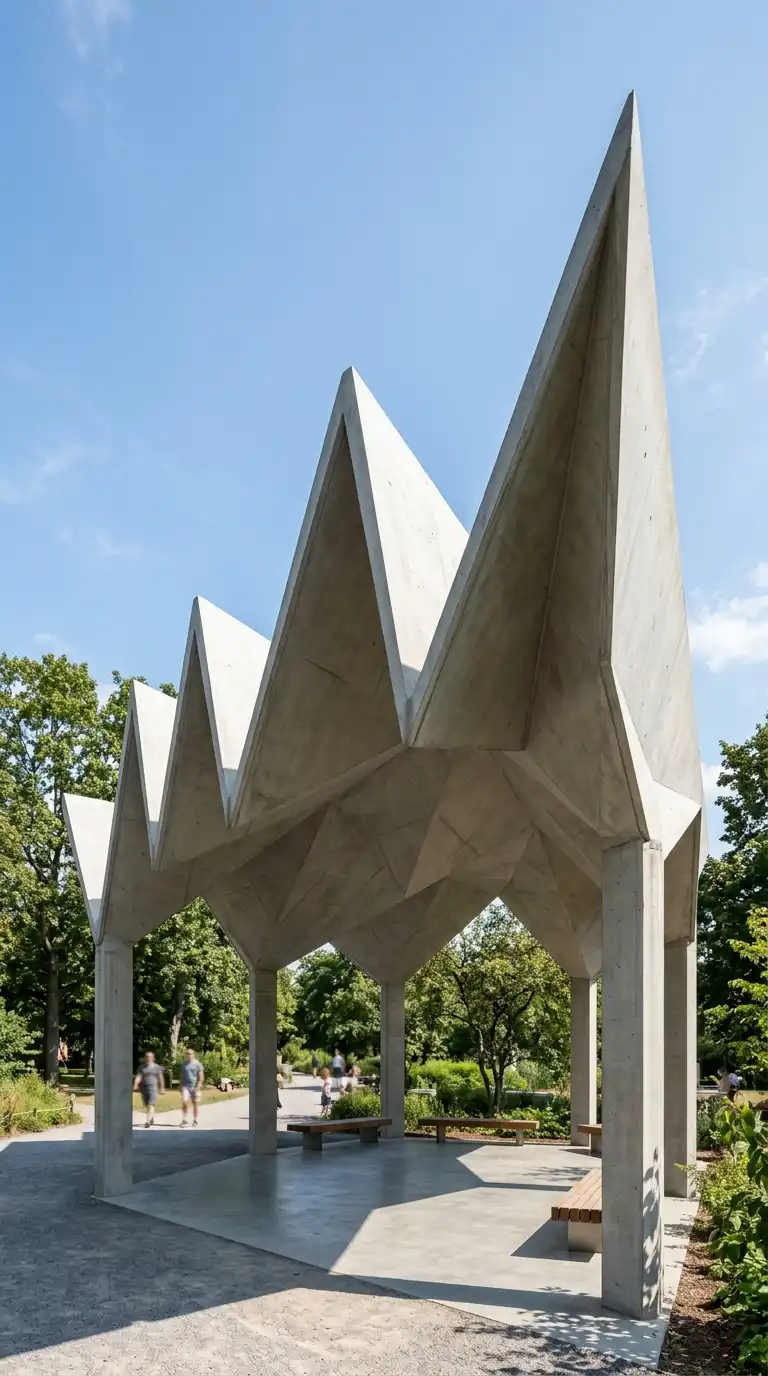
1. The Folded Plate Roof
The folded plate roof is made of flat, planar facets that fold in a continuous surface. The folds create a self-supporting structure — no beams or trusses are needed. The folded plate roof is strong, light, and dramatic. The folds can be V-shaped, zigzag, or faceted.
This design is ideal for gymnasiums, auditoriums, and pavilions. The emotional effect is faceted, structural, and origami-like.
Quick Tips
- The roof must be made of flat, planar facets.
- The facets must be continuous — no gaps.
- The roof must be self-supporting.
2. The Origami House
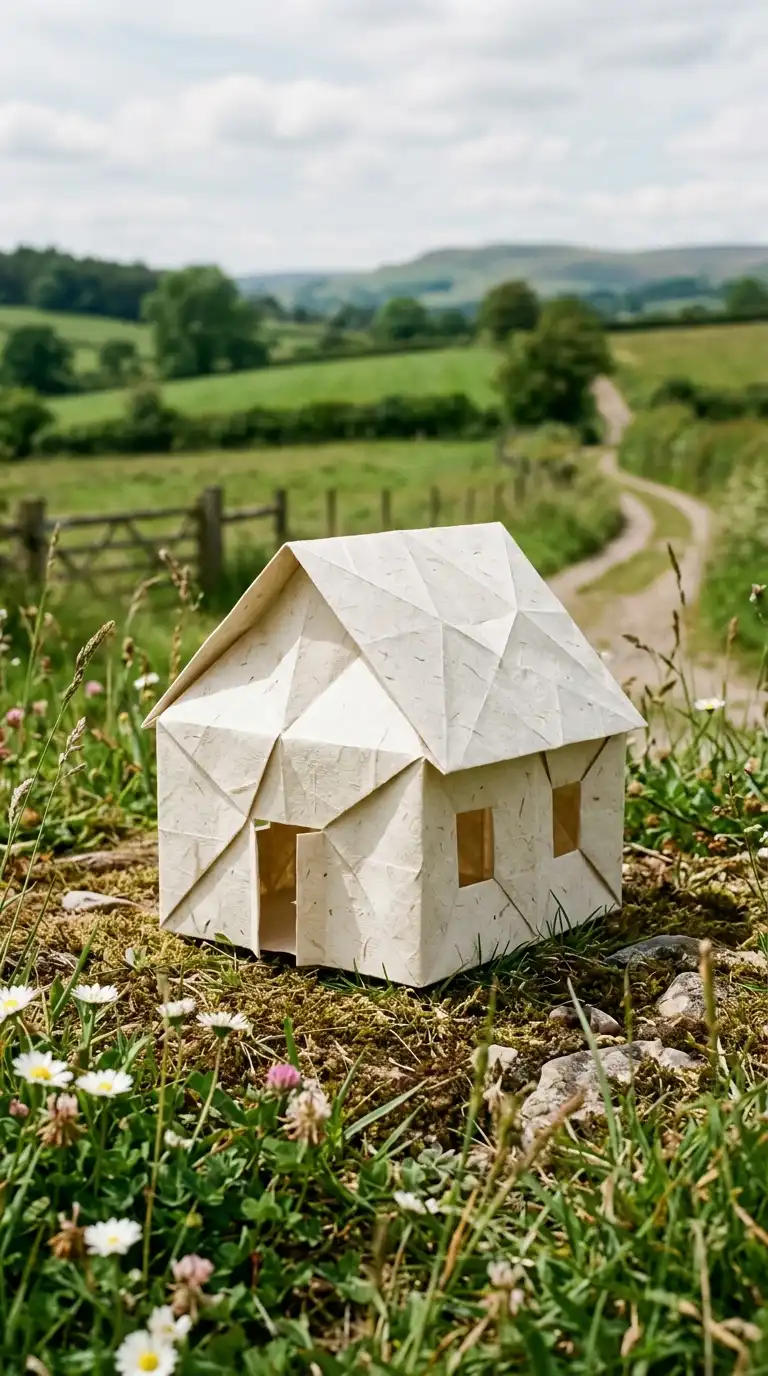
The origami house is a house shaped by folds. The walls, roof, and floor are continuous folded surfaces. There are no separate elements — everything is one folded sheet. The origami house is dramatic, sculptural, and efficient.
This design is ideal for contemporary houses on dramatic sites. The emotional effect is folded, sculptural, and continuous.
Quick Tips
- The walls, roof, and floor should be continuous.
- Avoid separate elements (e.g., a roof sitting on walls).
- The folds should create interior spaces.
3. The Faceted Tower
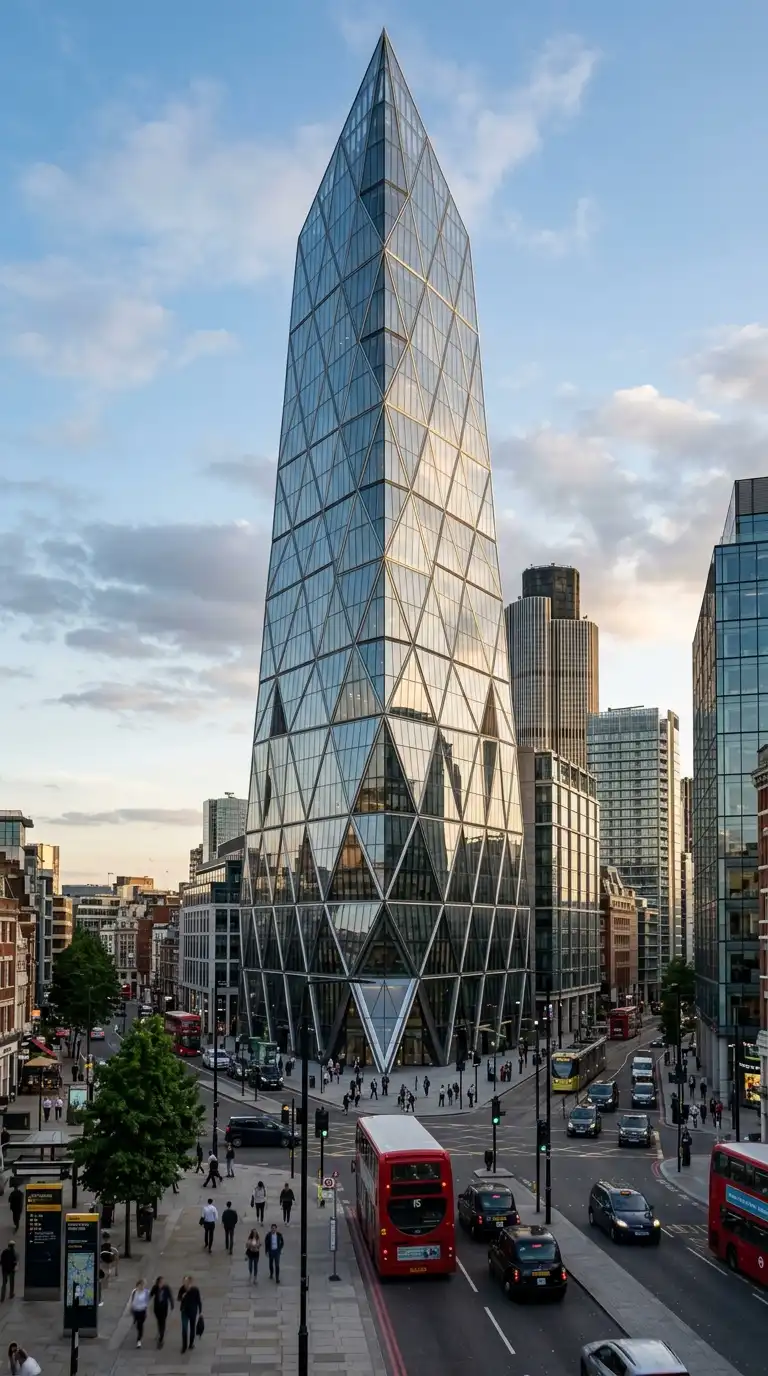
The faceted tower is a tall building made of flat, faceted surfaces. The facets create a faceted, crystalline form. The faceted tower is dramatic, sculptural, and highly visible. The facets catch light and shadow differently on each face.
This design is ideal for skyscrapers, observation towers, and landmarks. The emotional effect is faceted, crystalline, and dramatic.
Quick Tips
- The tower must be made of flat, planar facets.
- The facets should be arranged in a regular pattern.
- The tower should taper or twist for drama.
4. The Folded Facade
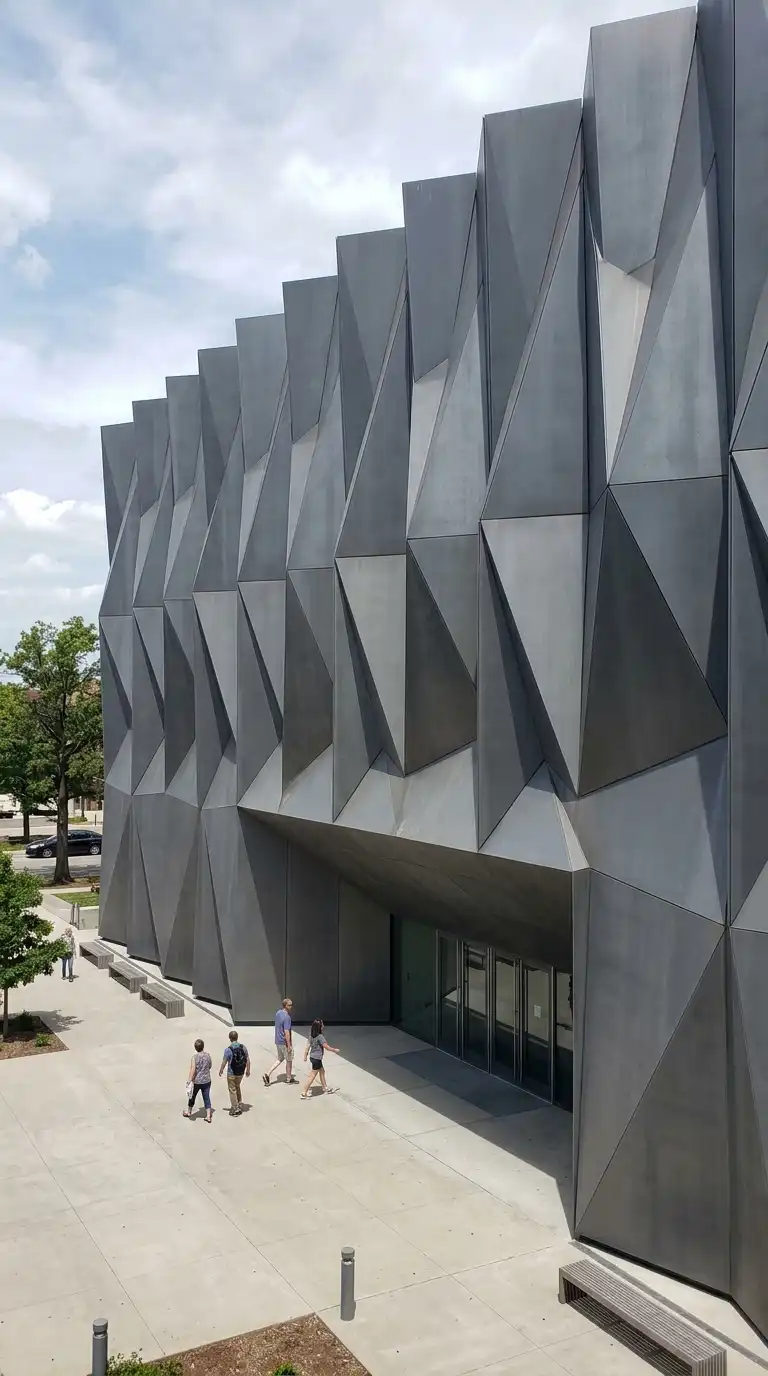
The folded facade is a building facade made of folded flat sheets. The folds create depth, shadow, and pattern. The folded facade is self-supporting — it does not need a separate structure behind it. The folds can be horizontal, vertical, or diagonal.
This design is ideal for museums, cultural centres, and contemporary offices. The emotional effect is folded, shadowed, and patterned.
Quick Tips
- The facade must be made of folded flat sheets.
- The folds should be deep enough to cast shadows.
- The facade should be self-supporting.
5. The Origami Pavilion
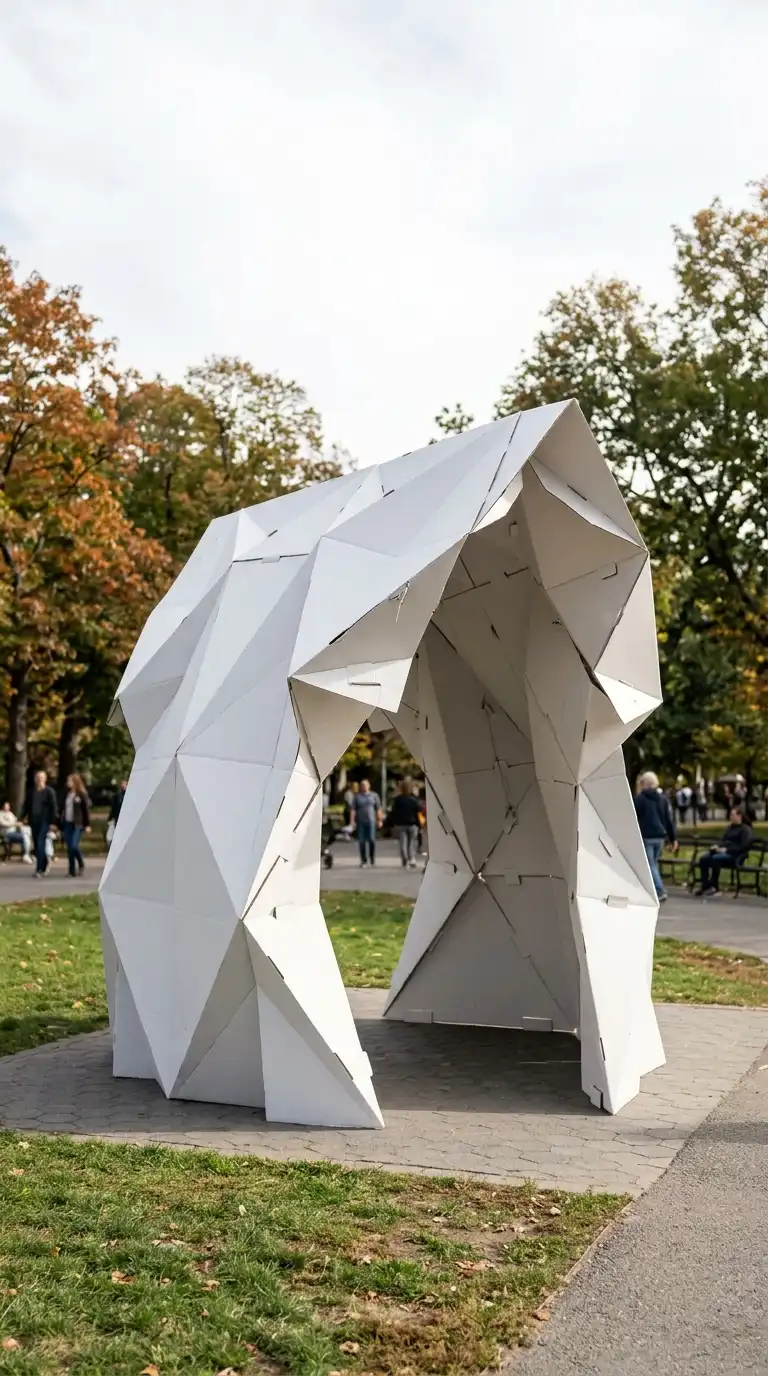
The origami pavilion is a small, temporary structure made of folded paper, cardboard, or thin metal. The pavilion is lightweight, portable, and quick to assemble. The folds create both structure and ornament. The origami pavilion is a showcase for folding techniques.
This design is ideal for exhibitions, fairs, and temporary events. The emotional effect is lightweight, temporary, and folded.
Quick Tips
- Use lightweight materials (paper, cardboard, thin metal).
- The pavilion must be demountable.
- The folds must create a self-supporting structure.
6. The Folded Bridge
The folded bridge is a pedestrian bridge made of a single folded sheet of metal or composite. The folds create the stiffness and strength needed to span a gap. The folded bridge is lightweight, elegant, and structural.
This design is ideal for parks, gardens, and pedestrian paths. The emotional effect is folded, lightweight, and spanning.
Quick Tips
- The bridge must be made of a single folded sheet.
- The folds must create the structural stiffness.
- The bridge should be lightweight.

7. The Origami Canopy
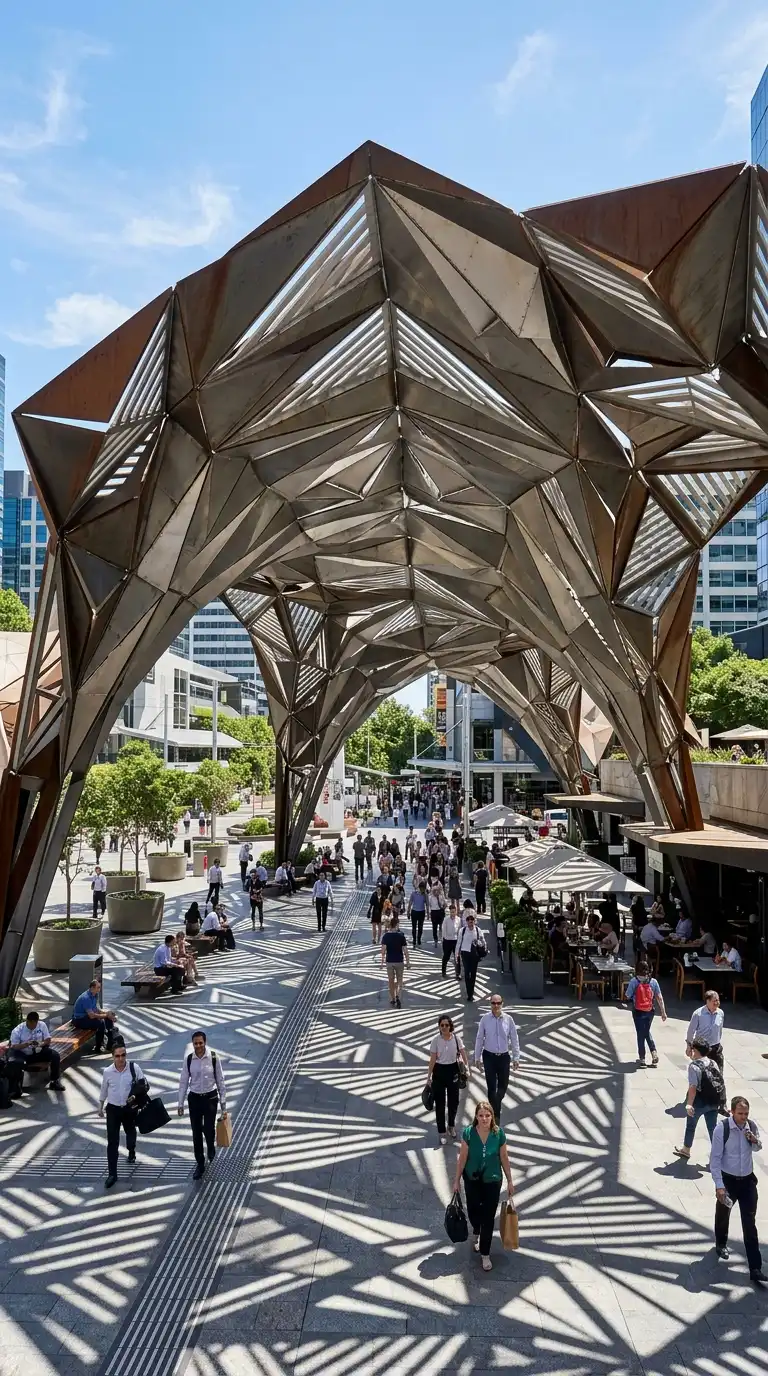
The origami canopy is a folded roof over an outdoor space. The canopy provides shade and shelter. The folds create a rhythmic pattern of light and shadow. The origami canopy is lightweight, dramatic, and shade-giving.
This design is ideal for playgrounds, plazas, and outdoor seating areas. The emotional effect is shaded, rhythmic, and folded.
Quick Tips
- The canopy should be made of folded metal or fabric.
- The folds should create a pattern of light and shadow.
- The canopy should be self-supporting.
8. The Folded Interior Wall
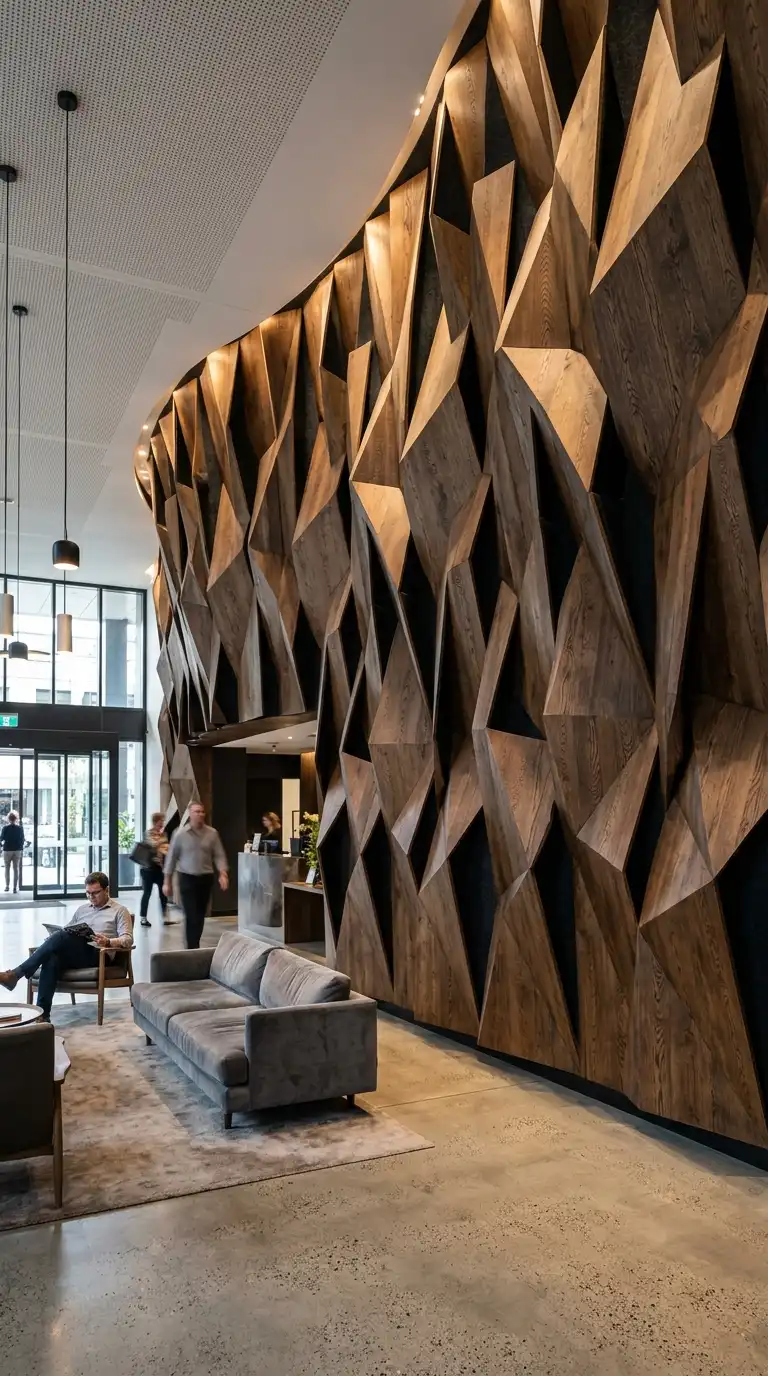
The folded interior wall is a non-structural wall made of folded panels. The folds create depth, texture, and acoustic absorption. The folded wall can be used as a room divider, a feature wall, or a backdrop. The folded interior wall is sculptural, textured, and space-defining.
This design is ideal for offices, lobbies, and galleries. The emotional effect is folded, textured, and sculptural.
Quick Tips
- The wall should be made of folded panels.
- The folds should be deep enough for visual interest.
- Use sound-absorbing material behind the folds.
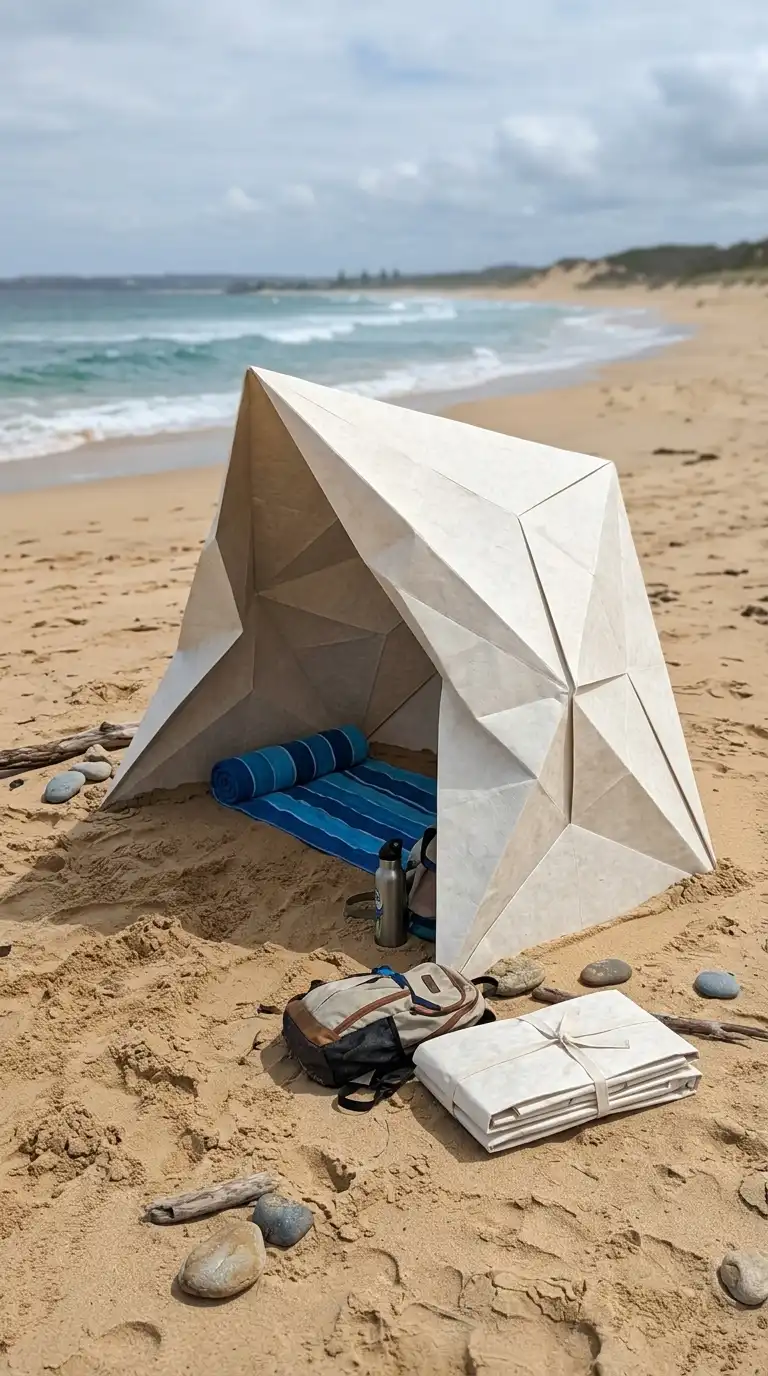
9. The Origami Shelter
The origami shelter is a small, one-person shelter made of a single folded sheet. The shelter folds flat for transport and unfolds for use. The origami shelter is lightweight, portable, and quick to deploy. It is ideal for emergency housing, camping, or beach shelters.
This design is ideal for humanitarian aid and outdoor recreation. The emotional effect is portable, quick, and efficient.
Quick Tips
- The shelter must fold flat for transport.
- The shelter must be made of a single sheet.
- The folds must create a self-supporting form.
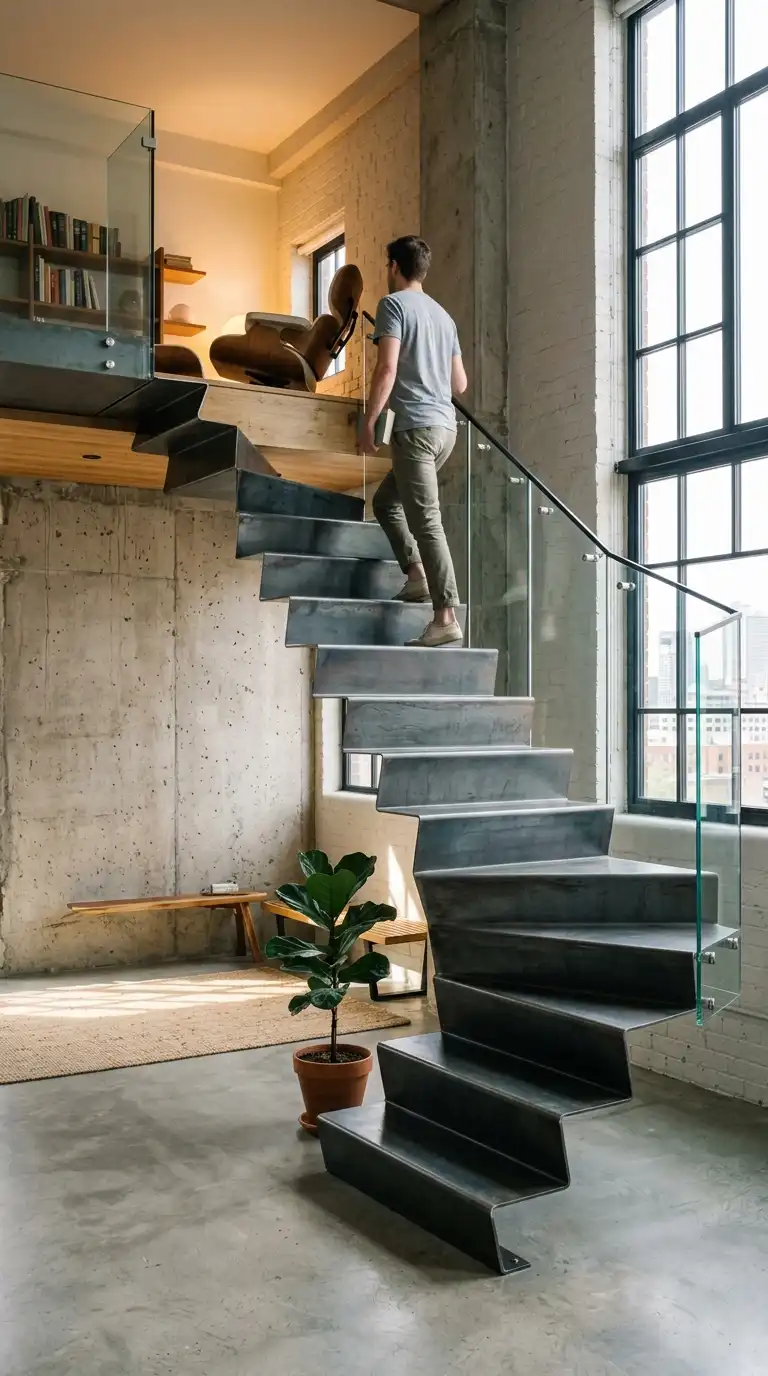
10. The Folded Stair
The folded stair is a staircase made of a single folded sheet of metal. The treads and risers are folded from the same sheet. The folded stair is lightweight, elegant, and structural. There are no separate parts — everything is one piece.
This design is ideal for modern houses, lofts, and galleries. The emotional effect is folded, continuous, and elegant.
Quick Tips
- The stair must be made of a single folded sheet.
- The treads and risers must be folded from the same sheet.
- The stair should be self-supporting.
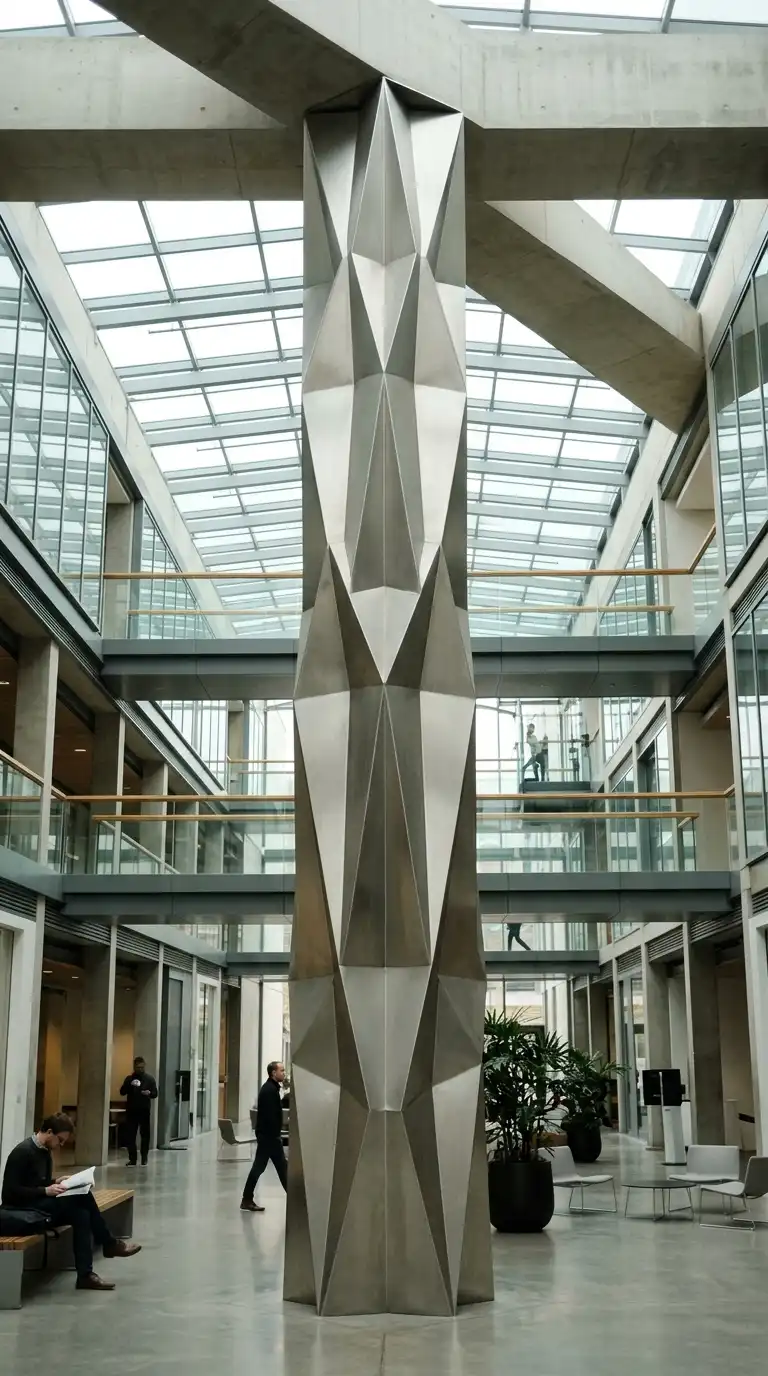
11. The Origami Column
The origami column is a column made of a folded sheet of metal or composite. The folds create stiffness and strength. The origami column is lightweight, strong, and sculptural. The folds can be vertical, spiral, or faceted.
This design is ideal for atriums, lobbies, and exhibition spaces. The emotional effect is folded, lightweight, and structural.
Quick Tips
- The column must be made of a folded sheet.
- The folds must create structural stiffness.
- The column should be hollow for lightness.
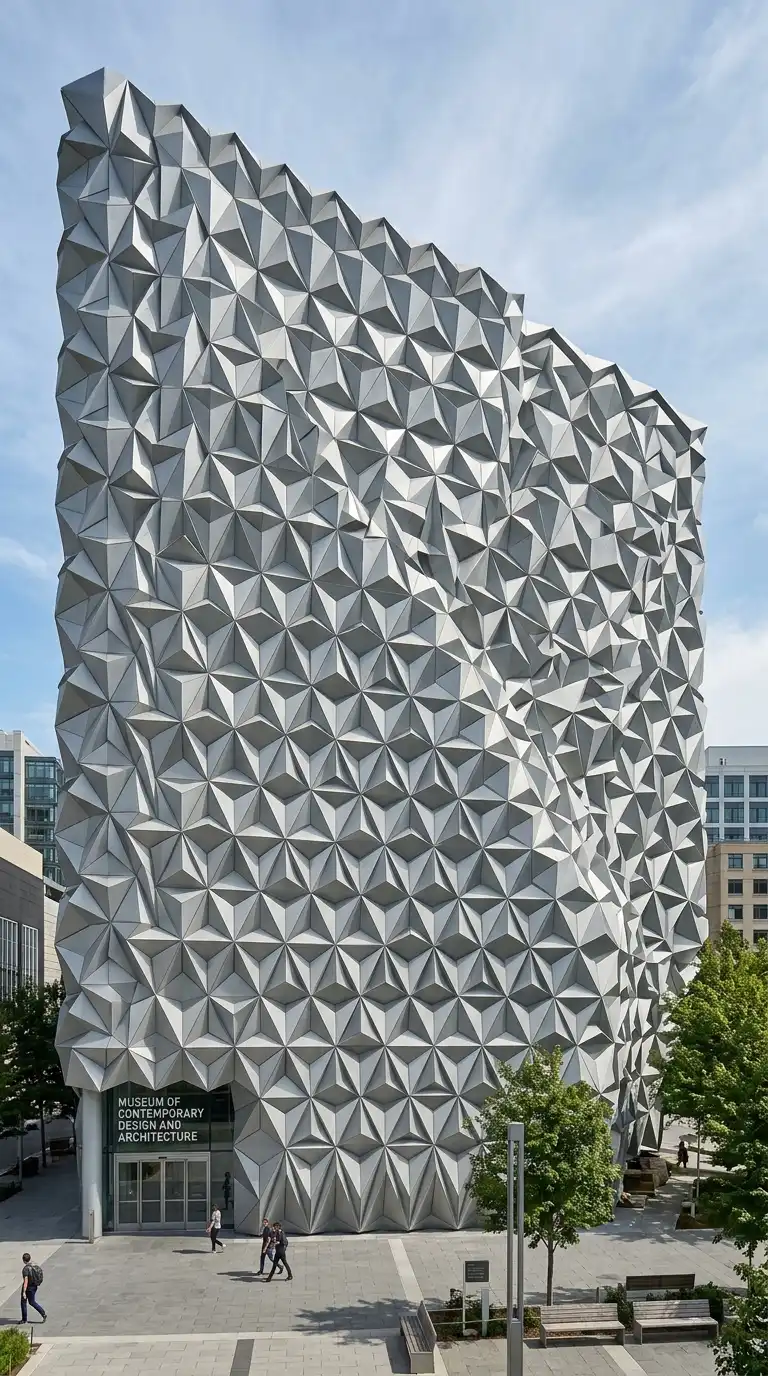
12. The Origami Tessellation Facade
The origami tessellation facade is a building facade made of a repeating folded pattern. The pattern is a tessellation — a repeating geometric pattern that covers a plane without gaps. The origami tessellation facade is complex, rhythmic, and mathematically beautiful.
This design is ideal for museums, cultural centres, and university buildings. The emotional effect is tessellated, rhythmic, and mathematical.
Quick Tips
- The pattern must be a repeating geometric tessellation.
- The folds should be deep enough to cast shadows.
- The pattern should be consistent across the facade.
Final Thoughts
Origami architecture is not just about making buildings look like folded paper. It is about the logic of the fold: flat sheets become three-dimensional forms. The folds create structure, space, and ornament simultaneously. Origami architecture is lightweight, efficient, and dramatic.
These 12 origami designs are not mutually exclusive. A folded plate roof can be on an origami house. A folded facade can be an origami tessellation. An origami column can support a folded canopy. The best origami architecture is not the most complex — it is the most logical. It understands the fold: a single sheet, folded, becomes architecture.