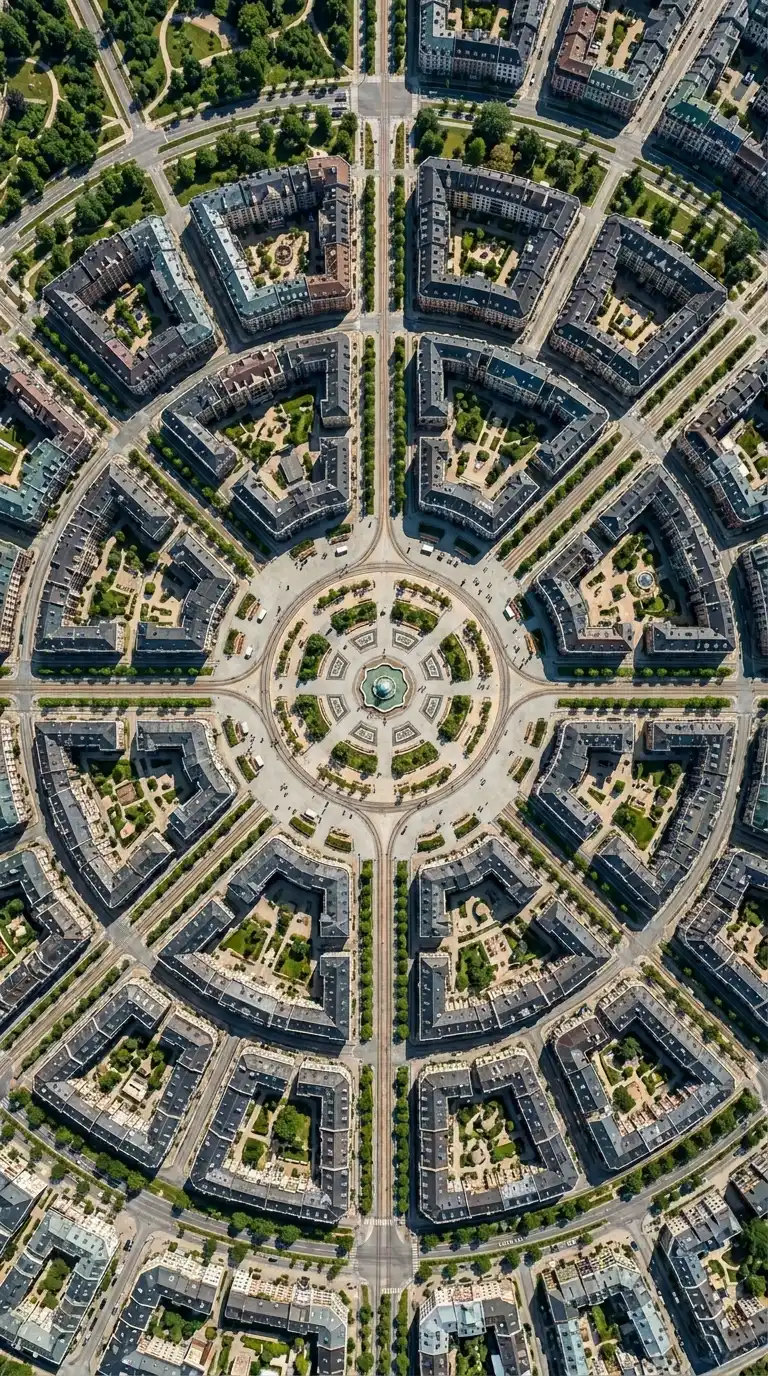
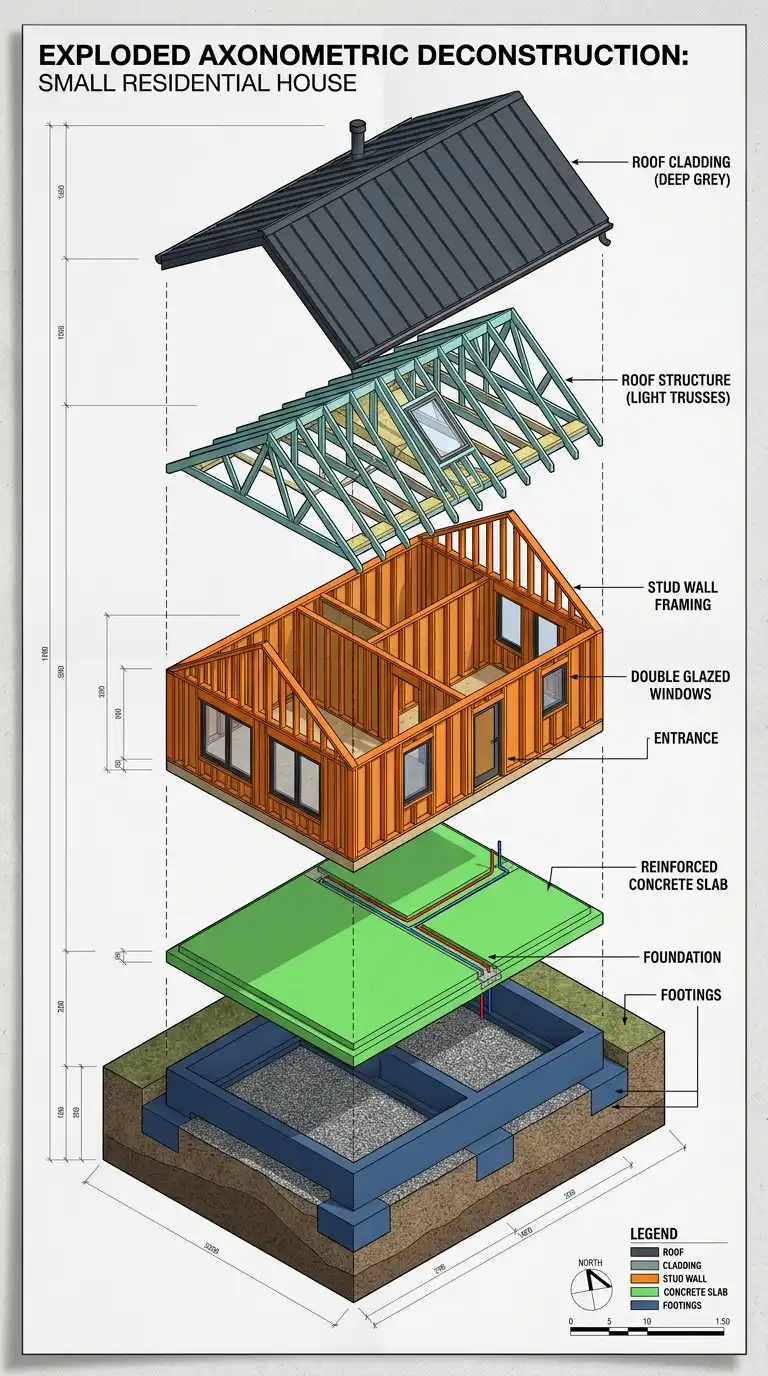
Roman architecture is the foundation of the Western building tradition. The Romans did not invent the arch, the vault, or the dome, but they were the first to use them at an unprecedented scale. They transformed Greek columns and lintels into an architecture of poured concrete, vast interior spaces, and engineered infrastructure. Roman buildings are not just beautiful — they are structural, civic, and pragmatic.
These 15 Roman architecture designs span the Republic and the Empire, from temples to bathhouses to bridges. Each design includes defining characteristics, key examples, and architectural principles.
1. The Roman Temple
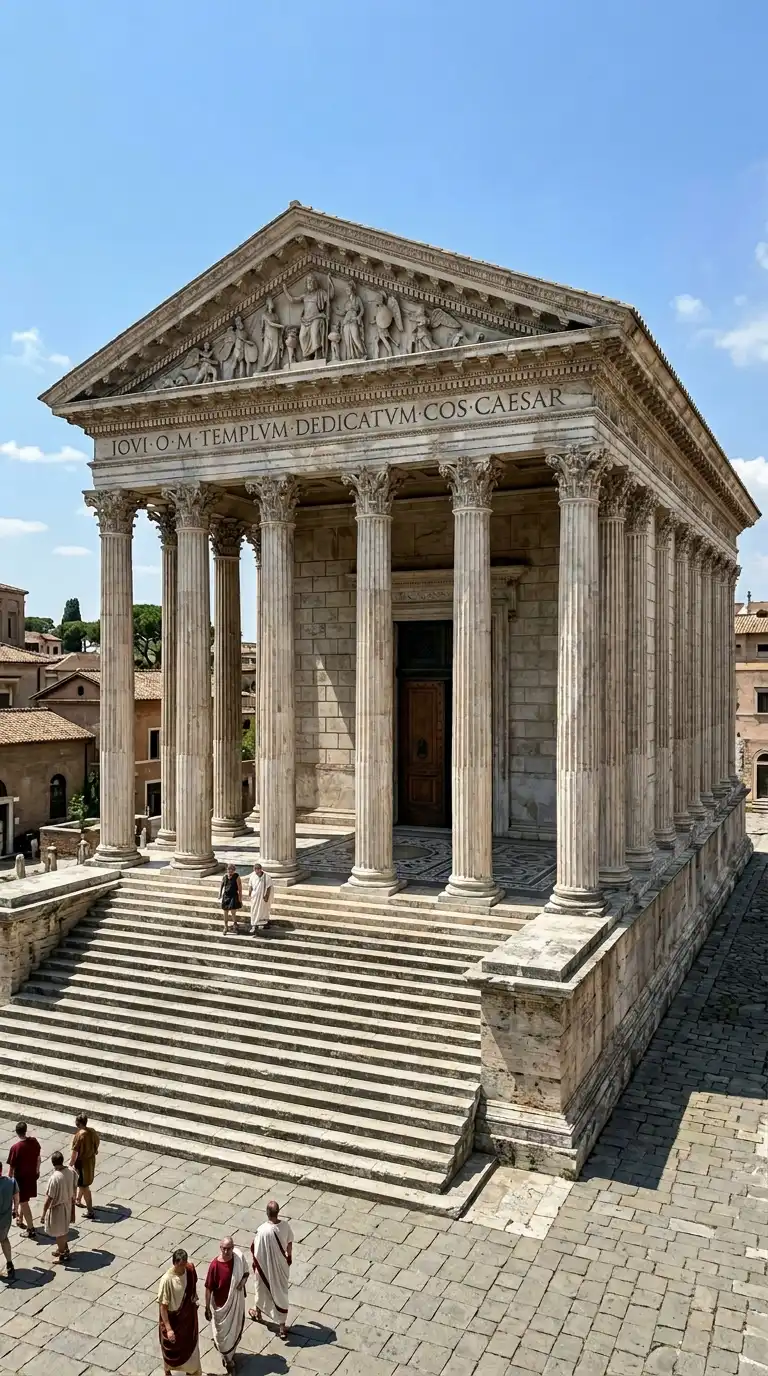
The Roman temple differs from its Greek predecessor. The Greek temple is a sculptural object, visible from all sides. The Roman temple is frontal — entered from the front only, with a deep porch and a single staircase. The temple sits on a high podium. The columns are often engaged (attached to the wall) on the sides and rear.
The Maison Carrée in Nîmes, France (16 BCE) is the defining example. The emotional effect is frontal, hierarchical, and civic.
Quick Tips
- The temple must sit on a high podium.
- The entrance must be frontal — one staircase, one door.
- Columns should be engaged on the sides and rear, free-standing in front.
2. The Basilica
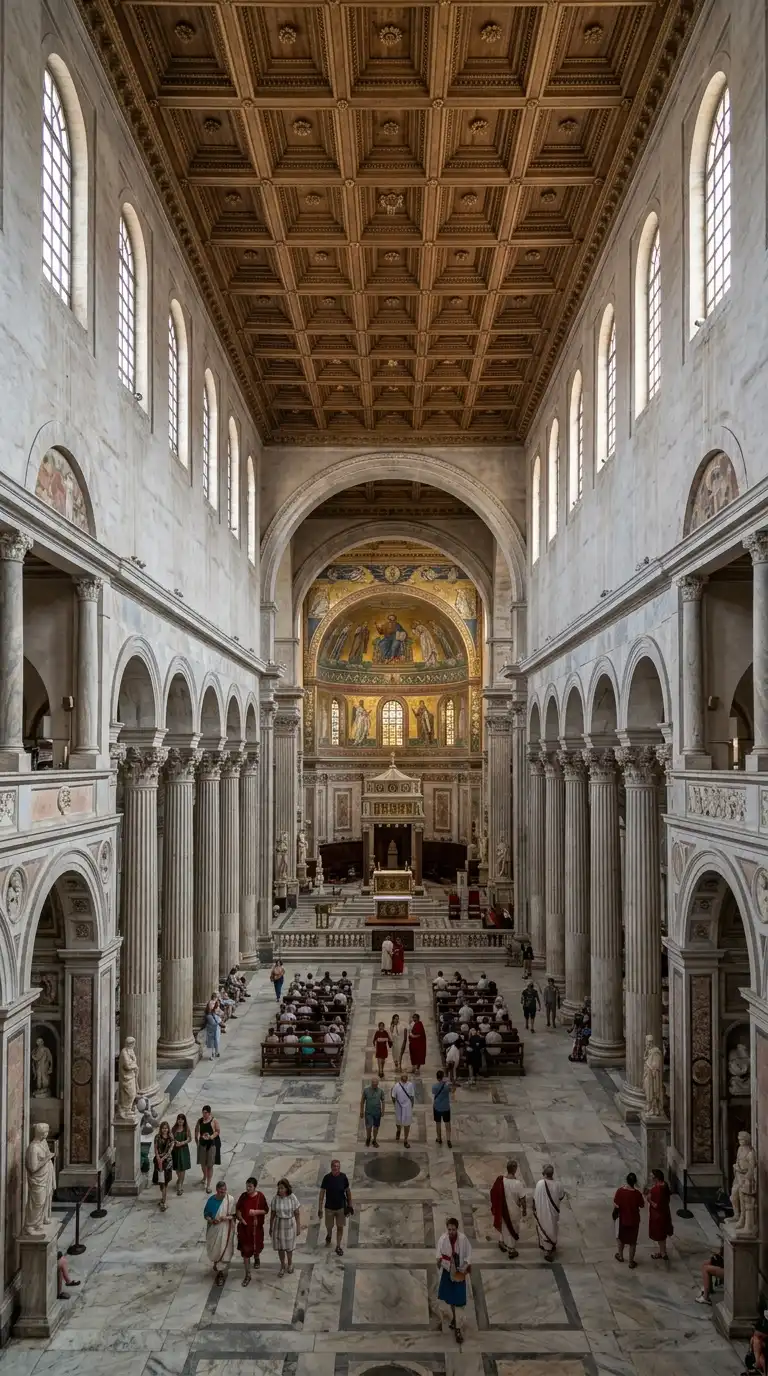
The basilica was the Roman law court and public hall. The plan is a long rectangle with a central nave and lower side aisles. The nave is lit by a clerestory — a row of windows above the aisle roofs. The apse at one or both ends held the magistrate’s tribunal.
The Basilica of Maxentius and Constantine in Rome (312 CE) is the defining example. The emotional effect is axial, hierarchical, and public.
Quick Tips
- The plan should be a long rectangle with a central nave and side aisles.
- The nave should be higher than the aisles with a clerestory.
- An apse should be at one or both ends.
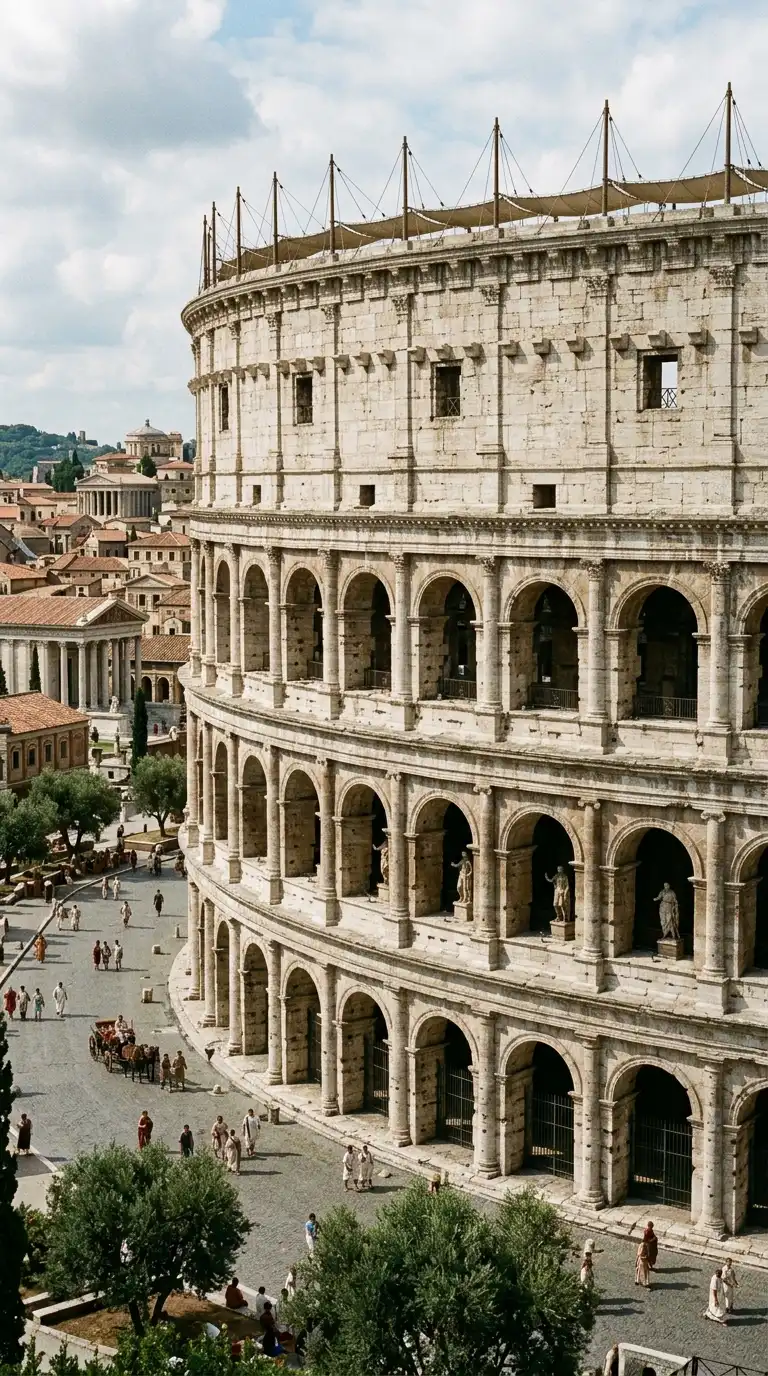
3. The Roman Amphitheatre
The amphitheatre is a Roman invention. Two theatres placed face to face create an oval arena surrounded by rising seating. The amphitheatre hosted gladiatorial combats, animal hunts, and executions. The seating is supported by concrete vaults and arches.
The Colosseum in Rome (80 CE) is the defining example. The emotional effect is monumental, public, and terrifying.
Quick Tips
- The plan should be an oval or ellipse.
- Seating should rise on all sides around a central arena.
- The exterior should have arched openings on multiple levels.
4. The Roman Theatre
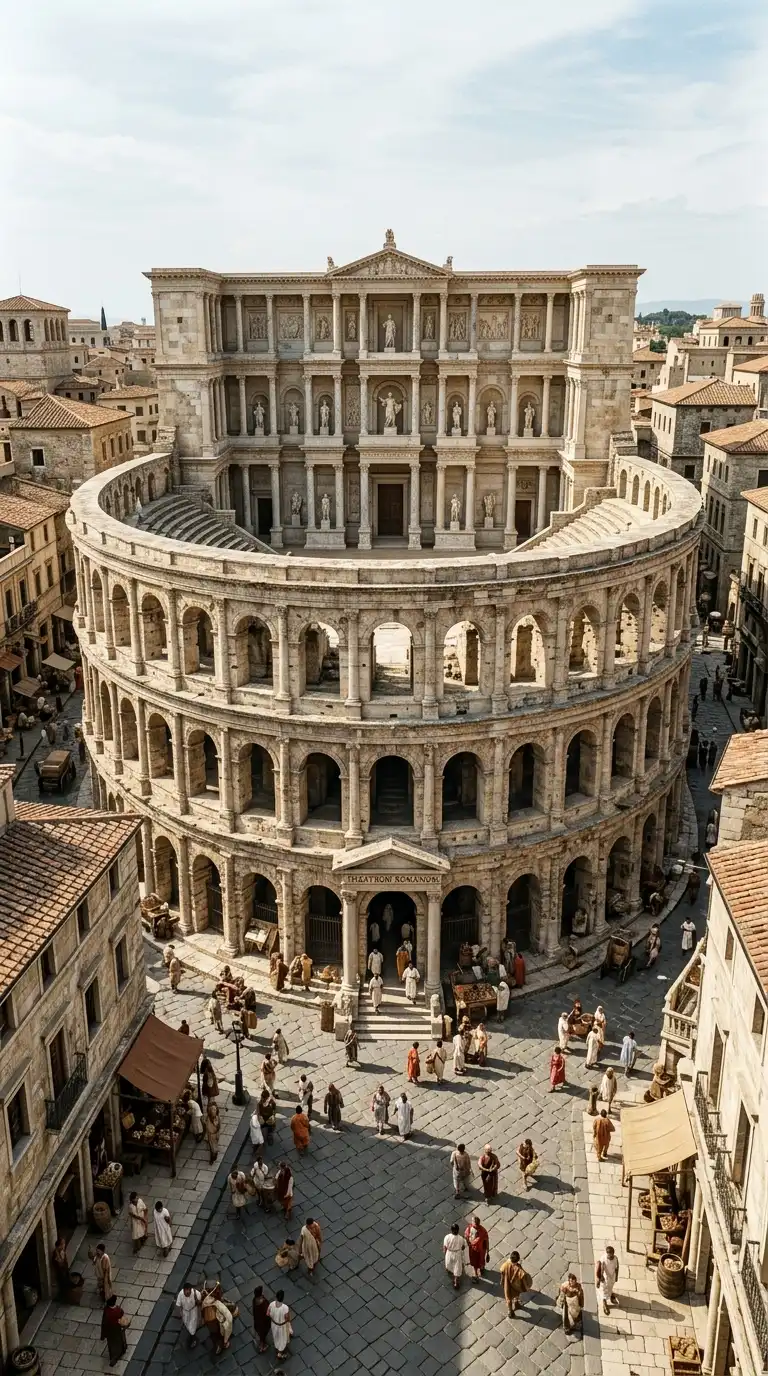
The Roman theatre differs from the Greek theatre. The Greek theatre is carved into a hillside. The Roman theatre is a freestanding building, supported by concrete vaults and arches. The seating is a semicircle (cavea). The stage building (scaenae frons) is as tall as the seating, enclosing the space.
The Theatre of Marcellus in Rome (13 BCE) is the defining example. The emotional effect is enclosed, theatrical, and urban.
Quick Tips
- The theatre must be freestanding, not carved into a hill.
- The seating must be a semicircle.
- The stage building must be as tall as the seating.
5. The Roman Bathhouse (Thermae)
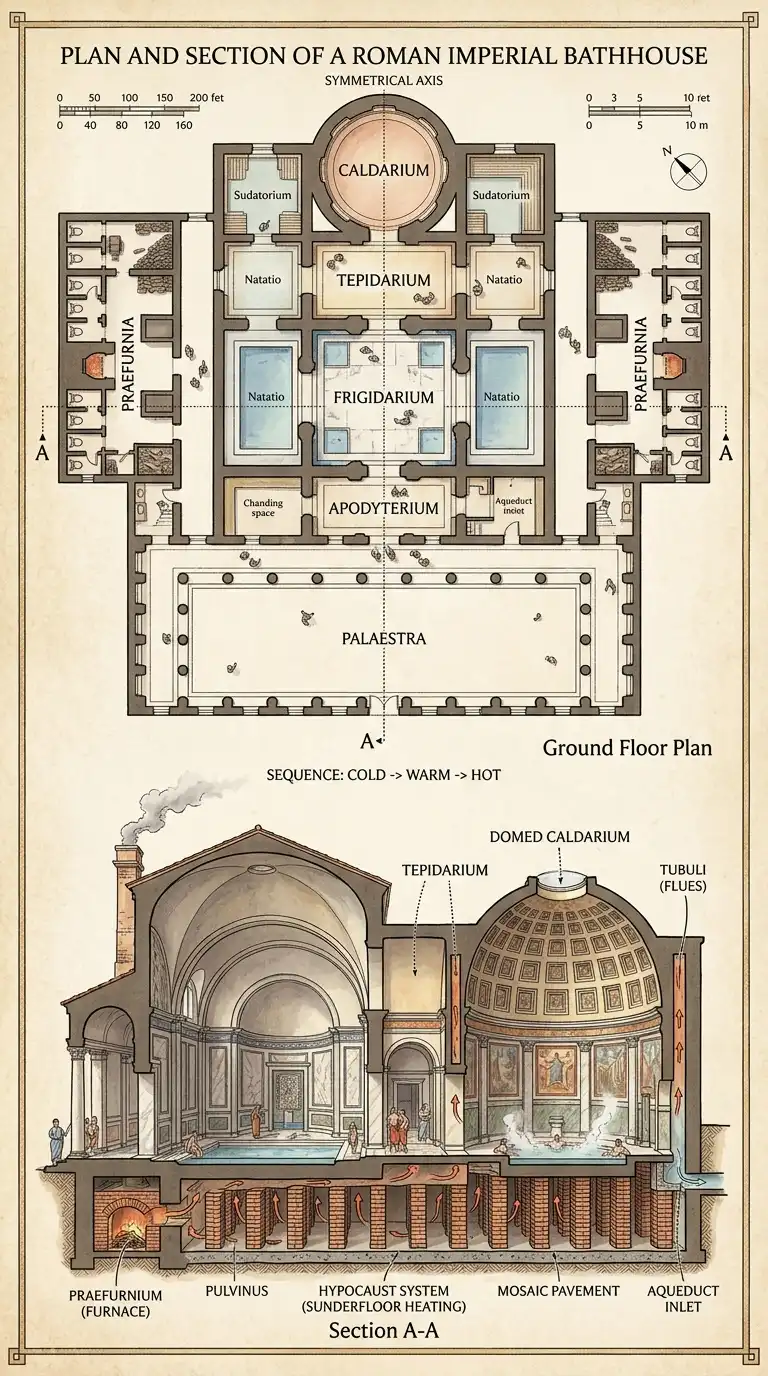
The Roman bathhouse was a public leisure complex. The plan is symmetrical, with a sequence of rooms: apodyterium (changing room), tepidarium (warm room), caldarium (hot room), and frigidarium (cold room). The rooms are heated by a hypocaust — a raised floor with hot air circulating beneath.
The Baths of Caracalla in Rome (216 CE) are the defining example. The emotional effect is social, leisurely, and monumental.
Quick Tips
- The plan should be symmetrical with a sequence of heated rooms.
- The caldarium should be domed.
- The hypocaust system should be visible in section.
6. The Roman Dome
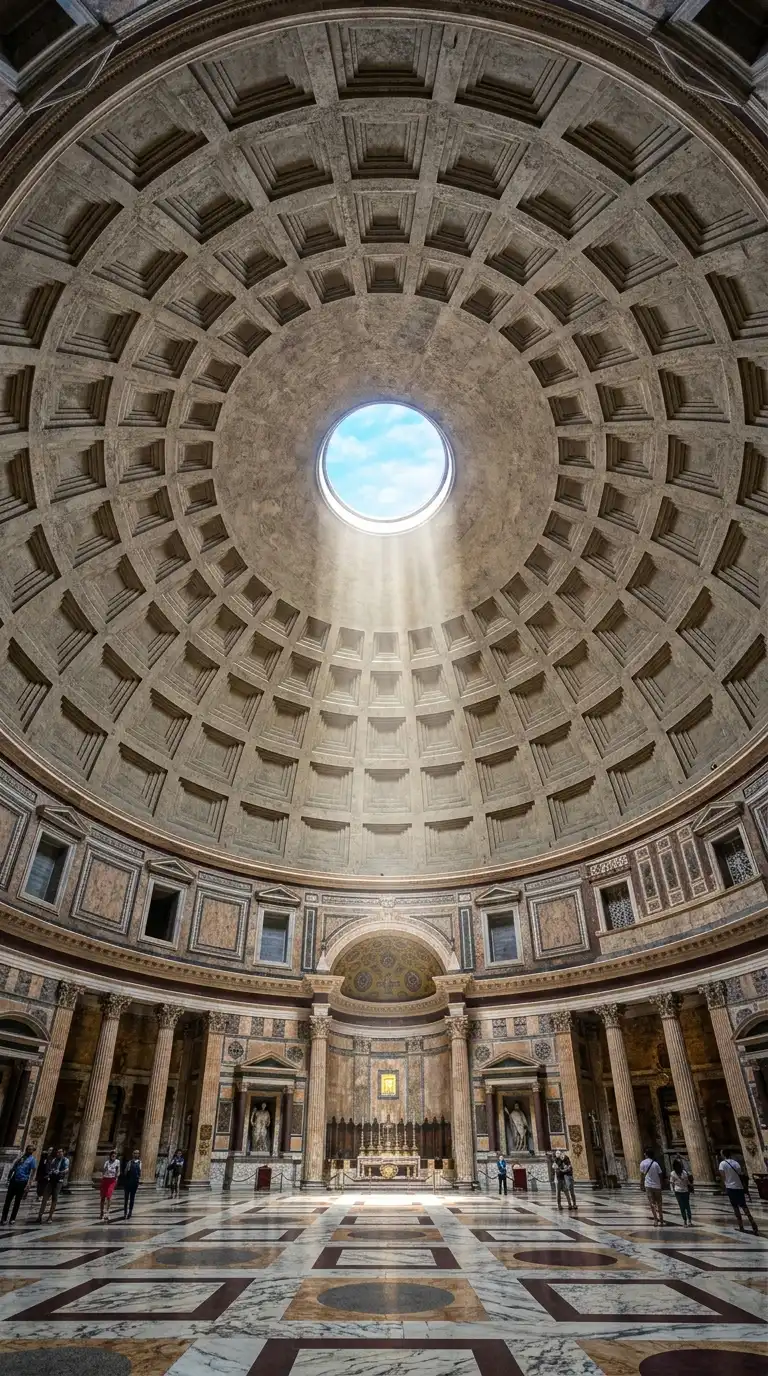
The Roman dome is the largest unreinforced concrete dome ever built. The dome is a hemisphere, with the height equal to half the span. The dome is coffered — the interior surface is divided into recessed panels that reduce weight. The oculus at the centre is open to the sky.
The Pantheon in Rome (126 CE) is the defining example. The emotional effect is celestial, awe-inspiring, and structural.
Quick Tips
- The dome must be a hemisphere (height equals half the span).
- The dome must be coffered to reduce weight.
- The oculus must be open to the sky.
7. The Roman Arch
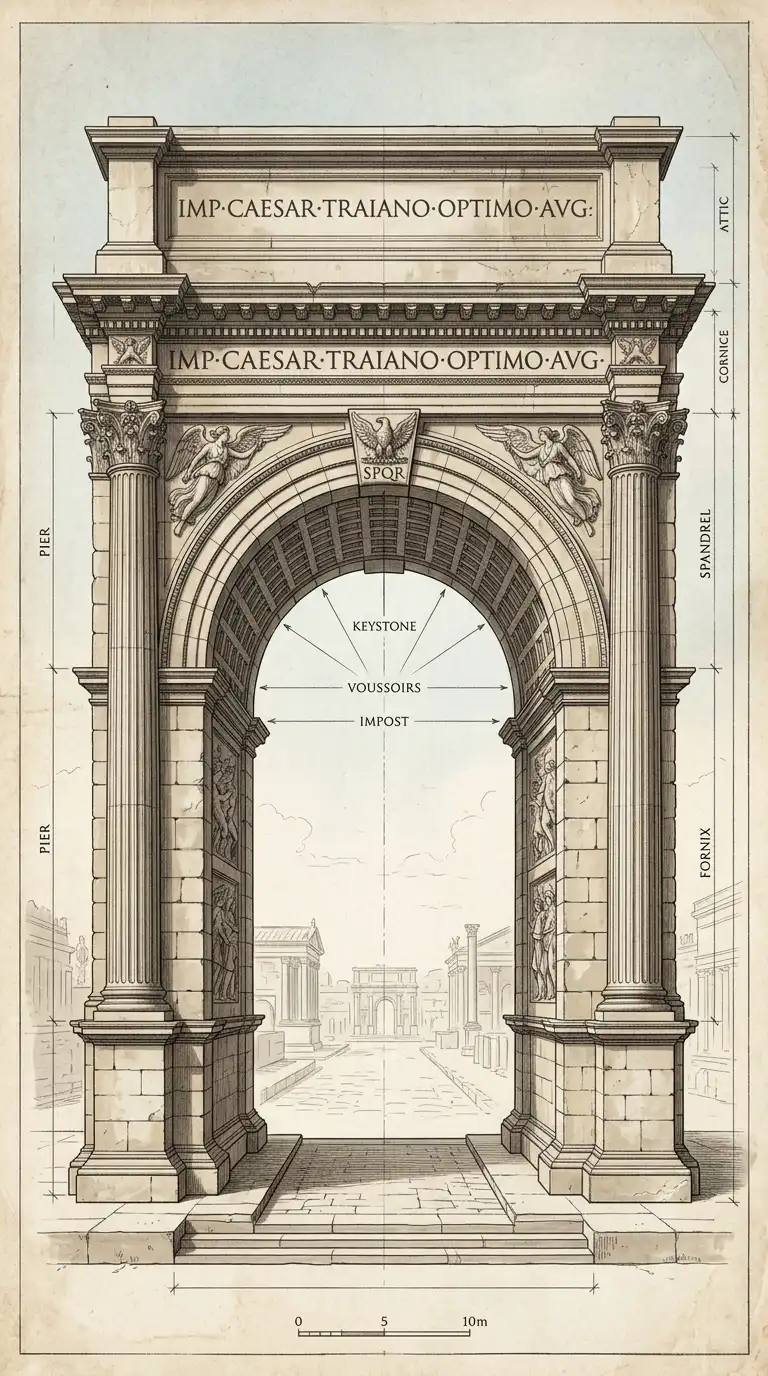
The Roman arch is a semicircular arched opening, supported by piers. The arch is made of wedge-shaped stones (voussoirs) that lock together. The arch can be repeated in arcades, aqueducts, and bridges.
The arch is the basic unit of Roman engineering. The emotional effect is structural, rhythmic, and engineered.
Quick Tips
- The arch must be semicircular (half a circle).
- The voussoirs should be visible as wedge-shaped stones.
- The keystone at the centre should be emphasised.
8. The Roman Aqueduct
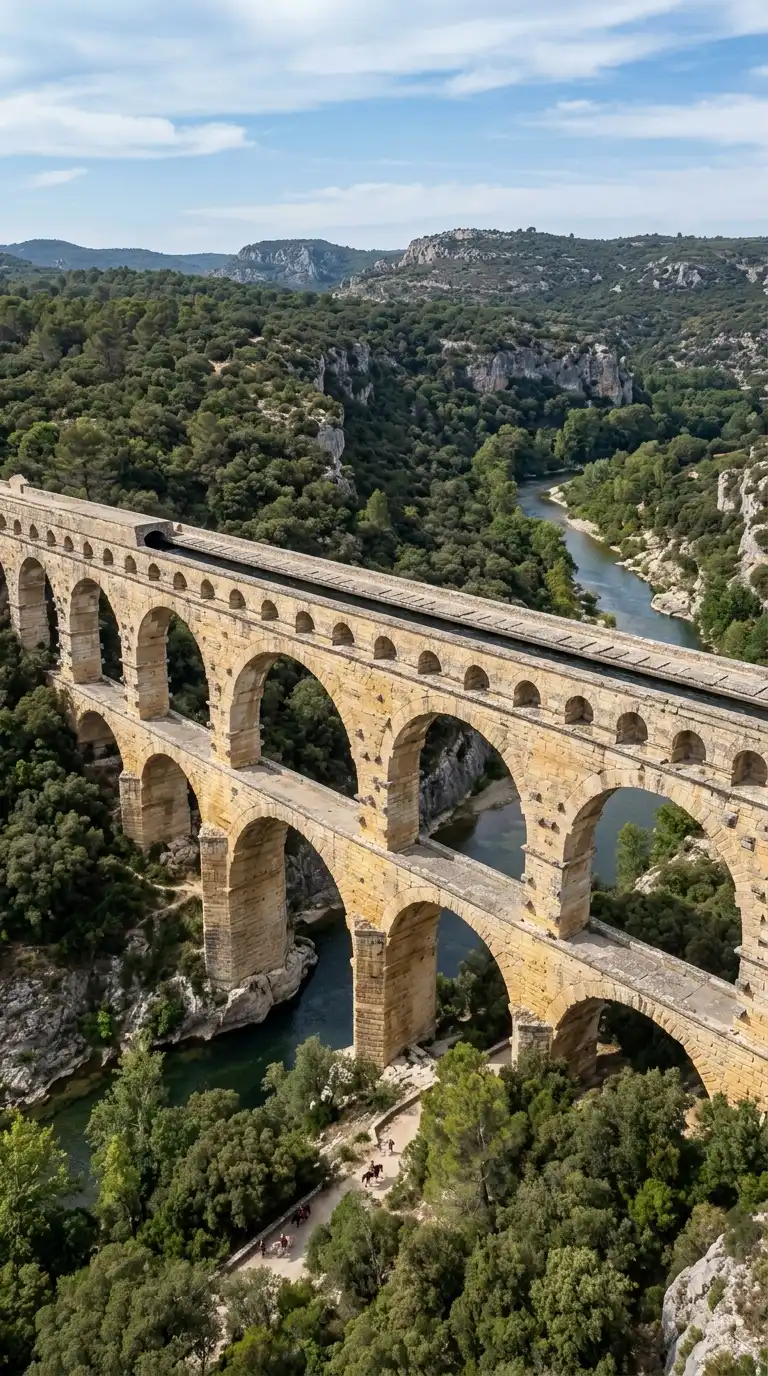
The Roman aqueduct is a long arcade of arches, carrying water across valleys. The arches are stacked in two or three levels. The top level carries the water channel (specus). The arches are built of stone or concrete, faced with brick.
The Pont du Gard in Nîmes, France (1st century CE) is the defining example. The emotional effect is engineered, rhythmic, and monumental.
Quick Tips
- The aqueduct should have two or three levels of arches.
- The top level should carry the water channel.
- The arches should be semicircular.
9. The Roman Bridge
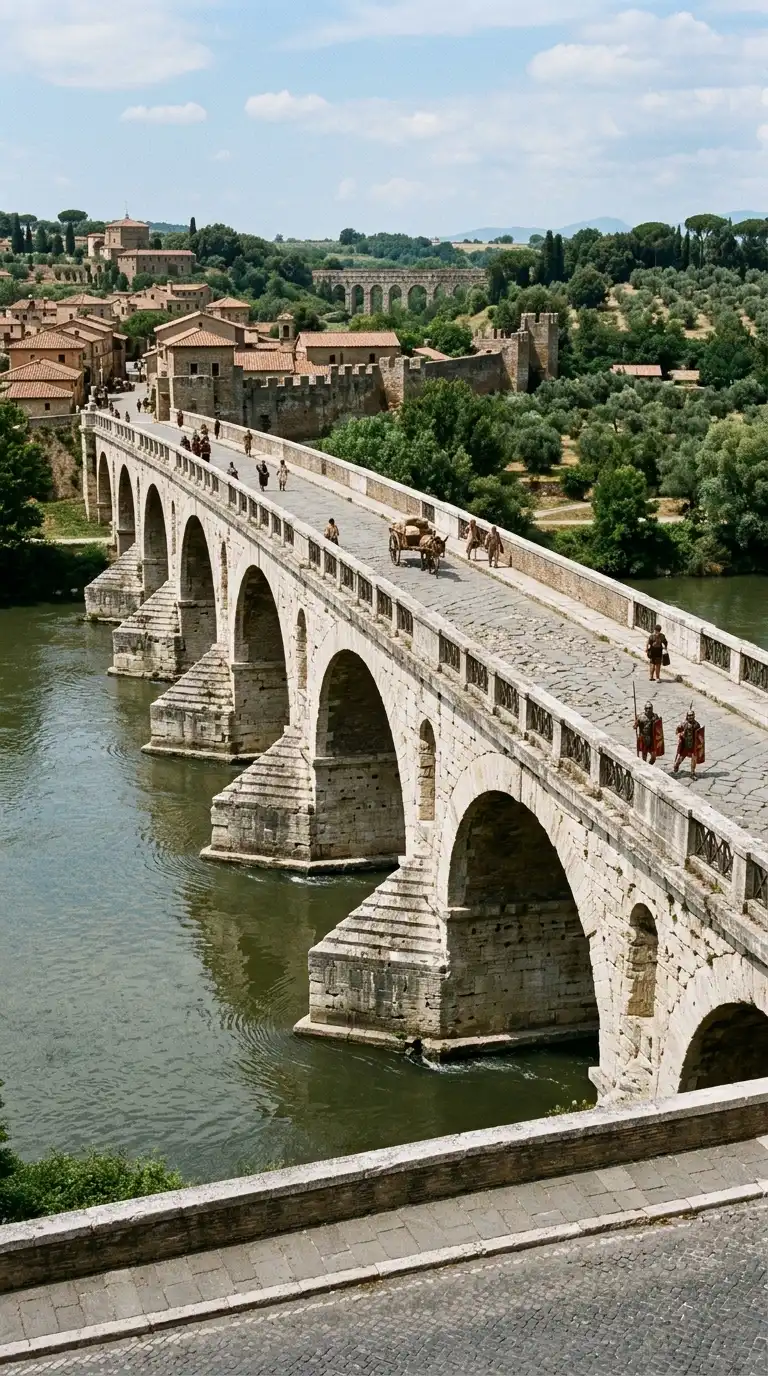
The Roman bridge is a stone arch bridge, with semicircular arches and massive piers. The piers have cutwaters (triangular projections) on the upstream side to reduce scour. The bridge deck is paved with stone.
The Pons Fabricius in Rome (62 BCE) is the defining example. The emotional effect is engineered, durable, and infrastructural.
Quick Tips
- The arches must be semicircular.
- Piers must have cutwaters on the upstream side.
- The bridge deck must be paved.
10. The Roman Triumphal Arch
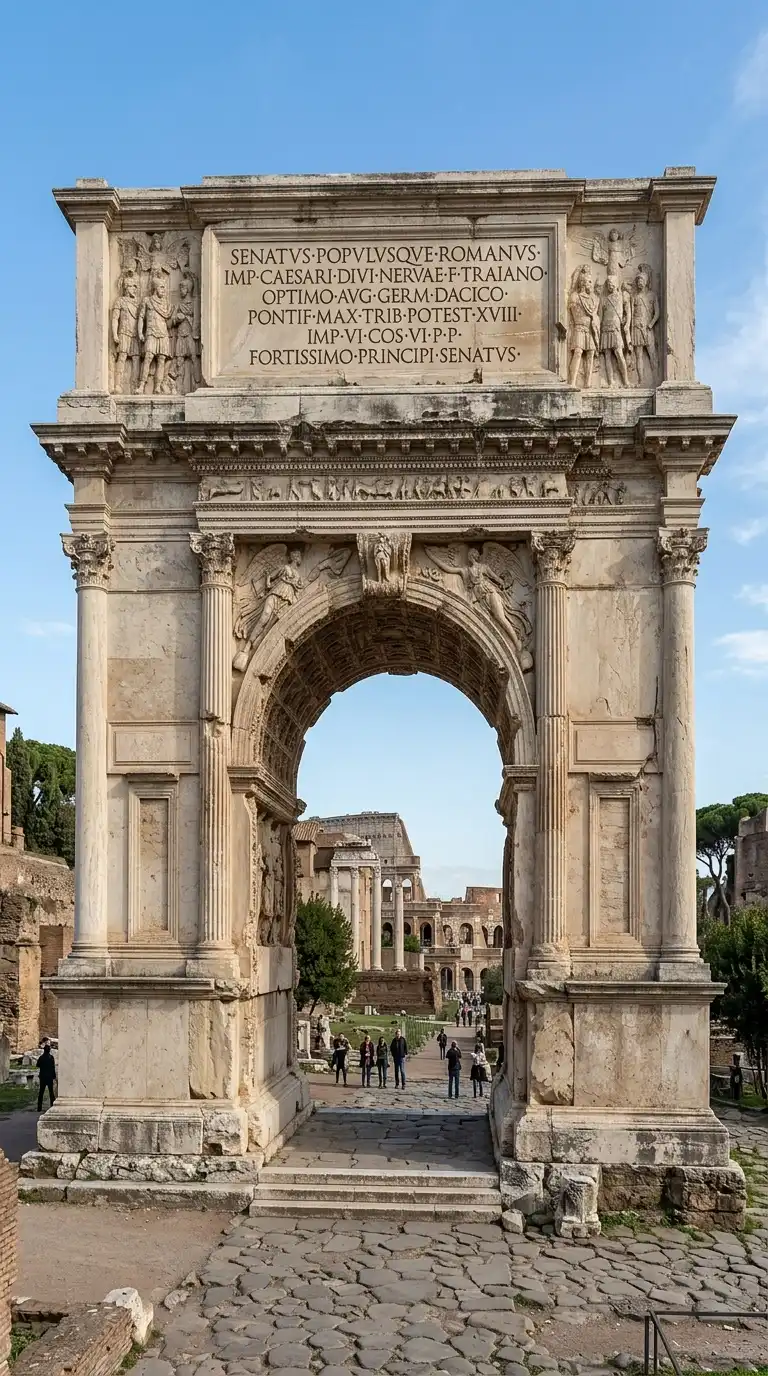
The triumphal arch is a free-standing arch commemorating a military victory. The arch has one large central opening (single arch) or three openings (triple arch). The arch is decorated with columns, pediments, and sculpted reliefs.
The Arch of Titus in Rome (81 CE) and the Arch of Constantine in Rome (315 CE) are defining examples. The emotional effect is commemorative, monumental, and heroic.
Quick Tips
- The arch should be free-standing.
- The central opening should be arched, not lintelled.
- Columns should be engaged on the piers.
11. The Roman Insula
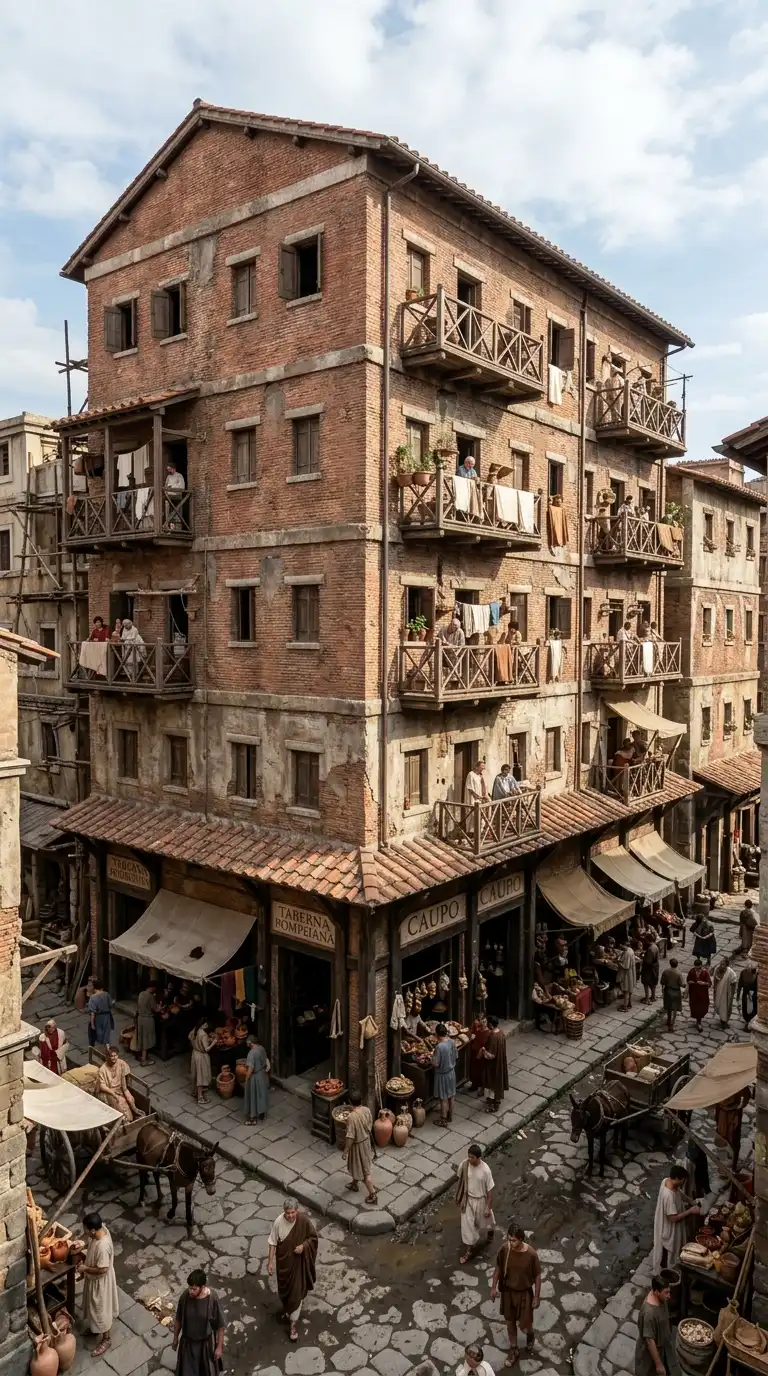
The insula was a Roman apartment block, housing the urban poor. The insula was four to seven storeys tall, built of concrete with brick facing. The ground floor held shops. The upper floors held apartments. The higher floors were cheaper and more dangerous.
The Insula of the Muses in Ostia Antica (2nd century CE) is a defining example. The emotional effect is urban, dense, and pragmatic.
Quick Tips
- The building should be four to seven storeys tall.
- The ground floor should have shops facing the street.
- The upper floors should have windows and balconies.
12. The Roman Villa
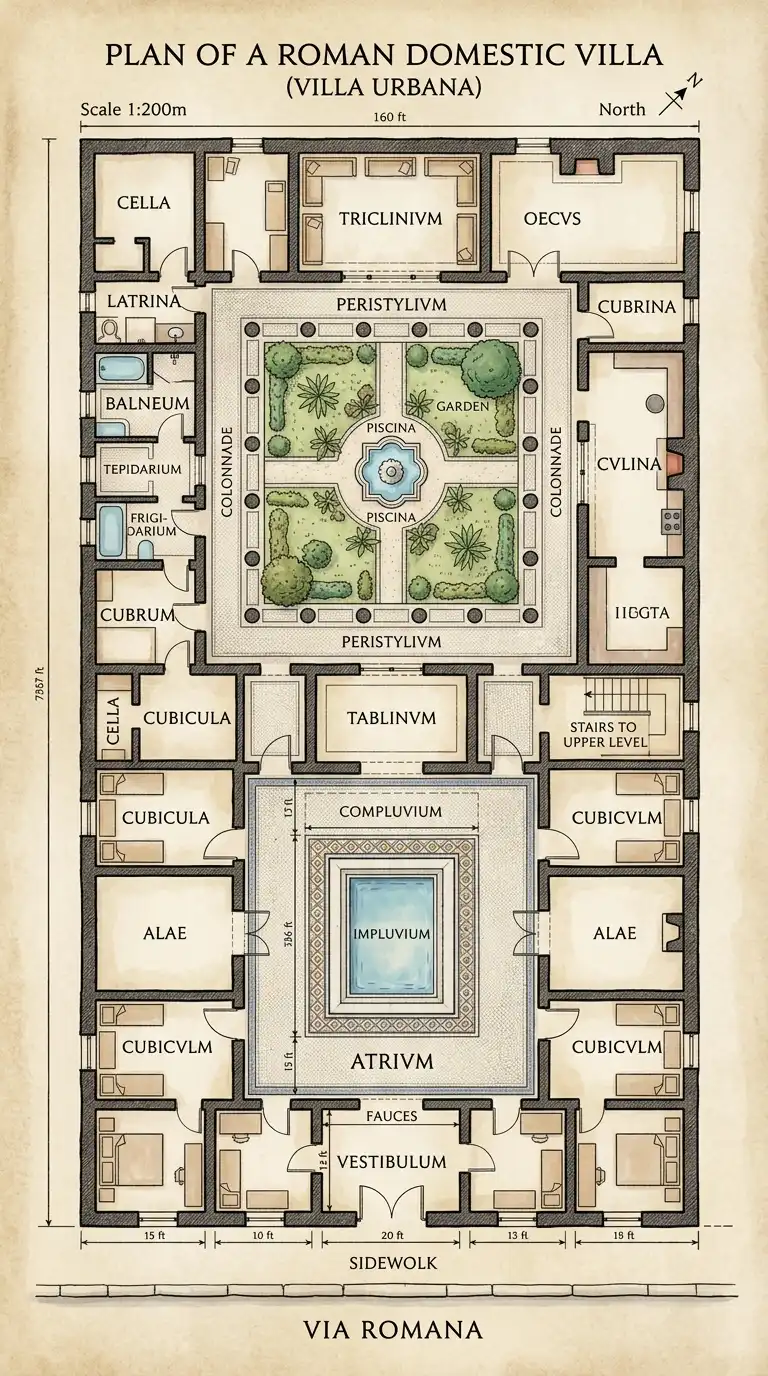
The Roman villa was a country house for the wealthy. The villa was organised around a central atrium (courtyard with a pool) and a peristyle (colonnaded garden). The rooms included triclinium (dining room), cubiculum (bedroom), and bath suite.
The Villa of the Mysteries in Pompeii (1st century BCE) is the defining example. The emotional effect is domestic, leisurely, and inward-focused.
Quick Tips
- The plan should have an atrium with an impluvium (pool).
- The plan should have a peristyle garden.
- Rooms should be organised around the atrium and peristyle.
13. The Roman Forum
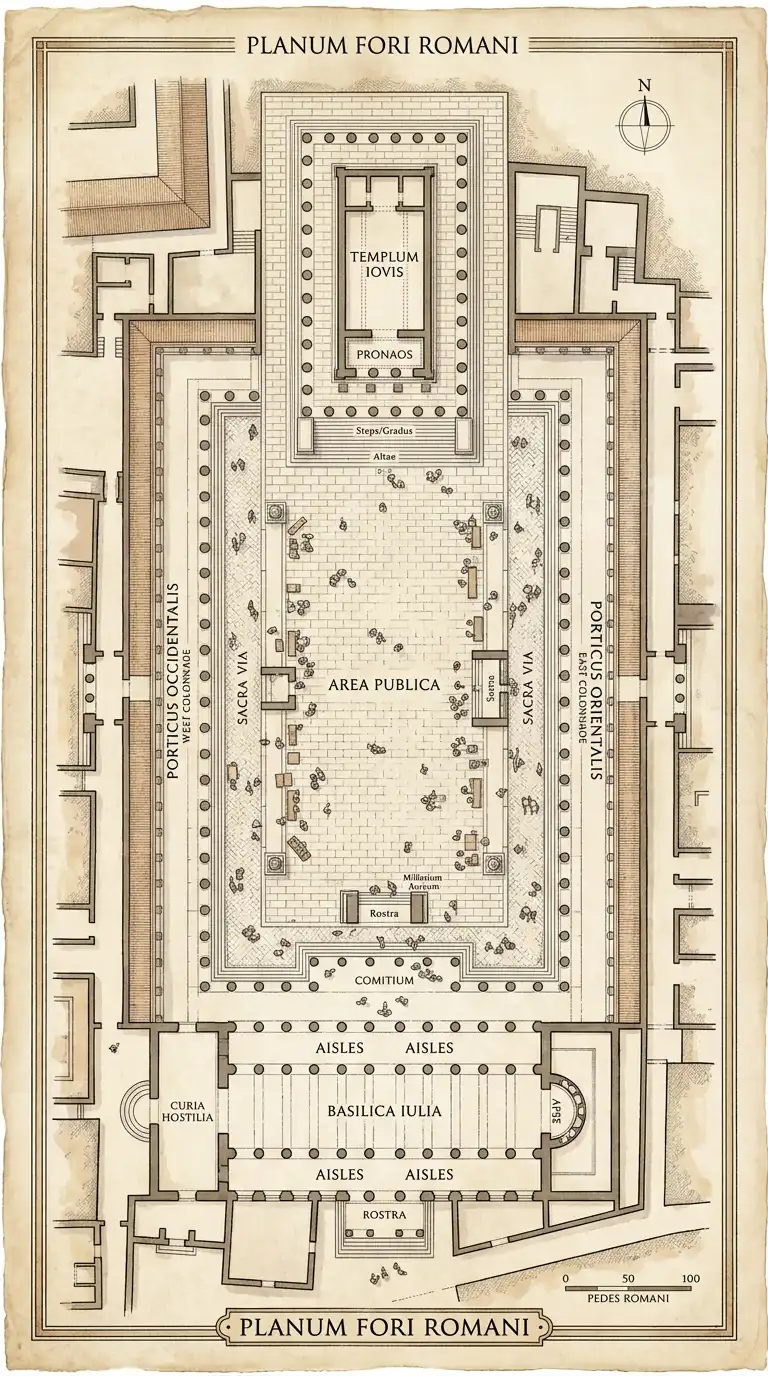
The Roman forum was the civic centre of a Roman city. The forum was a rectangular open space, surrounded by colonnades, basilicas, temples, and public buildings. The forum was the place for law, commerce, politics, and religion.
The Roman Forum in Rome (8th century BCE – 4th century CE) and the Forum of Trajan (112 CE) are defining examples. The emotional effect is civic, public, and axial.
Quick Tips
- The forum should be a rectangular open space.
- The forum should be surrounded by colonnades and public buildings.
- A temple should close the vista at one end.
14. The Roman Tomb
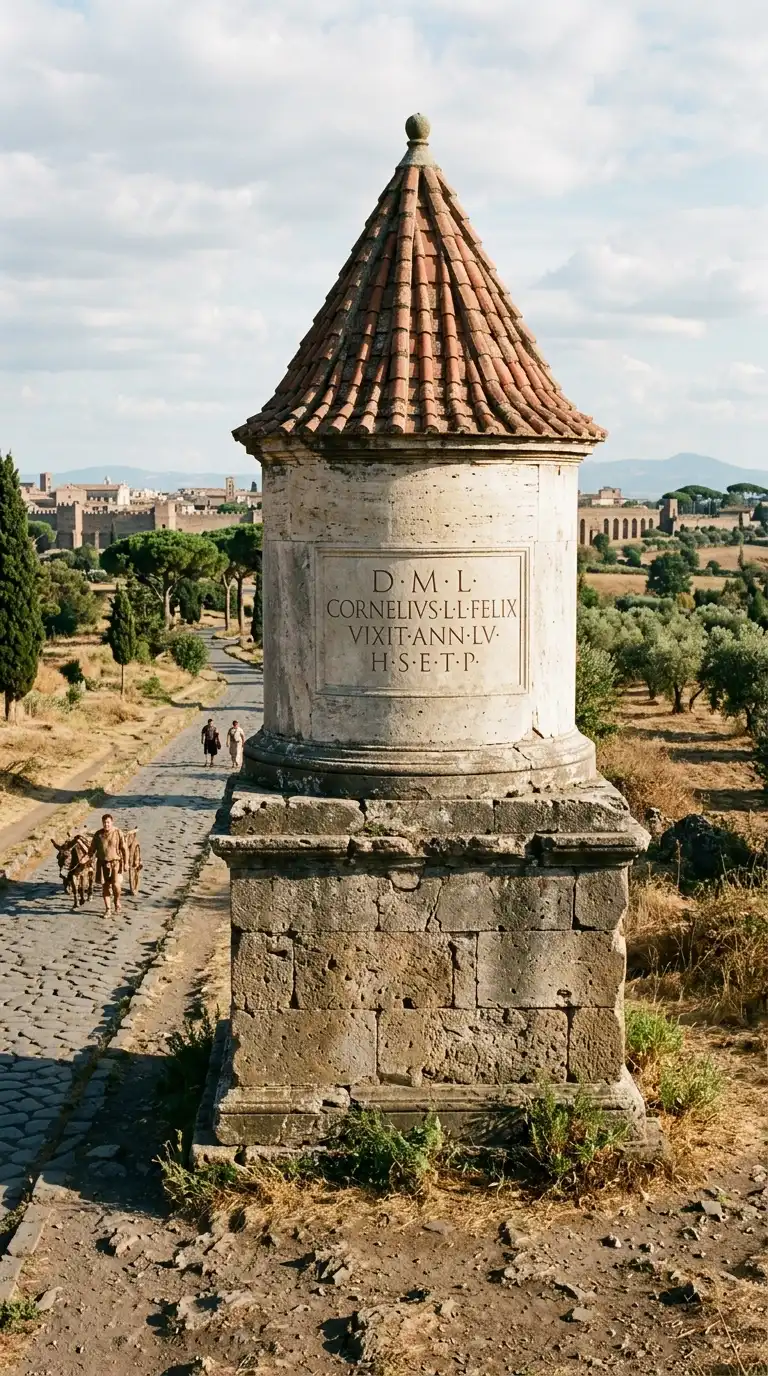
The Roman tomb is a monument to the dead, built along the roads outside the city. The tomb takes many forms: a cylinder (the Tomb of Caecilia Metella), a pyramid (the Pyramid of Cestius), or a temple. The tomb is built of concrete faced with stone or brick.
The emotional effect is commemorative, monumental, and funerary.
Quick Tips
- The tomb should be located outside the city, along a road.
- The form should be simple and geometric: cylinder, pyramid, cube.
- The tomb should have an inscription.
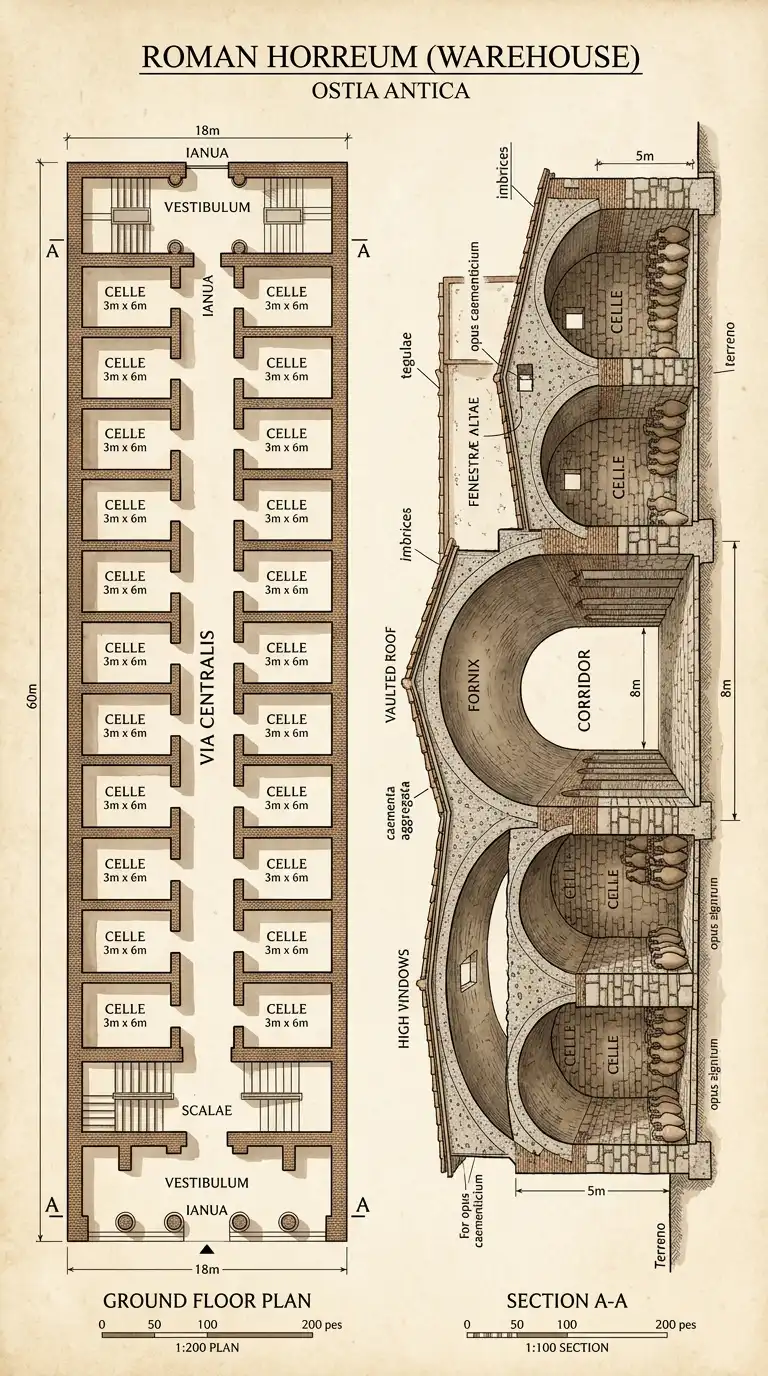
15. The Roman Warehouse (Horreum)
The Roman warehouse stored grain, olive oil, and wine. The warehouse was a long, narrow building with a central corridor and small rooms on both sides. The walls were thick for insulation. The windows were small and high. The roof was vaulted in concrete.
The Horrea Epagathiana in Ostia Antica (2nd century CE) is a defining example. The emotional effect is utilitarian, efficient, and infrastructural.
Quick Tips
- The plan should be long and narrow with a central corridor.
- Small rooms should open off the corridor on both sides.
- Windows should be small and high.
Final Thoughts
Roman architecture is not just the origin of the arch, the dome, and concrete. It is the origin of the idea that architecture can serve everyone — not just priests and kings. The Romans built bathhouses for the poor, aqueducts for the thirsty, and amphitheatres for the masses. Roman architecture is pragmatic, engineered, and profoundly civic.
These 15 Roman designs are not mutually exclusive. A basilica can have a dome. An amphitheatre can use the arch. An insula can be built with concrete. The best Roman architecture is not the most decorated — it is the most intelligent. It uses new materials and new structures to create spaces that had never existed before. That is the Roman legacy.