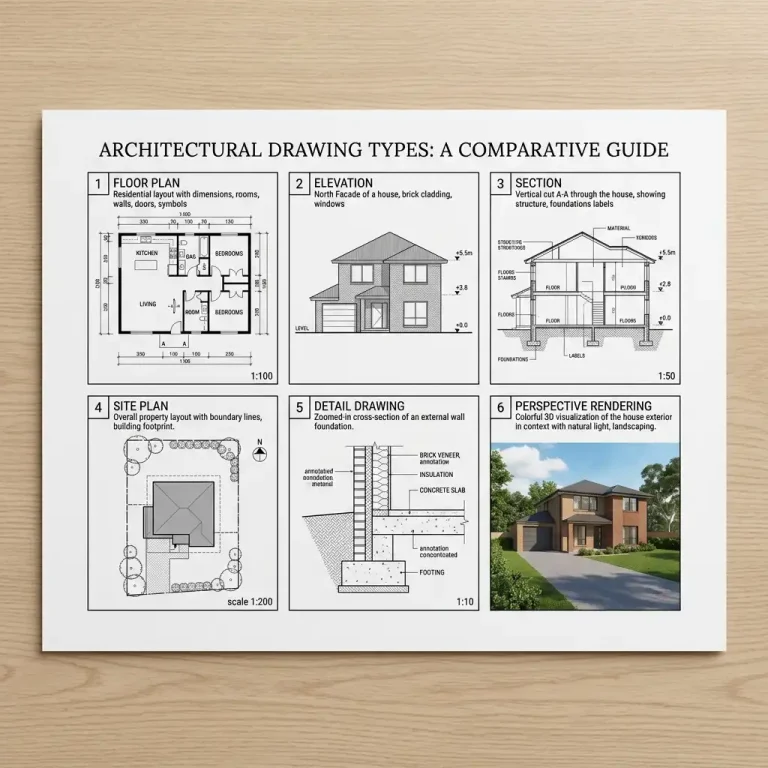
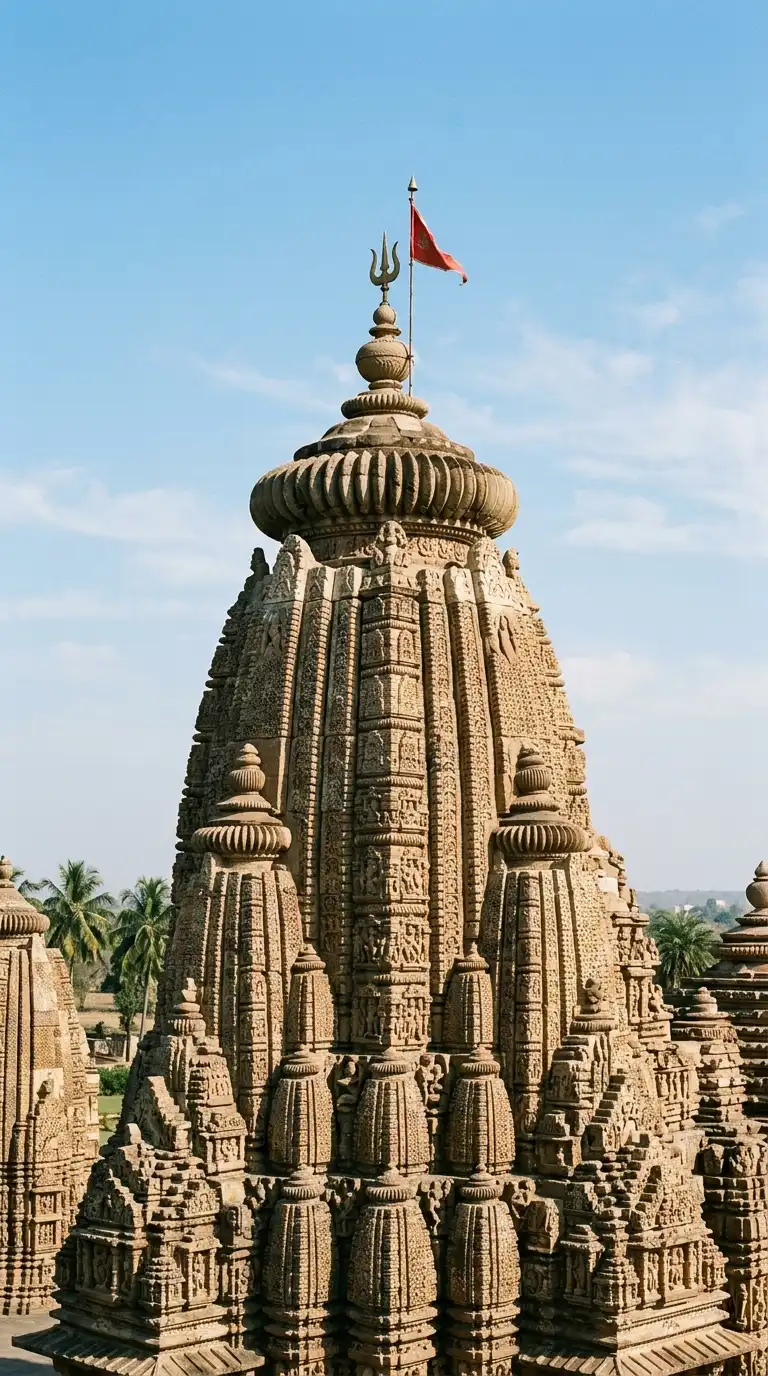
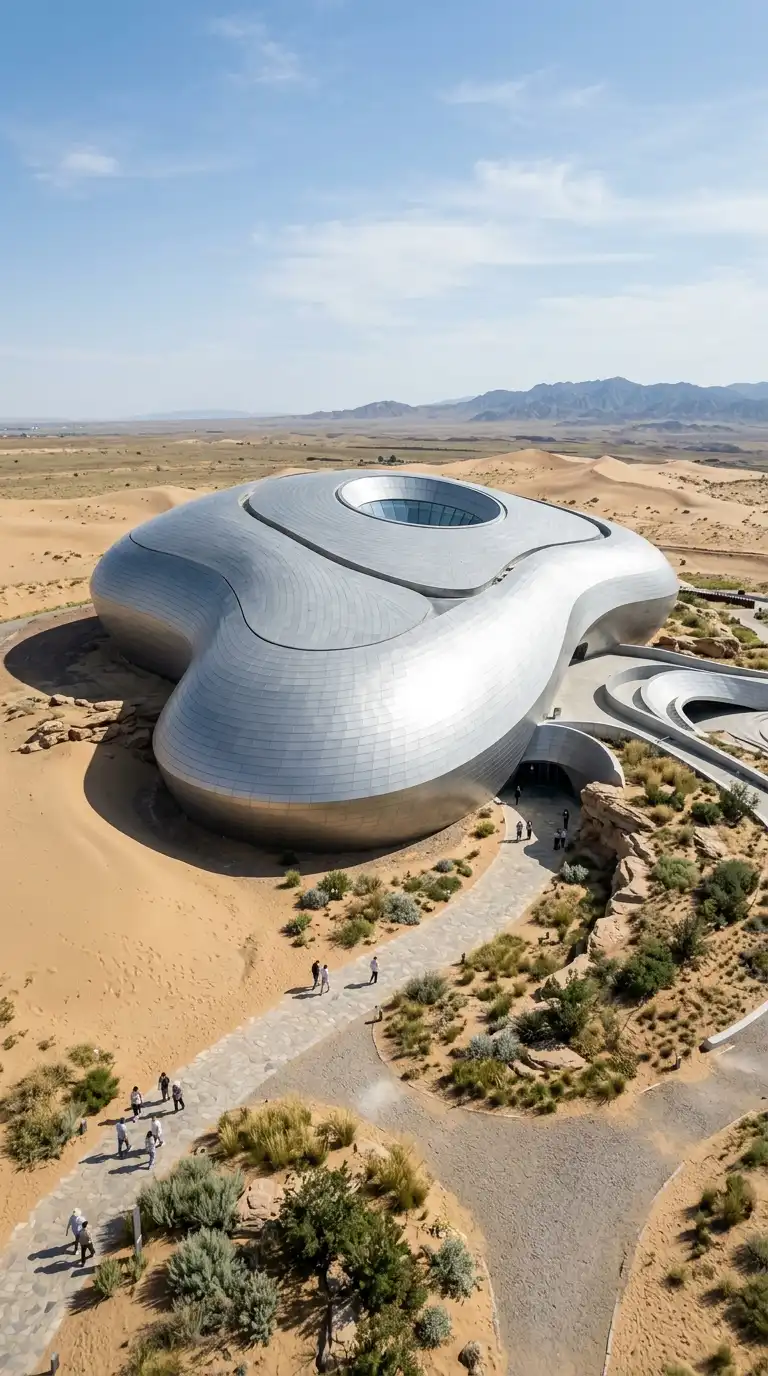
Architecture drawing is not just a tool for construction — it is an art form. A well-drafted plan, a dramatic perspective, or a delicate section drawing can be beautiful on its own terms. Unlike technical documentation, which prioritises clarity and precision, architectural drawing art embraces line, shadow, texture, and composition.
These 12 architecture drawing art ideas span techniques, subjects, and artistic approaches. Each idea includes defining characteristics, artistic principles, and applications.
1. The Dramatic Perspective
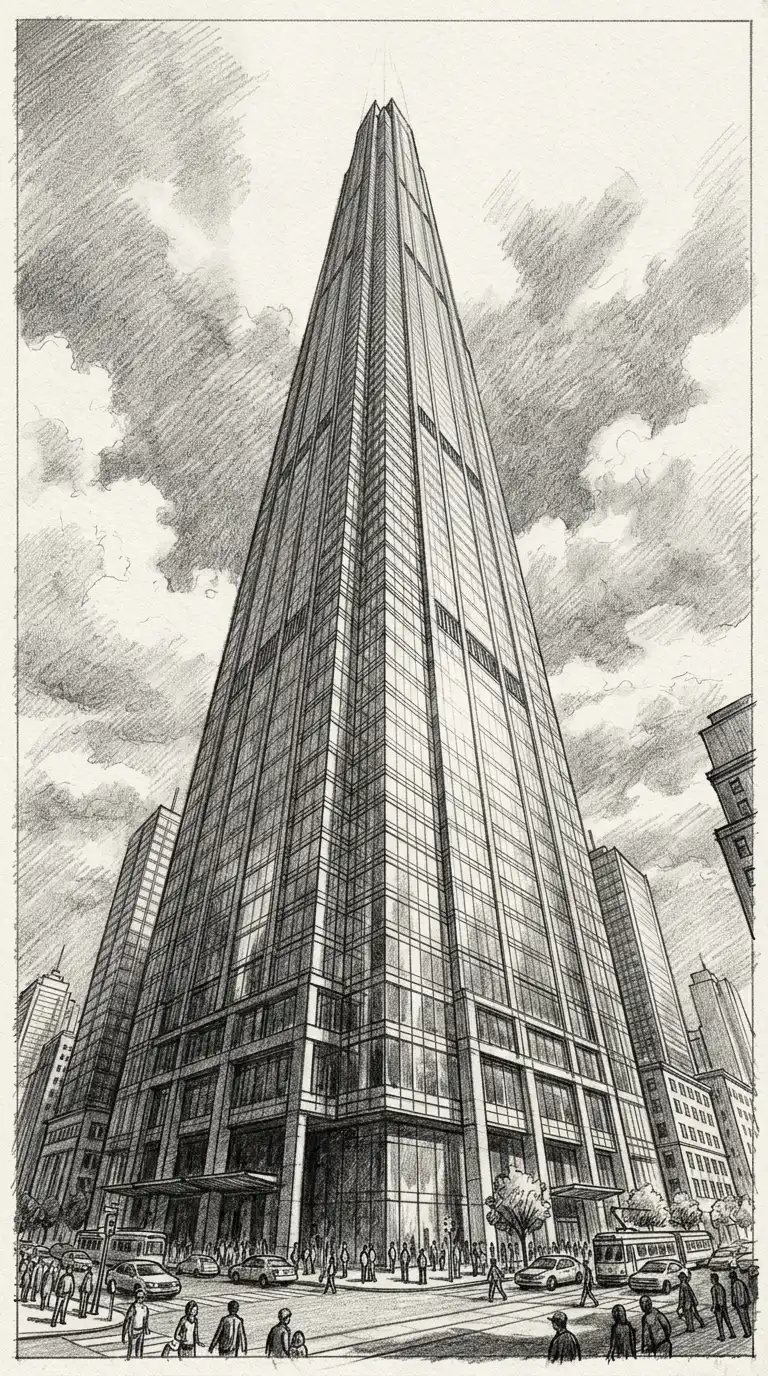
The dramatic perspective uses a low or high viewpoint to create a sense of drama and scale. A worm’s-eye view makes the building soar. A bird’s-eye view makes the building recede. The perspective is exaggerated, not measured.
This drawing type is ideal for competition entries and artistic presentations. The emotional effect is dramatic, immersive, and heroic.
Quick Tips
- Use a three-point perspective for maximum drama.
- Exaggerate the vanishing points — place them close together.
- Add figures for scale.
2. The Exploded Axonometric
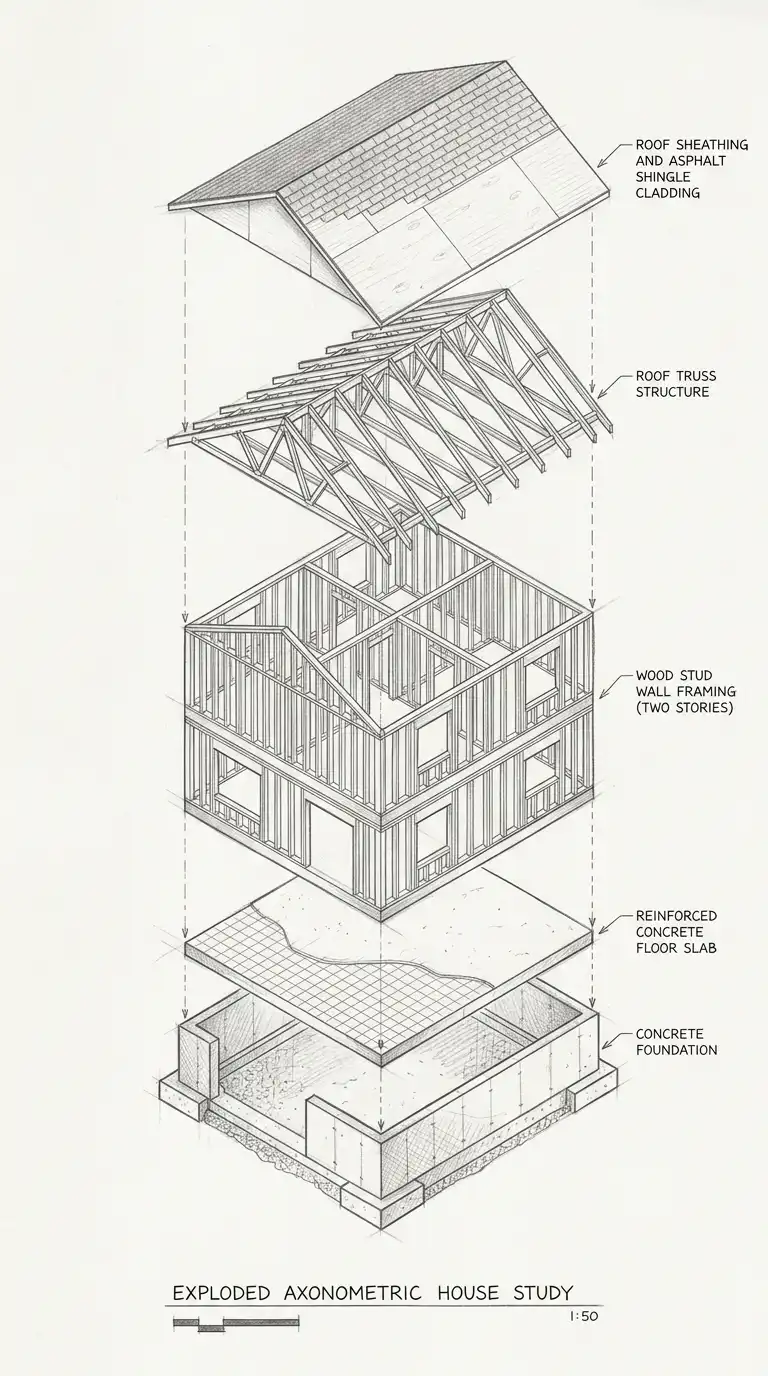
The exploded axonometric takes a building apart layer by layer. Floors, walls, roof, and structure float apart along a vertical or diagonal axis. The drawing shows how the building is assembled.
This drawing type is both technical and artistic. The emotional effect is technical, dramatic, and educational.
Quick Tips
- Space the layers evenly for visual rhythm.
- Use leader lines to connect components.
- Keep the explosion direction consistent.
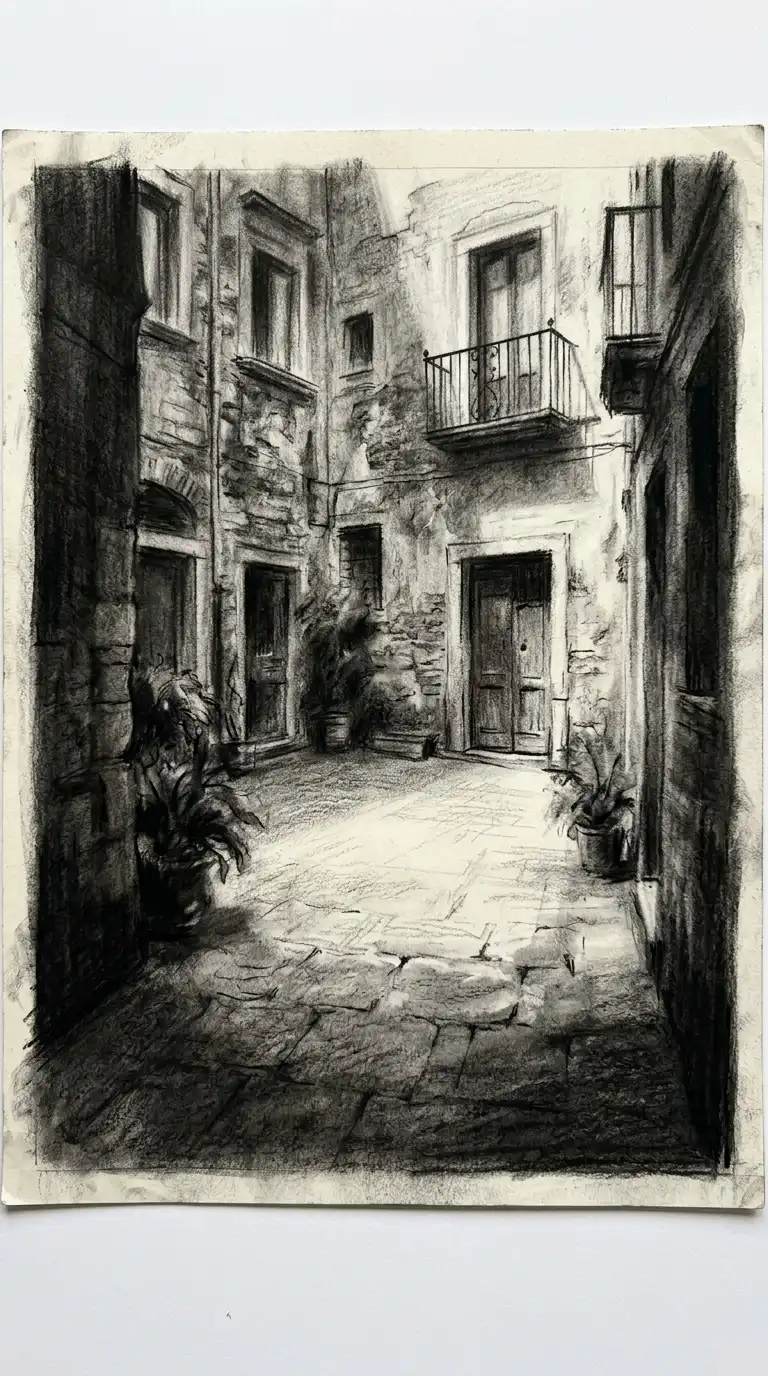
3. The Charcoal Shadow Study
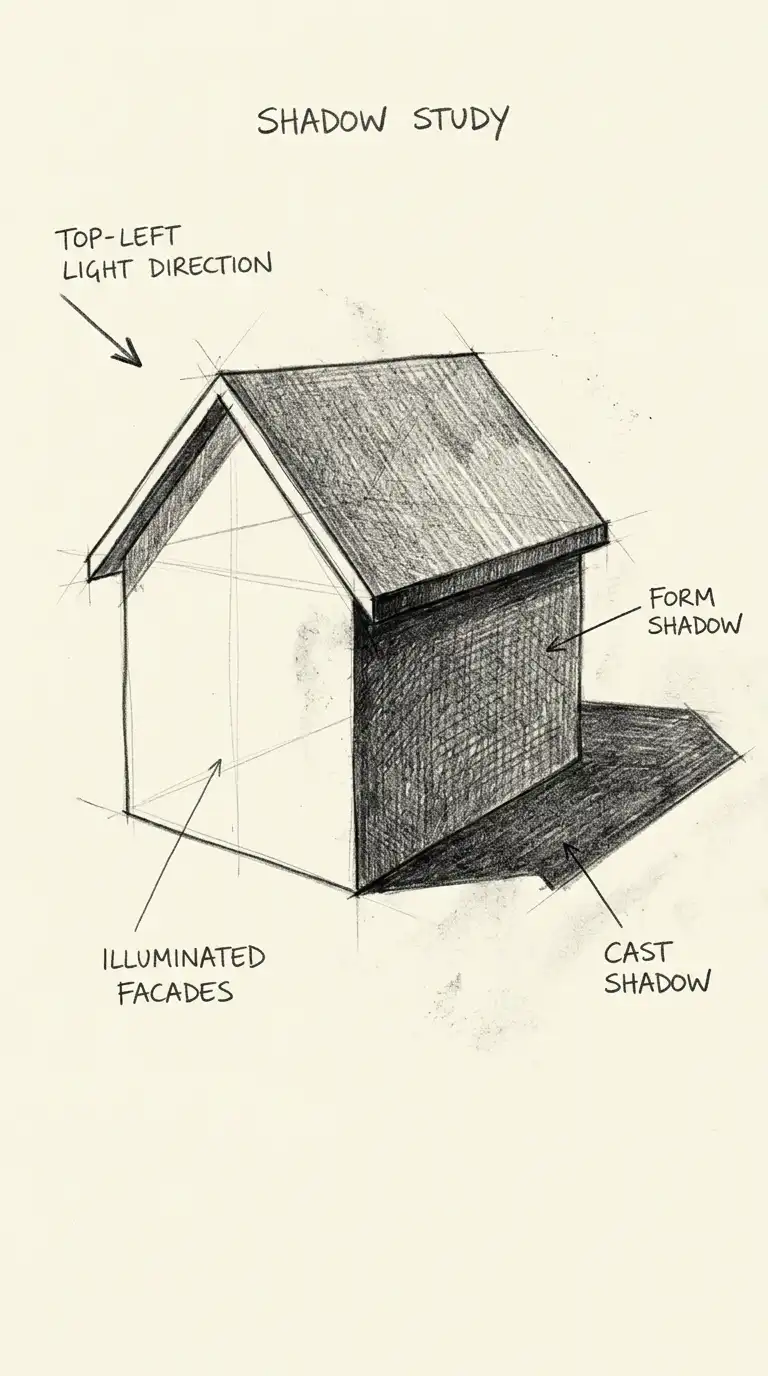
The charcoal shadow study focuses on light and shadow, not on line. The drawing is made with soft charcoal or graphite powder, smudged and erased. The building emerges from the shadows. There are few hard lines — only values.
This drawing type is ideal for studying light and atmosphere. The emotional effect is dramatic, atmospheric, and tonal.
Quick Tips
- Use soft charcoal (4B-6B) for dark values.
- Blend with a stump or tissue for smooth transitions.
- Erase highlights with a kneaded eraser.
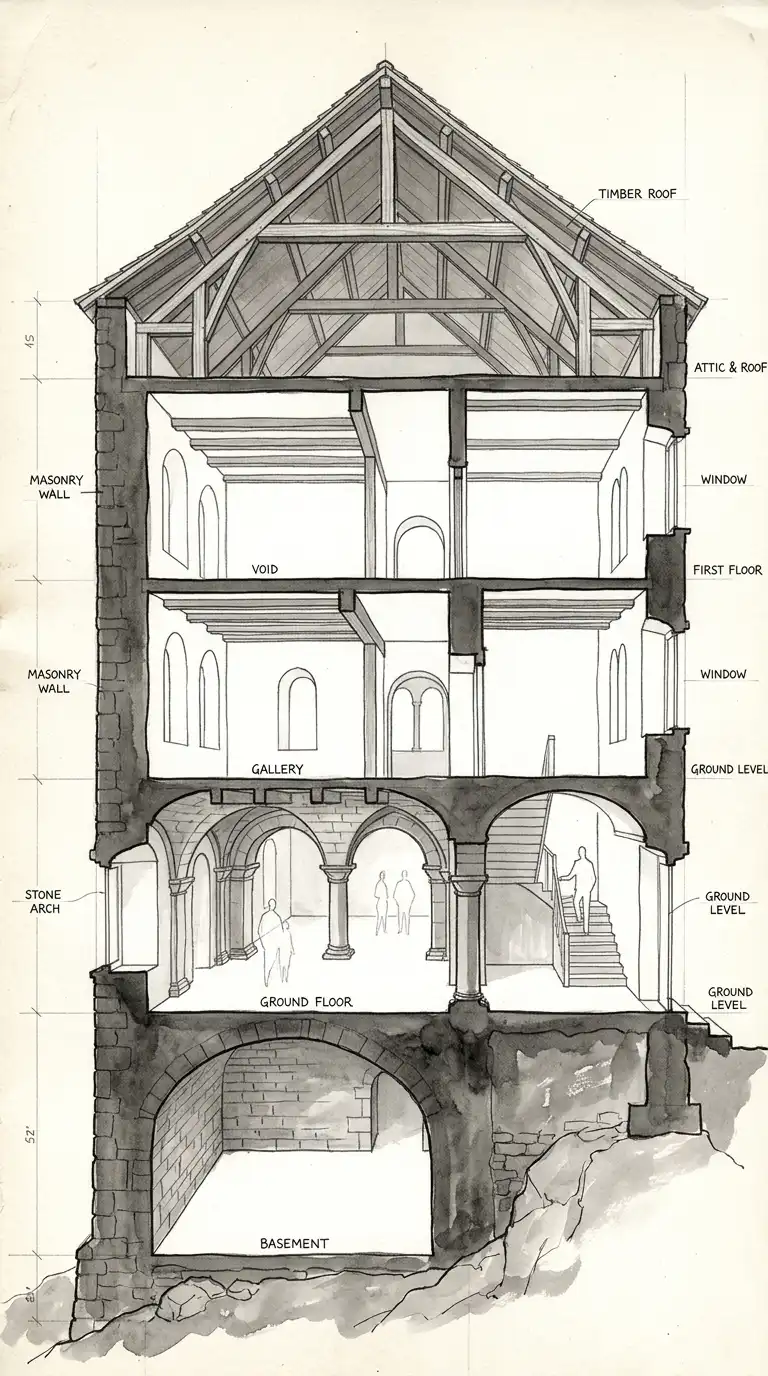
4. The Ink Wash Section
The ink wash section combines line drawing with diluted ink washes. The section is drawn in waterproof ink. The cut surfaces are filled with a grey ink wash. The spaces beyond are left white or lightly washed.
This drawing type is ideal for sections and cutaway drawings. The emotional effect is graphic, tonal, and dramatic.
Quick Tips
- Use waterproof ink for the lines.
- Dilute ink in a palette for different grey values.
- Apply the wash with a brush, not a pen.
5. The Plan as Pattern
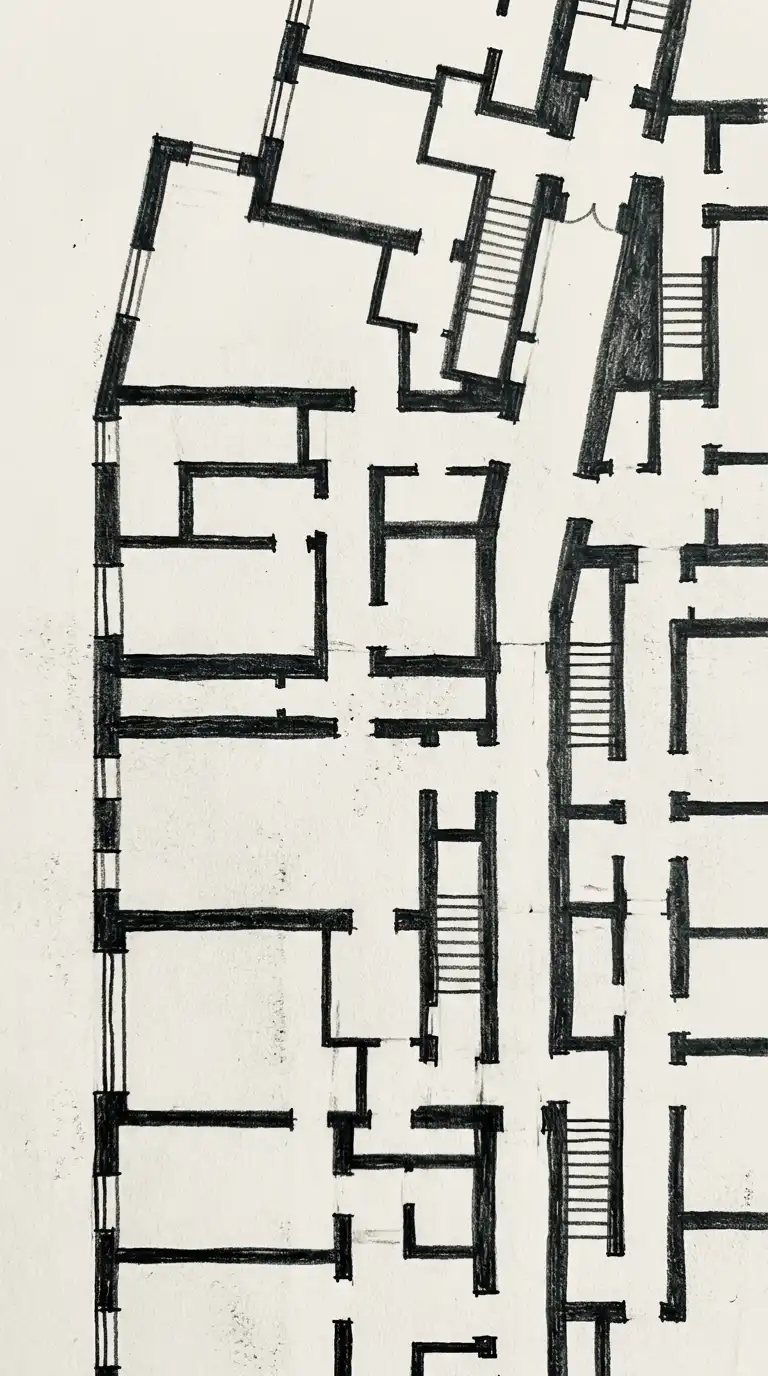
The plan as pattern treats the floor plan as an abstract composition. The plan is cropped tight, removing context. The walls become thick black lines. The openings become white gaps. The drawing becomes a pattern of black and white.
This drawing type is ideal for posters and covers. The emotional effect is abstract, graphic, and rhythmic.
Quick Tips
- Crop the plan to an interesting fragment.
- Use solid black for cut walls.
- Remove all labels, dimensions, and notes.
6. The White on Black Drawing
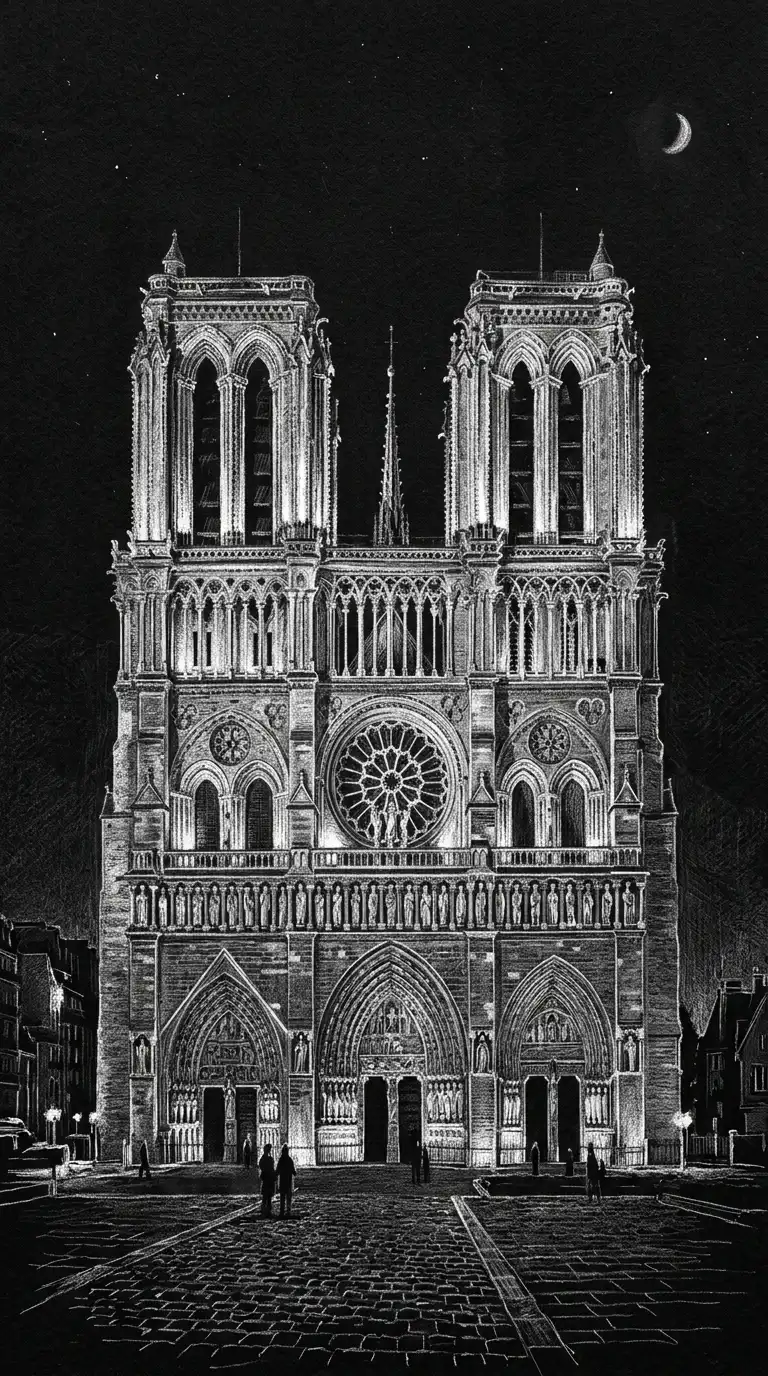
The white on black drawing reverses the usual relationship of line and ground. The paper is black. The drawing is white. White lines trace the building. The effect is luminous and dramatic.
This drawing type is ideal for night scenes and dramatic presentations. The emotional effect is luminous, dramatic, and inverted.
Quick Tips
- Use white pencil, chalk, or gel pen on black paper.
- Leave large areas of black for contrast.
- Build up white in layers for highlights.
7. The Figure-Ground Plan
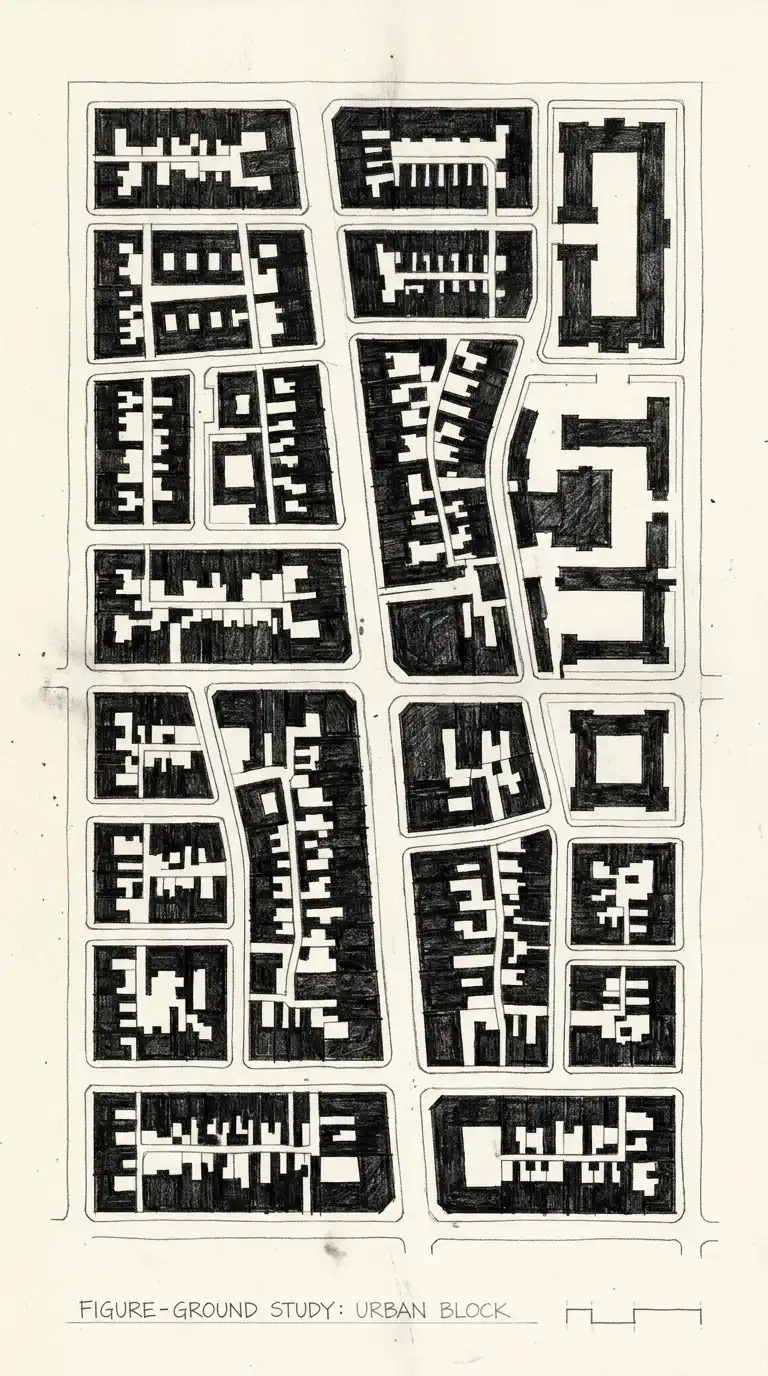
The figure-ground plan shows buildings as solid black masses and open space as white. The drawing is a map of solid and void. The pattern of black and white reveals the urban structure.
This drawing type is ideal for urban analysis and master planning. The emotional effect is graphic, abstract, and urban.
Quick Tips
- All buildings must be solid black.
- All open space must be white.
- No internal details — no windows, no courtyards.
8. The Hand-Lettered Drawing
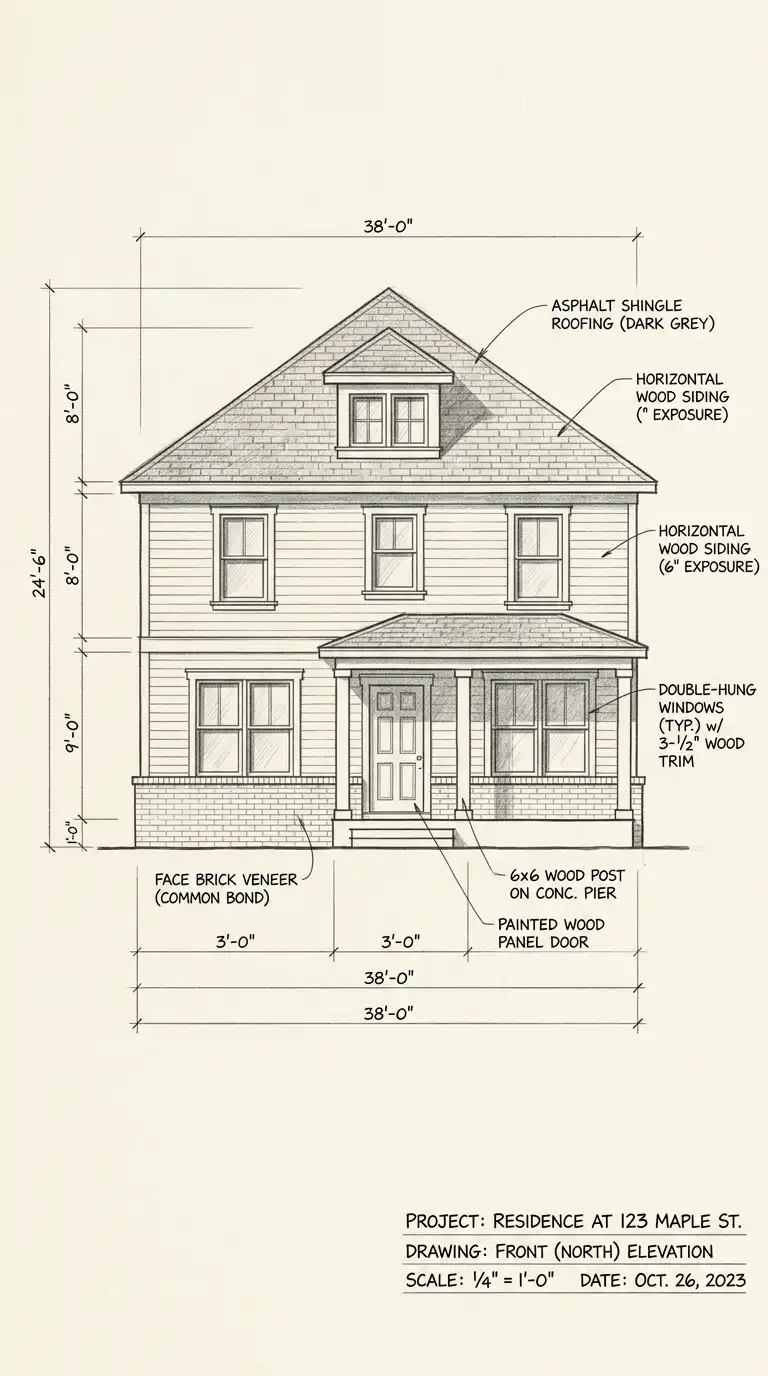
The hand-lettered drawing integrates text into the drawing as a graphic element. Notes, dimensions, and labels are drawn by hand, not typeset. The handwriting becomes part of the composition.
This drawing type is ideal for sketchbooks and process drawings. The emotional effect is personal, authentic, and crafted.
Quick Tips
- Write neatly — hand lettering is part of the aesthetic.
- Use consistent letter height and spacing.
- Integrate text into the drawing, not just in the margin.
9. The Layered Tracing Paper Drawing
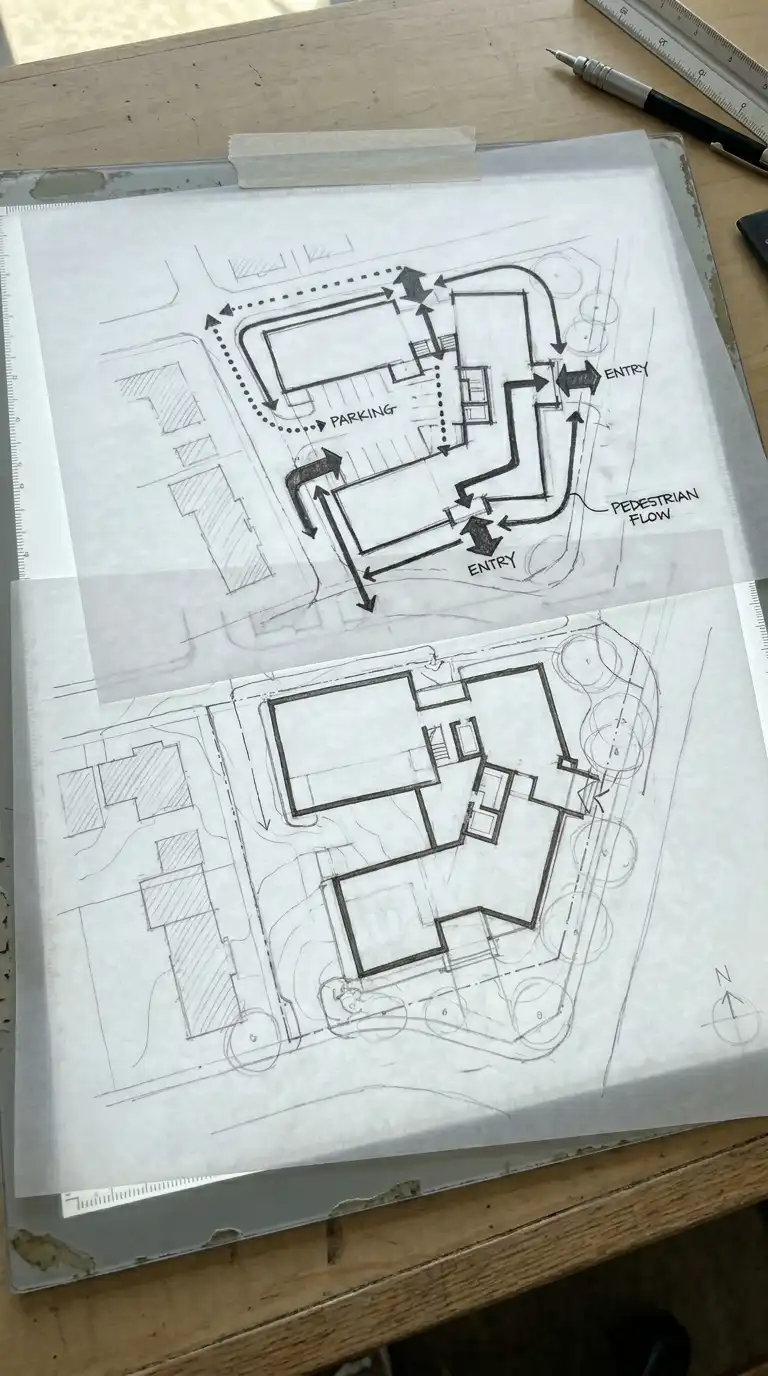
The layered tracing paper drawing uses multiple sheets of tracing paper, each with a different layer of information. One sheet has the site plan. Another sheet has the building massing. Another sheet has circulation arrows. The layers are overlaid to see the whole.
This drawing type is ideal for process and analysis. The emotional effect is layered, transparent, and analytical.
Quick Tips
- Use tracing paper or vellum.
- Draw each layer on a separate sheet.
- Overlay the sheets to see the complete drawing.
10. The Collage Drawing
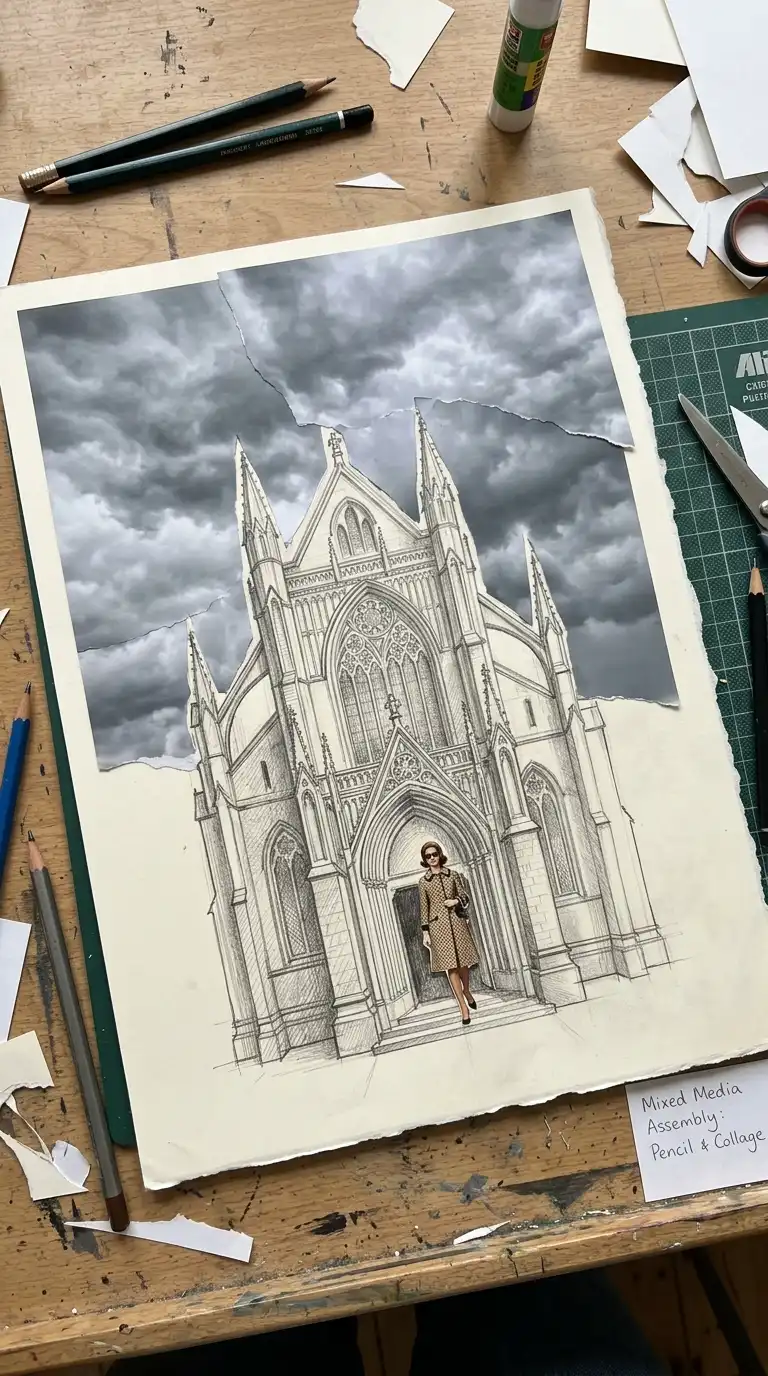
The collage drawing combines hand drawing with found images, textures, and photographs. A drawn building is collaged with a photograph of a sky, a texture of brick, a cut-out figure. The drawing is assembled, not drawn from scratch.
This drawing type is ideal for conceptual presentations and speculative projects. The emotional effect is layered, surprising, and poetic.
Quick Tips
- Use a hand-drawn base for the building.
- Collage found images for context and atmosphere.
- Glue or tape elements physically, or scan and assemble digitally.
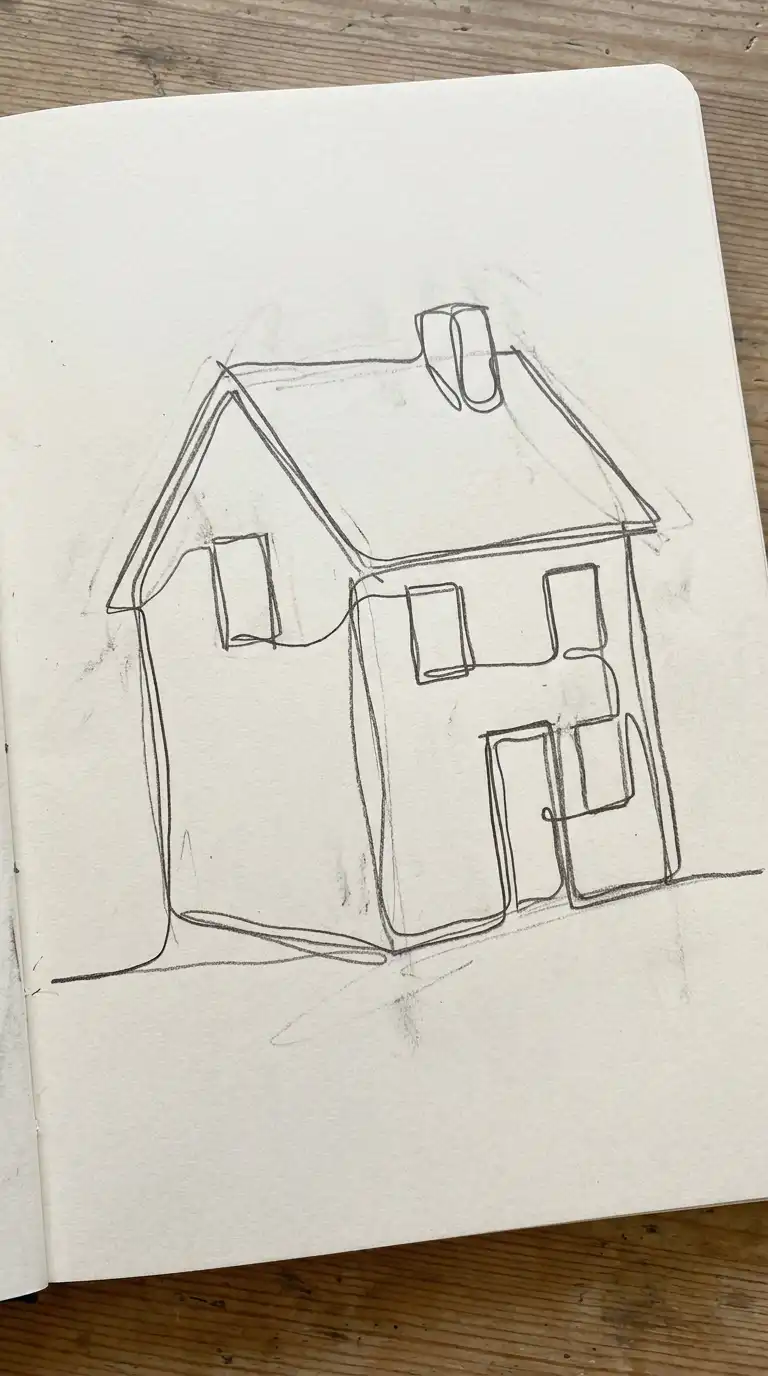
11. The Continuous Line Drawing
The continuous line drawing is a single, unbroken line that traces the entire building. The pencil never lifts from the paper. The line is loose and energetic. The drawing is minimal and expressive.
This drawing type is ideal for sketchbooks and quick studies. The emotional effect is energetic, minimal, and continuous.
Quick Tips
- Do not lift the pencil from the paper.
- Draw quickly — hesitation shows.
- Accept mistakes as part of the drawing.
12. The Ghosted Drawing
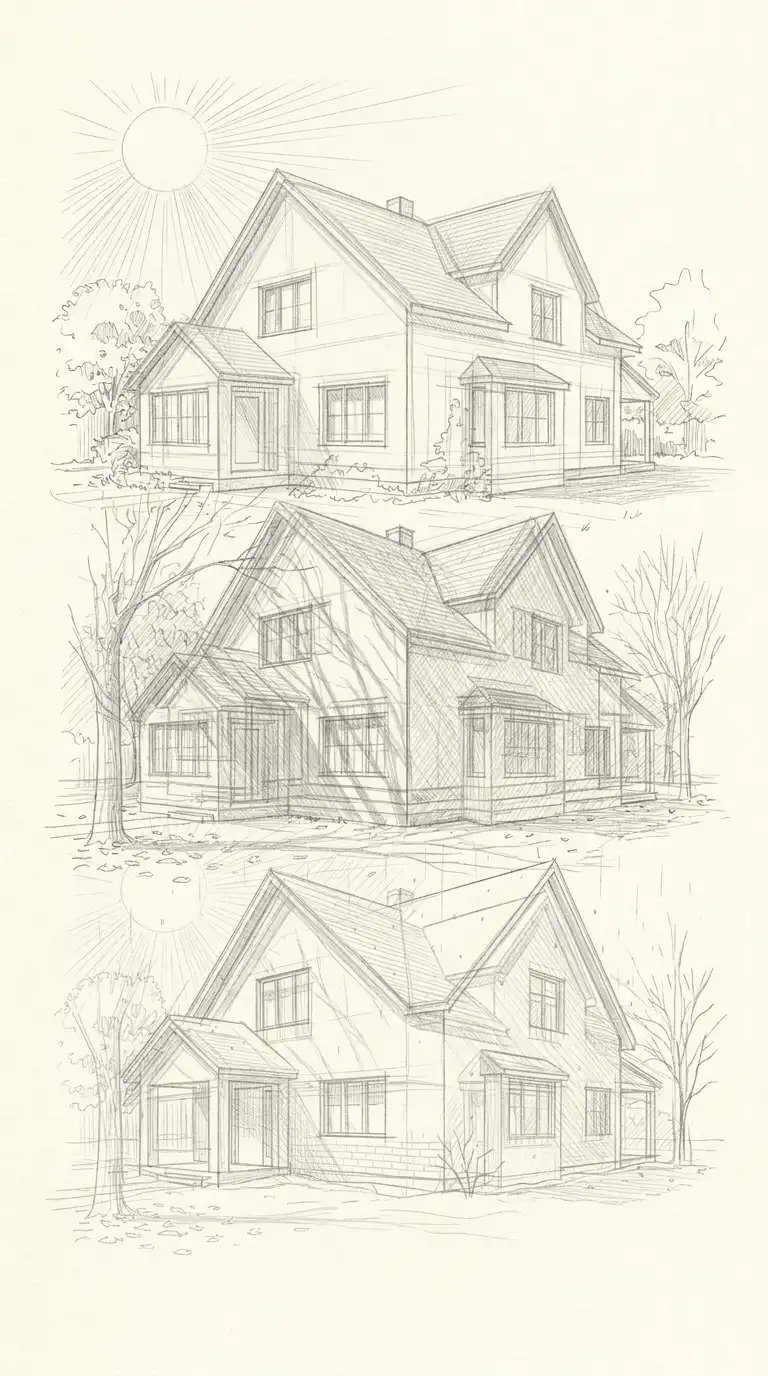
The ghosted drawing shows multiple positions or states of the same building in one image. A house at three different times of day. A building in plan, section, and elevation overlaid. The same view in summer and winter. The lines are thin and transparent.
This drawing type is ideal for showing change over time. The emotional effect is layered, temporal, and ghostly.
Quick Tips
- Use thin, light lines for all layers.
- Differentiate layers by line weight or value, not colour.
- Keep the drawing transparent — layers should not obscure each other.
Final Thoughts
Architectural drawing is not a neutral technical exercise. It is a way of seeing, a way of thinking, and a way of expressing. A dramatic perspective can make a building heroic. A charcoal shadow study can make a space atmospheric. A plan as pattern can make a diagram beautiful.
These 12 drawing art ideas are not mutually exclusive. An ink wash section can be hand-lettered. A white on black drawing can be a ghosted drawing. A continuous line drawing can be a dramatic perspective. The best architectural drawings are not the most accurate — they are the most expressive. They communicate not just information, but emotion.