Gothic architecture is one of the most dramatic and expressive building styles in Western history. Emerging in 12th-century France and flourishing until the 16th century, Gothic design transformed cathedrals, castles, and civic buildings with its characteristic pointed arches, ribbed vaults, flying buttresses, and spectacular stained glass. Drawing Gothic architecture requires attention to verticality, tracery, shadow, and structural expression.
These 9 Gothic architecture drawings span structural systems, ornamental details, and complete building elevations. Each drawing includes defining characteristics, line techniques, and shadow principles.
1. The Pointed Arch
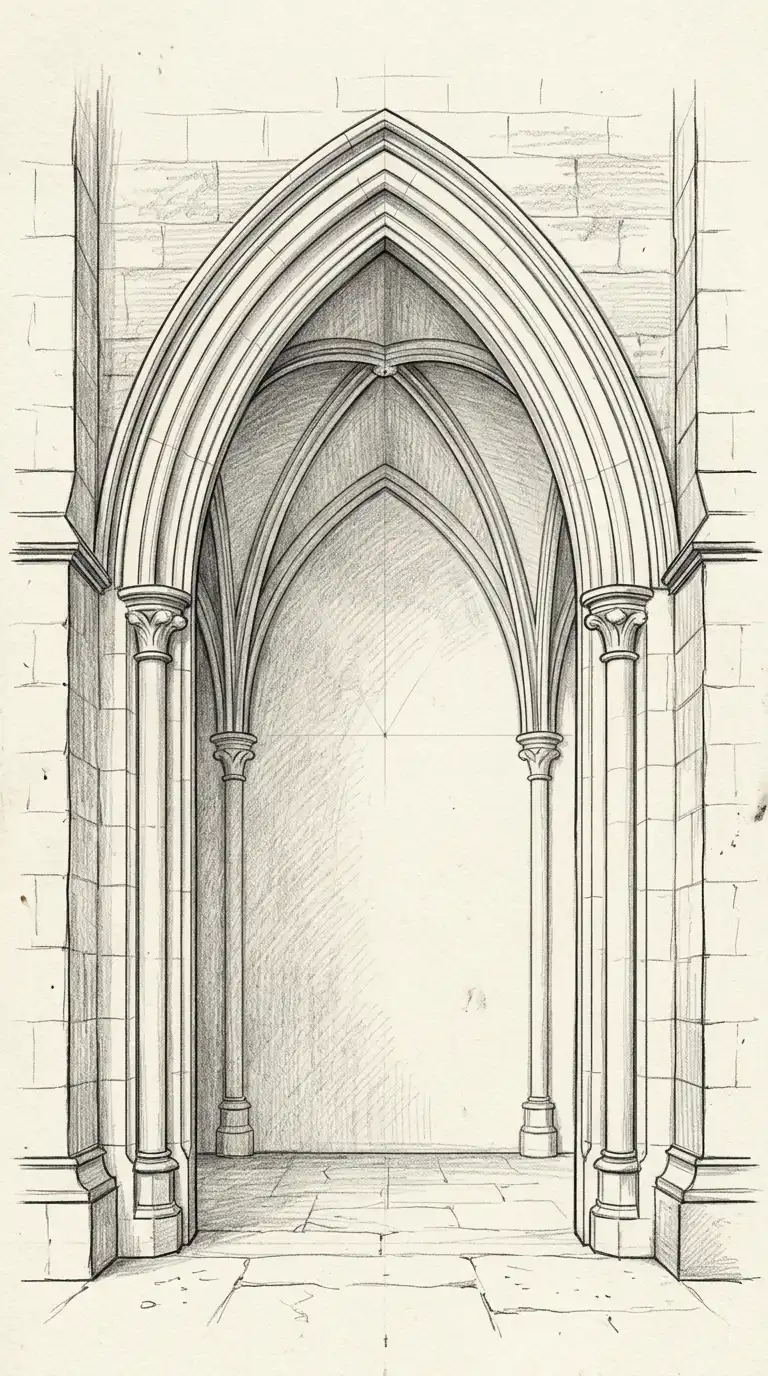
The pointed arch is the defining structural element of Gothic architecture. Unlike the round Roman arch, the pointed arch rises to a sharp point at the centre. It distributes weight more efficiently, allowing taller walls and thinner columns. The arch is often decorated with tracery or cusping.
This drawing focuses on the geometry of the arch: two circular arcs meeting at a point. The emotional effect is vertical, aspiring, and structural.
Quick Tips
- The point must be sharp, not rounded.
- The arch should be taller than it is wide.
- Use thin, precise lines for the arch itself, thicker lines for the surround.
2. The Ribbed Vault
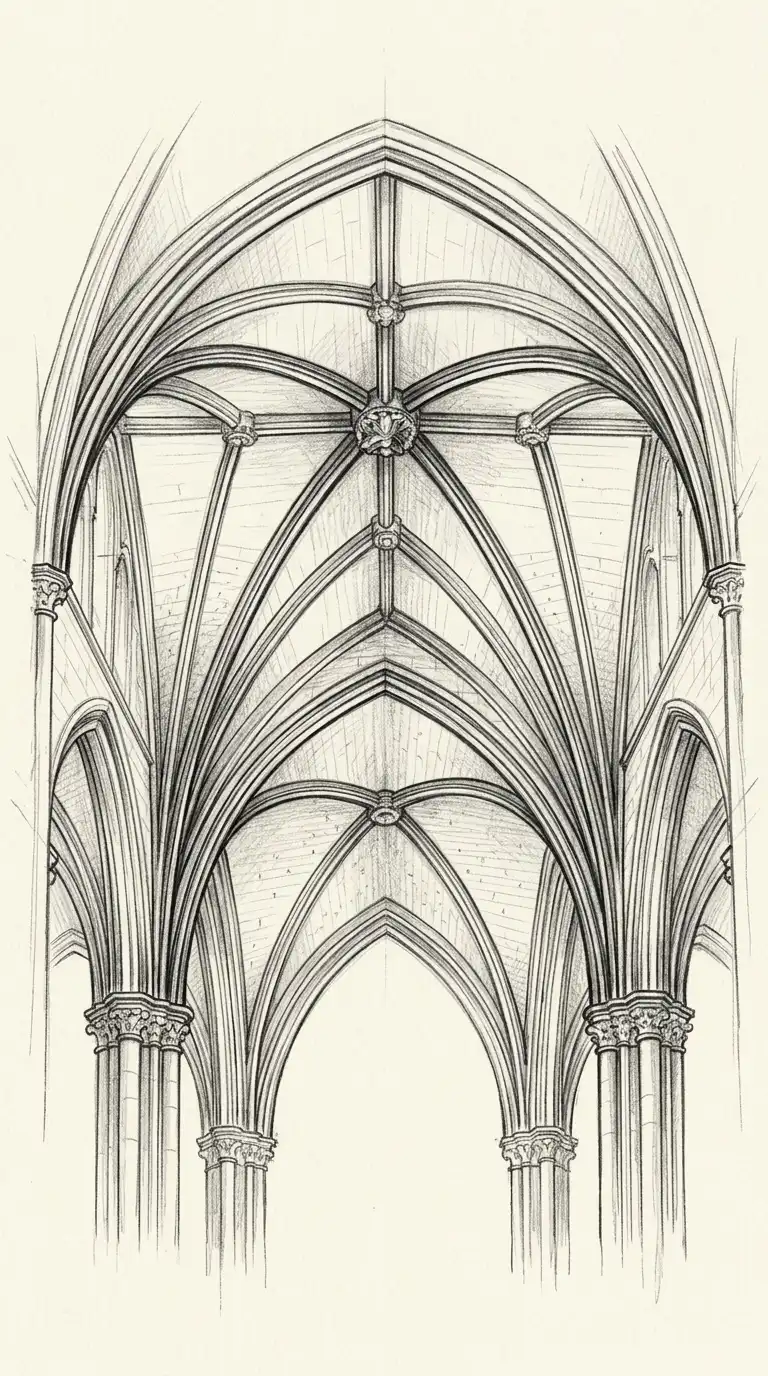
The ribbed vault is a web of stone ribs crossing the ceiling. The ribs spring from columns or corbels and meet at bosses (carved keystones). The ribs create a skeletal framework that supports thin stone panels. The ribbed vault is the most distinctive interior feature of Gothic architecture.
This drawing requires careful perspective or axonometric projection to show the ribs springing from columns and crossing at the centre. The emotional effect is skeletal, structural, and celestial.
Quick Tips
- Ribs should spring from columns or corbels.
- Bosses should be at the intersections.
- Use heavier lines for the ribs, lighter lines for the panels.
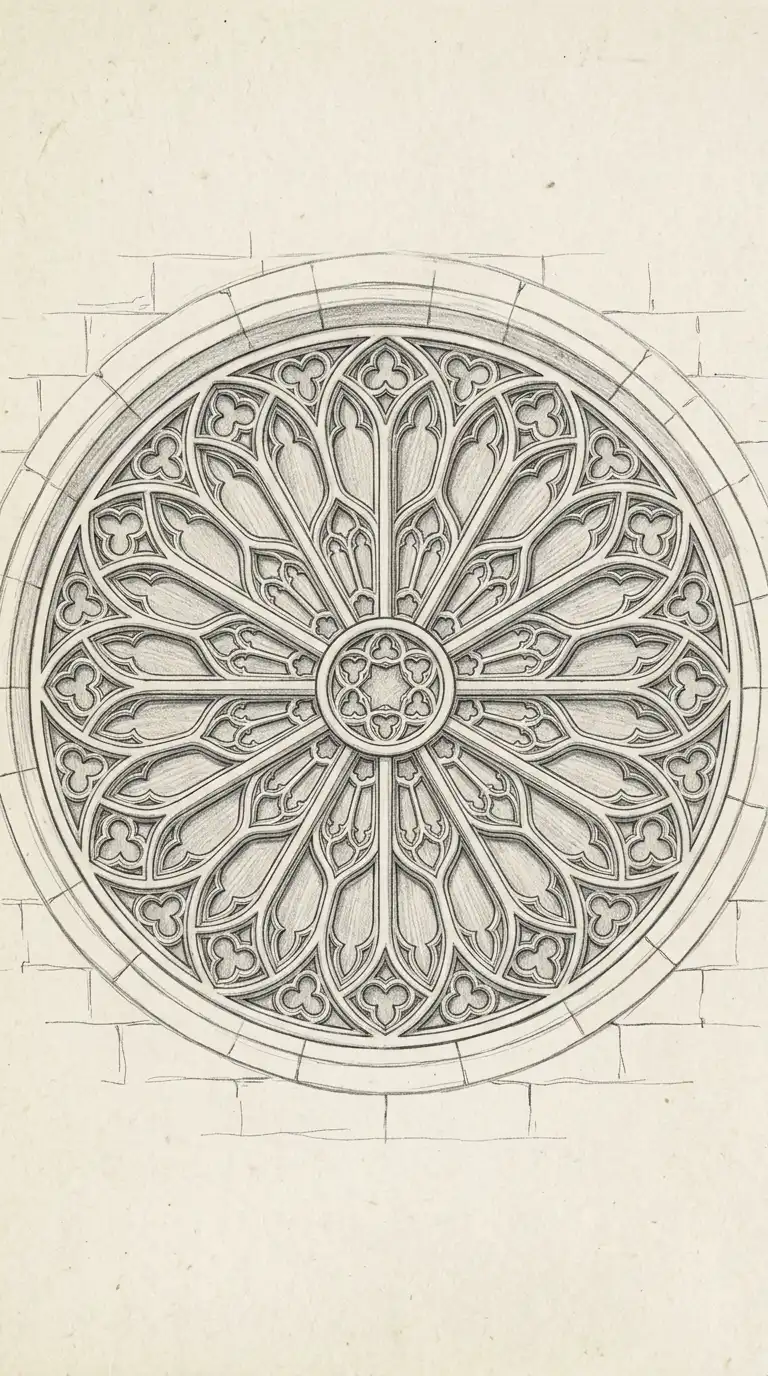
3. The Rose Window
The rose window is a large circular window filled with stone tracery and stained glass. The centre is a small circle. Radiating petals, like a flower, extend to the outer ring. The tracery is geometric and intricate. The rose window is the most decorative element of the Gothic facade.
This drawing requires careful radial symmetry. The centre must be precisely located. The petals must be evenly spaced. The emotional effect is circular, radiant, and intricate.
Quick Tips
- The centre must be a small clear circle.
- Radiating petals should be evenly spaced.
- Use thin, precise lines for the tracery.
4. The Flying Buttress
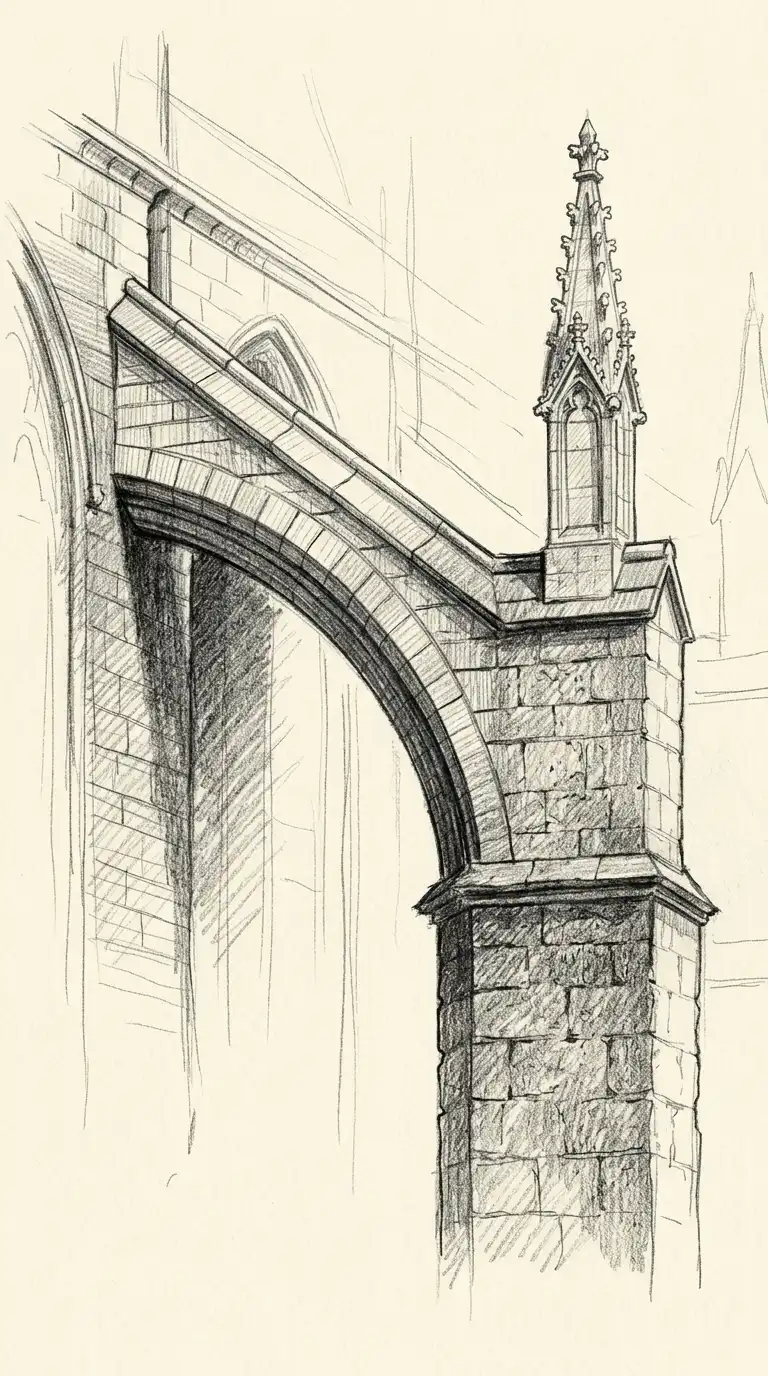
The flying buttress is an external support that transfers the weight of the vault to a heavy pier. It is a half-arch that flies from the upper wall to the pier. The flying buttress is a symbol of structural ingenuity and invisible support. It is often topped with a pinnacle.
This drawing should show the half-arch curving from the wall to the pier. The pier should be heavy and vertical. The pinnacle should be tall and pointed. The emotional effect is structural, supporting, and arcing.
Quick Tips
- The half-arch should curve gracefully.
- The pier should be heavy and vertical.
- Add a pinnacle on top of the pier.
5. The Lancet Window Group
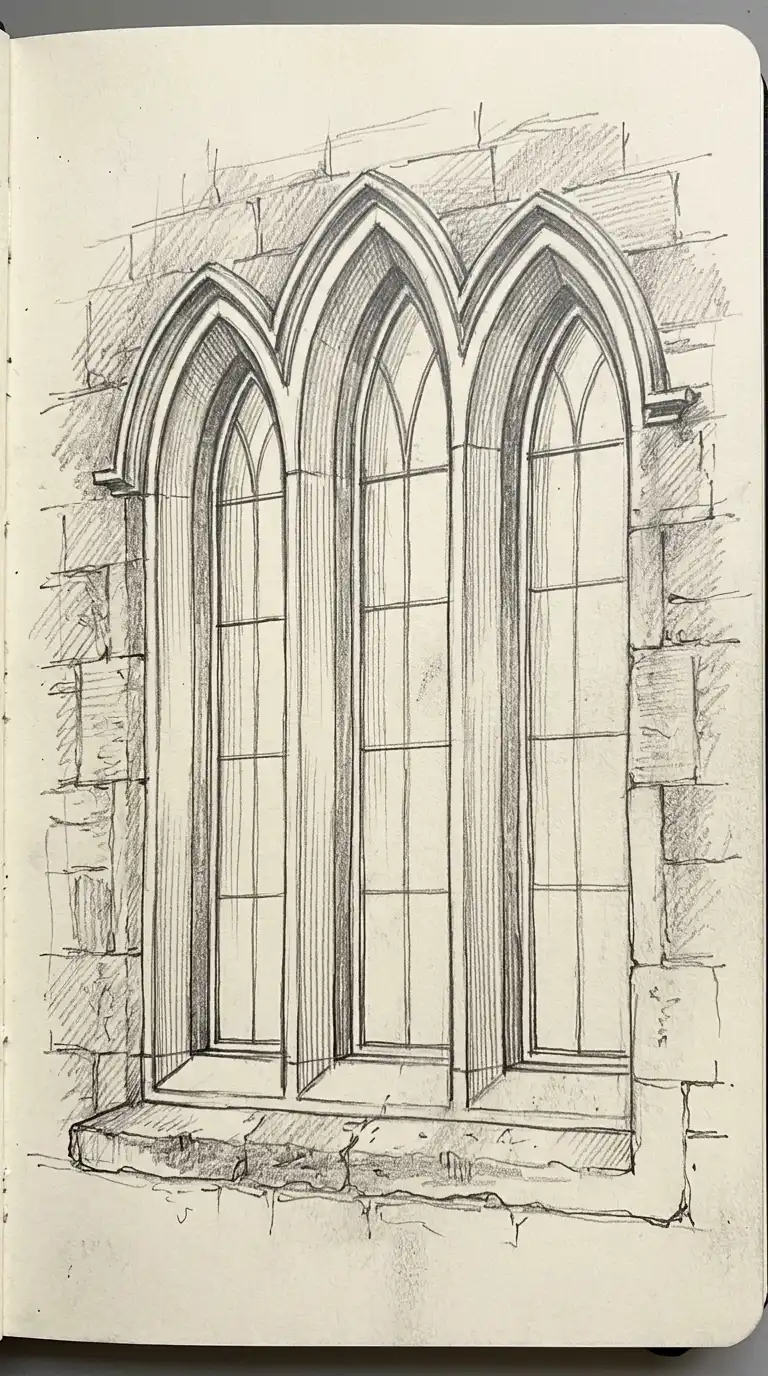
The lancet window is a tall, narrow window with a pointed arch at the top. Lancet windows are often grouped in twos, threes, or fives. They are simple, vertical, and elegant. The lancet window is the purest expression of Gothic verticality.
This drawing should show two or three lancet windows grouped together. The arches must be pointed. The windows should be taller than they are wide. The emotional effect is vertical, elegant, and aspiring.
Quick Tips
- The windows must be taller than they are wide.
- The arches must be pointed.
- Group two, three, or five windows together.
6. The Tracery Panel
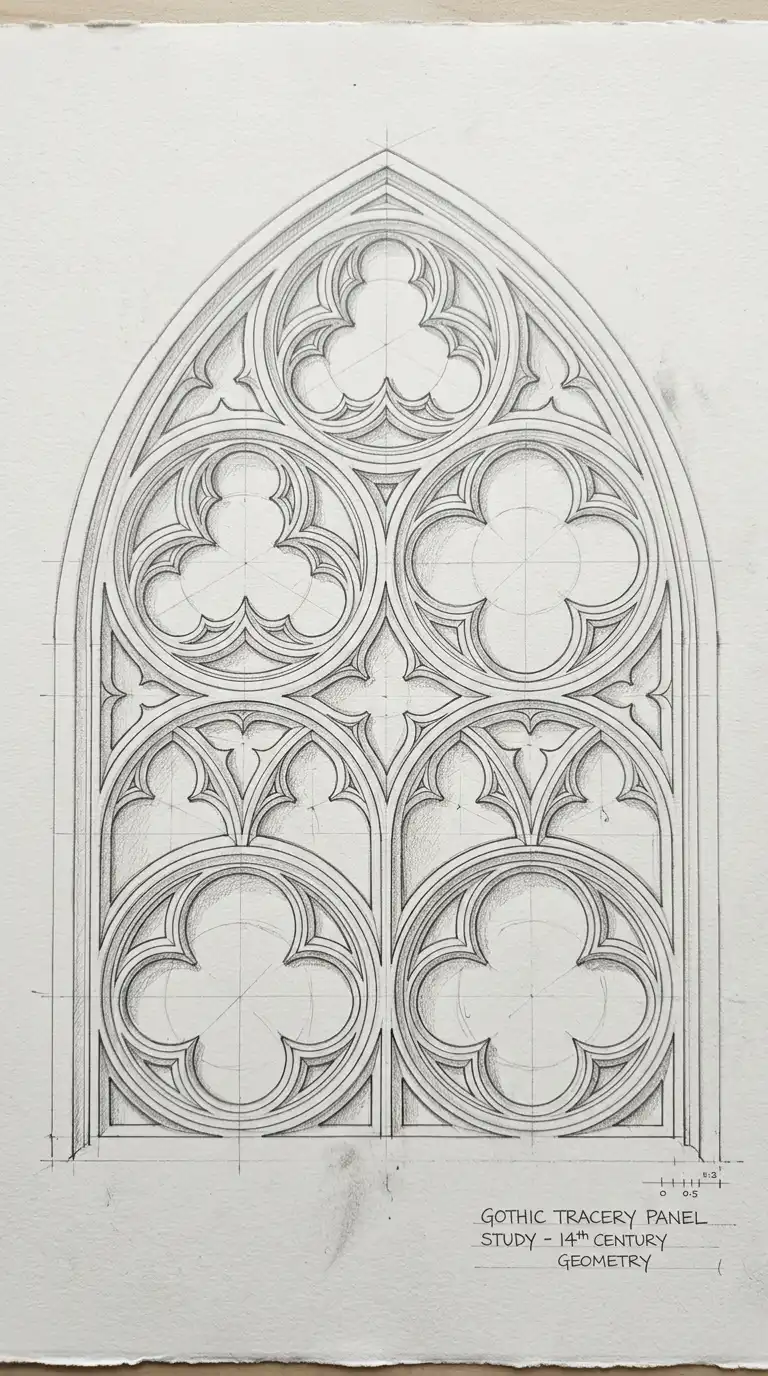
Tracery is the stone framework that holds stained glass. Tracery panels are filled with geometric patterns — circles, trefoils, quatrefoils, and daggers. Tracery is delicate, intricate, and infinitely variable.
This drawing requires precise geometric construction. Circles must be true. Intersections must be exact. The emotional effect is intricate, geometric, and decorative.
Quick Tips
- Use a compass for circles.
- Use a straightedge for straight lines.
- Keep lines thin and delicate.
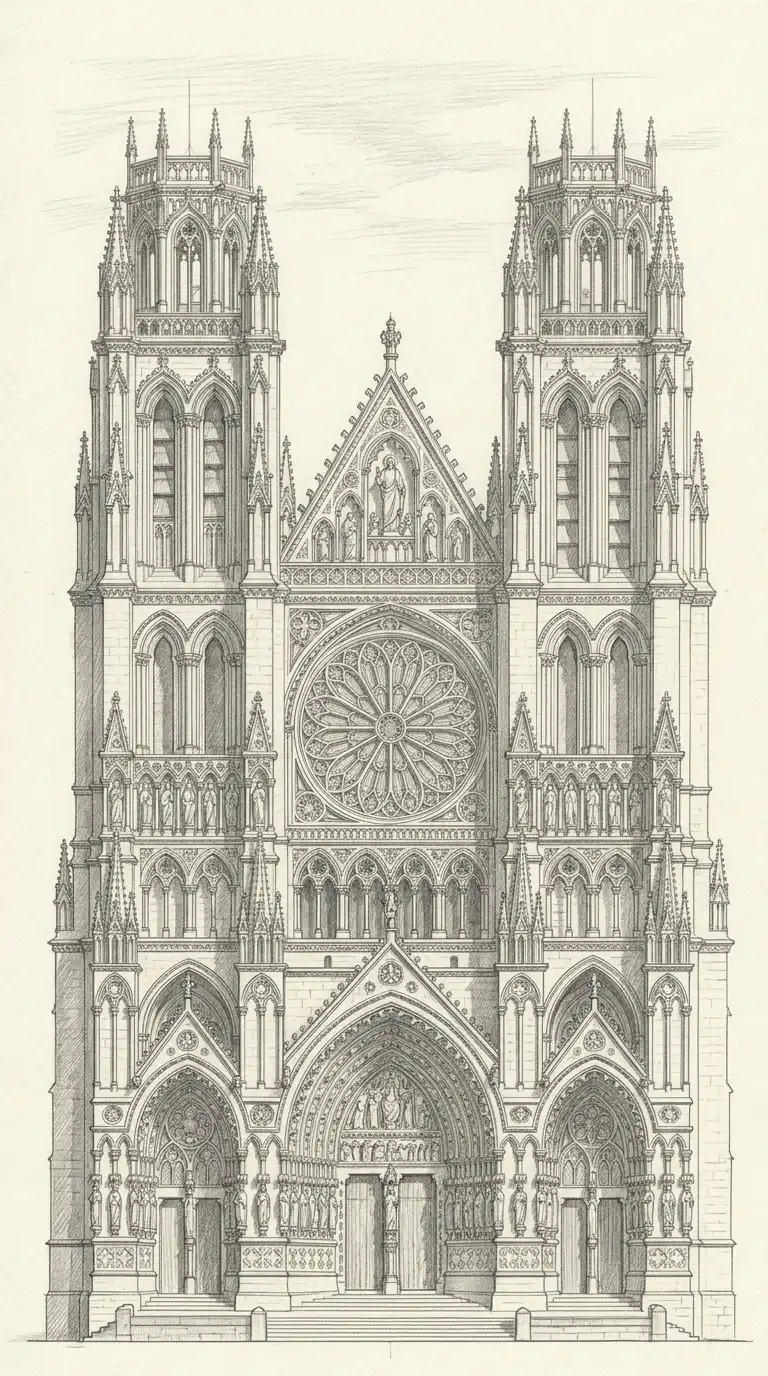
7. The Cathedral Facade Elevation
The cathedral facade is the complete west front of a Gothic cathedral — two towers, a central rose window, three portals, and a gable. The facade is symmetrical, vertical, and monumental. It is the most ambitious Gothic drawing.
This drawing requires precise symmetry. The centre line must be established. The two towers must be identical. The rose window must be centred. The three portals must be evenly spaced. The emotional effect is monumental, vertical, and awe-inspiring.
Quick Tips
- Establish a centre line first.
- Draw the two towers identically.
- Centre the rose window on the centre line.
- Draw three portals at the base.
8. The Spire and Pinnacle
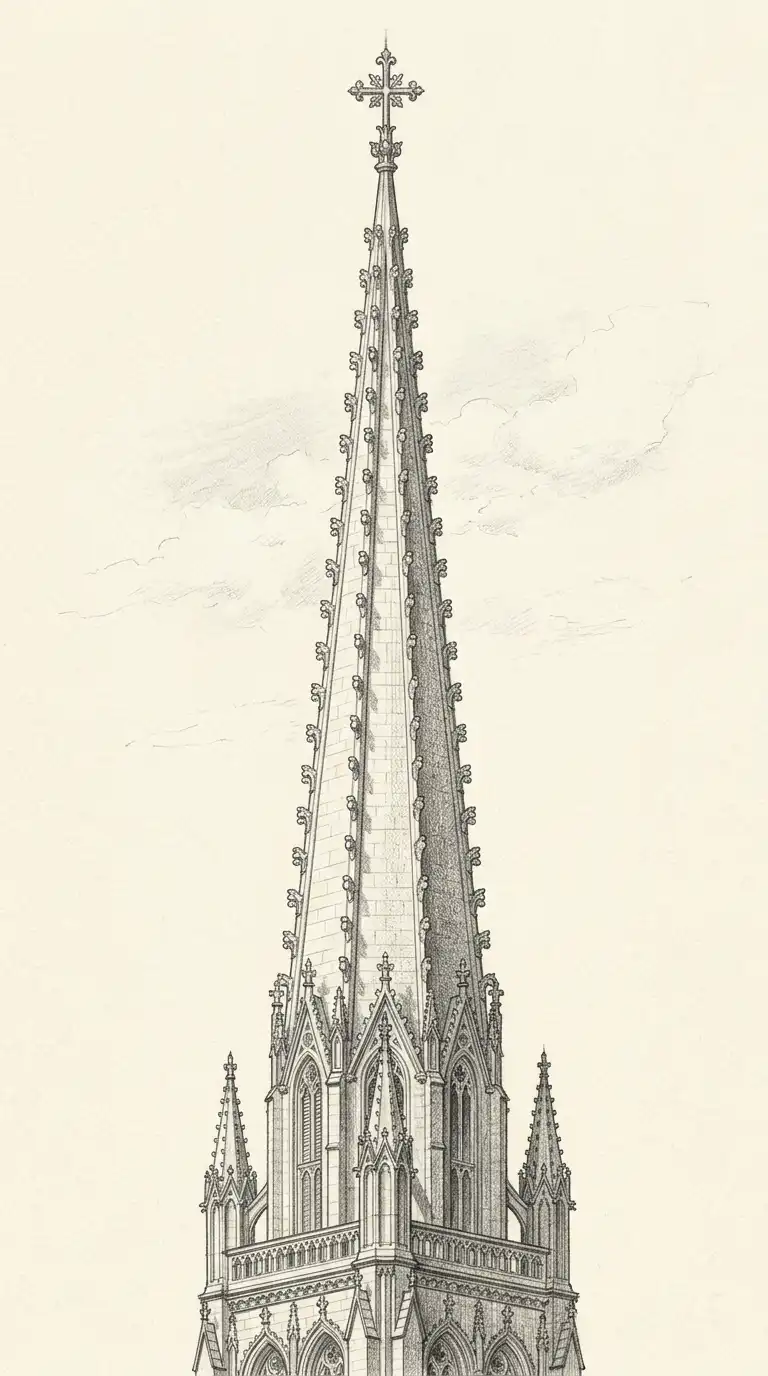
The spire is the vertical pinnacle of a Gothic cathedral, rising from the tower to a sharp point. The pinnacle is a smaller spire on top of a buttress or pier. Both are decorated with crockets (leaf-like carvings) and finials. The spire symbolises aspiration.
This drawing requires careful vertical alignment. The spire must taper smoothly to a point. Crockets must be evenly spaced. The emotional effect is vertical, aspiring, and directional.
Quick Tips
- The spire should taper smoothly to a sharp point.
- Crockets should be evenly spaced along the edges.
- Add a finial at the top.
9. The Clustered Column
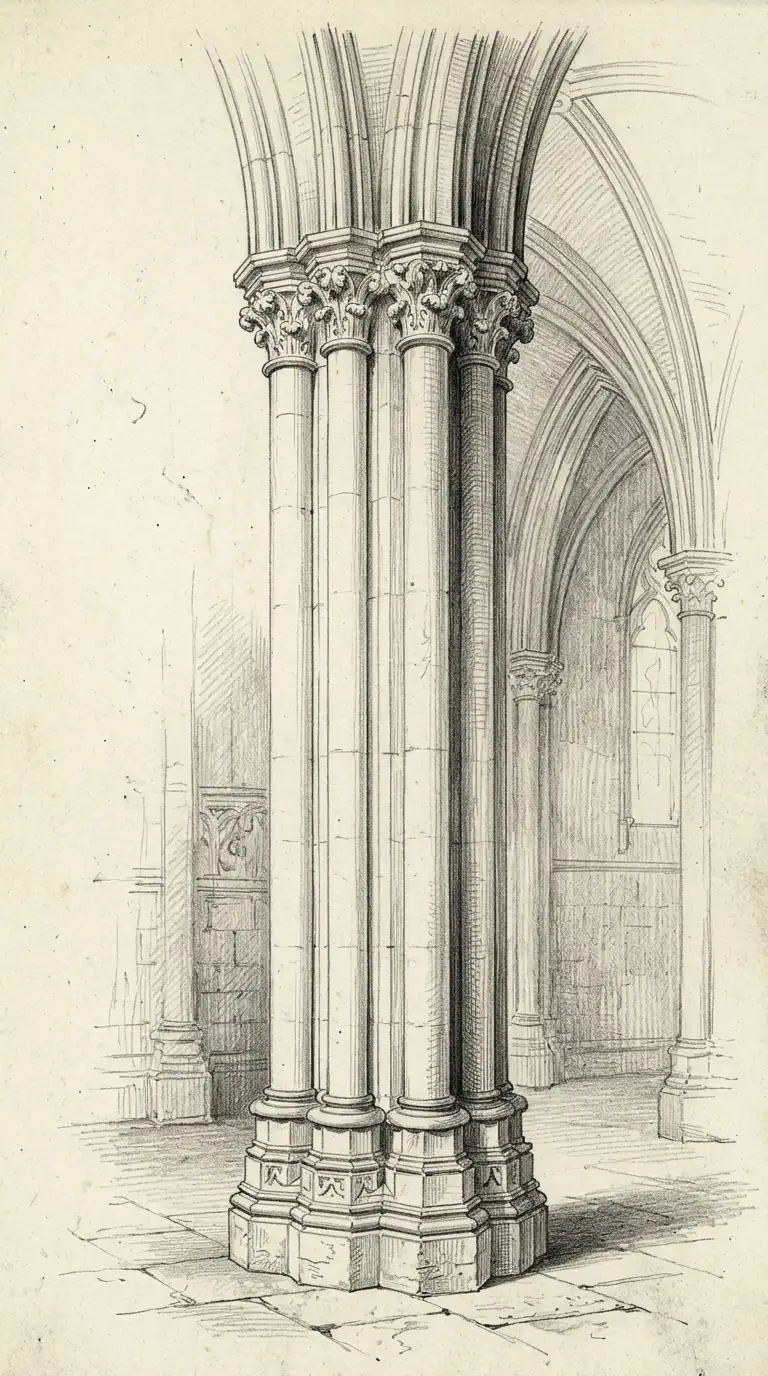
A Gothic clustered column is a group of slender columns bundled together. Each column has its own base and capital. The cluster is stronger than a single column and more visually interesting. The clustered column is a symbol of collective strength.
This drawing requires parallel vertical lines. The columns must be evenly spaced around a centre. Each column must have its own base and capital. The emotional effect is vertical, bundled, and strong.
Quick Tips
- Draw three to five slender columns bundled together.
- Each column should have its own base and capital.
- The columns should be parallel.
Final Thoughts
Drawing Gothic architecture is an exercise in precision, patience, and verticality. A pointed arch is geometry. A ribbed vault is structure. A rose window is symmetry. A clustered column is repetition. The best Gothic drawings are not the most ornate — they are the most precise. They respect the geometry, express the structure, and capture the vertical aspiration of the Gothic. They are drawings of stone, light, and faith.