Art Deco emerged in the 1920s and flourished through the 1930s. It was the first truly global style — modern, optimistic, and glamorous. Unlike the organic forms of Art Nouveau or the austerity of early Modernism, Art Deco celebrated geometry, machine production, and exotic cultures. The style is named after the 1925 Exposition Internationale des Arts Décoratifs et Industriels Modernes in Paris.
These 12 Art Deco architecture designs span skyscrapers, cinemas, hotels, and civic buildings across Europe, America, and beyond. Each design includes defining characteristics, key examples, and architectural principles.
1. The Setback Skyscraper
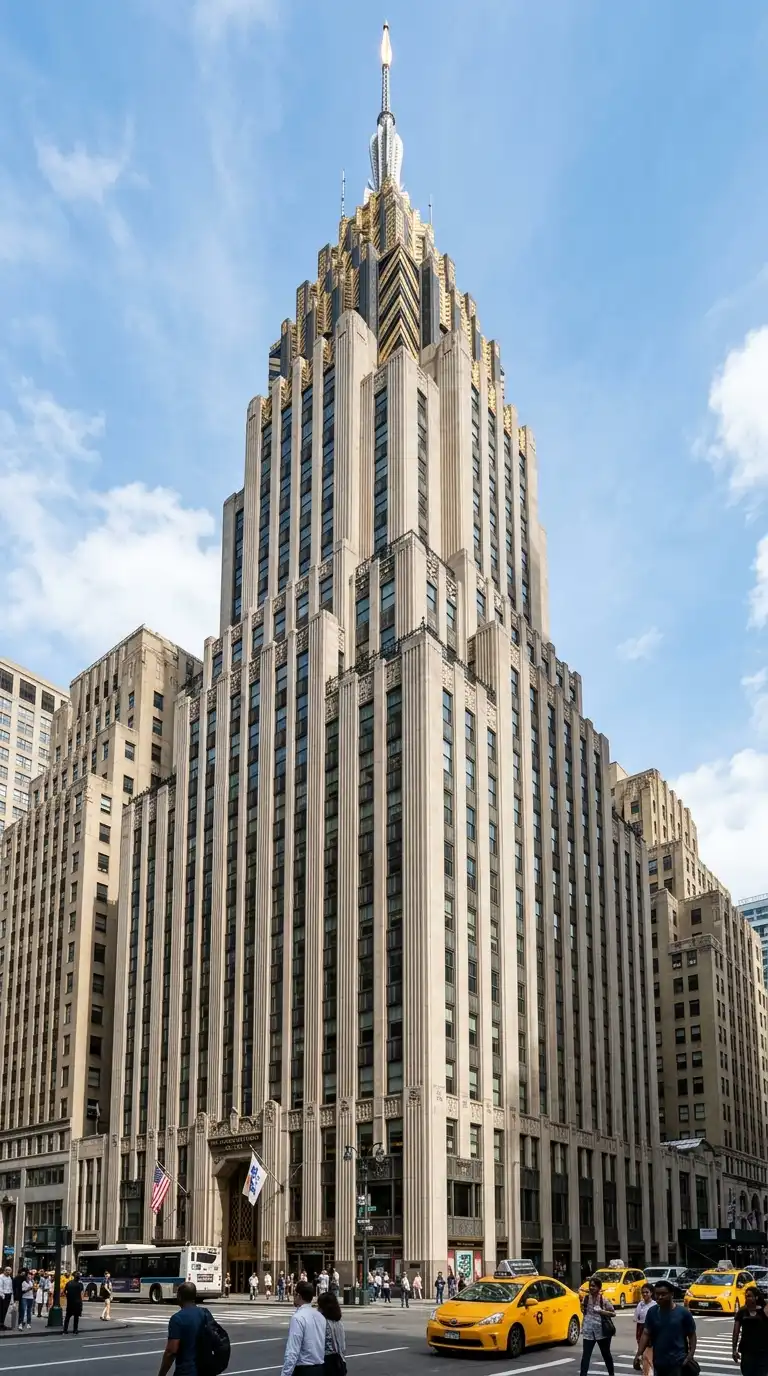
The setback skyscraper is the most iconic Art Deco building type. The tower rises in stepped layers, each step set back from the one below. The setbacks were required by New York’s 1916 zoning law, which mandated light and air at street level. Art Deco turned a legal requirement into an aesthetic.
The tower is crowned with a spire, a lantern, or a ziggurat. The vertical lines are emphasised, drawing the eye upward. The emotional effect is vertical, triumphant, and unmistakably urban.
Quick Tips
- The tower must have visible setbacks, not a straight rise.
- Vertical lines must dominate horizontal lines.
- The crown must have a distinct termination — a spire, lantern, or ziggurat.
2. The Sunburst Motif
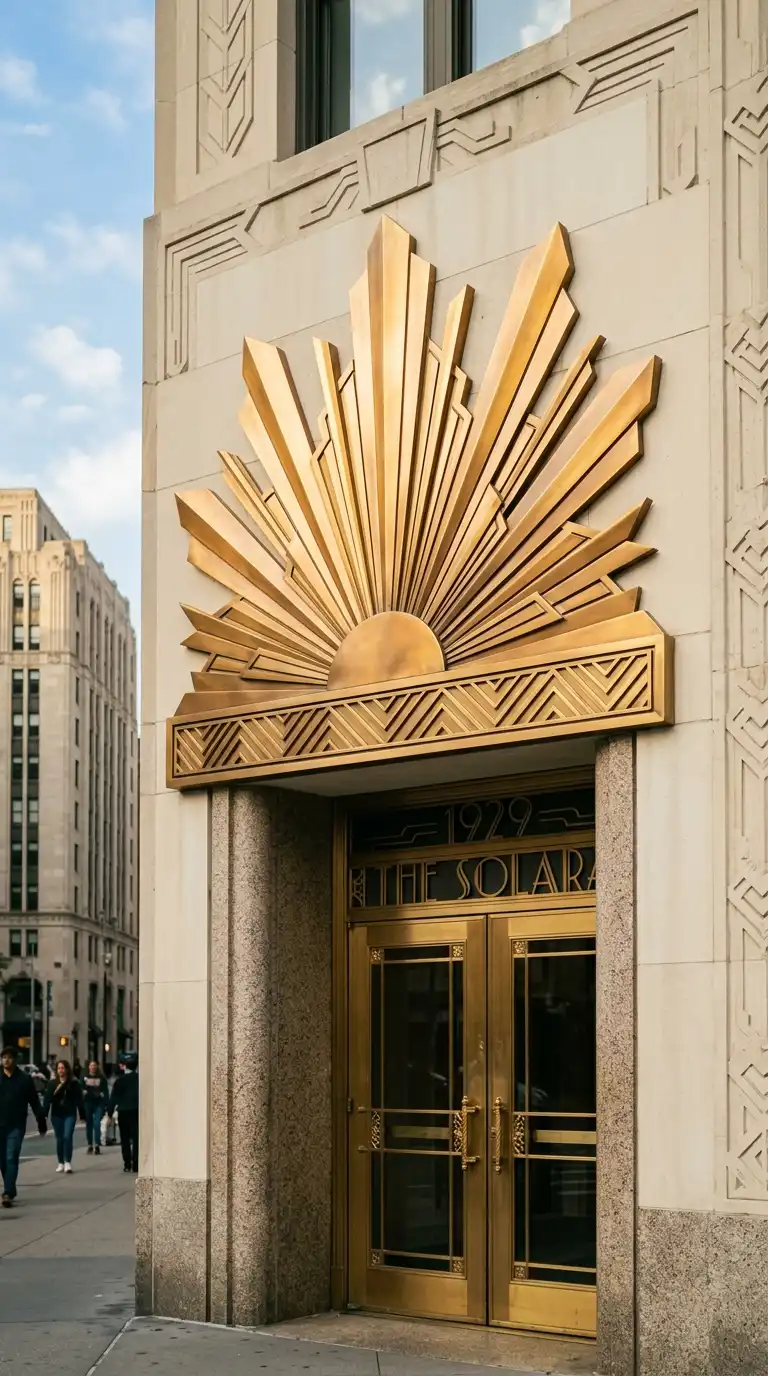
The sunburst is the most recognisable Art Deco ornament. Radiating lines, rays, or fans emanate from a central point. The sunburst appears over entrances, in lobby ceilings, and on elevator doors. It symbolises the dawn of a new age.
The sunburst can be abstract or naturalistic, but always geometric. The emotional effect is optimistic, radiant, and energetic.
Quick Tips
- The sunburst should be centred over an entrance or focal point.
- Rays should be geometric, not organic.
- The sunburst can be rendered in metal, glass, or plaster.
3. The Streamline Moderne Building
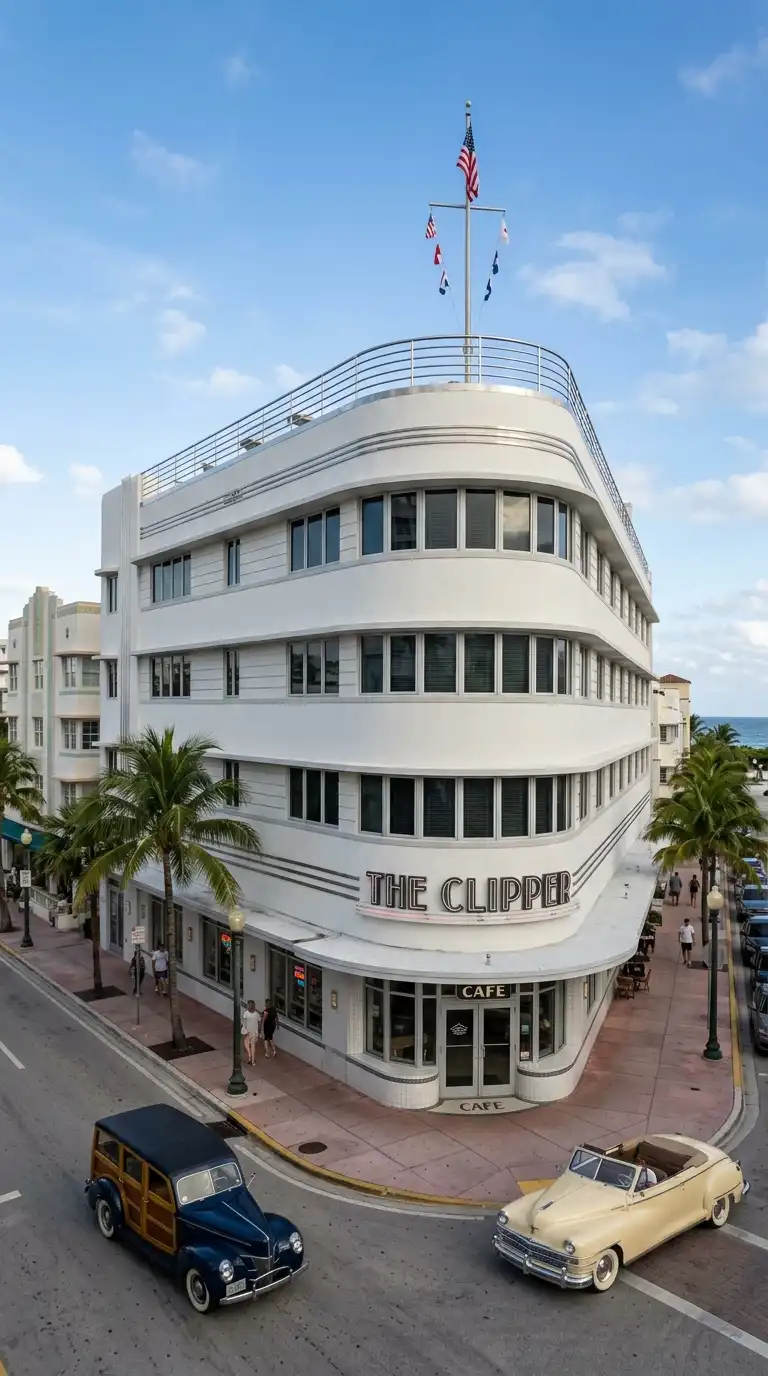
Streamline Moderne is the late Art Deco style of the 1930s. It emphasises horizontal lines, rounded corners, and smooth white surfaces. The style was inspired by ocean liners, trains, and airplanes. Nautical details — porthole windows, railing balustrades, and bridge-like observation decks — are common.
The emotional effect is futuristic, aerodynamic, and machine-age.
Quick Tips
- Rounded corners are essential — no sharp edges.
- Horizontal lines must dominate vertical lines.
- Nautical or aerodynamic details should be included.
4. The Art Deco Skyscraper Lobby
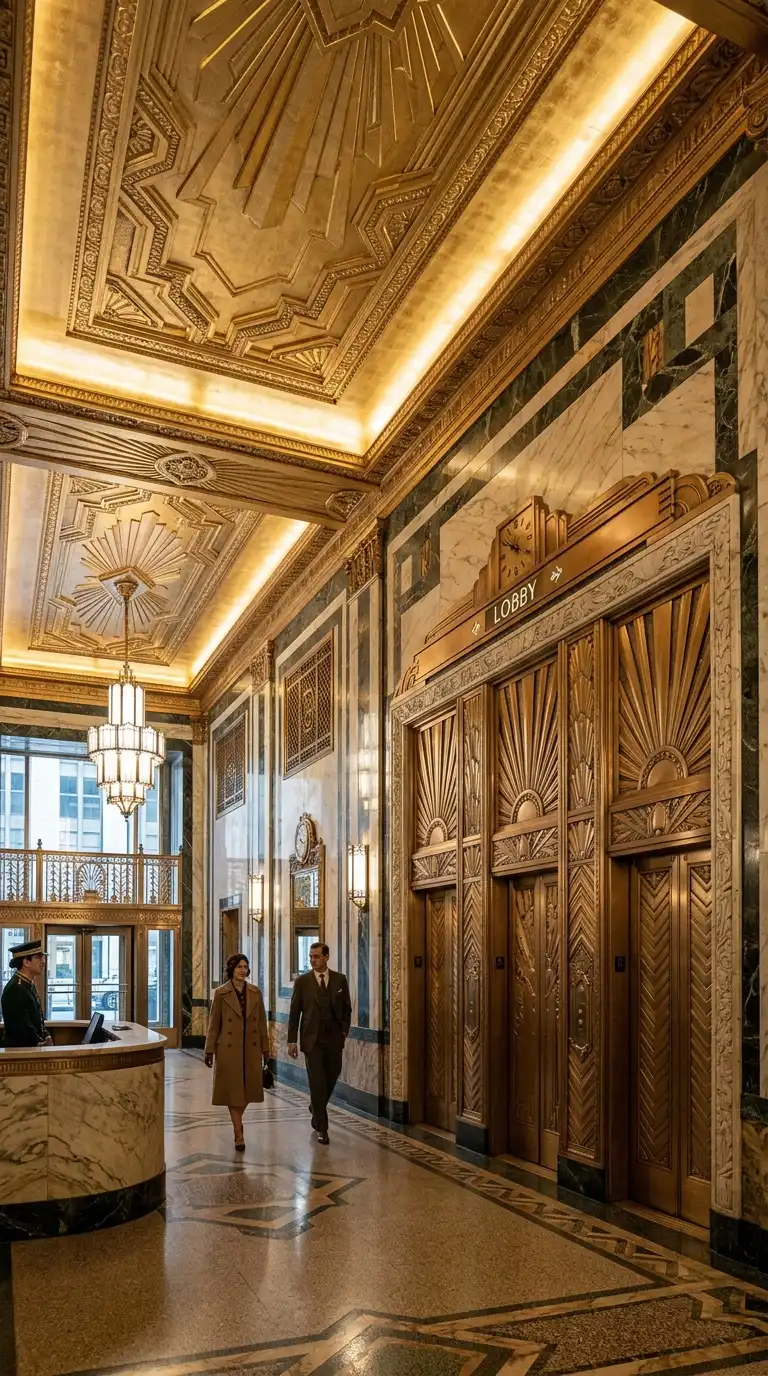
The Art Deco skyscraper lobby is a public interior of astonishing richness. The walls are clad in marble, travertine, or terrazzo. The ceilings are gilded and painted. The elevator doors are bronze or stainless steel with geometric patterns. The lighting is indirect and glamorous.
The lobby is the building’s public face — a stage for the drama of urban life. The emotional effect is glamorous, rich, and welcoming.
Quick Tips
- Use rich materials: marble, bronze, stainless steel, glass.
- Elevator doors should be decorated with geometric patterns.
- Lighting should be indirect and dramatic.
5. The Zigzag Moderne Building
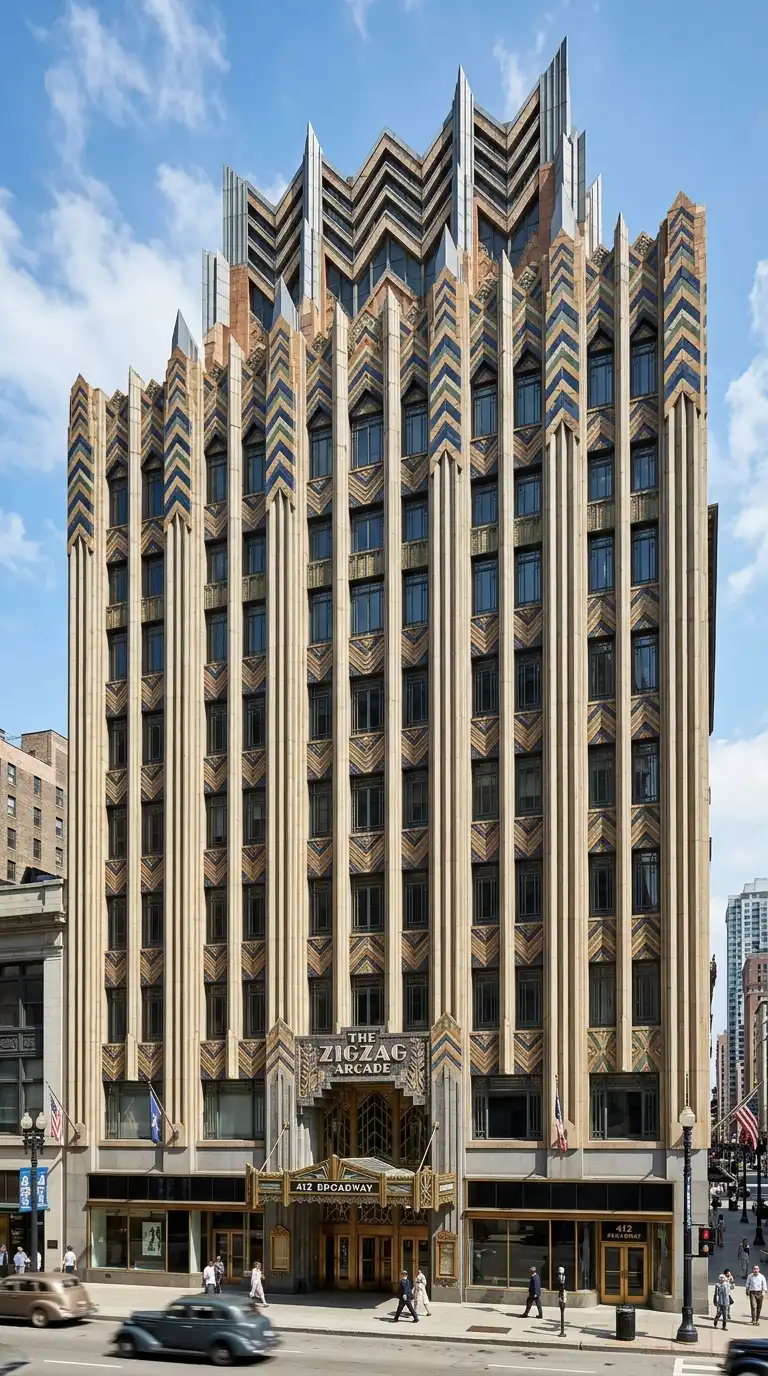
Zigzag Moderne is the early Art Deco style of the 1920s. It emphasises sharp, angular, geometric ornament — chevrons, diamonds, lightning bolts, and stepped forms. The zigzag is the signature motif. The style is more vertical and more angular than Streamline Moderne.
The emotional effect is dynamic, sharp, and jazzy.
Quick Tips
- Use sharp, angular ornament: chevrons, diamonds, lightning bolts.
- The zigzag motif should appear somewhere on the facade.
- Vertical lines should dominate horizontal lines.
6. The Art Deco Cinema
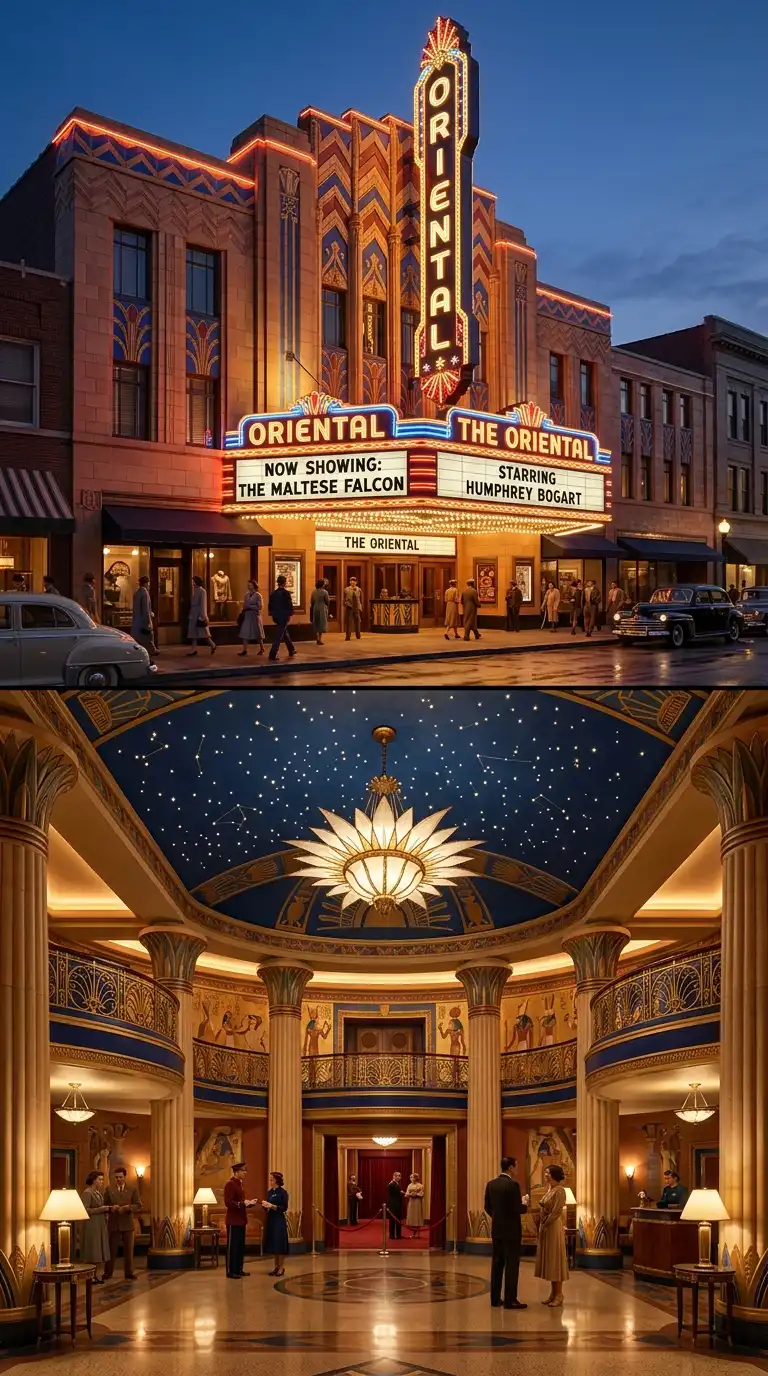
The Art Deco cinema is a palace for the movies. The exterior is dramatic, with a tall vertical sign and a marquee. The interior is exotic and luxurious — a fantasy of Egyptian, Mayan, or Chinese motifs filtered through Art Deco geometry.
The cinema was the people’s palace. The emotional effect is exotic, glamorous, and escapist.
Quick Tips
- The exterior should have a tall vertical sign and a marquee.
- The interior should have exotic motifs (Egyptian, Mayan, Chinese).
- The ceiling should be decorated with stars or clouds.
7. The Art Deco Apartment Building
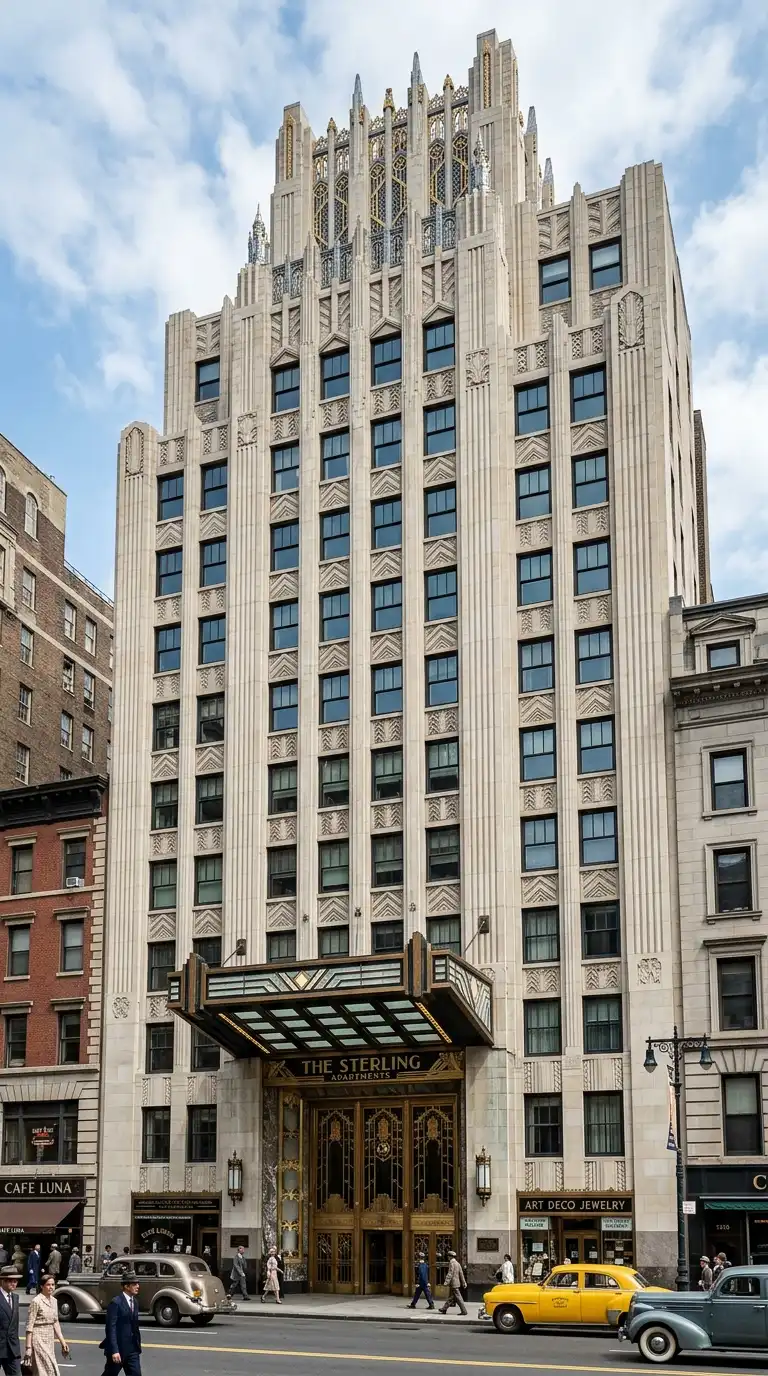
The Art Deco apartment building brings the glamour of the skyscraper to residential living. The facade has vertical fluting, chevron patterns, and a stepped crown. The entrance is framed by a geometric canopy. The lobby is small but rich.
The emotional effect is urban, stylish, and aspirational.
Quick Tips
- The facade should have vertical fluting or chevron patterns.
- The entrance should have a geometric canopy.
- The lobby should be small but rich.
8. The Art Deco Civic Building
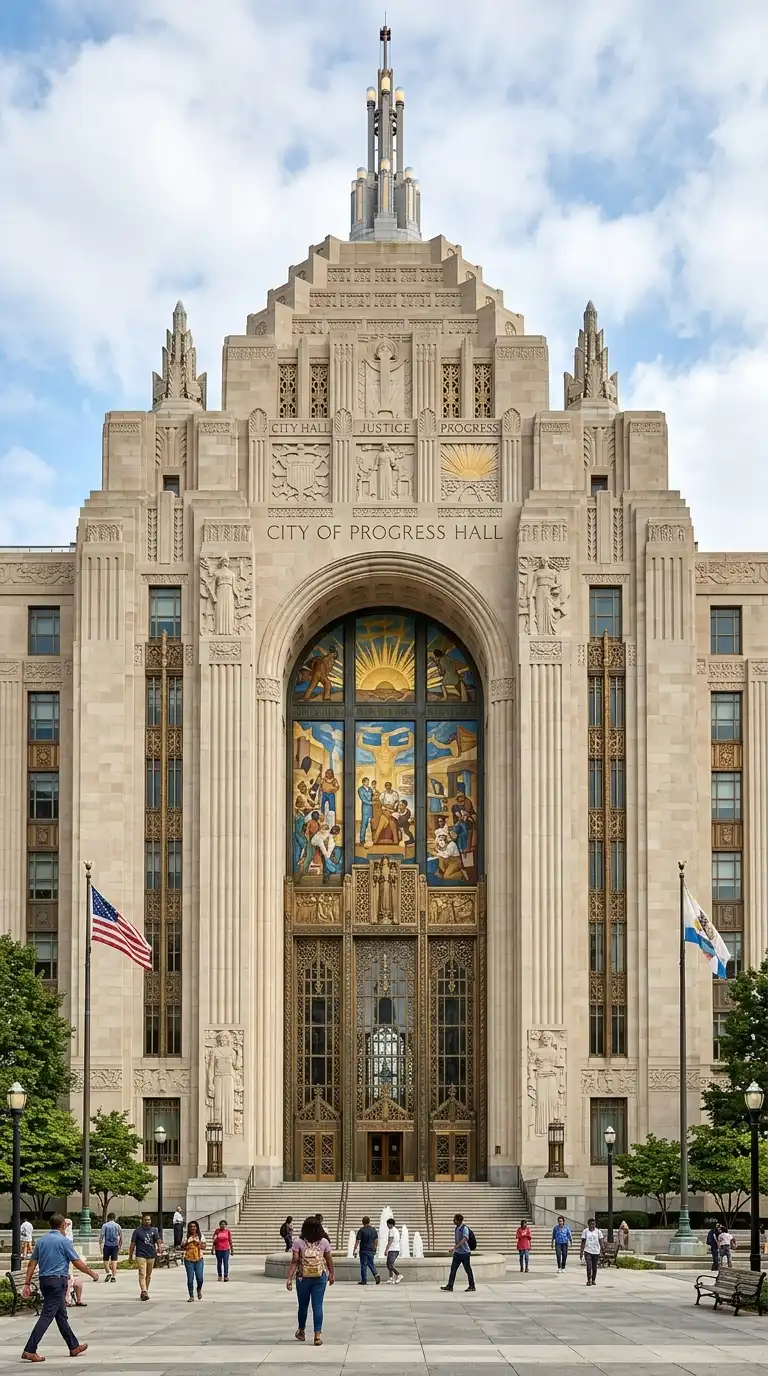
The Art Deco civic building is a courthouse, city hall, or post office. The building is monumental and symmetrical, but decorated with Art Deco ornament. The entrance is grand. The interior has murals celebrating industry, progress, and local history.
The emotional effect is civic, optimistic, and public.
Quick Tips
- The building should be monumental and symmetrical.
- The entrance should be grand with a decorated door.
- Interior murals should celebrate industry or local history.
9. The Art Deco Power Plant
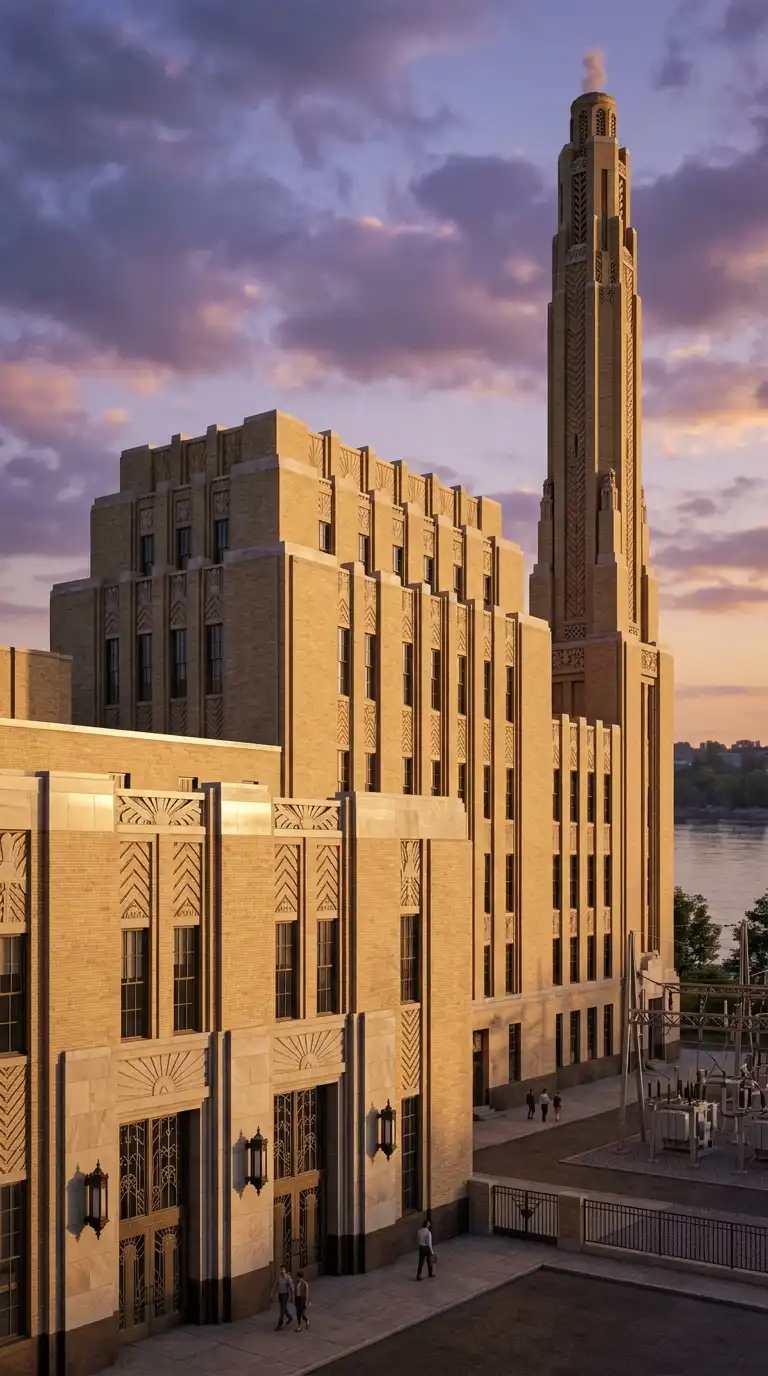
The Art Deco power plant transforms industrial infrastructure into public architecture. The building is a massive block, but decorated with geometric patterns, vertical fluting, and a stepped crown. The chimney is often treated as a tower.
The emotional effect is powerful, industrial, and proud.
Quick Tips
- The building should be a massive block with a stepped crown.
- The chimney should be treated as a decorative tower.
- The facade should have geometric ornament.
10. The Art Deco Hotel
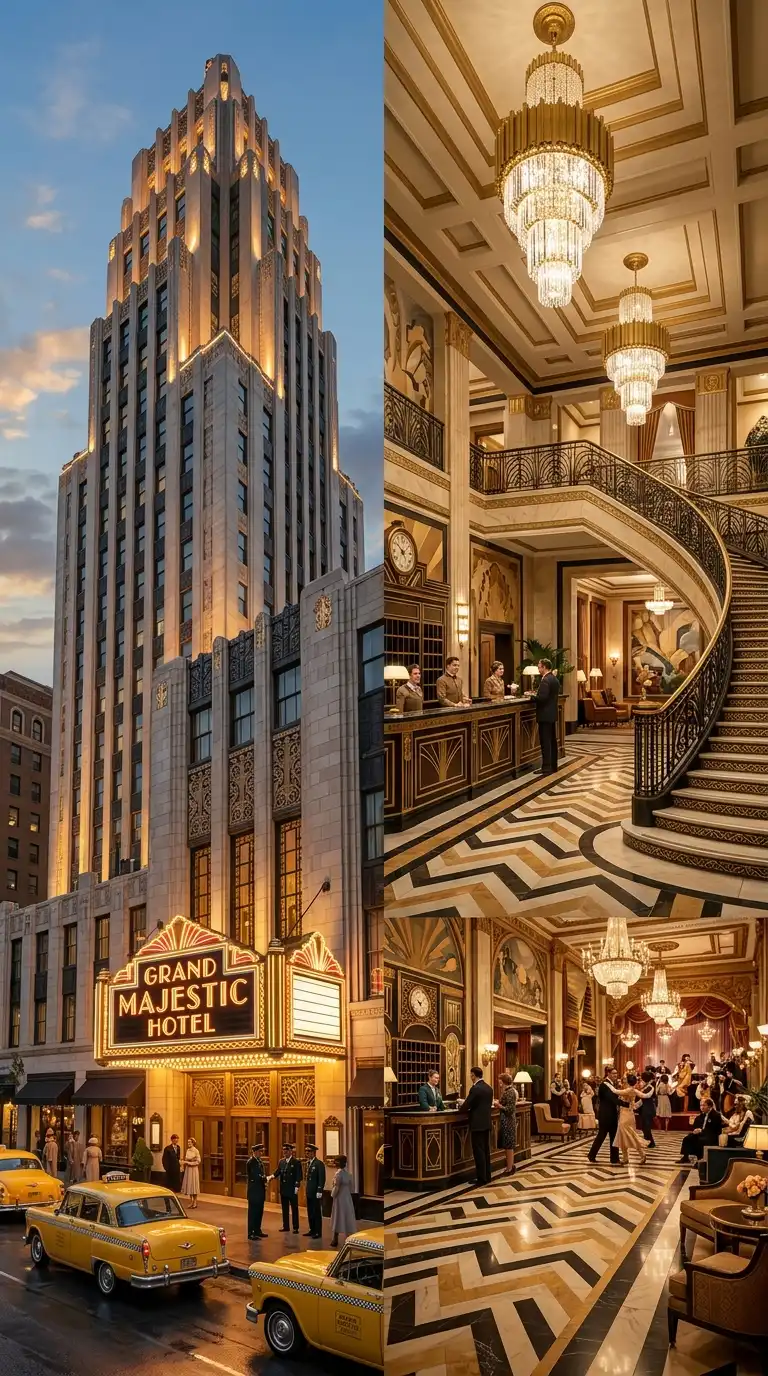
The Art Deco hotel is a destination in itself. The exterior is glamorous, with a tower, a marquee, and decorative lighting. The lobby is grand, with a long reception desk, a coffee shop, and a ballroom. The guest rooms are small but stylish.
The emotional effect is glamorous, urban, and welcoming.
Quick Tips
- The exterior should have a tower and a marquee.
- The lobby should be grand with a long reception desk.
- The ballroom should be decorated with geometric patterns.
11. The Art Deco Transportation Building
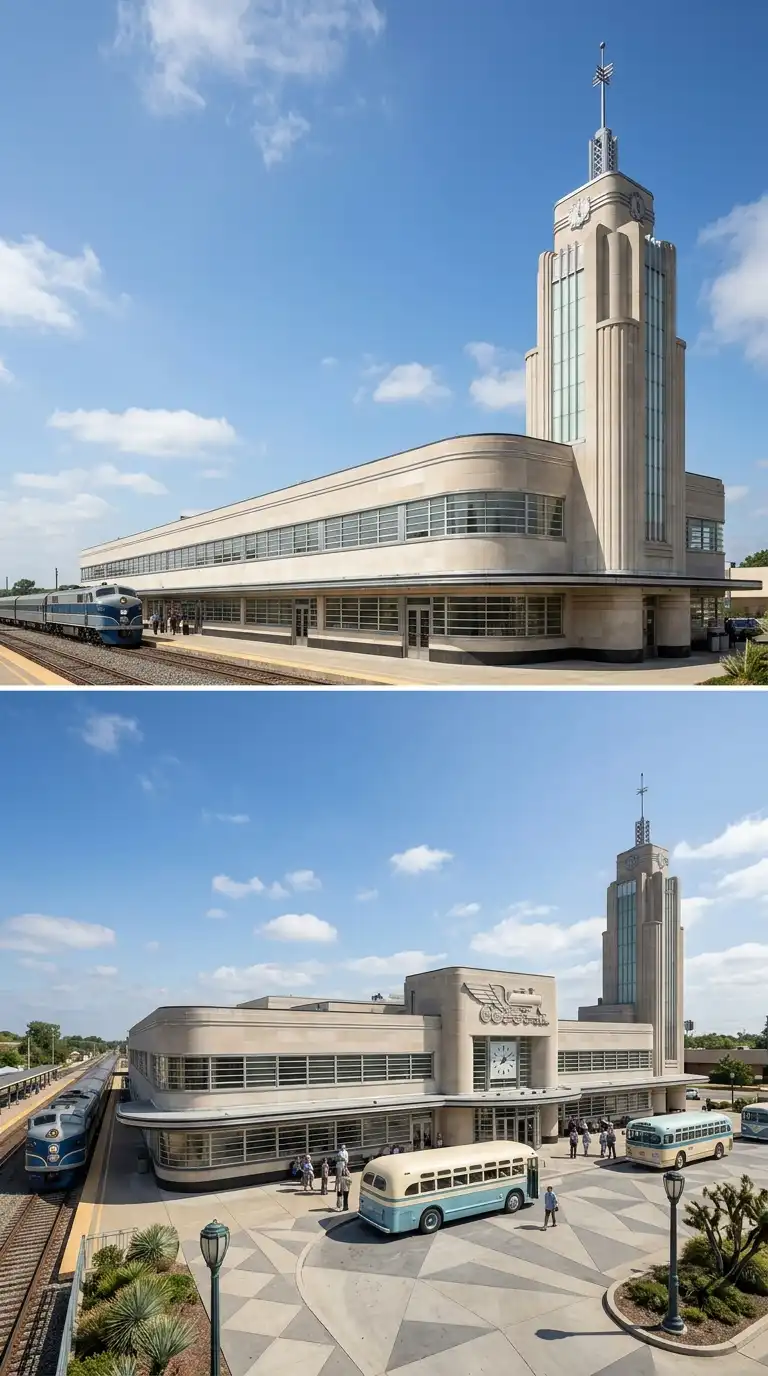
The Art Deco transportation building is an airport terminal, train station, or bus depot. The building is streamlined and horizontal, with rounded corners and banded windows. The interior is efficient but stylish. The building celebrates movement and speed.
The emotional effect is streamlined, efficient, and futuristic.
Quick Tips
- The building should be horizontal and streamlined.
- Rounded corners are essential.
- The interior should be efficient but stylish.
12. The Art Deco Skyscraper Crown
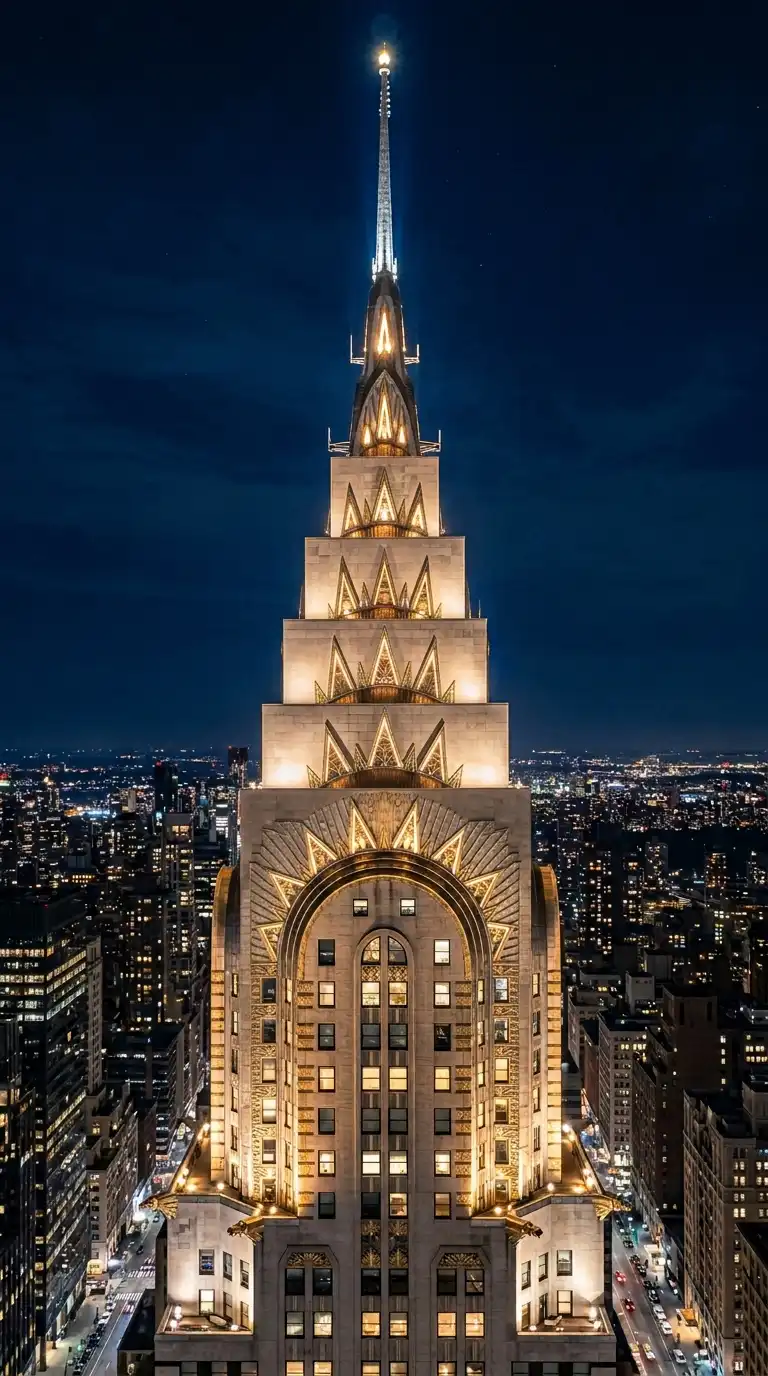
The Art Deco skyscraper crown is the most dramatic part of the building. The crown is visible from across the city. It is a stepped ziggurat, a spire, a lantern, or a combination. The crown is often lit at night.
The crown is the building’s signature. The emotional effect is vertical, triumphant, and iconic.
Quick Tips
- The crown should be visible from a distance.
- The crown should be stepped, spired, or lantern-topped.
- The crown should be lit at night.
Final Thoughts
Art Deco is the architecture of the Jazz Age — optimistic, glamorous, and modern. It celebrated the machine, the city, and the future. Unlike Modernism, which rejected ornament, Art Deco embraced it. Unlike Revival styles, which looked to the past, Art Deco looked forward.
These 12 Art Deco designs are not mutually exclusive. A setback skyscraper can have a Streamline Moderne lobby. A Zigzag Moderne building can have a sunburst entrance. A cinema can combine Egyptian motifs with a Streamline Moderne exterior. The best Art Deco architecture is not pure — it is eclectic, luxurious, and joyful.