Persian architecture is one of the world’s oldest and most influential traditions. For over 2,500 years, from the Achaemenid Empire to the Safavid dynasty, Persian architects developed a distinctive language of forms: the iwan, the dome on squinches, the four-iwan plan, the char bagh garden, and the muqarnas vault. Persian architecture is characterised by brilliant tilework, intricate geometry, and the masterful use of water and light.
These 14 Persian architecture designs span palaces, mosques, gardens, and bazaars. Each design includes defining characteristics, key examples, and architectural principles.
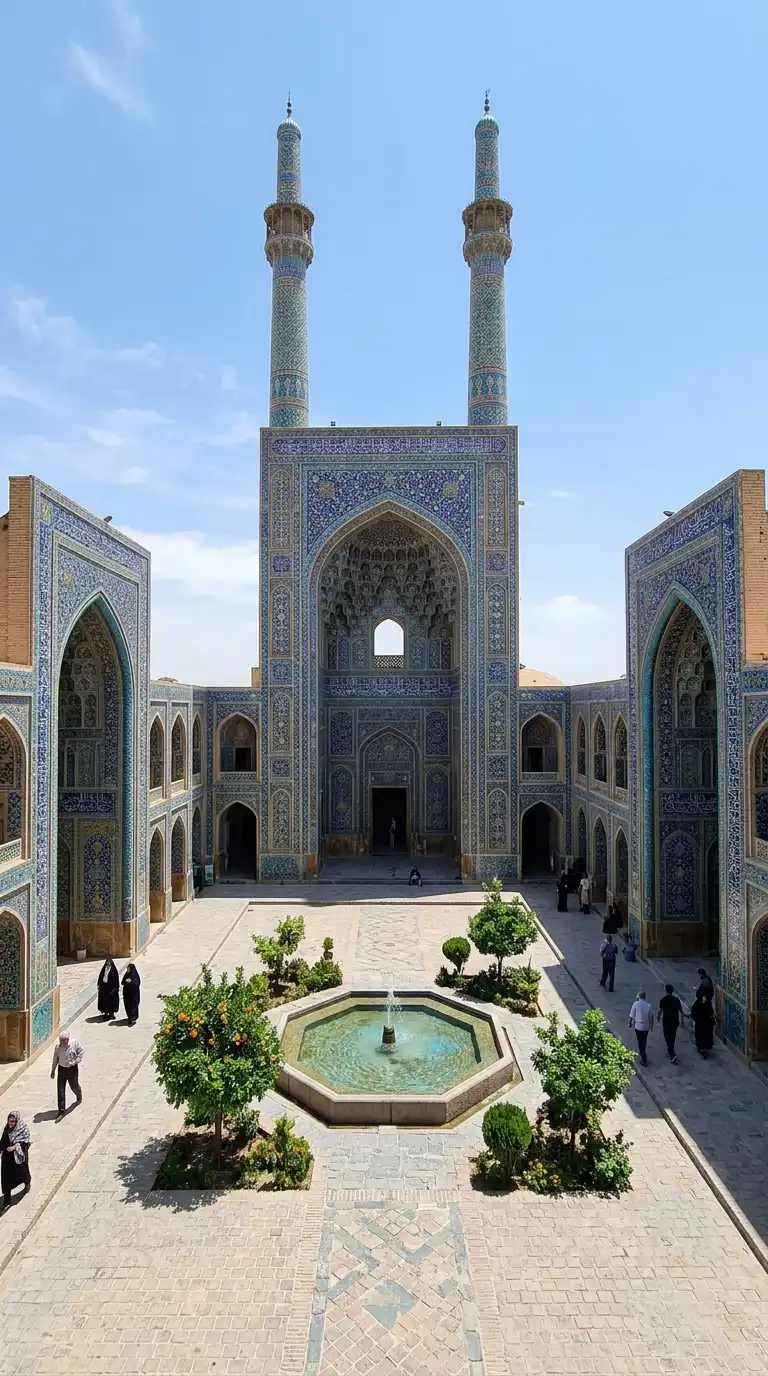
1. The Four-Iwan Plan
The four-iwan plan is the most recognisable Persian architectural form. A central courtyard has four iwans — vaulted halls open to the courtyard on one side — one on each side. The iwans are framed by pishtaqs (tall, decorated portals). The largest iwan leads to the domed prayer hall or throne room.
This design is ideal for mosques, madrasas, and palaces. The emotional effect is axial, monumental, and hierarchical.
Quick Tips
- The qibla iwan must be the largest and most decorated.
- The courtyard should be large enough for gathering.
- Pishtaqs should rise above the courtyard walls, framing each iwan.
2. The Dome on Squinches
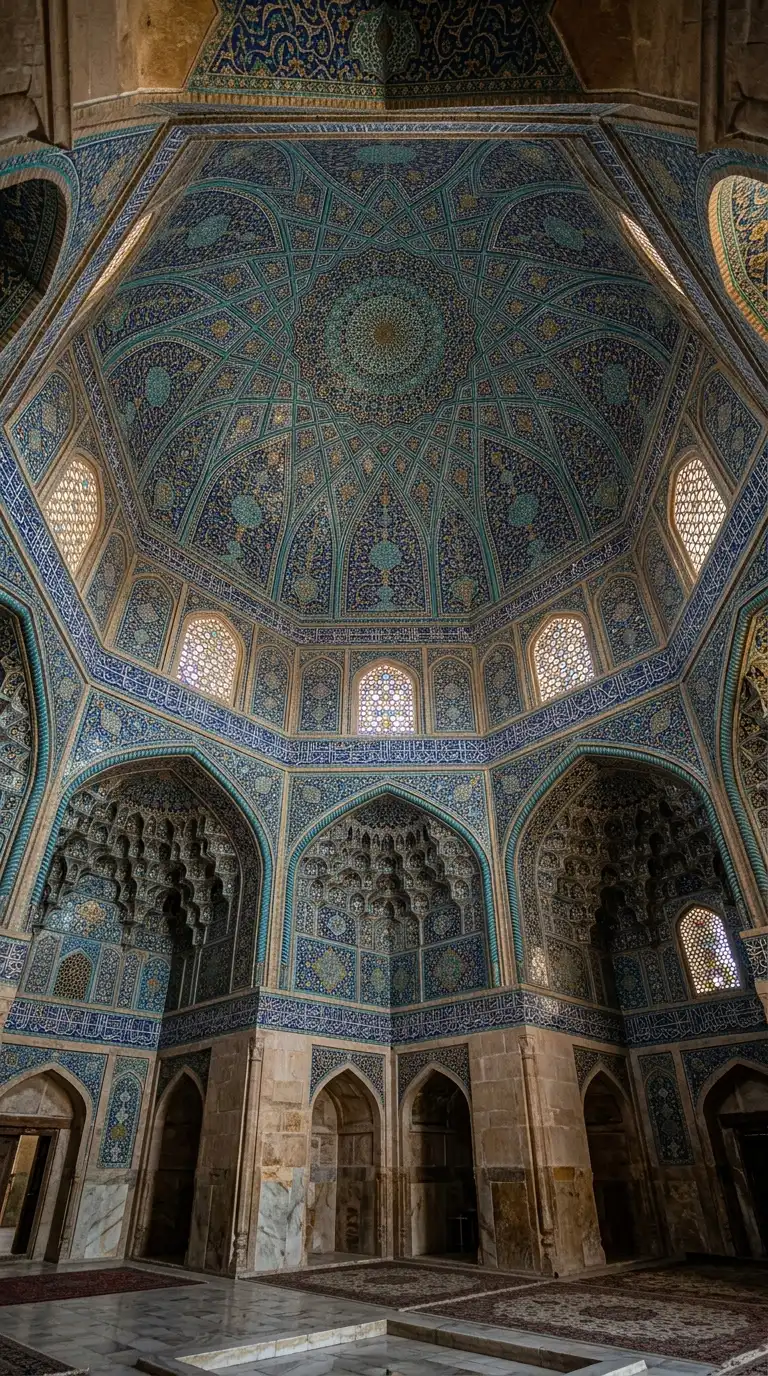
This design is ideal for mosques, tombs, and palaces. The emotional effect is celestial, awe-inspiring, and structural.
Quick Tips
- Squinches must be visible in the transition zone.
- The dome should be taller than a hemisphere — pointed.
- The exterior of the dome should be tiled in blue.
3. The Pishtaq
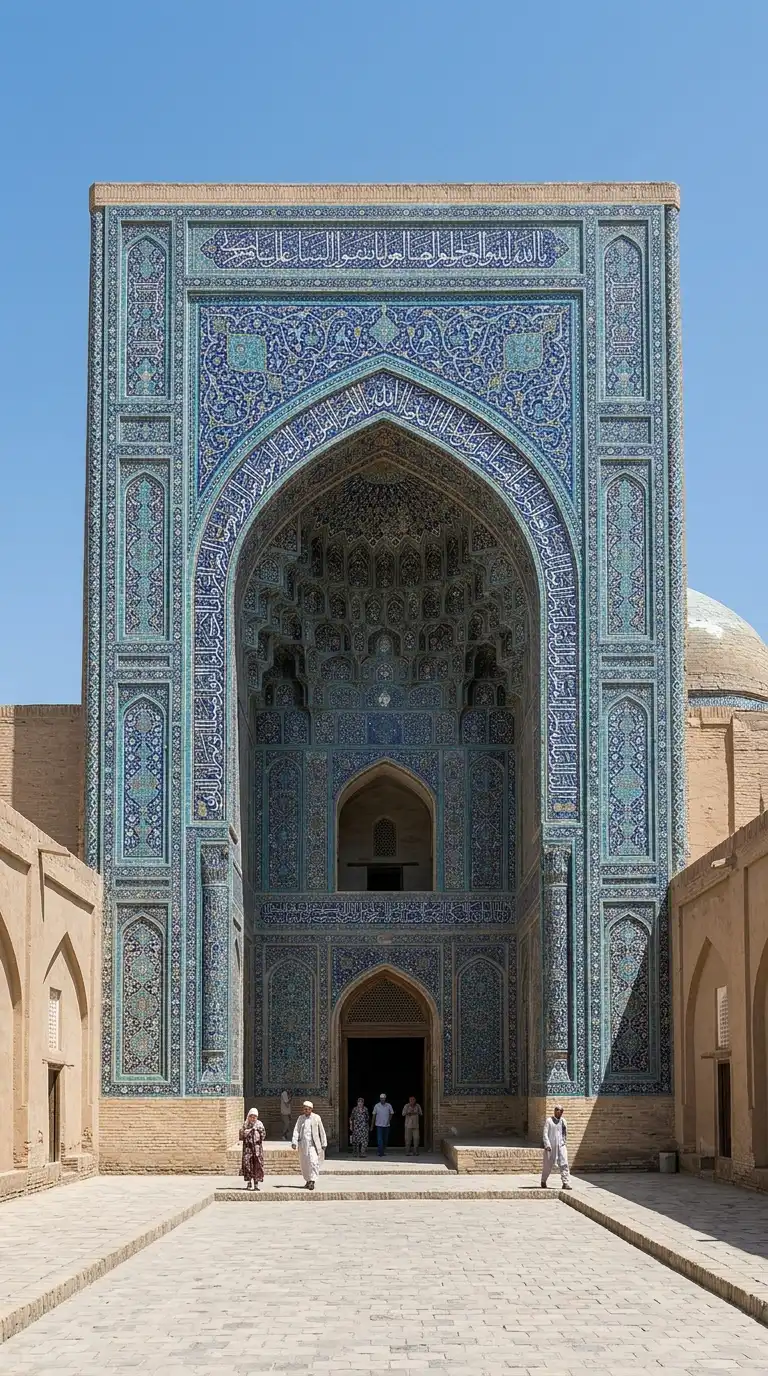
The pishtaq is a monumental portal framing an iwan. It is a tall, rectangular frame that rises above the iwan arch. The pishtaq is covered in tile decoration, calligraphy, and geometric patterns. The pishtaq announces the importance of the space behind it.
This design is used on mosques, madrasas, and palaces. The emotional effect is vertical, monumental, and decorative.
Quick Tips
- The pishtaq should be taller than the iwan it frames.
- Tile decoration should cover the entire surface.
- Calligraphy should be placed in a rectangular band around the arch.
4. The Char Bagh Garden
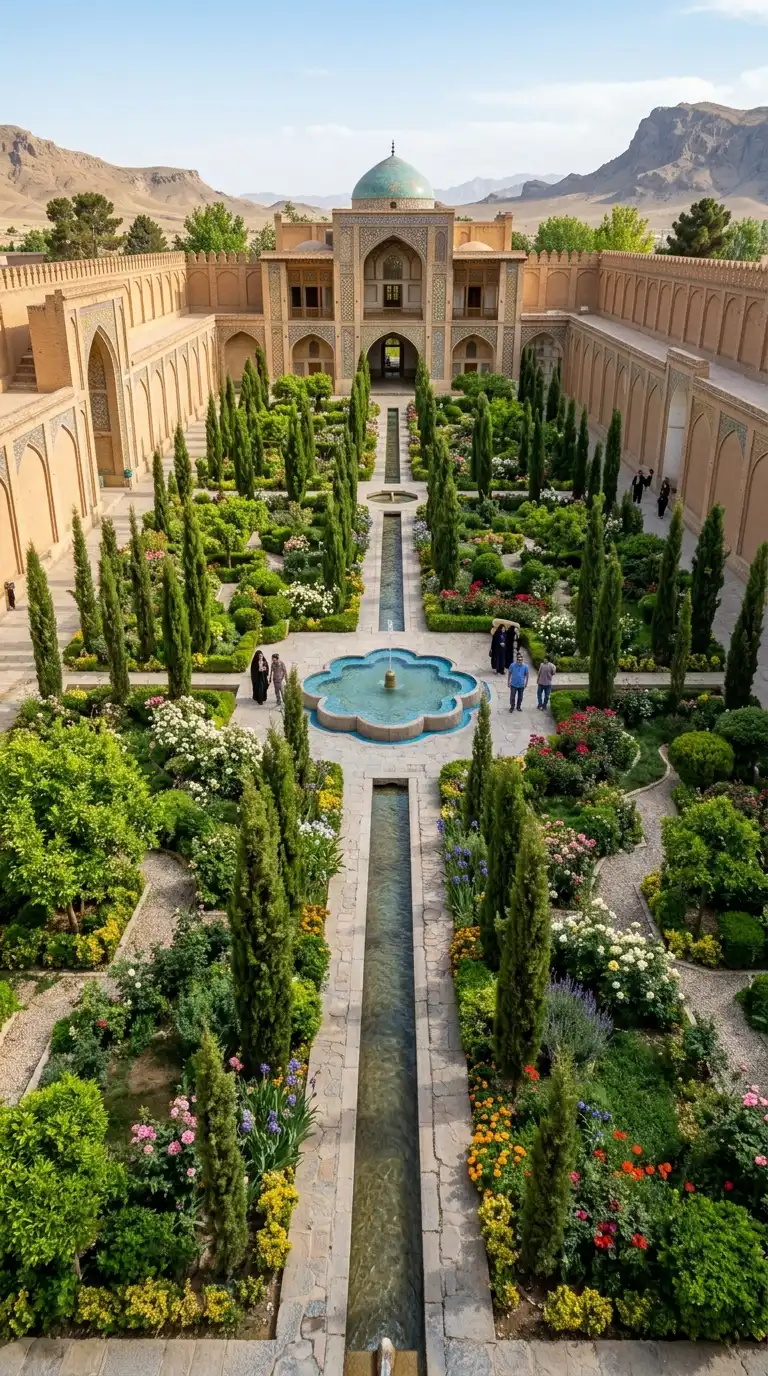
The char bagh is a four-part garden divided by water channels. The garden is a paradise on earth, symbolising the four rivers of life. The water channels meet at a central pool or pavilion. The garden is walled. The char bagh is the quintessential Persian garden.
This design is ideal for tombs, palaces, and pleasure gardens. The emotional effect is paradisiacal, ordered, and refreshing.
Quick Tips
- The garden must be divided into four equal quadrants by water channels.
- A central pavilion or pool must mark the intersection.
- The garden must be walled for privacy and protection.
5. The Muqarnas Vault
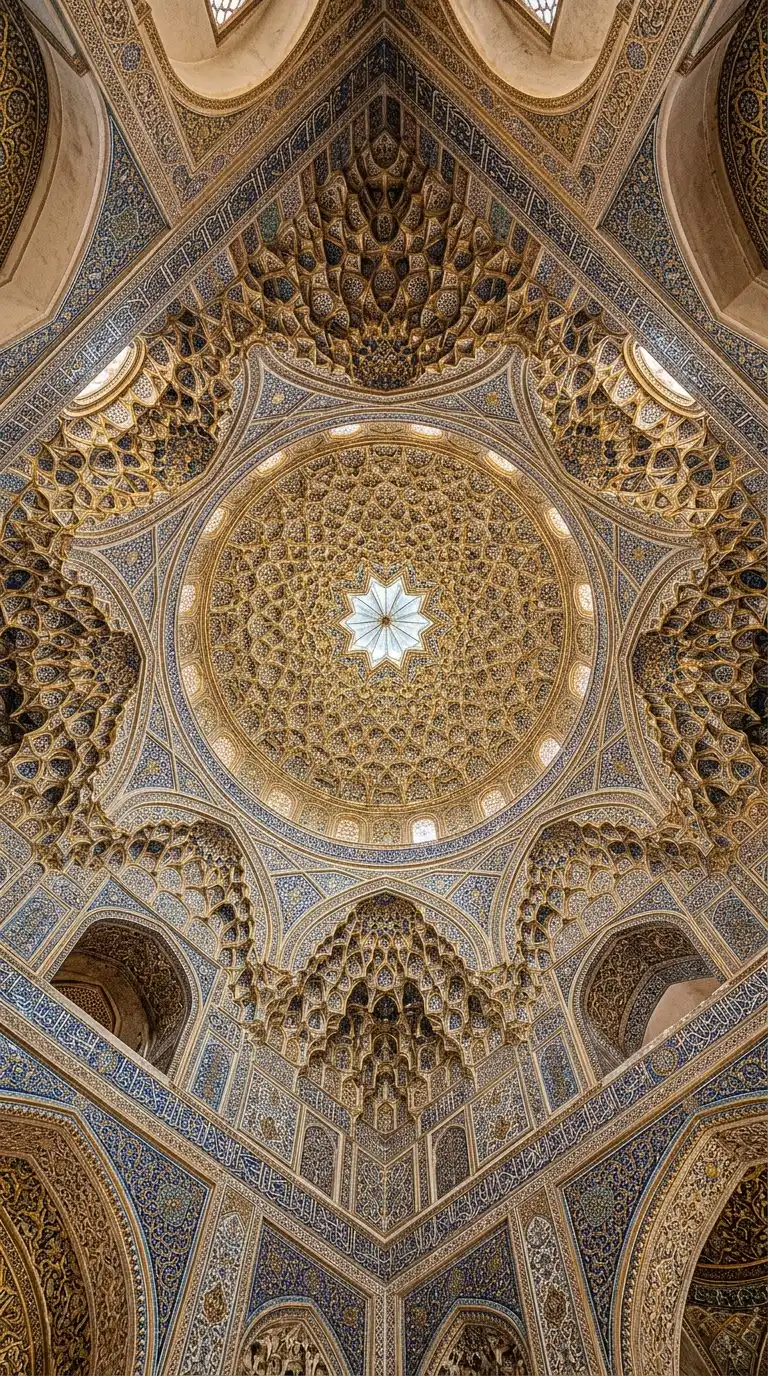
Muqarnas is a form of ornamental vaulting, resembling honeycombs or stalactites. It is used on domes, iwans, and cornices. The muqarnas is built from tiers of small niches that transition from a square or polygonal base to a circular or domed top. Muqarnas has no structural function — it is pure ornament.
This design is used on iwans, domes, and entrance portals. The emotional effect is complex, celestial, and dazzling.
Quick Tips
- Muqarnas should transition from a square or polygonal base to a circular or domed top.
- Each tier of niches should be smaller than the one below.
- The underside should be decorated with tile or paint.
6. The Windcatcher (Badgir)
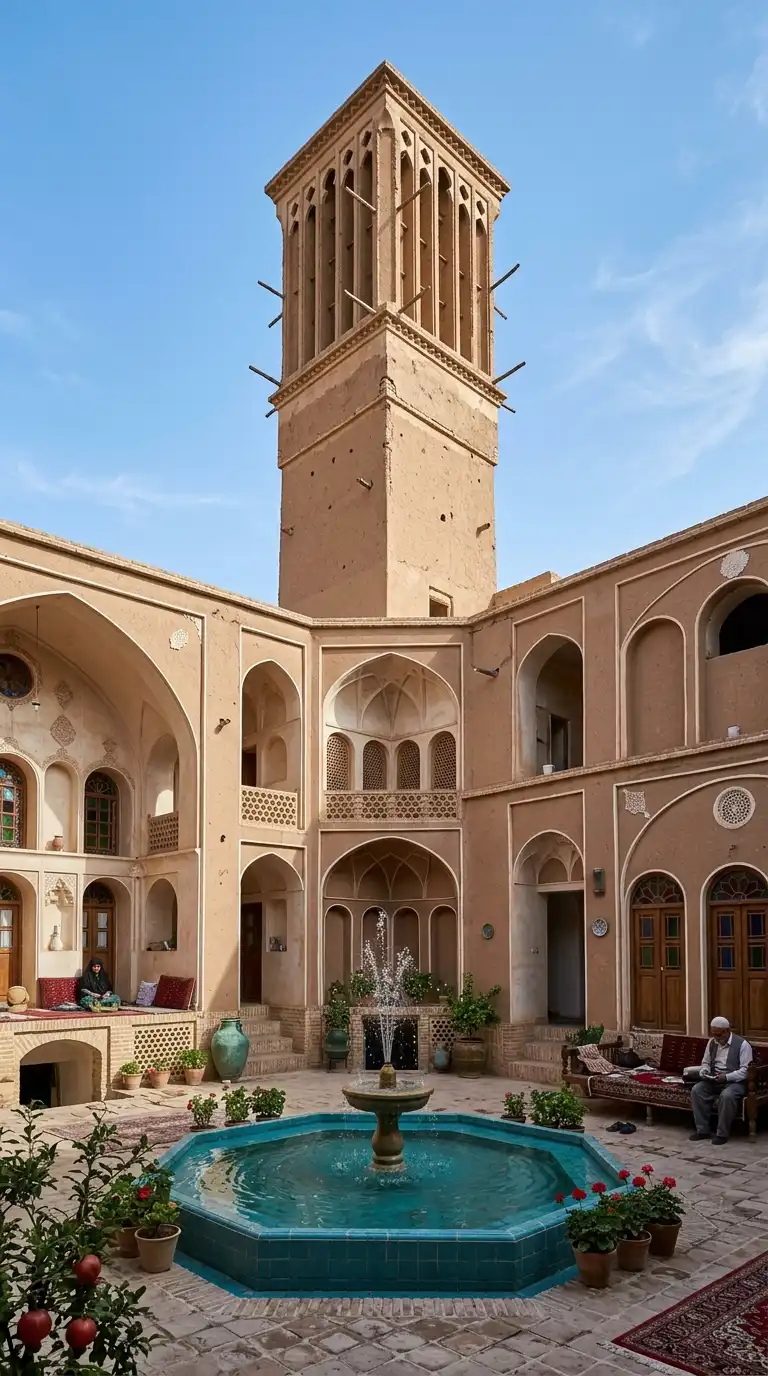
The windcatcher is a traditional Persian cooling structure. It is a tall tower on the roof of a building, with openings facing prevailing winds. The tower captures wind and directs it down into the building, often over a water fountain that cools the air further.
This design is ideal for houses in hot, dry climates. The emotional effect is cooling, sustainable, and ingeniously simple.
Quick Tips
- The windcatcher must face the prevailing wind direction.
- The tower height determines the wind pressure — taller is more effective.
- A water fountain or pool beneath the windcatcher enhances cooling.
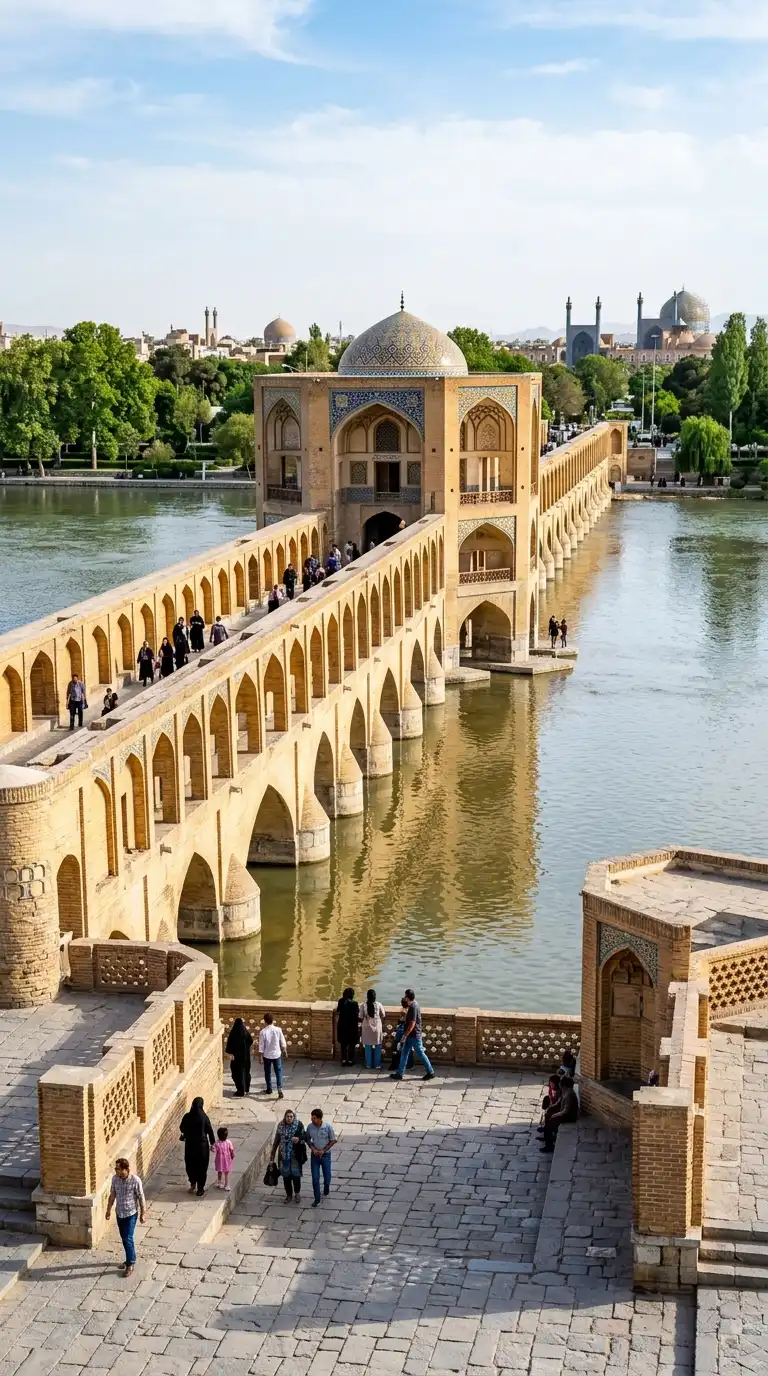
7. The Persian Bridge
The Persian bridge is a stone arch bridge, often with multiple arches and decorative elements. The bridge may have a pavilion at the centre or towers at the ends. The bridge is both functional and beautiful. The most famous is the Si-o-se-pol (Bridge of 33 Arches) in Isfahan.
This design is ideal for river crossings in cities. The emotional effect is rhythmic, civic, and beautiful.
Quick Tips
- The bridge should have multiple arches.
- Arches should be pointed or semi-circular.
- A pavilion or walkway should be provided for pedestrians.
8. The Bazaar
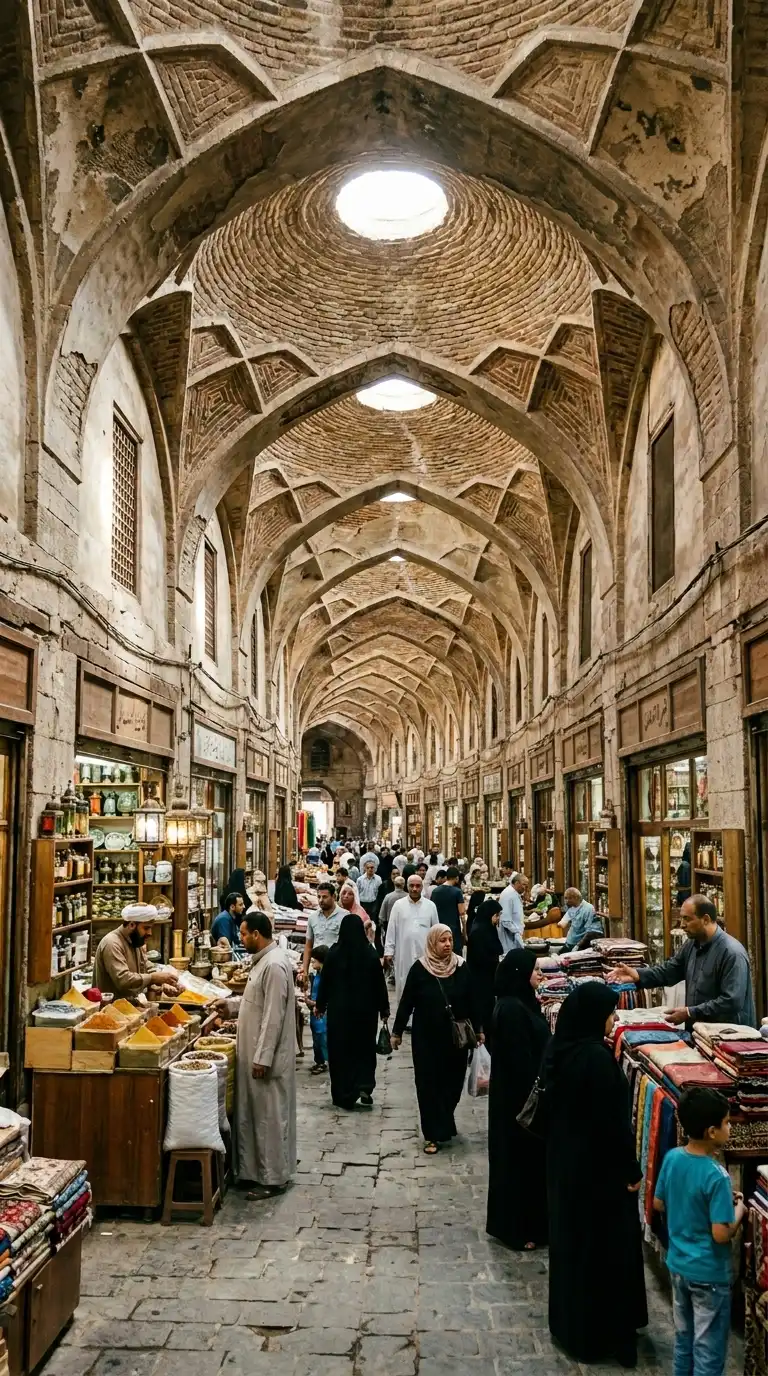
The bazaar is a covered market street. The street is lined with shops on both sides. The roof is vaulted, often with a series of domes or barrel vaults with openings for light. The bazaar is a linear space, sometimes branching into smaller streets. The bazaar is the spine of the Persian city.
This design is ideal for commercial districts in cities. The emotional effect is bustling, shaded, and labyrinthine.
Quick Tips
- The main street should be 4-5 metres wide for comfortable pedestrian flow.
- Shops should be small and uniform, typically 2-3 metres wide.
- Domes or vaults should have openings for light and ventilation.
9. The Persian Palace
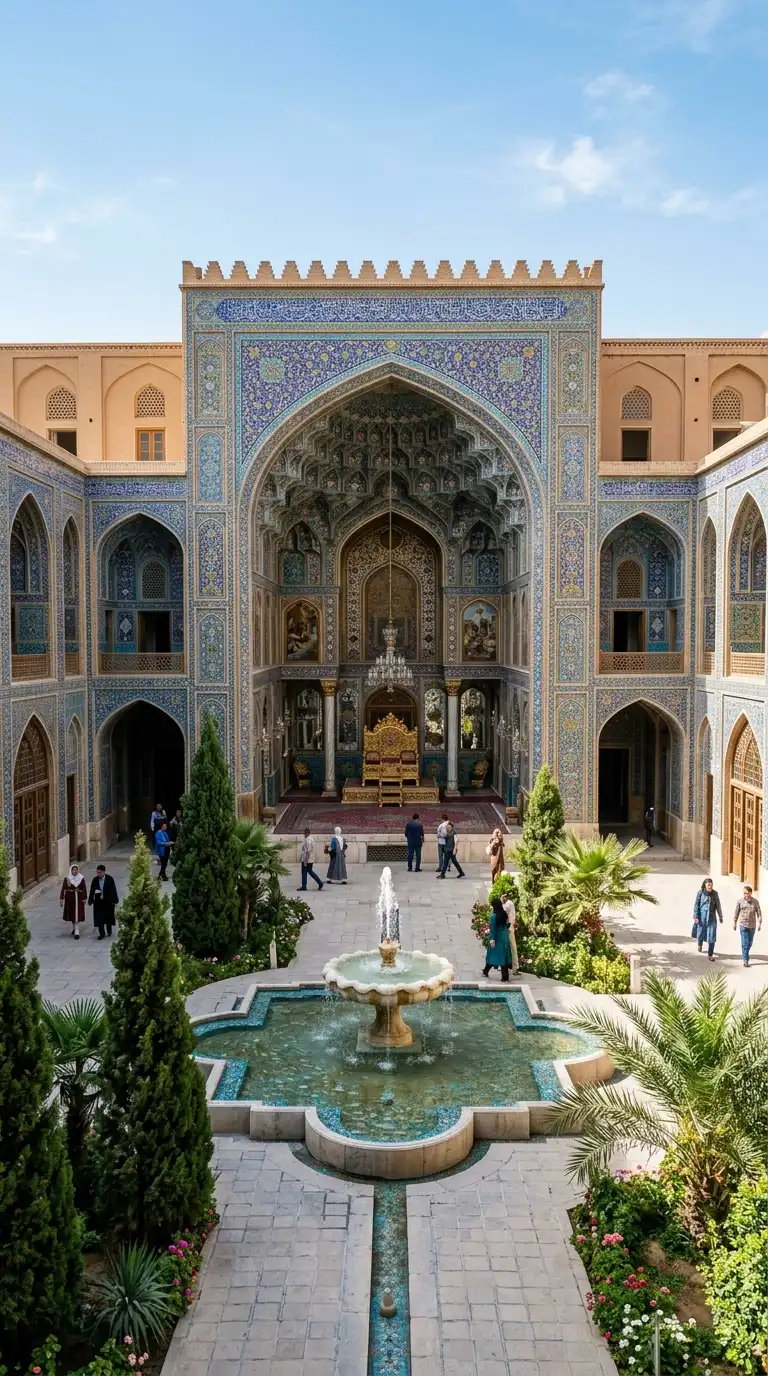
The Persian palace is a complex of courtyards, gardens, pavilions, and reception halls. The palace is organised around a series of courtyards, each with a different function. The most important courtyard leads to the throne room. The palace is decorated with tilework, mirror work, and painting.
This design is ideal for royal residences and government buildings. The emotional effect is imperial, luxurious, and hierarchical.
Quick Tips
- The palace should have multiple courtyards arranged in sequence.
- The throne room should be the largest and most decorated.
- Gardens and water channels should be integrated.
10. The Persian Mosque
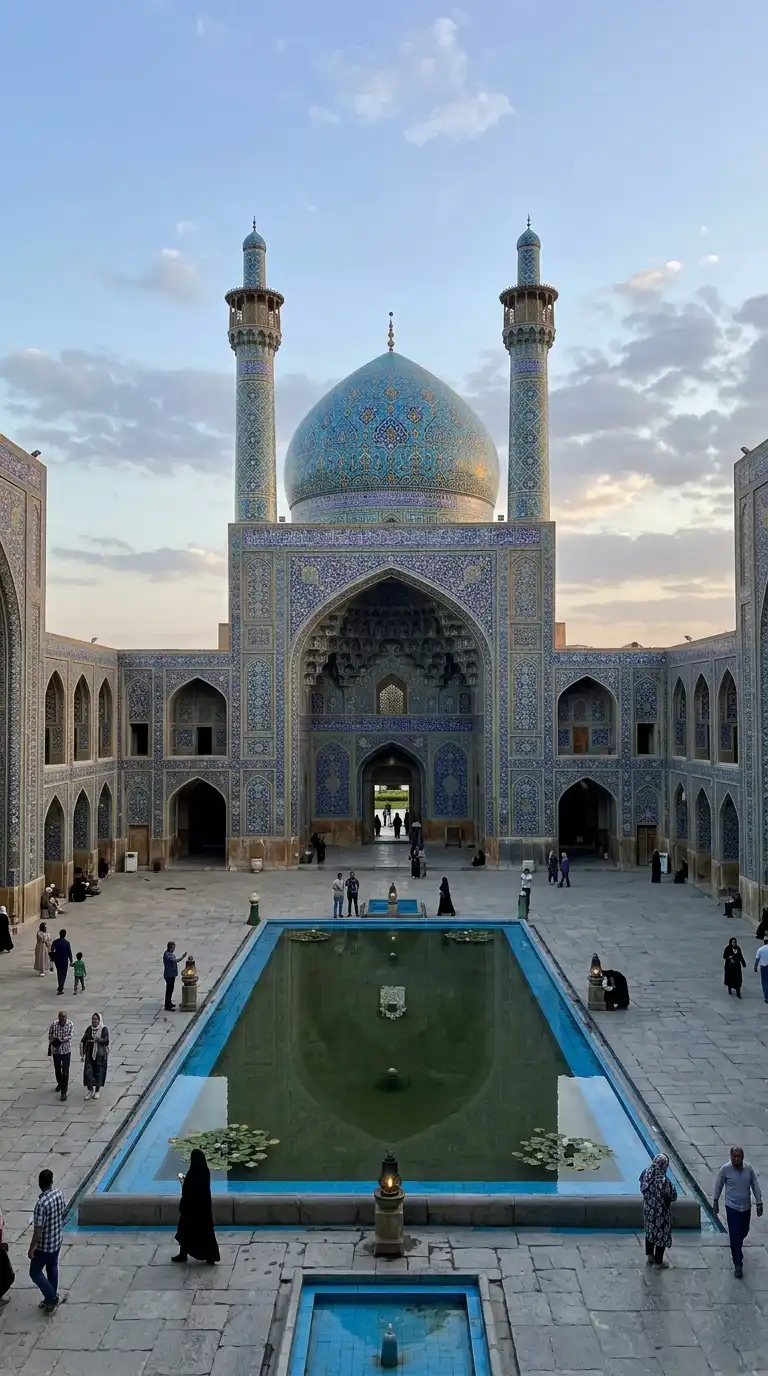
The Persian mosque combines the four-iwan plan with a large dome over the prayer hall. The dome is on squinches. The iwans and dome are covered in brilliant blue tile. The courtyard has a central fountain. The minarets are tall and slender.
This design is ideal for congregational mosques. The emotional effect is imperial, celestial, and brilliantly coloured.
Quick Tips
- The plan must be four-iwan with a domed prayer hall.
- The dome must be on squinches.
- Tile decoration must be blue and white.
11. The Ab Anbar (Water Reservoir)
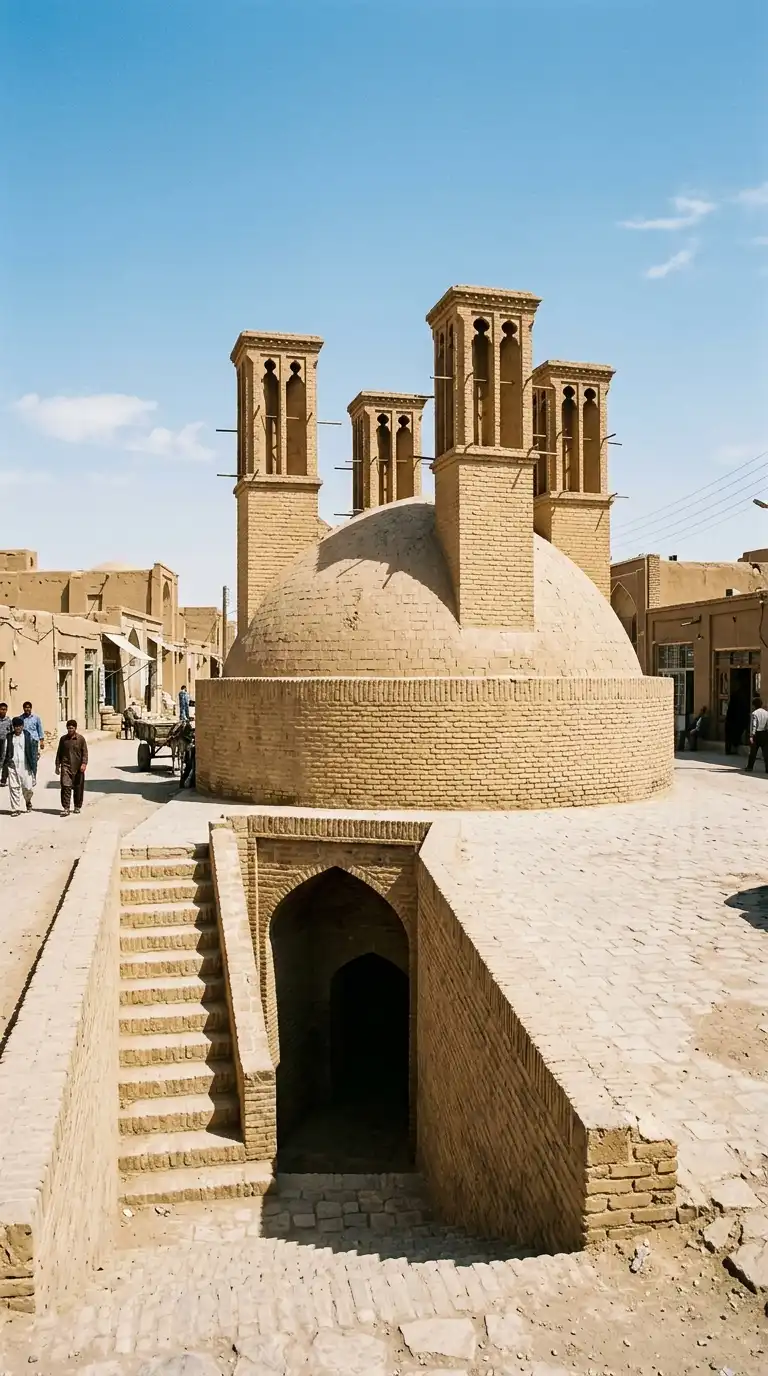
The ab anbar is a traditional Persian water reservoir, storing drinking water for a neighbourhood. The reservoir is underground, with a domed roof above ground. The dome has windcatchers to cool the water. The ab anbar is entered by a staircase.
This design is ideal for hot, dry climates. The emotional effect is cooling, communal, and ingeniously simple.
Quick Tips
- The reservoir must be underground for coolth.
- The dome must have windcatchers.
- A staircase must provide access to the water.
12. The Persian Caravanserai
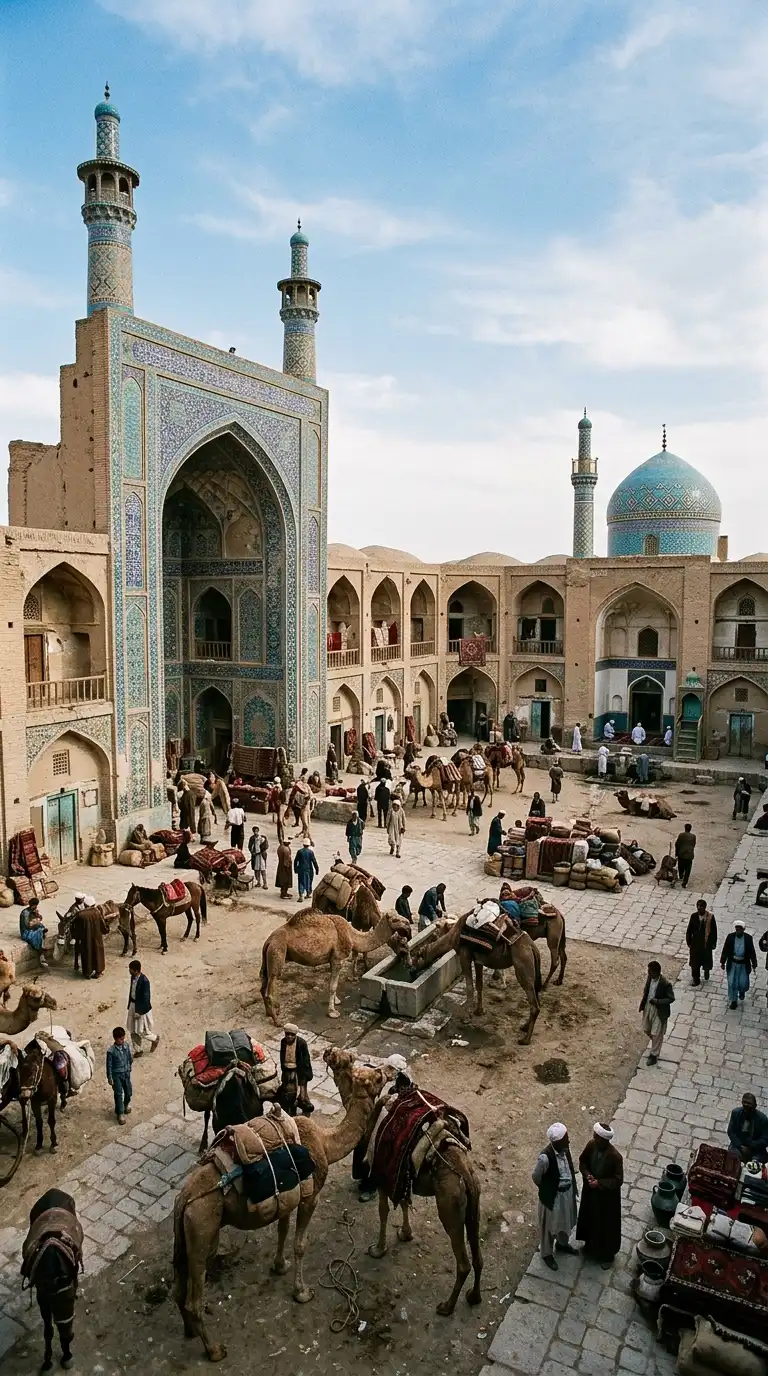
The caravanserai was a roadside inn for merchants and their caravans. The plan is a large courtyard surrounded by arcaded rooms. The courtyard is large enough for camels or horses. The gateway is monumental, often with a pishtaq. A small mosque is attached.
This design is ideal for trade routes. The emotional effect is protective, communal, and commercial.
Quick Tips
- The courtyard must be large enough for animals.
- The gateway must be monumental with a pishtaq.
- A small mosque should be attached.
13. The Ice House (Yakhchal)
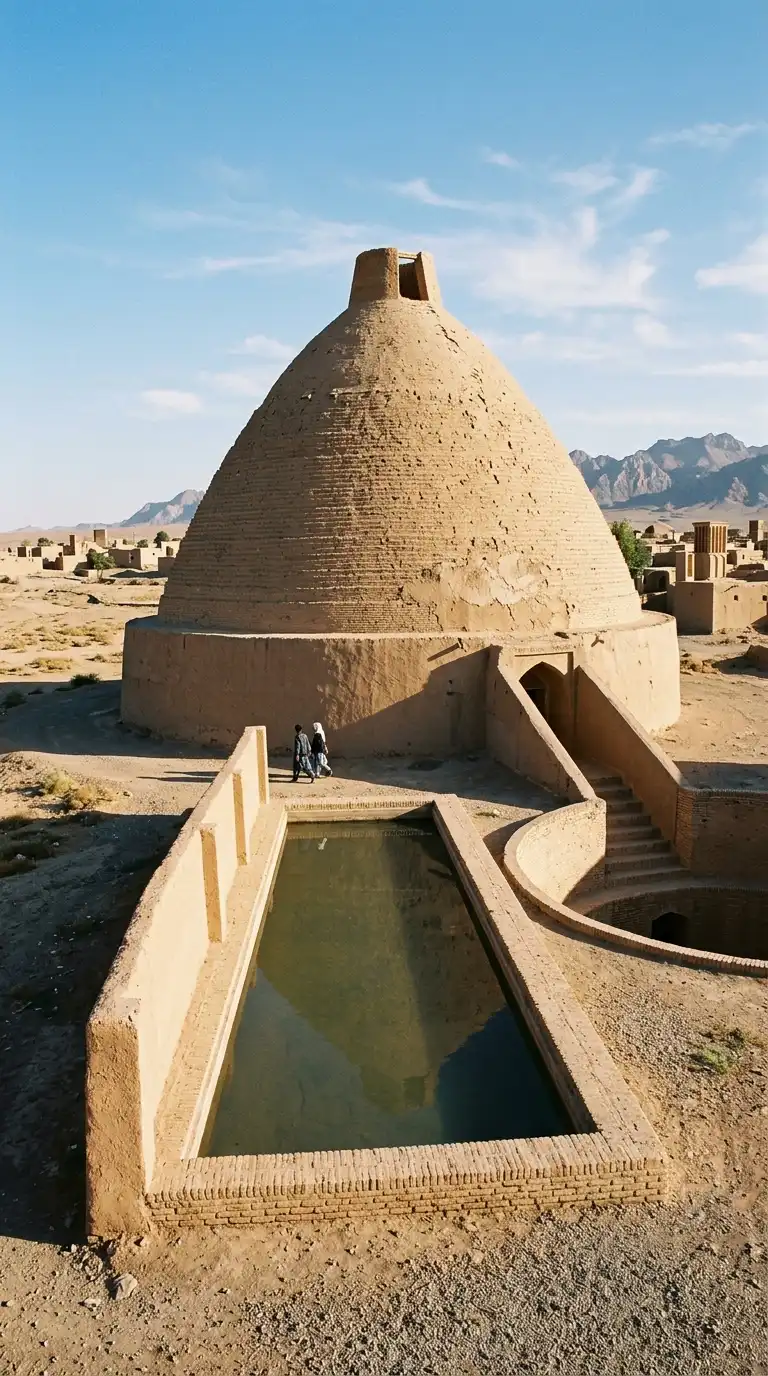
The yakhchal is a traditional Persian ice house, storing ice through the summer. The building is a large domed structure with thick walls. A pool of water froze in winter. The ice was stored in the pit below the dome. The dome kept the ice cool through the summer.
This design is ideal for hot, dry climates. The emotional effect is cooling, ingenious, and ancient.
Quick Tips
- The walls must be thick (at least 1 metre) for insulation.
- The dome must be tall for air circulation.
- A pit below the dome must store the ice.
14. The Persian Garden Pavilion
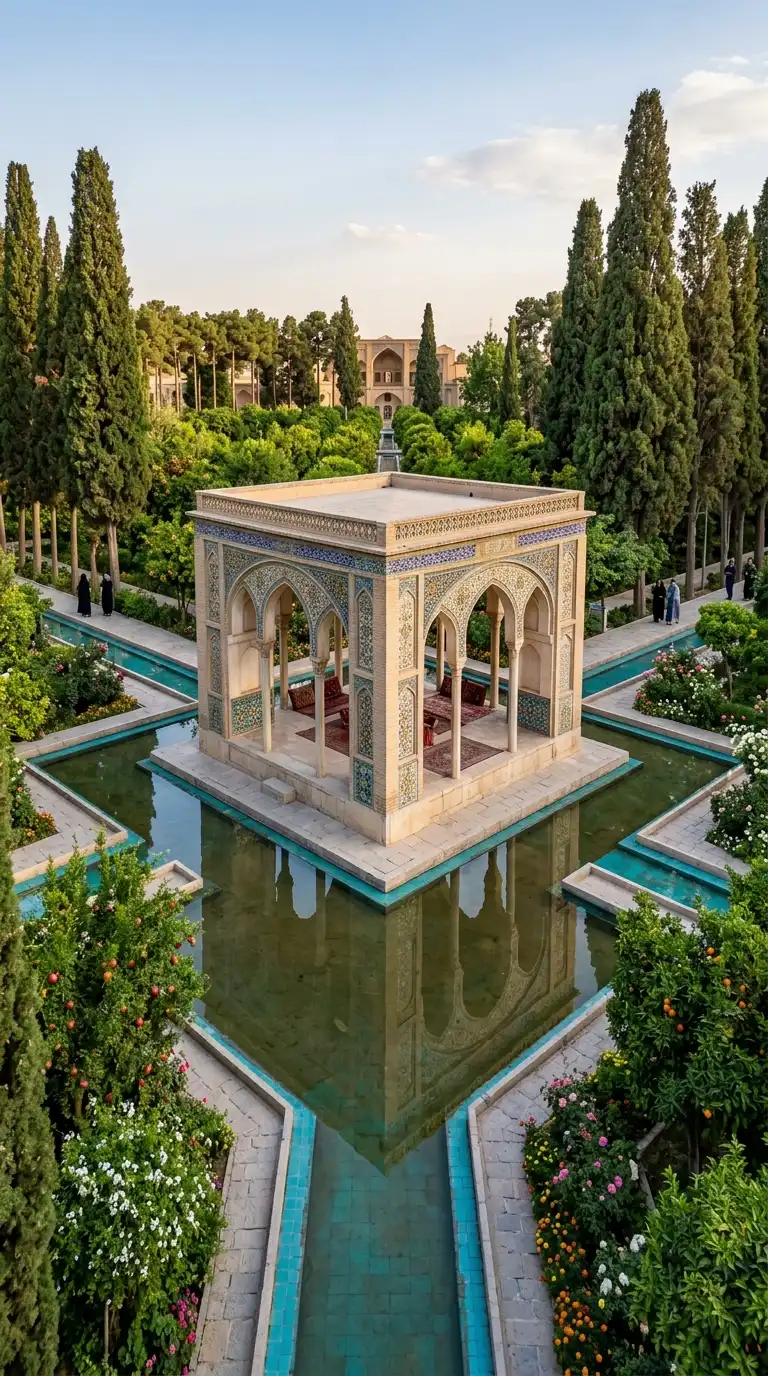
The Persian garden pavilion is a small, open building set within a char bagh garden. The pavilion is open on all four sides, with arches and columns. The roof is flat or domed. The pavilion sits at the intersection of water channels. It is a place for pleasure, poetry, and music.
This design is ideal for gardens and pleasure grounds. The emotional effect is open, garden-framed, and poetic.
Quick Tips
- The pavilion must be open on all four sides.
- The pavilion should sit at the intersection of water channels.
- The roof should be flat or a shallow dome.
Final Thoughts
Persian architecture is the architecture of paradise on earth. The gardens are paradise. The domes are the vault of heaven. The tilework is the stars. The water channels are the rivers of life. Persian architecture is not just beautiful — it is symbolic.
These 14 Persian designs are not mutually exclusive. A Persian mosque can have a four-iwan plan, a dome on squinches, a muqarnas vault, and blue tile decoration. A Persian palace can have a char bagh garden, a windcatcher, and a garden pavilion. The best Persian architecture is not the most restrained — it is the most perfect. It is the architecture of geometry, light, water, and paradise.